As current inbound arrival figures from China remain dismal, India’s Ministry of Tourism is stepping up its efforts to woo the Chinese market, including the relaunch of a tourism office and promotional videos in China.
“The current visitor arrivals from China to India are not satisfactory,” said KJ Alphons, India’s tourism minister. “Our aim is to attract 10 per cent of 144 million Chinese (outbound) tourists in the next five years.”
Gateway of India as seen from the Mumbai Harbour
The Ministry of Tourism has recently relaunched an India tourism office in Beijing that closed previously in 2016, in addition to organising a multi-city roadshow covering Beijing, Wuhan and Shanghai earlier this year.
A series of promotional videos has been shot in Mandarin to promote segments including wildlife, Ayurvada and luxury travel, while there are plans to host Chinese bloggers and journalists for a fam trip next year.
“We are also looking at ways to upgrade our tourism infrastructure in Buddhist sites including wayside amenities and a six-lane highway. We will also introduce theme-based marketing and promotional campaigns in the China,” said Alphons.
However, some tour operators remarked that much has to be done if India has to attract significantly more Chinese tourists, of which only 240,000 visited India last year.
“India is yet to become an aspirational tourist destination in the minds of Chinese tourists.There is a need for theme-based marketing campaigns to attract Chinese leisure travellers, whose numbers are far less than business travellers,” said Arun Anand, managing director, Midtown Travels.
The lack of Mandarin-speaking guides is another major bottleneck faced by Indian tour operators, Ravi Gosain, managing director, Erco Travels, pointed out.
“The Ministry of Tourism needs to look at ways to train guides in Mandarin,” said Gosain. “There is a lot of competition from shorthaul destinations like Thailand and Hong Kong and longhaul destinations like Australia and Europe in attracting Chinese tourists.”
As current inbound arrival figures from China remain dismal, India’s Ministry of Tourism is stepping up its efforts to woo the Chinese market, including the relaunch of a tourism office and promotional videos in China.
“The current visitor arrivals from China to India are not satisfactory,” said KJ Alphons, India’s tourism minister. “Our aim is to attract 10 per cent of 144 million Chinese (outbound) tourists in the next five years.”
Gateway of India as seen from the Mumbai Harbour
The Ministry of Tourism has recently relaunched an India tourism office in Beijing that closed previously in 2016, in addition to organising a multi-city roadshow covering Beijing, Wuhan and Shanghai earlier this year.
A series of promotional videos has been shot in Mandarin to promote segments including wildlife, Ayurvada and luxury travel, while there are plans to host Chinese bloggers and journalists for a fam trip next year.
“We are also looking at ways to upgrade our tourism infrastructure in Buddhist sites including wayside amenities and a six-lane highway. We will also introduce theme-based marketing and promotional campaigns in the China,” said Alphons.
However, some tour operators remarked that much has to be done if India has to attract significantly more Chinese tourists, of which only 240,000 visited India last year.
“India is yet to become an aspirational tourist destination in the minds of Chinese tourists.There is a need for theme-based marketing campaigns to attract Chinese leisure travellers, whose numbers are far less than business travellers,” said Arun Anand, managing director, Midtown Travels.
The lack of Mandarin-speaking guides is another major bottleneck faced by Indian tour operators, Ravi Gosain, managing director, Erco Travels, pointed out.
“The Ministry of Tourism needs to look at ways to train guides in Mandarin,” said Gosain. “There is a lot of competition from shorthaul destinations like Thailand and Hong Kong and longhaul destinations like Australia and Europe in attracting Chinese tourists.”
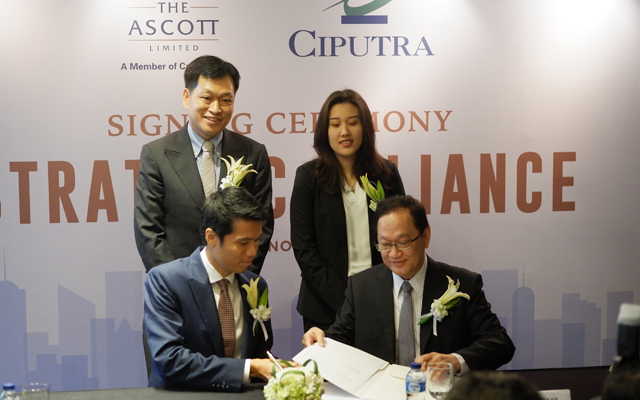
Front row: Ascott' Ervin Yeo (left) and Ciputra's Artadinata Djangkar
Ascott has formed a strategic alliance with Ciputra Development Group, one of Indonesia’s top property developers, to manage serviced residences in Indonesia and China within the next five years.
The announcement made yesterday did not disclose the number of properties Ciputra was planning to develop in both countries within the period, but revealed that the 253-unit Citadines Sudirman Jakarta targeted to open in 2021 would be the first property under the alliance.
Front row: Ascott’ Ervin Yeo (left) and Ciputra’s Artadinata Djangkar
Artadinata Djangkar, senior director of Ciputra, said that prior to formalising the alliance, the companies had already been in partnership over a span of two decades.
“It started with Somerset Grand Citra Jakarta in 1996 (which is jointly owned with Ascott Residence Trust). Ascott also acquired Ascott Kuningan Jakarta from Ciputra in 2014 and Ascott Sudirman Jakarta in 2017,” he said.
The signing ceremony yesterday also simultaneously marked the opening of the 192-unit Ascott Sudirman.
Artadinata said: “In Indonesia, we have properties in cities such as Jakarta, Semarang and Surabaya with the potential to be developed into serviced residences. These properties can be managed by Ascott through its portfolio of brands.”
Kevin Goh, Ascott’s CEO, said: “Forming strategic cooperation with leading industry players continues to be a key growth strategy for Ascott, as it provides us with accelerated access to a pipeline of quality projects.”
The alliance with Ciputra follows Ascott’s recent partnership with Tauzia Hotel Management, one of Indonesia’s major hotel operators.
Goh added that strategic partnerships have helped Ascott add the biggest number of properties in Indonesia in a year.
“With an expanded product offering, we expect to pick up pace in our growth in the country. Indonesia is South-east Asia’s largest economy, where we see huge potential for us to expand.”
Ervin Yeo, Ascott regional general manager Singapore, Malaysia and Indonesia, said Ascott currently operated nine properties in Indonesia and would open nine more serviced residences with more than 1,600 units in the country over the next five years, including first properties in Bandung, Somerset Asia Afrika Bandung and Citadines Kings Bandung.
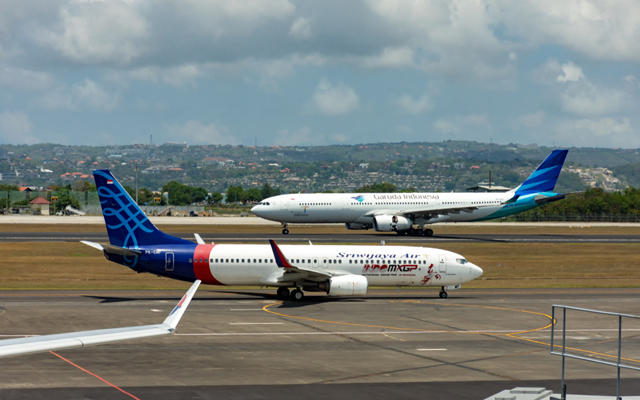
Garuda Indonesia finally usurps Lion Air's domestic market lead
Garuda Indonesia, through its Citilink subsidiary, is taking over operational control of rival Sriwijaya Group, giving it a majority share of the domestic aviation market, according to a Reuters report.
As part of the agreement, Garuda aims to improve the operational and financial performance of Sriwijaya Air Group. This will include helping Sriwijaya meet its financial commitments to Garuda Group, the latter said in a statement without disclosing details of the financial obligations.
Garuda Indonesia finally usurps Lion Air’s domestic market lead
The partnership could also be expanded to share ownership in Sriwijaya Group.
A change in management at Sriwijaya is also expected to come with the takeover.
The national carrier has been battling for market share against Lion Air, a top airline in the country that was set back last month by the crash of one of its Boeing 737 Max jet, which killed all 189 people on board.
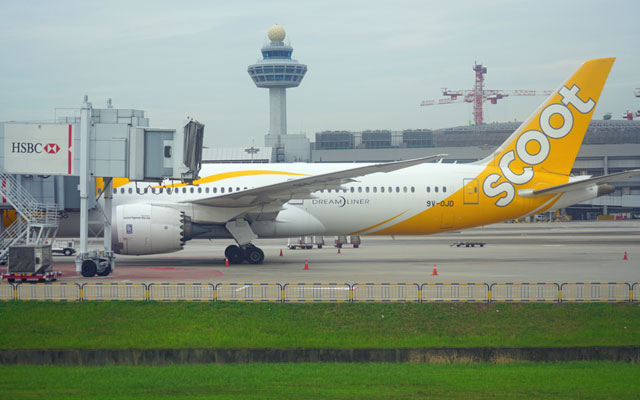
Scoot operations will be relocated from Terminal 2 (T2) to Terminal 1 (T1) of Singapore Changi Airport come 4Q2019 in anticipation of the LCC’s projected double-digit annual growth over the next three years.
Lee Lik Hsin, Scoot’s CEO, said: “The move to T1 will be beneficial for several reasons, chief of which being that it will allow us to continue serving our growing customer base and meet their needs for a fast and fuss-free pre-flight experience.”
The LCC to relocate to T1, where upgrading works are underway
Managing director of airport operations management at Changi Airport Group (CAG), Jayson Goh, shared: “CAG periodically reviews the allocation of airlines across all terminals to provide sufficient terminal capacity for future traffic growth.”
Changi Airport has been undertaking upgrading works to expand the passenger handling capacity of T1, with the project expected to be fully completed in 2019.
In the T1 departure hall, refurbishment work has just been completed. The upgraded facility features a central Fast and Seamless Travel Zone where passengers can check in and drop off their bags at the self-service automated machines.
Meanwhile, its baggage claim hall is being expanded to incorporate more baggage claim belts to serve more arriving flights.
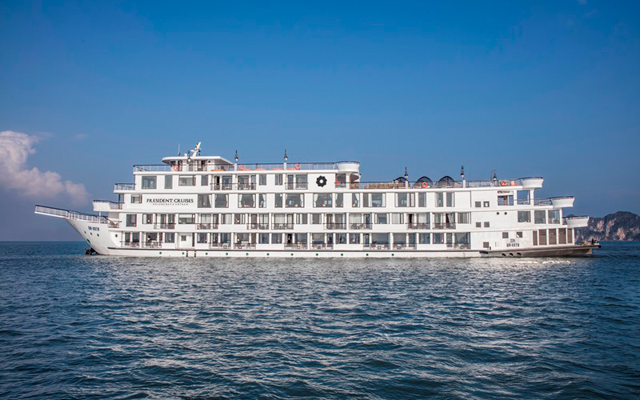
Halong Bay will next year welcome the 46-cabin, 1,200-ton President Cruise, which the cruise’s operator believes is the largest overnight ship to ply the UNESCO World Heritage Site.
Lion Asia, a new luxury cruise operator scheduled to debut next year with the first of two President Cruises, also claims to be the first on Halong Bay to feature an elevator system catering to people with disabilities and the elderly.
Largest overnight ship in Halong Bay?
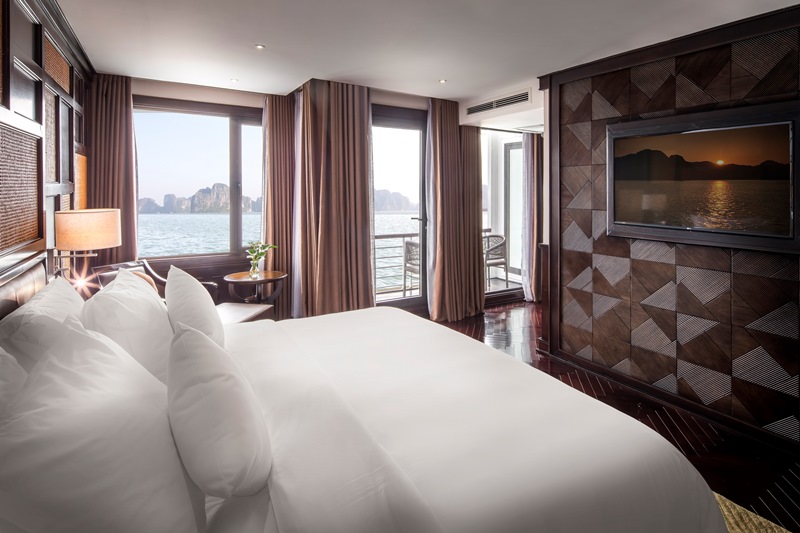
Balcony cabin
Measuring 86m long, 13.9m wide and 13m high, the steel craft offers cabins ranging from 30m2 to 130m2 across five cabin types.
The 30m2 Ambassador Balcony and Premier Balcony cabins are equipped with private balconies while the Cabinet and Treasury suites span 35m2 and 38m2 respectively and offer outdoor terraces and bathtubs.
On the upper deck at the front of the ship, the 130m2 Presidential Suite is complete with a private terrace, private bar and dining area, and floor-to-ceiling windows affording sweeping views of the bay.
Facilities include two sun decks, each able to accommodate all 120 passengers; a piano bar featuring nightly performances by a Brazilian jazz duo; a six-room spa by Vietnam’s Kaia Spa; and a fine dining restaurant presenting an a la carte menu of Japanese-, Korean-, and European-inspired dishes.
A limousine transfer service with reclining seats connects Hanoi with Halong Bay on a new highway that has cut the drive time between the destinations in half to two hours.
President Cruises offers one and two-night itineraries with a luxury speed boat transporting passengers to attractions around the bay including caves, beaches, floating villages and a pearl farm. The ship also offers sunrise tai chi and cooking classes onboard.
The League of Professional Receptive Operators participated in the recently concluded CITM 2018 with its first-ever dedicated booth, comprising 40 ground operators from countries including Israel, Turkey, Slovakia and Spain.
The decision to present as a collective was driven by the desire to gain a better understanding of the Chinese outbound market and to raise awareness of the organisation.
Shang: strength in numbers
Formed in 2015, the league comprises professional ground operators seeking a platform to share resources, information for clients as well as expertise.
Founding member Frank Shang told TTG Asia: “In previous CITM shows, our members exhibited under their own country pavilion or on their own. Now this collective effort is putting us under the spotlight.
“It’s not our aim to compete with group tour agents, and we hope buyers would know us as a bunch of inbound/outbound receptive operators with warm service. A lesson learnt from the Sino-US trade is not to rely on one single source market but be globalised in business.”
Highlighting the four key trends observed of the Chinese outbound market – “namely the rise of personalised products, small group tours, online payment platforms like Alipay as well as refined services” – Shang also urged league members to “go in the direction of customised tour ideas” to survive in future.
Louis Lee, Slovakia-based planner at European Tourism Planning Agency, which specialises in cultural exchange tours, also foresees small group tours to take off among the burgeoning Chinese FIT wave.
“China is such a huge market with immense growth so this collective platform would create head-to-head competition with other members,” he said.
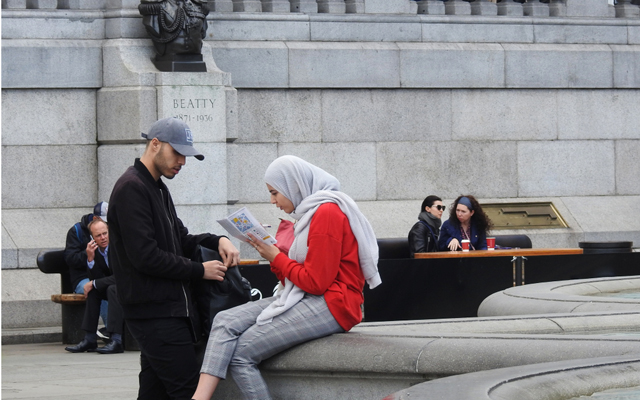
More of the tourists surveyed prefer city breaks than beach holidays; pictured, tourists in London
City breaks and shopping are more popular with the world’s fast growing Muslim travel market than beach holidays and museum visits are, according to an IPK International study commissioned by ITB Berlin as part of the World Travel Monitor.
High growth of Muslims travelling abroad
The report identified “the most interesting source markets” when it comes to Muslim travel demand are Indonesia, India, Turkey, Malaysia and the Arab countries.
Source markets with a predominantly Islamic population showed growth rates that were 40% higher in the past five years, compared to the rest of the world.
Muslims are the world’s fastest-growing religious group and by 2030 will make up an estimated 25% of the world’s population.
More of the tourists surveyed prefer city breaks than beach holidays; pictured, tourists in London
City breaks top the list
While city breaks and sun and beach trips are the most popular holiday types, the Muslim travel market presents a different picture, the report said.
For the segment, city breaks top the list with a market share of over one-third, followed by tour holidays and sun and beach holidays.
In general, the report said that holidays are less important for Muslim travellers, who take more trips for business, visiting friends and relatives, and other leisure reasons.
Religious trips and pilgrimages in particular play a much greater role and make up 10% of foreign trips – 10 times higher compared to the rest of the world.
More shopping, less sightseeing
Apart from preferring other types of holidays, Muslims also tend to pursue different activities when travelling, according to the study.
Whenever they visit cities, shopping is on top of the list. In contrast, sightseeing – the number one attraction for other travellers – visiting museums or seeking out good food is less important for this segment.
Also, tour holidays are shaped differently with less focus on sightseeing or museum visits and more focus on nature and shopping instead.
Germany the most popular destination in Europe
For Muslims traveling abroad, the UAE is the most popular destination worldwide. Germany comes second, followed by Saudi Arabia, Malaysia and Singapore.
Looking at each continent, over 60% of trips abroad by Muslims go to Asia (including the Middle East) and around one-third to Europe. By comparison, trips to Africa, North and South America only have a very small share of the market.
Young and highly educated
Measured against all other international travellers worldwide the percentage of female travellers from Islamic countries is below average. However, in recent years their numbers have increased steadily.
The study also revealed that Muslim travellers are much younger than average, with 75% aged between 25 and 44.
In terms of education, there is a larger share of those with high education levels.
The World Travel Monitor is based on the results of representative interviews with more than 500,000 people in over 60 global travel markets.
Thailand’s Centara Hotels & Resorts is expected to boast a fourth property in Krabi come September 2019.
Centara Ao Nang Beach Resort & Spa Krabi will offer 180 rooms ranging from 39m2 to 81m2 across eight configurations, including 20 rooms with bunk beds. Most ground floor rooms will have direct pool access.
The property is also expected to feature F&B outlets that can be used for breakfast and special event buffets, a spa and a beach club.
The Swiss hospitality management school will set up an international campus in Singapore
The Singapore Tourism Board (STB) and the National Association of Travel Agents Singapore (NATAS) last Friday announced new and updated initiatives at the STB-NATAS Travel Agent Industry Forum, aimed at helping travel agents stay relevant in the competitive landscape.
These include the Travel Talent Transformation & Management Programme, which aims to improve HR practices and attract and retain workers, the one-stop NATAS Resource Centre supporting business transformation projects, and an updated Business Transformation Through-Train Programme to guide the implementation of new business models.
These initiatives are part of the Travel Agent Roadmap launched by STB and NATAS two years ago.
Since the launch of the Roadmap in August 2016, more than 90 projects, ranging from technology adoption to business remodelling, have received support from STB’s Business Improvement Fund. These projects have helped travel agents improve productivity and save over 800 man-hours – which translates to 100 workers – per day.
More initiatives to help travel agents in the city stay relevant
Transforming business through Through-Train Programme v2.0 STB will be launching version 2.0 of the Business Transformation Through-Train programme in 2Q2019. Aimed at progressive travel agents ready to relook their business models, the programme helps travel agents envision new business models, identify gaps and opportunities and implement business shifts to remain competitive.
Following this year’s pilot run with seven agents, version 2.0 of the programme takes into consideration feedback from the first run.
Ong Ling Lee, STB’s director travel agents & tourist guides, policy & planning group, added: “From next year it’ll be held twice a year, up from once a year. We’ll be adding more sessions, where participants will have more time to consult with the experts, as well as time to do more research.”
An open call to the industry for the second run will be made in 1Q2019.
Boosting travel agents’ tech savviness To educate travel agents on the technology solutions available and guide their technology adoption, STB will organise regular talks that cover emerging technologies, conduct a solution call-out to identify relevant technology vendors for travel agents and develop a do-it-yourself guide to assist travel agents in selecting suitable technology solutions that will meet their business needs.
In the coming year, NATAS will also be launching a Travel Technology Challenge that builds on the Tourism Innovation Challenge to further proliferate new technology solutions among the industry.
NATAS is also looking at the potential of developing an offline-to-online (O2O) portal to support travel agents in moving into the online domain. The portal will feature themed travel fairs throughout the year, and will serve as a plug-and-play solution for travel agents who currently do not have an online presence.
Bridging manpower gaps, managing travel talent STB and NATAS also announced the Travel Talent Transformation & Management Programme, which is aimed at identifying and bridging gaps in HR practices. Travel agents will be able to diagnose their HR gaps through one-on-one sessions with consultants, learn how to resolve these gaps through masterclasses and site visits to firms with successful HR practices, and be guided through the solution implementation.
For jobseekers, NATAS will work with Workforce Singapore (WSG) to list available jobs in the travel agent industry on the MyCareersFuture job portal.
STB and NATAS will embark on a series of marketing activities next year, focusing on changing the perception of the industry as a viable career option for jobseekers. More details will be announced at a later date.
In addition, Wee Hee Ling, CEO, Euro-Asia Holidays, and also deputy chairman of the NATAS manpower committee shared that the committee is reviving its youth chapter – headed by Albert Tan of Pegasus Travel Management. Wee expressed hopes that this would help pull in the younger generation tour agents, which would in turn help to solve manpower issues.
From left: Pegasus Travel Managements’ Charles Tan; STB’s Ong Ling Lee; Euro-Asia Holidays’ Wee Hee Ling; and Monster Day Tours’ Ty Suen during the STB-NATAS Travel Agent Industry Forum media roundtable
Birth of Tour Operators Alliance A group of tour operators have also come together to form a Tour Operators Alliance, STB announced at the forum. The founding team includes Monster Day Tours, Let’s Go Tour Singapore, Singapore Sidecars, Ruby Dot Trails, and Tribe.
Ty Suen, founder of Monster Day Tours, and the alliance’s spokesperson, shared: “We are still in the early stages but the top agenda is getting to know each other’s strengths and what we can bring to the table. What we do have is a direction of how we want tours to be, and we want to push the agenda that Singapore is more than just a stopover destination. And this can only be done with the help of more interesting content and experience.”
Suen added that each tour operator currently runs day tours individually, but rather than competing with each other, they want to pool their resources together, in order to reach out to more channels and work with larger DMCs.
For instance, Singapore Sidecars and Monster Day Tours are able to work together together where Singapore Sidecars’ specially trained riders operate the vespa sidecars, with guiding by Monster’s guides, should tourists tourists want a more in-depth view of Singapore. And instead of a three-hour tour originally, by combining their resources, both companies would be able to sell a longer six-hour tour, which would be a combination of a Vespa and walking tour.
NATAS Resource Centre in development Lastly, NATAS is looking at developing an online Resource Centre in 2019, a one-stop shop where travel agents can access toolkits and resources and obtain advice on how to embark on business transformation projects.
Ong concluded: “The core of the travel business is about connecting people and the destination. Technology can play a big part (in helping). But to make technology work, the business, the way of connecting people together, has to evolve. It doesn’t have to be a big step, small steps are fine. Travel agents must be willing and able to put effort (in order for change to happen).