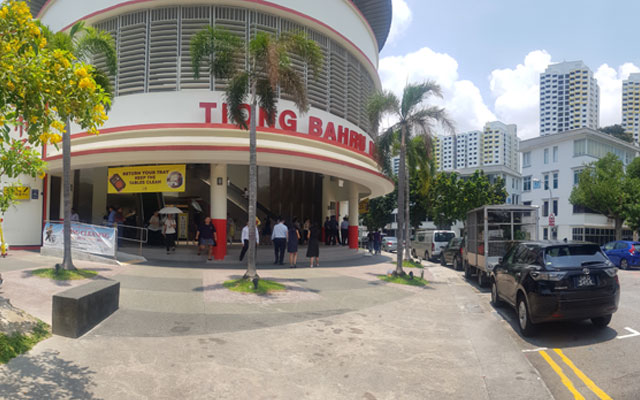
From December 1, 2018, Grand Copthorne Waterfront Hotel will roll out a complimentary half-day tour Tiong Bahru Heritage Tour, available to any guest who books a stay at the property.
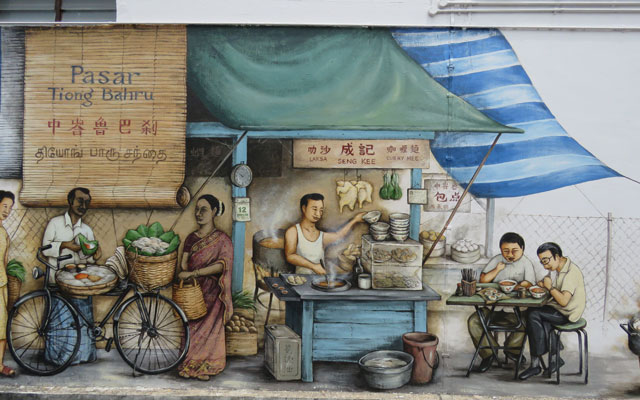
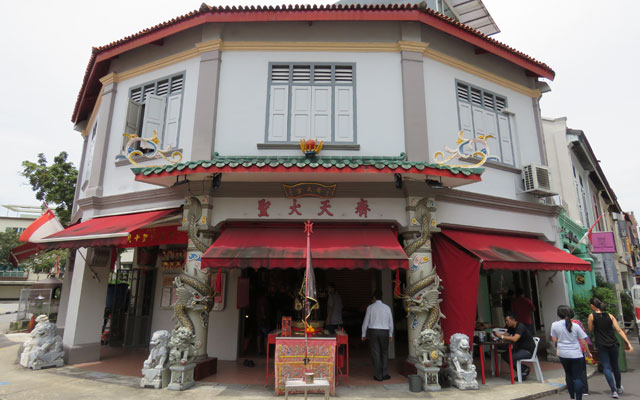
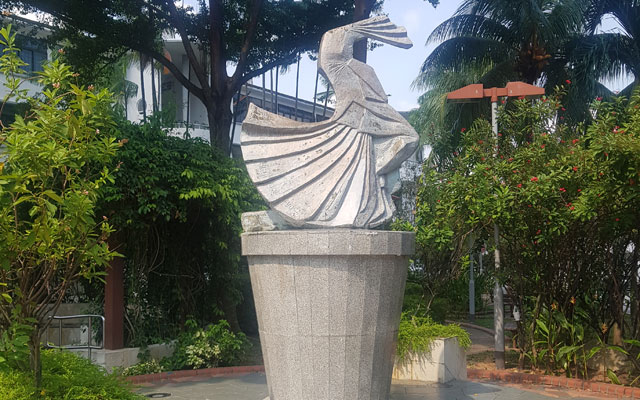
Running twice-daily every Saturday at 09.00 and 13.00, tours includes return transfer by coach, certified English-speaking guides from Tour East Singapore, and sampling of local dishes such as chwee kueh, min jiang kueh, you tiao, traditional kaya butter toast at Tiong Bahru Market. Other places of interest the tour visits include the Qi Tian Gong Temple; wall murals in the district; Seng Poh Garden; and Galicier Pastry, a four-generation-old bakery which sells traditional nonya kueh.
1 of 4
Tiong Bahru Market
Mural in the Tiong Bahru District
Qi Tian Gong Temple
Dancing Girl Sculpture in Seng Poh Garden
In addition, the Grand Copthorne team will also create in-house activities revolving around the cultural festivals in Singapore for guests.
Readers who type “LOCAL” while booking rooms on the Grand Copthorne Waterfront Hotel’s website will receive a three per cent discount.
The ‘Live Like a Local’ campaign is supported by Singapore Tourism Board’s Experience Step Up Fund that encourages experience development projects that enhances visitors’ experience in Singapore.
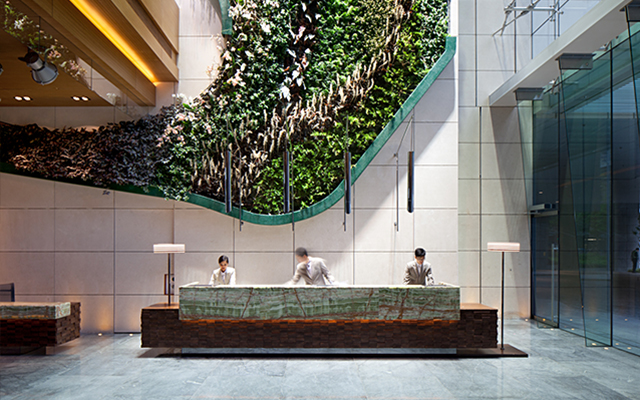
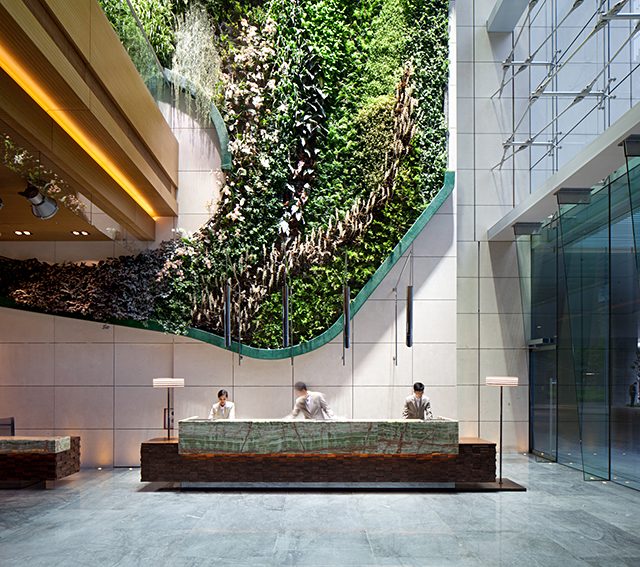
Hotel ICON is an award-winning luxury property housing 262 upmarket rooms. Located in the bustle and energy of Tsim Sha Tsui in Hong Kong, Hotel ICON is a modern, uniquely designed property with a commitment to delivering unrivalled guest comfort and featuring a wide range of dining choices for both leisure and business guests.
In addition to being a top-rated business hotel on TripAdvisor, Hotel ICON is also a training school for the next generation of hospitality leaders. Owned by Hong Kong Polytechnic University, Hotel ICON was opened in 2011 by Richard Hatter, the hotel’s general manager and adjunct professor, and operates as a research and training facility for the School and Hotel of Tourism Management in Hong Kong.
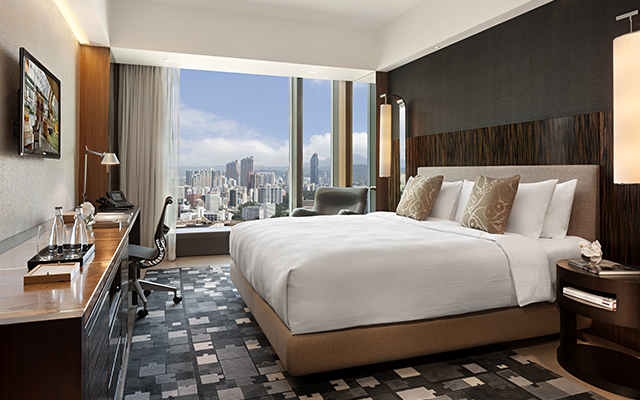
Photo: Suite bedroom
Attracting Higher-Value Guests in a Competitive Market
“Hotel ICON operates in one of the world’s most competitive hospitality markets and at very high occupancy levels—all of which means there is little margin for pricing error,” said Hatter. “Our executive team is always looking for ways to not only enhance guest experiences, but also improve the returns from our inventory and maximize revenues.”
Hotel ICON has a large inventory of upmarket club rooms and suites boasting superior amenities and accounting for 38.5% of the hotel’s total room inventory. Demand from guests, however, has traditionally been overwhelming for the property’s standard rooms, compared to higher-priced rooms. Demand for standard rooms from January to December 2017 was 126% compared with 40% for club rooms and 54% for suites.
“Our executive team was challenged by how to best lift revenues when market demand for our room inventory from guests was largely focused on lower-rated room categories,” said Hatter. “We quickly realized we needed a new approach with a best-of-breed revenue management system that could assist with room-type pricing and yielding.”
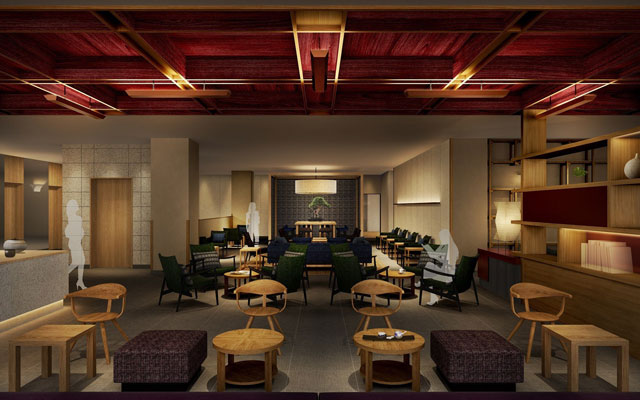
Photo: Lounge area
Returning to the Market Leader
Hotel ICON had been working with a different global revenue management system (RMS) provider but had experienced limitations with the system. Given the advanced automation and room-type management needed, Hotel ICON chose to work with IDeaS, a company the management team had previously enjoyed a successful relationship with.
“We had used a different IDeaS product previously, as well as another revenue management solution, and were confident that IDeaS G3 RMS’s unique ability to assist with room-type management and yielding, along with IDeaS’ solution for meeting space revenue management, was the best choice to drive revenue and profitability for the next stage in our revenue management journey,” said Hatter.
Through its adoption of IDeaS G3 RMS, Hotel ICON achieved optimal RevPAR performance through rate increases and by selling the higher room categories at suitable market prices. Importantly, this process helped minimize overbooking entry-level rooms and forced upgrades, a key area of opportunity many hoteliers are challenged by in the hyper-competitive Hong Kong market.
“Previously, increased demand would simply push the selling price of our room inventory higher across all room categories,” said Hatter. “Today, with the advanced IDeaS G3 RMS, Hotel ICON can accurately forecast and price our room inventory based on different room categories. This is a significant development for our property.”
Early Rewards
Since returning to work with IDeaS and implementing the industry leading G3 RMS solution, Hotel ICON has experienced significant improvement in the performance of the property’s higher-value room categories. Within three months of the G3 RMS installation, Hotel ICON saw year-on-year RevPAR growth of 4.51% for its higher-value club and suite rooms, driven by a 7.35% increase in ADR.
“When we looked to update our approach to revenue management, we committed ourselves to changing our strategies over the long term,” said Hatter. “We are pleased that since returning to work with IDeaS, Hotel ICON has experienced tangible improvements in the performance of our club and suite room categories, which has contributed to a signficant uplift in revenue over a short space of time.”
Thinking Outside the Guest Room
Going forward, Hotel ICON will also implement Smart Space by IDeaS, making their property the first in Hong Kong and China to benefit from the innovative, web-based tool which provides unparalleled visibility into meetings-and-events demand. Smart Space seamlessly pulls data from other sales tools to strategically manage function space events, allowing hoteliers to collaborate and create ideal pricing scenarios for group business.
“The positive results we have witnessed with IDeaS to enhance revenues from higher-value room categories gives us tremendous confidence we will see similar improvements from our meetings and events,” said Hatter. “We look forward to continuing our growth with IDeaS as we aim to enhance our total revenue performance.”
About IDeaS
With more than 1.6 million rooms priced daily on its advanced systems, IDeaS Revenue Solutions leads the industry with the latest revenue management software and advisory services. Powered by SAS® and with nearly three decades of experience, IDeaS proudly supports more than 10,000 clients in 124 countries and is relentless about providing hoteliers with insightful ways to manage the data behind hotel pricing.
IDeaS empowers clients to build and maintain revenue management cultures—from single entities to world-renowned estates—by focusing on a simple promise: Driving Better Revenue.
IDeaS has the knowledge, expertise and maturity to build upon proven revenue management principles with next-generation analytics for more user-friendly, insightful and profitable revenue opportunities—not just for rooms, but across the entire hotel enterprise. For more information, visit www.ideas.com.
About Hotel ICON
Unlike any other, Hotel ICON is an upscale Hong Kong hotel in the heart of Tsim Sha Tsui East. Standing as a testament to Hong Kong’s creative energy and vibrant arts scene, Hotel ICON showcases work from the city’s celebrated designers and the world’s most acclaimed architects. Offering the ultimate in comfort and committed to service excellence, Hotel ICON’s 262 stylish guestrooms comprise seductive extras, including complimentary wired and Wi-Fi internet connections, smartphone with unlimited mobile data and an ultra-slim 40” Ultra High Definition LED TV. Located on level 9, Hotel ICON’s Angsana Spa is a tranquil oasis while the harbour-facing outdoor swimming pool and fitness centre allow guests to exercise while enjoying views of Hong Kong Island’s spectacular skyline.
With a maximum capacity of 580 persons, Hotel ICON’s grand Silverbox ballroom is the ideal venue for a celebration or theatre-style conference. Hotel ICON houses three restaurants: Above & Beyond, The Market and GREEN, providing guests with exceptional quality of the food and impeccable service. wallpaper* magazine included Hotel ICON in its 2011 list of the world’s Best Business Hotels and DestinAsian included the hotel in its Luxe List 2011. The premier hotel has also won in 2 categories including the Top 25 Hotels in Asia in the 2017 TripAdvisor Traveler’s Choice Awards. Join us by following our official social media accounts at @hoteliconhk and share your memorable moments with us by using the hashtag #hoteliconhk.
After years of receiving mostly domestic tourists, Belitung is now getting ready to make its mark in the international travel community, with its first regency tourism board and destination branding in the works as well as new direct flights from Singapore.
Data released by Belitung Tourism Office showed there were a total 380,941 arrivals in 2017, comprising of 371,338 domestic visitors and 9,603 foreign visitors. This was an increase over 2016, when 292,885 visitors arrived in Belitung, 285,773 domestic and 7,112 foreign visitors.
The man-made Lake Kaolin in Belitung
Isyak Meirobie, the newly appointed deputy regent of Belitung told TTG Asia: “We are trying to promote Belitung as a holiday destination to grow visitor arrivals. I’m planning to form the Belitung Tourism Board which will be responsible for destination promotion.”
He also intends to get the destination ready for tourists by standardising tourism boats often used for island hopping, in addition to working on visitor-friendly facilities such as hospitals, land transportation and smart city digital capabilities.
Meanwhile in the private sector, the Belitung Chapter of the Association of the Indonesian tours and travel Agencies (ASITA) is stepping up regional promotions.
Karmila Santy, chairman of ASITA Belitung Chapter, said the association was conducting more sales missions, attending trade shows as well as organising fam trips for international agents and media.
Karmila lauded Garuda Indonesia’s recent launch of Singapore-Belitung flights. So far, visitors considering Belitung have ended up opting for other destinations as access to the former had to be through Jakarta, Batam, Pangkal Pinang and other gateway cities.
“Thankfully, now there is direct Singapore-Belitung flights by Garuda Indonesia. This gives us great hope with Singapore and Malaysia still the biggest (potential) markets for Belitung,” said Karmila.
Since last year, ASITA Belitung has been actively selling to the Singapore market. ASITA also held a sales mission several times to Singapore to offer Belitung.
Karmila explained: “In future, we want to develop Chinese tourists. Belitung is in accordance with the characteristics of Chinese tourists who like the beach, and Singaporean who want to relax at the weekend.”
Yudianto Evan Setiawan, director of the Billitonesia Tour, has seen growing interest from niche segments such as scientist and geopark adventure tourists.
“The government efforts to register the Belitung geopark (for UNESCO consideration) received a good response from adventure tourists. We also see a lot of scientists who are interested in coming to research the nature of Belitung,” he continued.
Up to now, however, he admitted that Belitung’s potentials have been latent, being constrained by infrastructure and lack of creativity in packaging tours.
Yudianto added: “Belitung has 200 islands, and most of them have not been explored. So tourism potential is still large, and tourists should not be bored because there are always new islands and attractions to be explored, including geoparks for nature and adventure seekers.”
Home to architectural marvels like the Great Wall, China – with its myraid attractions – should attract more inbound tourists
China may be the world’s largest tourist source but the country is punching below its weight as a global travel destination. Despite its splendid history, culture and culinary traditions, the number of international arrivals to China has yet to surpass 30 million, a meagre figure compared to the 122 million Chinese outbound travellers in 2016.
The vast “inbound tourism trade deficit” was an issue that Ctrip co-founder and chairman James Liang sought to highlight during his keynote address at the ITB China conference in Shanghai earlier this year.
Home to architectural marvels like the Great Wall, China – with its myraid attractions – should attract more inbound tourists
To put things into perspective, Liang compared China’s 29.2 million inbound travellers (excluding Hong Kong, Macau and Taiwan) with the US (75.1 million), Japan (28.7 million), the UK (37.6 million), India (14.6 million) and Turkey (39.9 million).
“China received just 30 million in actual figures for arrivals, which have not changed in years,” Liang remarked, a far cry from its booming outbound sector.
Visa policy a hindrance
To get a handle of vast discrepancy between China’s inbound and outbound figures, the Ctrip top honcho compared the country’s visa policy with that of others.
China has just 14 countries on its visa-exemption list, significantly less than the US (38), Japan (68), the UK (56) and Turkey (78). Only India, with a similar population size as China, allows fewer countries visa-free entry (three), although it also has an e-visa system in place, Liang noted.
Of the opinion that China’s restrictive visa policy is standing in its way to attract more international arrivals, Liang added that according to UNWTO, there are only five other countries in the world with stricter inbound visa restrictions than China, namely Nigeria, Gabon, Pakistan, Angola and Saudi Arabia.
China Tourism Academy’s head of international tourism research Yiyi Jiang agrees that restrictive visa policy poses a hindrance to visitors, but also argues that the Chinese inbound sector is more developed than the outbound sector, which only took off after 2000.
“China’s inbound tourism market has been opened since the country’s economic reform (in 1978), so the market can’t grow forever. It’s already a mature sector,” she posited.
As well, the Chinese economy has grown by leaps and bounds in the intervening years, pushing up living costs and salaries. What hasn’t changed as fast though are visitor perceptions, with potential travellers still viewing China as the world’s factory and a destination with cheap prices, Exo Travel China’s managing director Olivier Marchesin asserted.
“Real estate today in the big Chinese cities is much more expensive than in their European and American counterparts, so this impacts everything in the market, from salary to food,” he shared.
“When we send China quotations, (clients) are surprised by the prices. They often give up (on visiting China) when they see the rates.”
Rolling out the welcome mat
The easiest way to get around China’s shortfall in inbound tourism trade and foreign currency income is adopting a more welcoming approach in its visa regulations, Liang opined.
While foreign countries have adapted visa regulations to attract Chinese outbound tourists, he said China should likewise improve its tourist attractiveness through a less restrictive visa policy, even if the move is not reciprocated.
“If other countries want to restrict this flow of tourism (through visa policies), we shouldn’t reciprocrate. Why hurt ourselves?” questioned Liang.
Visa relaxation aside, Liang also wants airport development in China to be improved, as departure and landing fees in China’s airports are one of the world’s highest while high population cities like Suzhou, for instance, still has no airport.
He also sees ample opportunities in rail travel, which will place destinations further afield within one hour of hubs like Shanghai and Beijing.
In the march for progress, China needs to pay attention to retaining the charms of old living quarters like the Beijing hutong and Shanghai longtang, according to Marchesin. “Giving better living conditions for the residents in such places is understandable, but closing all small restaurants and the likes will push the tourists away,” he stated.
The ability to tell “a good story of China”, according to Jiang, is hence key to promoting the country on the global travel stage, focusing on its modern achievements and present way of living to match its tourism appeal with its economic development and world influence.
Believing that inbound tourism development is closely tied to a country’s progress, Jiang is certain that China’s One Belt, One Road foreign and economic policy will improve China’s image overseas and create new charm for the country as a travel destination.
Marchesin concurred: “Chinese history is amazing, but Chinese development is also exciting sometimes. My guests are really amazed with the new China, which they never expected before their visits.”
Amid the strong competition for tourist dollar in Asia-Pacific, China should invest more in tourism marketing overseas, urged Hemant Kaushik of Exotic Holidays, an Auckland-based travel firm specialising in Asia.
“China is not investing enough in tourism marketing, unlike Thailand, Malaysia and Singapore which are supportive of trade and also give strong marketing support to agents,” he said.
Cuba, which has in past years seen the fast boom and bust of the American feeder, is now targeting APAC's high-end travel market
Asia-Pacific’s luxury travel markets are attracting new suppliers from non-traditional destinations, hoping to bank in on the recent interest they’re seeing in their countries.
For the first time this year, representatives from Cuba and Rwanda participated in Australian luxury trade event Luxperience, telling TTG Asia they are encouraged by the response from agents.
Cuba, which has in past years seen the fast boom and bust of the American feeder, is now targeting APAC’s high-end travel market
“We noticed there is much more demand for Cuba as a destination from Australia and New Zealand,” said Senses of Cuba’s general manager, Bernd Herrmann.
The demand increase is seen from Asia-Pacific in general, but Australia and New Zealand are particularly important for higher-end travel and incentive groups, he added.
Meantime Rwanda introduced itself to the luxury market with a delegation of five tourism companies at Luxperience, including the Rwandan Development Board, which is responsible for tourism.
“Statistics show Australia is the number three source market for gorilla trekking so there’s a lot of potential,” said One and Only’s Nyungwe House’s marketing manager Bonita Mutoni. “We want to make sure we are in market trying to understand the needs and better sell our destination”.
Linda Liu, chief marketing officer for China’s Nuo Travel says she was keen to find out more about Rwanda’s offering as her company was getting more requests for Africa from clients.
“Rwanda is a very special destination especially for families with kids,” she told TTG Asia. “Our clients are interested in opportunities for their children to see animals in the wilderness and to learn about environmental issues”.
But some agents expressed concern that destinations like Cuba and Rwanda do not yet offer a total luxury product.
“(They are the kind of destination) people want to tick off their bucket lists,” said Anne Mullins from Mobile Travel Agents. “You have to sell them to the right clients, especially something like gorilla trekking where clients have to be fit to see them in their natural habitat”.
Both Liu and Mullins also expressed that clients need to be made aware that hotels in Cuba aren’t on par with international standards.
However, Herrmann said Cuba is well on the road to developing into a luxury offering with new hotel chains like Kempinski and Banyan Tree, and quality gastronomic offerings now in market.
Similarly in Rwanda, Mutoni noted that brands like Singita and Wilderness Safaris have joined One and Only to appeal to affluent travellers.
Mutoni also observed that Rwanda’s recent efforts to start courting Asia by participating in travel fairs in Hong Kong, Beijing, Singapore and Shanghai this year are paying off. “The response has been fantastic,” she said. “It was the first time I’ve been in market and been able to confirm bookings in the space of a month, which has never happened before”.
[Senses of Cuba’s Bernd Herrmann: increasing demand from APAC, with Australia and New Zealand of particular importance]
Voco Gold Coast, Australia
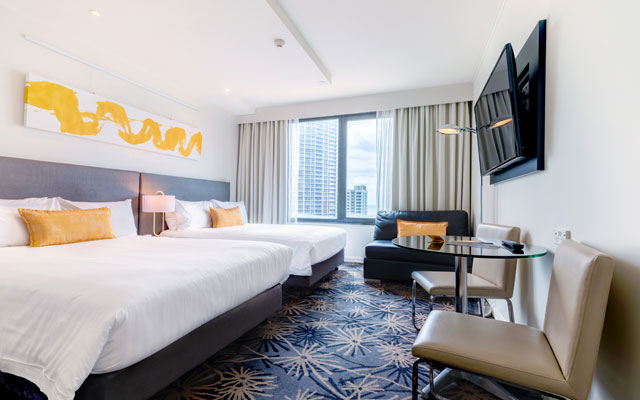
InterContinental Hotels Group has opened its first voco hotel, just five months after the upscale brand was launched. Standing in the heart of the Surfers Paradise in Gold Coast, the property offers 389 rooms, alongside a gym, two swimming pools, L’Aqua Day Spa and 800m2 of meeting space. There are also three F&B venues as well – Waves, Clifford’s Grill & Lounge and Social House – all designed to emphasise the property’s social element.
Other unique features that this voco property boasts include onsite beehives that produce honey for various uses in the hotel, as well as an initiative with Gold Coast City Council to ensure all kitchen waste is recycled.
Alila Bangsar, Malaysia
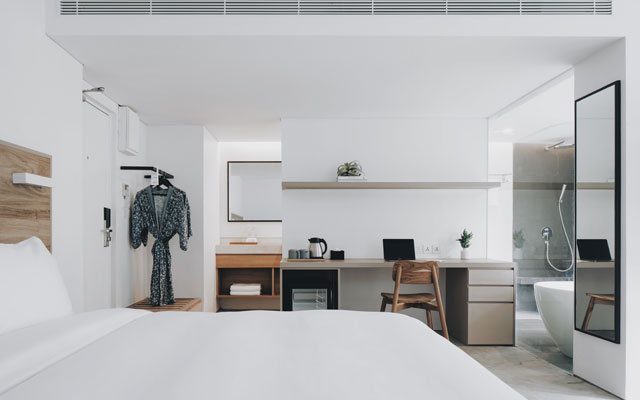
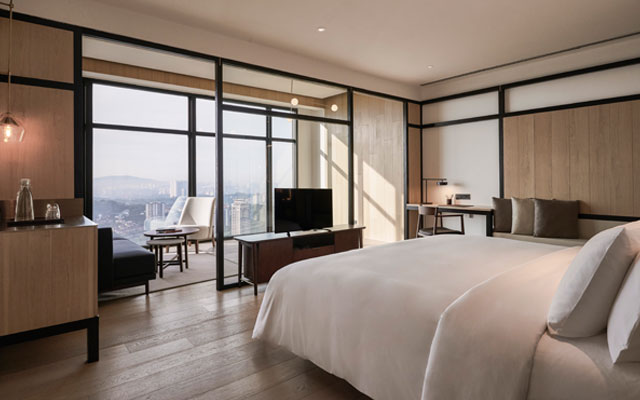
Alila’s first property in the country has recently opened, occupying the 35th to 40th floors of The Establishment, a mixed-use development in Kuala Lumpur’s Bangsar district. The urban retreat offers 143 rooms and suites across six categories, where each dwelling boasts floor-to-ceiling windows, as well as mod cons such as an LED TV, minibar and kettle.
F&B options include the pool bar, French semi fine-dining restaurant Entier on level 41, Pacific Standard cocktail lounge, rooftop bar Lido and all-day diner Botanica + Co. Other amenities include four meeting rooms, a pool on level 40 and a gym.
Lloyd’s Inn Bali, Indonesia
The Lloyd’s Inn brand, first founded in Singapore, has expanded to the Island of the Gods with its latest opening. The boutique hotel offers 101 rooms and seven room types ranging from 21m2 to 67m2. Facilities on-site include a lap pool, dipping pool, sun decks, spa, yoga lounge and garden. There are also two F&B options on-site: The Garden Café & Bar, which offers Indonesian fusion food; and the bar, which serves floral- and garden-themed drinks.
Grand Mercure Foshan Country Garden, China
The first international hotel in Jinshazhou, an island metropolis administered jointly by Guangzhou and Foshan, offers 219 guestrooms and suites. The hotel’s interior design reflects the locale’s culture that was inspired by the historic thousand-year-old Shabei Village located at the foot of Xunfeng Mountain.
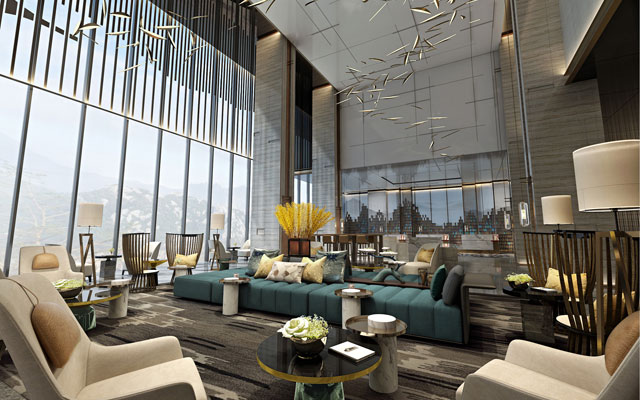
Recreational facilities includes an outdoor swimming pool and fitness centre, a lobby lounge, and an all-day dining restaurant and bar with a private dining room. As well, the hotel offers more than 700m2 of event space across a ballroom and five multifunctional rooms.
Agora Kanazawa, Japan
Agora Hospitalities will soon have a property in Kanazawa’s – the capital of Ishikawa Prefecture on Japan’s Honshu Island. The hotel offers a total of 200 rooms in twin, double and triple configurations, complete with free Wi-Fi, across 12 storeys. Amenities on-site include a lounge, hot spring, spa, gym, laundry facilities and a restaurant. Reservations are now open; the property is slated to open in autumn 2019.
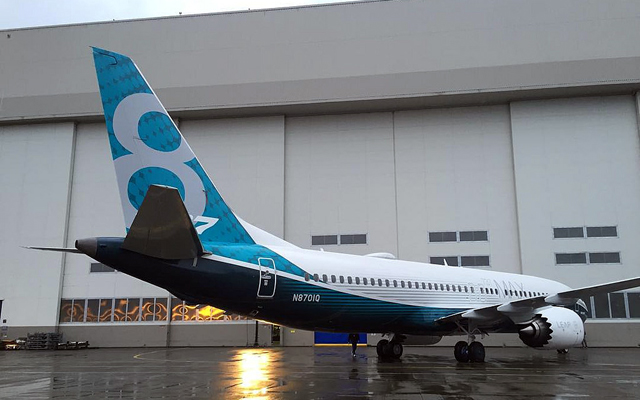
The 737 Max 8's stall protection system has a different design from that of an earlier member of Boeing's narrowbody family
Two families of victims killed in the recent Lion Air crash are filing wrongful death lawsuits against Boeing, with attorneys alleging that the tragedy was caused by a defective anti-stall system and the aircraft manufacturer’s defective flight manual and operating procedures.
“Boeing knew or should have known its aircraft and flight operations manual were unsafe and created a significant safety hazard, but the defendant failed to notify or warn anyone, which has caused immense pain and loss for surviving family members,” said co-counsel, Steven Hart with Hart, McLaughlin & Eldridge.
The 737 Max 8’s stall protection system has a different design from that of an earlier member of Boeing’s narrowbody family
Shortly after the crash, Boeing issued an updated Operations Manual Bulletin directing operators to existing flight crew procedures to address circumstances where there is erroneous input from an AOA sensor.
Issuing bulletins, the aircraft manufacturer said in a statement, was standard procedure carried out “whenever appropriate”.
Some have reportedly pointed fingers at the pilot’s response to the erroneous readings, rather than the technical issue itself or Boeing’s failure to include the relevant operating procedures in the original manual, as having a part to play in the tragedy.
The 737 MAX 8 departed from Jakarta’s Soekarno – Hatta International Airport around 06.21 on October 29, 2018. Shortly after takeoff, the Lion Air crew contacted air traffic controllers and requested a return to Jakarta. The aircraft received authorisation to return, but it did not manage a turnaround.
Witnesses reported seeing the aircraft bank left, make significant altitude shifts, and then drop sharply.
Data from flight radars showed the plane was at an altitude of about 5,000 feet when its final descent began. The aircraft plummeted into the sea and disintegrated upon impact, killing everyone onboard.
According to Kabateck LLP, the firm heading the plaintiffs’ legal team, more families are expected to engage the legal team “particularly given recent concern about attempts in Indonesia to coerce family members into signing away their right to seek justice in court”.
“It has come to our attention that there have been attempts to get families who are unrepresented by counsel to sign away their rights to sue parties like Boeing in exchange for insurance payouts that are required by statute. The families must get full recovery from all responsible parties,” said founding partner Brian Kabateck.
“We will make sure that families seeking recovery against Boeing are protected. We have coordinated with local Indonesian counsel who will work with us to protect our clients and the rights of all the victims in this matter,” added co-counsel Sanjiv Singh.
Last month, a court in the US allowed passengers of Emirates 521, which crashed two years ago, to sue Boeing for damages caused. A lawsuit was originally filed in the UAE, but was rejected by the judge.
Scoot is to take over a number of SilkAir’s routes over the next two years, ahead of the latter’s merger into Singapore Airlines (SIA). Scoot will also be transferring some of its services to existing destinations served by SIA and SilkAir.
Expected to take place between April 2019 and the second half of 2020, the changes are the result of a review to identify which airlines in the SIA Group portfolio are best suited to meet evolving customer demand, according to a statement from the group.
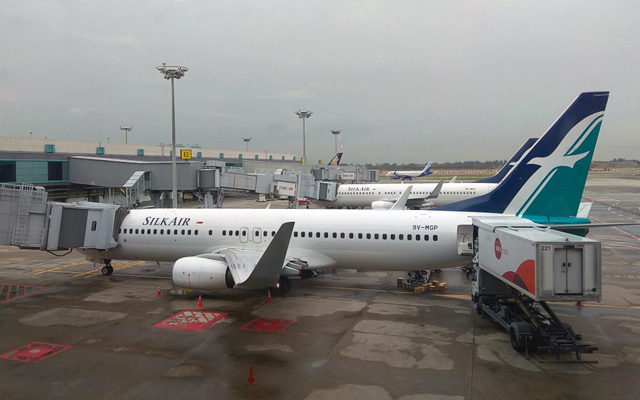
SIA Group’s low-cost subsidiary, Scoot, will take over some of the routes currently served by SilkAir, the group’s regional subsidiary of the SIA Group that will eventually be absorbed into SIA
The changes, which are subject to regulatory approvals, are planned as follows:
From SilkAir to Scoot:
• Luang Prabang and Vientiane in Laos, in April 2019
• Coimbatore, Trivandrum and Visakhapatnam in India, between May 2019 and
October 2019
• Changsha, Fuzhou, Kunming and Wuhan in China, between May 2019 and June
2019
• Chiang Mai (existing Scoot destination) in Thailand, in October 2019
• Kota Kinabalu in Malaysia, in December 2019
• Balikpapan, Lombok, Makassar, Manado, Semarang and Yogyakarta in Indonesia,
between May 2020 and July 2020
From Scoot to SIA (Both are existing SIA destinations):
• Bengaluru and Chennai in India, in May 2019 and May 2020
From Scoot to SilkAir (Both are existing SilkAir destinations):
• Shenzhen in China, from June 2019
• Kochi in India, from October 2019
In addition, SilkAir will be converting its Mandalay route to a seasonal service. Existing services will end in March 2019 and resume in November 2019, continuing until January 2020. Scoot will meanwhile be suspending services to Honolulu with effect from June 2019 as a result of weak demand.
Dates are indicative as a result of required regulatory approvals. Customers with existing bookings will be provided the option to switch to the new Scoot, SIA or SilkAir flights where possible, or be provided refunds.
“We are now at the half-way mark in our three-year transformation programme, and today’s announcement represents another development. The route review will strengthen the SIA Group for the long term, with the right vehicles in our portfolio of airlines deployed to the right markets,” said SIA CEO, Goh Choon Phong.
SIA announced in May that its regional wing SilkAir is to undergo a significant investment programme to upgrade its cabin products ahead of its eventual merger into SIA. The programme will see SilkAir’s cabins fitted with new lie-flat seats in Business Class, and the installation of seat-back in-flight entertainment systems in both business and economy Class.
The investments will ensure closer product and service consistency across the SIA Group’s full-service network.
Low-cost subsidiary Scoot’s fleet will meanwhile be expanded with the transfer of 14 Boeing 737-800s from SilkAir, while SilkAir will continue growing its operations in the years ahead as it takes delivery of new Boeing 737 MAX 8 aircraft.
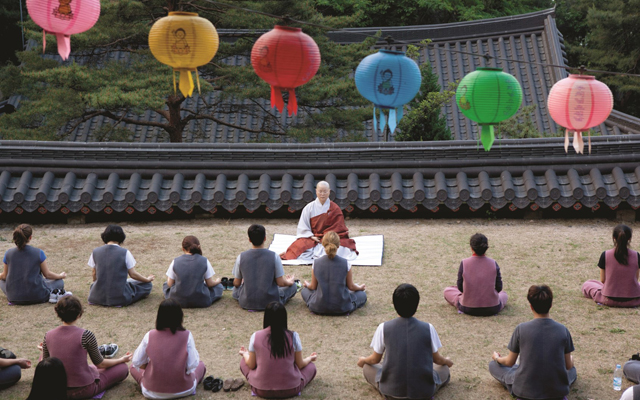
Access to South Korea's temples had largely been restricted until the Cultural Corps of Korean Buddhism opened them up during the 2002 World Cup (photo credit: Cultural Corps of Korean Buddhism)
Since public access to South Korea’s Buddhist temples opened up to promote cultural activities during the 2002 World Cup, 130 temples in the country now provide temple tour or stay programmes, 26 of which do so in English.
The interest in South Korean temple stays picked up this year, when the seven Sansa (mountain temples) were designated UNESCO World Heritage Sites. These temples are Daeheungsa, Magoksa, Beopjusa, Bongjeongsa, Buseoksa, Seonamsa and Tongdosa.
Access to South Korea’s temples had largely been restricted until the Cultural Corps of Korean Buddhism opened them up during the 2002 World Cup (photo credit: Cultural Corps of Korean Buddhism)
This is according to Templestay, a Cultural Corps of Korean Buddhism initiative that is said to be the only way international visitors can experience an immersion programme in the country’s temples, where access had for long been restricted.
Participants in Templestay may experience Yebul (a Buddhist ceremony), Chamseon (Seon meditation) and 108 bae (108 prostrations), as well as learn how to make lotus lanterns and Buddhist prayer beads and enjoy salt mandala (salt drawing).
Templestay also gives visitors the chance to try temple food, which adheres to a diet that does not use animal products or specific ingredients such as the “five pungent spices” of garlic, scallions, chives, onions and leeks.
It is now Templestay Weeks for Foreigners (November 5-30) in South Korea. Some 39 temples across the country are offering the programme, with options for a day tour at 10,000 won (US$9), while an overnight stay costs 20,000 won.
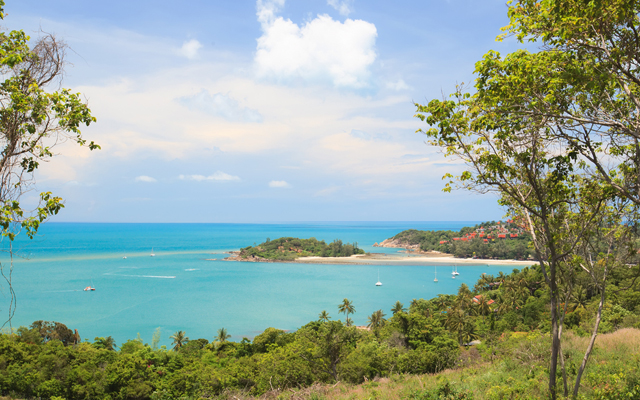
Thailand’s Koh Samui is set to have its first U Hotels & Resorts in late 2020.
Located 15 minutes from Samui International Airport, U Samui will offer 49 rooms and villas featuring Deluxe Seaview, Deluxe Seaview Pool Garden, Sky Suite Seaview, Seaview Pool Villa and Beachfront Pool Villa rooms.
The hotel’s services include a signature restaurant and pool beach bar, a swimming pool, gym (yoga classes available), garden and spa.