TTG Asia
Asia/Singapore Thursday, 9th April 2026
Page 1339

Sababay Winery, Bali

0
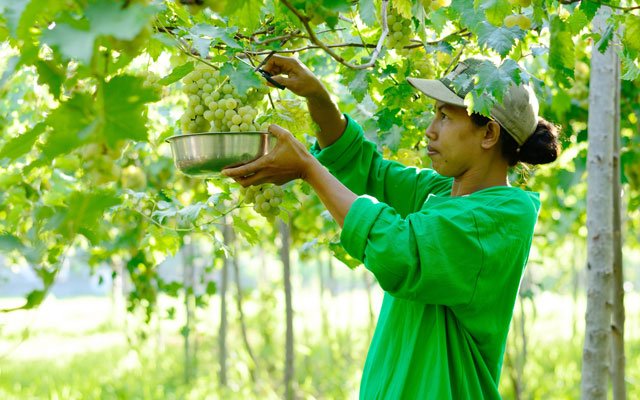
Local grape farmers harvesting the wine

Why
Indonesia, or in particular Bali, is hardly known on the world winery map. It is perhaps only a handful of people who know that the island actually grows its own grapes in Buleleng, on the north coast of Bali, which yields around 800,000 bottles a year at Sababay Winery in Gianyar.

Over the past three years, Sababay’s wine collections have won more than 30 awards and accolades at regional Asia wine competitions such as the Korean Wine Challenge, Sakura Wine Awards and China Wine & Spirit Awards. It also won an award at the AWC Vienna International Wine Challenge 2017, the largest wine competition with wine producers from 40 countries.
Local grape farmers harvesting the wine

What
I was lucky to visit the Winery Garden after a Muscat harvest, and my group managed to taste the grapes and its juice.

Sababay uses two types of grapes, Alphonse Lavallée, black local grapes – which are actually table grapes, and Muscat Saint Vallier, green grapes. Both are grown at the vineyards which are owned and cultivated by local farmers, in collaboration with the Asteroid R&D Vineyard. The winery is located a four-hour drive away from the vineyard.

Sababay was founded in 2010 by an Indonesian lady, Mulyati Gozali, who is now president director of the company.

The brand, Sababay, is derived from the winery’s location at the Bay of Saba Beach.

Mulyati was saddened by the condition of local farmers, whose grape harvests were sold at Rp500 (less than US$0.10 then) per kilogramme. As such, she decided to establish a local winery dedicated to using local harvests, and doing so through direct fair trade business practices and integrated farming.

“Grape prices today are about 10 times it used to be, and farmers have been able to expand their vineyard and send their children to universities,” the guide told us.

Mulyati invested in grape processing equipment imported from France, the only one in Indonesia so far; an automatic bottling line from Italy; and fermentation and storage tanks from Indonesia. The company also taught the local farmers how to better grow the grapes, cultivate the soil, and use of fertilisers and seeds to meet the requirements for winemaking.

Sababay’s wines were then created by a renowned Indonesia wine connoisseur Yohan Handoyo and Bordeaux-born winemaker Nicolas Delacressionnere.

Inside the winery, a glass of Sababay’s bestselling Moscato dBali welcomed us, before we were escorted to the fermenting area.

Nicolas, the winemaker, then poured us from a tank a glass of one of the Red Velvet series in the making. He then explained the whole process from the vineyard to bottling. We were then brought upstairs where we were given a chance to taste a series of wines here, as well as learn how to pair them with Indonesian food and snacks.

Yohan explained that while wines were usually paired with western cuisine, Sababay had been working with Indonesian chefs and culinary lovers to create Indonesian food pairings.

The Black Velvet, an easy drinking red, is suitable with ayam pepes a la bumbu Bali (steamed chicken wrapped in banana leaves). Meanwhile, the Pink Blossom, an aromatic rose, can be paired with sate lilit (Balinese-style satay) or gado-gado mixed salad with peanut sauce. The White Velvet, the fruity dry white, can be paired with fish cakes and sweet chilli sauce.

Yohan also revealed that Sababay has been appointed official wine partner of Wonderful Indonesia by the Ministry of Tourism.

How
The winery tour is available on Mondays, Wednesdays and Fridays from 15.00 to 16.30. It will cost Rp180,000 (US$12) per person, and includes the tasting of three wines.

The winery can also organise a private tour for groups from 20 to 150 people. In this case, it will cost Rp300,000 per person, and includes the use of the function room for three hours, exclusive use of the air-conditioned Joglo hall and its surrounding garden, and two glasses of wines. Reservations are mandatory.

A tailor-made programme, such as a tour of the vineyard, can also be arranged.

Verdict
The tour was an eye-opener for me, as I discovered that a Balinese vineyard is able to produce award-winning wines and has helped to improve the livelihood of local grape farmers.

Contact
Email info@sababaywinery.com
New World Petaling Jaya Hotel welcomes new DOSM

0

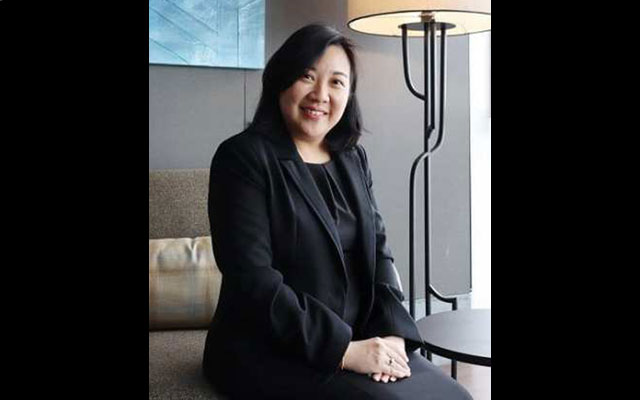
New World Petaling Jaya Hotel has named Shona Pang as director of sales & marketing.

Pang will play an integral role in the development and implementation of strategic sales and marketing plans.

Prior to joining New World Petaling Jaya Hotel, Pang was the pre-opening director of sales and marketing for Sheraton Petaling Jaya.

The seasoned hotelier with almost 15 years of industry knowledge in events, MICE and corporate sales, and has worked across various international hotel brands such as The Westin Kuala Lumpur and Mandarin Oriental Kuala Lumpur.

New GM for Shangri-La’s Boracay Resort & Spa

0

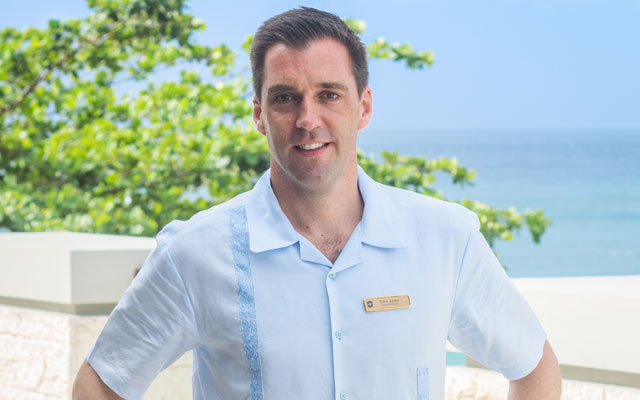
Dave Junker has joined Shangri-La’s Boracay Resort & Spa as its new general manager.

Prior to his most recent appointment at Shangri-La Hotel at the Fort, Manila, Junker has also been assigned to other Shangri-La hotels in South-east Asia, including Sule Shangri-La, Yangon; Shangri-La Hotel, Chiang Mai; Shangri-La Hotel, Bangkok and Shangri-La’s Mactan Resort & Spa, Cebu.

A Luxembourg national, the seasoned hotelier has close to two decades in the industry, and was also stationed at luxury hotels in the UK, the US, India and the UAE before joining Shangri-La.

Immersive, transformative travel in demand for new-gen Chinese

0
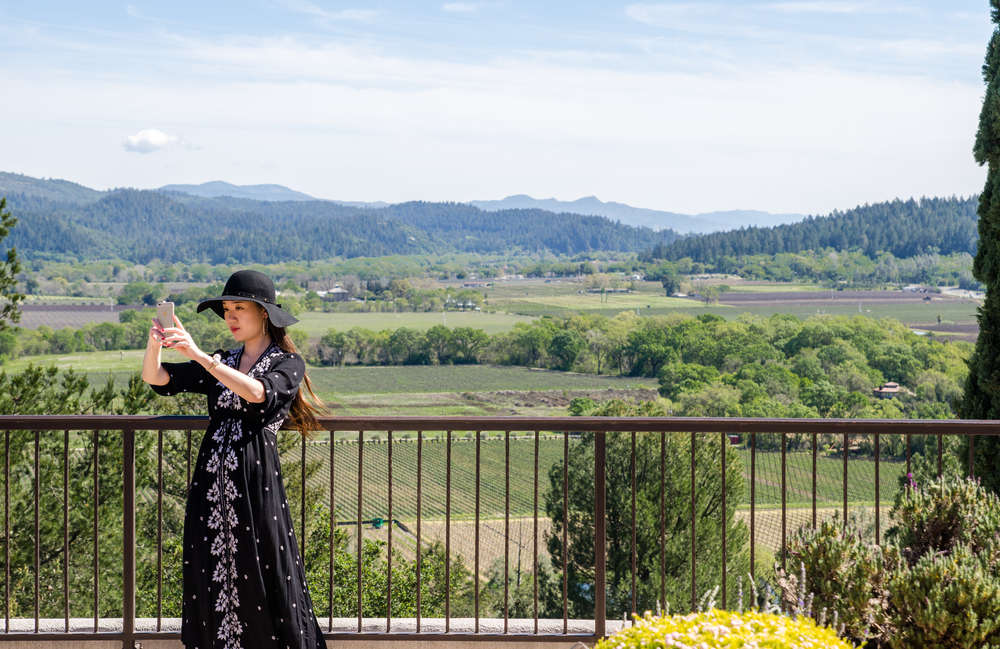
Chinese tourist taking a selfie in Napa Valley

As China’s outbound travel market enters a new phase of development, increasingly savvy Chinese travellers are eschewing cookie-cutter package tours for customised, personalised experiences during their holidays.

“Many (Chinese) have already been to the major ‘pit stops’ like New York, Las Vegas, Los Angeles and California. Now, tour operators tell us they want to see the ‘real’ America, and our region is considered a new product,” said Lee Anthony McCarrick, executive director of Great Lakes USA.

Chinese tourist taking a selfie in Napa Wine Valley

“We have the big-city experience with Minnesota and Chicago, but the majority of our region is small towns and the great outdoors,” he said. “The Chinese have been the number one overseas traveller market in the Great Lakes region.”

Joy Cao, general manager of marketing division, Guangzhou Dista International Travel Service, has also begun marketing tours anchored on American culture and nature, such as discovering Chicago’s jazz and blues scene, exploring the Yosemite National Park and Napa Wine Valley, as well as visiting the small towns surrounding Yellowstone National Park.

In Europe, Tuscany-based DaVinci Travels recently established a partnership with Chinese tour company Feiyang Italy to bring authentic Italian experiences to the Chinese market.

“We have mainly worked with Americans and Europeans, but now we would like to focus on the Chinese market,” said Beatrice di Tomizio, senior tour organiser and account manager for incoming department of Italia-Experience, the new company formed under the partnership.

She added: “We have cooking classes and wine tasting sessions, and for smaller groups, we can arrange stays in real Italian houses to give them an original and special taste of Italy.”

Elsewhere in Egypt, Chinese travellers are also forgoing direct train and ferry connections in favour of traversing the country on four-wheeled self-drives, noted Castle Tours’ tourism manager Ahmed Abdul Mounem.

This new breed of Chinese traveller seeking transformative experiences hence represents a lucrative opportunity for the industry, driving the development of “experiential products” among tour operators, remarked Wang Xinjun, CEO, Ivy Alliance.

“Experiential travel will be the driver for future growth,” Wang stated. “There is greater demand for themed and customised tour products and more spending on quality hotel, catering and entertainments while extravagant shopping is on the decline.”

Meanwhile, Fosun Tourism Group continues to upgrade its portfolio of overseas and domestic tour products from general sightseeing to more insightful experiences, according to chairman and CEO, Qian Jiannong.

Europe ranks high as a destination where demand for in-depth tours is high, followed by the US, Africa, Morocco and Mauritius, revealed Qian.

CITS Group Shanghai, secretary director and GM, Lu Jun foresees Central and South America will emerge as new destinations in the coming years for sophisticated Chinese travellers seeking in-depth travel.

According to Ctrip’s CEO Jane Sun, FIT and custom tours now accounts for 33 per cent of the Chinese OTA’s business. “In 1H2018, tour customisation requests were up 112 per cent and bookings for Chinese-speaking local guide increased 242 per cent,” said Sun.

Additional reporting by Prudence Lui

TAT outlines plan for greater promotion of 55 secondary provinces

0
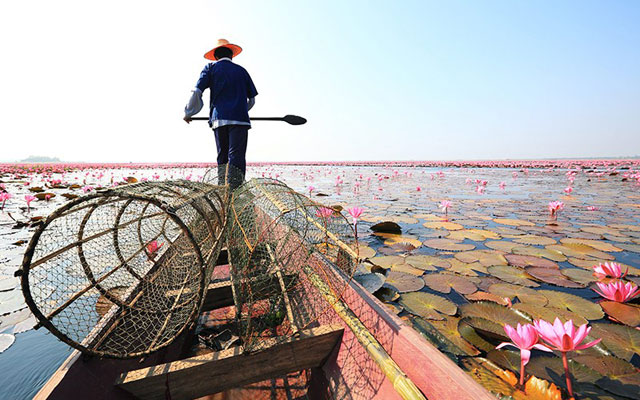
Red Lotus Sea at Nong Han Lake in Udon-Thani pictured

The Tourism Authority of Thailand (TAT) has developed a three-pronged approach to promote 55 secondary destinations, as part of its diversification strategy to better distribute tourism income and visitation across the country while encouraging low-impact, community-driven tourism.

TAT’s research has identified the need to position these secondary 55 provinces within the “big picture” of Thailand’s development by creating conceptual models specific to each secondary province; such as, a sports city in Buri Ram and a wellness city in Chiang Rai.

Secondary provinces like Udon Thani will feature more in TAT’s future destination campaigns; Red Lotus Sea at Nong Han Lake in Udon Thani pictured

These 55 provinces, which get less than four million local and foreign tourists a year, will also get greater prominence in TAT’s future marketing campaigns. According to TAT, there are more than 4,000 tourist attractions and over 8,000 accommodation units in the secondary destinations as of 2018.

A travel trends survey from the TAT Intelligence Centre showed that in the first half of 2018, the 55 secondary destinations hosted nearly 2.3 million foreign visitors, of which Laos (513,046), China (235,573), the UK (110,942), Germany (103,912) and France (84,380) were the top source markets.

The most visited secondary destinations (hosting over 100,000 tourists) are Nong Khai, Udon Thani, Chiang Rai and Mae Hong Son. The cities receiving between 55,001 to 100,000 tourists are Ubon Ratchathani, Mukdahan and Satun.

The three tourism promotion concepts for the secondary destinations identified by TAT are:

  • Local Experience: Provide visitors with an in-depth experience such as, community-based tourism, lifestyle, wisdom, local identity and distinction of each area.
  • Future Challenge: Secondary cities have enormous potential to expand their economies and boost the income of the local people if the tourism industry is developed in a sustainable and well-planned manner.
  • Connecting Destinations: Connecting Thailand’s big cities with smaller cities and also connecting them with neighbouring countries. There are 29 destinations adjacent to the primary cities, 22 airports in these destinations, and 10 destinations with immigration checkpoints.

Flores’ tourism growth draws Asian Trails Indonesia to set up newest office

0

Asian Trails Indonesia is stepping up its presence in the country with the launch of a new office in Labuan Bajo, Flores.

The DMC’s expansion into Labuan Bajo, in addition to Bali, Jakarta, Yogyakarta and the Gili Islands, is driven by Flores’ rising tourism potential, said Asian Trails Indonesia’s managing director Björn Schimanski.

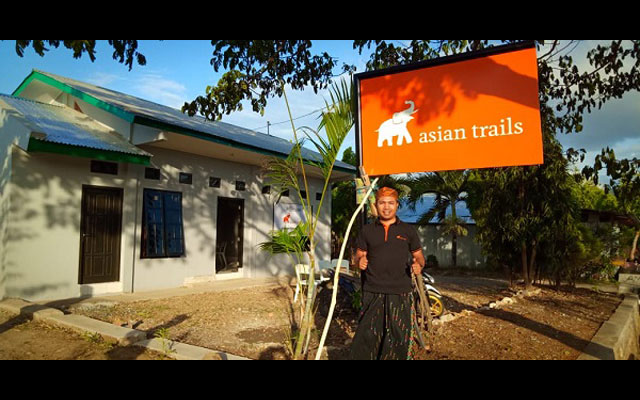
Asian Trails Indonesia’s newest Flores island

Said Schimanski: “Flores island always has had a great touristic potential but only since the last few years we see it slowly taking off. We are only at the beginning of what will be a major tourist destination in Asia.

“I am convinced that especially the Labuan Bajo and surrounding Komodo national park area will boom in the years to come. We can see already new interesting properties opening up and the sheer beauty of the area will make it a must-see destination.”

Alongside this opening, Asian Trails Indonesia is working on expanding its product range on and around the island.

Maeve Nolan heads up Exo Travel’s Luxe unit

0

Maeve Nolan has been named director of Luxe by Exo, a premium selection of Asia travel experiences and services launched by Bangkok-based DMC Exo Travel in October 2017.

Maeve will be responsible for servicing Exo’s luxury clientele and leading Luxe business and product development.

She moved to Hanoi in 1998 and has been travelling across Asia ever since. She moved to Bangkok in 2011.

Airbnb rolls out premium-tier listings in Bangkok, Phuket

0
Airbnb Plus has made its debut in Thailand

Airbnb is stepping up its offerings in Thailand with the introduction of the premium Plus accommodation in the country.

Just launched in Bangkok and soon to be available in Phuket next month, Airbnb Plus is a new tier of homes “introduced to broaden the appeal of Airbnb and recognise local hosts who go above and beyond to provide outstanding and authentic hospitality”, said Mike Orgill, the company’s country manager, South-east Asia, Hong Kong and Taiwan.

Airbnb Plus has made its debut in Thailand

Airbnb Plus homes have been inspected and verified in person by a third party against a 100-plus point checklist covering cleanliness, comfort and design, while Airbnb Plus hosts are highly rated (4.8+ out of 5) and receive excellent reviews, the company said in a release.

The move to roll out premium-tier listings comes on the back of Airbnb’s launch of Experiences across the country and developing key strategic partnerships with the Thailand Boutique Accommodation Trade Association and the Thailand Ministry of Interior’s Department of Local Administration.

Yokohama’s big touchdown

0
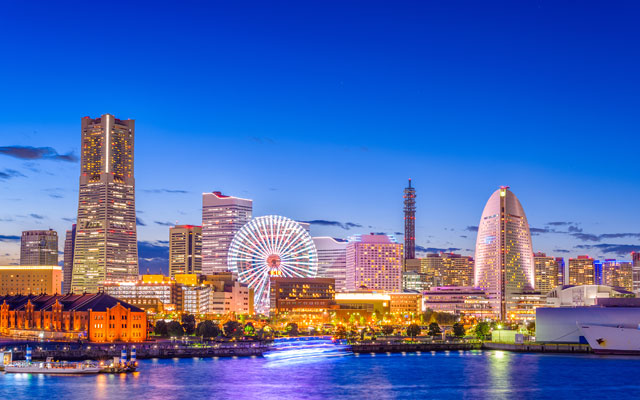
Yokohama readies for its big moment in the international spotlight when major sporting events arrive on its shores

Thirty-seven floors above street level, the construction cranes are in constant motion as the largest hotel in Japan slowly takes shape.

Yokohama readies for its big moment in the international spotlight when major sporting events arrive on its shores

The US$140 million Apa Hotel & Resort Yokohama Bay Tower will have 2,400 guestrooms across more than 58,000m2 of floor space when it opens in 2019.

This comes at a fortuitous time, coinciding with Yokohama hosting matches in the Rugby World Cup, including the final. Moreover, the hotel is in proximity of Tokyo, which will host the Olympic Games in the summer of 2020.

Some 70,000 people will be in the International Stadium Yokohama for the final of the Rugby World Cup, according to Seiichi Hata, manager of the Yokohama Convention & Visitors Bureau’s MICE team.

He further shared that Yokohama will host seven Rugby World Cup Games games, and many other events will take place throughout the city during the tournament.  “We anticipate a real bustle around the city,” he remarked.

“This is a great opportunity to raise awareness of Yokohama, particularly among strong rugby-playing countries, such as New Zealand, Australia and some European nations.

“We want to keep that going the following year so we get the ripple effect from the 2020 Olympics and Paralympics,” he said. “We are confident we can do that because a number of the events – such as soccer and baseball – are being held here.”

Yokohama is already an appealing destination for visitors to Japan, thanks to historic sites that arguably have been better preserved than elsewhere in Japan, the Chinatown district, and its strong air, sea, road and rail links with the rest of the country and abroad.

Potentially enhancing its visitor appeal are new developments in the pipeline.
No fewer than 14 new hotels are due to be completed by 2020, delivering an additional 4,500 rooms. Besides the Apa property, the pipeline includes the first Hyatt Regency in the city, with 315 rooms close to the Yamashita Park waterfront district.

Plans are also under way for a new passenger ferry terminal – capable of accommodating the largest ships operated by international cruise lines – and a five-storey complex in the Minato Mirai district that will include a 20,000-seat music venue, a 21-storey hotel, exhibition spaces and offices.

At the InterContinental Yokohama Grand Hotel, Akira Honjo, general manager said inbound visitors are increasing, with foreign guests accounting for around 40 per cent of the total. Americans represent the largest single nationality, followed by Chinese, Taiwanese and South Korean visitors, although the majority remain short-stay domestic visitors from Tokyo and other neighbouring regions.

He anticipates that the global sporting events scheduled for Japan over the next couple of years will serve to raise the profile of Yokohama as a destination and boost the city’s tourism business.

“There are high expectations for the Rugby World Cup, and the Olympics, and we want to use these opportunities to demonstrate Japanese hospitality to the rest of the world,” Honjo said.

Hideaki Furusawa, manager of global sales for the Yokohama Bay Sheraton Hotel & Towers, said his property has already been accepting reservations for the Rugby World Cup and the Olympics, although overall figures for arrivals so far this year have been slightly down on the same period last year.

“The government has set a target of 40 million foreign visitors in the year 2020, and we seem to be on target for that,” he said.

Adventure travel to get slower, quieter, greener in 2019: World Expeditions

0
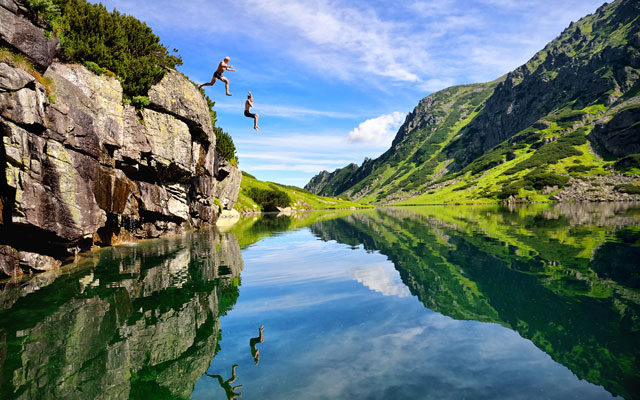
Adventure travel next year is shaping up to be slower, quieter, smarter and greener

The need for downtime, concerns about overtourism and the dual desires to travel sustainably and to have informative experiences are the major influencers on adventure travel in 2019, according to adventure travel specialist, World Expeditions.

Adventure travel next year is shaping up to be slower, quieter, smarter and greener

Travel less, see more
Travel itineraries such as a multi-day trek or a cycling journey allow travellers to switch off and immerse themselves in the natural landscape and puts them in touch with their senses in a way that is becoming a luxury for many people.

“It’s a case of travelling less and seeing more – rather than travelling more and seeing less – that is inspiring many people to undertake slow travel,” says World Expeditions CEO, Sue Badyari. “When your body is your vehicle and you are immersed in your surrounds, life slows down.”

Quieter locations
Publicity about over-tourism is encouraging more confident travellers to look beyond replicating what they may see on social media of friends’ travel.

World Expeditions reports a significant increase in enquiries for the company’s range of exploratory expeditions in remote regions and in alternative treks in better known destinations.

Badyari said: “We’re finding that more confident travellers are less interested in replicating the travel experiences of others that they may see on social media and more interested in seeking out lesser visited destinations and trails.”

More information, more heart
Travelling with an expert adds a dimension to a trip that is not possible otherwise, and creates sought after experiences, World Expedition notes.

Being a “thoughtful traveller” and ensuring the places we visit are positively impacted by our visit is a priority for many travellers. Child safe tourism, animal welfare, conserving environments and cultures will remain important aspects of the travel experience, World Expeditions foresees.

Moreover, in 2019, many people will be focussed on reducing their use of plastic by taking refillable water bottles and avoiding buying single use plastic bottles.

Next year, the company will roll out a carbon-neutral project across all itineraries, which will be analysed for carbon outputs and the costs of mitigated and built into the trip cost.”