Stephanie Young has been named managing director of Hong Kong Disneyland Resort (HKDL) effective February 1, 2019, replacing Samuel Lau who will return to Orlando for a role with Walt Disney World.
Young has a 26-year career with The Walt Disney Company. Between 2006 and 2009, she was chief financial officer of HKDL, where she was responsible for finance, controllership, treasury, corporate alliances and technology. She also worked on the capital realignment plan that enabled a significant expansion of HKDL, bringing to fruition three new themed areas, namely, Toy Story Land, Grizzly Gulch and Mystic Manor.
Most recently, Young led the operations team of Disneyland Resort in Anaheim, California, as senior vice president, operations where she is responsible for leadership and integration of all aspects of the guest and cast experience across the resort, including the attractions, entertainment, retail, food and beverage, lodging and resort development teams. Prior to that, she held a variety of senior executive roles, including senior vice president, financial & capital planning and revenue management & analytics.
Celebrating 25 years with members of the Genting Cruise Lines family
Genting Cruise Lines celebrated its silver anniversary on board Genting Dream in Singapore on December 14, commemorating 25 years since the first sailing of Langkapuri Star Aquarius from Singapore in 1993.
Founded a quarter of a century ago as Star Cruises, Genting Cruise Lines is a pioneer of cruising in Asia and introduced ships designed specifically for the region’s more relaxed cruise market where guests can enjoy a variety of leisure activities and dining options unbound by the rigid schedules commonly found on other ships.
Celebrating 25 years with members of the Genting Cruise Lines family
Over the past 25 years, the company has welcomed more than 6.5 million guests on board its fleet through over 7,500 ship calls in Singapore.
In the last 12 months, Genting Dream, the only ship on a year-round deployment in the city, welcomed about 400,000 cruise passengers, of whom 60 per cent were tourists, helping cement Singapore as the port with the most number of international cruise passengers in Asia, according to the cruise company.
Among recent developments at the company, Dream Cruises was created in 2015 and 2016 to cater specifically to the growing premium segment in Asia, with the completion of the Marina Bay Cruise Centre in Singapore and clear Chinese policy to promote cruising.
The acquisition of Crystal Cruises in 2015 also helped Genting Hong Kong capitalise on the growing global demand. Through significant investment by Genting Cruise Lines, Crystal has introduced two new cruise options – Crystal Expedition Yacht Cruises and Crystal River Cruises – and is reaching new heights with Crystal Luxury Air.
Looking forward to the next 25 years, Genting Cruise Lines aims to build a fleet of technologically advanced cruise ships for its three brands, having bought its own shipyards in Germany, the MV Werften.
The first of a fleet of luxurious 20,000 gross ton Endeavor Class expedition vessels will be delivered to Crystal Cruises in 2020, followed in succession by the first of a fleet of 200,000 gross ton Global Class ships for Dream Cruises in 2021, 67,000 gross ton Diamond Class ships for Crystal Cruises in 2022 and innovative Contemporary Class ships for Star Cruises in 2023.
Bangkok’s growing luxury hotel scene will welcome a new brand when the world’s first Orient Express hotel opens in the King Power Mahanakhon Building in 4Q2019, 136 years after the Orient Express took its maiden journey from Paris.
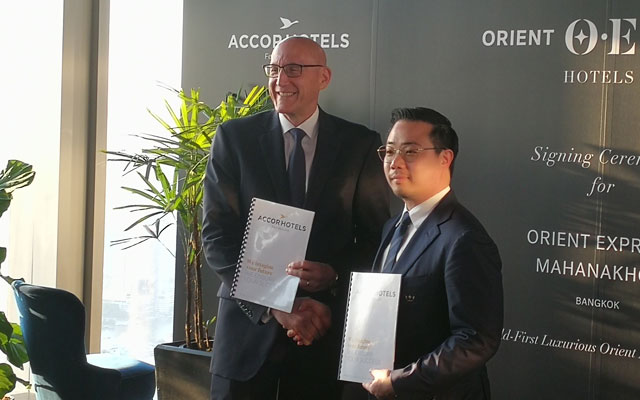
The Orient Express Hotel brand was unveiled by AccorHotels and King Power during a signing ceremony between the two companies yesterday at the recently opened Mahanakhon Skywalk, Thailand’s highest observation deck atop the 78-storey King Power Mahanakhon Building, and which will be accessible to hotel guests too.
King Power Mahanakhon Building
Sebastien Bazin, chairman and CEO of AccorHotels, said in a statement: Orient Express has always acted as a passport between worlds… This linking of Occident and Orient, of history and modernity, and of curiosity and cultures will be a hallmark of the new Orient Express Hotels and we are excited to bring back this spirit of luxurious adventure to today’s modern travellers.”
Michael Issenberg, chairman and CEO AccorHotels Asia Pacific, said: “Paris was the most visited city when the Orient Express train was launched; now Bangkok has the honour of being the most visited city when the Orient Express Hotel launches.”
At the signing ceremony, Aiyawatt Srivaddhanaprabha, CEO of King Power Group – son of late Vichai Srivaddhanaprabha – also dedicated the “multimillion” project to his father who passed away in recent helicopter crash at the King Power Stadium in Leicester.
The Orient Express Mahanakhon Bangkok will feature 154 rooms including nine suites and two penthouses, as well as an entire floor devoted to wellness including an outdoor pool and jacuzzi plus signature Orient Express Spa by Guerlain.
Designer Tristan Auer has been tasked with reimagining the Art Deco stylings and plant motifs of the original Orient Express carriages into the modern skyscraper hotel.
AccorHotels’ Michael Issenberg (left) and King Power Group’s Aiyawatt Srivaddhanaprabha
The hotel will feature two signature restaurants. Mott 32, on the second floor, will offer a contemporary Cantonese dining experience, and Mahanathi, on level five, will be helmed by chef David Thompson of the Nahm and Long Chim fame.
Accor’s top executives also expressed bullish sentiments of Bangkok’s tourism prospects, in view of the recent expansion of luxury room supply in the city.
The Orient Express Hotels brand signifies Accor’s desire to “compete at the super luxury level”, said Patrick Basset, COO of AccorHotels for Upper Southeast & Northeast Asia and the Maldives. The French hospitality giant currently has 80 hotels in Thailand, with over a third in the luxury segment.
Basset said: “Even though Thailand saw some hiccups this year with some markets, but overall we’re confident of the long-term prospects of Bangkok, with tourist arrivals likely to hit 38 million this year and probably much more in the future.”
Issenberg expects the new Orient Express hotel in a landmark building to be a “destination” in itself and attract new visitors to Bangkok. “A whole package like this doesn’t exist elsewhere. Orient Express Mahanakhon Bangkok will be highly sought after,” he stated.
Bangkok, apart from the upcoming Orient Express hotel, has been the launchpad for several Accor brands like Pullman and So Sofitel, said Issenberg. “The (Bangkok) market is not as sophisticated but is open to new ideas,” he remarked.
AccorHotels and SNCF Group signed a strategic partnership in 2017 to develop Orient Express hotels after AccorHotels acquired a 50 per cent stake in the share capital of the brand. SNCF still retains ownership of the seven original Orient Express carriages.
Marking the first theatrical collaboration between Singapore, Taiwan and South Korea, Musical Taru is now showing at Resorts World Sentosa featuring a star-studded cast that includes Wong Jinglun, Ling Xiao and Freya Lim.
The fantasy musical set in modern day Singapore tells the tale of three young protagonists who, along with resurrected museum exhibits from prehistoric times, embark on a search for the stolen fossil of a baby T-Rex named Taru.
Musical Taru is performed in Mandarin with English subtitles
A localised adaptation of a 2016 South Korean box-office hit, Musical Taru was produced by RWS in collaboration with Taiwan’s AMcreative and South Korea’s Culture Holic.
The musical incorporates puppetry from South Korea, with creative support and direction from Taiwan’s AMcreative.
Audience members can expect energetic dance numbers, music, arresting visuals made possible through stage sets and props, as well as creative life-sized dinosaur fossil puppetry.
Musical Taru made its regional premiere at Resorts World Singapore on December 7, and will run till January 13, 2019, with night (20.00) and matinee (14.00) timings available. The musical is performed in Mandarin, with English subtitles, and runs for 80 minutes without intermission.
Tickets are priced at S$38 (US$27.70), S$58, S$78, S$88 and S$108, excluding booking and handling fees. Prices exclude SISTIC booking fees and handling charges. Tickets can be purchased via Sistic or the Resorts World Theatre Box Office.
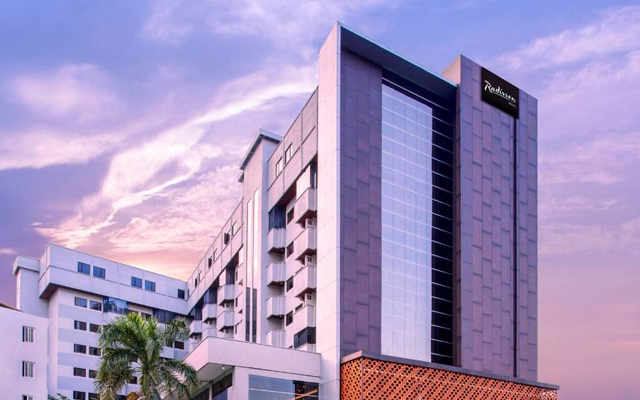
Carlson Panorama Hospitality signed Radisson Medan (pictured) in 2015
Radisson Hotel Group and Panorama Group are parting ways in their Indonesian joint venture partnership, ahead of its anticipated life span.
The hotel group, formerly Carlson Rezidor Hotel Group, entered an agreement with Panorama Group in 2013, leading to the creation of Carlson Panorama Hospitality in Indonesia.
Carlson Panorama Hospitality signed Radisson Medan (pictured) in 2015
The partners had initially planned to have 20 Radisson and Park Inn by Radisson hotels developed in Indonesia over seven years.
Radisson Hotel Group currently operates three hotels in Indonesia: Radisson Blu Bali Uluwatu, Radisson Golf & Convention Center Batam and Radisson Medan. Radisson Lampung is slated to open in 2Q2019.
With the end of the partnership, Radisson Hotel Group will acquire Panorama’s stake in Carlson Panorama Hospitality, giving it full control of the venture.
In a joint statement, the partners said the decision to go their separate ways was reached amicably by the shareholders to allow the groups to “align better with their respective business strategies” and focus on their core activities.
“Our partnership has seen the expansion of our footprint across the Indonesian archipelago, establishing our brands in important markets,” said Katerina Giannouka, president, Asia Pacific, Radisson Hotel Group. “Panorama Group is one of Indonesia’s leading tourism companies and we intend to retain a strong working relationship with the group.”
Budi Tirtawisata, CEO, Panorama Group, commented: “Our partnership with Radisson Hotel Group over the last five years has garnered mutual success. As we move forward as independent companies, all signs indicate accelerated growth and expansion for both parties.”
With 46 years of experience and more than 100 offices, Panorama Group is opening offices in Malaysia and Thailand, and intends to further expand its business to Vietnam and other potential countries in South-east Asia.
French luxury goods company LVMH – which owns iconic brands including Moët & Chandon and Louis Vuitton – is acquiring Belmond in a multi-billion-dollar deal expected to complete in 1H2019.
The deal is for US$25.00 per Class A share in cash, representing an equity value of US$2.6 billion and an enterprise value of US$3.2 billion.
Belmond Le Manoir aux Quat’Saisons, Oxford
In the 12 months ended September 30, 2018, Belmond recorded total revenues of US$572 million and adjusted EBITDA of US$140 million.
Established over 40 years ago with the acquisition of Hotel Cipriani in Venice, Belmond owns and operates a collection of hotel and luxury travel adventures in 24 countries.
Its portfolio comprises 46 hotel, rail and river cruise experiences, including Hotel Cipriani in Venice, Hotel Splendido in Portofino, Copacabana Palace in Rio de Janeiro, Le Manoir aux Quat’Saisons in Oxfordshire, Grand Hotel Europe in St Petersburg, Maroma Resort & Spa in Mexico, Hotel das Cataratas in the Iguassu National Park in Brazil, and Cap Juluca in Anguilla.
Belmond also operates trains such as the Venice Simplon-Orient-Express and Belmond Royal Scotsman as well as cruises including Belmond Afloat in France fleet and Belmond Road to Mandalay.
LVMH expects to significantly increase its presence in the luxury hotel world through this acquisition.
Commenting on the deal, Bernard Arnault, chairman and CEO of LVMH, said Belmond has strengths in its “exceptional assets”, heritage, innovative services, as well as complementary offerings to LVMH’s own Cheval Blanc maisons and the Bvlgari hotels activities.
Roland Hernandez, chairman of Belmond’s board of directors, said the board came to the conclusion that the transaction provides “compelling and certain value for shareholders” following a strategic review that attracted interest from real estate and lodging companies, sovereign wealth institutions and other financial buyers around the world.
The online travel industry is growing fast. In 2017 alone, it contributed over US$8.3 trillion to the global market. Travellers continue to crave personalised experiences and want to maintain control over their travel plans by using self-service solutions to organise trips that best suit them.
This has led to an explosion in data on traveller behaviour and preferences – a gold mine for travel marketers who want to offer customers the most desirable and timely products and services. Turning this data into meaningful customer experiences can lead to higher conversions, stronger engagement and repeat business.
How can marketers leverage demand and data to win not just short-term gains, but also long-term value?
The data dilemma
Vast amounts of data present challenges as well as opportunities. With information about customers’ travel destinations, preferences, budgets and more, marketers may struggle to identify, unify and analyse data from multiple sources (websites, apps, loyalty programmes, etc).
Travellers are looking for an easy search process that will help them find personalised, timely offers for just the right destination. Even with all this data, there’s a whole element that may be missing from the efforts of many marketers – knowledge about customer interactions across the Internet, such as recent searches and travel content consumed elsewhere online.
The AI answer
This is where AI is a clear solution – it can prove valuable in meeting the needs of customers seeking specific recommendations and customised experiences, all instantaneously and at the right point during their planning process.
An AI-powered marketing automation platform can help you better understand user interest and behaviour to create unique, personalised, relevant messaging and recommendations for each customer. It’s these customised interactions that drive conversions and loyalty.
Here are some of the key AI applications that travel marketers can leverage to create meaningful engagement:
Understand user intent based on behaviour outside the brand app or website
Sophisticated AI platforms not only analyse internal consumer data, but also seek to understand users’ external interests based on comprehensive data outside your own app or website. These insights can be used to offer hyper-personalised recommendations mapped to individual interests.
Identify the need of first-time visitors before they land
AI also allows you to decipher user preferences before they even engage with your platforms, and so you can personalise content for prospects when they first arrive on your website or app.
Identify the right opportunity
AI can identify exactly what your consumers are looking for, when, and on which device, letting you engage seamlessly with them across multiple screens using the right message and offer.
Effectively scale marketing efforts
By detecting patterns across your most valuable customers, AI can help you effectively scale marketing efforts by segmenting your consumers and creating lookalike audiences based on similar interests and preferences.
As the travel industry changes, one thing will remain the same: customer focus. By leveraging AI, you can connect with customers at a hyper-personalised level and create one-to-one engagement.
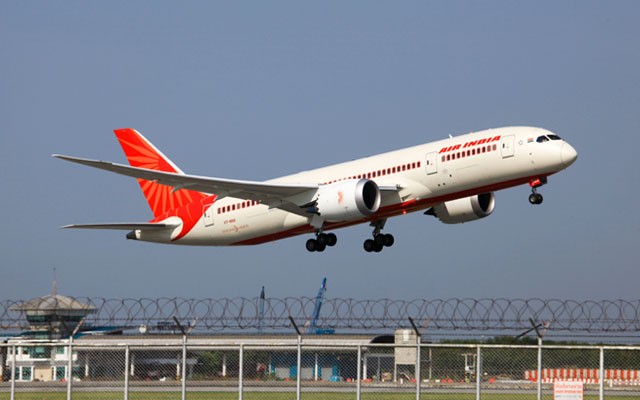
Indian travel agents and associations have taken offence to the recent decision of national carrier Air India to make Travelport its exclusive GDS provider for domestic flight content.
Starting December 4, 2018, Air India has disconnected its domestic inventory from Amadeus and will go on to pull its domestic inventory from other GDSs in 2019 – effectively continuing its inventory distribution with only Travelport.
Travelport wins tender for sole distribution supplier to Air India
A large section of Indian travel consultants polled by TTG Asia opined that the move will alienate the airline from the trade, as Amadeus is the GDS provider with the largest agency market share in the country at 40 per cent.
“Till recently it was easy for a medium-sized agency to offer a gamut of airline options, including Air India, to a client who could then make an informed decision. With this move, agencies like ours with no access to Air India’s choice of GDS will not be able to offer this airline as an option,” said Farah Raina, founder & CEO, Pink Elephant Sport & Pink Elephant Journeys.
“In the short run, due to this move and the resulting confusion, Air India will surely lose a lot of business to its competitors, which are more supportive of small- and medium-sized travel agents,” she added.
In a joint communication to Air India, two major Indian travel agents associations, Travel Agents Federation of India (TAFI) and Travel Agents Association of India (TAAI), expressed strong reservations about the airline’s decision.
“We were informed that Air India had to take this initiative to save on GDS costs, which are high. We explained that GDS cost is not as important as a seat sale. To lose out on the sale of a seat implies huge losses compared to the savings on GDS distribution,” read the communication.
Industry sources further speculate the move could have repercussions on Amadeus’ decision to continue its contract covering international bookings with Air India.
“If Amadeus decides to cancel its contract for international bookings, it will be a major jolt to Air India which is already under financial stress,” said a Chennai-based leading travel agent who wish not to be named.
However, it appears that Air India content is neither available domestically nor internationally.
An Amadeus spokesperson told TTG Asia: “Air India has decided to cancel its distribution agreement with Amadeus. The airline’s content is no longer available on the Amadeus system, in India or internationally. We have presented many options to Air India over recent months in an effort to give it access to the best technology with the broadest network of travel agencies globally and remain open to discussions.”
At press time, Air India was unavailable for comments.
Update: Amadeus has gotten in touch with TTG Asia to clarify that Air India content is not available domestically or internationally.
With cruise tourism in the Philippines on an upward growth trajectory, the emergence of this sector is bringing along with it growth opportunities as well as challenges.
Tourism undersecretary Benito Bengzon Jr revealed that there were 190 cruise calls this year, up from 140 the previous year.
Boracay, for instance, is one destination that is if continued to accommodate mega cruise ships with more than 1,000 passengers, it might exceed the tourist carrying capacity which was recently imposed on the popular island.
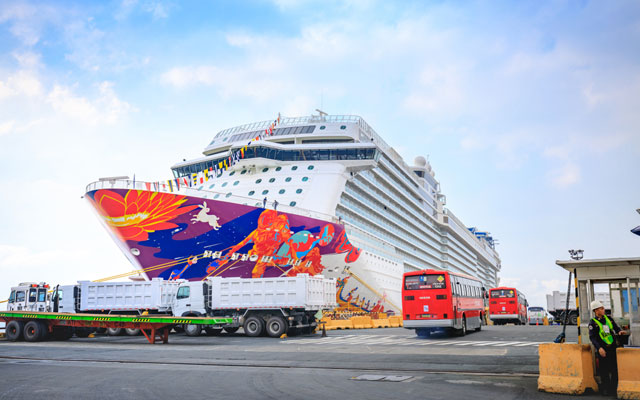
World Dream docked at the Port of Manila
When interviewed on the sidelines of the Kain Na (Let’s Eat) culinary tourism launch in Davao last Friday, Bengzon Jr said that Boracay’s local government has to decide whether it would continue to allow large cruise ships to dock at the island.
A Boracay-based tourism member added that other concerns the island had was the lack a proper cruise terminal, the impact on coral reefs when the ships drop anchor, and low earnings from shore excursions as cruise passengers do not stay overnight and spend lesser than longer-staying tourists.
But Travel Plus International’s sales and reservations manager Tonette De Vera offered differing views, indicating that during shore excursions, cruise passengers would usually lunch on and buy souvenirs on Boracay – and other similar island destinations – before returning to the ship in the afternoon.
Destinations should therefor roll out more creative offerings to capture greater spending from cruise visitors, urged de Vera.
Moreover, word-of-mouth endorsement and social media postings by cruise passengers to Boracay and similar destinations are valuable marketing opportunities for the country, she added.
Cruising also helps to promote new and lesser visited destinations, particularly for smaller expedition-type ships of up to 300 pax, which typically go to places inaccessible to mega ships, noted Benjie Bernal, tour operations manager of Sharp Travel Services.
For example, Kalanggaman Island in Leyte became more popular when his company included it in the cruising itinerary several years ago. Other recent additions include Calaguas Island in Camarines Norte and Batanes.
With lower fuel prices and strong economic growth, the global airline industry net profit is expected to hit US$35.5 billion in 2019, slightly ahead of the US$32.3 billion expected net profit in 2018 which saw profitability squeezed by rising costs, according to IATA forecasts.
It is expected that 2019 will be the 10th year of profit and the fifth consecutive year for airlines to deliver a return on capital to investors.
“We had expected that rising costs would weaken profitability in 2019. But the sharp fall in oil prices and solid GDP growth projections have provided a buffer. So we are cautiously optimistic that the run of solid value creation for investors will continue for at least another year. But there are downside risks as the economic and political environments remain volatile,” said Alexandre de Juniac, IATA’s director general and CEO.
The 2019 industry outlook is based on an anticipated average oil price of US$65 per barrel, lower than the US$73 recorded in 2018, following the increase in US oil output and rising oil inventories.
Fuel is expected to account for 24.2% of the average airline’s operating costs, an increase from 23.5% forecast for 2018.
Meanwhile, passenger traffic (RPKs) is expected to grow 6% in 2019, outpacing the forecast capacity (ASKs) increase of 5.8%, and remains above the 20-year trend growth rate. This in turn will increase load factors and support a 1.4% increase in yields. Passenger revenues, excluding ancillaries, are expected to reach US$606 billion (up from US$564 billion in 2018).
Asia-Pacific carriers are expected to report a US$10.4 billion net profit in 2019, up from US$9.6 billion in 2018, with net profit per passenger projected to be US$6.15 (3.8% net margin). Lower fuel costs, low levels of fuel hedging and strong regional economic growth are supporting profitability in 2019 in this region, according to IATA.

















With lower fuel prices and strong economic growth, the global airline industry net profit is expected to hit US$35.5 billion in 2019, slightly ahead of the US$32.3 billion expected net profit in 2018 which saw profitability squeezed by rising costs, according to IATA forecasts.
It is expected that 2019 will be the 10th year of profit and the fifth consecutive year for airlines to deliver a return on capital to investors.
“We had expected that rising costs would weaken profitability in 2019. But the sharp fall in oil prices and solid GDP growth projections have provided a buffer. So we are cautiously optimistic that the run of solid value creation for investors will continue for at least another year. But there are downside risks as the economic and political environments remain volatile,” said Alexandre de Juniac, IATA’s director general and CEO.
The 2019 industry outlook is based on an anticipated average oil price of US$65 per barrel, lower than the US$73 recorded in 2018, following the increase in US oil output and rising oil inventories.
Fuel is expected to account for 24.2% of the average airline’s operating costs, an increase from 23.5% forecast for 2018.
Meanwhile, passenger traffic (RPKs) is expected to grow 6% in 2019, outpacing the forecast capacity (ASKs) increase of 5.8%, and remains above the 20-year trend growth rate. This in turn will increase load factors and support a 1.4% increase in yields. Passenger revenues, excluding ancillaries, are expected to reach US$606 billion (up from US$564 billion in 2018).
Asia-Pacific carriers are expected to report a US$10.4 billion net profit in 2019, up from US$9.6 billion in 2018, with net profit per passenger projected to be US$6.15 (3.8% net margin). Lower fuel costs, low levels of fuel hedging and strong regional economic growth are supporting profitability in 2019 in this region, according to IATA.