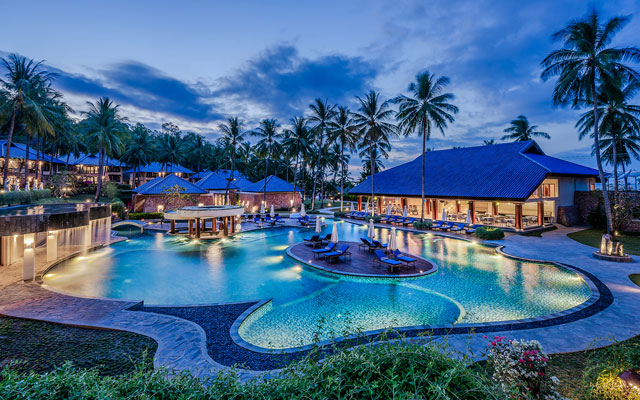
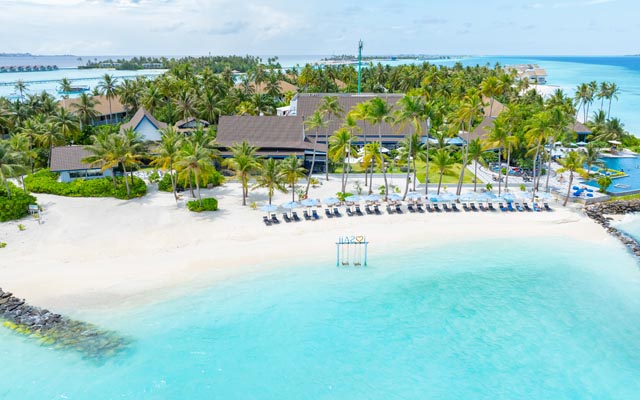
Wyndham Sundancer Lombok is riding on the announcement of direct flights from Perth to Lombok with a A$1 (US$0.70) stay offer.
AirAsia will commence four-times weekly between the two cities on June 9, departing Mondays, Wednesdays, Fridays and Sundays.
Coinciding with the start of the service in June, Wyndham Sundancer Lombok guests will be able to stay in a one-bedroom suite at for A$1 for the first night, for reservations of three nights or more. Subsequent nights will be charged at rates starting from just A$130.
To enjoy the offer, guests must book by April 30 for stays from June 9 to 30, 2019.
Bookings for June 9 are also entitled to complimentary return car transfers, breakfast for two, 30-minute spa treatment for two and an invitation to a cocktail reception by the beach.
Contact +62 370 619 9888, +62 877 6292 6966 (Whatsapp) or reservations@wyndhamsundancerlombok.com and quote promotional code WyndhamAirAsia1 to enjoy the deal.
Join us in the 12th edition of ITB Asia, Asia’s Leading Travel Trade Show from 16 – 18 October 2019 at Marina Bay Sands, Singapore. With more than 11,000 delegates coming from 127 countries, meet over exhibitors and buyers across all segments of MICE, Corporate and Leisure with our unique matchmaking system.
Register before 15 May 2019 to secure your stand at ITB Asia 2019!
With Lombok hit by yet another earthquake on March 17, tourism stakeholders are stepping up on promotions and disaster mitigation measures.
While the trade associations in West Nusa Tenggara (NTB) reported no cancellation following the earthquake, they expressed regret over the casualties resulting from a quake-triggered landslide.
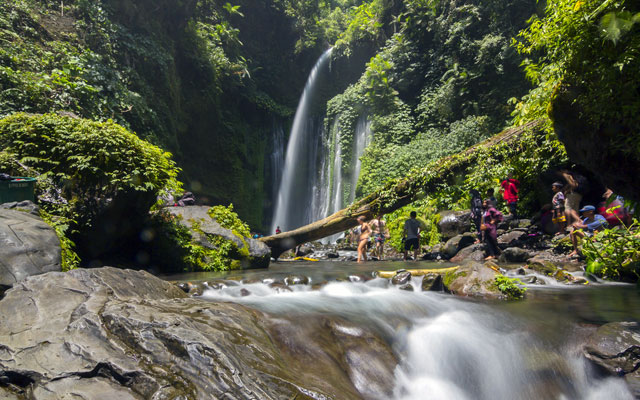
A landslide was triggered near Tiu Kelep waterfall, a tourist attraction in the north of Lombok
Dewantoro Umbu Joka, chairman of The Association of the Indonesian Tours and Travel Agencies (ASITA) NTB Chapter, said the body had earlier recommended against visiting the tourist sites where the landslide occurred due to their vulnerability to accidents.
Ricky Setiawanto, director of business development at Panorama Destination, said the Lombok packages the DMC offered were to beaches and islands like Seggigi and the Gilis, therefore he did not have clients around the Senaru area where the landslide took place.
Awan Aswinabawa, the chairman of the NTB chapter of ASTINDO, admitted that the number of tourists coming to NTB had not fully recovered from the devastating earthquake in 2018, but natural disasters were not the only factor hampering growth.
“After last year’s big earthquake in August, some travellers might think that Lombok is unsafe. That makes people reluctant to visit Lombok. Worse is the domestic airfare hike has made the Indonesian travellers more reluctant to come,” he said.
Domestic arrivals to Lombok make up 65 per cent of total visitors to the destination.
ASTINDO has teamed up with hotels to offer packages to boost domestic arrivals to NTB, according to Awan.
“Also, in collaboration with ASTINDO, NTB government just held a month-long Lombok Sumbawa Great Sale to entice domestic tourists by giving discount of 30 to 60 per cent in packages,” he said. A 3D2N tour packages (excluding airfare) in Lombok usually priced at almost two million rupiah (US$143) now costs just around 700,000 rupiah.
Dewantoro is also optimistic with AirAsia’s new Lombok-Perth service, which will take off in June, will speed up Lombok’s post-earthquake tourism recovery.
On the domestic sector, AirAsia also plans to open direct flights from Jakarta and Yogyakarta to Lombok. ASITA is planning to meet with AirAsia this week to discuss the possibility for the airline to offer more discounted airline tickets to attract more people from the two big source markets to fly to Lombok.
Awan, meanwhile, is hopeful that AirAsia Indonesia’s announcement to develop Lombok as its new hub will spur more direct flights from Lombok to other big cities, especially in the eastern area of Indonesia, such as Makassar in South Sulawesi.
For NTB Regional Tourism Office head Lalu Faozal, AirAsia’s Lombok plans is proof that the destination is still attractive for tourists.
He said that earthquakes that hit Lombok did not stop the provincial government from promoting the destination – and not at the expense of tourist safety.
“Disasters can happen anywhere and at any time. The most important thing is that we are ready to face them and provide the best service to tourists,” he said.
Learning that natural disasters are hard to forecast, the NTB government intends to improve risk management and disaster mitigation measures in a bid to minimise the number of causalities, according to Faozal.
“In every tourist destination, we will provide information about early warning system. We will also install signs for evacuation (routes) so that people know what to do when disaster strikes,” he said.
We are moving into a future of highly designed, hyper controllable environments. Technology can make spaces and moments more user-friendly and personable; and no one is better placed than hotels to shape that human-centred approach.
But hotels can’t just throw technology at guests that has nothing to do with the guest experience just to check the box. They need to find human-centred technologies.
Some technology-enabled hotel services, such as mobile concierge chat or the ability to order rooms service via a smartphone, are no longer innovations but mandatories, enabled to cater to the way people interact today. If we order our dinner via a mobile app at home, it may prove a barrier to pick up the phone at a hotel, especially if there is a language gap.
With the help of data, Porter and Sail connects guests relevant and timely content
DATA & PERSONALISATION
Do
Collect data to understand the overall guest behavioural patterns and offer personalised experiences. For example, Porter & Sail user data shows that guests start to look at restaurants for the evening at around 15.00. Our solution – provide useful information on the onsite restaurant at around 14.45.
Don’t
Never take a guest’s data for the sake of it, if you aren’t providing a direct benefit to the guest. Let them decide whether the information-benefit exchange is worth it.
WELLNESS Do
Sleep is the new frontline. Today more than ever, people want a good night’s sleep. Hotels can be consulting with scientists on air, light, aromatherapy oils to promote relaxation. For example, ITC hotels are already doing high-tech “sleep programming” by not only offering curated menus of pillows, sleeping masks and aromatherapy oils, but also a selection of ITC sleep music and providing a list of relaxation and breathing apps.
Don’t
A new take on a hotel gym? Instead of investing into more high-tech equipment in the physical gym that guests loath to go to, replace it with tech-supported mirrors that can bring the workout in-room, or provide running routes on the hotel app – it’s a great way to showcase the hotel neighbourhood too!
RETAIL Do
Embrace the online retail growth. Hotels can be amazing liveable showrooms with everything available for purchase (but not explicitly presented as such). You’ve sat in the chair. You’ve lain in the bed. If you want that same luxurious experience at home, tap your phone to it, and everything you need to know is beamed straight to you. Many hotels offer this service already from beds to towels and totes available for purchase, but technology can further enable a memorable shopping experience that brings the travel mementos to the next level.
Don’t
Refrain from using technology itself as a retail opportunity and make a guest pay for the use of ready-available services such as Wi-Fi.
IMMERSION Don’t
Virtual reality is rising, but hotels don’t need to be The Millennium Falcon to be an escape. Hotels are doing that right already providing a real sensory environment. The trend of presenting a VR experience of a hotel as a pre-stay research opportunity is, in mind, questionable, as it can strip out the important aspects such as the quality of the design materials and human interactions that amount to how a hotel environment makes you feel.
Do
Instead use the immersive media to put guests in the position to live the hotel fantasy longer, whether it be Instagram, video or audio. On a wet Wednesday afternoon in the office, if I want to escape to a gorgeous hotel, I can. That’s immersive technology serving you, not competing with you.
SUSTAINABILITY
Luxury hotels can be seen as more wasteful than regular hotels. That’s a problem. And the solution: Technology, which is inherently sustainable. The luxury traveller will drive the new paradigm in hotels, even more than in their homes. The future is not about how much you can offer your guests, but how little.
Don’t
Is it really on-brand for your front desk to hand out another obsolete thing such as a plastic room key?
Do
Offer keyless room entry technology, to not only save on plastic but enhance the guest experience by reducing the anxiety of remembering to pack that plastic key in your pocket every time you leave the room.
Solar panel blinds, rooftop hydroponics, air conditioning that turns on automatically when it detects you are 10 minutes from your room. This is the next decade in hospitality.
COMMUNITY Do
With technology, hotels can know and shape their guest’s city experience, as much as the hotel experience. You don’t have to hold guests so close to keep the conversation going. Use technology to help guests uncover the local community and a connected network of art galleries, cafes and retail that enhance the overall guest experience.
Don’t
Don’t keep guests on property – encourage them to go out into the neighbourhood for authentic experiences, not simply curated offerings in the hotel. Hotels can use technology to remain a support for their guests far outside their doors.
Overall the hotels can be high-tech, but they are always high touch. Technology that makes us more connected, more personable. In other words, technology to further the mission of hospitality.
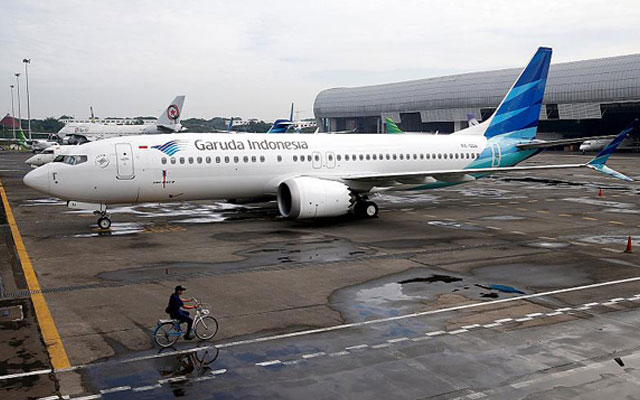
Garuda Indonesia's Boeing 737 Max 8 airplane, parked at the Garuda Maintenance Facility AeroAsia, at Soekarno-Hatta International airport near Jakarta, Indonesia, March 13, 2019. -@ Copyright : Willy Kurniawan
Garuda Indonesia has dropped its order of Boeing 737 MAX 8, after the new plane model was involved in two recent fatal crashes.
Ari Ashkara, president and CEO of Garuda was quoted by the media as saying: “We have sent the letter to (Kevin) McAllister (president and CEO of Boeing Company) that we are cancelling the 49 units on order.”
Garuda Indonesia’s Boeing 737 Max 8 airplane, parked at Soekarno-Hatta International airport. Photo credit: Willy Kurniawan
He explained that customers have also lost their confidence and are refusing to fly with Boeing 737 MAX 8 type of aircraft, even if the aviation giant would take care of the current problem.
Garuda initially ordered 50 aircraft of the Boeing 737 Max 8, one of which was delivered in 2017. The aircraft has been grounded indefinitely by Indonesian aviation authorities.
Ari said Boeing executives would be heading to Jakarta on March 28 to negotiate with the airline.
“We have started discussions and our priority will be to find an alternate type (of Boeing aircraft) rather than dropping the order altogether, (as it would result in us) losing the downpayment.”
Ari stressed that the negotiation process will take time and if it comes to a deadlock, Garuda may take the option to purchase aircraft with other companies.
“However, according to the contract we cannot withdraw (the order), and I believe that Boeing will not ignore Garuda as one of their market leaders,” Ari said.
According to Channel News Asia, Lion Air will also be postponing delivery of four of its Boeing 737 Max 8 jets on order.
TKC unveils microsite providing tourist information on Intramuros, with plans to create similar ones for Bohol and Palawan
The Philippines’ Rajah Travel has launched The Knowledge Center (TKC), with the aim of turning the facility into a top-of-the-mind source of information on travel and tourism in the Philippines and also South-east Asia.
Executive director, Rolando Canizal – who was former tourism undersecretary – explained that “more than a travel agency, Rajah Travel is a corporation that recognises the information needs of policymakers, programme managers and tourism professionals, among others”.
TKC unveils microsite providing tourist information on Intramuros, with plans to create similar ones for Bohol and Palawan
TKC held the maiden edition of its Travel Talk Series on the timely issue of balancing economic and conservation objectives towards sustainable tourism before an audience of over 250 tourism students, professors and industry members at the Lyceum of the Philippines University.
Subsequent editions of this interactive forum that uses live streaming to expand its reach will be held in June at Our Lady of Fatima University and in September at San Beda College.
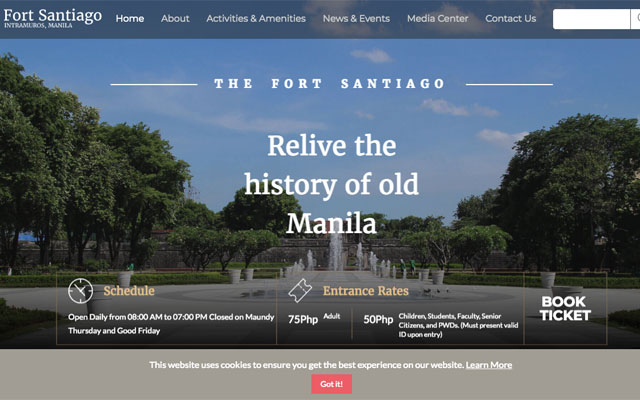
Also unveiled at TKC’s launch was the Intramuros microsite www.visitfortsantiago.com.
Apart from Fort Santiago, the microsite also links to other Intramuros attractions like Casa Manila, Baluarte de San Diego, etc, making it easier for tourists to plan their trips and avoid long lines to Fort Santiago.
Rajah Travel president and chair Aileen Clemente said that the company is now working on similar microsites for Bohol and Palawan.
Canizal said the arrivals data from Intramuros’ microsite – hoped to be search-engine optimised to have greater visibility over blogs – will be incorporated into TKC’s Data Center to help industry practitioners, researchers and policymakers to formulate policies and studies on sustainable tourism.
The year 2018 was a challenging year for Myanmar’s tourism sector as Western tourist arrivals continued its downward trend, but the trade is hopeful that 2019 will mark a turnaround as the year started on a positive note with foreign investments and arrivals on the up.
Myanmar Tourism Marketing reported 160,000 tourist arrivals in January 2019, a 20 per cent year-on-year increase. Not only did overseas tourist numbers increase, the number of domestic tourists visiting sites as Bagan, Kalaw or Inle Lake saw double-digit growth, leading to fully booked hotels during Myanmar’s holiday periods.
Tourists visiting Myanmar’s Inle Lake
International brands such as Courtyard by Marriott and Sheraton are set to open in Yangon. Rosewood Hotels & Resorts has been appointed by Prime Residence to manage Rosewood Yangon, as the brand’s first property in Myanmar and seventh in Asia.
Meanwhile, in January, the American Society of Travel Advisors (ASTA) opened its newest chapter in Myanmar, along with plans to work on a variety of projects. These include a pavilion at the ASTA Global Convention in August and the Myanmar Road Show with activities including tourism education and training of US travel advisors.
Moreover, German wholesale company Metro this month announced its entry into Myanmar, allowing for greater trade engagements in the country that could contribute to economic growth in sectors such as agriculture, tourism and hospitality, said Philippe Palazzi, COO of Metro.
Also notably, the first Rakhine Investment Fair took place in Ngapali in February, where attempts were made to attract investors to join in the development of the state, especially its hotel and tourism sector. The fair was supported by the Myanmar Investment Commission and the Rakhine state government, and co-organised by Japan International Cooperation Agency (JICA) and the Japan External Trade Organization (JETRO).
“As the last frontier of South-east Asia, Myanmar presents immense potential for foreign investment. And we continue to believe that tourism is a good way to connect people and to bring development and peace all over the country for any race or religion,” said May Myat Mon Win, chairperson of Myanmar Tourism Marketing.
The country adapted the foreign investment law late last year and made it possible for foreigners to buy 35 per cent of shares of a local company, with industry-specific examples including local guesthouse, restaurant, bar or hotel.
Thais may be bucking the tradition of returning to their hometowns for Songkran, according to Agoda.
The OTA says its booking data for the upcoming Songkran period shows Tokyo, Osaka, Seoul and Taipei taking up four of the top 10 spots.
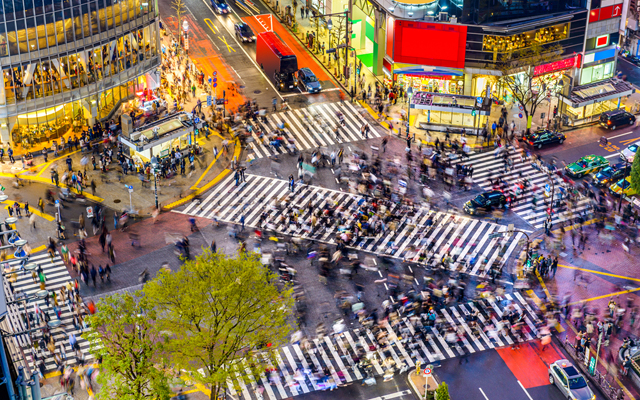
Tokyo (pictured) took Bangkok’s crown in the ranking of Thai’s most booked destinations during Songkoran
This suggests a departure from the tradition of Thais returning to their hometowns to pay respect to their elders by pouring scented water onto their palms and visiting a temple to make merit, according to Agoda.
Agoda’s booking data show Tokyo usurping Bangkok as the most-booked Songkran destination, a title the Thai city held for at least the last two years.
Meanwhile, Thailand’s seaside destinations of Pattaya and Hua Hin held onto second and third destination for Thai travellers.
Fresh from a US$7 million Series B funding round, vacation rental startup AsiaYo is mapping an ambitious expansion in Asia that includes entering its first South-east Asian markets.
The Taiwanese startup completed its Series B, led by Alibaba Taiwan Entrepreneurs Fund and China Development Financial.
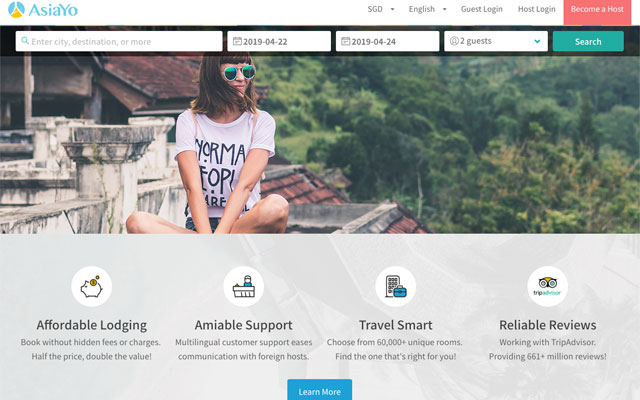
A screenshot from the AsiaYo website.
It has since announced its launch in Singapore and Malaysia in 2Q2019, in addition to plans to roll out a Japanese version of the online platform in 2H2019. AsiaYo currently manages over 60,000 listings in Taiwan, Japan, South Korea, Hong Kong and Thailand.
It is set to add more South Korean listings to its platform with its latest partnership with Yanolja, a unicorn that’s said to be the country’s largest accommodations booking platform.
The deal, which involves an exchange of listings between Yanolja and AsiaYo, adds to the latter’s stable of foreign tie-up including with Japan’s Rakuten Lifull Stay, Japan’s Neppan, Hong Kong Airlines, Taiwan’s KKday and Taiwan Host Association.
South Korea is a high growth market for tourism. The number of tourists between Taiwan and South Korea is increasing every year, with an estimated one million travelling each way.
With this partnership, AsiaYo estimates that the revenue from the Korean market will see double-digit growth this year.
In addition to the arrangements in North-east Asia, AsiaYo has been actively exploring the Chinese market, having set up an office in Beijing at the end of 2018. With Chinese tourists making over 30 million trips to Asia countries each year, the collaboration with Fliggy will attract more Chinese tourists to make reservations on AsiaYo for self-guided trips to various countries throughout Asia.
CK Cheng, founder and CEO at AsiaYo, said: “The biggest reason for naming the brand AsiaYo is that we wanted to be a cross-regional and cross-language platform from day one. I look forward to developing more listings from different countries and making use of a synergistic network to help travellers from all over the world find ideal accommodation easily, and to promote cultural exchanges as well as the local economy.”
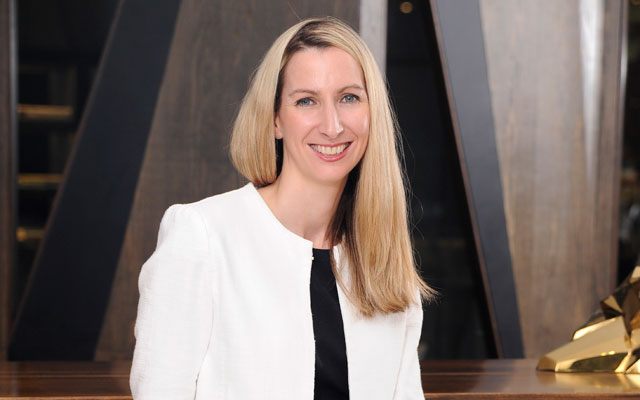
Le Méridien Singapore, Sentosa has appointed Rachael Harman as general manager.
With over two decades worth of hotel experience, Harman began her hotelier career with a F&B role at Sheraton on the Park, Sydney, before moving on to various roles at Sheraton Mirage Port Douglas, The Westin Melbourne and The Westin Auckland Lighter Quay.
In 2010, the Aussie moved to Malaysia to join The Westin Kuala Lumpur where during her six year stint, she was given key management positions including hotel manager and director of sales and marketing.
In her most recent role prior to her Singapore posting, Harman was general manager at Le Méridien Kota Kinabalu in Malaysia.