TTG Asia
Asia/Singapore Thursday, 2nd April 2026
Page 1271

Fliggy introduces new shopping channel for Chinese travellers

0
Fliggy Buy channel allows Chinese travellers to browse and shop at overseas merchants before picking their items up in destination

Fliggy, the travel service platform of Alibaba Group, has launched its Fliggy Buy, which allows Chinese travellers to browse and order overseas goods for pick up in-destination.

Merchants on Fliggy Buy will include duty-free and tax-free stores, both overseas and within mainland China, international brands, specialty local stores and an increasing range of shopping destinations.

Fliggy Buy channel will initially include duty-free stores, but there are plans to recruit other merchants

“Duty-free and tax-free stores are our focus during the first phase of rollout, as they are the most visited shopping and consumption venues amongst Chinese outbound tourists. Our next step is to enrich the product categories on Fliggy Buy and recruit more overseas merchants to include high-end luxury brands, household electronics sellers, as well as pharmacy and cosmetics stores, assisting them to reach more Chinese consumers,” Roman Zhu, head of Fliggy Buy.

Furla Hong Kong and Laox of Japan are already on the channel, with more merchants are expected to join.

Chinese travellers using this service can choose from products, including cosmetics, suitcases, bags and alcohol. After selecting a pickup store, as well as inputting their personal information and completing payment, consumers can then pick up their goods at their leisure, Fliggy said in a statement.

One major advantage of this is that it allows travellers more time to explore and experience the destination.

Through Fliggy Buy, Chinese customers can access detailed information and buyers’ reviews about products, presented in their own language, prior to an overseas trip. This helps them understand features and compare prices across different merchants before committing to a purchase.

In addition, the channel allows travellers to check if items they want, especially limited edition goods, are in stock before their trip, pre-order online, and seek online customer service.

“The launch of Fliggy Buy represents our latest move to work with merchants targeting the vast numbers of tourists from China to develop innovative solutions, and offer them targeted customer traffic. Our aim is also to embrace the potential of digital technology and provide a holistic travel experience encompassing food, accommodation, transportation, sightseeing, shopping and entertainment,” Zhu said.

Fliggy’s insights show the average overseas spending of Chinese travellers up nine per cent year-on-year in 2018.
New CEO takes the helm at Fujita Kanko

0
Ise

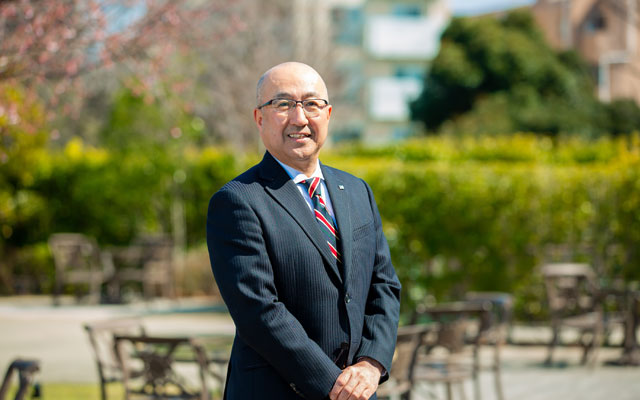
Fujita Kanko has promoted senior managing executive officer Yoshihiro Ise to the new role of president, succeeding Akira Segawa.

During his 36-year tenure with Fujita Kanko, Ise has held a broad range of positions at both corporate offices and hotels.

Yoshihiro Ise

He has managed several key properties as general manager, led multiple corporate initiatives, and developed new properties and brands.

This year, the 64-year-old Fujita Kanko will be announcing its medium-term management plan beginning 2020, where Ise has been tasked with revitalising and strengthening the company’s management and business practices.

Amadeus to acquire ICM Airport Technics

0
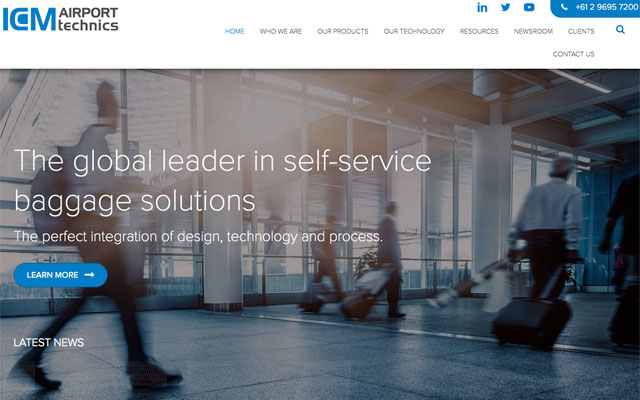
A screenshot from the ICM Airport Technics website

Amadeus will acquire ICM Airport Technics, a Sydney-headquartered provider of passenger automation and self-service bag drop solutions for customers principally in Asia-Pacific and Europe.

Approximately 150 ICM employees are expected to join Amadeus. ICM will become part of Amadeus’ Airport IT division, forming part of its Strategic Growth Businesses customer unit. ICM will retain a local presence close to its customers via offices in both Sydney and Melbourne.

A screenshot from the ICM Airport Technics website

Amadeus and ICM expect the transaction, which will be fully cash-financed, to close in 2Q2019.

Richard Dinkelmann, CEO of ICM, pointed out the synergies between ICM’s self-service and passenger processing solutions and Amadeus’ global reach and complementary product offering.

Following this deal, Amadeus believes it will be in a stronger position to drive future growth in the sector as smart airports continue to invest in improving capacity and efficiency, while seeking one-stop solutions.

Bruno Spada, head of airport IT at Amadeus, said: “Often the passenger experience in airports is not a good one: long queues to check bags in and disparate services and technologies that do not always speak to each other.

“In essence, airports are crying out for open self-service solutions to help take the friction and hassle out of the airport experience for passengers. By combining Amadeus’ and ICM’s software and hardware capabilities, by accelerating and introducing more self-service options, and by using the power of biometrics, this deal announced today will ensure that together we can deliver better journeys for passengers in the future”.

Spada continued: “Importantly, customers continually tell us they need a strategic end-to-end solution in order to answer the evolving operational needs of the airport – they don’t want to have to work with multiple suppliers but rather single providers that can harness the best of the very latest technologies and who ultimately can ‘do it all’: this deal delivers just that.”

Since 2009, ICM has processed more than 75 million bags worldwide and is a global leader in providing airports with either retro-fitted or replacement type Auto Bag Drop (ABD) units. ICM serves around 25 airports. The company is also an early pioneer in biometrics for baggage processing.

New hotels: Vivanta Kathmandu, Liu Men Melaka and more

0

Vivanta Kathmandu, Nepal
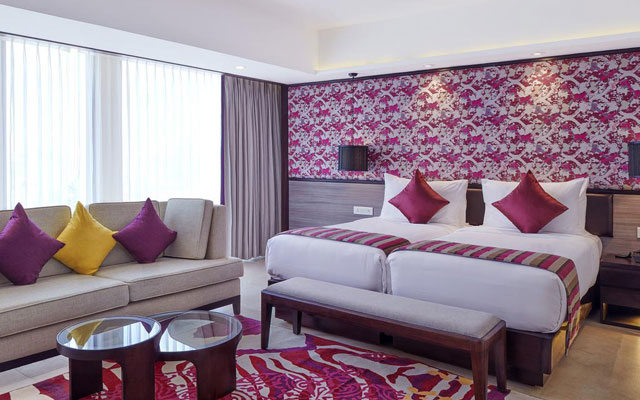
The Indian Hotels Company has introduced the Vivanta brand in Nepal with the opening of Vivanta Kathmandu. The 110-key property, located in the Jhamsikhel district, offers facilities such as a fitness centre, swimming pool and spa. There are three F&B choices within the property – the pan-Asian restaurant Akari; all-day diner Mynt; and Koko rooftop bar. This is the company’s second property in the Himalayan region after Meghauli Serai, A Taj Safaris Lodge in Chitwan National Park.

Liu Men Melaka, Malaysia
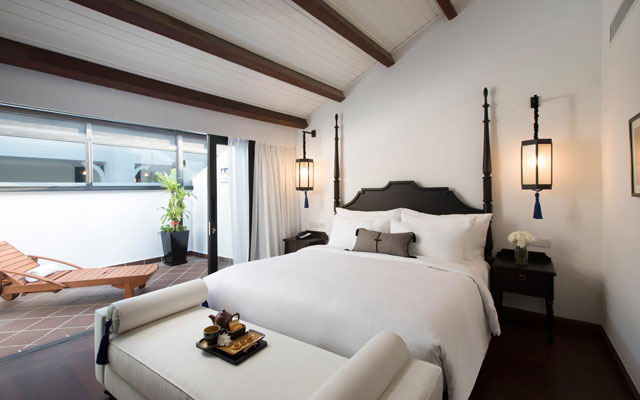
A boutique property under Tauzia Hotels’ Préférence brand, Liu Men Melaka blends 1930s colonial art deco and Chinese Peranakan culture. The 30-key property features nine different categories of rooms, ranging from the Lekir room that boasts a blackwood herringbone floor, to the attic room named Hang Tuah. The hotel stands along Jalan Tokong, and is within walking distance to Cheng Hoon Teng Temple.

Hyatt Place Changsha Meixihu, China
The first Hyatt Place hotel in Changsha – the provincial capital of Hunan in south-central China – has opened with 158 rooms. The hotel offers free Wi-Fi, the Coffee to Cocktails Bar, and the Gallery Menu & Market that serves prepared meals, sandwiches and salads 24/7. Hot breakfast items are also available daily in the Gallery Kitchen. Other amenities include a 24-hour gym, as well as 276m2 of meeting space.

Wyndham Garden Hanoi, Vietnam
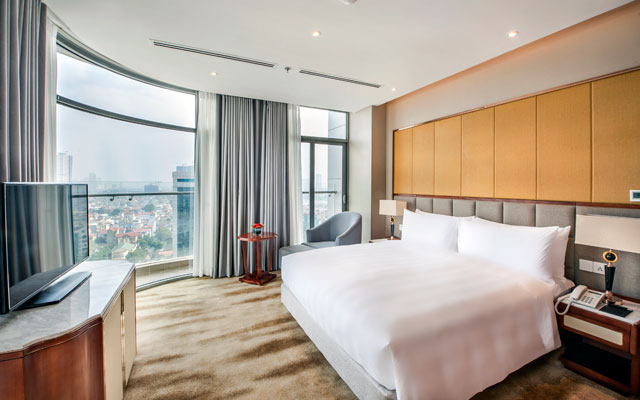
The first Wyndham Garden-branded property in the country offers 112 keys over four room categories. Deluxe rooms start from 28m2, and go up to the 450m2 Presidential Suite. There are two F&B venues on-site, the Silk Garden all-day dining restaurant, and the Twilight Bar on the rooftop. Recreational facilities include a spa, fitness centre, swimming pool, steam room and jacuzzi. The hotel also offers conference and banqueting space, including a 200-guest ballroom, three smaller meeting rooms and a large pre-function area.

Eat, Pray, Shop in Bangkok with Grand Hyatt Erawan

0

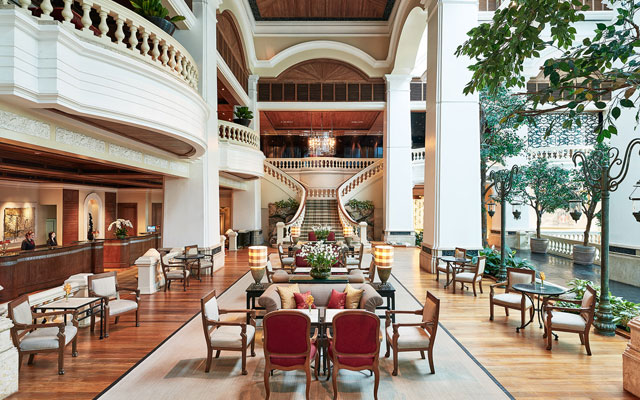
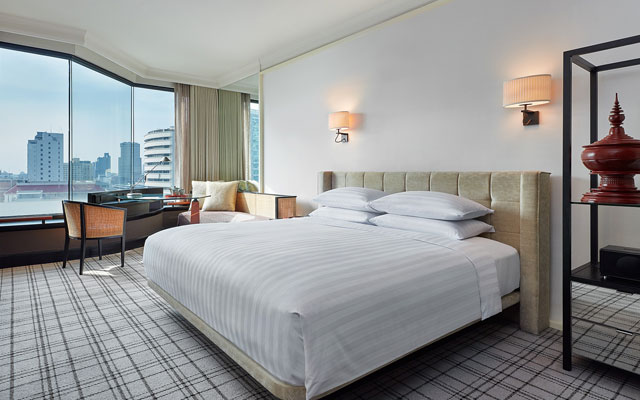
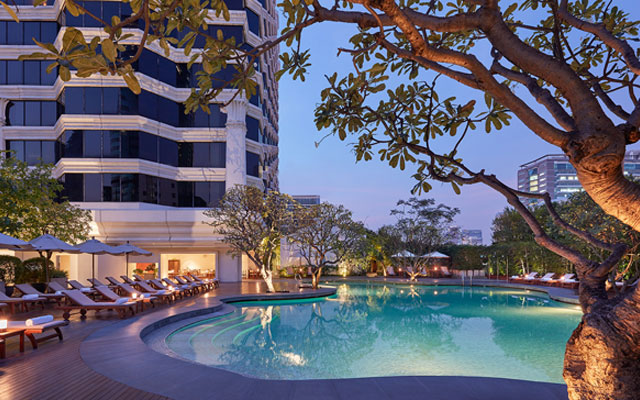
Grand Hyatt Erawan Bangkok has launched its Eat, Pray, Shop package, including a Thai afternoon tea and private tour to Erawan Shrine.

The deal is valid for bookings made between now and December 31, 2019 for stays February 29, 2020.

The package includes a personal guide from the hotel’s concierge team to Erawan Shrine; garlands, candles and scents used to pay respects at the shrine; one Thai afternoon tea set per person; and a shopping guide with discount vouchers to various shopping spots in the area.

Holding steady

0

With almost 5,000 estimated additional hotel rooms this year and the closure of the 869-room Excelsior Hong Kong this month, the industry is divided on what to expect of hotel rates.

According to STR Global’s performance data for 2018, the city’s occupancy rose by 1.3 per cent to 87.7 per cent. ADR increased 8.3 cent to US$234.70.

PC Tours and Travel’s general manager Cary Chiu told TTG Asia: “Hotel business was good last year due to the surge of Chinese travellers. Though there’ll be new supply from the luxury Rosewood Hong Kong, my clients typically opt for four-star hotels.”

Three- and five-star options already dominate the downtown, and the lack of four-star choices will only be intensified with the closure of Excelsior.

Vigor Tours, Greater China manager, Coral Wu, said hotel rates were too high and unlikely to come down in the near future due to the “insufficient” inventory.

However, Destination China’s general manager, Gunther Homerlein, foresees little impact from The Excelsior’s closing.

He said: “Right now the rates seem comparable with 2018 in high-end hotels. Like us agents, hotels are dealing with a situation where bookings have short lead times, while there is a big drop (in demand) from the US. I expect rates to remain the same or even lower than 2018.”

Some hotels seem to be winning against this backdrop. Last year saw the Holiday Inn Golden Mile grow their market share and reach record occupancy levels. The hotel’s general manager Gerhard Aicher is optimistic of continued growth following the property’s recent revamp.

“We will see continued growth however at a slower pace. Several new hotels have recently opened or are opening, which will increase the supply of hotel rooms.

“We (also) see some uncertainties in the market with the US-China trade conflict as well as the slowing Chinese economy.”

Dorsett Wanchai Hong Kong also recorded double-digit increase in total room revenue last year over 2017. A spokesman remained optimistic about the hotel business in 2019, especially in the China market. She said: “We believe the new additional room supply will outweigh the impact of the rooms reduction from The Excelsior.

With HK Express acquisition, Cathay Pacific gets foot in the door of growing LCC market

0

Cathay Pacific is buying budget carrier HK Express in full, with the HK$4.9 billion (US$630 million) deal expected to go through by December 31 this year.

The amount comprises a cash consideration of nearly HK$2.3 billion and a non-cash consideration of HK$2.9 billion settled through the issue and novation of promissory loan notes.

In a statement detailing the deal, Cathay Pacific said the purchase of Hong Kong Express represents “an attractive and practical way for the Cathay Pacific Group to support the long-term development and growth of its aviation business and to enhance its competitiveness”.

Cathay Pacific estimated to get 50 per cent marketshare with the acquisition

HK Express will continue to operate as a standalone airline using the LCC model, according to Cathay Pacific.

Some industry observers opine that it would make better sense for the two airlines were to operate separately, unlike in the case of Cathay Pacific integrating Dragonair.

Travelzoo.com, general manager, Kevin Shui said: “After Cathay took over Dragonair few years ago, redundancy or restructure followed. I’m interested to know how Cathay’s go-to-market strategy would look like, and whether HK Express will operate separately. It would make more sense to run a dual-band mode in future as each targets different audience.”

EGL Tours, executive director and co-founder, Steve Huen, told TTG Asia: “This is a good deal for Cathay because most mainstream airlines in the region are tagged along with an LCC subsidiary. When Cathay bought Dragonair a few years ago, we wonder why it did not operate Dragonair as an LCC.

But unlike Shui, he opined that Cathay Pacific and HK Express may not be going after such disparate consumer sets.

“Not all LCC passengers are budget conscious and LCC doesn’t mean cheap – airfare is (determined by supply and) demand. For instance, it costs me HK$5,000 for a same-day return ticket on HK Express’ Hong Kong-Osaka route while Cathay Pacific asked for HK$7,000. I chose the former because if offered the best time slot.”

He added: “Cathay Pacific may (be interested to) keep and build customer rapport for the budget market as customers may eventually move up to fly full-service (Cathay Pacific or Dragonair).”

Huen also pointed out that the acquisition could be to preempt the potential intensification of LCC competition in the future.

“Saturated capacity of the Hong Kong International Airport (has thus far been) the stumbling block of LCCs development. However, the completion of the third runway in 2024 is expected to spark off the entrance of new LCC players. Cathay Pacific may have realised this.”

He further speculated that once the deal completes, some existing HK Express routes may be slashed after reviewing passenger loads and performance.

“I reckon it’d not just crave Japan destinations but also South-east Asia.”

Meanwhile, Arrow Travel, managing director, Tommy Tam said there is concern within the travel trade about Cathay gaining bargaining power. If it goes through, the acquisition could give Cathay over 50 per cent market share.

He said: “This means that HK Express’ airfares will be less competitive than before. Still, HK Express employs direct marketing and consumers mostly skip agents and book directly, so I don’t foresee big impacts on agents.”

A Morning Star Travel Service spokesperson also said that the agency seldom uses HK Express, claiming that for group travel, there is no big difference in LCC and FSC fares.

“Even though HK Express publishes low fares, quantity is limited. It is still early to comment if airfares will be increased, and whether more tickets will be allocated to FITs or groups. As a homegrown LCC, hopefully it will be managed in a better way under Cathay’s umbrella in future.”

PATA ponders marketing tweaks for travel mart in Astana, now renamed Nursultan

0
Capital city of Kazakhstan renamed Nursultan

PATA Travel Mart, which is headed for Kazakhstan this year, may have to tweak its marketing to reflect an official change in the name of its host city.

Kazakhstan has renamed its capital Astana to Nursultan to honour the nation’s outgoing leader and only president since the collapse of the Soviet Union.

Capital city of Kazakhstan renamed Nursultan

Nursultan Nazarbayev unexpectedly resigned on Tuesday, and was within 24 hours succeeded by Kassym-Jomart Tokayev, who proposed the change in name of the capital city, before parliament adopted a law making it official.

“We are still waiting for information from our host on how we should refer to the city moving forward before we change references in our marketing material,” PATA CEO Mario Hardy told TTG Asia.

The happenings in Kazakhstan will only affect PATA Travel Mart when it comes to how the trade show is marketed.

Beyond that, “it may make people want to visit the new city even more” as the historic events in Kazakhstan are likely to stir curiosity worldwide.

Meanwhile, Kazakhstan’s national flag carrier, Air Astana, stated it plans to stick to its current brand name.

Astana, which means “capital” in Kazakh, became the capital of Kazakhstan in 1997, taking over from Almaty, still the country’s commercial hub and largest population centre.

Indian trade mourns sudden passing of Praveen Chugh

0

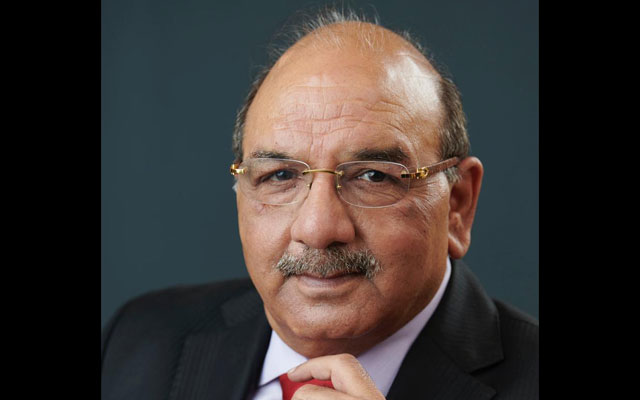
Praveen Chugh, a veteran of India’s tourism industry and president of Travel Agents Federation of India (TAFI), suffered a fatal heart attack on Tuesday, March 26.

He was at Indira Gandhi International Airport’s Terminal 2, having arrived in New Delhi on a Jet Airways flight after a TAFI managing committee meeting in Mumbai. As he was leaving the domestic terminal, he suffered a heart attack in the washroom. Doctors present tried to revive him but were unable to.

Born on October 16, 1955, Chugh was serving his second consecutive term at TAFI. He has also served as the vice chairman of the World Travel Agents Association Alliance. Recently, Chugh had taken over as Via – COO, agency sales, post the acquisition of his company, Business Travels, by Ebix Cash.
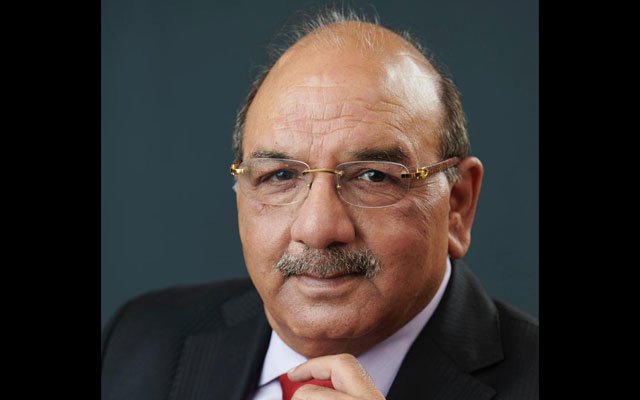
Elected president of TAFI in 2016 and 2018, Chugh also served as the president of Skal International – Delhi, president of Skal International – India and vice president of Skal – West Asia.

One of the doyens of India’s travel industry, Chugh spent more than four decades working the sector, during which he founded some of India’s largest travel companies.

Chugh first joined the hotel industry in 1974. He then worked for 15 years from 1976 to 1991 with President Travels, and was instrumental in making the company one of the top five travel agencies in north India. Subsequently, he started Pearl International in 1991 along with its promoters, and took the company from a startup and transformed it into the largest travel agency in north India and one of the top three in the country.

He then started Travel Services International (TSI) in 1999 which went on to become one of the largest online B2B consolidation companies in north India. Yatra Online acquired TSI in 2010 which led to the creation of TSI-Yatra.

Chugh has also served as a member of IATA’s Agency Programme Joint Council (APJC), alongside several agents and airlines.

The travel trade is mourning Chugh’s sudden passing.

“Praveen Chugh was man of great stature, and he succeeded in taking TAFI to new heights. It is a sad time for the entire industry as we have lost a great human and a thorough professional who kept working till the end,” said A Basheer Ahmed, managing committee member, TAFI.

Jyoti Mayal, secretary general of Travel Agents Association of India and director New Airways Travels (Delhi), shared: “Praveen Chugh was a very close family friend and a true man of the travel industry. He was always planning and thinking of the future, and was a very soft spoken and diligent person. He truly had a vision for the industry.”

“My husband, Balbir Mayal, and I, shared a very close relationship with him in business, as associations and as friends. We have travelled extensively and socialised together as a family. I think the industry and TAFI have lost a leader. We will certainly miss him. My heart goes out to his daughters Pranita and Ranita,” she added.

Indian trade mourns sudden passing of Praveen Chugh

0

Praveen Chugh, a veteran of India’s tourism industry and president of Travel Agents Federation of India (TAFI), suffered a fatal heart attack on Tuesday, March 26.

He was at Indira Gandhi International Airport’s Terminal 2, having arrived in New Delhi on a Jet Airways flight after a TAFI managing committee meeting in Mumbai. As he was leaving the domestic terminal, he suffered a heart attack in the washroom. Doctors present tried to revive him but were unable to.

Born on October 16, 1955, Chugh was serving his second consecutive term at TAFI. He has also served as the vice chairman of the World Travel Agents Association Alliance. Recently, Chugh had taken over as Via – COO, agency sales, post the acquisition of his company, Business Travels, by Ebix Cash.

Elected president of TAFI in 2016 and 2018, Chugh also served as the president of Skal International – Delhi, president of Skal International – India and vice president of Skal – West Asia.

One of the doyens of India’s travel industry, Chugh spent more than four decades working the sector, during which he founded some of India’s largest travel companies.

Chugh first joined the hotel industry in 1974. He then worked for 15 years from 1976 to 1991 with President Travels, and was instrumental in making the company one of the top five travel agencies in north India. Subsequently, he started Pearl International in 1991 along with its promoters, and took the company from a startup and transformed it into the largest travel agency in north India and one of the top three in the country.

He then started Travel Services International (TSI) in 1999 which went on to become one of the largest online B2B consolidation companies in north India. Yatra Online acquired TSI in 2010 which led to the creation of TSI-Yatra.

Chugh has also served as a member of IATA’s Agency Programme Joint Council (APJC), alongside several agents and airlines.

The travel trade is mourning Chugh’s sudden passing.

“Praveen Chugh was man of great stature, and he succeeded in taking TAFI to new heights. It is a sad time for the entire industry as we have lost a great human and a thorough professional who kept working till the end,” said A Basheer Ahmed, managing committee member, TAFI.

Jyoti Mayal, secretary general of Travel Agents Association of India and director New Airways Travels (Delhi), shared: “Praveen Chugh was a very close family friend and a true man of the travel industry. He was always planning and thinking of the future, and was a very soft spoken and diligent person. He truly had a vision for the industry.”

“My husband, Balbir Mayal, and I, shared a very close relationship with him in business, as associations and as friends. We have travelled extensively and socialised together as a family. I think the industry and TAFI have lost a leader. We will certainly miss him. My heart goes out to his daughters Pranita and Ranita,” she added.