Inaugural Skift forum in Asia to feature TED-style talks and Q&A with leading minds in travel
Inaugural Skift forum in Asia to feature TED-style talks and Q&A with leading minds in travel
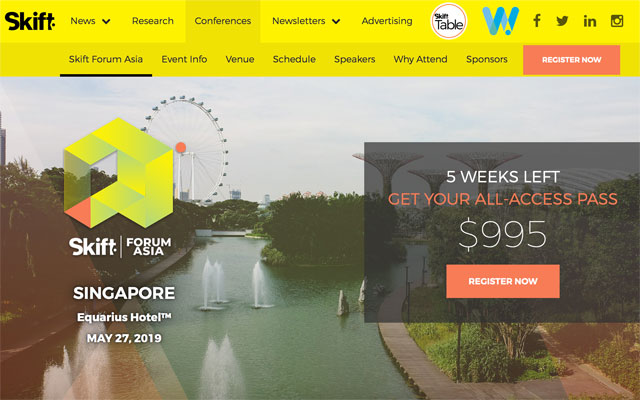
US-based business information company Skift will organise its inaugural Asia forum on May 27, 2019 in Singapore at the Equarius Hotel at Resorts World Sentosa (RWS).
Held in Equarius Hotel’s newly-refurbished ballroom, Skift Asia Forum 2019 will feature TED-style talks and Q&A with the business leaders and creative thinkers in the travel trade industry. Top-level speakers confirmed include CEO of Rosewood Hotel Group Sonia Cheng; CEO of Singapore Airlines Goh Choon Phong; Richard Holden, vice president product management, travel of Google; and CEO of Agoda John Wroughton Brown.
In addition, the day-long conference will explore strategic, marketing and technology trends emerging in and coming from Asia-Pacific countries. Skift will pay special attention to digital disruptions in communications and transportation, and how these innovations will transform customer experience globally and across every travel industry sector.
There will also be an opening reception the evening before at the floor-to-ceiling Ocean Gallery at the S.E.A. Aquarium.
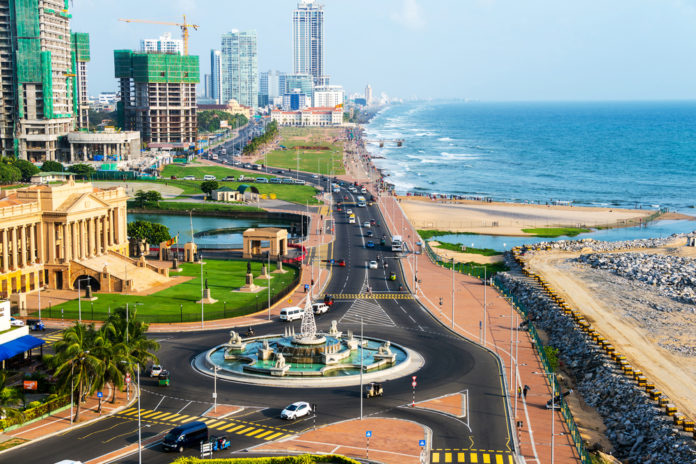
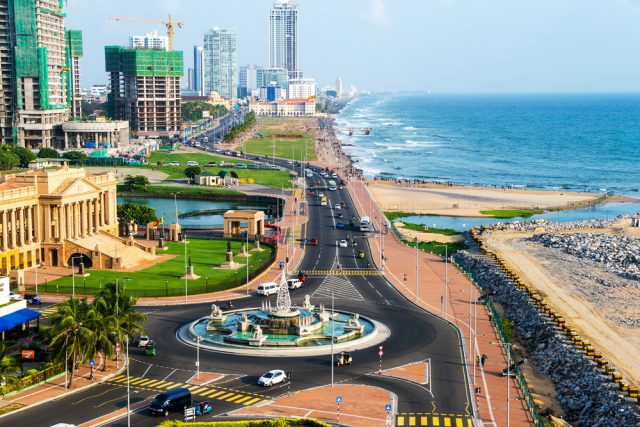
At least 35 foreigners killed in Easter bombings; pictured, Colombo city
At least 35 tourists were among more than 200 people killed during ferocious terrorist attacks that rocked Sri Lanka yesterday, targeting three churches and three luxury hotels during Easter Sunday celebrations with authorities worried about its immediate impact on tourism.
TV visuals showed graphic scenes of devastation at three five-star Colombo hotels – Shangri-La, the Kingsbury and Cinnamon Grand – where Sunday Easter Brunch patrons at three restaurants were swept away by the blasts.
At least 35 foreigners killed in Easter bombings; pictured, Colombo city
Chairman of the state-owned Sri Lanka Tourism Promotion Bureau Kishu Gomes told TTG Asia that 32 tourists died from the attacks while another 20 received treatment at state hospitals. Other sources said the death toll had risen to 35 foreigners.
“Our priority right now is in attending to the needs of those affected and coordinating with the hospitals and embassies. Tomorrow it would be clearer as what needs to done in the short and long term (to restore confidence in the industry),” Gomes said.
Tourists from the UK, the US, Pakistan, India, China, Japan and Belgium were among the victims.
While Sri Lankan authorities put the pieces together, imposing a 15-hour curfew ending at 06.00 on Monday, tourism officials braced for serious repercussions on the country’s thriving tourism sector.
Sri Lanka is expecting 2.5 million tourists this year, sharply up from less than 500,000 on 2008, a year before the civil war ended. Achieving the target this year is going to be challenging with these attacks, industry officials said.
Sri Lanka Association of Inbound Tour Operators (SLAITO) president Harith Perera said that this was the first time that hotels have been directly attacked, which had not happened even during the bloody 30-year-separatist conflict which ended in May 2009.
He said Sunday’s events were likely to impact on the summer holiday season.
Sri Lanka Hotels Association president Sanath Ukwatte was also shocked by the attacks which targeted Easter celebrations and Easter Mass. Noting that this would affect tourism, he said security was being beefed up at hotels with bags being checked among these measures. No major cancellations were reported so far while a few corporate clients had postponed trips, he said.
The authorities immediately suspended domestic flights at all local airports and beefed up security at the country’s main Bandaranaike International Airport.
Civil Aviation director general HMC Nimalsiri said that while all domestic flights have been suspended for the time being the authorities have raised the level of threat to the highest to all airports in the country.
The Sri Lankan government ordered the closure of schools and state universities on Monday and Tuesday but has been cautious in naming the perpetrators of the simultaneous morning attacks on six locations. Government investigators however suspect an extremist Islamic group of involvement and the involvement of three suicide bombers in the attacks.
The three churches in Colombo, Negombo on the west coast and one in eastern Batticaloa were packed with worshippers when the attacks occurred. More than 400 people have been injured.
Rail expected to open up new tourism areas such as Kuala Klawang; Jeram Toi Waterfall in Kuala Klawang, Negeri Sembilan
Malaysia’s travel trade has welcomed the government’s move to resume the stalled East Coast Rail Link (ECRL), a multibillion-dollar project expected to boost the country’s economy and tourism sector.
Uzaidi Udanis, president, Malaysian Inbound Tourism Association, remarked that improved rail connectivity will make travel within the country’s eastern seaboard more convenient for locals and foreign tourists, while boosting rural and community-based tourism. Small towns are expected to benefit, such as Jelebu, where ecotourism potentials are yet to be tapped, as well as Kuala Klawang, with fruit farms offering agrotourism opportunities.
Rail expected to open up new tourism areas such as Kuala Klawang; Jeram Toi Waterfall in Kuala Klawang, Negeri Sembilan
He said: “Most tourists now go to the islands off Terengganu for snorkelling and water-based activities but Terengganu also offers plenty of land-based attractions which are now known mainly to locals. The ECRL will make it more convenient to travel there and in turn will create more job opportunities and economic benefits for Malaysians.”
Tourism Malaysia’s director-general, Musa Yusof said the revived ECRL project will “renew” interest in the country with several more cities made accessible.
He also told The Malaysian Reserve that state governments will have more reason to upgrade their public facilities, which will benefit both locals and tourists.
Malaysia’s prime minister Mahathir Mohamad recently announced the outcome of renegotiations with China after the project was postponed last year due to its high cost. After nine months of renegotiations, the government had successfully reduced the cost to RM44 billion (US$10.7 billion) from RM65 billion.
The new rail alignment, shortened by 40km to 648km, will see the number of stations reduced from 26 to 20. The 640km alignment will cut through five states, instead of four states which previously did not include Negri Sembilan. The five states are Selangor, Negri Sembilan, Pahang, Terengganu and Kelantan.
Arokia Das, director, Luxury Tours Malaysia, expressed relief that the new alignment will spare The Klang Gates Quartz Ridge, which is the longest pure quartz dyke in the world. He shared: “The area is also well for its soft and hard adventure products which includes jungle trekking and rock climbing.”
The ECRL project could resume as early as next month provided approvals from the relevant authorities are obtained. The completion date is December 31, 2026, two years later than the original plan.
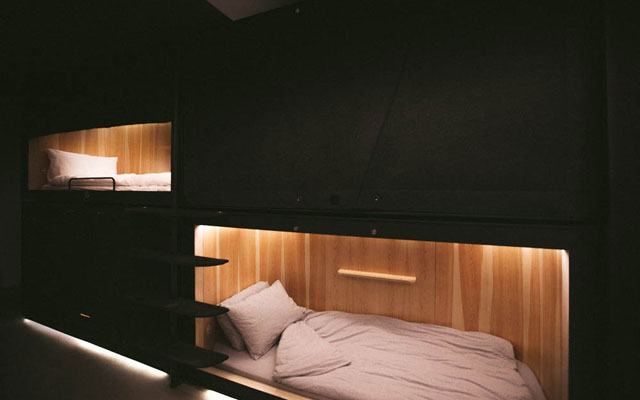
Hong Kong’s first licensed capsule hotel, Sleeep, is targeting an over ten-fold increase in its patented smart-beds (SLPers) from the existing eight to 100, this year.
Apart from opening an 18-SLPers hotel in Hong Kong’s Central next month, it will also add another 10 in Causeway Bay in June, followed by 46 in Silom of Bangkok this September.
Hong Kong-founded capsule hotel makes its way to Bangkok
Commenting on Sleeep’s foray into Bangkok, co-founder Alex Kot said: “This marks our first overseas property and it takes up an old block of building. Out of the six floors, two will be turned into a spa with a wellness theme, our first spa concept.”
The company chose Bangkok for its “vibrancy and immense innovative spirit”. Said Kok: “I think we can easily try different ideas there (which may be) tough to do in Hong Kong.”
Sleeep was conceptualised in 2014 when Kok and his partner took part in a competition that required candidates to use design to resolve urban city issues.
The duo proposed a capsule hotel as a solution to tackle shortage of space, sleep deprivation and high population density. Against the backdrop of an under-utilisation of space and fast-paced market with round-the-clock demand, Sleeep rose as the first licensed capsule hotel inside a 34m2 unit in November 2016. For last nine months, it was operating at full occupancy, and with excess demand.
“What sets us apart from (other capsule hotels) is the branding, patented innovation and technology. For instance, we stay ahead of the game by rolling out the second generation of SLPers, which is improved with better music and airflow whereas a brand-new version of double bed is equipped with premium movie theatre experience.”
There is a strong and growing market for capsule hotels, according to Kok. “In addition to overnight stays, we also sell quality sleep experience by the minute to allow users to pay only for what they need,” Kok shared. About 70 per cent of current bookings come from OTAs, while locals who work nearby popping in for an afternoon nap.
Seeing opportunities in the global growth in transit passenger volume, LCC and red-eye flights, the startup is also eyeing international airport locations. It is currently in talks to bring Sleeep to an airport in the Southern Hemisphere.
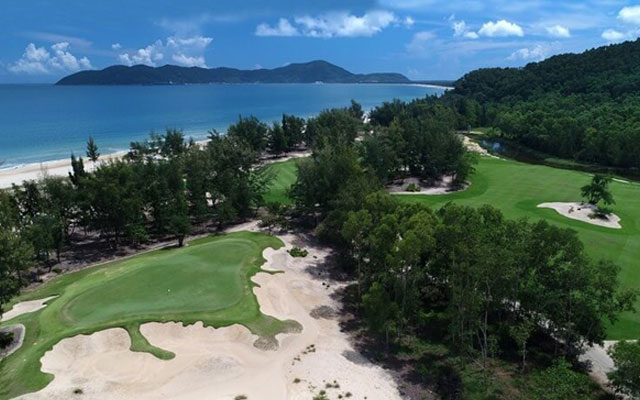
Golfasian, a Thailand- and Vietnam-based golf tour operator, has signed a strategic partnership with Vietnam Golf Coast, a DMO made up of six of golf courses in the central area of Vietnam.
This coordinated push was created to bring golf visitors to the Central Vietnam area and build on the region’s appeal, and to leverage Golfasian’s expertise in tying golf to other regional draws such as the cuisine, heritage and shopping.
Laguna Golf Lăng Cô
“Central Vietnam is certainly one of the best golf destinations in the region,” said Mark Siegel, managing director of Golfasian. “There’s everything from traditional links-style golf to tropical garden-style layouts. Together we can showcase all these great courses as well as the compelling tourism activities available in this part of Vietnam.”
“It’s a real boost for us to have an operator as able as Golfasian on board,” said Adam Calver, director of Golf at Laguna Golf Lang Co. “It has been the leader in golf tourism throughout South-east Asia for the past two decades – including being awarded the best tour operator in Vietnam several years running. Therefore, we are delighted to announce this strategic partnership as we aim to grow the game in Central Vietnam.”
Inaugurated earlier this year, the six member golf courses are Laguna Golf Lang Co, Ba Na Hills Golf Club, BRG Da Nang Golf Club, Montgomerie Links, Vinpearl Golf Nam Hoi An and the soon-to-open Hoiana Shores.
Established in Bangkok in 1997, Golfasian boasts a membership base numbering over 160,000.
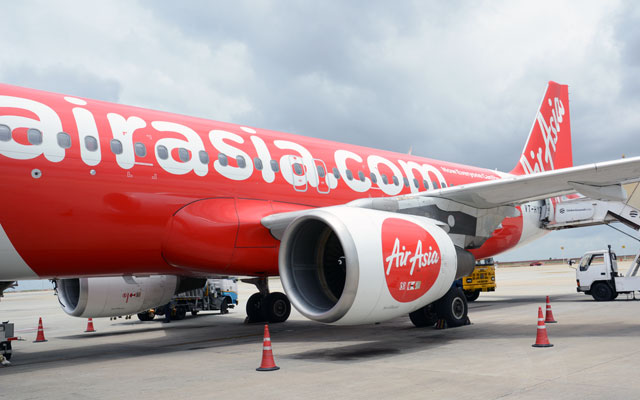
Tata Group gets controlling stake of AirAsia India as the airline comes under investigation for bribing government officials to get waiver from flying regulations
India’s Tata Group has increased its stake in AirAsia India to about 51 per cent, giving it controlling stake of its second airline, the other being Vistara, which is 49 per cent owned by Singapore Airlines.
Tata Group and its partner AirAsia Investments also injected five billion Indian rupees (US$71.9 million) to fund AirAsia India’s international growth plans, with the former putting in 51 per cent of the sum, The Economic Times of India reported.
Tata Group gets controlling stake of AirAsia India as the airline comes under investigation for bribing government officials to get waiver from flying regulations
Earlier, Tata Group and AirAsia each had 49 per cent stake, with R Venkataramanan, managing partners, Tata Trusts, and S Ramadorai, group executive, Tata Group, holding the rest.
The move comes as more than one of the country’s airlines find themselves in financial trouble. Just days after Jet Airways suspended all operations after failing to secure funding, Air India was reported to be short by around 90 billion Indian rupees to pay off debts due in the current fiscal year.
Tata Group is also upping its investment in AirAsia India at a time when the airline and AirAsia Group CEO Tony Fernandes are being investigated for allegedly bribing government officials to get a waiver in the foreign flying eligibility norms of five years and 20 aircraft.
Foreign travellers leaving Singapore will no longer need to have their passports stamped from today (April 22) onwards.
The Immigration and Checkpoints Authority (ICA) said it would stop issuing stamps of departure dates on travel documents, as part of ongoing efforts to simplify immigration processes.
Foreign travellers will no longer need to have their passports stamped; passengers at Changi Airport Terminal 3
Since September 2016, the departure stamp exemption has been in place for travellers whose fingerprints were enrolled via the BioScreen system on arrival in Singapore. These travellers have been able to use automated lanes when they leave the country.
Millennium Hotels and Resorts (MHR) has appointed Jean-Philippe Jacopin as general manager of Orchard Hotel Singapore.
Jean-Philippe will spearhead the development of MHR’s flagship 656-room property, following a multimillion-dollar transformation including a new lobby, grand deluxe rooms, function and event spaces, and F&B venues.
The hospitality veteran has over three decades of hotel management experience with global luxury hospitality brands in countries such as China, Japan, South Korea, Thailand, Switzerland and UK.
Increasing business activities, an expanding middle class and a growing bleisure market are some of the key factors driving demand for serviced apartments in Asia, spurring accommodation providers in the region to respond with robust pipelines and new brands.
The regional inventory of serviced apartments has exploded over the last four years.
According to the Global Serviced Apartments Industry Report 2018-2019, there are 116,603 serviced apartment units across Asia today, an increase of 63 per cent from 2015.
The growth trajectory for business travel, especially in Asia-Pacific, will continue to drive demand for bleisure across all regions worldwide, particularly for top destinations such as Singapore, Hong Kong, Tokyo and Shanghai, according to Richard Tan, vice-president, serviced suites, Pan Pacific Hotels Group (PPHG).
South-east Asia is projected to grow faster than elsewhere in the region, with demand primarily driven by Chinese travellers throughout the region, especially into Indonesia, Thailand and Vietnam, he added.
Shifting needs, blurring lines
While demand for serviced apartments continues to grow, international assignments are getting shorter as companies become more cost conscious.
Some of the cost-cutting measures include companies sending fewer married people with children overseas and offering international assignments of shorter duration, observed Onyx Hospitality Group’s president & CEO Douglas Martell, resulting in reduced demand for serviced apartments with several rooms.
At the same time, the modern working world is increasingly characterised by short-term contracts, freelance and remote work, co-living and co-working concepts have risen in popularity. The Great Room, Justco and WeWork are just some of the co-working brands that have popped up in Asia in recent years, and hotel operators like Ovolo have also jumped onto the bandwagon.
“The rising trend of co-living, along with co-working, is here to stay,” said Kevin Goh, CEO of Ascott.
Ascott has launched its co-living brand, lyf, to provide flexible communal spaces that facilitate collaboration, community building and social activities among guests. The first lyf property, lyf Funan Singapore, will open in 4Q2019.
The community spirit espoused in co-living is not a new concept though, said Arthur Kiong, CEO of Far East Hospitality (FEH). The company already segments its brands based on travellers’ profiles, e.g. serviced residences under the Village brand provide options for guests to engage in local festivities throughout their business trip, he shared.
In particular, families have risen as a notable growth segment for all the serviced apartment operators that TTG Asia spoke with, especially as multigenerational vacations grow in popularity among Asians.
“Millennials, who have become parents, are bringing their parents – active, healthy Babyboomers – along on trips as the grandparents play a large part in (grand) parenting the children. This is true of the Chinese market, as outbound family travel is often accompanied by grandparents,” observed PPHG’s Tan.
The trend is a perfect fit with the “homely” serviced residence product, he stated, as each unit typically comes with one or two bedrooms which can fit the whole family, plus a common living area, kitchen and family-friendly amenities such as washer and dryer.
“We also see a growing trend of families choosing to stay in serviced residences instead of booking multiple hotel rooms,” Tan added. “Compared to two connecting rooms or a suite in a hotel, a serviced apartment unit offers families or groups the convenience of space and facilities without a hefty price tag.”
A new breed of serviced residences
As lengths of stays become shorter and more leisure segments show a demand for serviced residences, operators have responded by offering more hotel-like services, further blurring of lines between the traditional focus of hotels and serviced apartments.
Pan Pacific Yangon
The “stronger demand for studio apartments over three-bedroom apartments and much shorter stays” has led Onyx Hospitality Group to roll out the Shama Hub concept targeting travellers from the “informal generation”, Martell revealed.
Unveiling the concept in conjunction with the recent Serviced Apartment Summit Asia 2019 in Bangkok, Onyx launched its prototype Shama Hub Bangkok Pratunam studio apartment to offer a first-hand experience of how the flexible space can sleep up to four people, incorporating a king-sized bed complemented by a foldaway wall with two additional beds, a modular mini-kitchen, modular seating that can be rearranged, and separate shower and WC rooms with dedicated vanity space.
“We came up with the Shama Hub concept because we already see from our existing Shamas that the demand for three- and four-bedroom apartments is getting less but demand for studio apartments and shorter stays is really increasing,” Martell said.
“Shama Hub is designed to meet the needs for high demand of studio apartments and (families or groups of friends) wanting to share a room together while getting a proper sleeping area,” Martell elaborated. “It’s a really inventive way to maximise a small footprint.”
The desire “to widen our range of products and services to appeal to the fast-growing middle-class hotel segment of customers who demand shorter stays at a mid-tier price” also underscored Ascott’s recent investment in Tauzia, a major hotel operator in Indonesia, according to Goh.
The Ascott has also launched Citadines Connect, a line of business hotels with selected services, in a bid to widen its short-stay offerings.
Hotels under this sub-brand will have tech-enabled features such as mobile keys, self check-in kiosks, smart washing machines or laundromats, content streaming-enabled TVs and Google cloud printers. Rooms within a Citadines Connect business hotel will mostly be studios ranging from 18m2 to 21m2.
As a predominantly corporate player, Oakwood now wants to tap growth in the leisure market where it sees rising demand, said Asia Pacific managing director Dean Schreiber.
“Our customers are demanding short stays, so we want to address our customers’ needs and develop products suited for them,” he said.
As well, the longer stay nature of guests make serviced residences a desired partner for consumer brands, Schreiber told TTG Asia.
The Oakwood Showroom was launched in its Singapore corporate office earlier this January for property owners to view and purchase in-room amenities. The showroom is a mock-up of a suite featuring the latest gadgets, furnishings and other homewares from various product partners, such as Samsung, Bang & Olufsen and Serta.
“A lot of partners we’re working with are all interested in this space because the customers engage with their brands a lot more in serviced apartments,” Schreiber shared.
“Our partners are very encouraged by the fact that they can put their brands in front of customers longer and the customers actually touch and use them, so we see an exciting opportunity. Our rooms are like showrooms for them.”
Airbnb opens up possibilities
As lines are blurred between serviced apartments and hotels, and the accommodation sector gets more crowded, what FEH’s Kiong finds a challenge is the “uneven playing field” that home-sharing platforms have brought in Singapore.
Village Residence Clarke Quay Facade
“Regulations here state that private residences can lease out their premises as long as guests stay for a minimum of three months. Yet, on home-sharing platforms, these lodgings can be booked for even a one-night stay. The intention and reality on the ground is very different,” he said.
“Serviced apartments on the other hand face a minimum six-night requirement, and are strictly regulated. The security and safety of the guests are also a high priority.”
Kiong added: “That brings us to the opportunity to reconsider the relevance of the service residence model with the six-night restriction; perhaps, doing away with or shortening the six-night requirement. This may be judiciously regulated to increase the room supply in Singapore, instead of allocating more land for hotel development where land is in short supply.
“With the deregulation of the serviced residences sector, we see the prospect of creating a new category of accommodation – aparthotels. This will target guests who would trade services for space. Those who do not need fancy services of a hotel, but need more space to have family with them or to cook in the apartment,” he elaborated.
But while Airbnb may have been perceived as a major disruptor in the hospitality sector, particularly persuading younger travellers to seek out alternatives to traditional hotel accommodation, the home-sharing trend has also shown that serviced apartments offer more freedom and space.
“Airbnb didn’t disrupt but made us rethink (our products). They are a solution, not a product,” Oakwood’s Schreiber stated.
“The likes of Airbnb puts us on our toes a bit more to be open-minded and give what the guest want, not what we want, e.g. getting rid of check-in and check-out times. We have to challenge ourselves a lot more.”
It’s an opinion endorsed too by PPHG’s Tan, who added that “the rise of the sharing economy has created unprecedented awareness in the accommodation space”.
“At the same time, lines between accommodation categories have definitely ‘blurred’, with home-sharing options, aparthotels and branded residences joining serviced apartments and hotels, not forgetting the proliferation of blended spaces, such as co-working spaces that double up as co-living spaces and vice versa.
“To capture this group of travellers, serviced apartments will need to better segment their markets to drive revenue and profitability, and employ a different strategy given shorter stays and higher guest turnaround,” said Tan.
Arrivals from Germany to the Maldives look set to keep its growth momentum, as the market’s traditional preferences hold steady while more affordable accommodation options open the destination up to new segments.
Overall, the German-speaking markets of Germany, Austria and Switzerland have posted slow but positive growth to the Maldives every year. While its growth is modest relative to other source markets, Germany represents one of the most resilient feeders for the Maldives.
Germany remains a core market for the Maldives
Germany is the Maldives’ second largest source market after China. Arrivals from Germany grew by 3.5 per cent year-on-year to reach 106,660 in the January-November 2018 period.
It seems demand could be further stimulated as the Maldives welcomes more big hotel chains and mid-market options.
“This makes a holiday in the Maldives affordable, especially for young couples, (but also for) friends or young families. The winners are the three- and four-star hotels, while five- and six-star ones are having a hard time,” according to Stéphanie Appenzeller, senior sales manager, Europe at the The Small Maldives Island, which has two properties in the Maldives.
Even as more affordable options open up, some maintain that five-star accommodation remain popular among Germans.
Thomas Meier, senior vice president-operations Asia for Minor Hotels, said: “Our five hotels have each seen an increase in guests from these markets during 2018, especially Anantara Kihavah Maldives Villa with an increase of 22 per cent versus 2017, and Anantara Veli Maldives Resort of 55 per cent year-on-year.”
While new resort categories are appealing to Germans, Andrew Ashmore, CCO at Coco Collection Hotels & Resorts/Sunland Hotels, said the German market remains “very traditional, brochurised and seek the peaceful style”.
At Coco’s Maldives resorts, which range from affordable to five-star, German guests have been steadily coming in, and stay for 10 to 14 nights, the longest among its feeder markets, Ashmore told TTG Asia.
Tracy Neureuther, director, Mosaic Tourism Consulting, said: “For Coco Collection, which we represent, the German-speaking market remains a very strong feeder with all key tour operators (recording) increasing figures.”
She added: “In general, positives speaking for the increase are airlift into the destination – with a good choice of direct connections from key cities, as well as the excellent coverage via Emirates.”
Meanwhile, Minor’s Meier pointed to an emerging preference for half-board accommodation among the German market.
“Luxury clients do not want full board or all-inclusive. Half board ensures they retain the freedom to choose during their holiday (while still) helping with budget planning at the time of booking.”
This contrasts with the observations of Howard Brohier, general manager of Diethelm Travel Maldives, who noted a growing popularity of resorts offering all-inclusive meal plans, complete with dine-around options and mini-bar inclusions.
Said Brohier: “In the past, all-inclusive meal packages lacked certain inclusions and were not offered by many five-star properties. However, as resorts add more value, we see the popularity of such resorts growing immensely.”
Suresh Dissanayake, assistant vice president – sales & marketing, Heritance Aarah & Adaaran Resorts, said: “(There is reason to be optimistic in 2019) with tourism bodies in the Maldives having planned a series of activities, starting with participation at ITB Berlin, to create more visibility in German-speaking markets.”