TTG Asia
Asia/Singapore Monday, 6th April 2026
Page 1233

Air New Zealand’s premium economy experience onboard the 787-9

0

WHY
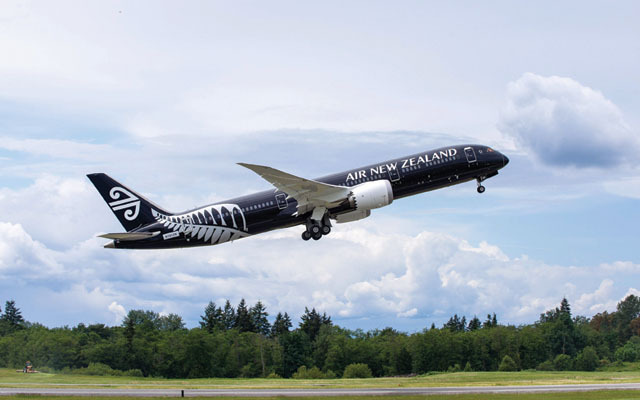
Air New Zealand was the first airline to fly the Boeing 787-9 Dreamliner aircraft in 2014. In 2017, Air New Zealand refreshed the cabin configuration by adding more seats to its two top classes in response to greater demand for these categories, particularly among longhaul travellers. The carrier’s Dreamliner planes now boast 27 business premier seats (up from 18) and 33 premium economy seats (up from 21).

Operating a daily service between Singapore and Auckland, the airline will launch seasonal flights to Christchurch from Singapore with the newly configured Dreamliner aircraft in December 2019.
WHAT
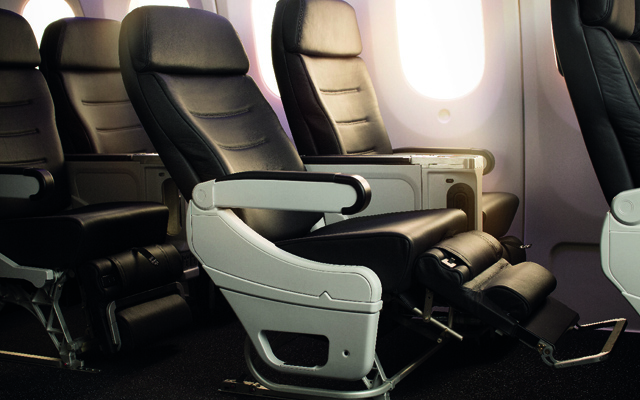
Air New Zealand offers four classes on board the B797-9 Dreamliner. The business premier features fully lie-flat beds, while premium economy seats are arranged in 2-3-2 configuration with a pitch of 41-42 inches and a nine-inch recline. The seat is 19.3 inches in width and five-inch wide armrest.

The economy class has a 3-3-3 configuration. The seat is 17.2 inches wide with a pitch varying between 31 and 33 inches, and a five inch recline.

The aircraft also features the Economy Skycouch, which is a row of three economy class seats turned into a couch after take-off. These seats are located on the left and right sides of the cabin.
HOW
Flying in premium economy, my black leather-upholstered seat was comfortable, offering ample space to stow my handbag and laptop under the seat in front of me. The stretched footrest allowed me to rest my petite feet throughout the flight.

The lower cabin altitude, large windows and wider aisle also gave the aircraft a more spacious feel.

I like the fluffy bedroom-sized pillow, which supported my head nicely when I adjusted the seat to its maximum reclining position for sleeping.
The personal touch screen in widescreen format serves both as an inflight entertainment device and an assistant. All information, whether it’s a tutorial on maximising our seats, flight details, weather at destination, cabin crew call button and personal light button, are located on the screen.

Air New Zealand’s inflight entertainment menu features over 1,700 hours of content, including latest movies, TV box sets, video, games and a dedicated kids’ selection.

During my evening flight to Auckland, I watched Aquaman during the first few hours of the meal service period and used the rest of the flight to sleep. My return flight, however, was a day flight so I could enjoy more films and some music.

In-flight entertainment does not have to be enjoyed alone on this flight. I had the option of enjoying the entertainment with company, simply by touching the Screen Share button. The Seat Chat button allowed me to chat with my fellow passenger on board.

A handheld remote is tucked beneath the armrest, while a power point and USB connection are also available to charge my gadgets.

The meals on board were fresh, tasty and generous in portion. I ordered diabetic meals and the catering team was creative in turning the limited variety of ingredients into tantalising meals.

Besides the two meals and a snack offered, passengers can also order crackers and cookies anytime during the flight. Wine lovers can also enjoy the wide range of quality New Zealand wine selections from the inflight cellar.

VERDICT
A business premier seat would be an ideal choice for a longhaul flight, but Air New Zealand’s premium economy does not pale in comparison, especially when it comes to the perks. Travellers get priority check-ins, free standard seat selection, two pieces of carry-on baggage for up to 7kg each and two pieces of checked baggage for up to 23kg each. Onboard, travellers also get an amenity kit with toiletries and comfort items inside.

For Thailand, promoting emerging destinations could be as simple as ABC

0
Thale Noi in Phattalung province one of the 'rising stars' TAT wants to promote
Thale Noi in Phattalung province one of the ‘rising stars’ TAT wants to promote

As the number of international tourist arrivals into Thailand surged past 38 million in 2018, the South-east Asian tourism heavyweight is seeing a greater urgency to encourage travellers to visit lesser-known parts in the country to take pressure off travel hotspots and spread tourist revenues to smaller destinations.

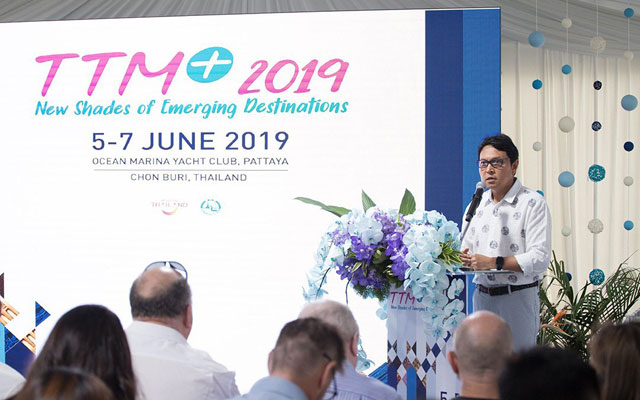
The Tourism Authority of Thailand (TAT), which finally removed arrival numbers from its annual target last year, again reiterated a “quality over quantity” focus for its international marketing strategies at the Thailand Travel Mart Plus (TTM+), which is currently taking place in Pattaya’s Ocean Marina for the second consecutive year.

Speaking at the TAT media briefing on the opening day of TTM+, TAT deputy governor for marketing communications Tanes Petsuwan said: “We are seeking a balance between quality versus quantity, marketing versus management… We are trying very hard to move Thailand from a mass to niche tourism destination.

Tanes: TAT ‘trying very hard’ to move Thai tourism from quantity to quality

“We are putting an emphasis on responsible tourism. The key is to manage numbers and create a higher level of environmental consciousness among the industry,” Tanes stated.

With sustainable tourism as its overarching goal, TTM+ 2019 is themed Open to New Shades of Emerging Destinations to put the spotlight on 55 provinces across Thailand, aligning with TAT’s marketing message of spreading international visitor footfall as well as revenue from major destinations to secondary destinations in the country.

According to Tanes, TAT’s emerging destination focus has reaped positive results, as the 55 provinces recorded six million trips in 2018, up 4.9 per cent from the year below.

Looking ahead, TAT is adopting the “ABC strategy” for its emerging destinations push, namely:

  • Additional (A), linking up major destinations with neighbouring emerging cities such as Chiang Mai and Lamphun and Lampang in the north, or Pattaya with Chanthaburi and Trat in the Eastern Seaboard;
  • Brand-new (B), promoting popular emerging cities with its own strong identity and positioning. A key example is Buriram, a province rich to strong Khmer heritage and is also up-and-rising global sports events destination with the launch of Chang International Circuit and MotoGP race;
  • Combine (C), co-promoting emerging cities with shared history or proximity, like bundling ancient Thai civilisations and kingdoms Sukhothai with Phitsanulok and Khampaeng Phet or Nakhon Si Thammarat together with Phattalung in a historical route.

In particular, Tanes also singled out Thale Noi, in Phattalung province in Thailand’s south, as “a rising star that TAT wants to promote”. Other emerging destinations rising in prominence are Chiang Rai, Trat, Sukhothai and Nong Khai, which are favoured among the Chinese, German, French and Laotian markets respectively.

But wouldn’t an emerging destination tack, besides spreading visitor footfall and revenue, also bring a host of issues such as visitor surge and congestion to smaller destinations, TTG Asia asked.

In response, Tanes didn’t deny the difficulty of maintaining the quality-quantity balance in emerging destinations, but he stated that TAT’s 29 offices worldwide and 49 domestic offices are “working closely to find the perfect match between the market and city”, and has also “invested in a lot of data and information to match demand and supply”.

Chiravadee Khunsub, TAT’s director of UK, Ireland & South Africa, shared that the UK market is particularly interested in culture and beaches, hence emerging destinations including Chiang Rai in the north, and Chumphon and Ranong have been promoted to this particular market.

Myanmar’s VoA move welcome but not enough, says trade

0
Shwezigon Paya, a Buddhist temple located in Nyaung-U, a town near Bagan

Myanmar’s travel trade has welcomed a move that will see six longhaul source countries granted visa on arrival (VoA), but claim more needs to be done to have a major impact.

From October 1, visitors from Italy, Spain, Russia, Germany, Switzerland and Australia will be allowed to enter the country via Yangon, Mandalay and Naypyidaw international airports, as well as some land crossings, for US$50.

Shwezigon Paya, a Buddhist temple located in Nyaung-U, a town near Bagan

While the industry has welcomed the relaxation in restrictions, member say additional efforts are essential.

Melissa Tan, Khiri Myanmar general manager, said: “It sends the message of Myanmar being very welcoming to European markets.”

However, she added these nations can currently apply for an e-visa, which is approved with email confirmation within less than an hour and costs the same.

Said Tan: “From the DMCs’ point of view, there is little difference as we have been, and will still, encourage guests to get e-visas before flying.”

Sammy Samuels, Myanmar Shalom Travels’ managing director, said the VoA should stimulate “some” growth, adding every year marketing towards European markets is increasing.

He said: “VoA is not key to recovery, but it is a very good initiative and we do hope to see visa-free entry given to some western countries that would attract more travellers.”

While “something is better than nothing”, Hla Aye, managing director of Shan Yoma Travel & Tours, thinks more direct flights from Europe are necessary.

Tan added more regional flights are also needed, with many European visitors travelling to South-east Asia missing out Myanmar due to limited connectivity.

“We’re connected to large destinations like Thailand and Vietnam, but not smaller ones like Cambodia or Laos. The majority of trips we book from Europe to the smaller nations do combine a larger South-east Asian country, but we often miss being considered entirely by not having direct flights.”

As well, Bertie Lawson, Sampan Travel managing director, believes high prices remain a barrier. “The high prices of domestic flights and other transport and activities are larger stumbling blocks. In many aspects, Myanmar remains more expensive than its neighbours, and this is problematic for many would-be visitors.”

Hilton unveils two new brands in Thailand

0
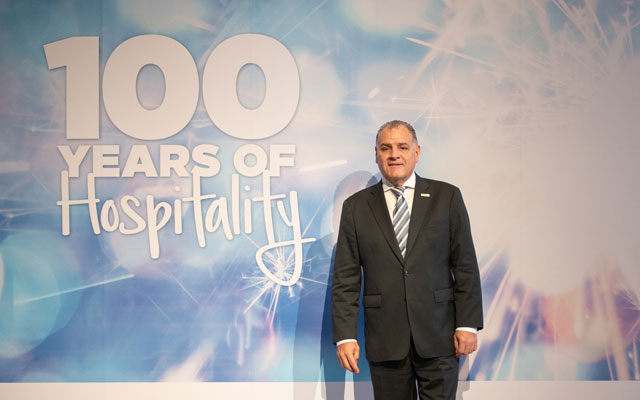
Hutton talks Thailand pipeline at Hilton's 100th anniversary event

Hilton is launching two new brands, Canopy and Hilton Garden Inn, into the Thai market to capitalise on tourism growth particularly in the lifestyle segment.

Scheduled to open its doors in 2022, the Canopy by Hilton brand will be located in Bangkok’s Sukhumvit area, with 176 keys, marking the brand’s second property in South-east Asia after Kuala Lumpur.

Hutton talks Thailand pipeline at Hilton’s 100th anniversary event

Hilton Garden Inn will open on the bank of Chao Phraya River, near the new luxury mall IconSiam, with 244 rooms.

Speaking to TTG Asia, Paul Hutton, vice president operations South East Asia, said bringing the Canopy by Hilton brand into top travel destination like Bangkok would help capitalise on the lifestyle segment, which has been increasing in Bangkok in recent years.

As part of the Canopy brand, a special team of enthusiasts will bring guests to explore unique local experiences in the areas such as food and drinks, art, shopping and running paths.

Hilton Garden Inn will offer customers an all-day-dining restaurant, fitness facilities, rooftop bar as well as meeting rooms.

“Thailand is a tremendous (successful) destination for tourism as arrivals keep increasing and it still has opportunity for further expansion. The quality of our airports and accessibility, as well as good infrastructure will drive growth,” he added.

The American hotel company also has five other projects in the pipeline and expects to start management within next three to five years.

Once all pipeline hotels open, Hutton said Thailand will become Hilton’s biggest South-east Asian market with the strongest brand presence – offering six brands in total.

Currently, Hilton manages 11 properties with over 3,000 rooms in total under four different brands – Waldorf Astoria, Conrad, Hilton and DoubleTree by Hilton. In the future, the group will be launching Curio Collection by Hilton into the region.

Regionally and beyond, the group operates hotels in nine markets: Indonesia, Malaysia, the Maldives, Myanmar, the Philippines, Singapore, Sri Lanka, Thailand and Vietnam. The group will soon be entering into two new markets, Lao and Timor-Leste.

Correction: This article earlier stated that the upcoming Canopy and Hilton Garden Inn properties in Thailand will be the biggest of both brands – that is incorrect. Thailand will hold the biggest brand presence within South-east Asia for Hilton when all pipeline hotels open. As well, Hilton does not have an existing pipeline in the destinations of Chiang Mai, Chiang Rai, Krabi and Rayong. The story has been updated to reflect that. 

Hospitality training gets Boost in mobile space

0
Taylor: investing in staff training for better employee retention and guest experience

Hospitality players now have another solution to address the perennial concern of skilled staffing, as Singapore-based Boost expands its presence in Asia.

Boost provides mobile training programmes, which include English and Chinese languages, vocational training for F&B service, housekeeping and upselling skills. Last month, it appointed Horst Schulze as director and board member.

Taylor: investing in staff training for better employee retention and guest experience

Schulze comes from a career in the hotel industry spanning more than six decades, including co-founding The Ritz-Carlton Hotel Company and founding The Capella Hotel Group. He will advise Boost on course content and curriculum and apply his own experience of service excellence to Boost’s mobile training programmes.

He explained: “Mobile training technology provides employees with the ability to learn consistently and continuously. For language learning this is vital as constant, bite-sized, regular learning is key to mastering a language. Mobile training is also very flexible.

“I intend to work with the Boost team on their curriculum and training programme, looking for ways to refine and level up their training.”

Launched in October 2018, Boost is currently used in 225 hotels in Asia to train more than 20,000 hotel employees. Hotels engaging the solution include Shangri-La Hotels & Resorts, Hyatt Hotels, Marriott International, Hilton, Accor Hotels, InterContinental Hotels Group, and some “small, boutique hotels”, said Allan Taylor, CEO of Boost.

The mobile training solution has been positively received in the region, remarked Taylor.

He shared with TTG Asia: “A typical reason that hotels would hold back on employee training is the belief that they will leave anyway, so why invest in training? Our clients especially know this to be short sighted and understand that if they train them, educate them and certify them then not only will they have more confident, highly skilled employees but they will also have loyal employees who will think twice before leaving. They get the double benefit of better guest service and lower employee recruitment and training costs.”

He mentioned that one of Boost’s clients, The Continent Hotel Bangkok, has seen a five per cent increase increase in upsell revenue year-on-year since it started on the Boost Upsell programme.

“We are seeing the same kind of results from our other hotel partners around the region, with many general managers noticing a substantial increase in the confidence of their employees, which in turn leads to better guest service,” observed Taylor.

Boost is headquartered in Singapore and has offices in Indonesia, Japan, Thailand, China, as well as R&D centres in China, Vietnam and Ukraine. Taylor revealed that the company will open in the Middle East in 2020 and continue expanding in South-east Asia with a focus on Vietnam.

The Boost suite of mobile solutions is available on Android and iOS mobile devices, and to hotels and resorts.

IATA, Star Alliance extend passenger verification partnership

0
ss

IATA and Star Alliance have renewed their collaboration on traveller document verification.

In a signing ceremony at IATA’s 75th Annual General Meeting in Seoul, the two agreed that IATA’s Timatic AutoCheck solution will continue to power Automated Document Check (ADC) for Star Alliance member carriers.

IATA’s Timatic AutoCheck solution will continue to power Automated Document Check for Star Alliance Carriers

IATA Timatic AutoCheck enables Star Alliance customers checking-in at the airport counter or online to verify that their travel documents are valid and complete for the whole journey, including any transit point before travel begins.

This, IATA says, delivers benefits such as:

• Preventing the embarrassing and distressing situation for passengers of being denied entry to a country on arrival owing to missing or invalid documents,
• Enabling a seamless experience when travel encompasses multiple carriers. Passengers will no longer need to see an agent to have their travel documents checked and rechecked at transit points, and
• Avoiding the passenger fine to airlines for transporting inadmissible passengers

Jeffrey Goh, CEO Star Alliance said: “This marks another milestone in our continuing strategy to improve the passenger travel experience, especially for those customers who fly on multi-carrier journeys. Our partnership with IATA to extend collaboration on passenger document verification through use of IATA’s Timatic AutoCheck to support our proven solution of the ADC will help ensure a seamless travel experience for our members’ 775 million passengers, a priority at the heart of our strategic repositioning.”

“Digital transformation is essential to meeting evolving passenger expectations today and into the future. Star’s selection of Timatic will give its customers a better experience,” commented Alexandre de Juniac, IATA’s director general and CEO.

Qantas, American Airlines JV likely to materialise

0

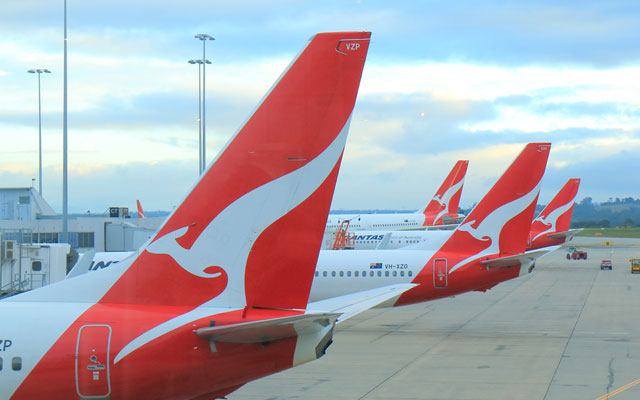
Qantas and American Airlines are creating a joint venture to better serve customers flying between the US and Australia and New Zealand.

Final approval of the joint business will allow for commercial integration between the two carriers, delivering new routes and customer benefits, including:

  • The opportunity to launch new routes and flights to new destinations, including to city pairs not currently served by either carrier;
  • An expanded codeshare relationship and optimised schedules on trans-Pacific services, opening up more connections to more destinations and reduced total travel time;
  • Better access to seats on each carrier’s network, leading to lower fares.
    Additional frequent flyer benefits by further integrating the carrier’s programmes, including higher earn rates for points on each other’s networks beyond what is possible today through oneworld, as well as increased redemption opportunities and improved reciprocal end-to-end recognition of our top-tier frequent flyers;
  • Co-location at airports, investments in lounges, baggage systems and other infrastructure designed to better serve the carriers’ joint customers

As part of the case put to the US Department of Transportation (DOT), Qantas and American flagged an intention to launch several new routes within the first two years of the proposed joint business.

Qantas expects to announce details of two new routes – Brisbane-Chicago and Brisbane-San Francisco – once final approval is received.

“As was evident in the unprecedented level of public support for this application, the joint business will also create additional jobs at our respective companies and in the industries we serve,” said American’s chairman and CEO Doug Parker.

Qantas Group CEO, Alan Joyce, said: “For more than 30 years, Qantas and American have connected the US and Australia as partners. This joint business means that we’ll be able to deepen this partnership to offer new routes, better flight connections and more frequent flyer benefits.”

A final decision from the DOT is expected in the next few weeks.

Holiday Inn takes little ones behind the scenes

0

Holiday Inn Resorts is inviting little travellers to try their hands “working” in its hotels through the Little Big Hotelier programme.

Four to 12 year-olds are taken through an edutainment experience that brings learning to life through role play in different properties in Asia.

Participants take up make-believe roles in key departments and learn new skills, all under the guidance of the Holiday Inn Hotelier crew and their parents.

Shantha de Silva, head of resorts and Thailand and Indonesia at InterContinental Hotels Group, said: “The programme helps empower children to embrace the world as their classroom. From restaurants to housekeeping, recreation to engineering. A resort is the perfect environment for children to gain invaluable skills, be it effective communication, interaction with others, basic culinary and recreation skills.”

“Children of various nationalities and ages can come together to spend their day with our crew and have a whale of a time learning not only the operational aspects of running a hotel but also learning from each other and the multiple resort personalities that they can encounter during their stay.”

To take part in the programme, kids register at the resort’s Holiday Inn Kids Club, choosing the time and role they’d like to experience across a variety of jobs.

The participating hotels are: Holiday Inn Resort Bali Benoa, Holiday Inn Resort Baruna Bali, Holiday Inn Resort Batam, Holiday Inn Resort Penang,
Holiday Inn Resort Krabi Ao Nang Beach, Holiday Inn Resort Phi Phi, Holiday Inn Resort Phuket, Holiday Inn Resort Phuket Mai Khao Beach, Holiday Inn Resort Vana Nava Hua Hin and Holiday Inn Resort Kandooma Maldives.

Detective Conan’s tribute to Singapore sparks tourism push

0

An upcoming Japanese animated film has sparked a series of publicity pushes for Singapore, which serves as an unprecedented setting for the show.

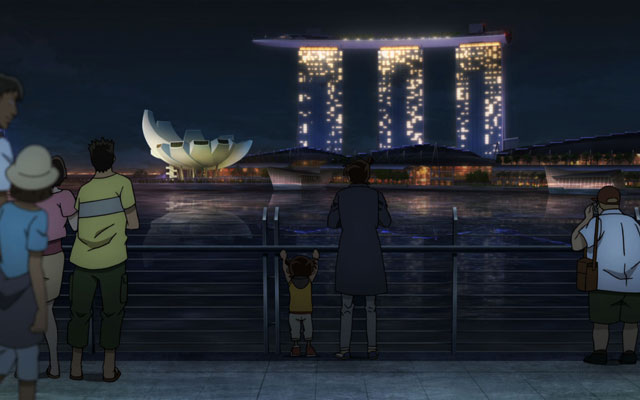
Detective Conan: Fist of the Blue Sapphire heavily features iconic scenes of Singapore, and it is the first of 23 movies under the popular Japanese franchise Detective Conan set outside of Japan.

In its home country, the movie beat out Avengers: Endgame as the best-selling movie in the box office for three weeks after its debut.

Scenes of Singapore featured in the movie include Marina Bay Sands, Raffles Hotel, Suntec City, Merlion Park, Gardens by the Bay, shophouses and Maxwell Food Centre, as well as local dishes such as chicken rice and kaya toast.

Chang Chee Pey, assistant chief executive, international group, Singapore Tourism Board (STB), shared that the Japanese movie studio committee first approached STB in 2017 with the intent to feature Singapore and continued to consult the NTO on recommendations for locations to feature.

Director Chika Nagaoka revealed that some settings in the movie – such as the Fountain of Wealth at Suntec City and the Marina Bay Sands light show – were written into the script after she was “inspired” by a visit to Singapore.

To capitalise on this release, STB has moved in on a series of product partnerships with tourism players. Chang said: “Local tourism stakeholders have been very supportive, and worked with us to create products that will drive visitorship.”

For example, Singapore Airlines will launch Detective Conan-themed amenities and sakura mochi on all outgoing flights from Japan. STB also partnered with Japan travel wholesaler HIS to create a Detective Conan travel package, under which visitors will tour film locations in Singapore on board Detective Conan-themed buses.

In Bangkok, STB has collaborated with a café to offer Detective Conan-themed sweets and drinks. Fans can also pose for photos against backdrops of scenes from the movie.

Singapore’s Chinatown now also sports a Detective Conan mural depicting protagonist Conan interacting with a traditional street food hawker amidst a durian feast.

The portrayal of Singapore in this movie is hoped to reach key markets in Asia, namely Japan, Thailand and Indonesia, said Chang.

Belitung’s international tourism dreams dashed with termination of Singapore flights

0
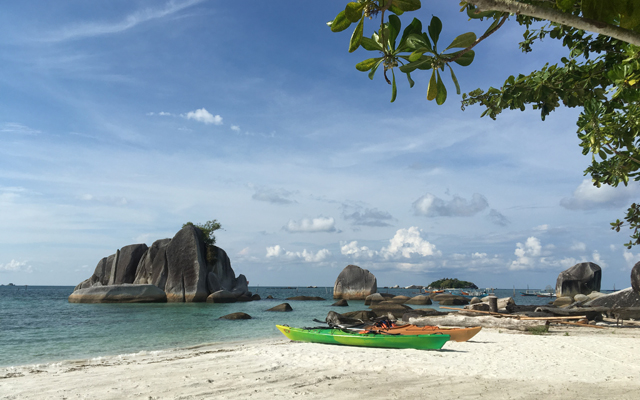
Belitung, a new alternative to Bintan for Singaporeans seeking getaway

The cessation of Garuda Indonesia’s four-times-weekly services between Singapore and Belitung has not only dashed the Indonesian island’s fledgling ambitions for international traffic, but also resulted in loss of business within the travel trade.

Matius Putrawan, CEO of Kasih Karunia Tour, reported that bookings from overseas fell more than 80 per cent since the loss of the Singapore connection.

The flights allowed Belitung to be sold as a new alternative to Bintan for Singaporeans seeking getaways

“From January to March, we had around 300 international travellers. The number has fallen drastically to only 14 since April,” he said.

His efforts to leverage the flights to sell new packages will also be in vain now. “I was planning to develop the Chinese market by selling China-Singapore-Belitung tour packages. I had (made sales calls) to several travel agents in China earlier this year.”

Yudianto Evan Setiawan, director of Billitonesia Tour, is having to cope with similar loss of business.

“A few groups were planning to visit Belitung in June and July, but this (service) closure inevitably made them cancel their trip and we lost the business.”

Without a direct link, Singapore and overseas clients are now “thinking twice” about selling Belitung, as domestic flights via Jakarta are more expensive, he added.

“At this moment, the dream to make Belitung an international destination is broken,” Yudianto said.

Even though demand tends to be slow in the first six months of introducing a new product, he has seen “pretty good response” the the past months. “We might have just introduced products last November, but we already received several tour groups from Singapore during February-April.”

In the absence of direct flights from Singapore, his clients in Singapore and overseas are thinking twice about selling Belitung. The alternate route is through Jakarta, but it is not favoured due to being time-consuming and relatively expensive.

Now, the travel trade is looking to LCCs to possibly pick up where Garuda left off. “We’re relying on AirAsia, which is said to launch flights from Kuala Lumpur in August. Hopefully the regional government will materialise the cooperation with AirAsia,” Yudianto expressed.

Following Garuda’s termination of the route, Isyak Meirobie, deputy regent of Belitung, has moved quickly to meet with several airlines, including AirAsia and Jetstar. “The biggest obstacle in growing Belitung’s tourism lies in access. Garuda’s termination of the Belitung-Singapore flight routes has (disappointed) the industry, “said Isyak in a media statement.

The regional government of Belitung also gained audience with Moeldoko, the chief of staff of president, in hopes the central government would help ensure smooth issuance of flight permits for AirAsia and Jetstar.

If everything goes to plan, AirAsia will start Kuala Lumpur-Belitung-Jakarta route from August 8, 2019, while the regional government expects to welcome Jetstar’s Singapore-Belitung services after July.