The Indian Railway Catering And Tourism Corporation (IRCTC), a subsidiary of Indian Railways that manages its internet ticketing operations, is looking to officially close distribution of its tickets through agent networks in a move that is expected to impact thousands of small enterprises.
There are more than 100 principle service providers (PSPs) who have been authorised by IRCTC to book tickets, and who further have a network of 300,000 sub-agents, also referred to as retail service providers (RSPs), at present.
Indian Railways looks to cease agent reliance
IRCTC, via communication to all its B2B PSPs, of which TTG Asia managed to obtain a copy of, has stated that there will be no annual renewals of their contracts and that they will also not be able to create new RSPs.
Jyoti Mayal, president, Travel Agents Association of India, said: “This is a very negative move as booking tickets is a source of income for many travel agents. We already have a restriction on the mark-up fee we can charge on a ticket. Many markets like Europe offer train tickets for travel agents to sell. Also, it brings ease of business to the table.
“With this move, touts who offer (passengers) rail tickets are going to come back. It is a further setback when our businesses are at a standstill due to the Covid-19 pandemic. The government should support us.”
Internet and Mobile Association of India has also expressed its disappointment on the proposed move, saying that apart from loss in employment and investment of companies, it will also impact bookings made on IRCTC as “there are people in India who need assistance for booking tickets”.
According to a source in IRCTC, the authorities decided upon the drastic step as a large number of agents were found booking train tickets meant for ‘tatkal’ (tickets Indian Railways offer to travellers with immediate travel plans that are released a day prior to the departure date) through fake e-mail addresses and mobile numbers using illegal software. Agents are unable to book tatkal tickets within the first 15 minutes when the window for the bookings open. However, these illegal software available in the market help agents to overcome such restrictions.
Airports Council International (ACI) Asia-Pacific is adjuring governments in the Asia-Pacific and the Middle East regions to take swift action to safeguard airports’ interests.
The association suggested five specific measures, which includes suspending airport slots usage requirements till end-June — with a potential for extention into 2H2020 depending on market conditions.
ACI Asia-Pacific urges governments to take steps to lift burden off its airport members
This will allow airlines to allocate and move resources according to the fall in passenger traffic, and ensure better protection of connecting traffic at hub airports, said ACI.
Meanwhile, the remaining four measures will directly alleviate the financial burden for airports.
Among them are the provision of tax relief — including waiving passenger departing taxes — and the deferring or suspending airport operators’ concession fees to governments.
Governments are also urged to provide financial assistance and to protect airport revenues from global waiver of airport charges or blanket discounts and to offer to bear the consequences of pegging charges at a higher amount.
ACI urged governments to take these steps amid an “extremely challenging” environment for its airport members, with data showing an 80 per cent decrease in traffic across Asia-Pacific member airports year-on-year in the second week of March.
“(Member airports) have already burnt through about 10 per cent of total yearly revenues in just three months,” said Stefano Baronci, director-general, ACI Asia-Pacific. “Relief measures are needed … to save jobs and allow economic recovery,” urged Baronci.
According to ACI’s revised forecasts, losses in 1Q2020 among airports in Asia-Pacific and the Middle East are expected to come in at approximately US$5.6 billion and US$1 billion respectively. Losses in the Middle East across 2020 are approximated at more than US$2 billion.
Smaller airports serving less than one million passengers a year cannot be neglected, as their survival ensures “the long-term social and economic benefits of (air) connectivity”, noted ACI.
Indonesia’s Ministry of Tourism and Creative Economy has partnered with several tourism and transportation players to provide accommodation and transport for medical frontliners and members of the Covid-19 Task Force.
At a press conference on March 26, minister of tourism and creative economy Wishnutama Kusubandio said a collaboration with Accor is underway to utilise the latter’s portfolio of properties to accommodate 1,100 medical staff in Jakarta, as part of phase one of the programme.
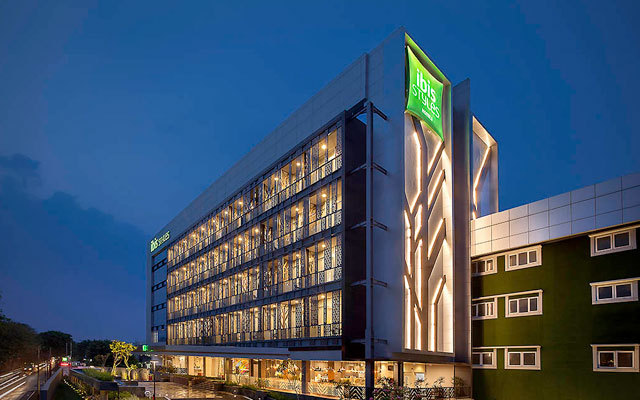
Ibis Styles Jakarta Sunter is one of the hotels in the Indonesian capital offering its facilities to house medical personnel and task force members during the Covid-19 pandemic
The ministry has also teamed up with BlueBird Group, Panorama Destination, White Horse Group and Antavaya Group to provide transport for medical workers and task force members in the Indonesian capital.
A budget has been set aside by the ministry to provide 615 rooms across five hotels and some 27 buses for the National Agency for Disaster Management in this initial stage.
Hotels selected for the programme are located near hospitals in Jakarta, namely, Cipto Mangunkusumo Hospital, the Gatot Subroto Army Hospital, the Sulianti Saroso Infectious Diseases Hospital and Persahabatan Hospital, according to Wishnutama.
Meanwhile, buses will commute medical personnel and task force members between the hospitals and hotels.
Participating suppliers must follow the standard operating procedures established by the Ministry of Health. Among the requirements are that hotel staff and guests must go don protective gear, use disinfection gates, and have their temperature checked.
Wishnutama called on hotels and transportation companies in other areas to take part in the programme, provided they meet certain requirements, such as being in the vicinity of relevant hospitals and not having retrenched any of its staff.
Wishnutama added that the ministry would pay the hotels at prices below the market rate, and that the cooperation would help keep the hotel and transportation industries afloat during these trying times.
Adi Satria, vice president of sales, marketing and distributions Indonesia, Malaysia and Singapore, Accor Hotels, said that the participating hotels – such as Novotel Cikini, Mercure Cikini, Ibis Styles Jakarta Sunter, and Ibis Senen – will not be accepting any regular guests during this period.
“All our teams who serve the (special) guests will also stay in-house to safeguard all parties,” he added.
WEHA Transportasi Indonesia, one of the transport companies supporting the government’s initiative, is providing four buses in the initial stage.
Its director of sales and marketing, Tiodora Bonardi, said: “On our part, we are ready to provide any number of vehicles they need.”
Tiodora added that the ministry would take care of drivers’ accommodation and meals, and provide all health and safety equipment needed during the programme.
“They will also train our drivers on the procedures and protocols to handle the guests, and how to keep themselves and the vehicles clean, healthy and ready at all times,” she added.
Indonesia’s Ministry of Environment and Forestry (KLHK) has ordered a temporary closure of 56 national parks and conservation sites nationwide, in a bid to further curb the spread of Covid-19 in the country.
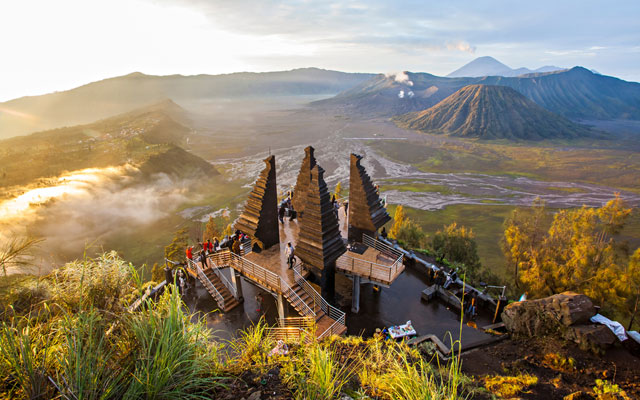
Affected sites include popular national parks such as Bromo Tengger Semeru and Mount Ijen in East Java, Tanjung Putting in Central Kalimantan, Mount Rinjani in Lombok, Mount Merapi in Yogyakarta, and Komodo in East Nusa Tenggara.
Bromo Tengger Semeru National Park is among the 56 conservation zones that have been indefinitely closed to stem the Covid-19 spread
Wiratno, director general of Natural Resources Conservation and Ecosystems, said in a press statement that more protected sites may be added to the list. Furthermore, all cruise ships have been banned from entering Komodo National Park, Wiratno added.
Activities surrounding wildlife rescue, rehabilitation and release of animals will still be carried out amid the closure, depending on the on-ground situation, according to park authorities.
Tour and travel agents, meanwhile, have welcomed the shutdown order, saying it will not only stem the virus spread, but give time for the conservation zones to rest, and provide an opportunity for park operators to repair and maintain facilities in those areas.
Abed Frans, owner of Flobamor Tours, shared that KLHK’s initiative was a “timely and wise” decision. “Although there is no valid research on animal transmission, we must take precautionary measures,” he said.
Monas Tjahjono, managing director of Monas Tours and Travel, expressed hopes that the park authorities will use the closure period to improve the areas’ sanitation facilities, such as toilets and wash basins, as travellers will be more hygiene-conscious post-pandemic.
Additionally, Monas proposed that medical personnel be assigned to clinics or surveillance posts around the parks, to bolster tourists’ sense of security when the parks reopen.
Meanwhile, Donny, owner of Adonta Global Trip, urged the park operators to consider virtual tours and live streaming of the national parks to allow people to continue exploring those sites during the closure, which will also help raise exposure for the attractions.
Malaysia looks forward to more travellers from Europe as Tourism Malaysia ramps up promotional efforts with Visit Malaysia Year 2026
The chiefs of Malaysian Association of Tour and Travel Agents (MATTA), Malaysian Association of Hotels (MAH) and Malaysian Association of Convention and Exhibition Organisers and Suppliers (MACEOS) have expressed their disappointment in Malaysia’s economic stimulus package which was announced on Friday.
The RM250 billion (US$57 billion) package is aimed at bolstering its economy and providing relief to individuals and businesses, which are grappling with the impact of the Covid-19 pandemic. It comes in addition to the RM20 billion fiscal stimulus package rolled out last month.
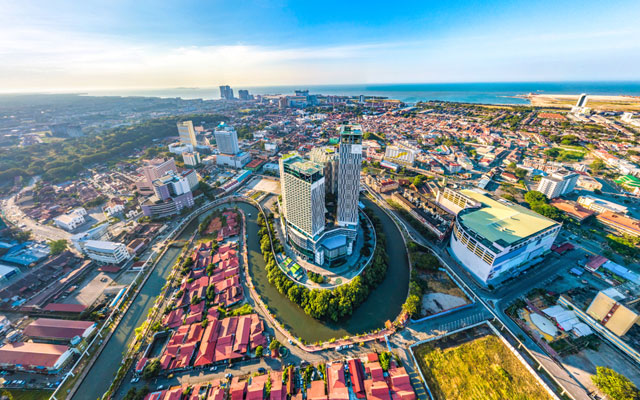
Malaysia trade urges government to review new stimulus package; Malacca City skyline pictured
Highlights of the new package for businesses include providing employers a RM600 monthly wage subsidy for three months to help them retain staff who earn below RM4,000 monthly; giving employers payment options in contributions to the Employees’ Provident Fund (EPF), such as restructuring of contribution schedules or staggering outstanding payments; exemption from the mandatory Human Resources Development levy for six months; and a three-month deferment of income tax instalment payments for all SMEs, beginning April 1, 2020.
Businesses and households will also enjoy free Internet from April 1 until the Movement Control Order ends, and electricity discounts of between 15 and 50 per cent for six months for those with usage below 600 kWh.
Mustapa Mohamed, the minister in the Prime Minister’s Department (Economy), said the stimulus package is “among largest in world”.
However, the travel trade has begged to differ.
MATTA president, Tan Kok Liang, issued a statement that expressed the disappointment in the stimulus package felt by his members. MATTA members said the stop-gap measures failed to address the key issue of job retention in the tourism industry, especially for SMEs
“What will happen after the handouts are fully given out by May when employees find themselves out of a job because the businesses they used to work for have been forced to close?” he asked.
Malaysia’s tourism sector, which employs 3.5 million people and contributes 15.2 per cent to the nation’s GDP, has seen revenues fall by a staggering 90 per cent in March and is looking at a near total-loss in business for the months of April, May and June, according to a MATTA press release.
Tan added that the stimulus does not address the fundamental needs of businesses and will eventually lead to companies having to lay off employees in order to stay in business – a move that will have a “long-lasting ripple effect on many other industries”.
“At this point in time, both employers and employees are willing to compromise to keep people employed but the government is making it somewhat difficult for everyone. For instance, the EPF contributions are only deferred and even then, subject to approval. Even the RM600 staff retention subsidy has questionable eligibility criteria.
“From the way it looks, employees can look forward to some small relief in April and partly in May, but after that, with the prospect of retrenchment looming, they are essentially on their own,” Tan said.
Similarly, MACEOS president, Vincent Lim, has urged the government to review the stimulus package, such that it would benefit players in the events industry in the long run.
“Currently, all business owners are cash-strapped as there are overheads to be covered during this uncertain period. As at March 15, the business events industry has accumulated a total loss of no less than RM1.5 billion. A total of 53 business events have been cancelled, while another 57 events have been postponed indefinitely,” he said in a statement.
With the pandemic, it is expected companies will face difficulties or even wind up soon. At the moment, members of MACEOS are already bracing for the fallout to extend beyond 2020.
Lim added: “As the Stimulus Package 1.0 did not address much of the concerns raised by the private industries, in particular the business events sector, MACEOS expected that a follow-up package would have mitigated some of the major needs expressed officially to the government through the association.
“The priority should be on assisting businesses, particularly SMEs, in order to sustain the country’s economy. When businesses, especially SMEs, have to wind up tomorrow, many will be forced to retrench their employees.”
Malaysian Association of Hotels (MAH) president, Kamaruddin Baharin, said that the wage subsidies given to employees fall below industry expectations.
“The hotel industry, in particular, had earlier proposed a minimum of RM1,000 per employee, or a minimum equivalent of 50 per cent of the employee’s monthly pay, for a period of six months. This is in response to a much lower occupancy rate projected for the coming months, looking at the situation worldwide,” he said.
“We are looking at an average occupancy for Malaysia of nothing more than 25 per cent in June, and that is if the Movement Control Order ends on April 14 and the spread of Covid-19 (is brought) under control. Recovery is not expected until the third quarter, with the industry putting hopes in the year-end holidays to ease (impact of) accumulated losses for the year,” he detailed.
Kamaruddin added that MAH’s call for banks to waive interests on top of the moratorium, and to reduce employers’ contribution, were not included. Instead, employers are encouraged to consult the EPF on restructuring, rescheduling or postponement of contributions from April 15.
“We all need to work with what is given now, and we will continue to engage and update the government on the situation on the ground, and whether the initiatives are helping (tourism businesses) or if hotels are still forced to close given such unprecedented economic pressures,” he said.
Since February, 2,041 employees in the hospitality industry have been laid off, while 9,773 have gone on unpaid leave and another 5,054 forced to take pay cuts, according to MAH statistics. This number is based on a sampling size of 56,299 employees and is set to grow over the next few months.
Malaysia Budget Hotel Association deputy president Sri Ganesh Michiel has called on the government to introduce a separate stimulus specially catered to the tourism sector.
Meliá Hotels International (MHI) has appointed Ernesto Osuna as general manager of Meliá Koh Samui, the brand’s first international property, in Thailand.
Having been with MHI for seven years, Osuna’s previous roles in the company include cluster general manager for two Meliá properties in Zhengzhou, China – Gran Melia Zhengzhou and INNSIDE Zhengzhou. The Spaniard also oversaw the 2015 opening of Meliá Danang in Vietnam, and was also general manager of Meliá Buenavista in Cuba.
The industry veteran began his career at the Ritz Hotel in Madrid in 1997 as a room service operator, waiter, and then, restaurant supervisor. He then swiftly rose through the ranks and assumed hotel manager and general manager positions at numerous five-star resorts, such as Starwood Hotels & Resorts, Westin Hotels & Resorts and The Excellence Collection.
Japan’s travel trade is scrambling to establish the fallout from the postponement of the Tokyo Olympic and Paralympic Games to 2021, but experts say the current Covid-19 crisis may have more impact on the nation’s tourism and service sector than the Games’ delay.
About 8.5 million international tourists were expected to visit Japan during the Games, according to the Tokyo Metropolitan Government. In addition to their accommodation, an estimated 46,000 rooms were booked for organisers, sports officials, media and sponsors.
Japan’s destination promotions in the lead up to Tokyo 2020 may have already paid off
The resulting total consumption over the period was forecasted by Goldman Sachs to reach US$1.3 billion for international visitors and US$3.6 billion for domestic visitors.
The loss of revenue is a huge blow, but analysts are split on their views on how devasting the postponement will be.
Some are concerned that postponement may reduce demand for the estimated 300,000 international and nine million domestic spectator tickets. Some 4.5 million tickets have been sold in Japan.
Others say Japan has benefited from Olympics publicity, as seen by continued growth in visitor numbers in recent years, which indicates that investment in destination promotion has paid off. Furthermore, a visitor boom during and following the Games is still possible; the timeline is simply extended.
Of immediate concern for the trade is cancellations and steps to address the revenue loss this summer. Tokyo hotels and other hospitality providers told TTG Asia anonymously that decisions on cancellation policies are being swiftly worked out.
This comes at a difficult time as hotels are coping with the loss of events following the Japanese government’s advisory against mass gatherings as Covid-19 continues to spread.
Larger hotel brands can more easily weather the storm than independent operators.
As of March 25, six businesses in the tourism industry and three in the F&B sector have filed for bankruptcy in Japan, according to credit research firm Teikoku Databank. It is believed some were already vulnerable before the pandemic due to a dip in consumer spending following the consumption tax rise in October 2019 and an extended lull in South Korean visitors.
Analysts report that if Japan’s tourism and service sectors can withstand the loss of business in the short-term, the additional impact to them of postponing the Games would be “fairly modest.”
Tourism companies in Singapore heaved a collective sigh of relief following the unveiling of the Resilience Budget yesterday afternoon, where the government has committed a total of S$440 million (US$305 million) to help the tourism industry with critical operating costs.
Support from the Resilience Budget includes full property tax waivers for the rest of 2020, as well as an enhanced Jobs Support Scheme (JSS) where the government will co-fund 75 per cent of wages for aviation and tourism firms, 50 per cent for F&B firms and 25 per cent for other sectors.
A global slowdown in travel has hurt Singapore’s travel and tourism industry
Steven Ler, president of the National Association of Travel Agents Singapore (NATAS), told TTG Asia that the government’s latest lifeline was a welcome one for an industry that is facing “strong headwinds” which have forced some members to contemplate drastic cost reductions to save their business.
These cost reductions include remuneration adjustments, longer no-pay leave and lay-offs.
“A good number of travel agents were considering cost-reduction exercises, from deepening pay-cuts to releasing their staff from April 1. The enhanced JSS is a much needed support at this point, as it will enable companies to have greater liberty to re-channel their cash flow to address other pressing concerns, with rental being the next largest operating cost,” said Ler.
Most travel agents TTG Asia spoke to are appreciative of the enhanced JSS.
Chung Kek Yoong, director, Pacific Arena, said: “We have never been in a situation where there is no revenue and travel is at a standstill. Without the enhanced JSS we will have no choice but to lay off most of our staff once our cash reserves are depleted, although we have already downsized by 10 per cent since the crisis begun.”
James Yeow, chairman, OMT group of companies, welcomes the government’s help to preserve his headcount. Because travel agents are a niche profession, he said replacing and retraining staff that were let go in bad times would be challenging when good times returned.
“This support will take a significant load off having to pay for their salaries and allow us to channel our existing cash flow into rent and other overheads,” he added.
EU Holidays, which has a large headcount of 120 people, has chosen to ride out the storm without staff redundancies. Director Wong Yew Hoong said the enhanced JSS would help the company with the wage burden and “ensure our survival for a longer time”.
Dynasty Travel, one of Singapore largest outbound travel agencies, has also chosen to prioritise staff well-being.
Alicia Seah, director, public relations & communications with the company, described the latest relief package as being “really generous”, and said it would help to defray wage and other operating costs while supporting staff training.
“We are now planning to use this period to train and upskill our employees, which will in turn benefit us when business resumes. We will tap on government’s support and various grants for employee training and upskilling courses, such as adaptive skills, service excellence, and occupational first aid. Digital marketing place-and-train programmes will also come in useful as the business undergoes digitalisation,” Seah added.
When asked about Dynasty Travel’s next-stage plans in the worst case scenario, where the crisis is prolonged beyond the support afforded by the Resilience Budget, Seah said: “Should the situation continue to deteriorate, we may implement flexible work arrangements. We hope to protect our workforce and keep our people as much as possible. When demand picks up, we want to be able to quickly ramp up and resume business.”
However, the Resilience Budget appears to not have much impact on lean outfits. Boutique travel agency owner Sheryl Lim, who runs Travel Wander, said: “It will not benefit us much at this point as we are home-based and operate with four staff, of which two are part-timers. Prior to the announcement, we have already taken up to 25 per cent pay-cut to finance our daily operations, ranging from maintaining our website, purchasing business solutions and paying our vendors. If anything, the wage supplement component will only contribute temporarily to our depleting cash flow and not significantly towards long-term sustainability.”
For hoteliers in the city-state, whose operations are dependent on a large labour pool, there is a sense of relief.
Singapore hotels are determined to protect their staff as much as they could in this crisis
Kwee Wei-Lin, president of the Singapore Hotel Association (SHA), said in a statement: “The Resilience Package has fortified Singapore’s hotel industry. SHA is truly thankful that our appeals over the past months have been heard.
“Through the collaborative effort of various government agencies and industry partners, SHA was in active dialogues to seek financial assistance for our members. As the outbreak escalated over the weeks, SHA proposed a series of relief measures to alleviate our hotel members’ financial burden.
We are relieved and appreciative that most of our appeals have been granted. This is a tremendous show of confidence in Singapore’s tourism industry and a much-needed boost of motivation for our embattled hoteliers.”
SHA represents 158 hotels in Singapore, comprising some 85 per cent of gazetted room inventory.
“Job security remains our top priority,” emphasised Kwee. “With more than 40,000 hospitality workers at risk, the Resilience Budget has given hotel members the ability to protect our human capital.”
Michael Issenberg, chairman and CEO, Accor Asia Pacific, told TTG Asia that “every little bit counts at this stage”.
The company oversees 30 hotels in Singapore, including Raffles Hotel Singapore.
Issenberg said: “Today, more than ever, we are concerned with the welfare of our local employees, so the enhanced JSS will be a welcome relief for our hotels to help us care for our teams in this time of crisis.
“In the medium-term, training will also be beneficial to nurture staff motivation and help us ensure that when travel rebounds, Singapore is ready to welcome travellers back in the most professional way possible.”
While applauding the Singapore government’s support to ensure the long-term viability of the country as a tourism and events hub, Issenberg also expressed a desire for other governments in the region to follow suit.
Although Tan Shin Hui, executive director of Park Hotel Group, regards the Resilience Budget as a “powerful cocktail of short term, mid-term and long term measures that help with cashflow and costs, availability of credit, saving and creating jobs, and support for lower income earners”, she is reserving her views on whether the lifeline will truly be able to alleviate the current financial hardship felt by hotels.
“The main challenge most hotels have is the high and inelastic cost base. When revenue falls drastically and swiftly as witnessed during this crisis, hotels are not able to react fast enough to contain costs,” Tan elaborated, adding that labour cost forms the bulk of hotel overheads.
Tan shared that Park Hotel Group has implemented voluntary no-pay leave across the board and is gradually moving into four-day-work weeks.
“We need to be very careful and sensitive when implementing any cost containment measures (regarding labour) as that impacts the livelihood of our team members,” she said.
With the latest survival package, Tan said her Group needs to “go back to the drawing board” and review their cost containment plans while awaiting more details from the relevant government agencies. – additional reporting by Therese Tan
The travel and tourism industry is in survival mode now, struggling to bear the burden of continued financial commitments amid an environment of almost non-existent revenues.
At this juncture, would maintaining a sustainable tourism commitment be too frivolous? Experts do not think so.
Eric Ricaurte, founder of Greenview, which provides tools and expertise to help tourism organisations achieve sustainability goals while meeting business objectives, explained: “Investors pay close attention to a company’s ESG (Environmental, Social and Governance factors that determine the company’s commercial performance), and they have not stopped doing that during the Covid-19 crisis. There is no reason for companies to abandon their sustainability goals now.”
Ricaurte (left) and Phun believe that the pandemic is providing learning points for the travel and tourism industry’s sustainability efforts
While acknowledging that the ongoing pandemic has created one of the worst crisis for the travel and tourism industry worldwide, Kevin Nehemiah Phun, director at The Centre for Responsible Tourism Singapore, remarked that it may well be a pivotal moment in the industry’s quest for sustainable tourism.
Phun told TTG Asia: “Of course, this is a crisis and not something we should be happy about. However, this pandemic will change the way we see and do things. For the next half a year to a year, I expect the benefits of sustainable living to become clearer for people. They will realise the positive impact on the environment reduced travel will have, for instance.
“As it is, the pandemic has taught us the importance of personal hygiene and sanitation, and to a greater extent an awareness of how we manage our waste and respect wildlife.”
Ricaurte agrees that the pandemic will be an awakening – in his case, for companies to realise that work can still be done remotely and the impact that has on carbon emissions.
“One very interesting development as a result of Covid-19 is the massive grounding of flights and halt in travel in general. Business travel has never been put on pause at such a global scale. People are realising that a lot of work can still be done without business travel, plus they get more quality time at home with the family and better sleep from being able to work from home. At the same time, companies are achieving huge reductions in their carbon emissions.”
Ricaurte would not venture to say if this would result in a long-term change in corporate travel habits.
“But I believe for many companies that have been making a conscious effort to reduce business travel as part of their sustainability policy, the travel ban during the pandemic will demonstrate such massive improvements in their sustainability standing that it may be tempting for them to do more about cutting business travel.”
While this thought may be worrying for travel suppliers, as business travel is a trillion-dollar industry, Ricaurte said there would still be many companies for which business travel is compulsory.
As travel and tourism business continues to crawl, Phun opined that destinations and tourism companies could use this downtime to look into matters they hardly had a chance to during busy periods, such as their sustainability programmes.
“Janitors would only come into the classroom to clean up after the students have left, as that’s when they can see clearly what needs fixing. With far reduced crowds at tourist sites, this is the best time to send teams in for maintenance and restoration,” he added.
Ricaurte said: “Ideally, destinations should take this time to improve on their infrastructure – upgrade their drainage, better their roads, and restore their heritage sites.”
That said, Phun admitted that with money and resources now lacking for many travel and tourism organisations, getting such work done would be challenging.
“It is a tough balance, but sustainability efforts should not stop when times are bad because when business picks up again, organisations will once more be too busy to bother,” he said.
Furthermore, according to Phun, it is a misconception that sustainable tourism can only be achieved with a million-dollar war chest.
“Preserving local heritage and culture does not require a million dollars,” he remarked.
Tour operators can enable sustainable tourism by building community exposure into their itinerary and facilitating interaction that will lead to support for home businesses
“A small tour operator can play a big role in enabling sustainable tourism, and the key lies in identifying ways to leverage relationships with the community. For example, a small tour operator can support local communities by building community exposure into his itinerary and facilitating interaction that will lead to support for home businesses,” he elaborated.
Ricaurte added that this is also an opportune time for companies to join forces on sustainability projects.
“The various tourism segments are working in silos, but a traveller’s carbon footprint starts from home to the destination (and cuts across all supplier segments),” he said.
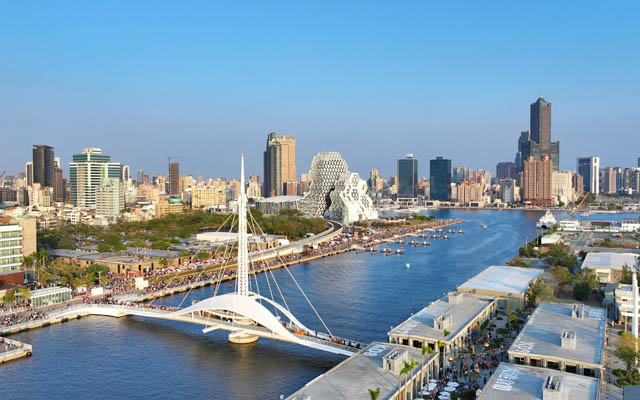
Taiwan to inject US$1.9 billion into economy amid Covid-19 outbreak
Taiwan will be rolling out a NT$40 billion (US$1.3 billion) stimulus package to help businesses hardest hit by the coronavirus pandemic.
The package was approved on March 24 by premier Su Tseng-chang.
Taiwan to inject more into economy amid Covid-19 outbreak
Drafted by the Ministries of Economic Affairs, Finance, Health and Welfare, Transportation and Communications, and Financial Supervisory Commission, the bill is the second of its kind for the country, following an NT$60 billion stimulus package rolled out in February.
Both packages are aimed at propping up Taiwan’s export-driven economy, since the outbreak of the coronavirus earlier in the year.
As part of the second relief package, SMEs in hard-hit sectors like aviation and tourism will be eligible for subsidies, tax reductions, preferential and special loans, as well as discounted utilities, according to the Ministry of Foreign Affairs’ news website Taiwan Today.
As of March 25, there are 235 confirmed Covid-19 cases in Taiwan, with two deaths. Since March 18, Taiwan has indefinitely banned the entry of all foreign visitors, excluding foreign resident permit holders and diplomats.