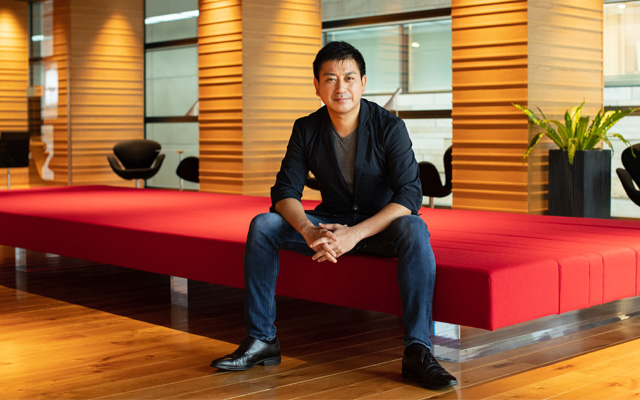
Munekatsu Ota, CEO of global travel commerce platform Rakuten Travel Xchange (RTX) and vacation rental model Rakuten Stay (RS), is propelling expansion of the Japanese brand, which means optimism, in South-east Asia and beyond
 What should our readers in the region, outside of Japan, know about RTX and RS?
RTX started as a B2B wholesales business in Singapore four years ago providing hotel, ryokan and vacation rental inventory to more than 1,000 OTA clients in 90 countries, primarily in China, South-east Asia, Australia and the US.
Within the Rakuten ecosystem, RTX serves as a global inventory platform for hotels and vacation rentals, playing a pivotal role in enhancing global transactions for Rakuten Travel (RT).
The primary focus of RTX is to boost inbound and outbound travel and global transactions, supporting RT’s operations in and outside Japan.
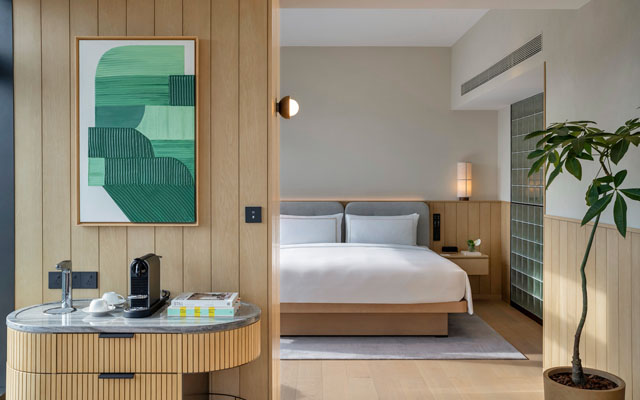
RS is a new type of real estate accommodation model featuring large spaces, designed by and owned by Rakuten. It is fully unmanned, using technology, and suitable for groups of between eight and 10 people. The idea was conceptualised during the pandemic lockdown.
There are around 600 RS accommodation and the aim is to grow to 10,000, mainly in Japan, but also in Hawaii, Singapore, Thailand, Vietnam and other parts of South-east Asia – we are preparing a private fund and inviting investors.
In addition, Rakuten Travel Experiences (RTE) is a concierge service providing sightseeing, exercise, activity and restaurant recommendation content and the next step is to create a seamless RS and RTE connection by next year.
What is the role of data and technology in RTX?
Data accuracy is fundamental to RTX’s operations, and artificial intelligence (AI) integration has played a significant role in boosting efficiency. Leveraging AI for mapping and best-rate search accuracy, RTX has simplified the process of finding the best prices.
However, it is important to understand the nuts and bolts of operations before shifting to AI for greater efficiency.
The global wholesale inventory comprises more than 700,000 properties and units on platform technology developed by Rakuten’s quality API (application programming interface) and data.
The single API connection through RTX eliminates multiple integrations and is open to small, medium and big B2B buyers where the accumulation of sales opportunities is very important for cooperation and partnerships.
The wealth of data amassed by RTX is a precious asset that benefits the Rakuten Group and our diverse customer base. It extends beyond profit generation; it’s about nurturing data-driven wealth to propel growth across the entire ecosystem.
My goal is to offer products and services that are more personalised and match the changing needs of our customers.
What do you want to achieve in 2024?
My vision is “connecting travel”. AI and data are very important for recommending not only hotel and transport options, and my plan is to distribute travel experience content to travel agents through RTX and through OTAs.
Amazon and Trip.com are bigger but the Rakuten Group is a very unique e-commerce ecosystem because of the number of its data sets* and the 100 million members in Japan is a very important asset to expand the business.
I’m very positive about RS and the low Japanese yen is helping inbound travel where the average daily rate is increasing, and where the occupancy rate during the pandemic lockdown was 70 per cent.
If the Japanese yen strengthens, we will take steps to enhance brand recognition and outbound travel.
What are your sustainability commitments as RS expands?
RS is based on “passive design” to maximise the use of natural sources of heating, cooling and ventilation to create comfortable conditions inside buildings.
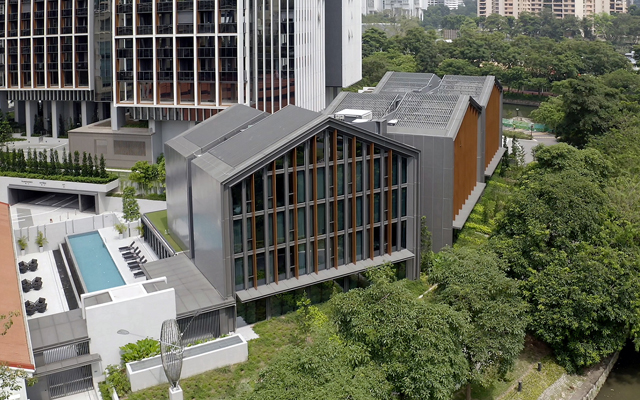
Upcoming properties in Kinugawa Onsen, a popular hot spring resort town along the Kinugawa River in Tochigi Prefecture, for example, are designed with innovative principles tailored to the local climate to ensure a consistently comfortable environment.
Key features include a continuous 45-degree gable roof to blend seamlessly into the natural landscape, optimising solar exposure during winter while providing effective shading in summer, reducing reliance on artificial heating and cooling.
Spatial dynamics like skipping floors promote natural ventilation, encourage passive airflow and minimises the need for mechanical ventilation. The interconnected layout also enhances penetration of natural light.
The use of sustainable sunlight-produced cedar boards offer thermal insulation and humidity regulation, contributing to a comfortable indoor environment without additional heating or cooling.
Another example is the harnessing of renewable energy with the installation of solar panels at facilities in Rakuten Stay Villa Fuji Yamanakako.
*Ota oversees a group of businesses that comprise RTX, RS, RTE and Rakuten Healthcare. Rakuten provides more than 70 services including: internet services, fin-tech services, mobile services and professional sports; and aims to expand its global membership of more than 1.8 billion.