Thai Airways is reducing Bangkok departures by 30 to 40 per cent in the coming days as it works to stabilise operations following four consecutive days of disruption at Suvarnabhumi Airport. Affected passengers are being transferred to partner airlines where possible, while military personnel have been deployed to support ground operations.
Chief executive Chai Eamsiri has taken responsibility for the disruption and pledged to clear a backlog of more than 5,000 bags within 72 hours.
The disruption at the national carrier contrasts with conditions across the rest of the capital. As of September 29, most of Bangkok had returned to normal following heavy rain; key roads such as Petchaburi Road and Sukhumvit Road were free of water, while main transport routes leading to both major airports were clear, including Vibhavadi Rangsit Road – one of the main routes to Don Mueang International Airport, which had experienced flooding.
Passengers flying with other airlines have reported largely smooth experiences.
Thai Airways, however, has been affected by shortages of specialised ground staff.
Since September 26, Thai Airways passengers have reported waiting five to six hours after their flights landed, and in some cases overnight, for their baggage with little information. Other passengers on September 28 reported waiting from morning until early evening for their flights to depart, also with limited information, while some online posts claimed passengers received notification of flight cancellations only after the scheduled departure time.
On September 28, criticism on social media called for clearer communication and official updates from the flag carrier, while others called on Thai Airways to issue flight cancellations in line with the apparent staff shortages.
During a live broadcast on September 29 posted to the THAI Corporate Communications Facebook page, Eamsiri rejected claims of management complacency, explaining that over the previous few days, fewer than three per cent of the airline’s departures had left on time due to a shortage of licensed ground staff. Many ground crew members reside in low-lying suburban communities, such as Lat Krabang, that remained affected by flooding, preventing the airline from rotating staff effectively. Cargo facility bottlenecks further contributed to the delays.
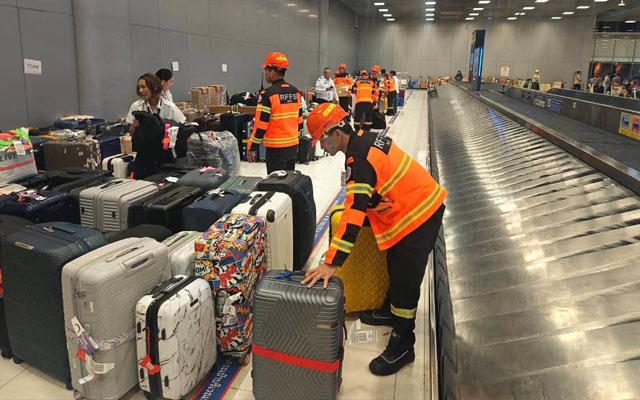
The operational disruption drew attention across social media over the weekend, with passengers sharing photos and videos of luggage accumulating in Suvarnabhumi Airport’s arrivals hall alongside queues at Thai Airways service counters.
Addressing why other airlines were largely unaffected, Eamsiri explained: “For Thai Airways, Bangkok serves as our main operational base, so everything returns to and lands in Bangkok. Unlike other carriers, they do not need to perform major unloading here; they handle that at their point of origin. Their required ground activities are far less than those of Thai Airways.”
To support operations at Suvarnabhumi, military personnel, including Royal Thai Air Force personnel, and volunteers from Thai Airways headquarters have been deployed to assist ground crews.
To clear the backlog of delayed baggage, Thai Airways has partnered with three courier services, including Thailand Post, to deliver luggage registered via QR code directly to passengers’ residences. Passengers seeking unregistered bags left behind on September 26 and 27 can retrieve them at Gate 1 on the second floor of the arrivals hall, where help desks are in operation.