The Asian Civilisations Museum will present Sacred Caves: Dunhuang, Buddhism, and the Silk Road this September, bringing life-size reproductions of the Mogao Caves and original works of art from Dunhuang to South-east Asia for the first time.
Presented in collaboration with the Dunhuang Academy, the exhibition explores more than 1,000 years of history at Dunhuang, an oasis city in present-day Gansu province in north-west China that connected China, India, the Middle East and other regions along the Silk Road.
The Mogao Caves, a UNESCO World Heritage Site, were created between the fourth and 14th centuries and contain Buddhist paintings, sculptures, manuscripts and devotional objects.
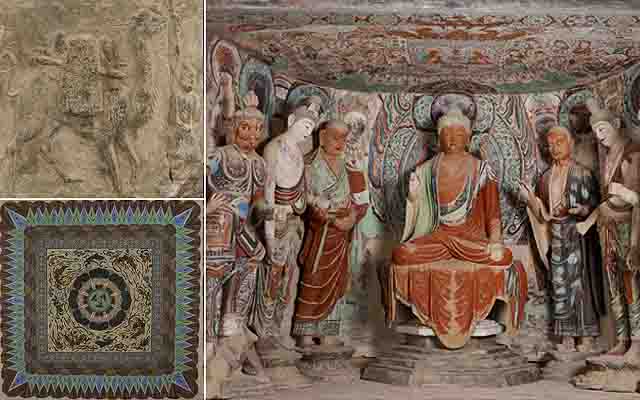
Among the exhibition highlights is a life-size reproduction of Cave 45, one of the best-preserved Tang dynasty caves at Mogao. It features sculptures of the Buddha, disciples, bodhisattvas and guardians, alongside murals depicting scenes of life along the Silk Road.
Other exhibits include a brick depicting a Sogdian man leading a camel, reflecting the role of traders and travellers in exchanges across Eurasia, and a linmo painting of the three hares motif, which appears in art and architecture across Asia, the Middle East and Europe.
For more information, visit Asian Civilisations Museum.