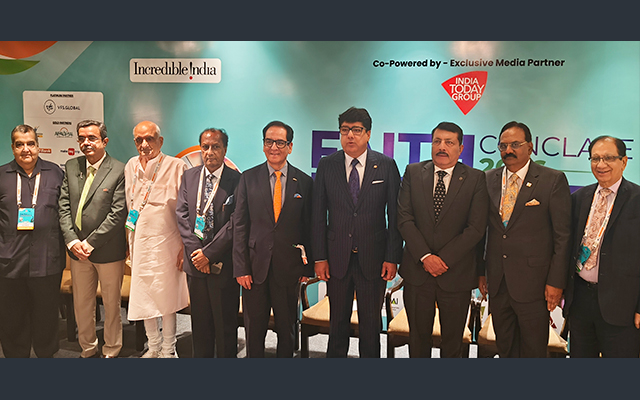
As India aims to increase the travel and tourism sector’s contribution to GDP to 10 per cent and boost foreign tourist arrivals from the current approximately 10 million to 100 million by 2047, the Federation of Associations in Indian Tourism & Hospitality (FAITH), the umbrella body representing the country’s leading travel trade associations, has presented a Tourism Growth Charter.
The charter outlines a set of key priorities that the industry believes will unlock the sector’s economic potential and strengthen India’s position as one of the world’s leading tourism destinations.
The charter was unveiled on the opening day of FAITH’s two-day conclave, held under the theme Incredible India: Invaluable Economics at Hotel Taj Palace, New Delhi, from July 16 to 17. The document includes recommendations for the central and state governments, including granting infrastructure status to the tourism industry, launching a dedicated global tourism promotion campaign under the Incredible India brand, expanding e-visa access and simplifying entry procedures for international travellers.
“Post-pandemic, the growth of domestic tourism has been phenomenal. However, the challenge is that we are still far from realising India’s full potential in the inbound tourism segment. The nearly 10 million foreign visitors we currently receive do not reflect our potential. In comparison, Paris alone attracts around 25 million international tourists annually. Measures such as granting infrastructure status to the tourism industry will enable businesses to access credit at more competitive rates, supporting faster growth and investment,” said Puneet Chhatwal, chairman, FAITH.
According to the India Tourism Data Compendium 2025 by the Ministry of Tourism, the tourism sector contributes 5.22 per cent to India’s GDP (total impact), with a direct contribution of 2.72 per cent.
In its recommendations, FAITH has urged the government to fast-track the development of the 50 tourism destinations announced earlier. It has also called for increased investment in tourism infrastructure, including last-mile connectivity, convention centres, wayside amenities, cruise terminals and digital infrastructure. Additionally, the industry body has recommended rationalising the tax regime to align with global benchmarks.
“The member associations of FAITH along with the central and state governments are working collaboratively to identify and implement measures required to position India as a leading global tourism destination. We are optimistic that these collective efforts will begin delivering tangible results over the next two to three years. India now needs an aggressive marketing strategy to showcase the diversity of its tourism offerings while also attracting greater foreign investment into the sector,” shared KB Kachru, president, Hotel Association of India.
Addressing delegates at the conclave, India’s minister of tourism and culture, Gajendra Singh Shekhawat, said the government’s vision is to position India among the world’s leading experiential tourism destinations. He added that, for the first time, the government is working towards establishing Destination Management Authorities across the country to develop well-managed, safe and sustainable tourist destinations.