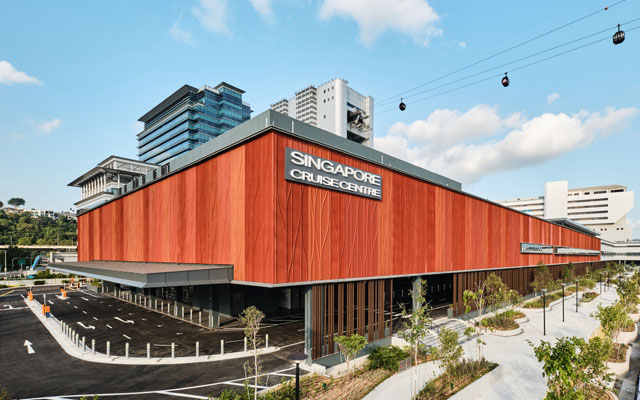
Singapore is investing in next-generation cruise ports to support its long-term cruise tourism ambitions. One of the immediate infrastructure projects is the relocation of the Singapore Cruise Centre, currently located at HarbourFront Centre.
Set to open on July 15, 2026, the new Singapore Cruise Centre (HarbourFront) “presents an opportunity for (it) to enhance the overall passenger experience through upgraded facilities that improve passenger flow while supporting future travel demand”, stated Jacqueline Tan, CEO of the Singapore Cruise Centre.
Tan outlined the features of the new passenger terminal in an interview with TTG Asia: “Designed to support a more seamless and efficient passenger journey, the new terminal will incorporate a range of automated features. These include self-service check-in kiosks, baggage drop facilities, self-service boarding gates, and biometric immigration clearance integrated with Singapore Immigration & Checkpoints Authority’s Automated Border Clearance System. These enhancements are aimed at improving processing efficiency and reducing waiting times, particularly during peak travel periods.
“Waiting areas within the terminal have also been expanded and are approximately 50 per cent larger than those at our current terminal. For the profile of cruise lines that call at Singapore Cruise Centre (HarbourFront), a new VIP lounge will also be part of the pre-trip facilities that passengers can enjoy.
“Beyond operational improvements, the new terminal will also house over 20 retail and service tenants, including Lagardère Travel Retail, which operates the duty-free concessions at both our HarbourFront and Tanah Merah terminals.”
The relocation to 5 HarbourFront Avenue, adjacent to the current site, forms part of the broader rejuvenation of the HarbourFront precinct. The area is set to evolve into a business and lifestyle destination within the Greater Southern Waterfront, an urban development stretching from Pasir Panjang to Marina East.
Tan said the proximity of the new facility to the existing site ensures that Singapore Cruise Centre (HarbourFront) retains its “excellent location” and convenient access to multiple transport modes, allowing it to function as a “key gateway for regional ferry and international cruise travel”.
She added that the Singapore Cruise Centre is looking to strengthen partnerships within the Sentosa-HarbourFront precinct to enhance passenger experiences.
Preparations for the move are underway.
“The ferry operators, cruise lines, port agents, and ground service operators have been regularly updated with the progress of the new terminal and even prior to the build-out, we have also taken on board feedback from key stakeholders to shape the new terminal planning and offerings.
“We have conducted familiarisation sessions, covering passenger flow, baggage handling processes, and the terminal’s new systems and operating procedures. These efforts are aimed at ensuring that there will be operational continuity and minimising disruption during the transition in July 2026,” she said.
In addition to the HarbourFront development, a study is underway to assess the potential for an integrated cruise and ferry terminal to meet future demand, said Melissa Ow, chief executive of the Singapore Tourism Board (STB), during her address at the Tourism Industry Conference on May 8.
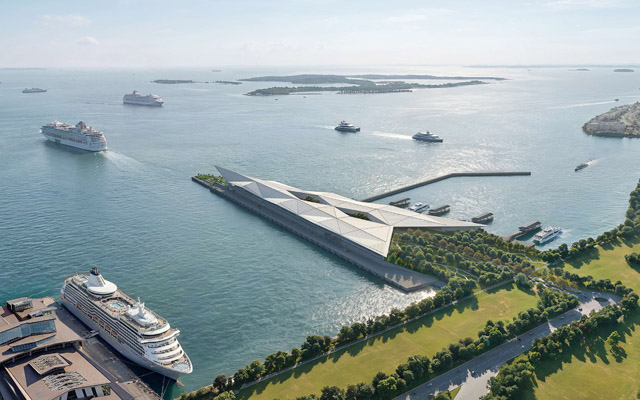
The study is being conducted by STB and the Maritime and Port Authority of Singapore.
Ow noted that “cruise demand is expected to grow steadily”, and “ensuring we have sufficient capacity to support our growing pipeline of cruises is therefore imperative”.
According to Grace Fu, minister for sustainability and the environment and minister-in-charge of trade relations, the proposed site may be at Straits View, adjacent to Marina Bay Cruise Centre Singapore (MBCCS).
Fu shared that the new terminal could support three cruise berths and up to 10 ferry berths, with a passenger capacity approximately 1.5 times that of MBCCS and twice that of the existing HarbourFront terminal.
“This represents not only a significant increase in international cruise capacity, but also greater regional connectivity,” she said.
According to STB data, cruise passenger throughput has shown strong growth, except during the pandemic years: 1.8 million in 2019; 1.2 million in 2022; two million in 2023; 1.8 million in 2024; and over two million in 2025.
STB told TTG Asia it will continue to work with cruise partners to support cruising experiences that meet the needs of visitors, including through schemes such as the Cruise Development Fund to help defray costs and support cruise deployments in Singapore. These efforts align with Singapore’s Tourism 2040 vision of advancing a future-ready industry while strengthening its appeal to regional and longhaul visitors.