By uncovering the underbelly of the city, local tour operator Hidden Heritage is showing that Singapore’s most compelling stories lie in the “micro-histories” preserved within the peeling walls and forgotten back alleys that the modern world tried to forget.
While most travellers see the island nation as a masterclass in gleaming glass and steel, co-founders Amanda Cheong and Stanley Cheah are drawn to Singapore’s true allure: the places the wrecking ball has not yet hit.
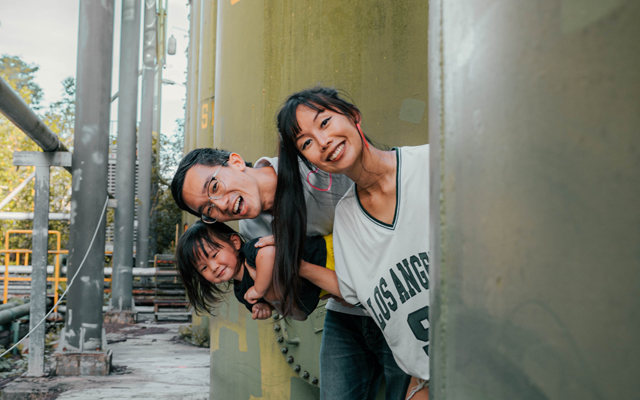
Instead of the manicured paths of Gardens by the Bay, the husband-and-wife duo choose to navigate the oily, skeletal floors of defunct lubricant plants, gritty back alleys, and the lived-in corridors of rental housing blocks. This shared passion for “sanctioned trespassing” began when they met through Cheah’s Abandoned Singapore Instagram account, and has since evolved into a business that secures access to sites usually off-limits to the public.
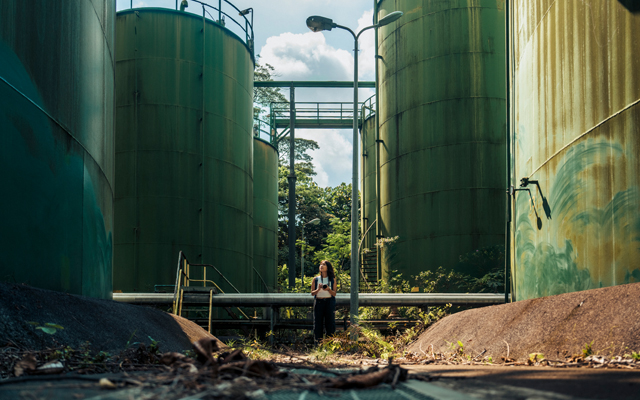
The couple’s commitment to the “raw” side of the city is literal. When searching for a wedding venue, they eschewed ballrooms for the former Shell lubricant blending plant in Woodlands.
“We wanted a place that represented how we met. Peeling paint, maybe a collapsed ceiling,” Cheah shared. When they approached the Singapore Land Authority, the response was one of disbelief. He recalled the officer warning them that the site had been vacant since 2018, and questioning if they truly wanted to hold a wedding there – to which the couple gave an emphatic yes.
The resulting black-themed wedding amid towering industrial tanks caught the public’s imagination, sparking a demand that birthed one of their signature tours – Industrial Relics and Wartime Secrets: Woodlands Factory Tour.
The Industrial Relics & Wartime Secrets tour is an unfiltered dive into Woodlands, centred on a preserved Shell lubricant blending plant. Participants navigate silent, industrial halls filled with vintage machinery, and overgrown structures, that have remained frozen in time. The trail extends to the former Hawkins Road Refugee Camp – Singapore’s only camp for Vietnamese refugees – and a hidden WWII air raid shelter accessible only by ladder. More than a history walk, it is a visceral race against time to witness these industrial and wartime vestiges before they are cleared for redevelopment.
“Singapore is not boring,” Cheong asserted, recalling the early feedback from their Covid-era pilot groups. “I realised a lot of the attractions tourists usually go to, like the Buddha Tooth Relic Temple, are very curated. We want to uncover the back alleys, the ‘underbelly’ of these spots instead. Our tours don’t shy away from the uncomfortable or taboo.”
For instance, in the Don’t Call Us Poor: Hidden Lives of Lavender Tour, travellers are offered a human-centric glimpse into the social fabric of Lavender’s one-room rental blocks, shifting the focus from Singapore’s economic success to its community resilience.
“Usually when you think of Singapore, it’s very affluent. But there are real stories and real people here who are stuck in the poverty cycle. They may not have much, but they are very happy. We offer personal stories that invite locals and travellers to think of things from a different perspective,” Cheah shared.
Another of their tours, Secrets of the Streets: Jalan Besar Heritage Tour, winds through back alleys and former red-light districts, featuring what was once a dragon dance association, now converted to a shophouse temple, and a discreet “Vegetarian Hall” – a banned religion in China that found sanctuary in colonial Singapore – which previously served as a refuge for destitute immigrant women.
While larger tourism operators focus on scale and volume, Hidden Heritage is doubling down on content-heavy experience, and the founders are not interested in the cheaper, mass-market model. Their next project is a food-centric tour set to launch in 2H2026.
“We don’t intend to compete with the big players. We don’t want to bring a large group around, and (run cheap tours). We aim to give a more premium experience, and develop a market of our own,” Cheah stated.