TTG Asia
Asia/Singapore Tuesday, 8th September 2026

PATA leadership urges travel community to support Nepal recovery through accurate travel advisory and donations

0
xx

In an open letter to the travel and tourism community, PATA chairman Henry Oh and PATA Foundation chairman Andrew Jones have underscored the impact of accurate destination updates on Nepal tourism’s road to recovery.

Oh and Jones expressed: “As the situation continues to develop, it is important that we provide travellers and tourism stakeholders with an accurate picture of what has been affected – and what has not.
Vast majority of Nepal remains unaffected and continues to welcome visitors; Machapuchare, located north of Pokhara, pictured

“The impact of the floods is significant, but it is geographically concentrated. The vast majority of Nepal remains unaffected and continues to welcome visitors. Kathmandu Valley, Pokhara and the Annapurna region, the Everest and Khumbu region, Chitwan, Bardiya, Lumbini and the Terai, as well as Nepal’s airports and major tourism infrastructure, continue to operate. The affected areas are concentrated along specific corridors, including parts of Rasuwa, Langtang and the Bhote Koshi, where search and rescue and recovery operations are ongoing.

“For international travellers and the tourism industry, this distinction matters. Nepal is a country of extraordinary geographic and cultural diversity, and conditions in one river corridor should not be taken to represent the situation across the entire country.

“We therefore encourage travel businesses, media, travellers and other tourism stakeholders to rely on verified information and to assess travel plans based on the specific destination or route concerned.”

The open letter emphasised that “continued responsible travel to unaffected destinations” will sustain livelihoods for the people of Nepal who depend on tourism.

Oh and Jones defined two courses of action that the travel and tourism community could take to support Nepal.

One, monetary contributions can be made to the PATA Foundation’s Nepal Tourism Recovery Fund, which will go live shortly. It is focused on the recovery of tourism livelihoods – the guides, drivers and porters, and the families running the homestays, lodges, teahouses and small hotels along the affected corridor.

“Many of these families have lost their premises and their equipment as well as their homes, and with them the income they would have earned this season. Helping them rebuild is how income returns to the affected communities, and it is work our industry is well placed to support. This is where we are asking members, their customers and their networks to direct support,” they wrote in the letter.

Two, careful presentation of destination information is priority. Oh and Jones ask travel professionals to “review what their own organisations are publishing about Nepal – destination pages, travel advisories, itineraries and customer service guidance – and to correct anything that describes the country as a whole as affected”.

“This is the main planning and booking season for travel to the country, which makes the accuracy of published information particularly important at this moment,” they stated.

PATA has identified some reliable sources of information: Nepal Tourism Board’s live travel information page via nepalnow.travel; Nepal Police and the NDRRMA; and PATA Nepal Chapter via · www.pata.org.np.

Young and adventurous breathe life into Vietnam’s rural areas

0
Phong Nha-Ke Bang National Park is now attracting visitors who are game for trekking, camping, kayaking and cycling in the area

A growing appetite among younger travellers for nature, soft adventure and meaningful cultural experiences is driving demand for Vietnam’s lesser-known destinations, with domestic tourism helping to pave the way for more international visitors.

“The younger generation is more focused on relaxing and being at one with nature, which is benefitting rural areas and communities. We’re becoming more and more popular with international visitors,” Pham Nhat Nguyen, head of marketing at An Chiang Retreat and Spa in remote northern Ha Giang province, told TTG Asia at ITE HCMC 2026.

Phong Nha-Ke Bang National Park is now attracting visitors who are game for trekking, camping, kayaking and cycling in the area

“Young international visitors are very eager to visit rural areas because the majority grew up in or live in cities,” she said, adding that Ha Giang offers opportunities to experience the cultures and traditions of different ethnic groups, alongside mountain landscapes and nature.

Nhat Nguyen said the visitor mix has shifted from being predominantly domestic to largely international, with travellers from the UK, US and Europe now accounting for the bulk of visitors. Asian markets make up about 30 per cent of the total.

Hien Pham, inbound deputy director at Vietluxtour, also noted growing interest among younger travellers from the US, Australia, Japan and Singapore in destinations beyond Vietnam’s traditional tourist circuit.

She said the growth of community-based tourism in recent years had initially been driven by domestic demand, but the segment is increasingly resonating with international visitors seeking more authentic experiences.

“They are seeking more remote areas where they can engage with local communities, have a cultural exchange and more meaningful experience,” Hien said.

Phong Nha-Ke Bang National Park is also attracting a new generation of visitors looking beyond its famous caves, according to Anh Nguyen of the Phong Nha Tourism Authority.

While the park in Central Vietnam is home to some of the world’s largest caves, including Son Doong and Phong Nha, she said visitors from Australia, New Zealand, the US and the Netherlands are increasingly seeking soft adventure activities, such as trekking, camping, kayaking and cycling.

“Visitors have always come for the caves, but now we have more adventure activities, and are seeing an increase in international markets wanting to stay more nights and explore the wider area,” she said.

Hong Kong stirs travel desires in Western China with Chengdu mission

0
xxx

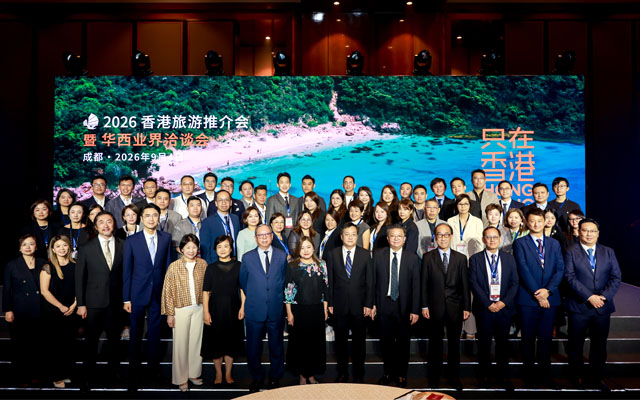
Hong Kong Tourism Board recently concluded the Hong Kong Tourism Networking Event to Chengdu 2026 in China’s Sichuan province, where the Only in Hong Kong global campaign took centre stage.

Key mega events in the second half of 2026 – such as Hong Kong Wine & Dine Festival and Hong Kong WinterFest – as well as new tourism offerings were presented to more than 100 travel trade and media representatives from across Western China.

Hong Kong tourism businesses and professionals join Hong Kong Tourism Board’s mission to Western China

Peter Lam, chairman of Hong Kong Tourism Board, said Western China has long been one of Hong Kong’s key source markets in the Mainland. He hopes that collaborative exchanges between Hong Kong and Western China travel trade would attract more Chinese travellers to Hong Kong and build stronger repeat visitation.

Rosanna Law, secretary for culture, sports and tourism, sees “tremendous potential to promote multi-destination tourism featuring the two cities, attracting more international visitors to explore Hong Kong, Chengdu and other Chinese Mainland cities”.

Besides the networking event, Hong Kong Tourism Board also led a large-scale travel mission in Chengdu, connecting Hong Kong’s tourism professionals with nearly 100 industry representatives from Sichuan, Chongqing, Shaanxi, Guizhou and Yunnan, as well as online travel platforms such as Ctrip and Meituan, through business matching and networking.

The tourism board will continue to grow the Mainland market through various promotional platforms and industry collaborations.

Thailand cuts visa-free stay to 30 days for 60 countries

0
Thailand's revised visa exemption reduces the standard visa-free stay to 30 days from September 15, 2026, under Ministry of Interior announcements published in the Royal Gazette on August 31, 2026. (Photo Credit: Markus Winkler)

Thailand is halving its standard visa-free stay to 30 days and reducing the list of eligible nationalities to 60 countries and territories, under four Ministry of Interior announcements published in the Royal Gazette on August 31, 2026 which will take effect 15 days after their published date, coming into effect on September 15, 2026.

The announcements include a clause repealing the special 60-day visa exemption introduced on July 15, 2024, which covered 93 countries and territories and allowed entry for tourism, short-term work and business contact. The new 30-day exemption applies to tourism only, meaning short-term business and work visitors from affected markets will require a visa from September 15, 2026.

Thailand’s revised visa exemption reduces the standard visa-free stay to 30 days from September 15, 2026, under Ministry of Interior announcements published in the Royal Gazette on August 31, 2026; photo by Markus Winkler

The Cabinet approved the revised framework on July 14, 2026, and the announcement was signed by Anutin Charnvirakul in his capacities as prime minister and minister of interior.

An official statement from the Thai government’s public relations department said the update reflected concern for national security, promotion of tourism and economic interests along with reciprocity and the reduction of overlapping visa exemption privileges – which “could create confusion for foreign visitors” – as well as convenience currently being provided by the e-Visa system.

India will fall under the new 30-day tourist exemption, having been added after the travel industry pushed back over its absence from the original 54-country list the Cabinet approved in May.

A new restriction limits visa-exempt travellers entering through land border checkpoints to two entries per calendar year. Nationals of Malaysia, Brunei, Indonesia and Singapore are exempt from the cap, as are other nationalities the minister may designate.

In the announcements, Thailand has also cut the visa-on-arrival list down to only three countries, covering Azerbaijan, Belarus and Serbia, while Seychelles and Mauritius move to a 15-day exemption. Previously, 31 countries had been placed on the visa-on-arrival list in 2024.

Separate bilateral visa exemption agreements are unaffected, including 30-day arrangements with China, Russia and Vietnam.

The current 60-day scheme remains valid for entries through September 14, 2026.

Travellers entering Thailand from markets that do not appear on any of the new lists will need to obtain a Thai visa to enter from September 15, 2026.

Travellers should check the entry conditions that apply to their nationality before travelling.

Saudi Arabia makes travel more fun and accessible for Indonesian market

0
xxx

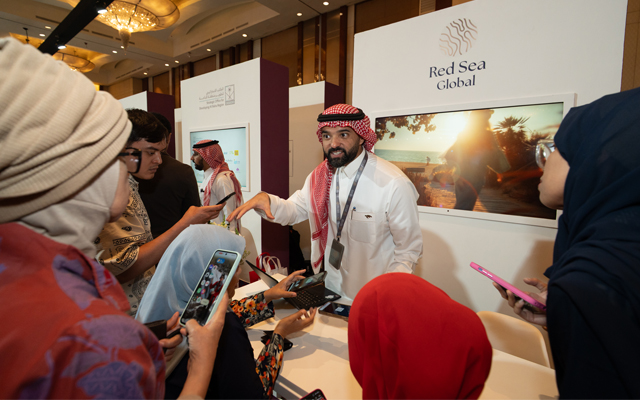
Saudi Arabia is expanding connectivity and improving travel facilitation for Indonesian travellers, as it works towards welcoming a targetted two million arrivals from the market by the end of 2026.

The Indonesian market has recorded an 11.7 per cent year-on-year increase from 1.6 million visitors in 2024. As of June 2026, the Kingdom had more than 633,000 Indonesian visitors on the books.

Saudi Arabia takes a destination roadshow to Jakarta, where destination highlights and upcoming tourism developments are presented

Speaking at Saudi Arabia’s Indonesia Trade Roadshow in Jakarta recently, Eyad Jan, market unit senior director-Southeast Asia of Saudi Tourism Authority, said: “We continue to see this strong interest and growing demand across all travel purposes from this region.”

The roadshow was attended by Indonesian travel trade partners, including tour operators and Umrah providers.

As of June 2026, Lion Air, Garuda Indonesia, Saudia and Flyadeal operate direct services between Indonesia and Saudi Arabia, providing 96 flights and approximately 34,988 seats per week.

Saudia, the national flag carrier airline of Saudi Arabia, plans to launch new flights to Surabaya, shared the airline’s East Asia & Australia director Reham Zarei. However, details are not available at press time.

Saudia currently operates direct flights to Jakarta (21 weekly from Jeddah, four from Medina) and three weekly flights from Jeddah to Bali via Singapore.

Riyadh Air is also planning a thrice weekly service to Jakarta this November.

To facilitate travel. Saudi Arabia recently introduced Package Visa, a digital solution that integrates tourist visa applications into curated bookings made through qualified travel and tourism service providers, allowing Indonesian travellers to enjoy a more seamless journey from trip planning to arrival.

The initiative enables eligible travellers to arrange their visa, accommodation, flights and tourism experiences through a single booking journey. The launch builds on the country’s broader efforts to simplify inbound travel, and sits alongside initiatives such as visa-on-arrival and the Stopover Transit Visa.

Saudi Arabia continues to create new tourism draws. The AFC Asian Cup Saudi 2027 football tournament was among the tourism draws highlighted at the destination roadshow. The sporting event is expected to attract visitors from across Asia and further showcase Saudi Arabia’s world-class sporting and tourism offerings.

Indonesia’s national team is among the qualified teams to play in Saudi Arabia.

Other fresh destination highlights include new hotel openings – such as Six Senses Southern Dunes, The Red Sea and Miraval the Red Sea, the wellness brand’s first property in the destination – and landmark developments such as Amaala, an ultra-luxury regenerative tourism mega project.

Beyond luxury tourism, the destination is also expanding its family and entertainment offerings. Aquarabia is in construction now to become the largest water theme park in the Middle East and the first attraction of its kind in Saudi Arabia.

TTG Conversations: Five Questions with Paul Wilson, Amadeus

0

Vietnam’s tourism landscape has been making headlines, with a wave of new hotels and tourism infrastructure being announced and launched. Amadeus’ latest market study also noted an 11 per cent boost in international air travel to Vietnam between March 2025 and March 2026.

In this episode of TTG Conversations: Five Questions, Paul Wilson, vice president, Hospitality Asia-Pacific at Amadeus discusses the factors that make Vietnam a hot destination for travellers, what travel and tourism suppliers need to do to stand out in Vietnam’s competitive space, and why AI can improve efficiency in the competition for travellers’ attention and business.

PATA, GBTA join hands for stronger corporate business travel component at PATA Travel Mart 2027

0
L/R: PATA CEO Noor Ahmad Hamid, PATA Chairman Henry Oh and GBTA Senior Director for APAC Elle Ng-Darmawan at the MOU signing ceremony during the PTM Knowledge Forum at PATA Travel Mart 2026 in Kuching, Sarawak, Malaysia.

The Pacific Asia Travel Association (PATA) and Global Business Travel Association (GBTA) have partnered to strengthen the corporate business travel component of PATA Travel Mart (PTM) 2027, which will take place in Macao from September 20 to 22.

Under a MoU signed on August 18 during the PTM Knowledge Forum at PTM 2026 in Kuching, Sarawak, GBTA will serve as Strategic Corporate Travel Partner for the 2027 edition.

From left: PATA’s Noor Ahmad Hamid and Henry Oh mark their partnership with GBTA’s Elle Ng-Darmawan

The partnership will bring GBTA’s global network of corporate buyers, procurement professionals and travel managers into PATA’s Asia-Pacific tourism marketplace, with the two organisations focusing on programme development, corporate buyer mobilisation, knowledge exchange and targeted business-to-business engagement.

GBTA will work with PATA on the development and delivery of corporate business travel content for the PTM Knowledge Forum, while using its professional network and communication channels to encourage qualified corporate buyers to attend the event.

PATA will facilitate the participation of qualified corporate buyers in PTM 2027 in accordance with its standard hosted buyer qualification and approval procedures.

The organisations will also undertake joint marketing and promotional activities through their respective communication channels to connect Asia-Pacific travel suppliers with a wider international network of corporate travel buyers and decision-makers.

“Our partnership with GBTA will bring together complementary networks and expertise, creating new opportunities for meaningful business connections and knowledge exchange,” said PATA CEO Noor Ahmad Hamid.

Elle Ng-Darmawan, senior director, APAC at GBTA said: “Our partnership with PATA creates a timely platform to connect travel managers, suppliers, destination leaders and other industry professionals in Macao. By combining our networks and expertise, we can unlock new opportunities, drive greater value for our members and ensure the region’s travel industry will continue to thrive.”

The partnership aims to support a more business-driven PTM 2027 by providing corporate buyers with greater opportunities to discover Asia-Pacific destinations, products and services while enabling suppliers to engage directly with qualified decision-makers from the global business travel community.

Rural Japanese prefectures record strong growth in international overnight stays

0
View from Kirosa Observatory Park, one of the attractions in Ehime

Japan’s push for more international travellers to explore its regions as part of a plan to combat overcrowding in major hubs and more widely disseminate tourism’s economic benefits is bearing fruit.

A survey of accommodation nationwide by the Japan Tourism Agency shows 39 of the country’s 47 prefectures welcomed more inbound visitors on overnight stays in 2025 than they did pre-pandemic.

View from Kirosa Observatory Park, one of the attractions in Ehime

By total number of overnight stays, the top performer was Tokyo, with 60.1 million, followed by Osaka (24.5 million), Kyoto (18.3 million), Hokkaido (13.3 million) and Okinawa (9.2 million), but rural prefectures were among those that experienced the most growth.

With 580,000 overnight stays, Ehime came first, up 168.8 per cent compared to 2019, largely due to campaigns targeting golfers in South Korea who can fly direct from both Seoul and Busan to prefectural capital Matsuyama, from where there are 16 courses within an hour’s drive.

Ishikawa, which has benefited from improved connectivity following the expansion of the Hokuriku Shinkansen into the area, was up 117.6 per cent on 2019, secured second place, succeeded by Fukuoka (up 97.6 per cent), Miyagi (up 59.0 per cent) and Niigata (up 76.7 per cent).

“Japan is highly regarded as a travel destination globally, and the inbound tourism market continues to diversify. Some regional areas are also seeing rapid growth in inbound visitor arrivals as a result of long-standing efforts,” said Japan National Tourism Organization president Atsumi Gamo.

Overnight stays by international visitors, which reached a record 179.9 million in 2025, are vital for Japan’s hotel and ryokan inn sector, accounting for 27.2 per cent of all overnight stays last year.

MAG strengthens network but trims flights as fuel costs weigh on business

0
vv

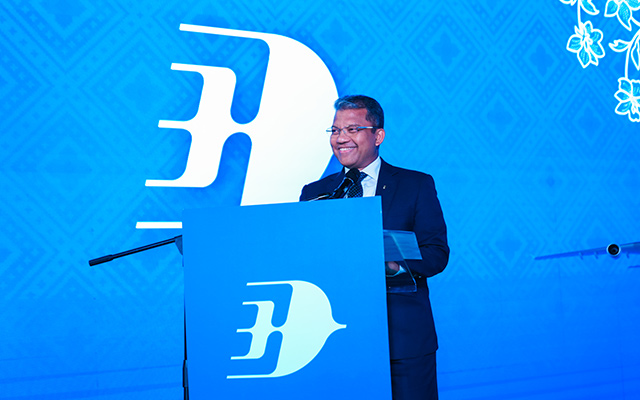
Malaysia Aviation Group (MAG) has cut about five per cent from its flight schedule as fuel costs and geopolitical uncertainty weigh on the business, with the group continuing to monitor demand and market conditions to protect its financial performance.

MAG president and group CEO, Nasaruddin A Bakar, said the group had made a “surgical cut” of about 8,000 flights from its original schedule of around 100,000 flights.

MAG chief Nasaruddin A Bakar details the company’s network growth plans on September 4

Fuel accounts for about 40 per cent of MAG’s total operating costs, with every US$1 increase in fuel prices adding approximately RM50 million to annual costs, Nasaruddin explained.

The group has hedged about 36 per cent to 50 per cent of its fuel requirements and continues to hedge quarterly on a rolling 12-month basis.

Despite the cuts, MAG is continuing to expand its network.

“We are continuing to grow with purpose, strengthening our network where there is demand, reconnecting established markets and expanding into new ones,” Nasaruddin said at a press conference on September 4.

Malaysia Airlines, which is operated by MAG, will increase frequencies on its Kuala Lumpur-Fukuoka service, which commenced on September 2, from five weekly flights to daily services from December 1; Kuala Lumpur-Brisbane from six weekly services to daily flights from October 25; and Kuala Lumpur-Surabaya from 14 to 16 weekly services from November 1. It will also resume Kuala Lumpur-Busan on December 2 with four weekly flights, returning to the route after it was suspended in 1998.

MAG is also expanding its China network through its wholly owned subsidiary Firefly, which will soon launch direct Kuala Lumpur-Kunming services, marking the airline’s first route into China. The service will be operated by Boeing 737-800 aircraft, although MAG has yet to announce a commencement date or ticket sale details.

Dersenish Aresandiran, chief commercial officer of airline business at MAG, said the decision to assign the China expansion to Firefly rather than Malaysia Airlines was based on the market segment and type of traffic expected on the route.

The move complements Malaysia Airlines’ existing China network, which now serves nine hubs. MAG is also preparing another South Asia destination, subject to regulatory approvals, although it has not disclosed the destination.

Club Med marks Asia for massive portfolio expansion

0

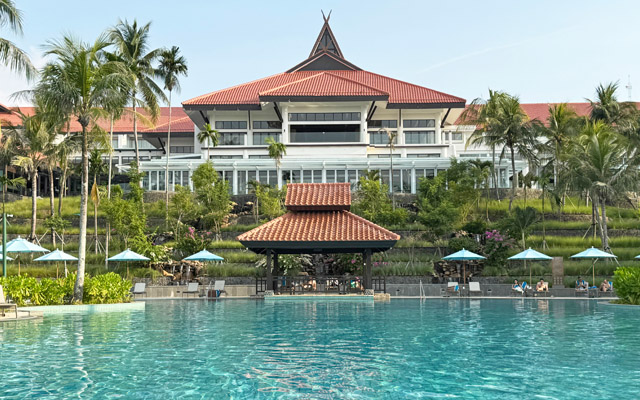
Club Med is on track with its global expansion ambition, which spells out a target of 100 resorts by 2035. Building towards this goal, the company has been accelerating the development of mountain resorts in North America, Europe and North Asia as well as sun resorts in the Mediterranean and South-east Asia.

Sharing an overview of Club Med’s expansion achievements, Rachael Harding, CEO, East & South Asia and Pacific, said many new properties will come into the marketplace over the next two years, rising in destinations such as Malaysia’s Sabah this year; the US’s St Croix, Senegal’s Cap Skirring and Brazil’s Gramado in 2027; Canada’s Mont-Tremblant, Italy’s San Sicario, Benin, Thailand’s Koh Samui and Indonesia’s Manado in 2028; and Oman in 2029.

Club Med Borneo will open in Malaysia’s Sabah later this year, offering travellers another all-inclusive holiday option in South-east Asia

Even more signings across Asia will soon come to light, allowing Club Med’s portfolio in this part of the world to grow in prominence.

“Capacity of our South-east Asia portfolio will grow at just over 13.5 per cent year on year. This is more than double of any other business unit growth worldwide. And it is about time, as we have not opened a new resort in South-east Asia for 20 years,” she said.

Along with the new properties, Club Med is lifting all existing resorts in South-east Asia with an intense asset enhancement investment. Thailand’s Club Med Phuket completed its renovations at the end of last year, while Club Med Kani in the Maldives and Club Med Bintan in Indonesia are progressively unveiling fresh features this year and the next. Club Med Bali is also undergoing major renovations, and will present its new look in 2027/2028.

Club Med Cherating Beach will close this October for a transformation that is expected to be done by December 2027, just in time for the festive holidays.

The transformation of Club Med’s legacy assets will see the creation of more defined zones with facilities and experiences that will appeal not only to the core family customer segment, but also to solo guests, couples, groups of friends, and even corporate groups.

“Travel agents and Club Med fans will continue to get the big, expansive resort grounds that they have known and loved for years, as well as architecture and design that continues to lean into the natural environment and culture of the destination. But in the next phase of our legacy assets, there will be new sporting facilities, new themed rooms, new water parks for children, additional work on our Zen zones, enhanced F&B concepts, and more,” detailed Harding, adding that guests can also expect elevated ambiance and entertainment.

Harding told TTG Asia that Club Med’s heightened development focus on Asia is a strategic decision that aligns with the “skyrocketing” demand for all-inclusive holidays in the region.

Club Med has seen demand for its resorts rising year on year at a rate that is “way above pre-Covid levels”.

Harding believes that the intense demand growth was triggered by the appeal of Club Med’s famed ski resorts in Asia. And as guests became fans of the all-inclusive product and experience in the snowy mountains, they started to seek out sun resorts in the group’s portfolio.

“Now, we have a big following for our sun resorts as well,” she said.

Club Med’s move to upgrade its properties also has a positive impact on business performance – its premium clientele is expanding and being converted into repeat guests.

“Asian travellers like refined properties. As we upscaled our current properties and rolled out new ones, Asian travellers got to see that we offer exactly what they needed,” stated Harding.

As Asian travellers benefit from easy access to Club Med resorts in South-east Asia, they are also encouraged to explore properties in other parts of the world.

Harding noted that there are many source markets in Asia worth courting. She pointed to Thailand, Indonesia, India, Vietnam, Cambodia and Myanmar as being attractive emerging markets for Club Med.