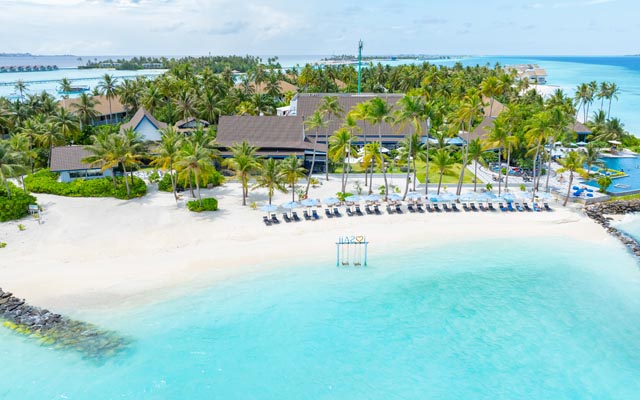
Managing director Mark Rohner, who has been primed for his new leadership role at Far East Hospitality, has finally taken over the reins since the start of the new year – he discusses his immediate tasks and the company’s future-ready strategy
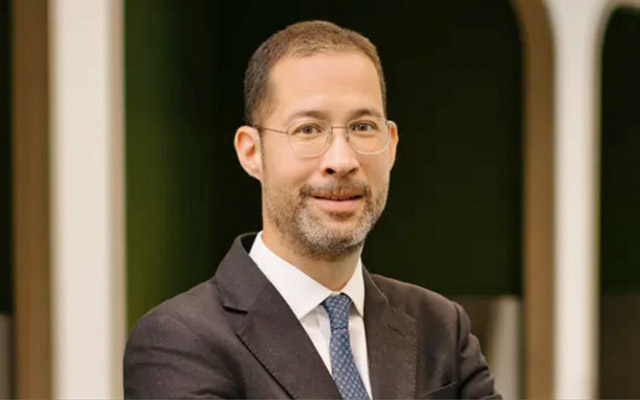
 You are not new to Far East Hospitality (FEH), having joined the company in 2024. Does taking on the managing director role feel somewhat easy and natural for you and the organisation then?
That’s a very fair question. First and foremost, it is never easy to start a new role as a managing director or CEO, as that always comes with challenges and the need to rise to new responsibilities. So, I wouldn’t say that the transition comes easy.
However, I have been well prepared for the role. As you know, I started in July 2024. I was able to work with (the various departments) and all the functional heads. I was also double-hatting, taking on some of the functions and responsibilities of Arthur Kiong (who retired as managing director on December 31, 2025 and currently acts as consultant until April 30, 2026, to support the handover). His insights into the business have been very helpful.
Of course, once I am in this role, new things come up. It is good to start off with very strong insight into the business and to know what the strengths and opportunities are for FEH.
Typically, when a new leader comes into position, there are structural or strategic changes within the company. With you being a familiar face in the organisation, is that sense of trepidation among staff less intense?
Well, I think that trepidation is less intense. The team has been subjected to gradual exposure therapy for a good 18 months, and everyone in the company knows (my leadership role) is coming.
I have been on every Monday management meeting for the last 18 months. I would say that has significantly eased my transition into the new role.
At the same time, I bring a fresh perspective on things, and I am trying very hard to inculcate this sort of mindset into the company. I see myself a bit of an agent of change. FEH is a very stable company with 31 hotels, mostly in Singapore, and has a very strong stance on customer service and service excellence. But what is next and how do we move this company to the next level?
What tasks are at the top of your agenda?
I think there’s a lot that we can do in terms of building the capabilities of the company.
One: being future-ready through things like building up our revenue management systems. We have a very strong revenue management team already, but we are looking to improve processes so that there can be less manual work.
Another future-ready task is to enhance the power of loyalty, which is so effective at driving business into properties for owners. As you know, wars (in our industry) are being fought on distribution and loyalty. As a small player with 31 properties and 7,000 keys, we are at a structural disadvantage. So, how do we build a loyalty platform that works for people and corporate clients? How do we compete against OTAs as well? We have been exploring different options and have made progress on one path. We can share more on that in due course.
We are also paying attention to business intelligence, allowing data to shape our decisions, as well as strengthening our standard operating procedures in governance, compliance, etc.
Two: being focused on digital transformation. Front office and housekeeping processed are already quite digitalised, but we are keen to look at creating value as well for our guests through digital transformation. For example, not every guest wants to check in at the front desk even though they are paying US$500 for a night. The definition of luxury is changing and so are the traditional ways of doing things in the customer journey.
Three: focusing on cost, efficiency and productivity. In Singapore, where we have 25 hotels, the travel industry is facing margin pressure. We owe it to our owners and different stakeholders to maintain or increase profitability. So, we are on a big drive to see how we can increase efficiency and productivity through our major centres, like housekeeping and front office.
Four: raising the bar for our customer service and service excellence. FEH has achieved a lot in the area of customer service. Our properties score very high on TripAdvisor, even those in the mid-tier bracket. Our people go over and beyond the tier level of service that customers would expect. So, that is something that we want to continue to build while evolving our service excellence towards customer centricity. I see this as a movement away from simply providing good service and towards providing what customers actually want and then tailoring offerings to suit. To get to that sort of personal level, we will need strong data.
These are very essential pillars. I’m not surprised these tasks remain for your company going into 2027.
Well, yes. These are multi-year kind of projects. Around these pillars is our overarching goal to grow the company.
We have three third-party HMAs (hotel management agreements) at this point, and are almost like an owner-operator. We need to secure more HMAs. All the projects I mentioned earlier will help us to ultimately build the capabilities that we need to showcase to owners and deliver results to owners.
Where are you looking to grow your portfolio?
We are looking a lot at Japan, which is a natural market for us. We had two openings last year in Osaka. But, you know, everyone else is too! So, we are also looking at other cities, like Kyoto.
Another region we are looking to grow is South-east Asia – primarily Vietnam, Indonesia and Thailand because these destinations are in our backyard and owners there are familiar with some of our brands, like Village, Oasia and Quincy. It is a little easier to sell the value proposition of us as an operator to developers in these destinations.
Will there be new openings in these locations this year?
We do have targets for 2026, but openings will be more of conversions. I will share details in due course.
What I can say is that we target to sign at least two to three hotels per year. So, over a five-year period, we are looking to grow our room count from 7,000 keys to 10,000 keys. This target excludes the TFE account (Toga Far East Hotels is a joint venture with Toga Group), which takes care of our presence in Australia.
FEH is always looking out for other opportunities to grow in a faster way. It will take a very long time to grow FEH on a contract-by-contract route. So, we look at hospitality players in different markets, have conversations with them as well as with financial institutions and brokerages to see where opportunities lie.
FEH properties have responded well to emerging travel trends through the years. Your hotels started to offer curated destination experiences for guests, just as demand for unique local interactions materialised. Your Oasia brand took on a wellness focus just as interest in wellness journeys started to kindle. What other emerging travel trends is FEH keeping close tabs on?
We are not only paying attention to new trends, but also how trends are evolving. Let’s take wellness as an example. We went into wellness in 2011 with the Oasia brand. The wellness definition has changed so much since then. Along the way, guests wanted high-intensity interval training, yoga, aqua gym – all kinds of stuff that we did not have when we started. Increasingly, now, they are also looking for contrast therapy. We have a few properties with saunas, but not ice baths.
So, we have to really stay on top of trends.
Another trend we have our eyes on is pet-friendly travel. We are well aware that there are many people who want to travel with their pets. Quincy House Singapore offers pet-friendly units, and it helps that the serviced residence is integrated with a pet-friendly mall.
We are also doing things at Oasia Resort Sentosa. We have a Pawcation package for pet owners (it comes with a pet-friendly Courtyard Premier room that features an outdoor timber deck, pet amenities set, and discounts for pet-friendly dining and experiences across Sentosa).
We are also keeping an eye on digital enablement, how customers are interacting with the hotel using their phones.
Let’s talk more about FEH’s products on Sentosa island. You have a cluster of four hotel brands working together to offer guests a varied experience across different price points. Will FEH replicate this ‘village of brands’ concept elsewhere in Asia?
That’s a really good question because the Sentosa development is one of our most successful developments. It is a truly transformational development where we took an old army barracks and parade square and turned it into four very distinct brands (Village Hotel Sentosa, Oasia Resort Sentosa, The Outpost Hotel Sentosa, and The Barracks Hotel Sentosa) with different average rates and different segmentation.
We have won tons of awards.
The four hotels are very well-positioned, and at the same time operated with a lower cost structure due to synergies across the whole back-end.
However, we need to find a developer that is able to pull such a cluster project off. It requires a lot of capital.
There are not many other such opportunities in Singapore now, so we may have to look overseas. Maybe we will find opportunities in Vietnam, where there are proposals and concepts for massive resorts. We may be able to pull off two brands on a single site, not four like what we have on Sentosa.
I find this to be a very good question because it is a reminder for us to use this successful development to showcase what we can do in Vietnam, Indonesia or Thailand.
To close off this conversation, will you share your outlook for travel and tourism in 2026?
I am cautiously optimistic. January did not start well, but we had a seasonality advantage with Chinese New Year in February. When we look at two months combined, it isn’t too bad.
In Singapore, there will not be a ton of supply coming online this year while there is a good line-up of events and concerts. So, there is quite a lot happening in Singapore, which I hope will give us some modest growth.
Industry forecasters are quite bearish at the moment, many expect this year to be quite flat – or even slightly down on rates.
In 2025, we saw Singapore’s hotel industry competing a bit too much on price. So, while occupancy went up as a whole, ADR went down.
I hope that we can get out of that mindset this year. It is important that we maintain or increase our rates. Yet, I know that Singapore is an expensive destination (when compared to options in the region). Singapore has to keep reinventing itself and making the destination experience more layered.
Industry players have to come together to achieve this.