

TTG Asia e-Daily will be taking a break on Friday, July 31, for the Hari Raya Haji public holiday.

News will resume on Monday, August 3.
From all of us at TTG Asia Media, Selamat Hari Raya Haji to our Muslim friends!
TTG Asia e-Daily will be taking a break on Friday, July 31, for the Hari Raya Haji public holiday.
News will resume on Monday, August 3.
From all of us at TTG Asia Media, Selamat Hari Raya Haji to our Muslim friends!
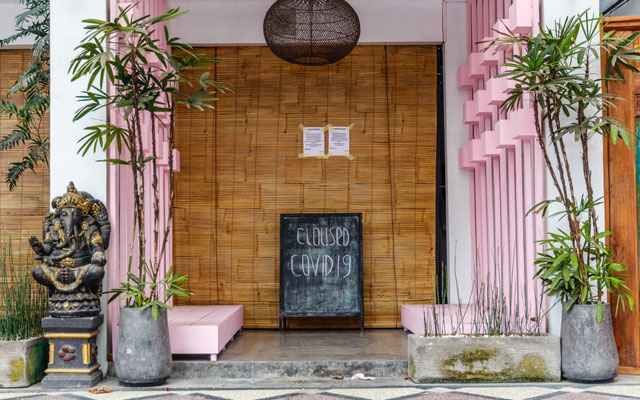
Hotel and F&B operators in Indonesia are underwhelmed by the government’s partial waiver of tax obligations, calling for more financial relief and incentives to aid the tourism sector ravaged by the Covid-19 pandemic.
Hariyadi Sukamdani, chairman of Indonesia Hotel and Restaurant Association (IHRA), bemoaned the government’s stimulus packages for their ineffectiveness in helping hoteliers tide through the ongoing crisis.
For hotels and restaurants, a 30 per cent waiver on corporate income tax, for example, was not helpful enough as they still had to shoulder the balance, while continuing to suffer losses, he said. Instead, IHRA members are hoping the government will completely waive the monthly tax.
“The pre-employment card programme is also ineffective because it benefits new job seekers instead of existing workers,” he said, hoping that the government would give the latter cash aid.
Hariyadi shared that hotels and restaurants were likely unable to pay land and building tax which is due in August, hoping that the government would waive it this year.
Most hotels and restaurants have run out of working capital reserves by now to resume operations, according to Hariyadi. He, therefore, urged the government to grant the members working capital worth 21.3 trillion rupiah (US$1.4 billion) to help tide their businesses through the next six months.
Their fiscal woes is worsened by electricity and gas bills that hotels and restaurants still have to foot, despite reduced consumption, due to the minimum charge payable, said Hariyadi. He hopes that the government would get the State Electricity Company to retract the minimum spend requirement, and bill companies for their actual usage instead.
Elsewhere, Denon Prawiraatmadja, chairman of Indonesia National Air Carriers Association (INACA), beseeched the government to absorb the Covid-19 testing costs of air travel passengers to incentivise people to fly again, as well as restore full operational capacity for airlines from the current 70 per cent in order to aid the sector’s recovery.
He also asked the government to provide financial relief for INACA members, such as waivers of parking fees, discounted aviation fuels, and tax relaxation on aircraft spare parts.
As well, Denon called on the government to coordinate regulations, citing overlapping information in circulars issued by health ministry, transportation ministry and Covid-19 task force.
He also urged greater consistency in health and safety protocols across regions to avoid traveller confusion and subsequent aversion to travel. One region, for example, required travellers to take a Covid-19 rapid test, while another, a Covid-19 swab test.
“Another challenge is how the government is going to take action against violations committed by stakeholders in the aviation industry,” he said, adding that strict adherence to health and safety protocols is important in restoring travellers’ confidence in air travel.
Meanwhile, speaking at a webinar on tourism recovery, Wishnutama Kusubandio, Indonesia’s minister of tourism and creative economy, assured the travel industry that the government was working to provide them with more financial support.
He said that he had presented the trade’s request for a complete waiver of corporate income tax during a meeting with finance minister Sri Mulyani and that the appeal “is still being processed”.
The annual Singapore Food Festival (SFF) will go virtual for the first time this year, and its offerings extend beyond just online cooking classes.
Taking place across two weekends – August 21-23 and 28-30 – SFF 2020 will bring Singapore’s culinary gems to life in the form of online and offline food tours, live and in-person masterclasses, chef collaborations, food bundles and limited-edition food merchandise.
On its virtual food tours, local TV personality Chua Enlai will take participants through the historical Tanjong Pagar, Chinatown, Katong and Joo Chiat precincts to discover stories behind popular eats, heritage food businesses and lesser-known food gems.
Physical guided tours of these destinations will also be offered over the two weekends, conducted by local tour guides. More details will be announced.
SFF 2020 will also feature exclusive merchandise. These include a range of T-shirts under Uniqlo’s UTme!, featuring eight limited-edition designs of popular hawker dishes such as laksa, kueh tutu and nasi lemak, by local illustrator Mandy Kew.
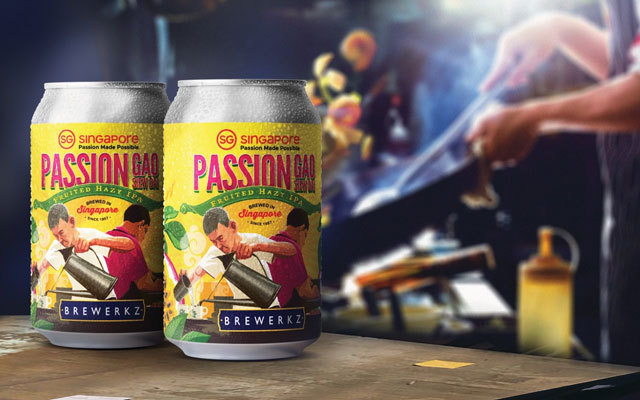
Other merchandise include Passion Gao Siew Dai, a beer exclusively developed by craft brewery Brewerkz for the festival; Chicken Rice Pretz, a collaboration between Glico and Wee Nam Kee; bakery Cedele’s prawn otah cookies and Violet Oon’s signature Sambal Bajak and Goreng Chilli.
To bring culinary flavours to participants at home, the event will have 17 free-to-view live masterclasses, featuring award-winning chefs such as Cheryl Koh of Tarte by Cheryl, Julien Royer of three Michelin-starred Odette, as well as bartending honchos Colin Chia and Charmaine Thio of speakeasy bar Nutmeg & Clove, ranked #32 in Asia’s 50 Best Bars 2020.
Selected masterclasses will also be available in person at restaurants, while participants can opt to purchase ingredient boxes and have them delivered to their doorstep.
Mobile marketplace Shopee will also host food bundles for delivery that feature tantalising dishes demonstrated in the live masterclasses. As well, social media app Snapchat will launch foodie-themed filter lens on August 21.
SFF 2020 is a highlight under the recently launched SingapoRediscovers campaign, which seeks to encourage rediscovery of Singapore’s local offerings and stimulate domestic demand.
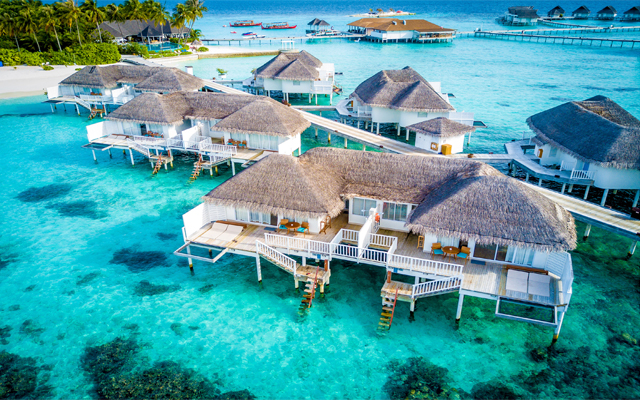
Centara Hotels & Resorts is offering promotional packages at its hotels and resorts in select destinations, including Thailand, Vietnam, Sri Lanka, the Maldives and Middle East.
The Stronger Together offer includes free half-board dining for stays of four nights or more. Global customers can book now for stays anytime before March 31, 2021, with free modification and cancellation.
Participating outlets in Thailand include Centara Grand Mirage Beach Resort Pattaya, Centara Grand Beach Resort & Villas Hua Hin, Centara Grand Beach Resort Phuket, and Centara Grand Beach Resort & Villas Krabi – all with starting rates from 3,120 baht per night.
At Centara Villas Samui and Centara Grand at CentralWorld, rates start from 2,240 baht per night. Guests who stay at Centara Grand from now until July 31 will also get 2,800 baht of hotel credit to spend on F&B or spa treatments, as well as early check-in and late check-out.
Elsewhere, guests can fork out US$80 for a night’s stay at the Centara Sandy Beach Resort Danang, or US$72 per night to staycation in Centara Ceysands Resort & Spa Sri Lanka.
Over in the Maldives, rates at the Centara Grand Island Resort & Spa Maldives and Centara Ras Fushi Resort & Spa Maldives start from US$520 and US$420 per night, respectively.
For travellers in the Middle East, a stay at Centara Muscat Hotel Oman will set you back OMR23 (US$59) per night, while a night at the Centara West Bay Residences & Suites Doha will cost you QAR340 (US$93).
The Stronger Together promotion is available to all new and existing members of Centara’s loyalty programme, CentaraThe1.
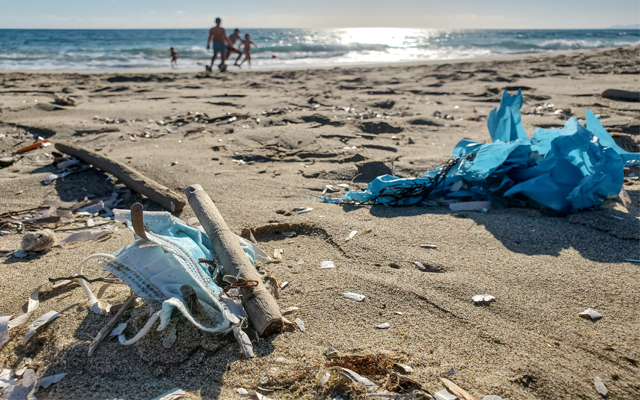
The pandemic has sparked a surge in plastic waste, as usage of disposables like face masks and sanitiser bottles continues to rise, with some coronavirus waste even making its way into the oceans. As such, a group of global bodies has released a set of key recommendations on how the tourism sector can continue fighting plastic pollution while tackling public health and hygiene challenges amid the pandemic.
The guidelines released by the Global Tourism Plastics Initiative, led by the UNWTO and the United Nations Environment Programme, in collaboration with the Ellen MacArthur Foundation, aims to spur industry stakeholders to address the root causes of plastic pollution amid these challenging times.
When not properly disposed of, products such as gloves, masks and sanitiser bottles can end up polluting the natural environments around major tourist destinations, said UNWTO in a press statement.
The Recommendations for the Tourism Sector to Continue Taking Action on Plastic Pollution During Covid-19 Recovery detail how reducing plastic footprint, increasing supplier engagement, closer collaboration with waste service providers, and ensuring transparency on the actions taken, can significantly contribute to the responsible recovery of the tourism sector.
UNWTO secretary-general, Zurab Pololikashvili, said: “As the tourism sector restarts, we have a responsibility to build back better. Not managing the transition into the new reality we are facing, including the strong focus on health and hygiene measures, in a responsible manner may have a significant environmental impact, which is why this renewed commitment is vitally important.”
UNEP economy division director, Ligia Noronha, added: “We need to take a science-based approach and support governments, business, and local communities to ensure we are taking the most effective measures to protect hygiene and health without creating pollution and causing harm to our natural environment. These recommendations addressing hygiene and disposable plastic can support tourism sector stakeholders in their efforts towards a responsible recovery.”
Already, major global tourism companies Accor, Club Med, and Iberostar Group have committed to fighting plastic pollution by signing up to the Global Tourism Plastics Initiative, alongside more than 20 signatories including major industry players and supporting organisations.
The Global Tourism Plastics Initiative unites the tourism sector behind a common vision to address the root causes of plastic pollution. It enables businesses and governments to take concerted action, leading by example in the shift towards a circularity in the use of plastics.
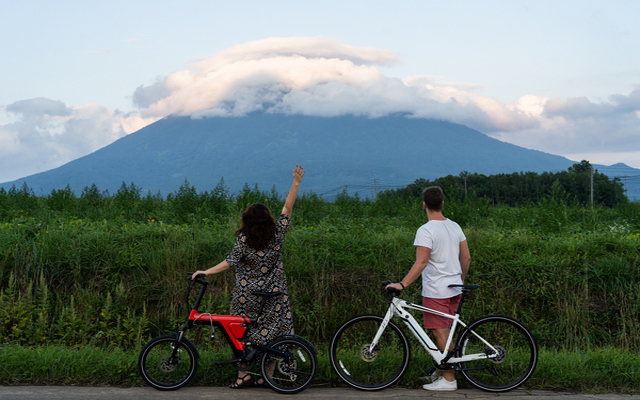
As more people look to greater personalisation and less crowded, off-the-beaten-track destinations for their next socially distanced getaway, the Covid-19 pandemic is fuelling the growth of Japan’s micro-tourism market.
“The new travel trend will be focused on simplified itineraries with limited locales and activities to minimise exposure to Covid-19,” said Mark Wong, senior vice-president Asia-Pacific at Small Luxury Hotels of the World.
“Our reservations team has become like a travel concierge desk for our guests. And we are also partnering with local experiential travel providers to curate activities that are off-the-beaten-track,” he added.
Travellers are also opting to stick to one accommodation for the entire duration of their trip.
In a recent survey by the brand, 90 per cent of respondents said they would feel “more comfortable” in a small independent hotel at present, prompting SLH to launch its Stay Small initiative to promote its properties, which each have a collection of 50 rooms on average.

Sub-campaigns include Stay Small, Stay Local, to push staycations and weekend getaways; and Stay Small, Stay Longer, which promotes regional itineraries.
Hoshino Resorts is tapping domestic demand by targeting people living within a 30-60 minute drive from their properties, with the lure of meals, hot springs and relaxation in a private space.
Jiseon Lee, the company’s area manager of global marketing, said that there is rising awareness among Japanese consumers to keep “travel closer to home and in a safe place.”
Lee said that micro-tourism can help support Japan’s hard-hit tourism industry by improving collaboration between nationwide and regional companies, while showcasing the unique aspects of localities. Kai Nagato, the group’s hot-spring resort in Yamaguchi, for example, is decorated entirely with local crafts such as hagi glass and tokuchi washi paper.
“(Our efforts) can help not only the tourism industry, but also the local economy, since developing and offering content will lead customers to come back to the region (in the future),” she said.
Sean Brecht, managing director of luxury DMC Discover Shikoku, agreed that current demand is focusing “largely around the themes of exclusivity, privacy, and limited interaction with appropriate social distancing”.
He said that his company is well-poised to meet the demand given that privacy and separation have always been key to its operation.
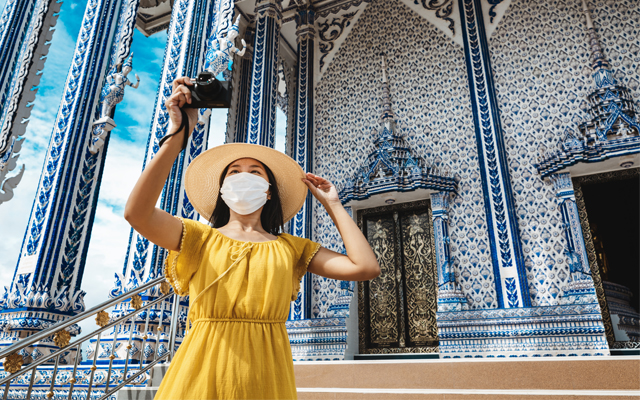
As the tourism industry starts to get back on its feet, Asian travellers have shown more confidence about travelling in the new normal, as compared to their Western counterparts, according to a recent global study.
Jointly conducted by social research agency Blackbox Research, data provider Dynata, and language partner Language Connect, Unravel Travel: Fear & Possibilities in a Post Coronavirus (Covid-19) World examined the sentiments of more than 10,000 people across 17 countries regarding travel in a post-Covid-19 world.
As part of the study, countries are measured on a travel confidence score, by considering two indicators: how comfortable a person is to travel internationally in the next 12 months, and how well-prepared they feel about their country reopening its tourism and leisure activities.
With a score of 76, India and Thailand are tied for top place with the most citizens confident of travelling in the new normal. Asian countries dominated the list of countries that scored above the global average of 61, including China (69), Indonesia (65), and Singapore (64). France, Germany, and Denmark also rated above the global average.
At the other end of the spectrum, Japan rated the most cautious with a score of 40, followed by the Philippines (43), and Hong Kong (50). Other countries that scored below the global average included Sweden, New Zealand, the UK, Canada, and the US.
Blackbox Research COO, Saurabh Sardana, said that each country’s score reflects a balancing act between a number of different considerations – the perceived importance of tourism to a country’s economy, national management of Covid-19 cases, and even past experiences of similar epidemics. Notably, New Zealand’s low case achievement has led to the country’s more cautious attitude towards international travel.
He added: “The scores revealed that a number of countries have had their confidence towards travelling severely battered, which can be attributed to the negative reporting on Covid-19 cases. For them, sustained control in Covid-19 numbers domestically and globally is needed before they begin revisiting international travel as a lifestyle priority.
“Meanwhile, with a significant part of Asia having experienced similar epidemics, it is not surprising that Asian travellers would be more resilient and optimistic about seeing the light at the end of the tunnel. Despite countries like India and Indonesia recently seeing a higher number of cases, their reputations as tourism powerhouses means it will be hard for them to neglect the travel industry in the long-term.
“When it comes to navigating travel in the new normal, we foresee people living in Asia will have the highest pent-up demand for travel, but tourism boards and the travel sector need to re-evaluate and reimagine their whole approach towards future travel experiences in order to be sustainable in the future.”
Overall, international leisure travel in the short-term is off the schedule for most people, with 44 per cent of respondents still keen to avoid international vacations. Notably, Japanese (32 per cent), Filipinos (42 per cent), New Zealanders (43 per cent), and Australians (52 per cent) are least eager to take longhaul trips.
However, the study also revealed that aspirations for regional travel has led to emerging travel trends in destinations. Australia and Japan emerged as the two most popular destinations for Asian travellers, while Spain is on the top of the list for European travellers given that its Covid-19 cases saw a downward trend in June.
The countries whose tourism appeal took the biggest hit during the pandemic are China, Italy, and the US. Sardana attributed this phenomenon as a reflection of what has been reported in international and mainstream media on each country’s Covid-19 crisis management.
Sardana noted: “The travel sentiment to countries like the US and China also gets severely impacted by key events such as Black Lives Matter protests, foreign worker visa freeze, and Beijing’s second wave of infections. This has a compounding effect which inevitably has taken a toll on their international standing as a tourism destination. What this means is that they have their work cut out for them to reposition themselves to attract tourists post-Covid-19.”
In order to win over future travellers, tourism boards and travel operators need to keep safety during travel at centre stage, with travellers willing to pay a premium for such assurances, according to the study. Globally, 80 per cent are willing to pay more for safer accommodation, while 74 per cent are open to paying a higher premium for travel insurance in exchange for protection against pandemics.
Meanwhile, contactless travel will be the new benchmark for travellers – 76 per cent of respondents indicated that their preferred travel destinations will be countries that offer more reliable contactless experiences. Travellers are also looking to minimise contact during transfers as much as possible – an overwhelming 66 per cent prefer to travel in their own vehicles for road trips between cities or countries, compared to travelling on a plane (18 per cent), rented or private-hire car or taxi (nine per cent), and buses and trains (seven per cent).
In response, Sardana said: “Governments will need to play a key role in messaging and ensuring travellers’ safety, as well as empowering the tourism industry through investment in new technology and innovation that would ensure a seamless, contactless travel experience that is sustainable. The first movers will cash in on the pent-up demand as borders open.”
In terms of what the future of travel looks like, the study found that e-boarding passes (44 per cent), touchless lavatories (43 per cent), contactless journeys from airports to hotels (40 per cent), no middle seats in transportation (36 per cent), and digital health passports (35 per cent) are some of the new ideas on global travellers’ wishlist.
Sardana concluded: “What the study has shown us is that the pandemic has unequivocally shifted how we see travel, and in order for travel industry players to stay relevant, they need to change the way they approach every aspect and touchpoint in the traveller experience, emphasising safety and rebuilding trust.
“Halting travel has had devastating social and economic implications – a majority of our respondents recognise that the tourism industry plays an important role to their country’s economy. In order for the travel industry to emerge from this crisis stronger and more resilient, they need to also recognise that Covid-19 will not be the last global health crisis, and beyond rebuilding an industry that caters to new needs, preferences, and expectations, it needs to reconsider its fundamental approach towards travel experiences.”

Aurora Expeditions has appointed Monique Ponfoort as CEO, commencing October 2020.
Ponfoort joins the business from Ponant & Paul Gauguin Cruises where she was vice president and general manager for Asia-Pacific.
She said that she was “drawn to the growth and forward thinking of (Aurora) together with their true passion in delivering outstanding expeditions and guests experiences to some of the most remote and unique places and cultures in the world”.
Aurora chairman Neville Buch said that Ponfoort’s experience and skills will help the company in its future expansion. He will continue working in an executive chairman role until Ponfoort’s start date.

Where do the sustainability measures taken by Asian tourism and hospitality players currently stand?
This field is constantly changing, as hotels have to keep addressing emerging issues like plastic and waste.
Overall, the big trend we have seen is hotel companies beginning to look at sustainability and social responsibility from a corporate standpoint… Before, it was somewhat piecemeal or focused on what could be done at each property separately.
Those in the region that have already developed robust platforms are now taking further steps (across) their supply chains and setting goals (covering broader and deeper measures).
How well are the active players in the region performing on this front?
Everyone is doing some aspects well (with room for improvement). (We hope to see) those who come out of this crisis and continue on their path to single-use plastic elimination – but who knows how that will turn out given the recent issues our planet is facing.
What would be the optimal way for a hotel to take the lead on sustainability?
Like all businesses, hotels need to…recognise the role they play in destinations and communities via their staff, procurement (processes)and their guests’ spending (habits).
The optimal way is to converge solutions with guest experience. That sounds great but (difficult) in practice. Still, we could use some more critical thought on what guests care about and how to correctly communicate the message.
What more needs to be done in the industry?
(There needs to be) more renewable energy and collaboration. The elephant in the room of climate change is switching to renewable energy, and hotels simply haven’t gone as far as needed to play their part, largely due to systemic issues.
Also, the industry and its various (sectors) should think more about how and where collaboration is possible, so that we aren’t doomed to repeat the same thing when the next pressing issue arises.
For example, it pains me to see how the (issue of) single-use plastic (has) played out in hotels. Pretty much every hotel chain did the same thing: (got) internal teams together; (figured) out what kind of single-use plastic is in their hotels; (identified) how, when and what they could eliminate or reduce; (implemented a series of other measures; before they started) engaging with external initiatives offering solutions.
Hotel associations, hotel chains and consultants could have worked together to figure this out more effectively.
What do you believe would help push hotels towards a higher level of sustainability?
Hotels tend to be very reactive. The real way to drive sustainability is for governments to issue policies and requirements to address sustainability in hotel buildings and operations; for guests and corporate customers or planners to request and demand more in this area as part of their decision-making; and for distribution channels to provide more content…to help (hotels make) informed decisions. Once these levers are activated, hotels will jump on board much more quickly and broadly, and learn from each other.
Instead of being purely reactionary and part of a chain reaction, how can hotels step up?
By not placing the responsibility on other entities. Within the industry, the single biggest change that needs to happen is to integrate sustainability into the process of hotel development and investment.
The asset-light model that allowed chains to grow, coupled with the basic premise of real estate appreciation that hotels could tap into, created this systemic challenge where most of the solutions require longer-term thinking, scale and investment, but ownership is too fragmented and (owners) often (have) different business objectives from the hotel’s operator and/or brand.
We dived into this in 2015 with broader sustainability movements of needing deeper targets to reduce environmental impact, and to address it we launched the Hotel Owners for Tomorrow Coalition with two dozen other entities to address this gap.
As we peeled (back the layers of this issue), we started to see the systemic challenge: in hotel deals, nobody was talking sustainability until the operator came in, which by then was too late. Many in the value chain were disincentivised from bringing it up.
To push for higher sustainability, the industry’s various players that are involved in hotel development and investment need to start talking about sustainability, and get owners really interested in it so they can start proactively seeking it as part of their investment and operator selection.







Why
We are in the midst of a Microsoft Teams meeting, and our companions at the other end of the video call are loud, boisterous… and very, very distracted. They aren’t paying attention to what we are saying, and are instead caught up in their own constant chatter. They also happen to be a bit wet having just come out of the shower. Not that any of that matters to us, as these leggy African beauties are a sight to behold. All 65 of them.
It isn’t every day that we get to hang out with a flock of flamingos. Or have the chance to grill a keeper for some fun flamingo facts.
That is now possible, thanks to Wildlife Reserve Singapore’s (WRS) Hello From The Wild Side programme, a host of online offerings that include virtual encounters with its feathered residents. This initiative was launched amid the closure of the group’s four zoological parks during the country’s circuit breaker. While all the parks have since reopened (except Night Safari which will reopen on July 30), the popularity of its virtual initiative has led WRS to expand its menu of online offerings.
What
Hello From The Wild Side now includes the option to purchase personalised video greetings featuring select animal personalities, and a private behind-the-scenes session with Singapore Zoo’s Asian elephants.
As part of its refresh, guests can have virtual group meetings with the double yellow-headed amazon, scarlet macaw and toco toucan (Jurong Bird Park); as well as great horned owl, Asian small-clawed otters, and white raccoon (Night Safari). That is on top of the original cast: capybara and great white pelican (River Safari), African penguins (Singapore Zoo), as well as oriental pied hornbill and white cockatoo (Jurong Bird Park).
How
Our virtual meeting on a Friday afternoon was with the Bird Park team, featuring a quartet of avian beauties: the double yellow-headed amazon, scarlet macaw and a pair of toco toucans, with a surprise appearance from the supermodels of the wild.
Taking us into the colourful and cacophonous colony of feathered fowls is the chirpy and wildly animated Lynn from the animal presentation team.
We hear our first guest before we see him – Quincy, a loud and talkative double yellow-headed Amazon parrot, a native to the forests of South America. Parrots like Quincy, we are told, are adept at mimicking skills. He can utter the words “welcome to parrot paradise”, mimic a cat’s meow, and even do a rousing rendition of Singapura, Sunny Island. We also learn that parrots like Quincy require a lot of time and attention, can create quite a ruckus, and live up to 80 years old.
Our next close-up encounter is with another South American native: Ippy, a long-tailed scarlet macaw, which tongue wiggled and somersaulted his way into our heart. As one of WRS’ Go Green for Wildlife ambassadors, Ippy even schooled us in the importance of recycling with a charming demo involving three types of bins and litter – and a pint-sized stool.
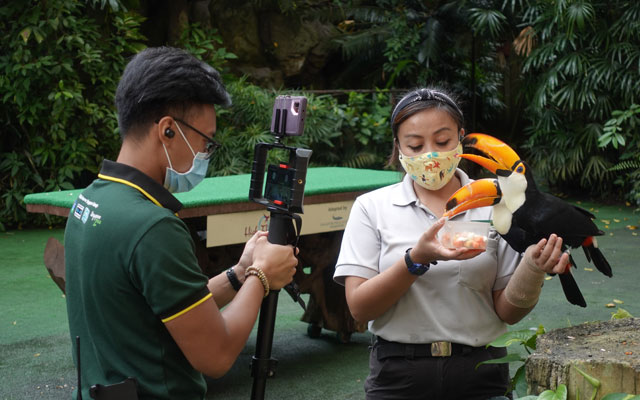
Our next guests are no stranger to the limelight, having graced cartoons and cereal boxes. Meet the big-beaked Mr and Mrs Axle, a pair of wildly popular toco toucans, which are the largest in the toucan family. The husband-and-wife duo quickly get busy munching on their treats comprising a mix of assorted fruits, eggs, and chicken – “for a well-balanced diet”, we are told. Despite their oversized bills, we found out that they are incredibly agile, via a performance involving one nicely fielded morsel of grape.
These interactive sessions would be a hit with parents with young kids, friend groups, or remote teams for teambuilding activities.
As opposed to an in-person trip, these virtual sessions offer the opportunity to interact with the keeper and learn more about these critters. It also affords an up-close look at the animals, albeit via a screen. It was almost surreal seeing the toco toucans in such close proximity in real-time, and we were entranced by their cartoonish-looking bills.
While these sessions are non-exclusive, they are limited to only three user profiles at any time. Alternatively, participants can opt for a personal session by booking out all three slots for that timing and invite up to five friends to join in the call. Part of the funds raised through these interactive sessions is channelled towards supporting ongoing efforts by WRS to care for and protect wildlife and habitats across South-east Asia.
Verdict
All in all, the 20-minute session was equal parts entertaining and educational, and we walked away with newfound knowledge on feathered fowls – some fun to know, some hard to swallow.
Like when we learnt how many parrot owners end up giving up their pets at the Jurong Bird Park due to the birds’ high maintenance. Or how the number of toucans in the wild is shrinking due to poaching and deforestation, driving home the importance of supporting local conservation efforts.
Turns out, staging a show with animals in real-time can make for pretty good comedy, thanks to their penchant for going off-script. To wit, Lynn’s repeated attempts at getting Quincy to say hello is met with stony silence, while earnest appeals for him to mimic a rooster’s crow sees the fowl letting loose a series of shrill whistles instead.
We were, perhaps, most delighted by a surprise appearance from the flamingo family as our session drew to a close. During an interactive Q&A session with the host, we received a crash course on flamingos: These pink beauties are not au naturel, but get their colour from their diet which contains beta carotene. They love to shower. Sometimes, they stand on one leg even when they are sleeping. And, yes, flamingos fly. But, like airplanes, they require a long runway to run a few paces to gain speed before taking flight.
Rate: S$100 (US$72.50) for a 20-minute session with all animal groups for virtual meetings, except oriental pied hornbill and white cockatoo (S$50 for a 10-minute session)
Contact:
Website: www.wrs.com.sg/en/hello-from-the-wild-side