TTG Asia
Asia/Singapore Tuesday, 7th April 2026
Page 834

A tale of two worlds

0

One is a high-tech smart city in the making, the other teeming with rustic, laidback charm. One is the next international commercial hub with an emerging tourism zone, the other, primarily a leisure destination that is also primed to host business events. Despite their differences, the New Clark City and the province of Bohol share the same goals for a sustainable and responsible tourism development.

New Clark City
Just a few hours’ drive from metro Manila, the New Clark City (NCC) in Tarlac raises the bar for a carefully master planned development that strikes the right balance between innovation and sustainability.
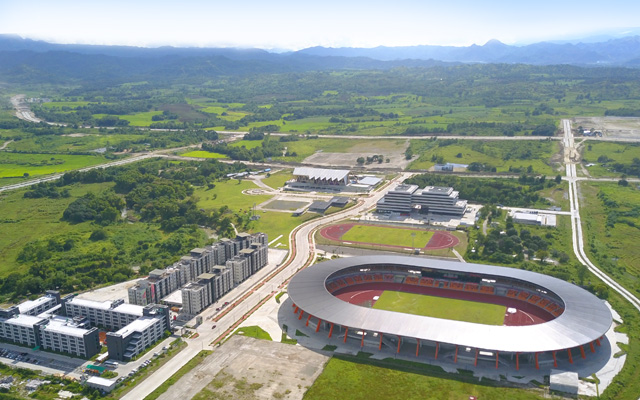
An aerial shot of New Clark City

Twice the size of Manhattan, only 40 per cent of the land area of the futuristic mega-project is being developed, leaving 60 per cent for green and open spaces including forest reserves. Ecosystem-based adaptation means it is designed to withstand natural calamities like typhoons, floods and earthquakes. Air pollution and traffic congestion are minimised by banning vehicles in many areas and by offering walkways and bicycle lanes instead.

Sharing the area is the former US military base in Pampanga that is now Clark Freeport Zone Complex, the primary district Clark Global City, and Clark International Airport.

Clark is “envisioned to be the country’s next smart and sustainable metropolis. It aims to become an international hub for companies and industries, and a major growth centre outside metro Manila,” said Vince Dizon, president and COO of the Bases Conversion and Development Authority (BCDA), which has the mandate to develop Clark in tandem with the private sector.

NCC houses the National Government Administrative Center, an integrated national government hub that will function as a recovery and backup operations centre in times of disasters and emergencies, according to Dizon.

Driving investments and growth in Clark are the airport’s major expansion and other key infrastructure projects such as the Subic-Clark Railway and the Malolos-Clark Railway that will drastically reduce travel time between Subic and Manila, Dizon added.

Bi Yong Chungunco, CEO of the Luzon International Premier Airport Development Corp., operator of Clark International Airport, said: “We have a growing catchment area in Central and Northern Luzon, due to the rapid rise of Clark as a preferred hub for business, economic and leisure activities.

“With Clark’s strategic location at the crossroad of major expressways, as well as the soon-to-complete Manila-Clark Railway Project which will have a train station stopping in front of the airport terminal, the airport will be easily accessible and well-positioned to serve travellers and metro Manila residents.”

Dizon said Clark is being positioned as a destination for business events and sports tourism, and was well on its way to becoming one of the country’s top business events destinations before the pandemic.

The world-class sports complex in NCC, composed of the Athletics Stadium, Aquatics Centre and Athletes’ Village, have put the new metropolis on the map for major sporting events such as the 30th Southeast Asian Games in 2019 and the recent Fiba Asia Cup Qualifiers.

Clark and Subic have also been added to tourism circuits that once included only Pampanga and Bulacan for food mapping, farm tourism and adventure thrills.

Tourism players have welcomed the new infrastructure taking shape at Clark as “this equates to more options that we can offer our clients,” said Ritchie Tuano, general manager of Asiareps Travel Services and immediate past president of the Philippine Travel Agencies Association.

He added that these developments are also “catalysts in regaining the travel business back to 2019 (levels)”.

Bohol
Conservation, preservation and sustainability have always been integral to Bohol’s tourism development.

Permanent structures are not allowed on the 1,776 Chocolate Hills that drop over the protected area of six municipalities. When an earthquake flattened most of the province’s historic churches back in 2013, experts painstakingly restored these fragile edifices rather than build replicas.
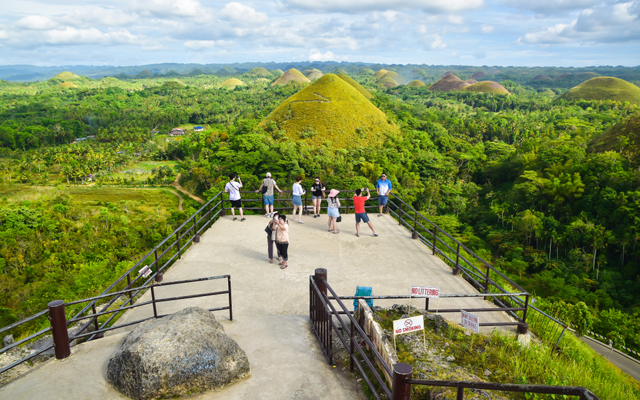
Popular tourist attraction Chocolate Hills of Bohol

In the gradual and systematic re-opening of tourism, Bohol is leveraging its unique attractions such as the Chocolate Hills, endangered species of tarsier, and Loboc River, while honing undiscovered destinations beyond Panglao and neighbouring Dauis. Further, efforts are underway to spice up little-known attractions and activities centered on community life, arts and crafts, culture and heritage, and ecotourism.

Bohol governor Arthur Yap shared that they are working on “high value, low density” tourism, which marks a move away from mass tourism, for both the travellers’ safety and the destination’s sustainability.

Yap said in the ongoing diversification of their tourism products, the missing piece is agri-tourism which is only possible if agriculture can be modernised. With agri-tourism, Bohol has “a fighting chance” to move into culinary tourism.

Lourdes Tuyor-Sultan, president, Bohol Federation of Travel and Tour Operators, said that by focusing on responsible and sustainable tourism, “we are trying as much as we can to minimise the negative impact of tourism. (While) tourism is one of the major economic drivers of Bohol, we are also conscious of the consequences (of its unbridled growth)”.

One of Bohol’s edge, Sultan said, is the close and strong interaction between the private sector and the local government unit currently helmed by Yap who is hands-on in working closely with the Department of Tourism (DoT) and its marketing arm, the Tourism Promotions Board.

As such, Bohol became one of the first Philippine destinations to establish a travel “bubble within the bubble” to spur domestic tourism and last year, hosted the country’s first international hybrid event, the Philippine Tourism Exchange.

In the gradual reopening of DoT-accredited tourism establishments, they are required to secure the Ultimate Bohol Experience seal, which proves their compliance with the requirements on carrying capacity, proper waste management, sewage treatment, use of renewable energy, and other sustainability measures.

Bohol also has a systematic method of allowing domestic tourists so people feel safe to travel, Yap shared.

Trade players call for greater clarity on Phu Quoc reopening guidelines

0

Vietnam’s tourism players are calling for clear guidelines to be announced as the country preens Phu Quoc for opening to vaccinated international travellers in October.

This month, Kien Giang authorities started vaccinating the island’s more than 127,000 residents as part of preliminary plans to start welcoming vaccinated tourists.

Phu Quoc starts vaccinating residents as it looks to welcome vaccinated foreign visitors in October 

While industry leaders have welcomed the news, they are calling for concise details to be released so plans can be put into play.

Nicholas Wade, general manager of Khiri Travel, said: “We need absolute clarity from the government on what requirements and restrictions are going to be in place. There needs to be a clear plan that is attractive (enough for) the travel industry to be willing to promote.”

If the pilot scheme gets green-lit, Pham Ha, CEO of Lux Travel DMC, predicts European and Russian holidaymakers will be the first to return. However, he said it is vital the industry focuses on “quality rather than quantity”.

Wade added Phu Quoc is predominantly a “flop and drop” destination, meaning multi-night stays in one resort should not be an issue. He added: “Without the possibility of travelling to the mainland, there aren’t going to be a huge number of tourists attracted.”

Ha said another challenge is the uncertainty over which hotels will be given the go-ahead to accommodate guests.

He noted: “Big guys like Vin offer packages (ranging from) seven to 14 nights. However, our German guests don’t want to stay in these big resorts. They prefer small resorts. Unfortunately, when we contacted those, they don’t always know how to conform to the regulations.”

Jeff Redl, managing director of Diethelm Travel Vietnam, said vaccination is key to reopening. The government plans to have 50 per cent of the population vaccinated by the end of 2021 and 70 per cent by the end of 1Q2022.

He remarked: “I’m confident the country will have in place efficient procedures to reach these targets. In the meantime, Vietnam will have to finalise and communicate efficiently the procedures and conditions it requires for welcoming international travellers.”

Linh Le, founding partner of Luxperia DMC, remains hopeful the vaccination campaign will allow borders to fully reopen by March 2022. In preparation, he said it is vital to retrain key staff who moved into other sectors due to the pandemic.

He added: “Leaders need to retain relationships with employees and support their teams to re-engage with talent within the industry. Once borders reopen for vaccinated travellers, it will be those with skilled staff who will recover faster.”

Sleepless in Asia: Destination developments keep chugging on

0

Producing this special co-branded TTG Asia and TTG Asia Luxury issue sparked much joy for me because every piece of content on our pages focuses on what’s moving positively in the travel and tourism industry.

We know what the tough headlines are, and we know that our challenges will take a while to resolve. So, for now, let’s focus on the developments that are still happening throughout the travel and tourism landscape.

Across Asia, fresh attractions and activities have been rolled out – with more to come throughout 2021 and 2022, much to the delight of local residents who are in desperate need for uplifting entertainment to satiate their wanderlust.

Developing a destination product to excite locals is no easy task. How do you appeal to people who believe that they have seen all there is to be seen in their backyard? And if these are well-travelled people, the bar is raised even higher – can your product be more alluring than what they had experienced overseas?

It is interesting to observe the range of new draws that have emerged. Hong Kong is set on a culture and heritage route, providing a nice contrast to its urban landscape. Japan is playing up its scenic, natural environment and wide open spaces, presenting even more points of appeal for outdoorsy folks.

City-state Singapore appears to be transforming into one big playground for the young and young at heart. In fact, Singapore Tourism Board is working to enthrall young families and children, to build their desire to visit when it is possible. It recently launched a seven-part animated mini series for children in India, where popular comic character Chhota Bheem takes his birthday party to Singapore and shows off some of the destination’s most iconic locations and experiences.

Over in Vietnam, secondary destinations have come into the limelight while in Macau efforts to reposition herself for families continue.

Some of these developments will help to push traveller traffic away from the usual popular haunts – so important in a safe-distanced, post-pandemic world – and into areas that can stand to benefit from some tourist income.

Amid the creation of all things bright and shiny, it is heartening to see that tourism authorities have not forgotten their commitment to build back tourism better and in a more responsible way that benefits the environment and local communities for generations to come. Cambodia, the Philippines, Indonesia and Thailand are setting with good examples.

Another positive development for the travel and tourism industry is the growing population of high net worth individuals across Asia-Pacific. Their travel desires have only intensified throughout the travel freeze. The luxury travel market is clearly still buzzing, with many buyers moving now to restart travel programming for their VIP clients. The strong interest to participate in July’s ILTM Asia-Pacific is proof.

As initial travel resumption would be pricey and time consuming to prepare for, the industry will need to count on luxury travellers – those with the resources to navigate the complex web of post-pandemic travel regulations – to lead recovery.

Karen Yue is group editor of TTG Asia Media. She sets the editorial direction for the company’s stable of travel trade titles and platforms, and produces content for them as well.

Meliá creates 240 jobs as it readies to open five-star hotel in Chiang Mai

0

Hundreds of hospitality workers in Chiang Mai and across Thailand are vying to secure jobs at Meliá Chiang Mai as the hotel prepares to start welcoming guests in the final quarter of this year.

Owned by Thailand’s real estate group Asset World Corporation and launched by Meliá Hotels International, the 260-key hotel will open with about 150 employees, and will employ a total of 240 people in light of its construction and pre-opening phase.

Meliá Chiang Mai will be the first five-star hotel to open in Chiang Mai this year

The opening of Meliá Chiang Mai presents an opportunity for hotel employees, especially those displaced by the Covid-19 pandemic, to secure roles spanning F&B, housekeeping, spa and wellness, sales and marketing, human resources, engineering, and many more.

“We have already received hundreds and hundreds of job applications from people in Chiang Mai and across Thailand, and admittedly, we have not yet done very much in terms of advertising positions and hosting recruitment drives,” said general manager Edward Snoeks.

He said the hotel project not only helps to create jobs and stimulate the local economy, but also provides a morale boost for the battered local tourism industry.

With many hotel owners putting hotel projects on hold amid the current uncertainty, Meliá Chiang Mai will be the first five-star hotel to open in Chiang Mai this year.

According to Snoeks, more than 99 per cent of the hotel’s employees will be made up of Thai nationals, with the only two foreigners being the F&B director and himself.

Ahead of the hotel’s opening, staff will be trained on the stringent anti-Covid safety protocols in place under the hotel group’s Stay Safe with Meliá programme that was developed in collaboration with certification, inspection and testing company Bureau Veritas, shared Snoeks.

With international recovery still on shaky ground, the domestic market will remain a major focus for Meliá Chiang Mai for the foreseeable future. But, at the same time, the hotel is also preparing for the eventual upturn. Already, it has lined up a programme called PengYou by Meliá which specifically targets leisure travellers from China.

Since July, Thailand has embarked on a phased reopening plan to reopen to vaccinated visitors without quarantine, in a bid to revive its economy. Chiang Mai is among several cities and provinces set to join the plan later this year, following the reopening of Phuket under the Sandbox reopening scheme as well as Koh Samui as part of the Samui Plus programme.

Malaysia projects most states to move into final phase of National Recovery Plan in October

0

The Malaysian government anticipates that most of the country’s 13 states will move into the final phase four of the National Recovery Plan (NRP) in October.

Prime minister, Muhyiddin Yassin, said the projection is based on the smooth running of the national immunisation programme as well as the government’s efforts to implement the recovery efforts.

With the acceleration of its vaccination programme, Malaysia expects most states to enter phase four of the National Recovery Plan in October

The three indicators to be fulfilled for transition into phase four of the NRP are that 80 per cent of the state’s adult population must have been vaccinated, the number of new cases must drop below 500, and the healthcare system is at a safe level with enough beds in ICUs.

In phase four, economic activities such as domestic tourism, performances with live audiences as well as group sporting activities will be allowed. At the moment, eight states – Perlis, Perak, Kelantan, Terengganu, Pahang, Penang, Sabah and Sarawak – are in phase two. Interstate travel is currently banned nationwide to control the spread of Covid-19.

On Monday (July 26), the country reported 14,516 new Covid-19 cases, with a record high of 207 deaths, bringing the national death toll to 8,201.

Earlier this month, in her keynote address at the Halal in Travel Global Summit 2021, tourism, arts and culture minister Nancy Shukri said that Malaysia is exploring the idea of making Langkawi as the pioneer location for the country’s Covid-19 Free Destination Programme, with the successful rollout of vaccinations for the island’s population.

No timeline has been set yet on when domestic and international travel to Langkawi can resume.

The Ministry of Tourism, Arts and Culture has also selected Pangkor Island in Perak to be phase two of the Covid-19 Free Destination Programme, following the pilot destination in Langkawi. It is expected that 80 per cent of Pangkor’s local population of 11,500 would have been fully vaccinated by September, thus achieving herd immunity, and paving the way for the island’s reopening.

Meanwhile, Pahang is also looking at reopening in phases. Tourism areas with small local populations, such as Taman Negara National Park, Tioman Island, Kuala Gandah and Fraser’s Hill, are expected to reopen ahead of other areas with larger populations.

However, no reopening date has been set. One of the main criteria for reopening is that at least 80 per cent of the local population must have been vaccinated, and that there are clear SOPs and guidelines in place.

Pahang State Tourism Exco, Mohd Sharkar Shamsudin, said the state government is in the midst of fine-tuning SOPs and guidelines for the planned reopening, and welcomed feedback from the private sector.

The state is also looking at establishing a travel bubble between Tioman Island and Singapore.

Singapore aims for quarantine-free travel by September

0

Kunming welcomes its first Grand Hyatt Residences

0

Visit Maldives woos SE Asian travellers in partnership with TripZilla

0

Visit Maldives has joined hands with travel portal TripZilla to launch a branding campaign to promote the Maldives as one of the world’s most preferred safe haven destinations, targeting the South-east Asian market.

The five-month-long campaign, starting from July till December, will leverage a variety of digital marketing components to promote the Maldives to ensure that the destination remains top-of-mind among South-east Asian travellers, in anticipation of the reopening of borders.

Under the campaign, articles on the tourism products (resorts, guesthouses, liveaboards, and hotels) and the unique experiences offered by the Maldives will be published on Tripzilla’s main website.

In addition, a video presentation featuring the serene scattered islands and the unique geography of the Maldives will be showcased through TripZilla. Besides spotlighting the activities that can be experienced in the Maldives, the video also highlights that the island country remains a safe haven destination given its unique one-island-one-resort concept.

Further, a variety of engagement posts will be created by TripZilla on Facebook to encourage viewers to engage with the content. The campaign is estimated to reach a total of at least 820,000 viewers across Singapore, Malaysia, Indonesia, and the Philippines.

As the campaign also aims to promote the Maldives as one of the leading Muslim-friendly destinations among South-east Asian travellers, the aforementioned articles will also be posted on HalalZilla.com – Tripzilla’s platform targeting millennial Muslims – and the HalalZilla Facebook page.

The campaign aims to create awareness about the activities that can be enjoyed by Muslim travellers, families, and luxury travellers.

Over the years, the Maldives has seen a steady growth in terms of tourist arrivals from the South-east Asian region, with greater flight connectivity to the island country. In 2019, the Maldives welcomed more than 87,636 tourists from the South-east Asian market.

ASEAN governments urged to work on a digital vaccine certificate to kickstart tourism recovery

0

The Federation of ASEAN Travel Association (FATA) is calling on South-east Asian governments to work out a common and acceptable vaccine passport protocol to jumpstart intra-regional travel.

ASEAN, comprising 10 countries in South-east Asia, has a combined population of 661.5 million people.

Having an ASEAN Digital Covid-19 Certificate will facilitate the safe restart of regional travel, says FATA

With most South-east Asian countries fast-tracking their national immunisation programmes, FATA foresees international borders will be reopened soon and vaccine passports will play a crucial role in the restoration of regional tourism.

FATA president, KL Tan, stressed: “A uniformed set of standard operating procedures (SOPs) must be in place to avoid confusion and anxiety, and to provide a seamless travel experience. IATA Travel Pass and WHO vaccine passports to facilitate international travel need to be considered by (South-east Asian) countries along with our own ASEAN Digital Covid-19 Certificate, a joint collaborative effort by ASEAN governments.

“Having such (a digital vaccine passport) would be a practical solution towards validating passenger risk status before travel, (and) ensuring the smoothest possible experience for air and land passengers/travellers alike. It is essential to have such a certificate to support the reopening of safe travel. A well-coordinated approach would help avoid unnecessary stress for passengers and travellers, especially those travelling by air.

“Ideally, the ASEAN Digital Covid-19 Certificate will provide information on proof of vaccination, show if a person holds a negative SARS-COV-2 test result, or has recovered from Covid-19.”

Tan opined that in order to reap the full benefits of the ASEAN Digital Covid-19 Certificate, it will require the harmonisation of the verification protocol among ASEAN member countries.

To avoid duplication (i.e. checks by multiple operators – airlines, immigration, public authorities, etc.) and confusion, FATA recommends a ‘one-stop’ verification process prior to departure, involving coordination between authorities, airports and airlines.

ASEAN member countries should ensure that the verification is carried out as early as possible, preferably before the passenger arrives at the departure airport, in order to ensure a smoother experience for all involved, said Tan.

He added: “EU member states have launched their EU Digital Covid Certificate on July 1. We can always learn and improvise if necessary to suit (regional) travel requirements. As a region, (South-east Asia) should not be left behind and push forward aggressively for our own ASEAN Digital Covid Certificate.

“Tourism is one of the key economic drivers of (South-east Asian) countries. The EU have gradually opened up their borders subject to SOPs. (South-east Asian) countries need to do likewise to balance lives and livelihoods. Intra-ASEAN travel is crucial rather than depending on longhaul travel or travel bubbles to revive the floundering regional economy.”

Indonesia develops plans to court post-pandemic Muslim tourists

0

Setting its sights to revive tourism to the country, Indonesia has put in place a slew of initiatives to capture a greater slice of the post-pandemic Muslim travel market.

Speaking at the panel discussion titled Strengthening the Quality of Indonesian Tourism through Halal Lifestyle, held in conjunction with the recent Halal in Travel Global Summit, Riyanto Sofyan, chairman of the Indonesia Halal Tourism Association (IHTA), said that among its strategies to lure Muslim travellers to Indonesia is to strengthen the destinations’ offerings to meet changing demands.

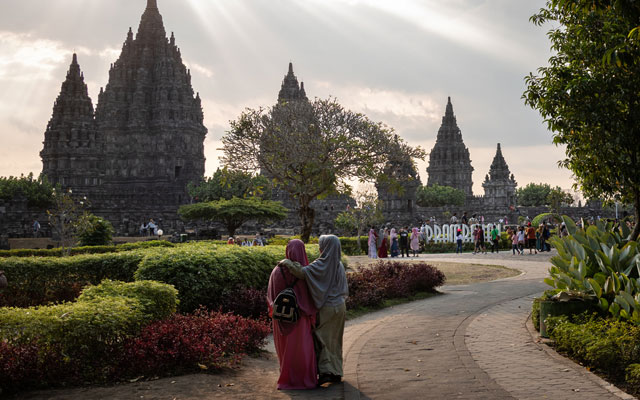
Indonesia strengthens tourism offerings to woo Muslim travellers; Muslim tourists at Prambanan Temple pictured

Riyanto said: “We are launching new and unique travel products, focusing on nature-based, wellness and cultural offerings, such as (developing new) glamping resorts and community-based tourism villages.”

One of the products in the making is the Syariah Quadrathlon initiated by the Syariah Economic Society Indonesia, which will include endurance horse-riding, swimming, running and archery.

Otto Setiawan, executive director of Syariah Quadrathlon Indonesia 2021, said the event will initially target domestic participants, with the aim to attract travellers from neighbouring countries at a later stage.

Rizki Handayani, deputy of tourism product and MICE at MoTCE, said: “(One of the post-pandemic trends) is travelling in small group sizes. We hope the domestic destinations can come up with new attractions that meet the needs of specific market segments, sports tourism being one of them.”

She also advised travel agencies on the importance of creating experiential value for tours. “You need to incorporate a story-telling component into the tour. Invite the young generations in your destinations to create stories about their places,” Rizki said.

Riyanto said IHTA would also emphasise on capacity building and the implementation of the Cleanliness, Health, Safety and Environmental Sustainability Plus (CHSE+) protocols at tourist destinations.

Wisnu Rahtomo, deputy chairman at IHTA, explained: “The Ministry of Tourism and Creative Economy has come up with the CHSE standard and the InDOnesia CARE (I Do Care) Campaign and we are supporting the initiative by adding the halal travel values to the standard (with the creation of CHSE Plus protocols and the I Do Care Plus campaign).”

In the aspect of Cleanliness, for example, the added component includes Muslim-friendly toilet and prayer amenities, while the Health element in restaurants is to provide halal-certified food and beverages.

“These are basic requirements but many have not paid much attention to them,” Wisnu said.

He added that the I Do Care Plus pilot project is planned for four regencies in West Java where a team comprising the regional government, academicians and practitioners would assist accommodations, restaurants and attractions in implementing the CHSE Plus standard.

Yenike Purbandari, a leader at the Nepal van Java tourism village, Butuh Village in Temanggung, Central Java, opined that the I Do Care Plus programme should not only focus on educating the industry but also the travelling public.

“As management, we implement the protocols and request visitors to wear masks but there is a misconception among travellers that when they are travelling outdoors, they do not need to wear a mask,” she said.

She also appealed for the government to address the manpower crunch in the sector, especially in tourism villages which are rapidly gaining popularity.