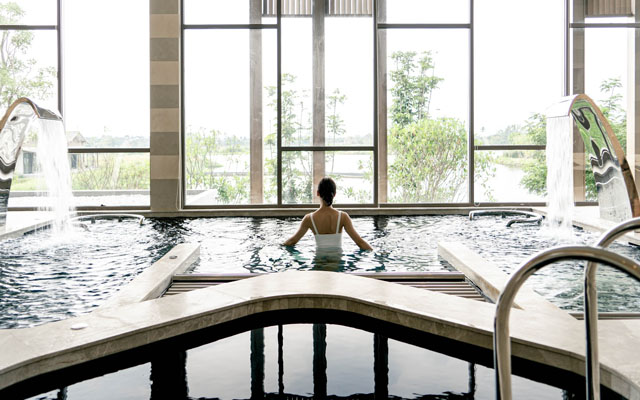
RAKxa, the integrative wellness and medical retreat in Bangkok has launched a series of new Authentic Eastern Programmes where tradition, technology and nature intertwine.
The three holistic wellness programmes – Sense of RAKxa; Rest & Reset; Cleanse & Purify – each focus on different goals and ensure that guests’ physical and mental health are taken care of to reach optimal well-being.
RAKxa has launched a series of new Authentic Eastern Programmes
Each itinerary is specially catered for and integrate eastern remedies, therapeutic massages and physiotherapy.
Treatments range from massages, tai chi, cupping, facials to medical treatments and more.
All programmes include doctor’s consultation, accommodation based on selection, round-trip airport transfer, daily wellness cuisine meals or detox meals per person, healthy drinks and seasonal fruits, general physical examination, and complimentary use of the hydrotherapy area.
Rates start from US$1,270 per person for the Rest & Reset Package with a minimum of a five-night stay. Additional treatments will come at an extra cost.
Taiwan will be reducing mandatory quarantine for all arrivals from seven to three days starting from June 15, in the destination’s latest easing of Covid-related rules.
Upon completion of their quarantine, individuals need to continue to monitor their health for another four days, and have been advised against going out where possible.
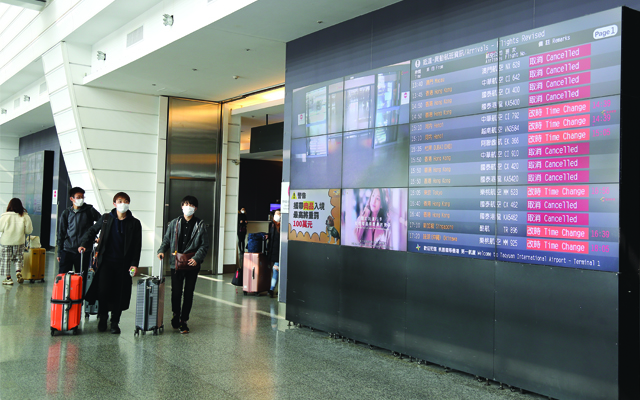
Quarantine for all arrivals in Taiwan has been reduced from seven to three days starting from June 15; Taoyuan International Airport pictured
Previously in May, Taiwan reduced the number of days spent in isolation for arrivals from 10 to seven.
As Taiwan has yet to fully reopen its borders, other Covid-19 restrictions – such as all arrivals are required to produce pre-departure negative PCR tests – remain in place.
Laguna Resorts & Hotels has quickly reactivated sporting events at its South-east Asian integrated resorts as travel ease returns this year, a move that will help to revive tourism for the destinations, shares Ravi Chandran, executive vice president of Banyan Tree Holdings and CEO of Laguna Resorts & Hotels.
In this episode, Chandran talks about the range of sporting events that are coming back, particularly to Laguna Phuket, travellers’ take on attending mass sporting events amid a pandemic, and the impact such events have on Laguna, the tourism industry and the local community.
Indonesia state-owned hotel management company Hotel Indonesia Group (HIG) is in the process of consolidating more than 150 hotels belonging to state-owned companies, as part of governmental efforts to help state-owned companies focus on their core businesses instead.
Currently, 29 hotels – out of some 150 properties – which were formerly a part of, or a subsidiary of, Hotel Indonesia Natour, Garuda Indonesia Group, Wika Realty, pawnshop company Pegadaian, and Angkasa Pura, have been brought under the HIG umbrella.
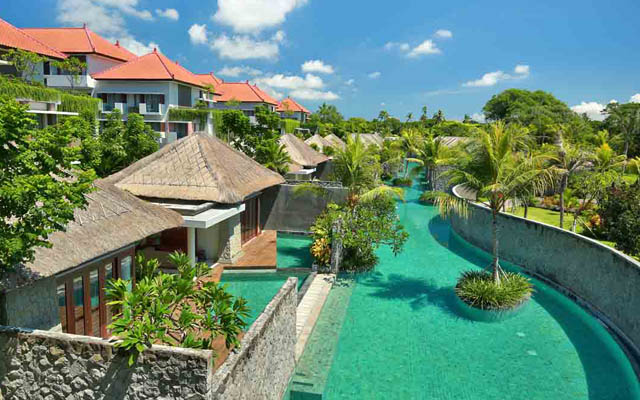
Inaya Putri Bali has been rebranded as Merusaka under HIG
To differentiate the hotels in its portfolio, HIG has also introduced three brands – Meru, Truntum and Khas – to better categorise the five-, four- and three-star rated properties respectively in its portfolio.
The rebranding process is currently ongoing with 14 hotels, such as Inaya Putri Bali, now Merusaka; Kila Senggigi, now Merumatta; Grand Inna Padang, now Truntum Padang; and Pesonna Malioboro, now Khas Malioboro.
HIG has developed three different brandings revolving around an individual’s five senses of sight, sound, smell, taste and touch.
Eva Tobing, vice president, marketing and brand development, HIG, elaborated: “For example, for the sight element, guests will be able to identify the hotel brand based on the (style and embellishments on the) staff uniform, the genre of music played (in the hotels) for sound, and identify the signature cuisine (taste) served in the restaurants.”
This approach was taken to help speed up the branding process and for easier implementation across the various properties, instead of having to make major changes to meet requirements.
Jean-Charles Le Coz, chief operating officer at HIG said: “Some hotels do need to be renovated to fit into the brand identity, or to be scaled up from a three-star to a Truntum four-star brand, for example. It depends on the owners’ budgets too.”
Two properties which will undergo major renovations this year are Grand Inna Malioboro and Grand Inna Bali Beach, with the completion and implementation of the Meru branding expected to complete in 2023.
As to how HIG hotels will be marketed, Le Coz said: “We will promote our hotels in trade events in collaboration with InJourney group (HIG’s holding company) and through partnerships with InJourney members such as Sarinah Department Store and (Borobudur and Prambanan Temple Park) through social media, and other online channels.”
Collaborations, for instance, will include an entry ticket to a temple complex with a hotel stay.
HIG currently operates 4,123 rooms across its 29 hotels, and aims to incorporate another 120 properties by 2023. – Additional reporting by Dhini Oktavianti
With the summer season in full swing, Switzerland is riding the revenge travel wave to promote its other outdoor pursuits, a stark difference to the snow-capped mountains and winter sports it is already renowned for.
Switzerland appeals to different target groups with its leisure offerings for all seasons
During a media gathering on June 8, 2022, Batiste Pilet, Switzerland Tourism’s director for South-east Asia, shared: “Visiting in the summer is very different from winter – travellers will have a totally different experience. This is why I think Switzerland has a very strong positioning as a leisure destination that can appeal to different target groups, because in South-east Asia, there are no seasons.”
Within South-east Asia, the top two inbound markets to Switzerland in 2019 were Thailand and Singapore, while Malaysia and Indonesia posted similar number of arrivals.
Some of Switzerland’s summer activities, Pilet elaborated, includes hiking along 65,000km of marked routes, mountain biking, canyoning, ziplining, climbing via ferrata, and doing yoga on the edge of a glacier with a mountain view.
All these activities also tie in to the wellness phenomenon that has emerged from the pandemic, as people have come to realise the many mental and physical benefits of spending time in the great outdoors.
“With a reasonable level of fitness, most travellers will be able to do some form of outdoor sports in Switzerland; which is probably the best way to get close to nature,” he added.
In conjunction with the promotion of summer activities, Switzerland Tourism also aims to increase women participation in both outdoor and mountain sports, as well as support women-driven tourism businesses and guides in the country, through its 100% Women initiative.
This year, the 100% Women initiative will comprise a rope team of around 80 women scaling Allalinhorn, a 4,000m-high peak in Valais from June 15 to 17. The participants – appointed ambassadors, media representatives, and celebrities – hail from different countries, and are of different ages with varying backgrounds. With sustainability high on Switzerland Tourism’s agenda, the whole event will also be carbon neutral.
Pilet shared: “We notice that more women are travelling, some of whom are solo travellers, and we are learning to take female travellers’ preferences more into consideration. We also have created a dedicated site with travel offers specifically for women.”
About the current recovery status of leisure tourism, Pilet revealed that it has been rather “speedy”, with 2022 standing at more than half of 2019 levels. According to estimations, Pilet is optimistic, and expects that a full recovery to 2019 levels will be achieved in 2023.
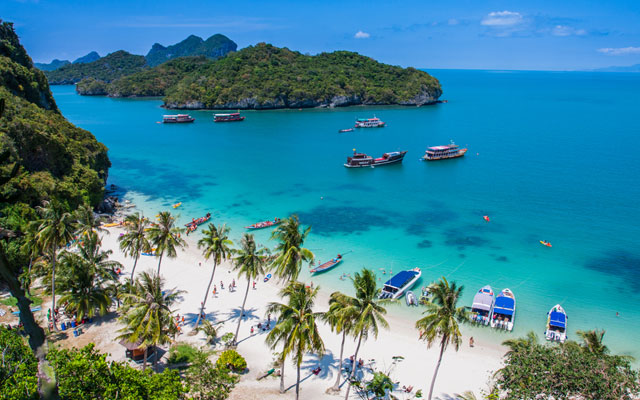
Hotels in Thailand are seeing the highest volume of bookings since February 2020, noted SiteMinder, with properties in Koh Samui leading in performance.
Data shows hotels are receiving 85 per cent of bookings recorded in June of 2019, confirming the stability of the domestic market and the return of international guests.
Koh Samui has the highest booking increase, receiving over 125 per cent of 2019 volumes
Koh Samui leads with the highest booking improvement. It received over 125 per cent of 2019 volumes, more than double the booking numbers seen in early-March this year.
Phuket follows next with 90 per cent of 2019 volume in the same period. In third place is Hua Hin, with 86 per cent of 2019 volume.
In June 2022, over 60 per cent of all bookings originated from international travellers, a 12 per cent improvement over April. However, this is still lower than the 69 per cent recorded in January 2019.
Almost 70 per cent of all hotel reservations made in the last two weeks of May were for stays in June and July.
Bradley Haines, SiteMinder’s market vice president, Asia-Pacific said: “According to our data, Thailand is slowly returning to becoming a top destination for international travellers. We are also witnessing more local hoteliers turning to technology ensuring they are marketing and selling their properties in a holistic fashion.”
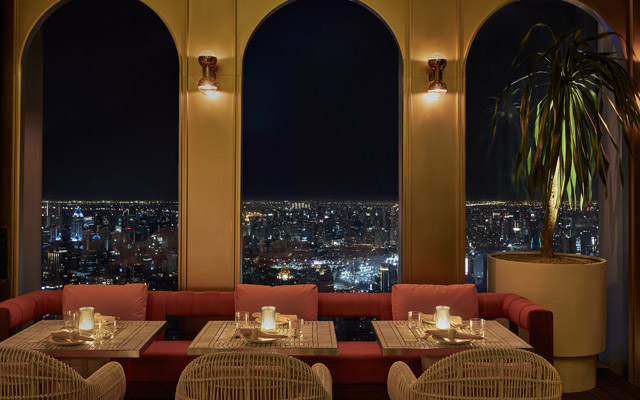
Ojo Mexican-inspired rooftop restaurant has opened at The Standard, Bangkok Mahanakhon, offering views of the city.
The restaurant is a collaboration between the hotel and Mexican chef Francisco Ruano. On the menu are traditional and contemporary Mexican dishes prepared with a mix of imported and locally-sourced ingredients.
Ojo offers a panoramic view of Bangkok city
Ojo is open daily for lunch and dinner from 11.30 to 14.30 and 17.30 to midnight.
Working holidaymakers create the virtuous cycle of earning and spending within the country
Government and hospitality companies are rolling out programmes to entice this segment of travellers
Competition from other destinations, visa process limitations are obstacles for working holidaymakers
Working holidaymakers were one of the first international visitor markets to return to Australia earlier this year, contributing to tourism recovery and providing a critical solution to the country’s labour crunch.
At the Australian Tourism Exchange (ATE) 2022 in May, Tourism Australia’s managing director Phillipa Harrison indicated that working holidaymakers are “incredibly important” to Australia.
Working holidaymakers in Australia contribute to tourism recovery and provide a solution to labour shortage
“We opened to working holidaymakers in November last year and they started coming back straightaway. This is a crucial sector for us because these individuals come here to work and support our tourism industries, and spend the money they earn here.”
According to Tourism Australia, 308,400 working holidaymakers arrived in 2019, filling about 250,000 jobs in the agriculture, tourism, and hospitality sectors, and generated about A$3.2 billion (US$2.3 billion) for the economy. Visas are available for those aged 18 to 30 (35 for some countries) and are valid for a year, although there are opportunities to extend it.
Working holidaymakers also spend more, disperse more widely and stay longer than any other international visitor. On average, they spend A$10,400 per trip and stay 149 nights.
Luring them back
The Australian government has pushed out several initiatives to help address critical workforce shortages caused by the pandemic.
On January 31, 2022, Tourism Australia rolled out the Work and Play the Aussie Way campaign to incentivise fully-vaccinated young people – based in the UK, Europe, Japan, and South Korea – to work and holiday in Australia.
Other rules have also been loosened, noted Nicole Downs, group director of people and performance at Ovolo Group.
She elaborated: “The government has relaxed some visa requirements, such as allowing working holidaymakers to work for one employer for up to 12 months, up from six months. This is aimed at encouraging holidaymakers to take jobs in the tourism and hospitality industry.”
Welcome To Travel, co-founder Adam Ogle, told TTG Asia that the government has also removed the A$495 visa application charge for working holidaymakers who were previously granted a visa but were unable to travel to Australia during the pandemic. This was effective January to April.
Melbourne-based Welcome To Travel helps to bring in working holidaymakers from countries such as the UK, Ireland, Canada, the US, Germany and the Netherlands. At last count, the company has welcomed over 38 nationalities.
Downs:rules have been loosened to encourage holidaymakers to take jobs in the tourism and hospitality industry
“Eighty per cent of the people on our tours are here for a working holiday. Our main tour is an eight-day package where we cover their accommodation for a week. At the end of the week, we help these 20 individuals to set up their tax file number, phone, and bank account, before helping them find a job in our database of employers,” detailed Ogle.
Business has been good, he added, and tours have been “full” for the last six weeks.
This positive sentiment is echoed by Wendi Aylward, managing director of the American Institute for Foreign Study (Australia) (AIFS). Similarly, AIFS conducts orientations and helps working holidaymakers find work, primarily in the hospitality sector due to their partnership with hotel groups.
When asked where her clients hail from, Aylward shared they are “mostly from Western Europe”, although the company recruits “through partners around the globe”. Within Asia-Pacific, Japan stands out as a “strong growing market”, with AIFS recently handling its first arrivals from Japan.
“We only restarted in January, so our numbers are relatively small, with around a dozen to 20 working holidaymakers entering Australia every week,” she said.
Hospitality help
Hospitality companies interviewed by TTG Asia all indicate that working holidaymakers are an important part of their workforce, and are a great source of talent. Hence, aside from government initiatives, companies are doing their part to entice working holidaymakers to walk through their doors.
For example, Leanne Harwood, senior managing director – JAPAC of IHG Hotels & Resorts, shared that the company introduced initiatives such as myBenefits, which boasts paid parental and birthday leave; and myFlex, a system where an individual can self-schedule their working hours to balance work-life commitments, as long as they complete a minimum number of hours.
Illustrating the importance of having working holidaymakers in hotel operations, Harwood said there are cases where the company has to cap hotel occupancies, due to a shortage of this workforce segment, to ensure the guest experience is not impacted.
“IHG currently has around 900 advertised roles,” she shared.
Earlier in November 2021, Accor rolled out a talent attraction programme, Work Your Way, in an attempt to bolster its workforce in Australia and New Zealand.
Sarah Derry, CEO of Accor Pacific, told TTG Asia: “We also have introduced initiatives such as Same Day Hire where a candidate can be interviewed, hired and start working all on the very same day.”
She noted: “Working holidaymakers help us to bolster our workforce over peak periods such as during the school holidays and ski seasons. This group of individuals also bring varying skills and diversity, providing Accor with different thought perspectives and complementing our existing workforce.”
However for 2022, with working holiday visas down 86 per cent compared to 2019, the labour shortage will not be solved anytime soon, she lamented.
To deal with the labour crunch at its properties, Ovolo Group is tapping onto the domestic market to fill positions, Downs said, which includes hiring high school students and undergrads.
Jarrah Morgan, deputy general manager at Bannisters Port Stephens, is also exploring domestic options.
“We have looked more broadly within Australia, with a particular focus on Newcastle, Sydney, Melbourne. But with the borders open, we have refocused our efforts on attracting working holidaymakers,” said Morgan.
To help with relocation, the Australian boutique hotel group offers staff accommodation.
Derry: working holidaymakers help us to bolster our workforce over peak periods
Recovery roadblocks
These days, with more savings in the bank and a thirst for revenge travel, as well as competition from other countries, an uphill battle to entice working holidaymakers Down Under looms on the horizon.
Pre-pandemic there were usually around 300,000 people in Australia at all times on working holiday visas, but as of December 2021, there were only 40,000, Ogle said.
A working holidaymaker visa waiver spanning a longer duration – beyond just January to April – would have made Australia more attractive, opined Ogle.
“The visa waiver should have been made available for perhaps one year or more because this allows those who made the trip to Australia to tell their friends about the experience. These youths will (indirectly be) ambassadors for Australia,” he added.
“With borders now open, the government needs to rethink its working holiday programme. We believe access to visas need to be easier, with flexibility around how they spend their time in Australia,” said Downs, adding that the visa should encourage longer stays.
She proposed a working holiday duration of two years, with “some conditions surrounding the goals and outcomes”.
“For example, they can choose two different hotel groups within the two years, which will encourage them to stay longer while still gaining the most out of their time in Australia,” she said.
Working holidaymakers are “imperative” to Ovolo’s business, and the company is trying to source for necessary visas. However, Downs said it has been difficult, as “processing times are out of our control”, while “some countries still have quarantine restrictions” in place.
But with travel resuming and the world returning to normality, Downs is positive about being able to entice working holidaymakers to work with the company.
Aylward enthused: “I am optimistic about the year ahead because there are amazing opportunities for young people – the most resilient to the pandemic’s challenges – to travel and work in Australia.”
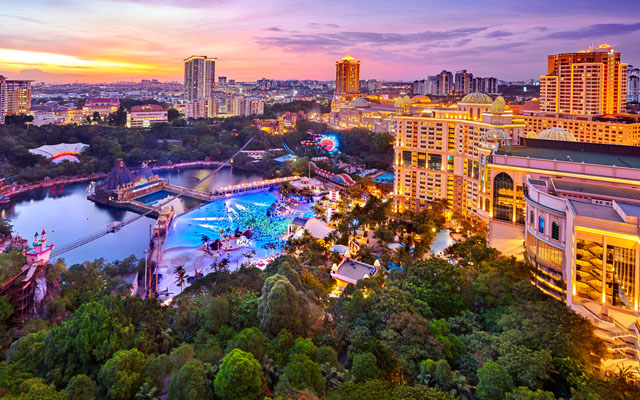
A revitalised Sunway Resort at Sunway City will reopen in phases from this month to unveil new accommodation categories and fresh guest experiences.
The US$60 million transformation of Sunway Resort, which began in early 2020, will deliver 12 new room and suite categories, a new lobby with 24k gold leaf ceilings, landscaped pools with underwater speakers, and the world’s first Gordon Ramsay Bar & Grill to be located outside London.
Sunway Resort will reopen in phases from June this year
Technology is utilised throughout the property to enhance the guest experience, starting with contactless check-in and keyless room entry, and carrying through to a custom-built app with multiple functions that guests will find useful.
Sunway Resort also deploys specialist iButlers that will set up devices, offer demonstrations, and deliver nifty gadgets such as Harman Kardon headphones and sound bars.
Guests can expect spa-inspired bathrooms, which feature a walk-in chromotherapy shower that uses colour and light as a restorative therapy, as well as a free-standing bathtub.
With sustainability being a driving philosophy at Sunway, the transformation has brought in advanced air-conditioning systems, smart curtains, solar panels and motion-sensor LED lighting to further improve energy efficiency. The use of plastic bags has been discontinued, and an urban hydroponic farm by Sunway XFarms supplies healthy, farm-fresh produce to the resort’s restaurants.
Alex Castaldi, senior general manager of Sunway City Kuala Lumpur Hotels, said in a press statement that one of the “truly unique” aspects of Sunway Resort’s transformation is the introduction of bespoke room categories for corporate travellers, families and wellness seekers.
The Corporate Suites feature a fully-connected office space with essential amenities such as a printer, scanner and wireless chargers, while the Wellness Suite is equipped with in-room fitness equipment and an ambient sound and light machine to support deep sleep.
The Family Fun Suite showcases the latest in virtual entertainment, including a multi-player game console and a karaoke machine.
Malaysian outbound agents are eyeing Japan as a new destination to sell from June 10 when borders are finally eased open for foreign, non-essential travellers.
Forward bookings is strong for Malaysia based Apple Vacations & Conventions, which is planning group departures from next month.
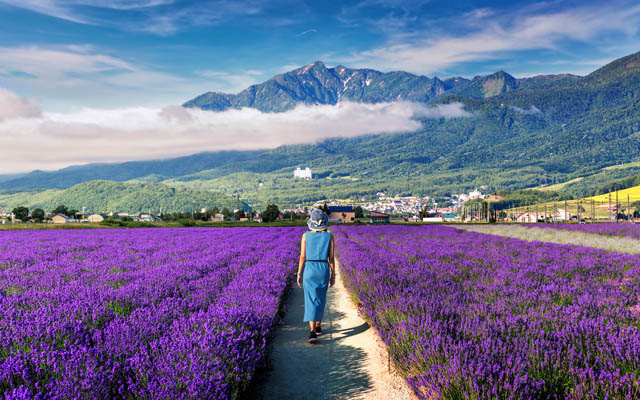
Tours to places in Japan, like Hokkaido, will include more nature-based activities
Koh Yock Heng, the agency’s group managing director, shared that itineraries would include more outdoor and nature-based activities, and group sizes would be limited to 25 people to cater to travellers’ preference post-lockdown.
In conjunction with year-end school holidays, Apple Vacations is organising six charter flights to Hokkaido as well as selling tours to other parts of Japan on scheduled airlines. Of the 5,000 seats available, including the charters, some 45 per cent has been sold, shared Koh.
Rosli Seth, managing director of Feel Japan with K, also has departures to Kanazawa and Tokyo in July and August. Programmes will avoid crowded places during peak hours as a health precaution.
Japan’s strict requirements for inbound travellers, which include group travel only, present business opportunities for travel agents, said Adam Kamal, general manager, Suka Travel, who noted that pre-pandemic, Malaysian travellers typically made their own bookings and arrangements instead of relying on agents.