

TTG Asia
Asia/Singapore Monday, 23rd March 2026
Page 2152

New programme to train up marginalised individuals in Singapore

0

HOSPITALITY veteran Milton Monteiro is starting the Hospitality Academy for Training in Service (HATS) to bring individuals that recruiters do not usually consider into the hospitality sector.

Open to Singaporeans and permanent residents, the programme targets mostly young adults above aged 16 who are troubled financially, the elderly who are able-bodied and can be trained in certain F&B services, and past offenders or the underprivileged.

Through HATS, participants will gain skills for F&B operations in the hospitality industry and learn about banquet and catering service, bar service and restaurant service.

Besides being the initiator of the programme, Monteiro is also the chief trainer, bringing with him 28 years of hospitality experience.

The programme ultimately hopes to address the need for manpower and service levels in the hospitality industry, while also increasing job opportunities for secondary school leavers, motivating the elderly to work in certain areas and integrating past offenders into society.

Said Monteiro: “The hospitality industry has changed me over the years for the better. One tends to be more gracious. Unfortunately, at many times operations takes precedence over service and we somehow lose the touch.”

“At HATS, I believe it can set the correct foundation for good service because I intend to inculcate this in all my trainers and those in the class.”

HATS will rely on industry partners to provide mentorship and guaranteed job placements to make the programme a success.

HATS is a 160-hour programme and costs S$1,200 (US$928) per candidate, with each intake accepting between 10 and 30 students. The e2i (Employment and Employability Institute) in Singapore is providing a subsidy of 90 per cent on course fees.

The Park Lane Hong Kong rebrands to Pullman

0

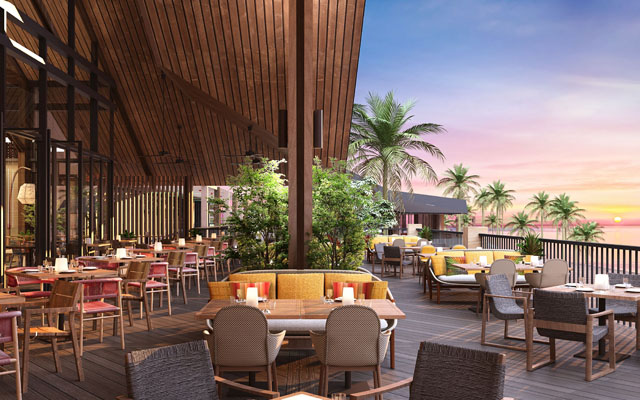
THE Park Lane Hong Kong has entered a franchise agreement with Accor that will see the former rebrand to Pullman and run its own operations from January 1, 2015.

The 826-room The Park Lane Hong Kong, a Pullman Hotel is spending HK$200 million (US$25.8 million) on a makeover in order to meet Pullman standards as the first Pullman hotel in the city. Refurbishment work covers the hotel’s suites, executive floors, dining outlets, meeting rooms and executive lounge.

Area director of Park Lane Hotels International, Luc Bollen, said the move coincides with The Park Lane Hong Kong’s 40th anniversary and gives the independent hotel access to an extensive database and markets the hotel is interested to tap.

“It’s a way forward to rejuvenate and reposition the hotel as the outside world has changed. We did an extensive search for partners, and Pullman’s contemporary image and its connectivity and digital platform fit us,” he explained.

The hotel has been affiliated with Worldhotels for the last eight years and now becomes Accor’s 600th hotel in Asia-Pacific.

Accor Asia Pacific chairman and CEO, Michael Issenberg, said: “There is no restriction on the number of Pullman hotels in Hong Kong and it’s possible to have another one on the Kowloon side.”

Indonesia to throw visa requirements out the window for 5 markets

0

INDONESIA will waive visa requirements for tourists from China, Australia, Japan, South Korea and Russia as well as introduce third-country visas next year.

Announcing this following a coordinating ministers’ meeting this morning, Indonesia coordinating minister of maritime affairs, Indroyono Susilo, said: “A task force has been set up to make the (government regulation) amendments, with a target to implement this in 2015.”

This is a breakthrough for a country that has thus far followed a policy of reciprocity in visa regulations.

Part of the Ministry of Tourism’s quick-win programmes to boost arrivals to Indonesia and achieve 20 million arrivals by 2019, tourism minister Arief Yahya is expecting 500,000 arrivals from the five target markets alone as a result of the visa-free facility.

“These five countries are Indonesia’s major markets, with big potential to grow…We may lose US$25 per tourist in visa fees, but will receive US$1,200 through their spending,” he said. “We will lose US$11.3 million, but gain US$600 million.”

Currently, tourists from China, Australia, Japan, South Korea and Russia must obtain visas on arrival to enter Indonesia.

On the third-country visa programme, Indroyono said travellers who have gained entry to Singapore and Malaysia will be granted visa-free access to Indonesia.

Arief explained: “We still need to discuss details with the related government departments, but the idea is other country’s customers can also be ours. Longhaul travellers, for example, have come a long way to Singapore or Malaysia, and they also want to visit us while in the neighbourhood.

“But we have made this difficult with our visa requirements. Why don’t we let these countries check them and we just welcome them?”

Within South-east Asia alone, Arief sees market potential in Singapore’s 15 million arrivals, Malaysia’s 25 million and Thailand’s 26 million.

However, he also said in future third-country visas could also apply for areas like the US, EU and Australia, which are known for their stringent visa application requirements.

National ecotourism strategy for Myanmar in the pipeline

0

ECOTOURISM in Myanmar is set to receive a boost with a national Ecotourism Policy and Management Strategy underway.

Working on the strategy are the Ministry of Hotels and Tourism (MOHT), Ministry of Environmental Conservation and Forestry, and the Myanmar Tourism Federation.

The strategy is meant to support biodiversity, conservation, community-based income generation, and strengthen the management of protected areas and cultural assets in Myanmar.

This includes Lampi Island Marine National Park in the south and Hkakaborazi National Park in the north.

MOHT had held a national consultation workshop in end-October to gain information and suggestions from industry stakeholders. Details of the workshop were released to the press recently.

It was the latest in a series of consultation sessions that have been held since May this year and the initial results from these will be compiled for further discussion at national level.

A collaborative Ecotourism Task Force has also been established, drawing senior officials from 15 ministerial departments in Myanmar.

Singapore welcomes new homegrown boutique hotel

0

THE six-storey, 19-room Adonis Hotel officially opened yesterday in the heart of Singapore at Purvis Street, converted from a pre-war shophouse that was once a traditional Hainanese bakery.

Targeting business travellers, Adonis Hotel is the first hospitality venture of local wellness and beauty brand Adonis Group.

There are four categories of rooms, namely Quaint Queen, Deluxe King, Premier King and Suites (Artist, Explorer and Photographer). The property’s only other facility is the 30-seat Argo Café at the lobby level.

Asked how the hotel, with an introductory price tag from S$185 (US$143) to S$588, intends to differentiate itself in the already mature hospitality market, Andrew Wang, director of Adonis Hotel Management Hospitality told TTG Asia e-Daily location plays a part.

“Guests have easy access to Suntec Singapore Convention & Exhibition Centre, City Hall MRT interchange, Singapore Art Museum, historical CHIJMES, and the bustling shopping belt in the Bugis and Suntec City district,” he said. “We also offer complimentary mini bar items and Wi-Fi throughout the premise, which are typically chargeable in five-star hotels.”

The hotel’s small inventory and staff strength of 21 is an advantage, rather than a weakness, he added, as it allows for a more personalised service and peaceful environment.

He therefore does not see the 92-key Porcelain Hotel, an existing boutique hotel owned by another homegrown wellness and beauty brand Mary Chia, as a competitor.

Since its soft opening in July, Adonis Hotel has enjoyed high occupancy, with 80 per cent of guests comprising FITs and business travellers from the region and beyond.

Hotel manager Bhaktananda Yap said: “Our average occupancy since opening until October was around 85 to 95 per cent.”

He added the hotel has been promoting through OTAs such as Booking.com and Expedia, and will look at partnering brick-and-mortar travel agencies early next year.

The hotel is also not ruling out further expansion in Singapore and Malaysia in the near future.

Maritime Silk Road a major thread of discussion at GTEF

0

INFRASTRUCTURE improvements and collaboration between governments and the private sector are key to the successful development of the Maritime Silk Road, one of two ambitious multi-national Silk Road projects envisioned by Chinese president Xi Jinping.

Over 40 tourism officials participated in the third edition of the Global Tourism Economy Forum in Macau last week, themed Maritime Silk Road – From Macau We Begin.

Unveiled at the forum was a report by the UN World Tourism Organization (UNWTO) and Global Tourism Economy Research Centre on Asian tourism trends.

Xu Jing, regional director for Asia and Pacific, UNWTO, said China is the largest generator of trips in the region and dominates intra-regional travel, especially to countries along the Maritime Silk Road, such as Thailand, Indonesia, India, Kazakhstan, Sri Lanka, Iran, Greece, UAE and France.

“(However), the report notes that tourism along the contemporary Silk Road is becoming a two-way flow. Conventional destinations are now becoming new source markets, such as the Middle East sub-region for China, and the Middle East for Malaysia,” he said.

But in order to realise the potential of the Maritime Silk Road, there needs to be more air links to secondary and tertiary hubs with a special emphasis on LCCs, Xu said.

Public and private sector collaboration was also singled out as an important factor. Examples raised during the forum include Malaysia’s plans to develop cruise tourism and Croatia’s shift away from sun-and-sand offerings to a cultural heritage focus.

The Maritime Silk Road was envisioned by China’s Xi in October 2013, alongside a second new and land-based Silk Road.

JW Marriot implements package for small-scale business events

0

JW Marriot Hotel Hong Kong has introduced an Executive Meeting Suite package that is catered towards organisers of smaller scale business events.

The meeting suites in the package are able to accommodate up to 18 persons boardroom style and has natural light streaming in.

Prices start from HK$5,000 (US$644.90) for booking a meeting room inclusive of Internet access and LCD projector with screen for four hours and HK$8,000 for eight hours, lunch and refreshments are available as an additional request with extra charges.

The hotel is currently offering special room rates until December 31 2014.

Find out more at jwmarriotthongkong.com

Chanelle Garvey picked for DOSM, Sofitel Bangkok Sukhumvit

0

SOFITEL Bangkok Sukhumvit announced the appointment of Chanelle Garvey to the post of sales and marketing director last week.

Starting her career in the hospitality industry in 1991, Garvey has worked at various hotel chains including Sheraton, Stamford, and Radisson.

During her time with Sofitel she has worked at Sofitel Brisbane Central and more recently, Sofitel Philippine Plaza Manila.

FRHI picks new GMs for Beijing hotels

0

TWO FRHI properties in the Chinese capital of Beijing have welcomed new general managers.

Taking the helm at Raffles Beijing is Christian Sack, who was previously general manager at Raffles Grand Hotel d’Angkor, Siem Reap since 2011. The Vienna native brings 22 years of international experience working in five-star hotels and resorts.

At the same time, Swissôtel Beijing, Hong Kong Macau Center has welcomed Stephen Fewell as general manager. He was most recently at the Swissôtel in Sochi, where he and his team prepared for the 2014 Winter Olympic Games.

Itinerary building, editing offered on new GTA tool

0

EMUTRIP, unveiled by GTA this week at the World Travel Market in London this week, is a free mobile tool that streamlines travel consultant itinerary processes while allowing for more revenue opportunities.

The whitelabel tool gives travel consultants the ability to dynamically package content from GTA’s database and elsewhere to create customer itineraries under the agency’s own brand.

Travel consultants can edit the itineraries with notes, reminders, and additions that provide travellers with recommendations on attractions and excursions, allowing them to more easily up-sell and cross-sell products to travellers even on the go.

Customers can view their Emutrip-generated itineraries on the Emutrip app, available for download on the App Store and Google Play or through the itineraries emailed to them by travel consultants.

Although the mobile tool is available only in English presently, it will be rolled out in other languages in 2015.

Emutrip is currently a free to use solution but will see functionality and content boosted in the future to become an “all-in-one” sales tool with third-party content such as local weather and news, special offers, transfers or destination services.

For more information, visit www.emutrip.com.



