TTG Asia
Asia/Singapore Sunday, 22nd March 2026
Page 1912

Philippines whet tourists’ appetite with food festivals

0

APRIL is dubbed “food month” in the Philippines as it readies to host two international culinary events – Madrid Fusion Manila and World Food Street Congress – in addition to a month-long gastronomic feast across the country.

“This is an opportunity for us to share to a global audience the richness and contemporary edge of Filipino gastronomy,” said Tourism Promotions Board COO Domingo Ramon Enerio III.

A highlight of the food month is Madrid Fusion Manila taking place from April 7 to 9, said Enerio, which will feature a larger contingent of world-renowed and Michelin-star chefs in its second edition this year.

Expected to draw some 1,000 tourists, Madrid Fusion Manila will feature Spanish and Asian chefs, including Joan Roca of three-Michelin-star El Celler de Can Roca, S Pellegrino’s world’s best restaurant for 2015; Eneko Atxa of two-Michelin-star Azurmendi Restaurant in Basque, Spain; and Yoshihiro Narisawa of three-Michelin-star Les Creations de Narisawa in Tokyo.

The World Street Food Congress, which were held in Singapore for past two years, will take place in Manila from April 6 to 9, confirmed Enerio.

A big hit in Singapore, the Food Congress promotes comfort and street food in a bid to preserve food culture and heritage, professionalise the street food craft and open business opportunities.

Projected to bring in about 1,000 tourists, the Philippines might negotiate to be the venue for the World Street Food Congress next year depending on the success of the event.

Taking place in conjunction with the April food month is the Flavours of the Philippines, a food festival featuring food markets and curated Filipino menus in numerous establishments around the country, Enerio said.

Flavours of the Philippines will include activities such as kulinarya tours, cooking lessons and demo, food fiestas and sales, weekend markets in Legazpi Village, Makati and Centris in Quezon City, among others.

Read more ASEAN Tourism Forum (ATF) 2016 stories in the digital edition of our Show Dailies here.

Best Western upgrades loyalty programme

0
Best Western Plus Oceanside Kawana Hotel interior.

Best Western Plus Oceanside Kawana Hotel interior.

BEST Western Hotels & Resorts has unveiled two new membership tiers for its loyalty programme and removed expiration dates for its reward points.

With the addition of the two new membership tiers, Best Western now has five tiers in total, starting with the standard entry Blue tier, followed by the new Gold status, which can be earned with a minimum of 10 nights stay at Best Western hotels within a year.

Next on the rung is the Platinum tier, for members who have managed 15 nights stay a year, then the Diamond tier, reserved for members who have stayed for 30 nights a year. A new Diamond Select status has been added, earned by those who have stayed for 50 or more nights a year at a Best Western property.

Guests who achieve the Diamond Select status will receive a 50 per cent point bonus, room upgrades and a welcome gift on check-in.

All Platinum and Diamond members will also receive a welcome gift on check-in at any of Best Western’s 4,000 hotels worldwide, as part of an ongoing strategy to introduce more member benefits.

Best Western Rewards points can be earned from stays across Best Western’s six brands: Best Western, Best Western Plus, Best Western Plus Executive Residency, Best Western Premier, the BW Premier Collection and GLō.

Indonesia, Malaysia share strengths in halal tourism

0

INDONESIA and Malaysia have come together to leverage each other’s expertise in developing Muslim-friendly products to draw more Muslim travellers to both destinations.

The way forward for this collaboration was discussed at a bilateral meeting between the two tourism ministries during the 43rd ASEAN NTO Meeting on Monday.

I Gde Pitana, deputy minister for international tourism marketing development, Indonesia Ministry of Tourism, highlighted a number of reasons backing the collaboration.

Pitana said: “First, although Indonesia is made up of predominantly Muslims, we still get enquiries from Malaysian Muslim travellers on whether we have halal products. The cooperation is expected to raise confidence in Indonesia as a friendly destination among these travellers.

“Secondly, Malaysia has managed to attract millions of Middle Eastern visitors while Indonesia is only getting a few hundred thousands. Middle-Eastern travellers have a month-long summer holiday and they spend an average of 10 days in Malaysia. We would like to get them to spend more time in South-east Asia by extending their stay in Indonesia.”

Ong Hong Peng, secretary general of the Ministry of Tourism and Culture Malaysia, said the collaboration seeks to “find a common ground and share experience” to “strengthen each other”.

“We will start off with having common Muslim-friendly packages that will meet the expectations of Muslim tourists.”

Both ministries have identified the Middle Eastern market as a target, but will also court other sources.

A series of technical meetings involving travel trade players will follow the ministerial-level bilateral meeting on Monday.

Hamzah Rahmat, president of the Malaysia Association of Tour & Travel Agents (MATTA), welcomes the initiative and told The Daily that “Indonesia Ministry of Tourism has already taken steps (to involve the trade) by inviting inbound operators to provide product updates on Batam”, so as to create combined packages incorporating Malaysia and Indonesia products.

Hamzah added that the Indonesian ministry will work with MATTA to conduct more fam trips to Jogjakarta, Surabaya and Padang this year.

Elly Hutabarat, PanTravel Indonesia president, said: “Developing a joint product between Indonesia and Malaysia is in line with the spirit of developing ASEAN as a single destination. We can start from (bilateral cooperation) and grow from there.”

Read more ASEAN Tourism Forum (ATF) 2016 stories in the digital edition of our Show Dailies here.

New awards lend power to homestay experiences

0

THE inaugural ASEAN Homestay Standards Award to be presented this Friday will honour 40 quality homestay operators from South-east Asia who will be able to use the recognition in their branding and marketing communications.

Eight ASEAN member countries, with the exception of Singapore and Myanmar, will nominate five homestay operators each for these awards, said Ong Hong Peng, Malaysian head of NTO delegation and secretary-general of the Ministry of Tourism and Culture Malaysia.

Speaking to TTG Asia e-Daily in an interview, Ong said: “(The award) is a significant development as it shows the progress of the development of homestay standards, while sharing best practices.”

Winners will be promoted through the ASEAN tourism marketing website and social media platforms, and the efforts are expected to help homestay operators market their products and draw more local and foreign guests.

All award recipients must fulfill the ASEAN homestay standards which were established based on inputs from ASEAN NTOs, covering areas such as accommodation requirements, cleanliness in food preparation, provision of environmentally-friendly activities that do not have a negative impact on the environment, and involvement of guests in local activities.

Malaysia was appointed the lead country in 2010 for the development of the ASEAN Homestay Standards and it implemented the programme in full last year.

Homestays promote rural tourism, revitalises the rural economy, and provides additional income for the rural population.

For the first 11 months of 2015, some 64,599 international tourists visited and stayed in Malaysian homestays, of which 22,065 had come from South-east Asia.

Read more ASEAN Tourism Forum (ATF) 2016 stories in the digital edition of our Show Dailies here.

ASEANTA aligns itself for global impact

0

ASEANTA, which is expected to play a bigger role in the AEC, has mapped out several initiatives, including having a wider membership base and joining international organisations, in order to better align itself with regional and global tourism bodies.

Its president, Aileen Clemente, said that “to fully represent the travel industry”, ASEANTA has amended its by-laws to allow taking in members from recreational facilities, parks and convention centres. It has also widened its limits to include global members who have a business interest in ASEAN.

Previously, members have mainly comprised hotels, airlines, travel agencies, tour operators and NTOs within ASEAN.

The widening of ASEANTA’s membership base is in line with the goals of the ASEAN Tourism Strategic Plan 2016-2025 and the Visit ASEAN@50 campaign, set by the ASEAN NTOs during their meeting this week at ATF 2016 to encourage greater private sector participation.

After all, the private sector, especially ASEANTA, will be the one to come up with, push for and sell tourism products, reasoned Clemente.

“We’re hoping that as private sector partners, we are more in tune and aligned with (the government’s) marketing plans instead of just being told what to do. There’s a big difference,” she pointed out.

Clemente also said ASEANTA will be applying for membership with the UNWTO and WTTC so it “will be aligned with global tourism bodies”.

Membership is a big task that will require the studying of policies and agreements to comply with and figuring out how ASEANTA can fit themselves in, added Clemente.

The Federation of ASEAN Travel Agencies, one of the three ASEANTA sub-groups, will also seek membership in the Worldwide Summit of Presidents of Travel Agencies Association, usually held in Europe.

Other initiatives that the association is embarking on includes the presentation of the ASEANTA Special Award on Friday to Sabah Malaysia’s Ministry of Tourism and Culture for its extraordinary contribution to the tourism sector.

These initiatives are “small steps but with big impact,” said Clemente. “We don’t want to put a lot on our plate but we want to be focused and aligned (to create) greater impact.”

Read more ASEAN Tourism Forum (ATF) 2016 stories in the digital edition of our Show Dailies here.

SIA first to operate international flights from Canberra

0

sia

FROM September 2016, pending regulatory approval, Singapore Airlines (SIA) will ply the Canberra-Singapore and Canberra-Wellington routes four times weekly each, making it the first carrier to operate regularly scheduled international flights from Australia’s capital city.

Flights depart Singapore at 23.00 on Tuesdays, Thursdays, Saturdays and Sundays, and will arrive in Canberra at 08.35. The flight will then leave Canberra for Wellington at 09.50 and arrive at 15.05 on Mondays, Wednesdays, Fridays and Sundays.

Return flights will depart Wellington at 20.15 on Mondays, Wednesdays, Fridays and Sundays, and arrive in Canberra at 22.05. On the same days, the flight will leave Canberra at 23.30 and land in Singapore at 05.50.

A Boeing 777-200 comprising 38 business class seats and 228 economy class seats will operate on the routes.

Tickets will go on sale from January 25 with economy fares starting from S$650 (US$452) all-inclusive for Canberra-Singapore return and S$469 all-inclusive for Canberra-Wellington return. Business class fares start from S$3,166 all-inclusive for Canberra-Singapore return and S$1,450 all-inclusive for Canberra-Wellington return.

Singapore Airlines’ partner Virgin Australia will also codeshare on flights between Canberra and Singapore.

Halal tourism gets wider push in South-east Asia

0

AS THE Muslim travel market becomes a growing force worldwide, ASEAN countries are developing new strategic directions in a bid to wrestle a bigger piece of the lucrative halal tourism pie.

This fast-growing sector is projected to grow to 150 million visitors comprising 11 per cent of the global travel economy with an expenditure of US$200 billion by 2020, according to a 2015 study by Singapore-based CrescentRating.

Halal tourism is being recognised as “an opportunity market” for the Philippines, as its sizable Muslim population as well as increasing visitor arrivals from the Middle East, Indonesia, Malaysia and Singapore in recent years place it in a good position to attract more Muslim travellers, said Arturo P Boncato Jr, assistant secretary, tourism regulation, coordination and resource generation, at the Philippine Department of Tourism (DoT).

The DoT has joined hands with the National Commission on Muslim Filipinos to launch the Philippines Halal Tourism Project last year to improve halal facilities in the country, according to Boncato. “We are targeting at least 50 halal certified establishments in the four major regions (Manila, Cebu, Boracay and Davao) in time for Madrid Fusion Manila in April,” he commented.

Similarly, Indonesia is positioning Lombok in West Nusa Tenggara (NTB) as a Muslim-friendly destination, after the Muslim-majority island was recognised as the world’s top halal tourism and honeymoon destination at the 2015 World Halal Travel Summit in Dubai.

Indonesia minister of tourism Arief Yahya said: “The awards will sharpen Lombok’s position…especially in (attracting) travellers from the Middle East and other Muslim countries.” Aceh and West Sumatra will be touted as a role model for Muslim-friendly destinations in Indonesia.

The move will expand Lombok’s visitor source markets to Muslim travellers, commented Awan Aswinabawa, advisor to the Association of the Indonesian Tours and Travel Agencies NTB chapter.

“We have been getting inquiries from travellers from the neighbouring countries as well as the growing domestic market whether we have halal facilities such as restaurants and hotels,” he said. “Lombok naturally has Muslim-friendly products although not all are certified halal, so we just need to improve and highlight what we have.”

Furthermore, a halal branding will also distinguish Lombok from neighbouring Bali’s Hindu-influenced culture or East Nusa Tenggara’s Christian-dominated culture, he opined.

Hasiyanna Ashadi, president director of Marintur Indonesia, said: “It is up to the destination how far they want to apply the label, but as a tour operator, we welcome more halal facilities to widen the choices for travellers. Even Aceh, whose rule is based on the Syariah law, has eased some of the rules for non-Muslim travellers.”

Awan, however, reminded the government to balance the halal branding and not intimidate the other markets, which have been enjoying Bali. “We do not want (non-halal) markets to think that we limit ourselves to the Muslim travellers only and apply rigid (Syariah law) in the destination,” he said.

Within South-east Asia, with the exception of Myanmar and Laos, all other countries already have their own halal certification and logo, stated Nirwan Noh, undersecretary for industry development at Malaysia’s Ministry of Tourism and Culture.

Additional reporting from Mimi Hudoyo

Read more ASEAN Tourism Forum (ATF) 2016 stories in the digital edition of our Show Dailies here.

The allure of a small island

0

Primarily visited by domestic tourists, the smallest of Japan’s four main islands is working hard to grow its appeal to international visitors.

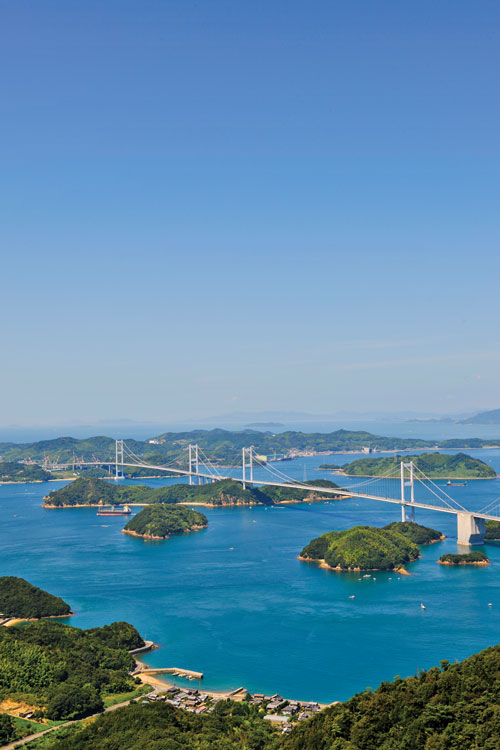
22-jan-japanmain

The eastern prefectures of Shikoku – arguably one of the least-known and most underappreciated areas of Japan – are rolling out the red carpet to foreign visitors.

“We definitely think that low recognition is a problem,” admitted Kanako Maeda, head of the International Strategies Division, Tokushima Prefectural Government.

“Unlike Tokyo and Osaka, not a lot of people know about Tokushima,” she said. “We are working hard to relay as much information as we can, so more people know about Tokushima and want to visit.

“At the same time, we will continue to improve the situation in the prefecture for foreign visitors, such as placing signs in more languages.”

Other incentives include new subsidies of up to 50 per cent for coach charters and similar assistance for rental car tours.

The three prefectures of Tokushima, Kagawa and Kochi – often overlooked by overseas visitors – make up the eastern reaches of the smallest of Japan’s four main islands, and local tourism operators are hoping to build on their relative proximity to Osaka.

“Most people do the Golden Route of Tokyo, Kyoto and Osaka when they come to Japan, particularly if they are first-time visitors, but we are less then two hours by bus from Osaka and visitors can see something here that can only be seen in two other places in the world,” said Kazuko Kifuku, manager of Onaruto Bridge Museum Eddy.

In the narrows between the north-east tip of the prefecture and Awaji Island, powerful ocean currents generate massive tides and whirlpools, many ranging up to 20m in diameter. The only other places in the world where such potent currents come together is off Vancouver in Canada and in the Straits of Messina, between Sicily and the Italian mainland.

“Most of our foreign visitors are from Asia, and tourists from China, Taiwan and South-east Asia tend to travel in groups,” Kifuku added. “People from Hong Kong, Europe and North America seem to prefer to travel independently, and we are keen to reach out to both groups.”

Activities in Tokushima include taking a small boat along the Oboke Gorge or soaking in the hot springs of nearby mountain towns. For the more adventurous, activities like whitewater rafting, traversing the vine bridges of the Iya Valley and surfing off the southern coast await.

The prefecture is also home to the Shikoku Pilgrimage, a 1,400km route that links 88 sacred sites on the island.

But it is the 400-year-old Awa Odori festival for which the prefecture is most famous for. Held over three days in mid-August, the event attracts some 1.3 million visitors to Tokushima City each year to see men and women in brightly coloured kimonos and distinctive pointed hats dance through the streets.

On the north coast of Shikoku, Kagawa Prefecture includes dozens of islands that are linked by ferries.

The largest island is Shodoshima, which is effectively a miniature version of Shikoku. A cable car rises through Kankakei Gorge to the highest point on the island. The island also boasts traditional terraced rice paddies at Nakayama, somen noodles still stretched by hand in Hiraki, traditional soy sauce factories and the Michi-no-Eki Shodoshima Olive Park.

“We are trying to let more foreign visitors know about our island because most people who come here at the moment are domestic Japanese travellers,” said Mizuki Shimamoto of the Shodoshima Tourism Association.

“We are promoting ourselves through social media sites, websites, booklets and TV shows, while I am teaching some local people in the tourism sector to speak English. It’s a start and we’re hoping that it will bring more people to this part of Japan,” Shimamoto added.

This article was first published in TTG Asia, January 8, 2016 issue, on page 19. To read more, please view our digital edition or click here to subscribe.

Wider access on the horizon

0

How will Indonesia’s lifting of cabotage restrictions shape the future development of South-east Asia’s cruise industry?

22-jan-cruises-rajaampat

In a bid to boost arrivals, the Indonesian government has recently relaxed its cabotage principles imposed on cruise ships by allowing foreign vessels to anchor at selected ports in the country.

International cruise lines can now embark/disembark tourists through the seaports of Benoa (Bali), Tanjung Priok (Jakarta), Tanjung Perak (Surabaya), Belawan (Medan) and Soekarno-Hatta (Makassar).

Cruise companies interviewed by TTG Asia are salivating at the prospects of a larger domestic cruise market and more interesting itineraries.

Welcoming the development, Michael Goh, senior vice president – sales, Star Cruises, said: “We foresee it will have a significant and positive impact on the region, boosting the development of both the domestic and South-east Asian cruise markets.

“Recently, Star Cruises had completed its 46-night Southern Hemisphere cruise onboard SuperStar Virgo, calling at several ports in Indonesia including Jakarta and Bali late last year. With the new ruling, this will enable Star Cruises to explore new itineraries and most importantly, expand our reach in Indonesia, as the country has the making and potential to be one of the leading cruise hubs in the region.

Buhdy Bok, Costa Group’s Asia president, is equally positive: “As a key market for Costa, Indonesia’s latest move provides a huge opportunity to develop the cruise market both domestically and around the region. We are always keen to explore new itineraries in the region, and are excited to see the development of more itineraries with the increase in port calls in Indonesia, enriching our cruise holiday offerings for guests in the Asia region.”

Melvyn Yap, regional director-Asia of Silversea Cruises, said: “The Indonesian archipelago is a long stretch. This will give us a lot of time to explore all the beautiful islands instead of trying to get to another country just to meet the cabotage requirements.”

It is hence not surprising that Indonesia’s outbound operators are viewing the cabotage lift in positive light, especially as Indonesians, who still need to fly out of the country to embark on a cruise ship, will be able to sail from domestic ports in the future.

Nurdin Supena, manager, Bayu Buana Travel, said: “It would be more attractive for Indonesians because it means reduced cost in terms of air tickets to Singapore, and it is also time-effective to be able to hop onto a cruise from Jakarta as the major outbound market comes from here.

“The cruise package prices need to be attractive though,” she added. “The most important thing, however, is the readiness of the ports to berth the big ships which are operating in the region nowadays.”

Furthermore, the ability to cruise from homeground will likely appeal to Indonesian travellers seeking to enjoy the facilities on board a ship, rather than those whose cruise journeys are motivated by the destination, observed Rama Tirtawisata, group managing director of Panorama Leisure Group.

“The new policy opened up more opportunities to grow the first group, as it would be more convenient for them to start their trips from Indonesia. For these people, the destination is not the main interest, and short (South-east Asian) cruise programmes such as Singapore-Port Klang-Phuket are popular.

“For the second group – those who would travel to places like the Mediterranean or Alaska – the new policy does not bring any change,” he added.

At the same time, Rama also sees ample opportunities for international cruise lines to roll out domestic programmes for Indonesians across the sprawling archipegalo. “Indonesia has so many interesting destinations such as Togean and Raja Ampat which are not easily accessible by air, and cruising can be a good alternative for adventurous Indonesians,” he said.

Likewise, Lim Chee Tong, managing director of Malaysia’s Jebsen Travel & Tours Services, foresees cruise lines will offer itineraries to more exotic destinations in Indonesia beyond current ports of calls like Komodo Island and Bali. “This will benefit agents as they will have more products to sell,” he said.

On the other hand, Richard Vuilleumier, managing director, Panorama Tours Malaysia, foresees a lukewarm reception for all-Indonesian itineraries, as many Malaysians have already been to Indonesia for shopping, sightseeing, golfing and cultural experiences, and therefore would rather take cruises to novel destinations farther afield.
22-jan-cruisesship

John Chan, business consultant at Malaysia’s Kris International Traveltours, views the cabotage lift as the nascent development of the Indonesian cruise industry and as it matures, there will be more opportunities for corporate companies to hold their incentive events onboard a cruise ship, with embarkation and disembarkation in Indonesia.

He commented: “For the Malaysian market, Indonesia will be a new destination for cruise holidays as compared to Southern Thailand and Hong Kong. Malaysia will also benefit as passengers could transit at the international airports here before boarding an onward flight to Indonesia.”

The biggest loser may be Singapore, which has established itself as the cruise hub of South-east Asia.

Alicia Seah, director of marketing communications at Dynasty Travel, deems the cabotage lift a threat as it will “definitely affect and reduce the numbers” boarding from Singapore.

She said: “With Indonesia’s big population base numbers, secondary cities will benefit to depart from their homeport country rather than via Singapore where accommodation and transfers will definitely cost more.”

Echoing similar sentiments, Chan Brothers Travel Singapore’s marketing communications executive, Rebecca Chia, commented: “With the lifting of cabotage of the sea, we foresee that passengers from Jakarta may choose to embark and disembark from their homeports instead of Singapore for domestic and regional cruising.

“We have seen bookings from the Indonesia market gaining traction only in the last two years, with majority of travellers originating from Batam, Jakarta and Yogyakarta. (Nevertheless), they may still find it more convenient to embark and disembark from Singapore than through their own seaports due to our strategic location within South-east Asia,” Chia said.

However, the trade is not expecting Indonesia to compete with Singapore’s cruise hub position yet.

Seah added: “We reckon that there will be challenges in (the Indonesia cruise industry) for at least the next two to three years in terms of infrastructure building as well as pricing strategies as they may be pegged against the US dollar.”

Star Cruises’ Goh urged: “We hope Indonesia will continue to implement cruise-friendly measures and develop the overall cruise tourism network, economy and infrastructure for the selected seaports, which are equally important in order to attract more cruises and tourists to the country in the near future.”

This article was first published in TTG Asia, January 8, 2016 issue, on page 11. To read more, please view our digital edition or click here to subscribe.

Additional reporting from S Puvaneswary and Paige Lee Pei Qi

Chinese FITs travelling more to lesser known locales

0

ONLINE travel portal Agoda has seen a significant increase in bookings to off the beaten path destinations by independent Chinese travellers using their platform.

The city of Dumaguete in the Philippines, known for diving excursions, whale-watching cruises and cultural sites, saw the highest spike of 805 per cent in bookings in 2015 compared to 2014.

Yufu in Japan, Koh Lanta in Thailand, and Asahikawa in Japan are the next most popular destinations with a 239 per cent, 219 per cent, and 204 per cent year-on-year increase in 2015 bookings respectively. Yufu’s hot springs, Koh Lanta’s day trips to island hideaways, as well as Asahikawa’s winter celebrations continue to generate buzz among adventurous travellers.

Japan’s Nagoya and Beppu come up next with a 187 per cent and 161 per cent jump in bookings respectively, thanks to Nagoya’s cultural sites and local food, and Beppu’s unique mud springs.

Other destinations frequented include Nha Trang in Vietnam, Krabi in Thailand and Nagano and Takayama in Japan.