Thai minister of tourism and sports Kobkarn Wattanavrangkul making a speech during Thailand Travel Mart Plus 2016
SPORTS tourism is thrust into the limelight at Thailand Travel Mart Plus (TTM+) 2016, with Thai minister of tourism and sports Kobkarn Wattanavrangkul proposing a marketing budget of 100 million baht (US$2.8 million) from the cabinet to grow the burgeoning sector.
“Thailand is entering the sports tourism era,” declared Kobkarn during her sports tourism presentation at TTM+, as she sees great potential in leveraging the country’s existing sporting infrastructure and events to make the kingdom the “dream sports destination” for international sports visitors.
Efforts in this arena include the implementation of 648km of bike lanes across the country and the introduction of Tour de Andaman, a three-day cycling event taking place in Krabi, Phang Nga and Phuket, to the Thai sporting calendar this year.
And despite the lack of an iconic sporting event like Singapore F1, Kobkarn believes major events like Thailand Golf Championship and FIVB Volleyball Grand Prix and rising sports champions the likes of Ratchanok Intanon (badminton) and Ariya Jutanugarn (golf) will aid the kingdom’s image as a sports destination on the world stage.
As well, the increasing popularity of marathons, triathlons and cycling events that is developing in tandem with the rising wave of health consciousness will further stoke interest in Thailand as a sports tourism destination, she added.
Seeing potential in Thailand’s sporting tourism market is Lars Vinterberg, partner and product manager from Denmark’s Live Travel, who opines that cycling most appeals to his clients as the Danish hail from a country steeped in the bike culture. “We are already working a lot with SpiceRoads for cycling trips in Bangkok and Chiang Mai.”
However, for cycling tourism to properly take off in Thailand, Vinterberg urges the Thai authorities to improve road safety levels in the country.
ROYAL Caribbean International’s newest ship, the Ovation of the Seas, will be homeporting in Singapore for a season next year, with sales channels officially opened today.
Over ten itineraries will take place from March to April 2017 that includes three- to five-night sailings to Penang, Phuket, and Bangkok (Laem Chabang), as well as a one-way cruise to Tianjin with calls at Ho Chi Minh City (Phu My), Hue/Danang (Chan May), Hong Kong and Seoul (Incheon).
Some 42,000 guests are expected to set sail through Singapore during this period.
The announcement was made during the Quantum Class smartship’s maiden call in Singapore yesterday at the Marina Bay Cruise Centre, bringing more than 4000 passengers with it to the city-state.
The ship is bound for a sold-out three-night sailing from Singapore to Phuket today, before going on a 12-night one-way trip to Tianjin on Sunday.
During the inaugural event, Sean Treacy, managing director Southeast Asia, Royal Caribbean Cruises, expressed his excitement for the warm reception and gratitude to travel agents here for making this a success.
He added: “With Ovation returning next year, Mariner coming for a full winter season, and also the return of Voyager, we’re looking at about 30 per cent capacity growth next year in Singapore.”
Treacy further revealed that at current, roughly 60 per cent of passenger load from Singapore are fly-cruise guests and the rest local, with weekend sailings tending to have more domestic holidaymakers compared to longer four-night or more itineraries.
“In the long-term, fly-cruise is extremely important for us here. Singapore is a great market and our travel agencies really support us, but at the end of the day, the opportunity lies outside. What’s great about Singapore is its position. It is a short flight for people from India, China, Indonesia and Malaysia, but fly-cruise is the future,” he said.
While the leisure segment remains Royal Caribbean’s core customer base, opportunities are also opening up in the MICE segment as in accordance with the broader cruising industry.
For them, at least 90 per cent or more guests are still leisure customers, said Treacy, but MICE sales are showing increasing traction.
“We’ve seen some good groups. We just had a charter from Nu Skin for the whole ship out of Southampton earlier this year, so there’s definitely growth in that area,” he said.
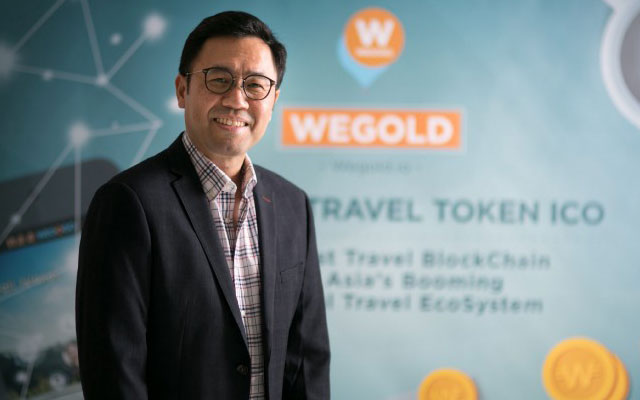
NEW startup WEGOGO sees huge opportunity to connect tourism suppliers outside China, particularly small and medium-sized enterprises, to sophisticated Chinese tourists via WeChat, the dominant social networking platform in China with 633 million users.
The venture is backed by a group of Singapore private investors led by Farsight Capital’s managing director Wong Toon King, a Massachusetts Institute of Technology graduate who has a track record with startups.
Raini Hamdi talks to Wong, chairman of WEGOGO, about the ‘social discovery AI travel platform’.
Wong Toon King
What’s the big idea?
The big idea is there is a huge number of Chinese travellers, over 100 million now and projected to grow to 200 million by 2020. Many of them, in particular the millennials, don’t even do group tours, but leapfrog straight to FIT and are very adventurous.
So we’ve built this platform to match travel suppliers to the new Chinese travellers (WEGOGO was launched to suppliers in Singapore recently). Most suppliers have caught on to the idea of a digital platform to attract clients, but they have not caught on to the need to serve Chinese travellers in their own way. In China, people use WeChat, not Facebook. Yet, suppliers are not even on WeChat. So the first step is to quickly get them (suppliers) on WeChat, then evolve to match suppliers and Chinese tourists effectively through a learning system based on AI technology.
(Editor’s Note: The latest Hurun Report shows WeChat as the top mobile phone function – 79 per cent – for Chinese millennial travellers.)
How quickly and easily can suppliers get a presence in China?
We’ve built the platform such that in less than two hours, you’ll have your own mobile website and presence in China. You’ll have the details of your company, product, pricing, promotions on a microsite and you can start selling as there’s payment gateway. (There is free language translation up to a certain number of words.)
We don’t repurpose your content or present your product. The platform enables you to be directly linked to the consumer. We’re the enabler.
How are you going to attract the Chinese travellers?
In Q3, we will do a major launch to the Chinese audience, and we will activate media and other online channels to be our partners.
We will do a lot of video campaigns. We put the videos on WeChat; Chinese travellers can ‘like’ it, comment on it, so we are creating aspirational demand. It does not have to be expensive places. The first, Island Fever!, has just kicked off and showcases the laid-back nature and lifestyle of the Gili Islands in Indonesia. There are five videos of Gili, experiencing Beaches, Diving, Swimming with Turtles, Island-hopping and Underwater World, each with a local person.
We focus on people – the local hosts, the guides, etc – who make the experience possible. We are attracting the Chinese travellers with transformative stories. Today, they want more than just bragging rights to a destination. Travel is life-changing and self-learning for them.
What is the bigger goal you think WEGOGO can achieve?
Chinese travellers, in such huge numbers, are really going to transform the way we organise travel to suit them. But in return, as they learn about the world, they are going to be transformed. So we’re hoping that what we do will help them realise that, even for China, there are many things they need to preserve, sustain, by seeing what others are doing.
That’s why we want our hosts to share tips with them on how to care for the environment and how they would like travellers to interact with them, so we become a bridge that links and empowers both sides.
How many suppliers are you targeting?
We want to get our positioning right, so it’s not so much the number of suppliers but the quality. It’s about the creation of a community that can provide transformational experiences. The suppliers can be an activity provider, a certified home-dining experience, an accommodation provider, etc, and certain categories may jump if they have been under-served. If we have to put a number to it, probably 15,000 in three years’ time.
Do you verify them?
Yes, we have partners and groups of people who will verify, while the user-generated content will provide instant feedback to travellers.
How do you make your money?
Through a booking transaction fee.
Tell me about the AI part of WEGOGO.
AI is the next big trend in every sector. Everyone is trying to make sure their system is intelligent and learning. You can build an intelligent system initially by coding, but it stays somewhat static. AI enables the system to continue to learn over time. And it is possible to learn now because of the deluge of information – what you post, what you are doing are captured and these bits of information start to build a pattern for each person.
In the end, we are teaching this AI system to understand a person’s aspiration. Does he travel to escape, get inspired, be stress-free, to have time to bond with his family? And we’re focused only on the Chinese travellers as their mindset is different and it is a big enough market to apply the technology in the domain of travel.
Why did you decide to back WEGOGO?
Any venture is about people. We (the people in the startup) go back a long way. I believe in the team. Secondly, we’re talking about the entire China travel market; that’s huge. Thirdly, it’s an area I was trained in.
(Editor’s Note: The people in the startup include founder/CEO Mak Chee Wah, former CEO of Melioris International and CFO of SilkRoute Holdings which Wong set up; Richard Tan Boon Piew, co-founder/COO, who has 23 years experience in the IT industry; Yue Yew Hoong, co-founder/CFO, who was also with Melioris and SilkRoute; and Reene Ho, managing director of BrandStory Inc, who is strategic advisor of WEGOGO.)
Do you think with platforms such as yours, which connect travellers directly to suppliers, travel agents will die?
The whole industry is transforming. But I don’t see ourselves as a disruptor. Travel is so complex, so there must be intermediaries, that’s the lay of the land. Will there be more direct (sell), yes, but will there be others who need guidance? Absolutely.
In the case of Chinese millennials, they want more direct (buying), because they are so used to technology.
Anthony Lark, managing director and general manager of Trisara, is PHA’s president
PROMINENT leaders in Phuket’s hospitality sector have rallied together to establish the Phuket Hotel Association (PHA) to develop a unified voice and brand identify for the island.
The formation of PHA was spearheaded by Bill Barnett, managing director of C9 Hotelworks, who enlisted the assistance of veteran hotelier Wichit Na-Ranong as founding advisor.
Heading the Phuket Hotel Association as president is Anthony Lark, managing director and general manager of Trisara, while Mark Simmons, vice president sales & marketing, Asia-Pacific at Outriggers Resorts, and David Keen, chief executive of Quo, have been appointed as strategic advisors, among other prominent hotel owners.
Speaking to TTG Asia e-Daily, Simmons said: “The idea of the association is for hotels to collaborate together to focus on ‘Brand Phuket’, to give one voice to Phuket’s hotel industry. Covering hotels from north to south of the island, the association will collaborate on tourism marketing strategies to promote Phuket as a leading resort destination in Asia.”
Creating synergies out of the collective reach of the non-profit, strategic initiative is a principal goal. “We want to be a strong part of the local economy to lobby the government to improve the infrastructure, for example, as Phuket gets a new airport terminal and attracts major events like Laguna Phuket International Marathon,” added Simmons.
PHA will also be a platform to “groom the next generation of talent in the hospitality sector” and lead in charitable works, he informed.
Comprising general managers and owners to ensure that decisions are made at the executive level, the newly-launched association currently boasts 40 chain and independent properties, and targets to reach 70 hotels by this year-end.
Global third-party companies like STR are also supporting the association, revealed Simmons.
SOUTH East Queensland is trialling Australia’s first public transport travel card tailored to the MICE market.
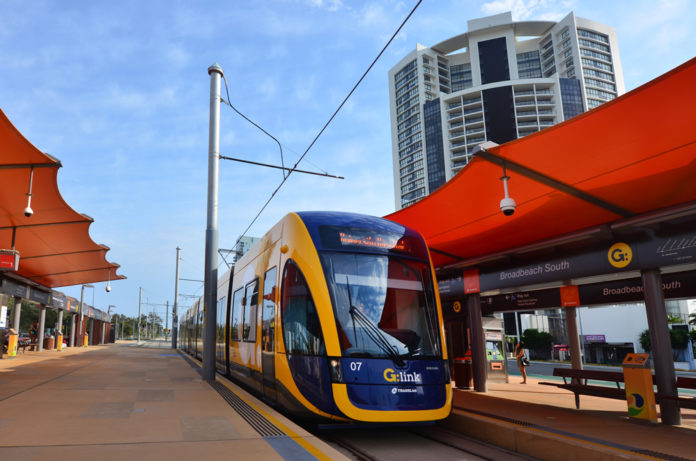
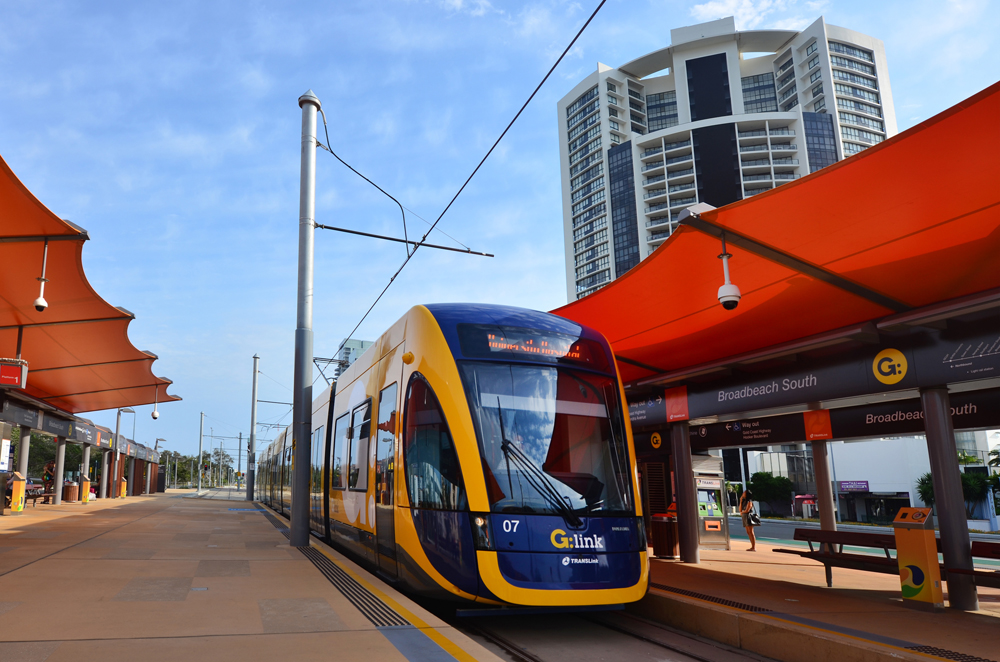
The go access Corporate Events card, an initiative of Translink in Queensland’s Department of Transport, costs A$12 (US$8.95) for three days of unlimited travel on buses, trains and ferries throughout the South East, as well as on the Gold Coast’s G:Link tram network.
Speaking to TTGmice at the This is Gold Coast Business Exchange last week, Translink’s senior advisor new business and product development, George Chemali, said: “What we found from surveys over 18 months was that (the card) was something the industry was crying out for.”
Chemali added: “It means that a delegate can get on at any mode of transport and travel anywhere in South East Queensland and not have to worry about a deposit, topping up or understanding zones.
“We’ve had (representatives) from other states (in Australia) say they wish their transport authority would take a leaf out of our book.”
Shannon Thwaites, manager, Gold Coast Business Events, said the card provided a seamless public transport mode for delegates with significant savings.
“The card has also enabled delegates to choose from a wider selection of accommodation venues, with so many conveniently located in close proximity to the light rail corridor,” she said.
The go access Corporate Events can only be purchased for events with 50 delegates or more.
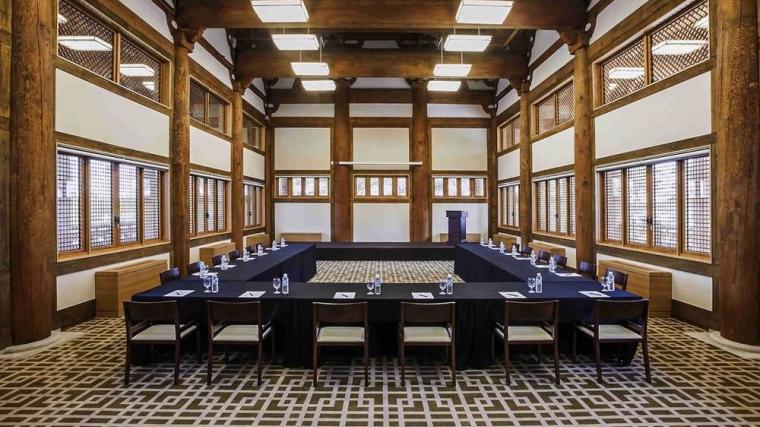
Meeting room at Gyeongwonjae Ambassador Incheon Associated with Accor
SOUTH Korea’s largest hanok-inspired hotel by the Ambassador Group in the heart of Songdo’s Central Park in Incheon, is strengthening its efforts to reach international MICE clients with its unique blend of Korean tradition and Western hospitality.
Unlike most hanok accommodation facilities, this 30-room luxury property, which opened last May, offers traditional architecture and modern furniture including plush beds, flat screen TVs and high speed Internet. Some of the suites also offer a private sauna.
Explaining how this property transports serious meetings into a tranquil setting, Dahl Joe, general manager of Gyeongwonjae Ambassador Incheon Associated with AccorHotels, said: “Event delegates can experience the local cultural touches and appreciate its historical heritage (during their meetings), while accompanied by the gardens that provide beautiful scenic spots.”
Although the hotel offers limited rooms, Joe pointed out that the expansive meeting facilities will be able to lure clients for day meetings and dinners. The outdoor courtyard can sit up to 500 guests in a banquet setting, while the grand ballroom can accommodate 400 delegates in a theatre setting.
Highlighting the property’s unique selling point, Joe said: “Guests will be greeted with grandeur… creating (a setting for) dignified meetings and events and we are the first South Korean hotel to be modelled after the Goryeo dynasty.”
According to Joe, 30 per cent of current hotel guests are from the MICE segment, with majority from the domestic market. The top three international markets are China, Japan and the US. Nevertheless, Joe said the property is optimistic the international MICE clientele will rise with their increased marketing efforts and recent participation in trade shows like the Hanok Expo – Korean Traditional Housing Festival, the MICE Alliance and Korea MICE Expo.
THE Incheon Tourism Organization and Chinese cosmetics company Aurance Group have inked an agreement which commits the latter to hosting incentive meetings in the South Korean city until 2018.
Earlier in March, 6,000 Aurance Group employees visited Incheon – the largest single tour group to arrive in South Korea – and took part in various activities such as partaking in a huge beer and fried chicken party in Wolmido, visiting film locations of popular TV shows, and meeting at Songdo Convensia.
Director of Incheon Convention & Visitors Bureau, Jake Kim, told TTGmice e-Weekly: “The event was a huge success and the agreement to continue visiting Incheon is proof that the company (employees) really enjoyed themselves.”
Kim said this “vote of confidence” from Aurance Group helps to endorse the city as a venue ready for business events and incentive activities.
According to Kim, one of the key selling factors of the city is its proximity to the Incheon International Airport, with the city centre just a 20-minute drive away. Moreover, the compact city places luxury hotels within walking distance of the key landmarks.
He explained: “The city (offers) easy access to entertainment, malls and the convention centre. Also unique is our proximity to the sea and we have many water activities to offer for teambuilding and incentive programmes.”
Unlike the more developed cities like Seoul, Kim said Incheon is still considered relatively new for many travellers and that heightens the destination appeal, especially for repeat visitors to South Korea.
US TICKETING firm Eventbrite has appointed its first general manager for Australia, Phil Silverstone.
Silverstone will be responsible for leading and expanding Eventbrite’s Australian operations and for driving the company’s local strategy as it pushes for a bigger slice of Australia’s A$270 million (US$201 million) ticketing industry.
He most recently spent 16 years in financial services with GE Capital.
His appointment comes as the local arm of the company enters into a new phase of growth and capitalises on strong traction the company has seen since launching its Asia-Pacific office in Melbourne in March 2014.
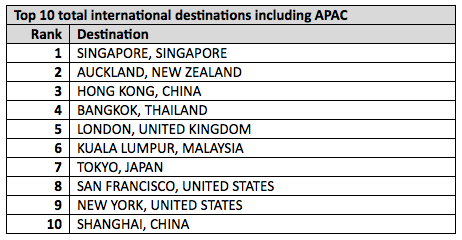
A STUDY by American Express Global Business Travel (GBT) has revealed that cities in Asia-Pacific remain high on the list for Australian business travellers, with the top four spots going to Singapore, Auckland, Hong Kong and Bangkok.
This highlights the significance of regional centres for Australian businesses.
London however, maintains its spot as the highest ranked destination outside of Asia-Pacific, followed by San Francisco and New York. Meanwhile, strong links between Australia’s technology sector and the Silicon Valley as well as improved airline connectivity appear to be driving an increase in business travel to San Francisco, which has overtaken New York as the top US business destination for Australians.
In Asia-Pacific alone, Singapore, Auckland and Hong Kong remain unchanged as the top three business travel destinations, while Bangkok returns to the rankings after a year’s absence. This highlights a renewed confidence in the city following a brief period of political unrest, while China’s declining popularity could be linked to the country’s economic performance.
“While we haven’t seen movement across our top three international destinations for Australian business travellers, we have noticed a decline in business travel to China over the past twelve months,” said Jo Sully, vice president and general manager, American Express GBT, Australia.
“Shanghai has fallen from sixth to tenth in the overall international rankings, and Beijing has dropped off the rankings entirely.”
“Despite recent reports that China has overtaken the US as the world’s largest business travel market, the Chinese travel market continues to be dominated by domestic travel. The decline in Australian business travel to China is likely to be heavily influenced by the slowdown in the Chinese economy and a wane in their demand for Australian resources.”
This data encompassed all air bookings made directly with GBT for Australia-based travellers between March 2015 to April 2016, and shows the top 10 most-booked destinations within the Asia-Pacific region and globally.
ALTHOUGH only one of several developments within the Adelaide BioMed City Precinct has been completed – with the rest coming up over the next few years through to 2020 – the massive redevelopment along Adelaide’s Riverbank Precinct has drawn significant attention from health and medical associations worldwide. This has led to a line-up of 45 conventions that will take place between 2015 and 2016.
Damien Kitto, CEO of the Adelaide Convention Bureau, told TTGmice that a “large majority” of the wins were association gatherings and many of them were led by national associations.
Kitto attributed Adelaide’s recent success in health and medical events to the Adelaide BioMed City Precinct.
According to Marco Baccanti, chief executive of government agency Health Industries South Australia, the A$3.6 billion (US$2.7 billion) project is significant because it houses facilities that “combine the entire value chain, starting from academic research and scientific research at South Australian Health and Medical Research Institute (SAHMRI)” and will “bring about a combination of academic and clinical research, training, therapy for patients, and business activities”.
SAHMRI, which was the first facility to be completed in 2013, now houses 600 researchers from across the globe and these individuals “provide rich content to help us to bid and win related events”, explained Kitto.
Steve Wesselingh, executive director of SAHMRI, said the facility also helps to bring health and medical association conventions to Adelaide by offering to secure high-level speakers for the programme, organising site visits for the delegation, drawing national and international attendees to the convention, and writing letters of support to the international organising committee that extol the scientific strengths of its departments.
Last week, Adelaide Convention Bureau held its second Adelaide BioMed City Showcase, to raise awareness of the ongoing Adelaide BioMed City Precinct development and the transformation of the Riverbank Precinct, and how high-level state support is available for associations keen on taking an event to the South Australian state capital.
Kitto revealed that 70 medical experts had attended the event – double that of the inaugural showcase in April 2015 – and these participants were “associated with over 100 event possibilities for Adelaide and 90 per cent of those are international gatherings”.
The current calendar of 45 health and medical association conventions will draw some 16,000 delegates to the city and is forecasted to generate A$59 million in economic benefit.