TTG Asia
Asia/Singapore Thursday, 2nd April 2026
Page 1799

LICC enhances its half- and full-day meeting packages

0

wes283br-164710-grand_ballroom_-_banquet_style
LICC’s Grand Ballroom

THE LANGKAWI International Convention Centre (LICC) has recently enhanced is half- and full-day meeting packages.

Half- or full-day meeting packages, complete with lunch and tea break are priced are RM160 nett (US$40) and RM180 nett per person respectively. Both packages come with complimentary use of an LCD projector and screen, a flipchart and/or whiteboard and two microphones from a choice of wired, wireless, lapel or table microphones. Conference stationery, mints and bottled water are also provided throughout the meeting duration. For additional meeting rooms, a discounted rental charge will be applicable.

For clients who wish to add dinner to the package, there will be a choice of buffet or set menu starting at RM180 nett per person.

“A variety of Asian and international cuisine is available; including Malay, Chinese, Indian, Western and fusion, providing our customers with a delicious conclusion to their meetings,” said Tengku Ramizan, director of LICC.

Moreover, LICC is offering complimentary return transfer pickups for any confirmed clients whose guests are staying at hotels, excluding the neighbouring Westin Langkawi Resort and Spa. LICC delegates will also be able to enjoy 30 per cent discount for any spa treatment and 20 per cent discount for beverages during events.

All promotions are available until December 31, 2017.

Contact the LICC team at info@licclangkawi.com or visit www.licclangkawi.com.

Malaysia Airlines appoints new chief commercial officer

0

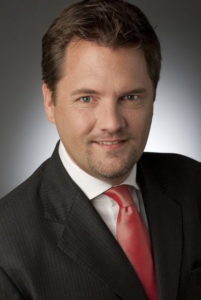
MALAYSIA Airlines has named Arved von zur Muehlen as its new chief commercial officer effective from September 5, taking over Paul Simmons who will be leaving in mid-September.

Muehlen was most recently senior vice president of commercial network operations for Qatar Airways, where he was responsible for global sales strategy and development as well as innovation and technology with a revenue target of more than US$7 billion.

arved-von-zur-muehlen-1
Arved von zur Muehlen, COO of Malaysia Airlines

Prior to that, he spent four years with Swiss International Airlines as vice president sales international. He also spent over 15 years with Lufthansa Airlines covering a range of portfolios ranging from revenue management to sales and marketing.

In his new role, Muehlen will focus on developing a comprehensive and sustainable plan to improve Malaysia Airlines’ marketing, sales, products and customer service.

Is China’s Anbang now eyeing a takeover of IHG?

0

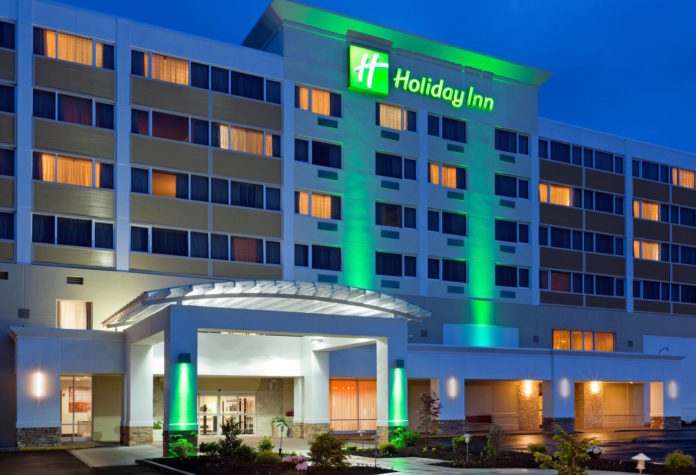
holiday-inn-clark

AFTER an unsuccessful bidding war with Marriott International for the acquisition of Starwood Hotels & Resorts, China’s Anbang Insurance Group has now apparently trained its sights on UK-based InterContinental Hotels Group (IHG).

Anbang, who became renowned for leading a Chinese consortium earlier this year to vie for control of Starwood, is reportedly preparing a 7 billion pounds (US$9.1 billion) bid for IHG, according to London’s The Sunday Times.

The paper mentions that bankers in London had been in opening talks with Anbang dealmakers since June.

However, a separate report by Bloomberg quoted an Anbang spokesperson as saying there are no plans for the Chinese company to make a bid, nor are they considering an offer for IHG.

IHG has nine brands under its umbrella, including Holiday Inn, Crowne Plaza and Hotel Indigo, as well as its newest brand Hualuxe specifically catered for Chinese consumers.

Its portfolio comprises over 4,700 hotels and nearly 674,000 rooms in almost 100 countries worldwide, which translates to approximately 157 million guest nights served per year.

Olivier Chavy takes top job at Mövenpick

0
NO MERCHANDISING / DISTRIBUTION. PERSONAL USE ONLY. COPYRIGHT OF ABU DHABI MEDIA.

Olivier Chavy

THE board of directors of Mövenpick Hotels & Resorts has appointed hotel veteran Olivier Chavy as the Swiss hospitality company’s new CEO.

His appointment will come into effect in September, taking over from current head honcho Jean-Gabriel Pérès, who is in the midst of supporting this transition.

Chavy’s experience spans three continents, having served in roles such as international head, global brand performance of luxury & lifestyle brands for Hilton Worldwide, as well as current positions like president and CEO of Wilson Associates, a leading global interior architectural design firm.

“I am thrilled to be joining the leadership team at Mövenpick Hotels & Resorts and to be representing this venerable Swiss brand,” said Chavy.

“In accepting this role, I look forward to driving the next phase of growth for the company with the support of the Mövenpick board, the expertise of the management team and the strong relationships with our business partners.”

Added Mövenpick chairman Jürgen Fischer: “Olivier will continue to drive value for Mövenpick’s shareholders, hotel ownership partners, employees and guests alike. I am sure that Olivier will propel the company into the next chapter of growth, building on the impressive, existing development pipeline, which will allow us to grow Mövenpick’s network to more than 100 upscale, full-service hotels in the very near future.”

Many air travellers not able to find best ticket prices: Sabre

0

sabre-fare-priceGlobal travel shopping data showing the share of travellers that pay above the average air fare price on selected routes

MORE than one in three travellers worldwide pay above the average airfare for plane tickets, according to a recent report by Sabre.

Comparing popular routes within Asia-Pacific, Singapore-Hong Kong saw 37 per cent of travellers paying above average prices while the domestic Sydney-Melbourne route recorded a whopping 48 per cent of travellers paying above the average route fares.

“As online penetration in Asia-Pacific continues, more consumers are gaining access to vast amounts of travel information and, with it, the confidence to shop around for the best option,” said Roshan Mendis, senior vice president for Sabre Travel Network Asia-Pacific.

“Yet despite a huge amount of time spent shopping and an abundance of travel services and unique content to choose from, consumers often don’t actually walk away with the best match for their booking criteria – which could factor in anything from price to flexibility or availability of add-ons, customised offerings and loyalty programmes.”

He added: “One of the biggest challenges facing travel companies today isn’t providing the level of choice that travellers expect; it’s ensuring that those choices are presented to the right person, in the right place and at the right time.”

CellPoint launches new mobile payments solution for airlines

0

aeroplane-sky

AIRLINE payment service provider (PSP) CellPoint Mobile has unveiled Velocity, the company’s latest offering, and touted as the first mobile PSP-as-a-service solution.

Created specifically for airlines and travel operators, Velocity is a plug-and-play business service that enables airlines to deploy mobile payment solutions, payment apps, and alternative payment methods (APMs) without friction to existing financial systems.

“Bolting mobile-centric payment capabilities onto legacy commerce systems is not a viable or profitable strategy in a marketplace that is rapidly shifting toward a mobile-first, mobile-only airline passenger,” said Kristian Gjerding, CEO of CellPoint Mobile.

“Our solutions and platform have been built specifically for the mobile environment, making it both easy and quick for us to offer PSP functionality and APM support to airlines – regardless of a passenger’s device, channel, preferred payment method or currency.”

Velocity comes in three scalable service options, namely Engage, Accelerate and Advance, in order to match different needs. Engage, for example, supports the the use of two global consumer wallets or payment apps.

Meanwhile, Accelerate supports three more APMs and added payment functionality, while Advance integrates up to 10 payment methods per market and full reporting capabilities for airlines interested in more robust mobile payment strategies.

CellPoint Mobile also supports MasterPass, Mobile Pay, Samsung Pay, Visa Checkout and a variety of other APMs.

Hotel Jen offers free city activities for guests

0

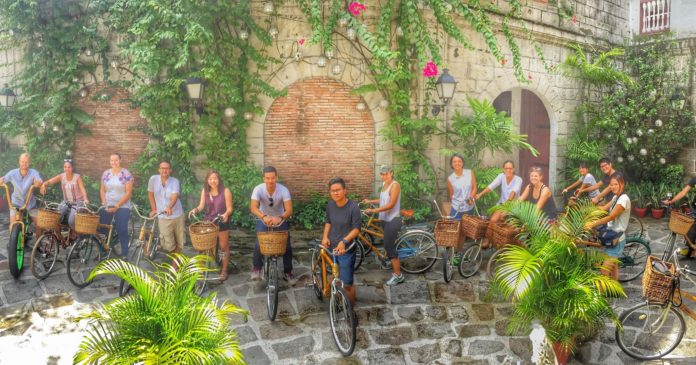
manila_-_bamboo_bicycle_ride_in_intramuros_credit_-_bambike_toursGuests riding on handcrafted bamboo bicycles in Intramuros. Credit: Bambike Tours

THOSE making a booking at one of any 10 Hotel Jen properties in the Asia-Pacific from now till end-September can get a city activity as part of the deal.

Part of the brand’s Leave Boring Behind campaign, the packages include late check-out, accommodation, daily buffet breakfast for two people and a special activity that highlights the destination the hotel resides in.

In Malaysia, guests get to go on a mangrove cruise, catch crabs in a kampung, or take part in a durian feast, while in Manila, they can ride on handcrafted bamboo bicycles for a guided tour through the city’s historic centre and old walled city.

In Singapore, guests can go on a food tour from the comfort of a special ‘Gourmet Bus’, while thrill-seekers can also head to the Adventure Cove Waterpark.

Those heading to the Maldives can visit Vilimalé City for a glimpse of local everyday life, while those staying at Hotel Jen Brisbane get to spot for humpback whales from a catamaran in Moreton Bay.

In China, a foot tour to explore Beijing is available, while in Shenyang, guests can enjoy traditional North Korean cuisine and cultural performances. Those staying at Hotel Jen Hong Kong get to go on a boat ride on a classic Chinese junk.

Commenting on the initiative, Marisa Aranha, vice president of sales and marketing at Hotel Jen, said: “Hotel Jen was launched by Shangri-La Hotels and Resorts two years ago to cater to today’s independent travellers who are passionate about discovering new places, cultures and experiences.

“We regard our guests as ‘friends of Jen’ and want to help them explore hidden gems and re-discover the magic of travel.”

Most Singaporeans underestimate value of cruising: RCI

0

seavsland_challenge_promotional_visual

IN A survey conducted by Royal Caribbean International (RCI), it was found that 86 per cent of Singaporeans underestimated the value of cruising.

The survey of 1,000 local respondents revealed that 66 per cent did not know that accommodation and food were included in the total price of a cruise package, while 61 per cent thought they had to pay additional fees to take part in activities such as rock-climbing and mini-golf.

Royal Caribbean’s managing director of Singapore and South-east Asia, Sean Treacy, said: “Many local travellers are unaware of what is included in a cruise package. For example, the survey showed that around six out of 10 Singaporeans (63 per cent) think that enjoying a Broadway Show on board, or even ordering room service, incur an extra fee – when it’s actually all-inclusive.

“We often have our guests telling us how surprised they are by the types of activities they can do on board for free. This includes having simulated skydiving and surfing experiences, going on an elevated observation capsule and attending a circus school on board,” he added.

According to Treacy, this shows that there is still a lot to do to educate local travellers about the value of an all-inclusive cruise experience over land-based holidays.

To overcome such misconceptions of cruise holidays, RCI has launched a Sea vs Land challenge, which will see Singapore’s savviest value hunters compete to complete as many cruise activities on land for the same price as a cruise package. Finalists stand a chance to win a cruise holiday for two to Hong Kong on board Voyager of the Seas.

For more information on the challenge, please visit www.seavsland.com.sg.

TTG Asia wishes Singapore a happy 51st birthday

0

national-day-fireworks
Credit: Facebook / NDPeeps

TTG Asia e-Daily will be taking a break for the public holiday in Singapore on Tuesday, August 9, in recognition of the country’s 51st National Day.

News will resume on Wednesday, August 10.

Happy National Day in advance to all Singaporean readers!

Divided over investment rules

0

Indonesia’s fragmented governance policy is weighing on tourism investment, just as the sector is picking up steam
aug-12-indonesia-governance

The multivalence of regulations and taxation imposed by Indonesia’s regional governments, if not handled properly, could offset recent strides made in the country’s current positive tourism investment climate.

Tourism investment surged 17 per cent to US$268.5 million in 1Q2016, 95.5 per cent of which were foreign investments, according to Henky Manurung, head of tourism business investment division, Indonesia Ministry of Tourism.

“Favoured destinations are not only Bali and Jakarta, but also West Nusa Tenggara, Central Java and Yogyakarta,” he shared.

Investment opportunities are also growing as the central government is channelling efforts into developing the infrastructure in 10 secondary and tertiary destinations such as Lake Toba, Tanjung Kelayang (Belitung) and Tanjung Lesung (Banten).

While Indonesia’s decentralisation policy − which started in 2005 − has in some ways stimulated regional business and demand for hotels, several industry players also pointed to downsides arising from the political and economic devolution.

Ida Bagus Ngurah Wijaya, a hotel owner and former chairman of Tourism Industry Association Bali, said: “(Previously), hotel licences were set by the central government, so there was more uniformity in the requirements. Today, each regency government can set their own rules.”

Maulana Yusran, vice chairman – research, information technology and organisational affairs at Indonesia Hotel and Restaurant Association (IHRA), added: “The overlapping rules, regulations and taxation imposed by the regional governments have added burden to hotels’ operational revenue.”

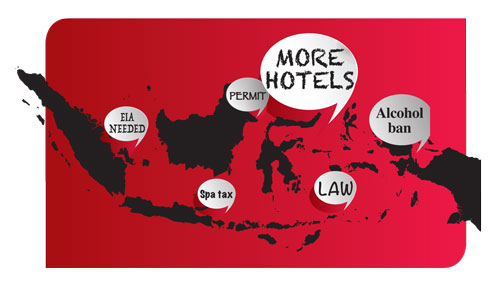
For example, Papua’s ban on alcoholic distribution and consumption has aroused concern among hoteliers catering to the international community.

Elsewhere in the country, a hotel is required to obtain its own permits for location and environment impact assessment even if it sits in a designated area that already has the equivalent permits.

Krishnadi, chairman of IHRA Jakarta chapter, said: “Spa and entertainment spaces should be considered part of the hotel facilities, but (the Jakarta tax office) applied different tax rates for these (on top of) the hotel tax.”

He added the Regional Revenue Office of Jakarta had implemented a new rule that taxes promotions based on rack rates instead of discounted rates. In other words, a 10 per cent tax will still be slapped on a room priced at 500,000 rupiah (US$37.64), even when it is sold at 400,000 rupiah after a 20 per cent discount.

Maulana lamented: “The regional governments are finding ways to increase their income and hotels have become their targets.”

Ng Suwito, president director at Red Planet Indonesia, was less cynical about the government’s regional autonomy policy but urged the better implementation of regulations.

“For an investor and operator like us, regulation changes are part and parcel of doing business, but we do not like surprises. We need to plan and manage (costs).”

A further consequence, Ng said, is that the tax incidence would fall on the end-consumer.

“At the end of the day, we have to pass (the additional cost) on to somebody else. We have no choice but to increase the ADR and the consumer will (have to) bear it.”

This could compound the challenges already faced by hotels, such as an oversupply of rooms in some destinations.

The Bali Hotel & Branded Residences Report 2015 issued by Horwath HTL and C9 Hotelworks noted that slower demand in 2015 resulted in the market struggle to maintain both occupancy and rate.

Meanwhile, Bali’s supply is still increasing, with the same report projecting the addition of 115 new hotels and 15,000 rooms by 2019, taking the total key count to around 55,000.

Arief Yahya, Indonesia Minister of Tourism, agreed that government regulations had hampered Indonesia’s development, including the hospitality sector.

He said: “One of our weaknesses as a country is that we are very slow. Regulations have slowed us down.”

Arief added that Indonesian president, Joko Widodo, has set 2016 as the year to accelerate deregulation, and he invited IHRA to submit a list of regulations which they believe were stumbling blocks for businesses.

The ministry has also set up a working group to come up with ways to help the industry to better compete with neighbouring countries.

This article was first published in TTG Asia, August 5, 2016 issue, on page 6. To read more, please view our digital edition or click here to subscribe.