TTG Asia
Asia/Singapore Monday, 6th April 2026
Page 1745

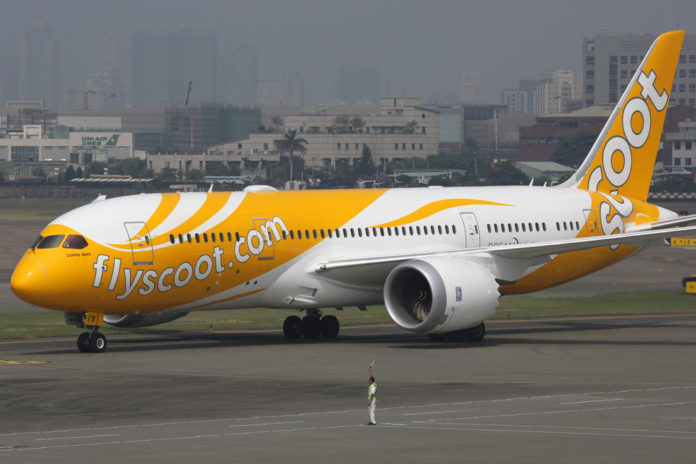
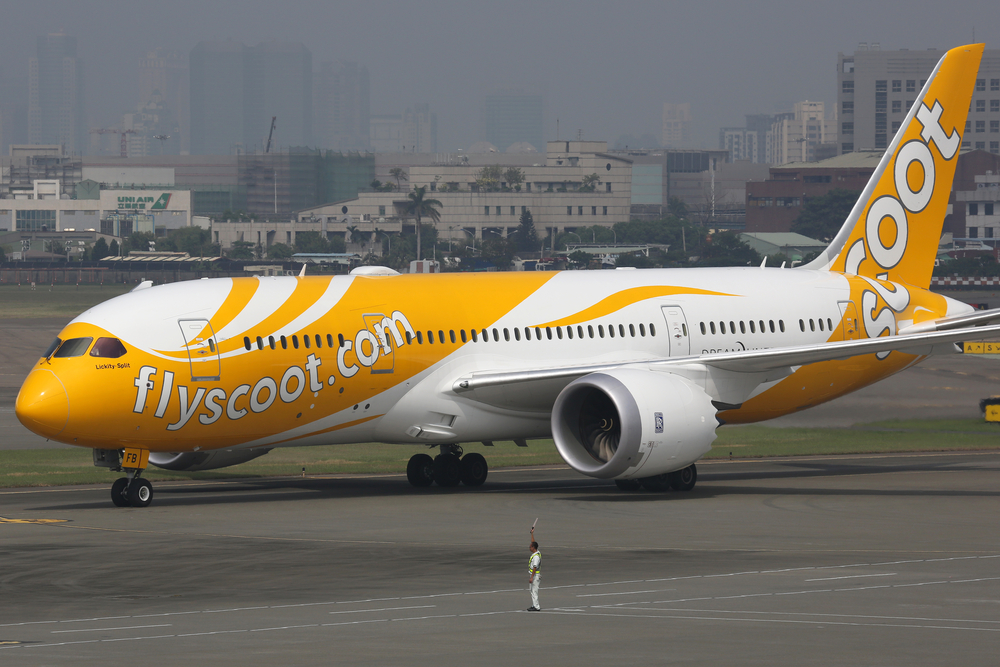
Scoot brand to front SIA’s budget operations

0

scoot

Tigerair and Scoot, which came under a single holdings company earlier in May, is set to integrate under a single operating licence in the second half of next year.

Both LCCs currently belong to Budget Aviation Holdings, under the SIA Group, and in an attempt to enhance the synergies of SIA’s budget operations, Tigerair will come come under the Scoot brand name.

This is a full integration that will encompass flight scheduling and connections, as well as a common website, contact centre and check-in counters.

“(The formation of Budget Aviation Holdings) has already led to commercial and operational synergies between Scoot and Tigerair that are providing growth opportunities for both airlines,” said Budget Aviation Holdings chairman Goh Choon Phong.

Goh, who is also CEO of Singapore Airlines, added: “Following a review, we have determined that the logical next step is to pursue a common operating licence and common brand identity to enable a more seamless travel experience for customers.”

EU, China to form new joint tourism committee

0

The European Union (EU) and China will be forming the EU-China Tourism Bureau, a joint committee that serves to represent the bilateral interests of the travel trade.

Ujhelyi Istvan, member of the European Parliament, speaking at the Global Tourism Economy Forum 2016 in Macau last month, noted that much more can be done to promote Europe’s tourism offerings.

Istvan, who is also vice-chair of the European Parliament’s transport and tourism committee, chair of the tourism task force, and also a member in the delegation responsible for relations with China, said: “We need more promotional campaigns about our cultures, cities and tourist destinations.”

He comments that current tourism work groups between the EU and China are insufficient. “In the EU parliament, we have a partner committee which works for the European tourists, but I think it’s not enough so we’ll create a new committee – a joint project to get tourist associations and political decision makers to serve both Chinese and European relationships.”

Hu Zhimin, headquarter vice president of China International Travel Service, agrees with the need for improved bilateral ties.

“We look forward to seeing more promotions from the EU, and Eastern Europe (especially), has been an emerging destination for sophisticated Chinese tourists given its rich tourism resources,” he told TTG Asia.

“It’d be helpful to have this bureau act as a centralised agency to do marketing rather than have individual destinations like Poland and Slovenia to rely on their limited budgets. They may ride on this platform to push their brands to Chinese visitors.”

The formation of the EU-China Tourism Bureau comes on the back of 2018 being declared the EU-China Year of Tourism.

Genting Dream a good fit for China, India markets

0
Genting Dream
genting-dream
Genting Dream

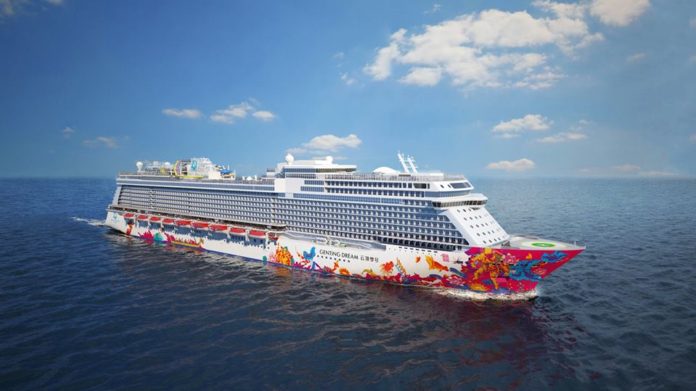
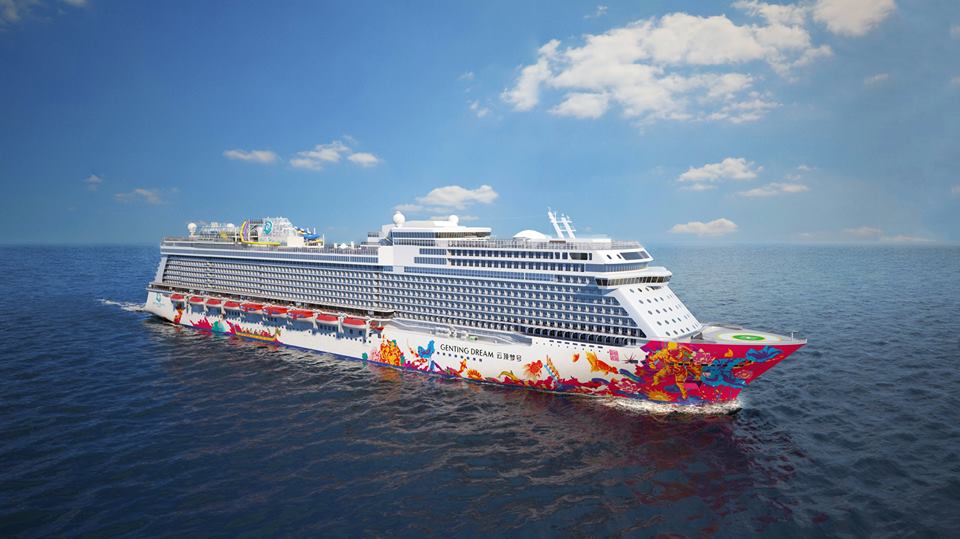
Dream Cruises, the first-ever Asia based premium cruise line brand, set sail from Singapore last week with its inaugural ship the Genting Dream.

Able to carry 3,400 guests and 2,000 crew, the 150,000-tonne German-built ship will be based in Asia with homeports at Guangzhou (Nansha Port) and Hong Kong.

Accommodation onboard the ship range from 13m2 Inside Staterooms to the 224m2 Garden Penthouse, with 70 per cent of rooms offering private balconies.

Facilities onboard include spas, 35 F&B options, numerous pools, six water slides, playrooms, a rope-climbing course, a bowling alley, and mahjong rooms. Unique elements include the first Zouk nightclub at sea as well as the first Johnnie Walker Bar on a ship.

Agents interviewed say that the China and India markets would be the most interested in sailing with Genting Dream.

“My clients will definitely be interested because it’s new and is a higher-class ship compared to Star Cruises,” said Cindy Goh, manager FIT-Worldwide department at ASA Holidays.

“There are a lot of facilities, and families will be drawn to it as there is something for everyone. There were quite a lot of enquires for the launch date sailing three months ago, and we completely filled up our allotment.”

When asked which Asian markets will be most interested in Genting Dream, she said: “I think Singapore, India – nowadays a lot of Indians like to go on cruises – China and Malaysia.

Stanley Yew, senior event sales executive, Pacific Arena, shared similar sentiments: “I think it is more for the China market. There will be some Singaporeans but not as many as the China market.

“(But) there will be a market for it as Singapore is quite small and we are on the constant lookout for new itineraries and new places to go.”

Kent Holidays’ travel planner, Aneesha Abdul, said: “We managed to fill half of our allotments, mostly to the China and India market, but we’ve also sold two cabins to Myanmar. These customers are booked in for the two-night cruise that will leave tonight (November 4).”

Abdul concluded: “It’s quite a big luxury ship and people are interested in it so they’ve taken a short cruise to explore it.”

Nida Rooms launches service for corporate travellers

0

nida-for-business

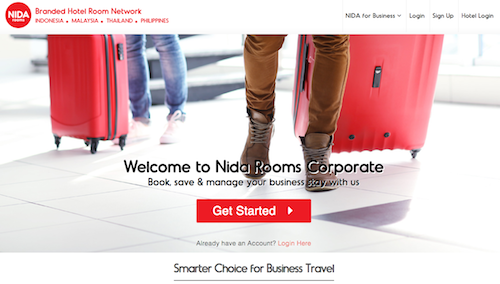
Budget hotel network operator Nida Rooms has lived its business travel solution, Nida for Business, targeted at SMEs.

The new platform allows travel managers to register their companies without pre-qualification and track and manage employee bookings, expenses and data from a central dashboard.

A key feature is the ability to change booking details or cancel bookings two days prior to the check-in date without being charged any penalties. Nida for Business is also catered especially for bleisure travel, according to Nida Rooms CEO Kaneswaran Avili.

“Nida for Business has been designed for business travellers who love to experience new adventures, that know how to combine their business skills and travel learnings to gain competitive advantages at their workplace,” he said.

“Even the benefits we offer with this service have two main aims, which are cost and time savings. We are offering an instant travel credit of RM 500 (US$118.70) for those businesses signing up before November 30.”

Nida Rooms currently has properties in four main countries, namely Indonesia, the Philippines, Thailand and Malaysia. Next year, the hotel room network operator has plans to expand into other countries in Asia.

“For the last 13 months, since our inception in September last year, we have identified and secured more than 4,000 hotels in hundreds of locations rich with culture, traditions, host to localised outdoor activities and immersed with the local flavor,” added Avili.

Training initiative kicks off for travel professionals in Cambodia

0

cambodia-tour-guide
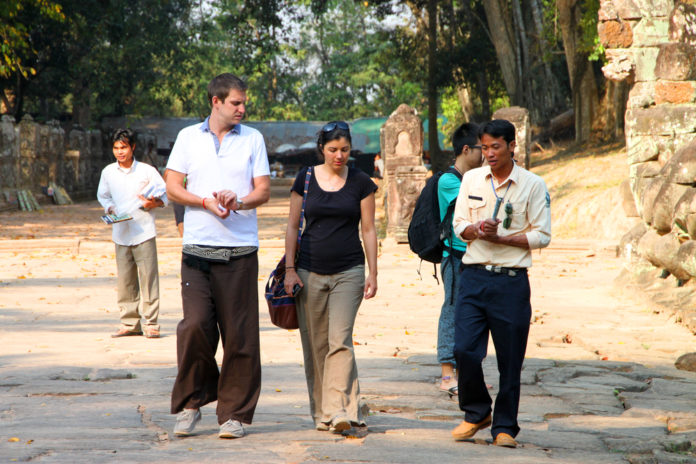
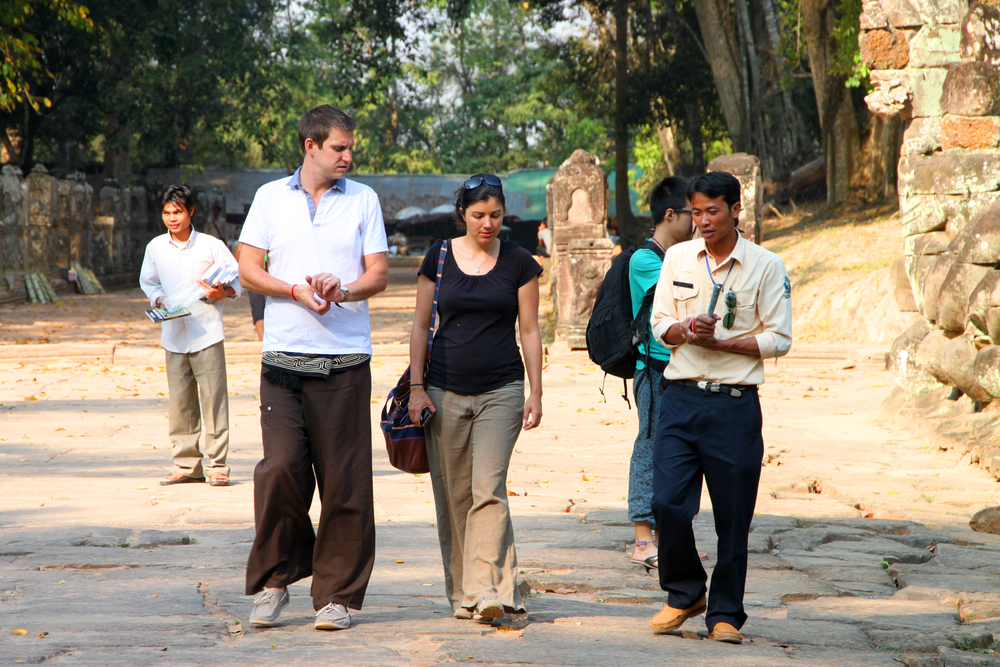
Tourists listening to Khmer local guide at Preah Khan in Siem Reap

Tourism industry stakeholders have welcomed a move by the Ministry of Tourism (MoT) to bridge the tourism skills gap in Cambodia.

The MoT has estimated that an additional 200,000 trained tourism professionals are needed to cater to the anticipated seven million foreign visitors in 2020.

To achieve this goal, a policy to promote vocational training for hotel and travel services has been developed. Twelve vocational training centres will be involved, offering a wide range of courses.

According to MoT deputy director general Try Chhiv, there are currently 620,000 Cambodians working in the tourism sector. But urgent training is needed to increase this figure to between 800,000 and one million.

Luu Meng, CEO of hospitality company Almond Group, agrees that there is insufficient skilled labour.

“We lack a lot of the skills and resources needed to meet tourist demand. We need to encourage all schools to invest in proper training, especially when it comes to language skills,” said Meng, who is also vice president of the Cambodia Tourism Federation.

The government is urging companies to invest in skills training at centres that meet ASEAN Economic Community standards so that professionals will gain regional recognition as well.

Jo Crisp, general manager of Peak Cambodia, agrees with the move, provided there is a “coordinated approach” and that quality training is provided.

As well, Amy McLoughlin, co-founder of tour operator Ayana Journeys, said: “We support any efforts to up-skill the Cambodian workforce, and are hopeful to see more confident and entrepreneurial bright sparks coming out of these centres.”

Malindo Air launches Kuala Lumpur-Chiang Mai flight

0

malindo-air

Malaysian carrier Malindo Air has launched daily direct flights from Kuala Lumpur to Chiang Mai, its second service to Thailand after Bangkok.

Flights depart from KLIA daily at 10.35 and arrives at Chiang Mai International Airport at 12.20 local time. The return service will then depart Chiang Mai at 13.40 and arrive at KLIA at 17.25. Flights take roughly 2 hours and 45 minutes.

A Boeing 737-800NG aircraft with a seat capacity of 162 – 12 business class and 150 economy class – will be deployed on the 1,762km route.

A third Malindo Air service to Thailand to Phuket is also set to launch on November 10.

Following in his footsteps

0

The best way for the people to honour the king’s exemplary life is to follow in his footsteps… A life goal of mine is to visit all the provinces in Thailand, tracing the king’s travels in each province.

nov_04_opinion

October 13 was a sad day for Thailand when King Bhumibol Adulyadej passed away at the age of 88. The beloved monarch reigned for 70 years with an almost legendary rectitude and devotion to his country. As a foreigner living in Thailand, I too felt the loss, and with my Thai family, mourn for the king’s death with the rest of the country.

A highly talented man, King Bhumibol was an avid jazz player, accomplished sportsman, keen photographer and innovative scientist. Also known as the World’s Development Monarch, he had undertaken many visits to rural areas throughout Thailand and initiated more than 3,000 projects in his lifelong support for opium elimination, poverty reduction and livelihood development.

Sumate Sudasna, managing director of CDM and president of Thailand Incentive and Convention Association, in his projection of the days ahead for Thailand tourism, thinks that King Bhumibol’s positive legacy and the many projects initiated and supported by the royal family will open up “a goldmine of attractions” for corporate travellers in their outreach programmes.

Not only that, I believe these royal projects can be sources of rewarding and educational experiences for general visitors to Thailand. While Thais are familiar with royal-associated attractions like Doi Tung and Doi Angkhang in the north or Doi Kham food products, to name just a few, not many foreign visitors are aware of these initiatives. Earlier efforts by the Tourism Authority of Thailand (TAT) to promote these projects were also more focused on the domestic market.

At the recent ITB Asia in Singapore, TAT revealed its latest plans to market the royal projects to the foreign audience. The greater publicity and promotion of the royal projects at the international level will definitely compel more foreign travellers to visit these sites, who through their visits will hopefully gain deeper insights into King Bhumibol’s dedication to the people and better understand the roots of Thais’ deep reverence for the late king.

Also worth mentioning is the Royal Park Ratchaphruek, a personal favourite of mine. First launched as a world-class horticultural expo from November 2006 to January 2007 to commemorate the king’s 60th anniversary of his accession to the throne, the breathtaking array of flora and landscaping at this 80ha attraction in Chiang Mai captivated me so much during my visit a decade ago that I was inspired to find out more about the king’s life. Today, this botanical gem is still as picturesque and alluring as ever.

That said, it will take time for Thailand to grief and recover from the loss of the nation’s guiding light, but I believe the best way for the people to honour the king’s exemplary life is to follow in his footsteps. And as I now call Thailand home, a life goal of mine is to visit all the provinces in the country, tracing the king’s travels in each single province, all 77 of them.

This article was first published in TTG Asia November 2016 issue. To read more, please view our digital edition or click here to subscribe.

Following in his footsteps

0

The best way for the people to honour the king’s exemplary life is to follow in his footsteps… A life goal of mine is to visit all the provinces in Thailand, tracing the king’s travels in each province.

nov_04_opinionOctober 13 was a sad day for Thailand when King Bhumibol Adulyadej passed away at the age of 88. The beloved monarch reigned for 70 years with an almost legendary rectitude and devotion to his country. As a foreigner living in Thailand, I too felt the loss, and with my Thai family, mourn for the king’s death with the rest of the country.

A highly talented man, King Bhumibol was an avid jazz player, accomplished sportsman, keen photographer and innovative scientist. Also known as the World’s Development Monarch, he had undertaken many visits to rural areas throughout Thailand and initiated more than 3,000 projects in his lifelong support for opium elimination, poverty reduction and livelihood development.

Sumate Sudasna, managing director of CDM and president of Thailand Incentive and Convention Association, in his projection of the days ahead for Thailand tourism, thinks that King Bhumibol’s positive legacy and the many projects initiated and supported by the royal family will open up “a goldmine of attractions” for corporate travellers in their outreach programmes.

Not only that, I believe these royal projects can be sources of rewarding and educational experiences for general visitors to Thailand. While Thais are familiar with royal-associated attractions like Doi Tung and Doi Angkhang in the north or Doi Kham food products, to name just a few, not many foreign visitors are aware of these initiatives. Earlier efforts by the Tourism Authority of Thailand (TAT) to promote these projects were also more focused on the domestic market.

At the recent ITB Asia in Singapore, TAT revealed its latest plans to market the royal projects to the foreign audience. The greater publicity and promotion of the royal projects at the international level will definitely compel more foreign travellers to visit these sites, who through their visits will hopefully gain deeper insights into King Bhumibol’s dedication to the people and better understand the roots of Thais’ deep reverence for the late king.

Also worth mentioning is the Royal Park Ratchaphruek, a personal favourite of mine. First launched as a world-class horticultural expo from November 2006 to January 2007 to commemorate the king’s 60th anniversary of his accession to the throne, the breathtaking array of flora and landscaping at this 80ha attraction in Chiang Mai captivated me so much during my visit a decade ago that I was inspired to find out more about the king’s life. Today, this botanical gem is still as picturesque and alluring as ever.

That said, it will take time for Thailand to grief and recover from the loss of the nation’s guiding light, but I believe the best way for the people to honour the king’s exemplary life is to follow in his footsteps. And as I now call Thailand home, a life goal of mine is to visit all the provinces in the country, tracing the king’s travels in each single province, all 77 of them.

This article was first published in TTG Asia November 2016 issue. To read more, please view our digital edition or click here to subscribe.

Learning on the go

0

Qooco’s David Topolewski shares how mobile learning will make an innovative, cost-effective way to transform training delivery in the hospitality sector

shutterstock_469451066 [Converted]

Governments and companies are embracing mobile learning today, reflecting an effort by society to support and accommodate populations that are increasingly more mobile.

In fact, one of the earliest forms of mobile learning still exists today – reading a book while travelling – although back then it was just called ‘learning’, as the acquisition, transference or sharing of knowledge was traditionally done in the classroom.

The invention of the first mobile phone in 1973 and the surging use of the Internet since 1995 by businesses, students and individuals set the foundations for the arrival and subsequent evolution of mobile learning, which has come a long way since the 1980s.

The first modern instances of mobile learning were conducted through cassette tapes and CDs. Between 1983 and 1987, Singapore telecoms companies even offered Mandarin lessons via telephone.

In the early 1990s, software companies such as Apple and Palm Corporation started developing mobile learning software and European universities started evaluating mobile learning for their own students.

Since these early days, mobile learning has boomed and is afforded much greater attention by institutions and policymakers alike, yet it is still in its infancy. With an already high and still fast-growing smartphone penetration rate and highly developed mobile infrastructure, Asia is in the perfect position to benefit from this phenomenon.

As more smartphones enter the market and infrastructure continues to develop, this trend is set to grow with more governments and companies realising the value and cost-effectiveness of mobile learning over the time-consuming and expensive methods of traditional teaching.

The Ministry of Education in Singapore has already begun mobile learning pilot projects in one of its schools and Malaysia’s YTL is providing 4G wireless access, a countrywide online education system and tablet computers to over 10,000 schools.

Faced with ever-increasing staffing costs and continuous challenges of finding qualified employees, mobile learning has emerged as a low-cost yet highly effective way to train hotel staff, improve service and drive revenues higher. While continued growth in international travel has been a boon for hotels and resorts, it also means that more people from diverse backgrounds and speaking different languages are checking into hotels.

oct28_hotel-solutionsquote

This is where mobile learning comes in to play. Rather than disrupting staff schedules with lengthy classes and forcing employees to attend study sessions for a few hours a week, hotels are subscribing to mobile learning programmes. Mobile language learning has evolved to provide specialised speech interactive content for each department, providing a near-real simulation of guest interaction with immediate actionable feedback. So, for the first time, hotels have both scale and performance information on the competencies of their employees in real time.

It doesn’t stop at language learning either. Hilton Worldwide has recently announced a complete F&B training course that, supported by a mobile learning company, is available online for their staff worldwide. Courses have been developed for a variety of hotel scenarios, including housekeeping, spa, F&B and front office, with even solutions that train a user on how to upsell in a hospitality setting.

But it is the future of mobile learning that poses even more exciting opportunities. Today, militaries around the world use virtual reality (VR) to train their troops, testing them in a variety of realistic battlefield situations and accurately gauging their ability to cope with pressure and stress, and develop their leadership skills. While the front office is a million miles from the battlefield, the same principles can be applied to hotels.

There is no reason why a typical hotel scenario – an overbooked hotel, irate guests, children playing in the lobby, etc – can’t be replicated through VR, with entire teams working together to fix the problem. This would test the leadership skills of the team leaders, as well as provide a realistic introduction for new employees.

Qooco’s developers are working with Microsoft’s HoloLens to apply mixed reality to staff training. HoloLens blends digital content with the world around us, projecting three-dimensional graphics around the wearer of the lens. We are exploring how this augmented reality (AR) platform can be used to enhance staff training by incorporating digital scenarios into real-life training situations.

Linked to mobile learning is the effective use of artificial intelligence and big data. Once you have an accurate picture of the individual strengths and weaknesses of your employees, you can better place them in situations where they excel. For example, should a large group of Chinese tourists be due to check in on a certain date, the system will automatically assign the employees who are strong in Mandarin (based on their mobile learning scores) and who have shown strong organisational and teamwork abilities during the VR training.

In its purest form hospitality is about cultivating an attitude of great service, teamwork and leadership; it is about having initiative, curiosity, flexibility and care for others. Mobile learning provides a way for individuals who are truly serious about hospitality to take the initiative to continuously cultivate those values.

David Topolewski is CEO of Qooco, which provides mobile language learning and vocational training solutions for employees in the hospitality and service industries.

This article was first published in TTG Asia October 2016 issue. To read more, please view our digital edition or click here to subscribe.

Brazen Bazin

0

Sébastien Bazin, chairman & CEO of AccorHotels and TTG Travel Personality of the Year 2016, tells Raini Hamdi how critical it is for the industry to get its act together and participate in the new economy

nov04_vftt_1

How far are you in changing the culture at Accor to fit current challenges?
If you compare Accor today with Accor 40 years ago, it’s been a 180-degree change. There’s a new way of thinking: more flexible, less dogmatic, more open-minded and there is a greater acceptance of risk.

But compared with where I want to go, I am still at number three out of 10 rungs on the ladder. Why? Because I believe the world is changing so fast that whatever we do today is not good enough.

It is my role to push people to take risks. We live in a world of recommendations. Whenever there is a new concept, people write about it and guests know about it. So guests want more and more surprises from the hospitality sector. And there is no reason a group of my size can’t be as inspired as any citizenM of the world. It’s not because we are heavy and big that we can’t think the same way.

But that’s the perception…
I know, I hate perceptions so I’m going to prove that it’s a matter of mindset and leadership, of accepting autonomy within a big group. Jo&Joe (the new brand), for example, had full autonomy (in its creation and budget) in the last seven months. You have to accept that you need to give freedom to some of your executives, and that they actually ask for it. Seven out of 10 times it will work. The three times it didn’t work do not matter.

Simplistically, legacy companies have been run and operated on a vertical manner. Top down. The boss decides and imposes, the people act. I’m thinking exactly the opposite. A company of our size should be horizontal, and a person who is 32 years old, even though he has less experience, should be able to make decisions without asking for permission.

You gave yourself three out of 10 on where you want to go. Where do you want to go?
I came on board three years ago to wake up a sleeping giant. And when you want to do that you need to be bold, a creative thinker and you have to be tough. You have to tell people that what you’ve done for 50 years is great, but now you have to shift the mindset and do things differently.

Accor and many other companies have been making decisions based on two things: new brand and new concept. We invented Ibis, Pullman, Sofitel; IHG (InterContinental Hotels Group) Holiday Inn and Crowne Plaza; then there’s Hilton and Hampton Inn, and we all forgot the client. What matters in the next 40 years is the client. Of course you defend your brand, but before you invent a new concept, ask what do your clients want tomorrow which is different from yesterday?

This is why you see so many new concepts like citizenM, Mama Shelter, etc. They attract clients because they are different, less dogmatic, more surprising, have fewer norms and they think of how to personalise the service.
So I’m moving from brand and concept to client first.

You’ve said the industry has been a sitting duck on three waves – OTAs, meta, sharing economy. What is the fourth wave the industry should look out for?
Certainly it will be something related to data…companies like Facebook, Amazon, Google and eBay without you knowing collect your data, so they can reinvent the new business model of tomorrow.

It’s actually scary when you look at the world today. Of the 500 large companies, 400 that existed 25 years ago – the IBM’s, General Electric’s and General Motors’s of the world – are no longer on the list. You do the same ranking in 10 years and of the existing 500, 400 will not be on the list. Why?

It’s mainly because all those new companies have five things in common. They are created by people below 35 years old. Ninety-five per cent of those new companies are created on a blank sheet of paper – no legacy. Ninety per cent are based on brand new technology – more efficient, more speed. Ninety per cent are addressing the world as their client base, not city, not country. And 90 per cent are organised in a horizontal manner, not vertical, so no status; if you have information, you share the information.

Our business model is inside to outside thinking. For the last 10 years, it’s exactly the reverse, all the new business models are outside thinking to inside producing. You first think of what clients want and you manage to invent what they want, as opposed to you invent something and decide to sell it. That is the shift of today’s business model and it’s all data-driven because you need to understand what people need and you only understand what they need if you have data access.

All the new players – distribution, private rental, concierge, etc – have been invented by non-hospitality companies. That has to stop. We too have to be at the forefront of new businesses.
nov_04_vfttquote

You’ve acted by buying technology providers, providing technology to indies, buying sharing economy players, plugging cities where customers are going, plugging Accor’s luxury gap, buying John Paul concierge service, etc. What’s next – data companies perhaps?
We’re shifting from being asset heavy to asset light as we may be disposing US$5 billion worth of real estate and moving into data. I’m more and more into data analytics. I don’t know if we’ll buy a data company but we are spending more and more time with software companies, which is what companies such as Visa and Mastercard are doing. And the additional thing I guess is to link data with social networks.

When hotel chains launch new brands, aren’t they putting their old brands at risk since the new brands are being created for future travellers?
Yes, but if you don’t, someone else will. We’re not putting the old ones at risk, we are provoking them. We ask Ibis, Novotel, Pullman to think a bit every day about what they should be doing differently. Anybody who thinks his brand will still be valid in 10 years without rethinking will die.

As I mentioned, it’s because clients will be more and more demanding. Due to the existence of social networks, people have more and more information, recommendations, knowledge. You aren’t talking to a number, you are talking to a person. That person has aspirations. You want to understand what they are. The good news is, a person’s aspirations don’t change when he goes from Paris to Bangkok, so if you follow him, you can replicate what he wants in Paris in Bangkok or New York without the person asking again and again for it. That’s data analytics.

Do you need to consolidate brands in your portfolio, now that you’re bigger?
(Everything that we’ve bought) was not by accident. We decided with Michael (Issenberg, chairman/CEO Asia-Pacific) and team we had been too heavy on economy/budget hotels, which comprised 50 per cent of Accor, so we increased the diversification with Fairmont-Raffles and now 35 per cent of the portfolio is luxury/upscale, up from 15 per cent before.

Same with OneFineStay. Clients who are fewer than three people and are staying for two nights continue to come to my hotels. But if they are seven to eight persons with kids, staying for a week, they will go to someone’s private home if they can find a similar experience for cheaper. But they need service and assurance. So why can’t Accor be the service provider for somebody else’s home for the same client who will stay with me if it’s two nights?

It’s called retention. I don’t want to lose my relationship with my clients.

The travel & hospitality sector in the world is also growing four to five per cent per annum, but hotel supply in the world is growing less than two per cent per annum. That’s why Airbnb exists, because demand is greater than supply. The paradox is we are in a blessed industry.

How so?
Since it is blessed, growing, scaleable, it is one of the industries that is impacted the most by the new digital players, because they too want to benefit from this growth. Which is why you see Booking.com, Expedia, Kayak, Trivago, Tripadvisor, the Ubers of the world attack the industry, because the industry is so vast.

So for a company like ours, if we want to participate in the growth of the industry, we have to be more and more technologically-oriented and more and more savvy in creating new business. Which is why I said we should have invented Airbnb. And that is why we have created Jo&Joe, because we are not going to have the millennial space taken by others.

So, ours is a great industry but be careful. That industry is being attacked by new initiatives and players with more agility than we have.

Have you covered all the segments you want?
Did I believe three years ago we would launch Jo&Joe? No. I’d even be more honest: of what we have done in the last 12 months, all the acquisitions – Fairmont-Raffles, John Paul, OneFineStay, etc – no more than half of these were in my mind 12 months ago. That shows how fast you need to adapt.

Do we have what we need today? Yes, but I may invent another segment in three years because the market would have involved. The world is moving so fast. Accor is not moving fast enough, but we are moving much faster than my competition, that’s for sure.

Which geographical markets should Accor focus on?
There are almost 1.4 billion people travelling in the world. The biggest travelling population is still the US, at 140 million people or 10 per cent of the number of people travelling in the world. Second, the Chinese, 130 million, but 90 per cent of Chinese stay in Asia-Pacific currently. In five years, they will probably number 200 million.

So we are spending more time to develop Accor brands in mainland China, in order to increase the visibility of our brands in China. We own 10 per cent of Huazhu (China Lodging Group)…you need to partner experts and think ahead in this market.
The other market we need to go deep into is India. It is going to take 10 years but India has the population size. We also need to grow big in Africa and Iran, where there will be a lot of appetite for travelling.

Do you think the wave of hotel chains consolidation over?
I don’t think it is over. Marriott/Starwood is proof that scale and size matters today. There are seven or eight large hotel chains; it’s only the beginning. But Accor has one big advantage: it is a world leader in terms of size if you exclude only China and the US. In Europe, Asia-Pacific, Australia, many places in Eastern Europe, etc, Accor is number one. We don’t have any need to participate in consolidation because we already are a leader in many of the markets we operate.

This article was first published in TTG Asia November 2016 issue. To read more, please view our digital edition or click here to subscribe.