TTG Asia
Asia/Singapore Friday, 10th April 2026
Page 1710

The Travel Corporation launches e-learning platform for agents

0

ttcertificate

The Travel Corporation (TTC) has launched the TTC Agent Academy, a new training initiative for travel consultants.

The e-learning platform showcases the four core brands – Trafalgar, Contiki, Insight Vacations and Uniworld – via a series of interactive, user-friendly modules and is complemented with a 90-second video animation highlighting the key benefits of the scheme.

Accessible online 24/7, the TTC Agent Academy is designed to instil in agents a greater understanding and confidence in selling, from comprehending the depth of TTC’s global network to the scope of travel solutions available for their customers.

Currently comprising four introductory courses of immersive information, the programme will be updated at frequent intervals across each of the four brands.

Upon successful completion of each module, agents can access downloadable certificates of accreditation.

Commenting on the launch, Brett Tollman, TTC’s chief executive said: “At TTC, we believe that travel consultants have the best job in the world and we have worked hard to create an inspirational programme to make selling more fun and easier for them. It is our hope that enrolment into the TTC Academy will reward travel agents with happy customers, generate repeat business and increased earnings.”

TTC Asia president, Robin Yap added: “This initiative is in line with Singapore Tourism Board’s call to embrace technology to facilitate learning and skills upgrading. We look forward to welcoming participants from tour consultants in the coming months.”

For further information please visit www.ttc.com/agentacademy or travel consultants should contact their local Trafalgar, Contiki, Insight Vacations or Uniworld sales manager.

Pay any price you want at Carousel’s 10th anniversary lunch

0

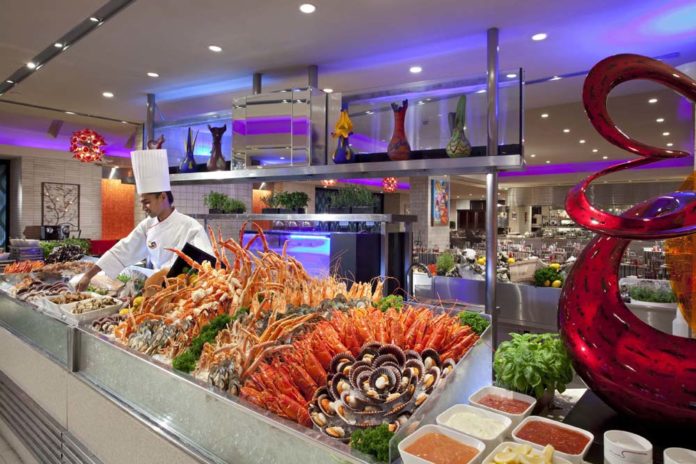
seafood_counter_carousel_royal_plaza_on_scotts

To celebrate its 10th anniversary, Royal Plaza on Scotts’ Carousel is hosting a Pay-As-You-Wish buffet lunch on on February 18 from 12.00 to 13.30.

Two hundred seats are available for the Pay-As-You-Wish buffet lunch, worth S$76 (US$54) per person. Reservations are not required and guests are invited to join in for lunch on a first-come, first-served basis. Table sharing will take place during the event as diners come together to celebrate the occasion.

Guests are encouraged to donate any amount they wish for their meal and all profits will go to The Straits Times School Pocket Money Fund, which supports more than 13,000 children and youths a year in providing them with monthly school pocket money.

This is the first time an international buffet restaurant in Singapore is giving guests the opportunity to pay any amount they deem fit for their meal, said the hotel in a press statement. The celebration will be topped off with a 10kg cake specially designed and crafted by the chefs of Carousel.

Chief experience officer and general manager of Royal Plaza on Scotts, Patrick Fiat, commented: “This is a significant achievement for Carousel as we enter our tenth year. We hope that our guests will come with an empty stomach and leave with a full heart by giving back to the less privileged in the community.”

Soaring air travel demand in 2016, says IATA

0

airplane-soar

In another strong annual showing, the world’s airlines saw demand in terms of revenue passenger kilometres (RPK) rise 6.3 per cent in 2016 compared to the previous year – and ahead of the ten-year average of 5.5 per cent – while average load factor reached a record high of 80.5 per cent, according to IATA.

International passenger traffic rose 6.7 per cent in 2016 from 2015. Capacity rose 6.9 per cent and load factor fell 0.2 percentage points to 79.6 per cent. All regions recorded year-over-year increases in demand.

The Middle East tops again the regional list with an 11.6 percent increase in RPKs, while Asia-Pacific comes in second with a demand increase of 8.3 per cent, ahead of Europe in third place with 10.7 per cent increase.

Meanwhile, domestic air travel rose 5.7 per cent globally led by India and China among the major markets, which saw RPK expand 23.3 per cent and 11.7 per cent respectively.

According to an IATA statement, these markets have been underpinned by additional routes and increasing flight frequencies, with the latter looking set to continue in 2017.

“Air travel was a good news story in 2016. Connectivity increased with the establishment of more than 700 new routes. And a US$44 fall in average return fares helped to make air travel even more accessible. As a result, a record 3.7 billion passengers flew safely to their destination. Demand for air travel is still expanding,” commented Alexandre de Juniac, IATA’s director general and CEO.

Amid expanding air travel demand, the IATA chief also called on governments to “to meet that demand with infrastructure that can accommodate the growth, regulation that facilitates growth and taxes that don’t choke growth” for the aviation industry to create more jobs and prosperity.

At the same time, he also warns governments to balance freedom to travel and security. “Our freedom to connect through air travel drives prosperity and enriches societies… Aviation is the business of freedom. And we must defend its social and economic benefits from barriers to travel and protectionist agendas,” said de Juniac.

Sydney turns red for Lunar New Year

0

sydney-roof
Westpac painting the town red; photo credit: City of Sydney

The iconic Sydney Opera House and Sydney Harbour Bridge were lit red to celebrate the year of the Rooster, in a city that hosts one of the largest Lunar New Year celebrations outside Asia with 80 events scheduled until February 12.

Said Sydney lord mayor Clover Moore: “From its humble beginnings in Chinatown, the festival now extends all the way to Sydney Harbour and last year attracted 1.3 million people, making it one of the largest annual events in Sydney.”

The festivities will also feature 12 contemporary Chinese zodiac animal lanterns, or Lunar Lanterns, which will illuminate iconic locations and light up a walking trail around the Sydney Harbour foreshore.

The Lunar Lanterns, up to 10m in height, are the works of Asian Australian artists including Tianli Zu (Rooster-Chinatown), design duo amigo and amigo (Rooster-Sydney Opera House, Snake-Circular Quay) and Guo Jian (Rat-Customs House).

Hilton rebrands, enhances loyalty programme

0

hilton-honors

As part of a streamlining strategy, Hilton has rebranded its loyalty programme to introduce several industry-first benefits, alongside a refreshing of its corporate identity.

The loyalty programme’s name and logo have been updated from HHonors (with two H’s) to Honors while the company will now go by Hilton rather than Hilton Worldwide.

Starting this summer, Hilton Honors programme members will be able to use their points to purchase products on Amazon.com.

As well, they will have the option of combining points and money to redeem stays effective late February. This means members will be able to use Points faster, at any time and with no blackout dates.

Members will also be able to pool points with up to 10 friends or family members for free beginning in April.

And to take into account the various life events that may put travel plans on pause, Hilton is giving eligible Diamond members a one-time, one-year extension of their status for any reason.

AccorHotels to acquire villa rental platform Travel Keys

0

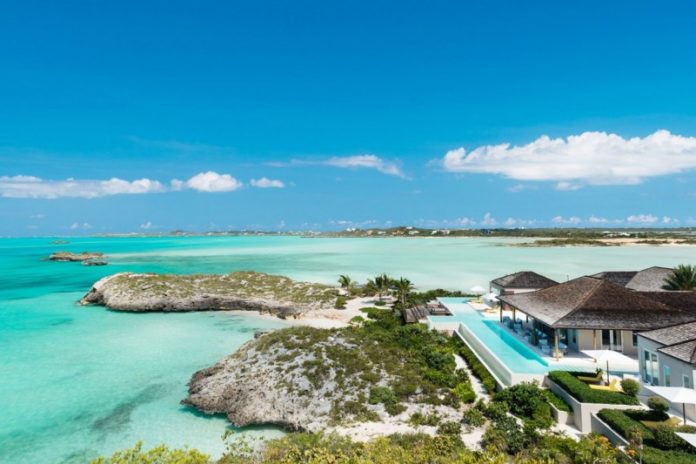
travelkeys-turksandcaicos

AccorHotels has announced that it has begun exclusive negotiations for the acquisition of 100 per cent of Travel Keys, a leading player in the private vacation rental market. The transaction is expected to close in 2Q2017 after customary due diligence.

Founded in 1991, Atlanta-based Travel Keys is an elite travel broker representing a luxury collection of over 5,000 highly curated villas across more than 100 destinations across the Caribbean, Mexico, the US, Europe, Asia and Africa, offering professional vacation planning and 24/7 concierge services.

Along with AccorHotels’ earlier acquisition of onefinestay and Squarebreak, the latest Travel Keys deal will give the French hospitality group around 8,500 addresses across resorts and cities in the luxury private rental market.

Sebastien Bazin, chairman & CEO of AccorHotels, commented: “Travel Keys brings an impressive portfolio of premium properties to our existing activities. This acquisition further demonstrates our agility and dynamic approach to offer comprehensive services to our clients.”

Bobby Gibson, CEO of Travel Keys, stated: “We feel a strong link with the AccorHotels’ teams, and share in the vision of both Sebastien Bazin and the private rental leaders at AccorHotels about the future of our industry. We are very enthusiastic about this partnership, writing a new and exciting chapter of Travel Keys’ story.”

Tokyo turns on charm offensive in India ahead of 2020 Olympics

0

shinjuku-tokyo
Shinjuku, Tokyo

As part of its strategy to double tourist arrivals from India in the run-up to the 2020 Olympics, the Tokyo Metropolitan Government last week organised its maiden tourism promotional event in India.

The New Delhi event saw the meeting of senior tourism officials from Japan with 85 Indian agents and members of the press to inform them about Tokyo’s tourism products.

“Our aim is to provide an overview of what Tokyo can offer to the Indian tourists. Japan is targeting to welcome 25 million international tourists by the Tokyo 2020 Olympics and we hope to double arrivals from India,” said Chitose Maeda, director for city sales, tourism division, Bureau of Industrial and Labour Affairs.

Indian arrivals to Japan stood at 123,000 in 2016, a growth of 19.3 per cent over 2015.

To grow the Indian market, the Tokyo Metropolitan Government plans to launch initiatives such as participating in travel tradeshows in India, conducting fam trips for Indian agents and developing a dedicated website for Indian consumers.

Ken Katayama, deputy director general, Bureau of Industrial and Labour Affairs, elaborated: “We are looking into an advertising campaign on Indian TV channels, apart from focusing on the Internet to reach out to the market. We will also be participating in SATTE 2018 in New Delhi.

“Tourist arrivals from India are mainly from the business segment so our aim is to increase leisure arrivals. We will be promoting Tokyo’s heritage, gardens, cuisine and entertainment options to Indian tourists,” he added.

Godfrey Pereira, head – holiday products at Via.com, said: “The growth from the Indian market to Japan has been steady in the last five years, but there is a lack of awareness about the destination. The tourist office needs to take a two-pronged approach to promote Japan, which includes engaging consumers through channels like advertisements and educating the trade through activities like training seminars.”

Marco Polo Hotels names new DOSM

0

Antony Box has been appointed director of sales and marketing for Marco Polo Hotels, Hong Kong.

He will be responsible for the overall strategic direction and oversee sales and marketing across corporate, MICE, communications, events, leisure and loyalty marketing departments for the Marco Polo Hongkong, Gateway and Prince hotels.

Antony_Box

Prior to his new appointment, Box was director of sales and marketing, and regional director of business development at The Westin Resort Macau.

Box has over 20 years of hospitality industry experience across China and Asia, including senior management positions in hotels such as The Westin Bund Center Shanghai, Hyatt on the Bund and Sheraton Huzhou Hot Spring Resort.

Heyday for smaller players

0

As global chains figure out synergies from their M&As, smaller groups are making hay.
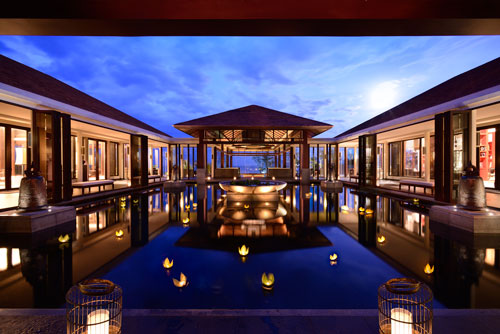
Banyan-tree-Danang-lobby
Banyan Tree Lang Co

On the question of who wins in the continuing trend of hotel industry consolidation, one group that appears to be thriving are smaller hotel companies, at least in Asia where the hotel market remains buoyant and the majority of hotels is unbranded.

During a session on mega hotel mergers presented by Baker & McKenzie at Hotel Investment Conference Asia-Pacific (HICAP) in October last year, 60 per cent of the audience polled believed fewer global hotel chains won’t be financially better for owners and operators. In another instant poll there, 73.6 per cent believed smaller players would benefit from mega mergers.

These players include small and medium-sized hotel management companies; hotel groups that focus on a real niche such as boutique or luxury, which can’t easily be copied; and owner representation firms that have the best accounting experts to decipher the various fees chains are charging them and take chains to task if these fees don’t commensurate with the returns.

For these companies, the field is wide open as owners ponder if they would be better off with huge chains where benefits of consolidation have yet to be proven or flow through, or with smaller groups which may not have the scale but are more likely to be able to give more focus to their hotels and stay truer to the brand DNA.

Marriott International’s regional vice president of hotel development Asia-Pacific, James Doolan, who’s on the Baker & McKenzie panel, agreed that “inevitably there would be people who just don’t like it, (being) part of a conglomerate that’s much bigger than it was before”.

“For the smaller groups, that’s the opportunity – ‘attacking’ or identifying the smaller, under-performing assets that feel a bit left out in this new world. There are opportunities for them to pick some of these up. I think there will be a little bit of that at the end of this (merger),” he said.

Bangkok-based Minor Hotels, which owns, operates and invests in 155 hotels currently – small in relation to Marriott international’s 5,700 properties, Hilton International’s 4,700 or AccorHotels’ 3,942 (as of June 30, 2016) – has already benefited from industry consolidation on at least one score. Speaking at a HICAP panel session, CEO Dillip Rajakarier said: “Actually we are happy… some of the best people are joining us from Starwood and Marriott.”

Rajakarier also said it had been difficult for Asian owners, particularly the less experienced ones, to decide what to do in the changing market. He said: “Sophisticated owners will manage their business well, but those owners who are not used to having hotel assets will have problems: who are they going to speak to, who is going to manage their asset, who is going to be their competitive set?

Swiss Belhotel is a perfect example of how smaller groups are positioning themselves ever more confidently in an environment of confusion and uncertainty that M&As bring about.

At HICAP, the Hong Kong-based company announced that it intends to pick up more management contracts, bringing its portfolio to over 200 hotels and 40,000 rooms by 2020, from 135 hotels now, as it “continues to provide a strong and attractive alternative to the big brand players such as Accor, Marriott and InterContinental Hotel Group”, said a spokesperson.
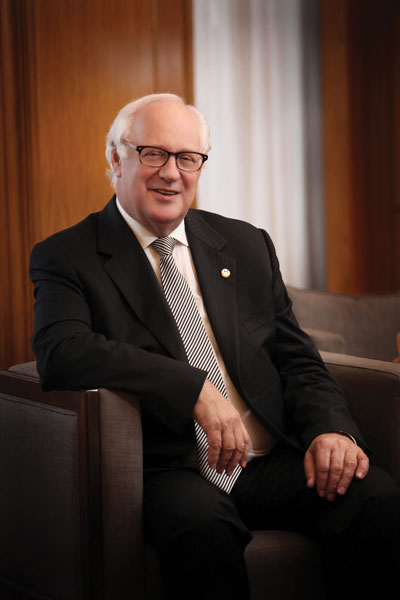
Gavin3Chairman and president Gavin Faull, who founded the independent hotel management group in 2000, told TTG Asia: “The more M&As there are, the better the business will be for us, because there are fewer people for developers to talk to (as a result of the consolidation).

“Many owners feel they are being dictated to… On top of it, we live in a world of big generational change… you have to be a lot more flexible and chain control is not flexible.

“We are flexible. We talk to owners and staff, so it’s personalised management. I was in Kuala Lumpur yesterday and the guy could not believe I was president of the company!”

All of Swiss Belhotel’s 135 hotels are management contracts, 80 of which are in operation, the rest in pipeline. Faull counts timing and earning the trust of owners as among the key pillars of his success. Swiss Bellhotel, for instance, has been in Indonesia since it was a sleeping giant, with a strong, silent partner, Ciputra, he said.

While the big chains dangle the benefits of having millions of loyal customers, Gaull said loyalty programmes are not the key anymore as people stay in different hotels for different reasons. “People now holiday once a month. There is a cultural and generational change.

“And I might have lost out initially to the big chains on distribution, but with the Internet today, the world is open. Technology is a lot cheaper now,” he said.

His worry is keeping the company personalised as it expands. “We can get to 250 or 300 hotels but I feel it is dangerous. I don’t want us to be a global machine. Right now I’m there, and I’ve a real passion for the job. At 140 hotels, it is already getting harder – the physical commuting especially; emailing only kills communications. The hotel industry does not have much of a relationship with its clients anymore, yet that’s what the clients need.”

So for smaller groups, the outlook looks rosy – until the behemoth hotel chains are able to show owners how their M&As have not only made them stronger but bring greater benefits to owners as well.


This article was first published in TTG Asia February 2017 issue. To read more, please view our digital edition or click here to subscribe.

Making a good change agent

0

You were a travel agent for 22 years. How has this given you an edge in your post?
(Detractors said that) I’m merely a travel agent who knew nothing. But having come from the industry, I understand and relate to the problems of the trade. I’m also seen as one of them so it’s now easier for the trade to deal with the Department of Tourism (DoT). I’m working with the trade now on accreditation and addressing issues such as the lack of tour guides, hotels and rates, etc.

(Some say) I have no marketing background. But there are those with marketing background who are not hands-on. I’m hands-on and am already getting a good response from tour operators and travel agencies abroad.

Many are expecting too much too soon. I’m just five months here (as of early December). Give me one, two years and I will prove them wrong.

There were criticisms about your bringing of new people to DoT.

I came from the private sector and have to work with people whom I can trust. I have not fired anyone except one who was not performing.

How do you deal with the critics?
Although I get hurt by the critics, I derive strength from my four brothers in the media. They’ve told me not to get distracted by criticisms as long as I do my job, not to be onion-skinned and just work really hard to prove myself.

One advice Mon (Ramon Tulfo, the crusader newspaper columnist) has given me is to ignore critics so I won’t get discouraged and fall down. The most painful thing to a critic is being ignored.

How did you start in the travel industry?
I worked as a model (for couturier Renee Salud) and flight attendant (with Air Niugini). After I got married, my husband and I lived in Davao where I taught business administration at Ateneo de Davao University. But my love for travelling led me to set up Mount Apo Travel & Tours.

I did well selling outbound and my forte was Europe. I was also the top producer for airlines and Royal Caribbean International cruises, and received awards for my performance.

When I realised that many didn’t know the Philippines, I felt that I had to do something about it, so I started handling inbound, starting with Davao and later Boracay and Palawan as well.

Selling inbound was not easy but I joined sales missions and travel fairs abroad to move things forward.

It must be tough selling Davao then.
Davao was not safe then. People would always cancel, and we didn’t have foreign groups in Davao. It’s now easier to sell Davao.

Tell us more about your experience as president of the National Association of Independent Travel Agencies (NAITAS) and other organisations.

There are three big organisations in the Philippines – Philippine Travel Agencies Association, Philippine Tour Operators Association and NAITAS, which was lagging behind before I brought it up to par with the other two. I started by increasing its membership, and mounting travel and trade shows.

I was also secretary of the first Tourism Congress of the Philippines. I was very active in Davao. I was elected president of the Davao Travel Agencies Association and got re-elected for a second term. I also served as president for the Davao Association of Tour Operators.

What can we expect from the DoT after two years?
I’m already working on increasing arrivals. There will be more tourist attractions, activities, flights and hotels. Beautiful destinations will be developed and poor communities will benefit from tourism.  Being a Cabinet member is an advantage as I can personally approach those in the government to speed up the requisites to boost tourism.

This will be a very good year. We’re able to bring to the Philippines the Miss Universe pageant, Madrid Fusion Manila, UNWTO International Conference on Tourism Statistics and we also won the bid for a conference of 1,000  university professors from England. China has also lifted its travel ban against the Philippines.

What’s your vision for Philippine tourism?
The Philippines will become known as one of the best destinations in Asia, with the development of many more local beautiful destinations.

Thailand receives millions of Chinese visitors while we get just 500,000. The Philippines should be at par with them. We’re selling (similar) attractions but we have another selling point: Filipino hospitality. We go out of our way to help. The economic benefits of tourism can help the many marginalised communities.

What’s being done to realise this vision?
The It’s More Fun in the Philippines campaign slogan will be levelled up from the  Miss Universe pageant in January this year. It will not be changed but improved by focusing on unique Philippine service and hospitality.

We’re selling the Philippines in Asia, Europe, the US and the rest of the world.We engage with travel agents, the media and bloggers to bring them to the Philippines.

Since China lifted the travel advisory against the Philippines, big investors have been coming in. I want to increase arrivals from China to two million in 2017 but (China) expects to to reach three million.

What about tourism infrastructure?
The tourism secretary is also a Cabinet member. The advantage is that I can personally follow up with other Cabinet members on matters concerning tourism such as airports and road infrastructure.

And safety and security concerns in the Philippines?
The Philippines is safe. Crime rate has gone down. I tell travel agents to visit the Philippines and see for themselves. They realise it’s safe and (gain confidence to sell) the Philippines.

After the bombings in Davao (in early September), I questioned the placing of the country on red alert (with security measures stepped up) as it would discourage tourists from visiting. But Philippine president Duterte asked me: “Wanda, what’s more important to you: red alert or tourists not coming here?” So there, we now have more peace and order.

What’s the legacy you want to leave after finishing your six-year term?
That the Philippines will become a top destination, that I’ve been a good tourism secretary and that I’ve done good for the country.


This article was first published in TTG Asia February 2017 issue. To read more, please view our digital edition or click here to subscribe.