TTG Asia
Asia/Singapore Wednesday, 31st December 2025
Page 1566

France speeds up visa delivery for 6 SE Asia nations

0

In a bid to boost tourism, French prime minister Edouard Philippe on Wednesday said the country will cut visa delivery time to 48 hours for citizens of Thailand, the Philippines, Cambodia, Laos, Myanmar, Indonesia, India and Russia, according to a Reuters report.

Visa applications from these countries currently take around 10 days or so on average, taking even longer in peak season.


Paris

This measure, which is expected to take effect from November 1, is likely to be expanded to include Vietnam next year if a change in EU visa procedures for the country allow it.

The French government also said it would assign more staff to airport passport checks to limit waiting time to 30 minutes for EU citizens and 45 minutes for non-EU citizens, the Reuters report added.

Accor houses vacation rental purchases under onefinestay

0

Having closed a deal to acquire all remaining shares in Squarebreak, one of three of its vacation rental purchases along with onefinestay and Travel Keys, AccorHotels will integrate the trio under the onefinestay brand by year-end.

This will give onefinestay a combined inventory of 10,000 curated homes, villas and apartments spanning six continents. Locations range from metropolitan centres such as New York, Rome and San Francisco, to islands in St Barts and Bali, and Mediterranean escapes in France, Italy and Greece.

Prior to the deal, AccorHotels had owned 49 per cent of Squarebreak since February 2016, acquired Travel Keys earlier this year and onefinestay in 2016.

Javier Cedillo-Espin, who has been appointed CEO of onefinestay, will head the grouping of three brands with a team of executives from onefinestay, Travel Keys and Squarebreak.

HomeAway gains Japanese vacation rental listings in new deal

0

A partnership will see Rakuten Lifull Stay, a newly-launched vacation rental business in Japan, provide property listings from its Vacation Stay service to the Expedia group’s homesharing brand, HomeAway.

By collaborating on listings, customer-acquisition and sales, the two hope to provide a service that is attractive to both property owners and visitors.

“We have seen healthy demand for vacation rentals in Japan from our booking sites across Asia. We hope that this partnership will help us provide travellers to Japan with more accommodation options across a range of property types – from modern apartments to traditional Japanese homes,” said Prashant Kirtane, vice president, HomeAway Asia.

The partnership follows Japan’s passing of a bill that allows homeowners to rent out rooms to tourists for profit, expected to come into effect after January 2018.

Rakuten Lifull Stay also plans to connect to Lifull Home’s Akiya Bank, a platform developed by Lifull that gathers information on unoccupied homes from a database run by local governments. Scheduled for launch this year, the platform will give registered owners of unoccupied homes in regional areas the option of utilising their homes as vacation rental properties.

All booths taken for upcoming Travel Revolution fair

0

This year’s second edition of the biannual Travel Revolution B2C travel fair will take place at Singapore’s Marina Bay Sands from August 4 to 6.

Kay Swee Pin, president of Singapore Outbound Travel Agents Association, said all booths have been fully subscribed with over 100 exhibitors, featuring new names including Ready To Travel, a wholly-owned subsidiary of Singapore-listed SATS, and YLS – Road Trip Specialist.

As part of the i-Weekly Travel Discovery workshops, local artistes Thomas Ong and Chen Han Wei, underwater photographer Yorko Summer and travel specialists will offer trip planning advice. The workshop will cover destinations such as Finland, Turkey, Norway-Finalnd, Iran, Croatia-Slovenia, Bhutan and Iceland-Norway.

Activity highlights at the fair include free virtual reality tours by Samsung, wine tasting, balloons, popcorns, candy floss and photo opportunities. There will also be a Taiwanese aboriginal song and dance by Amis tribal troupe.

As well, Wanderlust Market curated by Fleawhere and Invade.co will bring together over 50 local and overseas artisans showcasing handcrafted goods from fashion accessories, natural beauty products to art.

Lucky winners will have a chance to win prizes including air tickets to Europe and hotel stays at Marina Bay Sands.

Admission to the three-day fair is free.

For more information, visit www.TravelRevolution.sg.

Courtyard by Marriott to open in Yangon

0

A Courtyard by Marriott hotel is scheduled for opening in Yangon come 2019 as part of a mixed-use development.

Courtyard by Marriott Yangon will feature 200 guestrooms and suites, an executive lounge and four meeting rooms totalling 400m2, a rooftop pool, a fitness centre and treatment rooms.

F&B concepts include an all-day dining restaurant serving up local and international cuisines, a to-go stand for express meals and a bar.

The new-build property will be located 45 minutes away from Yangon International Airport, a short walk from Sule Pagoda, City Hall and Bogyoke Aung San Market.

New hotels: citizenM Taipei North Gate, Santa Grand Hotel Boat Quay and more

0

The latest hotel openings and announcements made this week.

citizenM Taipei North Gate
Asia’s first citizenM has arrived with the opening of citizenM Taipei North Gate, which offers 267 keys with just one room category. In the Living Room fronting the hotel entrance, high-tech kiosks enable guests to self check-in using their personal RFID (Radio Frequency Identification Data) card. Another hallmark feature is canteenM, a dining and cocktail space on the first floor available round the clock. Located directly opposite the city’s historical North Gate, the property boasts Tamsui River views and lies within walking distance to both Taipei Main Station and the Airport Express terminal.

Santa Grand Hotel Boat Quay
Standing in the Singapore River precinct and within walking distance from Clarke Quay MRT station is the Santa Grand Hotel Boat Quay. The property offers 41 keys across three configurations, where each room is equipped with complimentary high-speed Wi-Fi, a flat-screen IPTV and a rainshower in the bathroom. There is also a rooftop terrace on level six.

ibis Styles Bangkok Khaosan Viengtai
AccorHotels has opened the ibis Styles Bangkok Khaosan Viengtai – previously the Viengtai Hotel – on Rambuttri Road in the city’s old quarter. The three-star property offers 215 guestrooms, all of which come with ibis’ Sweet Bed concept, free Wi-Fi, 43-inch LED TV, and tea- and coffee-making facilities; some rooms also feature bunk beds for families. Amenities on-site include a pool, kids’ club, bar, café, bakery, as well as two meeting rooms that can cater up to 200 guests.

Element Foshan Nanhai
The second Element hotel in Greater China has opened in Shishan Town, Guangdong. The hotel features 329 guestrooms, each equipped with Heavenly Beds, a work space, complimentary high-speed Internet, kitchenettes, plus a bathroom with a rainshower. Recreational facilities include a 24-hour fitness centre, an indoor heated saline swimming pool, and a complimentary bike rental programme. Other facilities include a gourmet pantry, restaurant and a 56m2 meeting space.

Citadines Bayfront Nha Trang
Ascott has opened the Citadines Bayfront Nha Trang, located along Tran Phu Street in the Vietnamese coastal city. The serviced residence offers 310 studios and one-bedroom apartments, all of which come with a well-equipped kitchenette, as well as separate living and dining areas. Facilities include swimming pools, gym, residents’ lounge, children’s playroom, an all-day dining restaurant, and a ballroom and meeting rooms for functions.

A breath of fresh air

0

Julian Ryall takes a look at how the country’s largest port city makes a name for itself among international visitors by forging partnerships, launching campaigns and opening new attractions

Haedong Yonggungsa Temple in Busan

Like the rest of the country, Busan has benefited from the wave of South Korean movies and shows, with the latest blockbuster Train to Busan in part boosting the destination’s arrivals to 2.9 million in 2016, a strong rebound from 2.1 million in 2015, the year of the MERS outbreak.

However, the recent row between Seoul and Beijing over the deployment of THAAD anti-missile systems in South Korea threatens to derail arrival figures (see next page) this year as China has banned domestic travel agents from selling package tours to South Korea.

Looking to make up for the arrival shortfall, Busan Tourism Organization (BTO) is now seeking out new source markets beyond China and Japan.

Said Yoon Young-gi, assistant manager of BTO’s tourism marketing division: “Busan is quite well-known as a destination for FITs and we have high expectations that the inbound market from South-east Asia will grow.”

As well, 15 per cent of arrivals hail from outside Asia, another area that BTO intends to further tap into.

It has teamed up with Asiana Airlines since May to promote Busan to visitors from seven Asian cities – Manila, Singapore, Hanoi, Ho Chi Minh, Jakarta, New Delhi and Phnom Penh – offering free passes for sightseeing tours on bus.

“The campaign focuses on FITs from South-east Asian countries, and we are promoting it primarily online and through social media,” said Yoon.

Meanwhile, new infrastructure and hotel developments are expected to attract new travellers to the port city. The latest attraction is the Busan Air Cruise, a
glass-floored cable car that operates the 1.6km trip from Songdo Beach to Aman Park.

Arguably even more important are plans for a multi-billion-dollar project for a new airport on Busan’s outskirts. A feasibility study has been approved for the US$5.2 billion project that includes a 3,200m runway, new terminal, and associated facilities and infrastructure adjoining the existing Gimhae International Airport.

Once completed, the new airport will be able to handle 38 million passengers a year, a significant upgrade from the current 17.3 million. Work on the new airport is scheduled to start in 2021, with the facility operational in 2026.

Hilton Hotels and Resorts, similarly confident in Busan’s tourism potential, has opened its newest property in the city earlier this month.

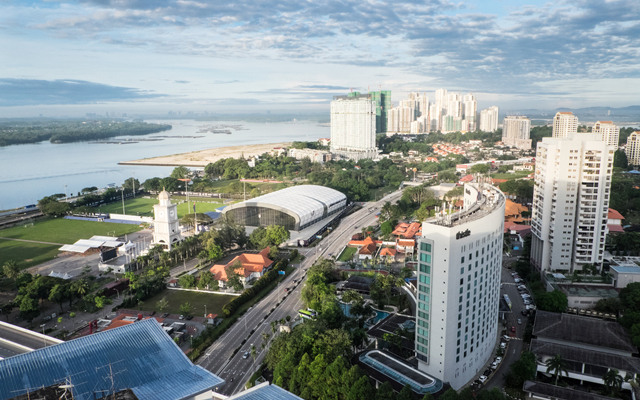
The 310-room Hilton Busan offers three pools, fitness and spa facilities spanning more than 3,500m2, a conference centre with two large ballrooms, plus proximity to a Lotte mall, a cinema complex and 180 retail outlets.

“This is a key gateway city and the second-largest city in South Korea, which makes its an important destination for us,” said Jean Sebastien Kling, general manager of Hilton Busan and Hilton Namhae Golf & Spa Resort.

“South Koreans come here to enjoy the beach life and there are a lot of positive attributes to the city, although there is internationally still a lack of awareness about Busan and we hope to be able to help to change that,” he added.

“Busan is becoming the complete destination and I am confident that more international hotel brands will want to be here soon,” Kling remarked.

Citizen guiding: friend or foe?

0

New platforms connecting tourists to local hosts defend themselves in the face of sceptical tour guides. By Adelaine Ng


A guided tour by Localyokl

Airbnb and Australian startup Localyokl have moved into the guided tours space, offering “live like a local” experiences often led by unlicensed hosts, a development some industry leaders in Australia are uncomfortable with.

About 400 guides have registered to be hosts with Localyokl, which offers 140 experiences from paddle board yoga to astrophotography.

“It’s not so much a threat,” said Rosemary Cameron, administrator for the Professional Tour Guide Association of Australia. “These are all opportunities for guides. It just means that guides have to change the way we find work.”

Rather, her unease is based on the lack of training or insurance involved and how people are becoming guides without understanding the pitfalls of the job.

The two digital disrupters were recently criticised by Australian Tourism Export Council managing director Peter Shelley, who called them cowboys in the marketplace that damaged expectations of Australia’s brand.

Localyokl experience creator Ben Crisp rejected the criticism, telling TTG Asia: “I don’t think we’re eroding anything they provide. They’re always going to provide a good service. All we’re going to do is (offer) an alternative for those who don’t want to get trapped in the one-size-fits-all tourism mould. (We’re about) flexible, small group tours.”

Crisp added that his company is looking into liability insurance for every guide but admitted they currently rely on a liability waiver with the onus still on the guide to have the relevant insurance.

Meanwhile, Airbnb insists many of the existing licensing laws are designed for mass tourism. For experiences that pose safety risks, like a motorcycle or helicopter ride, the vetting processes are strenuous.

Institute of Australian Tour Guides spokesperson Suanne Adelman advised that while training, first aid and insurance are extra costs, guides are better off paying that upfront “than to have someone from a very litigious country overseas sue you if something goes wrong”.

However, both Cameron and Adelman hope that the introduction of sharing economy guides in Australia will increase their membership numbers.

Brenden van Blerk, hotel manager, Holiday Inn Potts Point, Sydney

0

What are the three greatest challenges to Australian tourism and how would you address them if you had your way?

Labour shortage The primary issue in my eyes as a hotel operator is the attraction and retention of talent. The industry needs 36,000 team members and leaders, and we are not attracting or producing talent fast enough to keep up with demand.

More emphasis is required from high schools on the types of careers available in the hospitality and tourism industries. Vocational institutions need to find ways to ensure fees are affordable and government assistance programmes are accessible to students.

Digital experiences As an industry, we are sometimes slow to adapt to the rise of digital marketing and shopping experience. The consumer today is demanding media-rich digital content and engaging experiences before they even buy the product or use the service. It is all about the experience.

We need to (attract) digital leaders from other industries into the hospitality and tourism sectors and act on their recommendations. We also need to adapt our brands to be more nimble in this landscape to entice and secure buyer preference through experience loyalty.

Transport infrastructure Tourism transportation is nearing (or possibly already) at maximum capacity and yet we don’t have the right structure to grow significantly or handle the scale of international segments we are targeting.

We need to find the operational expertise, with state government support, to sign major projects like Western Sydney Airport so that we can exponentially increase connectivity into New South Wales.

By doing so, it will create growth in Western Sydney and then flow into benefits such as easier domestic travel and international choices, thereby helping reduce the perceived high cost of travel in Australia.

Mid-market demand drives launch of BHMAsia’s new millennial brand

0

With its X2 brand targeting the luxury segment and Away offering resort-type properties, BHMAsia believes there is a market for mid-priced hotels such as X2 Vibe, its new millennial brand focusing on the four-star segment with strong design elements.

Speaking at the launch of X2 Vibe Bangkok Sukhumvit Hotel yesterday, BHMAsia’s CEO Anthony McDonald said the conception of its newest brand is driven by increased demand for design-led accommodation at the mid-market level.

The newly-opened X2 Vibe Bangkok Sukhumvit

“X2 Vibe doesn’t demand a huge amount of investment but a large amount of creativity,” McDonald remarked. X2 Vibe properties are typically 100-200 keys, and inherits “some original DNA” of its older sister X2 to feature attractive interiors and looks that resonate with millennials.

“However, it’s more about psychographics rather than demographics; we want to attract the independent and creative types,” commented McDonald on the target customers of X2 Vibe.

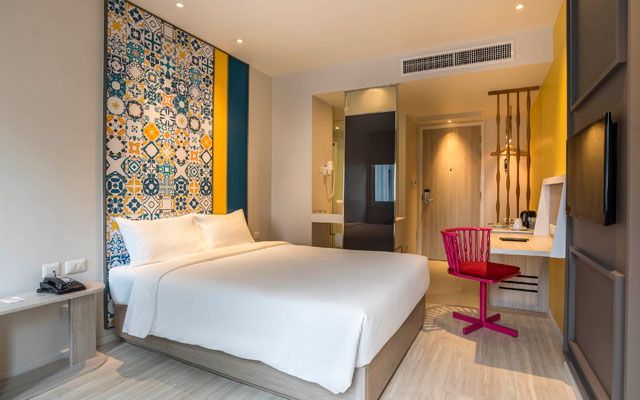
The brand’s flagship, X2 Vibe Bangkok Sukhumvit Hotel, soft-opened in March in On Nut, an up-and-coming and largely residential district in Bangkok. The property has 145 guestrooms and 121 serviced residences, offering facilities such as an all-day dining cafe, sea-salt pool, poolside bar, fitness centre, spa with a Japanese onsen, and a meeting room that can accommodate up to 48 pax.

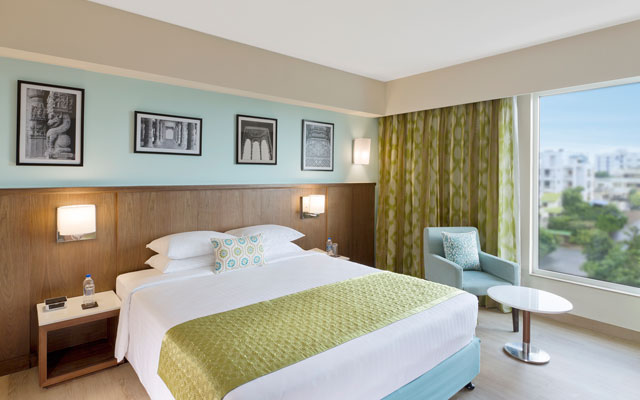
Superior room with bath

McDonald foresees X2 Vibe would become BHMAsia’s biggest brand due to its mid-market appeal. In addition to Bangkok, there are two other X2 Vibe properties in Chiang Mai and Buriram, plus four more X2 Vibe hotels opening in Thailand and Vietnam over the coming months.

Adopting an “opportunistic” expansion strategy, McDonald states that BHMAsia is quickly scaling up in Vietnam and Indonesia outside of its Thailand base. Vietnam, in particular, will boast a sizeable portfolio with about 12-14 properties by next year, while in Indonesia the focus will be kept on Bali, Lombok and Jakarta.

And with Flight Centre Travel Group’s (FLT) acquisition of BHMAsia being such a fresh deal, McDonald thinks it’s still too early to specify the impacts the new owner will bring but does not rule out leveraging “synergies” across FLT and its subsidiaries.

“It will certainly add more fuel to our (expansion) engine,” McDonald told TTG Asia.