The hotel will be Best Western's third in Malaysia
The hotel will be Best Western’s third in Malaysia
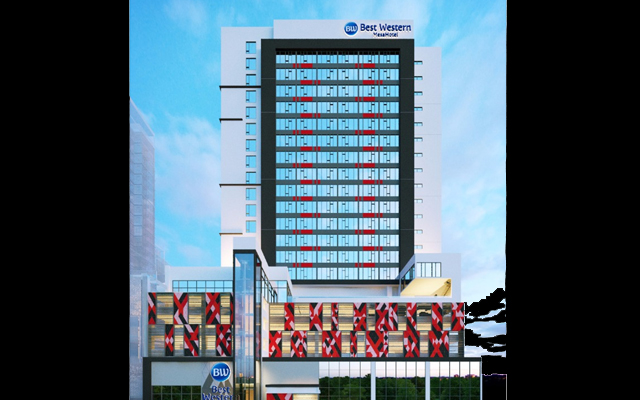
Best Western Hotels & Resorts is planning a new 200-room hotel in Nilai, a university town in Malaysia’s Negeri Sembilan state.
The 10-storey Best Western Mesa Hotel will form part of developer Green Target Group’s MesaHill development. The mixed-use complex also includes residences and a retail centre, MesaMall, which opened late last year to become the largest shopping and lifestyle mall in Nilai.
Best Western Mesa Hotel will be situated 18km from Kuala Lumpur International Airport (KLIA) and 50km from Kuala Lumpur.
It will become Best Western’s third midscale hotel in Malaysia, following Best Western Petaling Jaya and Best Western i-City Shah Alam, both of which are also located in the Klang Valley.
North Gate by Jetwing, Sri Lanka
Situated a mere 20m away from the Jaffna Railway Station is Jetwing’s second property in Jaffna. The hotel offers 44 rooms inspired by the city’s rich culture, and offers regular mod cons like a rain shower, TV with international and local channels, a tea/coffee making facility and mini bar. Facilities include a restaurant, bar, swimming pool, gym, and yoga classes for groups or individuals.
Photo credit: Hoshino Resorts
Hoshino Resorts OMO7 Asahikawa, Japan
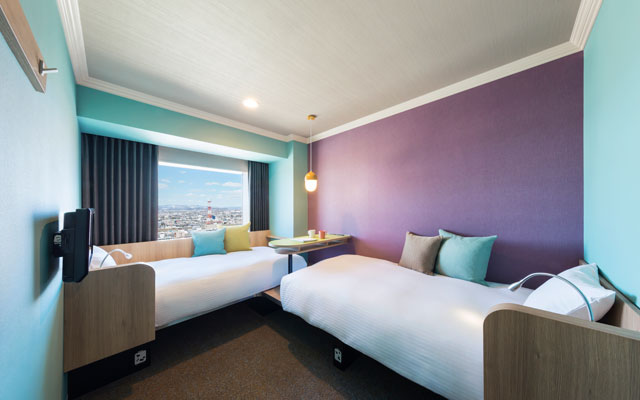
The first property under OMO – Hoshino Resorts’ fourth brand – has opened its doors in Hokkaido. The no-frills OMO7 Asahikawa offers 237 compact rooms, a gathering space in the form of the OMO Cafe & Bar and where breakfast can be had, a lobby lounge filled with local Asahikawa design, as well as a loft-like library.
Mercure Yangon Kaba Aye, Myanmar
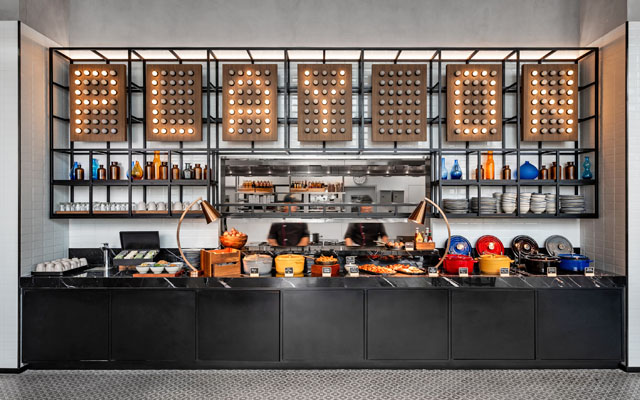
Mecure’s debut in Yangon offers 183 rooms and suites, with guestroom sizes ranging in size from 32m2 to 125m2. Suites come with an added kitchenette, as well as a separate lounge and dining room. Amenities on-site include the all-day dining MiCasa Restaurant & Bar, 21m-long lap pool, fitness facility, on-site babysitting services and several function spaces which can accommodate up to 210 pax.
Grand Hyatt Xi’an, China
The ancient Chinese city of Xi’an has welcomed a Grand Hyatt property, with a total of 396 guestrooms featuring designs inspired by a desert mirage. Facilities include four restaurants and bars on the 106m-high Sky Bridge that connects the hotel and office building – the property is part of the Maike Center – as well as a spa on level 6. For events and functions, the hotel has 2,134m2 of space on levels 3 and 3M.
Courtyard by Marriott Iloilo, Philippines
A 324-room Courtyard by Marriott has opened along Megaworld Boulevard in Iloilo City. The Courtyard Iloilo also offers the Refreshing Business lobby environment, where guests can enjoy media mods, complimentary Wi-Fi, and a variety of seating zones ideal for pop-up meetings to social gatherings. Aside from the Runway Kitchen, the 15-storey hotel also features an outdoor swimming pool, fitness center and guest laundry, and offers more than 279m2 of meeting space to accommodate functions of up to 180 people.
Kandima Maldives has appointed Brett Castleman as the resort’s general manager.
Castleman hails from South African and brings with him more than 20 years of international hotel management experience. He has worked in four- and five-star properties across Africa, the Indian Ocean and the Caribbean.
Observers wonder what will remain of the Movenpick DNA when the acquisition is complete
Once they were arch-rivals. Privately, Swissotel called the other one “that ice-cream hotel chain”, while Movenpick Hotels & Resorts, older and bigger, found Swissotel beneath itself to even call it anything.
When AccorHotels’ CHF560 million (US$562 million) acquisition of Movenpick is completed in the second half of the year, the rivals will become sisters and the sale will mark the end of Swiss-born international hotel companies, of which there were only the two (not counting representation firms such as Swiss Quality Hotels International). Many sentimental Swiss hoteliers will rue the day. They won’t be the only ones. Several Asian owners in fact care about it right now.
These owners picked Movenpick precisely because it wasn’t as big as the Accor’s or Marriott’s of the world. They had “close relationships” with the Movenpick team who could be easily reached to resolve issues immediately. A few have two or three Accor hotels located near their own hotel – to think that they had picked Movenpick specifically to compete against those Accor properties. Others thought of Movenpick becoming just a brand in the “fruit salad” of Accor and wondered why on earth Accor needed two Swiss fruits, or more fruits for that matter, given its upscale and upper upscale layers already bear brands such as Sofitel, Pullman and Grand Mercure.
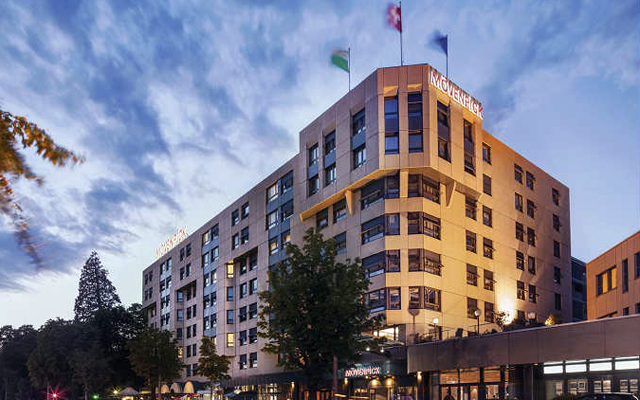
Observers wonder what will remain of the Movenpick DNA when the acquisition is complete (photo credit: Movenpick Hotels & Resorts)
Bill Heinecke, chairman and CEO of Thailand-based The Minor Group, which owns and operates hotels under its brands and third-party brands, thinks their concerns are understandable. “I cannot imagine that the owners would be in support of this acquisition and integration. Of course there may be benefits to owners such as economies of scale, but there are also many downsides. Owners become very small fish in a very big pond. There can be little or no personalisation and it is hard to see how Accor would cater to the individual needs of owners and support them in their efforts to compete with new sister brands in the same market,” he said.
As it is, Accor’s brands distinction is “a big mess”, said a source. “Many Sofitel hotels are definitely not luxury and some Novotels are better than some Sofitels. Single brand management is definitely more focused and targeted – think Four Seasons (Hotels & Resorts) or Mandarin Oriental (Hotel Group). We have seen the unfortunate demise of Le Meridien brand once it was bought by Starwood (Hotels & Resorts); it became a dying brand, from an excellent single brand company with a French touch.
“The question is whether Accor will actively develop the Movenpick brand as it will have a lot of brands to be selected for upcoming hotel projects,” said the source.
Said another source: “Honestly, I don’t see why Accor would have any interest in the Movenpick brand. They already have plenty of brands and I don’t think Movenpick has any particular USP that Accor doesn’t have from (its) other brands. I think it’s mainly buying presence in certain markets where Accor could use the lift and Movenpick is there, i.e. Middle East (and) may be certain spots in Europe.”
A company insider told TTG Asia while it’s true that smaller companies like Movenpick would benefit from a larger chain’s distribution, clustering, procurement, HR strategies, customer retention, loyalty programmes, cash for key money to secure a trophy hotel in a key destination and so on, the source believed the sale was triggered by Kingdom Holding, which holds 33.3 per cent in Movenpick, not Swiss-based Movenpick Holding.
Wall Street Journal had reported that the Saudi Arabia government demanded at least US$6 billion from Kingdom’s chairman, Prince Alwaleed bin Talal, in the recent so-called government crackdown on rich officials and businessmen. The Journal also reported while the prince remains chairman of Kingdom, investment decisions at Kingdom are now subject to government approval.
Kingdom owns a 5.7 per cent stake in Accor, which is flushed with cash, having sold its majority stake in AccorInvest.
“Nobody knows the facts but there was a deal. Therefore, it made sense for him to transfer his 33.3 per cent stake in Movenpick as he wants out already earlier as it is a minority stake,” speculated the source.
The source added there were two due diligences done in the past on Movenpick, the last two years ago around the time FRHI (comprising Fairmont, Swissotel and Raffles) was sold to Accor, but the sale of Movenpick did not materialise then.
“There was always talk of merging Swissotel and Movenpick in the past but it never materialised. The two companies would have complemented each other quite well looking at the geographical spread of hotels. For example, Swissotel is ‘a nobody’ in the Middle East, whereas Movenpick operates over 30 hotels with 20 additional properties in the pipeline. As a result, it would work well as they complement each other moving forward.”
WILL TWO BECOME ONE?
Whether or not Accor will eventually merge Movenpick and Swissotel into one remains to be seen.
Jesper Palmqvist, area director Asia Pacific of STR, said it’s hard to tell. “As seen in M&A activity in the past few years, we’ve seen both complementary acquisitions, but the big groups have also not been adversed to bringing brands into the fold that technically would compete in terms of chain scale or overall brand and customer perspective.
“These two historic European brands could certainly both compete and complement each other, when you look at locations and pipeline for both brands. The scale of this being two competing brands in the same family is also smaller than that of Marriott after the Starwood acquisition.”
Added Robert Hecker, managing director, Pacific Asia Horwath HTL: ‘Accor is currently saying they are keeping the brand, so those owners who picked Movenpick will still have the brand, although Accor may later try to convince them to switch to other Accor brands.”
What’s certain is it is the end of Swiss international hotel chains. There is SwissBel, founded by the late Peter Gautschi who worked for The Peninsula Group for 30 years, and is run successfully by a New Zealander, Gavin Faull. However it operates out of Hong Kong, is not considered a Swiss company, does not operate hotels in Switzerland, focuses mainly on Asia-Pacific and the Middle East – and may also end up in a fruit salad one day.
“The sad part is that the soul of Movenpick will totally disappear and be eaten up by the Accor machine,” said the insider. “Sad to see the end of an amazing company, the disappearance of Movenpick’s soul, DNA and company culture. Mainly corporate and area people will have to worry about integrating into Accor and whether their job is still secured. The most exposed people are the corporate and area teams as they are often the first ones to be released in case of a takeover as the management is always looking for synergies and shareholder value by reducing overhead costs. Marriott’s target was US$350 million a year.”
Palmqvist sees a silver lining: “Brands get created all the time, so perhaps this is an opening for a new Swiss entrepreneur.”
Likewise, waiting in the wings to swoop in on any disenchanted Asian owner are other smaller hotel groups, Minor, which is also growing in the Middle East, makes no bones about it.
Heinecke said: “Similar to the acquisitions that we have seen over the last few years, I feel that the Movenpick takeover offers an opportunity to Minor Hotels, and indeed all small and medium sized hotel groups, as we remain nimble and dynamic in the face of oversized giants. We still have the ability to react quickly to market changes and customer expectations. We are not weighed down with layers of bureaucracy and rigid guidelines, instead we have the ability to rapidly evolve the customer journey in real time. I truly believe that small and mid-sized hotel companies are more in tune with guests, staff and owners and can react quickly to their needs. We all know the story of David and Goliath – times have changed but the story remains relevant.”
As is the saying: never ever treat a rival badly. They could end up a sister one day.
Some question if basic fares, which exclude check-in baggage, are suited for longhaul travel needs
British Airways is aiming to head off the challenge of its low-cost rivals by launching new basic fares on a series of longhaul routes, including to Singapore and Hong Kong.
The UK’s flag carrier recently unveiled the new fares, which allow passengers to book tickets without checked baggage or seat selection. Fares are expected to be up to £60 (US$86) less than the standard return fare, depending on the route.
Some question if basic fares, which exclude check-in baggage, are suited to longhaul travel needs
The move marks BA’s latest attempt to compete with LCCs like Norwegian, which are increasingly encroaching on the airline’s territory. Norwegian launched direct flights from London Gatwick to Singapore in 2017, promising fares as low as £150. BA’s Basic Singapore fare will start from £230.
Passengers booking the basic fares will still receive a meal, hand baggage, blanket and headphones. The new fare option is available on routes between London Heathrow and Singapore, Hong Kong, Delhi and Dubai, plus a series of transatlantic destinations.
“Someone travelling for a short meeting or leisure break, who isn’t planning to check in a bag and is happy for us to allocate them a seat, will appreciate the option,” commented Adam Daniels, British Airways’ chief commercial officer.
In response to the move by British Airways, UK-based Flight Centre stated: “Flight Centre welcomes all innovations that improve customer experience, choice and value-for-money.
“Whilst we believe that the majority of travellers wouldn’t want to travel longhaul without hold baggage… there will be some people that are only looking for the most cost-effective fare.”
Jill Chamberlain, a UK-based Travel Counsellor who specialises in business travel, said she would “definitely” book unbundled fares, but likewise questioned whether they would be suitable for longhaul Asian routes.
“These fares are great for business travellers. I think clients like having the option to pay less,” she said. “(But) to be honest, I think it is unlikely travellers would go for hand luggage only on Far East routes. In my experience they usually stay longer than hand luggage would allow.”
Fellow Travel Counsellor and leisure travel specialist, Becky Stephenson, suggested the new fares might not be suitable for the leisure sector, especially in the higher end of the market. “I would consider them, but with them being Basic fares and needing luggage (add-ons)… I would probably look at the higher levels for my customers,” she told TTG Asia.
She added that the most important factors for booking Asian flights from the UK were “most convenient times, less changes (and) reputation of airline”.
Earlier this month, BA’s parent company IAG acquired a minority stake in Norwegian. IAG also confirmed that it is considering “the possibility of a full offer for Norwegian” in future.
With growing supply especially in Colombo, STR says rates may come under pressure going ahead
Hoteliers have managed to maintain pricing power despite slowing demand for hotel rooms in Sri Lanka, according to an analysis from STR, but growing supply especially in the upper-scale segments could begin putting pressure on rates.
Over the 12 months ending March 2018, Sri Lanka’s supply (room nights available) grew 6.2 per cent, while demand (room nights sold) increased 2.1 per cent.
While this saw occupancy fall 3.8 per cent to an annualised rate of 65.1 per cent, average daily rate (ADR) was up 7.2 per cent to 17,334 Sri Lankan rupees (US$109).
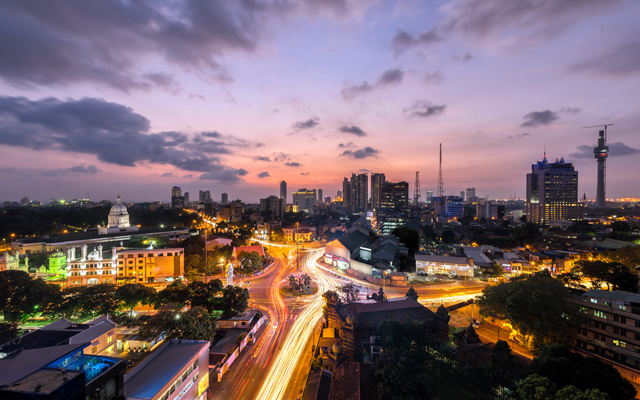
With growing supply especially in Colombo, STR says rates may come under pressure going ahead
“The last few years saw Sri Lanka become very popular with developers,” said Jesper Palmqvist, STR’s area director for the Asia-Pacific region. “Supply growth reached 6.8 per cent last year, and that came with demand basically flat year over year (+0.1 per cent). Hoteliers will need to develop impactful marketing campaigns to increase that demand and avoid a continued occupancy slide.”
Still, overall ADR has seen growth year over year for 30 consecutive months in Sri Lanka. The 1Q absolute level in the metric (19,868 rupees) was the highest for any first quarter in STR’s Sri Lanka database. Occupancy for 1Q grew one per cent after dropping 6.2 per cent for the whole of 2017.
“Hoteliers have been able to increase room costs to counter the declines in occupancy,” Palmqvist noted. “It will be key for those hoteliers to monitor the market performance in order to react prudently to more new supply.
“The Colombo skyline in particular continues to be busy with construction cranes. A lot of the new supply set to come online will be in in luxury and upper upscale segment, so we foresee interesting market dynamics ahead that will pressure occupancy and rate levels,” he cautioned.
STR’s hotel performance sample in Sri Lanka has grown to nearly 50 per cent of the 14,806 rooms in the country. Its census database shows 146 properties with another 26 across the under contract phases of the pipeline. STR’s March Pipeline Report showed 15 properties in construction comprising 3,450 rooms.
With Steven Pan letting go of a majority stake in Regent Hotels & Resorts to InterContinental Hotels Group (IHG), will the new joint venture finally make a bigger Regent a reality? Readers weigh in:
Robert Williams, partner, head of hotels & hospitality Asia-Pacific, Withersworldwide, Singapore
IHG has wanted the right luxury and resort-capable brand for some time, and Regent fits nicely into its brand stack. Looks like maximising the positioning of Gaw Capital’s billion dollar Hong Kong asset and refurbishment was a major driver here too. IHG has its mojo back, and we expect to see more strategic M&As from them.
Anonymous
Just read the article on Regent, very good summary and to the point. Regent had bad luck as none of the last three owners put serious money and in particular a strong team. Our Taiwanese friend was the worse in terms of setting up a strong team.
Personally I believe that a motivated and well-compensated team can get new deals. Must invest in people first. Same message goes for many other hotel groups, Asians in particular.
Andrew Wood, president, Skal Bangkok
I believe there’s a lot of unrealised potential with Regent. IHG in my opinion is a good fit. Win-win if IHG can position it as a super luxury brand, but they have to be careful not to ‘confuse’ the market. IHG is a very good product and has a loyal customer base. I’m sure IHG knows what it is doing and has plans afoot.
Bill Barnett, managing director, C9 Hotelworks
Regent remains a work in progress and believes the brand under IHG will go forward. Look at how Waldorf Astoria has been spurred by Hilton, etc, so I think (Regent)’s not failed but good potential. New World made a strong buy of Rosewood and it’s become a global brand so think fundamentally this is a very good deal.
Don’t paint Sihanoukville with a broad brush
Our recent story about Sihanoukville received quite a few comments on the state of tourism in the Cambodian beach destination:
Luzi Matzig, chairman, Asian Trails Group
Thank you for the April 5 article in TTG which, I believe, has a totally misleading headline, giving a wrong impression on trends by European visitors booking beach holidays in Cambodia.
While I fully agree that Europeans are now less interested staying on Sihanoukville’s mainland beaches due to pollution, heavy building activity etc., there is a very much a growing trend for overseas visitors to Cambodia to now visit Sihanoukville’s many islands and stay at new resorts like the Royal Sands Koh Rong, the upcoming Alila and Six Senses Resorts, etc.
All these islands belong to Sihanoukville Province so saying Sihanoukville falls “off radar” for Europeans is a misnomer and not up to TTG’s usually high standards of reporting. Thank you.
Disappointed tourist
Well done Cambodia, you sold out to the Chinese and screwed your own people… many lost homes, jobs and businesses. After visiting last week and talking to the locals it is saddening to hear and see the mess that has become ShmuckVille.
Ex Expat
It won’t be long before the authorities realise that the Chinese have already spent their money there building hotels and roads and since they only spend their tourist dollars with Chinese business (unlike Europeans) then they no longer are required to be there.
More to the Philippines than just Boracay
In response to our story on ‘When beautiful turns ugly‘, a reader opined that there remains pockets of beauty in the Philippines, and why more action is needed:
Mark-Anthony Villaflor
My wife and I own a boutique glamping site in El Nido, Palawan. We are looking to help change the narrative of our own tourism hotspot, with the recently US$10,000 grant received from the UNEP and the ESTEL Magazine (Eco-Sustainable Tourism EL Nido) print magazine we produce.
We’re into permaculture, self-sustainable waste and water management practices, education for our guests and climate resiliency. We believe there is a lot light to be shed from all the tourism disaster news we keep receiving.
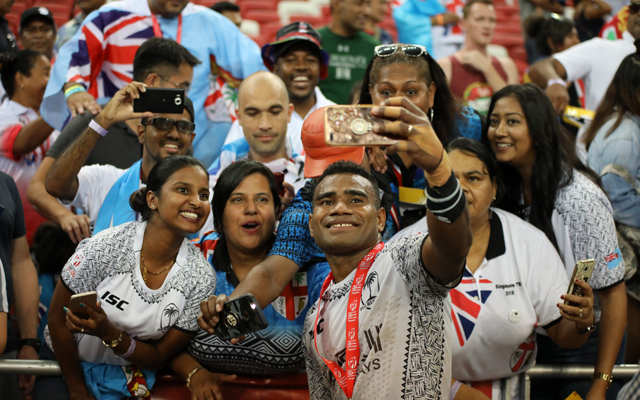
A triumphant Jerry Tuwai, captain of this year’s winning squad Fiji, poses with excited fans
WHAT
Since its debut in Singapore three years ago, the HSBC World Rugby Sevens Series has gained a following of veteran and new fans of the sport. This year, organiser Rugby Singapore sought to increase its popularity among the general public – including non-fans – by billing the event as the “Family Sevens” leg of the HSBC World Rugby Sevens Series.
It did so by expanding its family-friendly carnival offerings, including a 20,000m2 FunZone featuring Hasbro brands, The Transformers, Nerf and My Little Pony.
It also signed on more partners such as official apparel partner Headhunter Sport, dining and retail outlets, musicians and performers, tourist attractions and entertainment venues, as well as booth vendors for its fringe events.
The promotions worked. The two-day event from April 28-29 attracted a total of 55,000 spectators, a marked increase from last year’s 36,000.
WHY
A weekend at the games is contagious fun, and now with vibrant and lively tents of fringe activities and street food, as well as live performances for both kids and spectators adding to the atmosphere, it is easy to get caught up in the rugby rave.
As the headlining act, popular band Village People, took to the stage, leagues of fans cheered and danced on the bleachers. Others used the intermission to mingle with each other over drinks and grub. Some others – mostly children – took the chance to try their hand at the sport.
Outside the stadium, visitors drawn to the festivities also thronged the non-ticketed Singapore Rugby Carnival, where children could ride on Strider bikes and even race it out in a Spartan Mini Race.
Those seeking further fun and food outside of the event could also enjoy exclusive promotions from event partners, and these included dining options at Pan Pacific hotels in Singapore to special admission prices to AJ Hackett in Sentosa.
After the games, shuttle buses were at the ready to whisk attendees over to Clarke Quay, where the official Music After 7s after-party took place.
HOW
The fringe activities, booths and stalls set the tone for the sports weekend and festival atmosphere the organisers were gunning for. What it could greatly benefit from is even more support and partners, in order for the event to achieve a scale large enough to put Singapore Rugby Sevens on the country’s event calendar.
VERDICT
If this year’s carnival is a good indicator, the Singapore Rugby Sevens could grow into a festival weekend that entices overseas travellers – and not just fans – to fly into the country for.
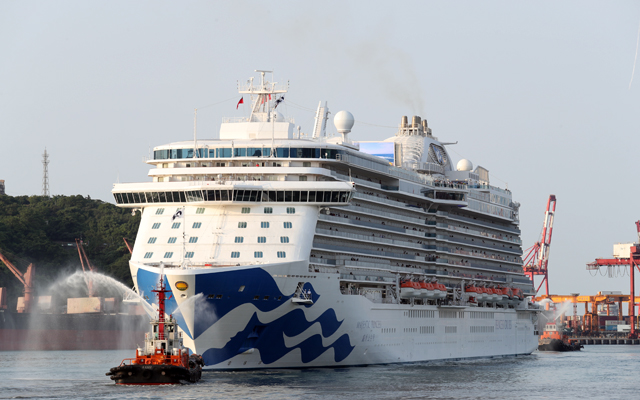
Majestic Princess visiting ports in Okinawa, Ishigaki, Nagasaki, Sakaiminato, Osaka, Miyazaki, Kagoshima and Busan in South Korea
Princess Cruises is this year deploying three ships to Taiwan for the first time, with Majestic Princess, Sun Princess and Diamond Princess offering over 50 sailings for 140,000 domestic guests and 14,000 international fly-cruise tourists.
Accounting for half of this season’s voyages is the Princess’ newest ship, Majestic Princess, currently homeported in Keelung for sailings to Japan until July.
Majestic Princess visiting ports in Okinawa, Ishigaki, Nagasaki, Sakaiminato, Osaka, Miyazaki, Kagoshima and Busan in South Korea
The 143,000-ton Majestic Princess, with a capacity of 3,560 guests, is expected to attract over 8,000 visitors to the Port of Keelung in a single day.
From May 5 to 8, guests aboard the Majestic Princess will be able to enjoy gourmet cuisine designed by two Michelin-star chefs for the specialty restaurants – chef Richard Chen who designed the menu for the Chinese specialty restaurant Harmony; and chef Emmanuel Renaut who created the menu for the French bistro La Mer.
Sun Princess’ itineraries run over a shorter duration of three to four days. The ship will complete her dry dock in July in Singapore and sail to Keelung for her summer homeporting season from July to September. Guests for the Taiwan sailings will be the first to enjoy the enhanced facilities onboard Sun Princess including celebrity chef Curtis Stone’s Share restaurant.
In addition, Diamond Princess will offer departures from Taiwan for cruises around Japan in a series of fall itineraries to Japan’s major cities – Tokyo (Yokohama), Osaka, Nagoya and Okinawa. Guests will also enjoy elements of Japan onboard with features including the largest Japanese bath at sea, origami classes and a Japanese restaurant.
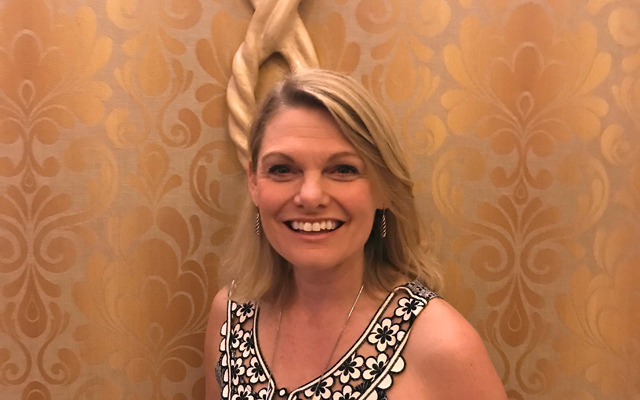
Michele Saunderson, who recently sold Virtuoso agency Peninsula Travel, will from mid-May take on the role of business development manager at Virtuoso, working with members across Victoria, South Australia, Tasmania and Queensland.
Having spent 15 years as an agency owner, Saunderson intends to leverage her experience help Virtuoso’s agencies drive more sales and get the most from their membership
Saunderson’s appointment follows a number of recent strategic staffing changes for Virtuoso regionally, including the promotion of Evan Pierce and Cristina Magni to regional director roles for Asia and Australia/New Zealand respectively, along with the appointment of Adrian Clarke as the new head of marketing.