Singapore Airlines (SIA) has added its LCC brand, Scoot, to the HighFlyer programme – the former’s frequent-flyer programme for SMEs.
From May 2, corporate members of SIA’s HighFlyer programme will be able to earn five HighFlyer points for every S$1 (US$0.75) spent on tickets if their SIA or SilkAir travel itineraries include a Scoot-operated flight segment and are booked through SIA’s corporate booking platform or an appointed travel agent, for eligible booking classes and destinations.
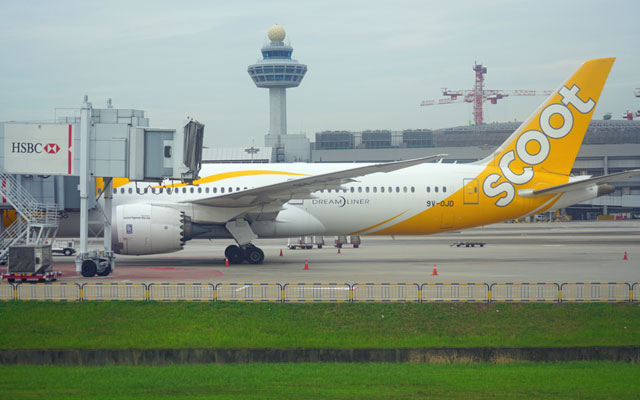
A Scoot plane at Changi Airport Singapore
These points may be used as full payment, or part payment for SIA and SilkAir tickets, upgrades and selected ancillaries.
Highflyer members will also have the option to redeem HighFlyer points for travel on Scoot-operated flights later this year.
Scoot’s inclusion in the HighFlyer programme marks the latest addition to its many existing products and services suitable to business travellers, such as the premium ScootBiz cabin on its 787 Dreamliner fleet, with in-seat power and Wi-Fi connectivity, said the carrier’s CEO, Lee Lik Hsin, in a press statement.
Earlier in April, SIA announced that it was adding Lufthansa and Swiss as partner airlines to the HighFlyer programme, where SMEs could obtain points on eligible sectors flown by the carriers.
Victoria Dockside, the ambitious 3 million-square-foot global art and design project along Hong Kong’s iconic Tsim Sha Tsui waterfront, is set to make waves with a ripple of exciting theatrical, art and cultural happenings. It is poised to be a new global art and design district, taking Hong Kong to a new cultural frontier.
Image: Adrian Cheng, Founder of K11 and Executive Vice-Chairman and General Manager of New World Development
Announcing the phase one launch of Victoria Dockside today, Adrian Cheng, Founder of K11 and Executive Vice-Chairman and General Manager of New World Development, was joined by over 1,000 local and international influencers and guests from art, creative media and lifestyle sectors at the Make Waves party at K11 Atelier, the first office building under the K11 brand. The venue K11 Atelier sits within Victoria Dockside, and is the first workplace to integrate art, people and nature in one state-of-the-art building. It also redefines the modern work space with its Vertical Creative City concept, creating an inspiring office environment for the next-generation workforce.
The theme “Make Waves” hints at the disruption brought by Victoria Dockside. At the launch event, guests were led on a fascinating journey through the “Make Waves” exhibition which charts the evolution of the district from 1845 to the present.
Reviving the iconic Tsim Sha Tsui Waterfront
Image: Victoria Dockside Tsim Sha Tsui
When the site was still known as Holt’s Wharf in the early 20th century, it already played a pivotal role in the city’s rise to the busiest port in the world, establishing Hong Kong’s reputation as the Gateway to the East. Following the opening of New World Centre in 1978, this area became a stronghold for international brands in the city and hosted some of the most innovative “happenings” Hong Kong ever witnessed. Forty years on, now as Victoria Dockside created by the cultural enterprise New World Development, it is set to trigger a new wave of disruptions in design, the arts, culture and sustainability. It will be the game-changer that will once again, break through traditions to create a new paradigm for the world.
Adrian Cheng, the mastermind behind the US$2.6 billion Victoria Dockside, said, “Our vision is to make waves at this world-class destination by providing a blank canvas for artists, designers and businesses to maximise their creativity and help create one of the most exciting new neighbourhoods of tomorrow.
Image: Victoria Dockside Hong Kong
“We are committed to establishing new frontiers with Victoria Dockside for Hong Kong. It will offer a kaleidoscope of experiences against the backdrop of one of the most impressive views in the world. This new district will provide a space for locals and international visitors alike to unwind from the chaos of everyday life. And the site will once again become a landmark in Hong Kong, bringing new disruptions and a new scene to the city.”
#MakeWaves in Design
Ten years in the making, the Victoria Dockside masterplan was led by Cheng and created by acclaimed architectural firms, and over 100 designers and consultants across the globe, including renowned names such as Kohn Pedersen Fox (KPF), and landscape architect James Corner Field Operations (JCFO). At K11 Atelier, the interior of the mixed-use office tower was crafted by the Japanese Design studio Simplicity, best known for creating minimalist, people-centric hospitality spaces.
#MakeWaves in Art and Culture
Fringing Victoria Dockside are the newly relaunched green space Salisbury Garden and Avenue of Stars – the promenade is scheduled to reopen in February 2019. These public spaces, both re-designed by New York Highline designer James Corner with the participation of Hong Kong designers such as LAAB, One Bite Design Studio, Urbis Limited and Ronald Lu & Partners, make for a welcoming blank canvas for artistic installations, performances, open-air concerts and other cultural events such as movie screenings. These spaces also offer the perfect view of the Victoria Harbour fireworks display.
#MakeWaves in Workplace
Image: K11 Atelier
Key to the first wave of Victoria Dockside is K11 Atelier, the first K11-branded Grade A office building with in-house cultural programmes to connect the next-generation workforce. Its main lobby doubles as a Community Space with a coffee kiosk and breakout area surrounded by greenery and natural wood. It offers an exceptional ambience for creative minds to connect, collide and inspire each other. K11 Atelier tenants will also be offered access to the ‘K11 Atelier Academy’, a myriad of programmes ranging from spiritual and physical wellness, to productivity, success, culture, creativity, and team building.
#MakeWaves in Sustainability
Referencing the United Nations’ Sustainable Development Goals, Cheng pioneered the “New World Sustainability Vision 2030” and steered the Group to curate business offerings that reflect the elements and benefits of “Green”, “Wellness”, “Smart” and “Caring” in every project. This vision is fully realized in Victoria Dockside.
K11 Atelier holds two top-class green building certifications, and its energy usage intensity is 1.5 times lower than typical Hong Kong office buildings. The façade of K11 Atelier is integrated with one of HK’s largest photovoltaic solar systems, creating enough power to operate around 220 coffee machines.
The entire district is set to fully open in 2019, with a new wave of announcement coming in June 2018. It will also feature an ultra-luxury Rosewood Hotel and Rosewood Residences. The new art and design district will reinvigorate the Victoria harbourfront and create the most exciting new neighbourhood for both Hong Kong residents and the city’s 60 million annual visitors.
What experience from your previous roles at Economic Development Board (EDB) and Singapore Tourism Board (STB) comes in handy for you at Sentosa?
I was involved in destination branding when I was with STB. I was able to use that experience when I returned to EDB and we decided to do business branding in a bigger way. The two boards worked closely together on the whole area of nation branding.
Quek Swee Kuan
When I joined the Sentosa Development Corporation (SDC, in October 2015, replacing Mike Barclay), the management team had already launched the ‘State of Fun’ tagline. So using the experience I had, I was able to work with the team to further amplify brand and step up marketing, both in the local and regional markets and increasingly now, longhaul.
How many people visit Sentosa in a year now and are they mostly locals?
Actually two-thirds are tourists and one-third locals. Our surveys show we get around 19.5 million visitors annually.
Of the two-thirds, more than 50 per cent are tourists from the region, the top five regional markets being India, Indonesia, Malaysia, China and the Philippines.
We think there is scope to grow the longhaul leisure market (in particular the UK, Germany, France and Russia), and the meetings and incentives market. Hotels on the island are really keen to have their fair share of meetings, incentives and reasonable size conferences, especially to fill a lower occupancy during weekdays.
And, indeed, with our golden beaches, two award-winning golf courses, a marina, beach clubs, five- and six-star hotels, Michelin-star dining options and many other facilities and services, we can curate unique experiences for MICE, weddings and leisure travellers (Sentosa is also eyeing to increase the number of luxury visitors to the island).
Is there a perception that Sentosa is a ’been there, done that’ attraction?
I think that’s a lesser challenge for the tourist market but is true of the local market.
On the contrary, for tourists, it’s more of a ‘if you’ve not been to Sentosa, you’ve not been to Singapore’.
The locals’ perception as ‘been there, done that’ is typical for all major attractions in Singapore. In our discussions with one another, we all face a similar challenge of how to continue to have the locals visit our attractions.
One of the factors is that the outbound market is strong and with the strong Singapore dollar, people find it attractive to make short trips to the region, especially during long weekends. But we are all keen to continue to have the local visitorship base; after all, tourists who visit a place want to see and be with the locals.
Are you satisfied with the one-third locals and two-thirds tourists ratio?
Yes, Singapore has a limited population anyway. And if STB continues to do a fantastic job, we will be receiving a lot more tourists. But we’re agnostic whether it’s tourists or locals, we just want to continue to make Sentosa attractive to both.
Who are your competitors?
Both the local players though we all work well together (the top three attractions in Singapore are Sentosa, Gardens by the Bay and Wildlife Reserves Singapore), and the regional ones, be they Legoland (in Johor, Malaysia) or Disneyland in Shanghai.
What’s on the cards with regards to attracting new developments on the island?
We want to approach development in a more considered manner. We do want to make efficient use of our land. We’ve embarked on a long-, medium- and short-term strategy.
For the longer term, we have embarked on a Sentosa 2030 masterplan. That exercise has begun; we have hired consultants (end of 2017, a consortium led by Grant Associates) to help us look at how we can develop Sentosa in the context of the greater southern waterfront – what we should have going forward, and the kind of experiences we should curate, including the hardware and areas such as events programming, connectivity and transport options.
We also want to make sure that we continue to be sustainable.
What’s the vision, or your brief to the consultants?
Sentosa is an island in a city, just like Singapore is a city in a garden. It is very accessible yet it still retains its island tranquillity and charm, and we want to preserve that. We look at it as green, blue and gold – green for the abundance of nature, blue for the water body and gold for the beaches. Our beaches are our greatest asset.
At the same time, we also want to be both a day and night destination. Currently, most people look at Sentosa as a day destination and we are enhancing our positioning and proposition as a day-to-night destination.
It’s a longer-term vision, but the planning has been embarked on in earnest.
What’s the short- and medium term plan?
In the medium term, we’re redeveloping the Merlion Gateway (a 12ha thoroughfare from Resorts World Sentosa past the Merlion Plaza and onto the beaches) to make it more seamless and attractive for guests as they walk through the precinct, both in terms connectivity and experience. For example, we want them to have an immersive experience, and we’re using technology solutions, creating photo points and establishing spaces for smaller programmes and events, for example.
We’ve hired two consultants (Axis Architects Planners as the lead consultant and Serie-Multiply Architects as the design architect) and the intention is to develop this by 2021.
In the short term, we’re looking at enhancing the guest experience and connectivity. For example, we’ve launched a public bus service – tourists and locals can take the bus (SBS 123) to island, stopping at Resorts World Sentosa or the beach. We’ve introduced a seventh train on our monorail, therefore the frequency of trains has increased.
Experience-wise, we’re looking at hardware, software, and now even a third dimension, the virtual world. We need to continue to refresh ourselves and work with island partners on this. The Surrender Chambers, for instance, has been revamped. Luge (a skyride), which has been so successful on this island, introduced two new tracks. AJ Hackett has opened, so we have bungy jump on the island; so has the Maritime Experiential Museum. Madame Tussauds has a new Marvel 4D Experience. The Merlion is being revamped – the list goes on.
In terms of software, events and programming are key and we’ve introduced everything from a Sandsation tournament to a Grill Fest, and dial up our aim to be a night destination with initiatives such as movies by the beach.
As for virtualware, we’ve introduced a new version of our app that guests can use pre-, during and post-arrival. Wi-Fi is free on the island. There are location-based promotions, for instance, and ideas for them to make the most of their visit.
We’re living in such exciting times now. Travel technology continues to evolve at a dizzying pace which, aided by connectivity, artificial intelligence (AI), automation, machine learning, among others, are offering new opportunities for businesses in the travel and hospitality industries.
Just last month, Singapore Airlines announced that its flight information is now available on Google Home, at the same time the voice-assisted device was launched in Singapore.
Marriott International has teamed up with Samsung and Legrand to launch the world’s first Internet of Things (IoT) room, while Hilton is currently beta testing a mobile-centric guestroom. Meanwhile, robot butlers have been introduced in several Singapore hotels to provide services like delivering newspapers and cooking eggs.
Innovation in the tours and activities sector is gathering pace too. Asiatravel and its B2B division TAcentre, together with Yaturu 5800 Israel, are working to bring Israel’s history to life with tours using augmented reality (AR) technology and scripted audio-dramas (Editor’s Note: stay tuned as TTG Asia’s Rosa Ocampo will be joining the AR tour and reviewing it for you).
On the customer service front, chatbots are becoming a popular solution among travel agencies (see our new Customer Service column) to increase staff productivity and alleviate hotlines.
But as tech-savvy as customers have become in an ‘Uberised’ age, the majority, I believe, still prefer a human touch in their interaction with brands and products, especially as more travellers seek authentic, personalised experiences in their travels.
And the reality is that personalised search results, automated check-in at airports or keyless hotel room entry are unlikely to deliver that ‘wow’ experience that will compel travellers to rave about their flight, hotel stay or tour booking. Such technologies will enhance customer satisfaction and drive efficiency, but they won’t create loyal brand evangelists.
For customer loyalty to happen, good, old-fashioned human connections are needed, especially in complex, unlikely or unpredictable situations when things get personal, emotional or highly charged.
Just look at the Troubleshooting and Say It Again sections in our new Customer Service column and it’s apparent travellers still want to be advised despite all the autonomy and information technology has brought.
What keeps a customer returning to H.I.S. Travel in his subsequent travels, for instance, was the agency’s ability to deliver and go beyond his earlier request – i.e. staying only in secluded temples and shrines in Japan. The trust and rapport with the company wouldn’t have been achieved if the travel experts hadn’t understand the complex request the first time round and tailored a highly customised itinerary.
There’s no doubt that technology will continue to drive breakthroughs in the travel sector, but it’s only by maintaining a human touch – understanding, empathising and responding to the subtleties required – that algorithms and AI can add the most value to businesses.
We at TTG Asia like to interact with our fellow readers too. How would you feel if we send a chatbot?
Chat with us, we’re all ears. Human ears that can empathise.
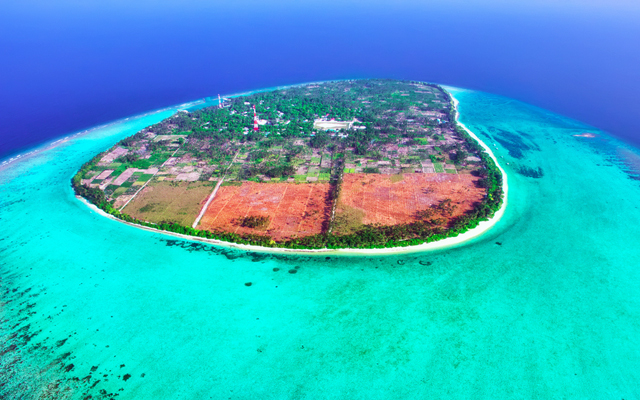
Thoddoo island in the Maldives home to several guesthouses
With more guesthouses popping up across the country amid a rising budget inbound sector, some operators in the Maldives are urging the government to promote this market at overseas trade shows.
“We desperately need more promotion,” Mohamed Karam, president of the Guesthouse Association of Maldives, told TTG Asia on the sidelines of the second International Travel Trade Show of Maldives (TTM), which took place in Malé earlier this week.
Thoddoo island in the Maldives home to several guesthouses
Unlike resorts, guesthouses have limited resources to attend trade shows or do their own international marketing, confided Karam, who owns a 12-room guesthouse on Thoddoo island. “We depend on online sales and cannot afford individual marketing at trade shows.”
Rallying support for island campaigns, Karam added: “Local councils on islands where guesthouses are located must promote each island, its properties and the benefit of a visit. These guesthouses bring huge benefits to the islanders.
“Unlike all-inclusive resorts, guesthouse islands engage local communities to provide facilities like restaurants, swimming pools, spas, shopping and sporting activities,” he pointed out.
The development of guesthouses, with average room count ranging from five to 20, is aimed at helping local communities thrive, Karam said.
He shared that the Maldives went from having just one guesthouse in 2010 to 600 guesthouses across 76 islands today, adding 7,000 beds. The number could rise to 700 guesthouses with a combined 10,000 beds by end 2019, according to Karam.
Anusha Zubair, sales and marketing manager at Fushifaru Maldives, said the guesthouse segment provides a different dimension to the market. “Now travellers have many options and those who are unable to afford luxury resorts can opt for guesthouses if their budget is around US$50,” she said.
Fushifaru Maldives is part of Muni Enterprises group, which owns a 20-room guesthouse on Maafushi island, two safari boats and other businesses.
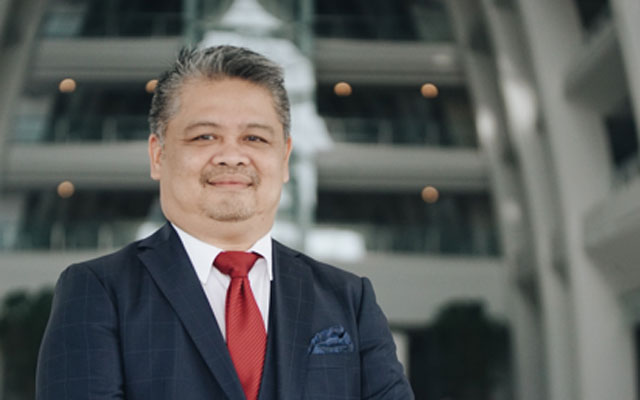
Hairul Maharis has been named general manager of Mövenpick Hotel & Convention Centre KLIA, a Sharia-compliant property scheduled to open in mid-2018 near the Kuala Lumpur International Airport (KLIA).
A Malaysian native, Maharis boasts a strong background in the management of airport hotels, having previously overseen the Tune Hotel klia2 and, most recently, ISG Airport Hotel in Istanbul.
Over the course of his 25-year-long career, the seasoned hospitality professional has also worked with brands including Le Méridien, Sheraton and Best Western.
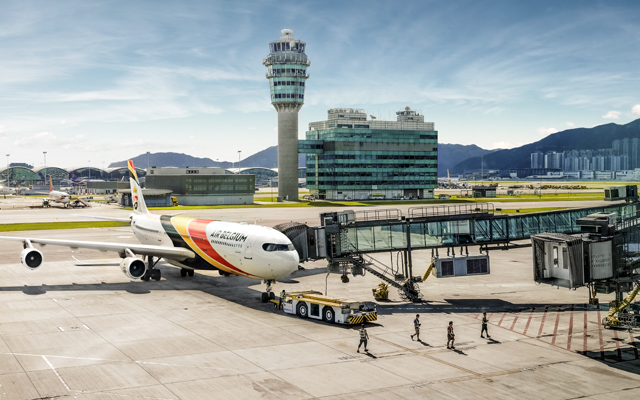
Barely two months into its launch, Air Belgium has postponed the launch of its first service – between Hong Kong and Brussels – after failing to obtain the required Russian airspace permit in time for the initial commencement date.
The launch of this four-times weekly service to Brussels South Airport was initially announced for April 30, but has now been pushed back to June 3.
A Belgium Airline spokesperson says the necessary approval will be processed in a matter of days
The airline’s CEO Niky Terzakis explained in a statement: “At this date and despite all efforts of our teams and the Belgian authorities, we are still expecting to receive the overflight permit from the Russian Authorities, knowing that overflying through Russian airspace is unavoidable.
“In addition to the uncertainty created by the above, the complicated and delayed GDS implementation has also prevented Chinese tourists groups from being directed to our flights.”
An Air Belgium spokesman added that the flights were initially scheduled with a “relatively short lead time”, and expressed confidence in obtaining the Russian Overflight Permit in time for June 3. It will take a matter of days, not weeks, he remarked.
The spokesperson also shared that the airline has “proactively (offered satisfactory solutions) to impacted passengers”.
A source told TTG Asia that impact on the Hong Kong trade and consumers has been minimal, with agencies such as Premium Holidays and Wincastle Travel (HK) stating no bookings had been made with the airline.
A larger obstacle in the airline’s way is perhaps its lack of brand awareness in Hong Kong.
Premium Holidays, general manager, Simon Wo said: “I heard about the carrier but have no idea (when they were launching the Hong Kong flights). So far, we haven’t make any booking with it as Cathay Pacific kicked off its Hong Kong-Brussels route in late March.”
He added that competition on the route will be considerable as the destination is “not a hot pick” for Hong Kong travellers.
Eliza Li, senior manager for marketing and product, Wincastle Travel (HK), agreed that few clients are aware of Air Belgium as it is a new entrant, adding that longhaul travellers have preference for carriers like Cathay Pacific, Qatar Airways and Finnair.
Li however suggested: “It’d be great if tourism representatives from Belgium can stage a roadshow in Hong Kong and share some latest travel information with us. From there, we can update our offers and package it with the new carrier’s offers.”
While working with several partners, Air Belgium has also appointed two GSAs in Hong Kong (one each for passengers and cargo). Local sales and marketing campaigns are being rolled out, TTG Asia understands.
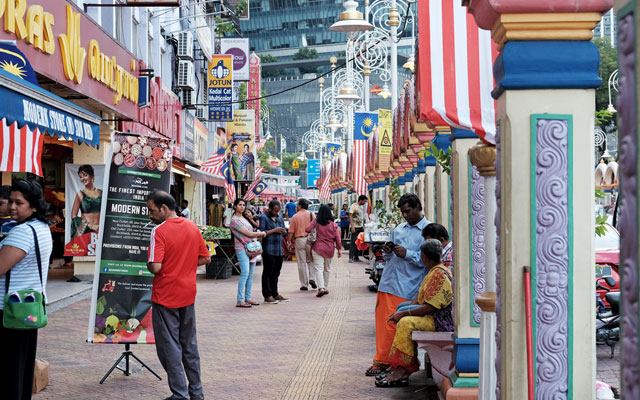
: Shoppers in Kuala Lumpur Little India, Brickfields, KL
With this year’s Ramadan – a traditional lean period for domestic travel in Malaysia – coinciding with the Indian peak summer travel in May and June, inbound players in the country have been quick to leverage the lower rates and traditions surrounding the fasting month to entice visitors from India.
Malaysia’s room rates for May and June are lower, pointed out Arokia Das, director, Luxury Tours Malaysia, thanks to weaker demand for domestic travel during this period.
Indian tourists in Kuala Lumpur’s Brickfields precinct
The availability of off-season rates is partly why summer travel from the Indian market this year is better than in 2017, observed Rajiv Kapoor, general manager of The Westin Langkawi Resort & Spa.
Inbound agents are also taking advantage of Ramadan as well as Hari Raya Aidilfitri, which follows the fasting month, to incorporate local festive elements into their tour itineraries.
Arokia shared that his company will include open house celebrations in conjunction with Hari Raya Aidilfitri for visitors to partake in the local festivities during this period.
Hidden Asia Travel & Tours is likewise running tours including Ramadan bazaars in Kuala Lumpur and Penang to give visitors “a feel of the local culture and festive mood”.
To commemorate Ramadan, The Westin Langkawi Resort & Spa and Langkawi International Convention Centre will offer buffet spreads for the breaking of fast, including an Indian vegetarian section to attract the Indian crowd, said Rajiv.
Maldives Holidays Collections began in 2012 much like other inbound tour companies – until a request for help with commercial shooting arrangements changed its story.
The company’s foray into production coordination began with an enquiry in 2014 to help in the logistics for a free diving documentary, recalled managing director Shausha Aan Shafeeq.
Maldives Holiday Collections’ Shafeeq with Star Wars Rouge One’s director Gareth Edwards
Shausha said the team shot for 10 days in different locations, some near inhabited islands. The company arranged for all the required government permits as well as the booking of venues and hotels.
The approvals process has since gotten more difficult, requiring approval not just from the Ministry of Arts and Culture but the police too, further cementing the company’s specialised service. “There are regulations – you can’t just come here and shoot videos,” he continued.
Since then the company has helped organise logistics and other support for close to 30 productions including a 20-minute scene of the Star Wars Rogue One movie released in December 2016.
Scenes were shot at the Laamu Atoll, one of the Maldives’ largest islands, which was depicted as planet Scarif in the film.
Two companies were involved in the coordination of this gigantic exercise with Maldives Holidays Collections handling the food and accommodation.
Two container loads of equipment including weapon props were shipped for the shoot while a helicopter was borrowed from Sri Lanka.
“That was an exciting event not only for us but great promotion for the country as well,” he said.
A few more production coordination jobs have been lined up this year.
Including Maldives Holidays Collections, there are just two companies in this business in the destination, according to Shausha.
The company handles logistics ranging from applying for business visas, booking of hotels and securing of locations.
The new revenue management system is expected to help Frasers better manage its diverse portfolio, which ranges from serviced apartments such as Fraser Place Setiabudi Jakarta (pictured) to hotel residences
Frasers Hospitality is collaborating with revenue strategy platform Duetto to develop what’s said to be the first revenue management system that uses open pricing to optimise rates for contracted extended stays in additional to traditional short stays.
To be made available in Duetto’s cloud-based GameChanger app, the feature is expected to help Frasers more efficiently balance revenue management strategy between long and short stays, and will be implemented across Fraser’s global portfolio.
The new revenue management system is expected to help Frasers better manage its diverse portfolio, which ranges from serviced apartments such as Fraser Place Setiabudi Jakarta (pictured) to hotel residences
Instead of traditional fixed-tier pricing where rates for different sales channels are derived from a single best available rate, open pricing allows accommodation providers to price all room types, channels and dates independently of each other based on actual demand.
By offering more flexibility in rate adjustments, this also means that guests are not turned away during peak periods when operators would normally close channels or add length-of-stay restrictions rather than sell discounted rooms.
Rates for the extended stay segment are typically inflexible and fail to account for the displacement of transient business and longer, more profitable longer-staying guests, according to Frasers.
Currently in beta stage, the new app module will be able to recommend an optimised rate and negotiation range for extended stay contracts after factoring in various costs.
The system is also expected to help hotels overcome manual data analysis, as well as allow for better prediction of demand that goes beyond historical guest records by leveraging third-party data such as web shopping behaviour, air traffic and weather to gauge price sensitivities and recommend optimal room rates.
This is part of a larger initiative that Frasers is embarking on to gain more insights into demand and boost its pricing and distribution strategies as it scales up its global portfolio, according to senior vice president, head of global marketing & sales, Joanne Ang.





 Just last month, Singapore Airlines announced that its flight information is now available on Google Home, at the same time the voice-assisted device was launched in Singapore.