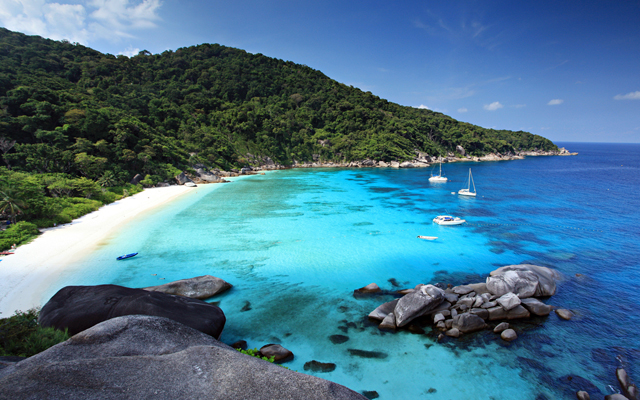
Similan Island not suitable for overnight stays due to lack of fresh water
Tourists will no longer be allowed to stay overnight on Similan Island in Thailand’s Phang Nga province, a move made to protect the marine resources in the area, the Bangkok Post reports.
The ban will kick in this October, when the island reopens to tourists after a rainy season closure beginning last month. Only day trips will be allowed on this island.
Tourists will only be allowed to visit the island on day-trips
According to the Bangkok Post article, the island is the only one of the Moo Koh Similan National Park’s nine islands that provides bungalows and camping grounds for visitors.
Most of these overnight stay facilities, which are operated by the state, have already been dismantled by the National Park Office of the National Park, Wildlife and Plant Conservation Department, department director Songtam Suksawang was quoted as saying by the Bangkok Post.
The article also reported that Songtam cited “concerns over the impact of wastewater from houses on the park’s environment” as a chief motivating factor behind the ban.
As more natural attractions come under strain from visitor influx, the Thai government has in recent months taken a more active approach to regulate numbers at popular islands in the south. Maya Bay is now temporarily closed for four months for rehabilitation.
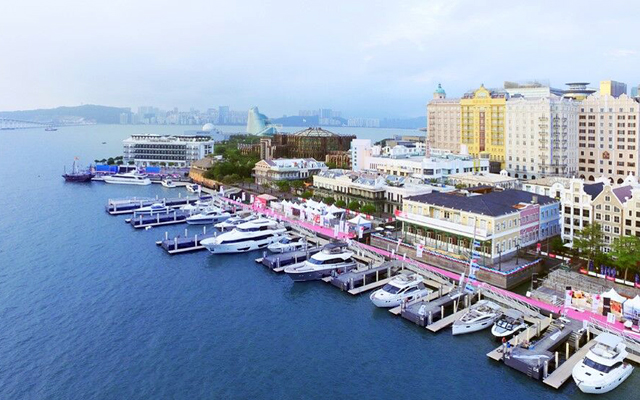
The congress takes place at the Macau Fisherman's Wharf this year
The Skål International Macau Club will host the 47th Skål Asia Area Congress under the theme of “gastronomy tourism” in Macau from June 21 to 24 this year.
Among the main highlights of the congress are the signing of an MoU between PATA and Skål International as well as talks by industry experts such as PATA CEO Mario Hardy, who will discuss “Setting the stage for Sustainable Tourism Development”, while Macao Government Tourist Office (MGTO) director Helena de Senna Fernandes will touch on “Macau, World Center of Tourism and Leisure” and Irene Lau “MICE in Macau”.
The congress takes place at the Macau Fisherman’s Wharf this year
As well, there will be a panel on tourism and gastronomy moderated by Cheng Wai Tong, deputy director of the MGTO. Speakers on the panel include Chattan Kunjara Na Ayudhya, deputy governor for policy and planning at Tourism Authority of Thailand; Fang Li, responsible for UNESCO Creative City of Gastronomy international cooperation of Shunde and deputy director of China-Europe International Hospitality School & Hotel Management Department of Shunde Polytechnic University.
The venue is located in a complex in Fisherman’s Wharf, boasting the largest and most flexible convention space in Macau Peninsula, and where the event’s official hotels Legend Palace and Harbourview are located.
This year’s gastronomy-themed congress also sees attention placed on the selection of menus and restaurants, with Vic’s Restaurant, Grand Coloane Hotel and MGM Cotai among the names featured.
This is the third time Macau has been chosen to host the event.
Whale sighted spraying water out in plumes near the ocean surface
Why
Whale-watching from above is a new concept in Sri Lanka with F-Air promoting “air tourism”. The company follows the Whale and Dolphin Watching Regulations and Guidelines closely, flying at least 1,000 feet (305m) above sea level before coming down to 700 feet when a mammal is spotted in the ocean.
The flight also gives guests an aerial view of different places of beauty that may otherwise require some work to get to, including picturesque scenes of temples, lakes, mountain ranges and the Weligama Bay, which has a lovely resort perched on a small hill abutting the beach.
Whale sighted spraying water out in plumes near the ocean surface
What
At the Sri Lanka Airforce base at Koggala Airport, Galle, where F-Air’s three aircraft are parked, guests preparing to take off on the four-seater Cessna 172 aircraft are greeted with a chilled drink and a comfortable check-in lounge by a lake at the tail-end of the runway.
Whales are generally located between five to 15 nautical miles (8-25km) off the coast and as we fly above a cluster of tourist boats below – also on the same whale-watching expedition – we spot a blue whale.
The boats close in like a race – the fastest to get there gets the best (camera) shot – and it was then I got a better appreciation of how much of a luxury the plane tour was. We drop down to 700 feet and got a clear sight of a large, majestic blue whale at the surface of the water, spraying water out in plumes as it breathes.
In the midst of the excitement of my fellow whale watchers scrambling for their long-range cameras, another whale surfaces.
At different points, lone whales or those moving in groups are spotted gliding through the turquoise blue waters. Another perk of viewing from atop is that the aircraft are quieter than boats so whales are less likely to be scared away as planes approach.
We witness a whale take a huge dive beneath the surface, and Sanjay Adhikari, CEO at F-Air, shared with me that it would take 10 to 15 minutes for the majestic creature to surface again, since it dives to the depth of the ocean before rising.
As the Cessna moves away from the whales, we spot dolphins, a pod of 10 to 15 pilot whales, about four turtles and a group of wind surfers having fun, ending a magical 45-minute ride.
How
F-Air operates tours mostly on the weekends but handles special tours on request, which are taken through resorts.
The company has three Cessnas with two more due to be delivered in May-September. The company operates an average of six to eight whale watching flights a day.
The company also helps in data collection by transporting researchers studying blue whales. At 30m in length and 180 metric tons or more in weight, this is the largest known animal to have ever existed. F-Air plans to fix a camera on the underbelly of the aircraft to help marine biologists research whale movements.
Verdict
The view from 500-700 feet above sea level is absolutely breathtaking. After this experience, watching sea mammals from a boat may never quite be good enough.
No. of passengers: Three per flight Rates: US$150 per ticket for adults and US$100 for children age 3-14 years; The company also offers package tours to 16 other scenic areas in Sri Lanka, as well as tours for research purposes, on a per-passenger rate or flat charter rate of US$300 per hour
Contact Tel: (94) 77 444 5830 Email:info@f-air.lk Address: F-airways, The Fairway, 100, Buthgamuwa Road Rajagiriya 10107, Sri Lanka
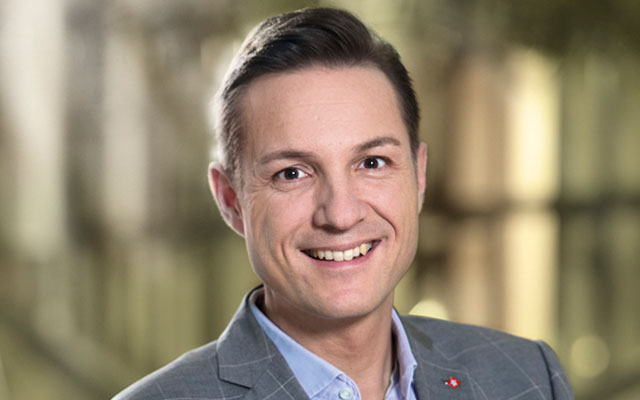
Lufthansa Group Airlines has appointed Alain Chisari as vice president sales in Asia-Pacific, with effect from September 2018.
Based in Singapore, he will be managing and directing sales activities of the Lufthansa Group Airlines – Lufthansa German Airlines, Swiss International Air Lines (SWISS) and Austrian Airlines – and also Brussels Airlines, in the Asia-Pacific region.
The Swiss has held several key positions in the airline industry over the last 20 years. He previously served as chief commercial officer and management board member at Edelweiss Air, the sister company of SWISS, and was also head of external relations & alliances and head of leisure sales Switzerland at SWISS.
Chisari also held various positions with Delta Air Lines in Germany, Austria, South Africa and the UK following corporate sales roles at British Airways and American Airlines.
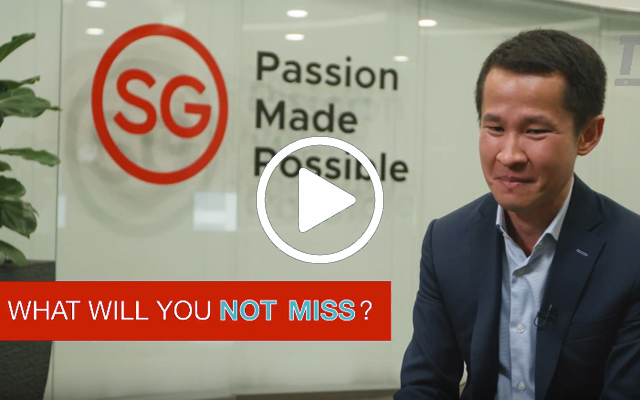
Yeo spills about unfinished business, what he will not miss, and more. Video here
A rotating CEO of Singapore Tourism Board (STB) works for the industry but it should not be too short nor too long, according to industry members interviewed and former STB CEO, Lionel Yeo.
Yeo served for two three-year terms, possibly the longest stint compared to previous STB CEOs.
Industry members interviewed all say a rotating leadership is necessary for “fresh perspectives” but enough time should be given to the STB CEO to get to know the industry and take charge, with the ideal length being no more than two terms.
Yeo spills about unfinished business, what he will not miss, and more. Video here
“A rotating leadership system can bring about increased effectiveness and innovation that comes from different minds making decisions within the boundaries established. That said, for a key stakeholder, the office bearer should be accorded a reasonable timeline to know the existing systems and people, formulate and implement strategies, and ultimately deliver the vision,” said Anthony Chan, group managing director of Chan Brothers Travel.
Margaret Heng, executive director of Singapore Hotel Association, agreed: “As long as the stint for each STB chief is long enough for him/her to deliver results, it is a good thing to have rotation – it offers fresh perspectives from a different set of lens.”
As to how long, Unlisted Collection’s director Loh Lik Peng believed “a two-term run is healthy and at most a three-term run, beyond which things might get a bit stale”.
In an exit interview (part 1 and part 2), Yeo, who left STB on May 31, said four to six years was a good length of time. “Personally, anything less than four years might be too short, beyond six years might be too long,” he said. “It takes a few years, especially for someone like me who came from outside the sector, to get to know the sector, to learn and familiarise with the leaders of the industry and gain their trust, before you can start doing some of the work.”
When asked how an STB CEO was picked and whether he was free to set the tourism agenda, Yeo said: “In our system, STB CEO reports to two bodies, first the chairman and directors of the STB board. Second, MTI (Ministry of Trade & Industry). These two bodies principally have to be comfortable with the candidate considered for the role. Once they’ve settled on the person, there are further internal controls in the public sector, or processes that need to be done. The head of STB is considered a public sector leadership appointment, so these appointments have to be endorsed generally by other bodies in the public sector.
“Free (to set tourism directions)? Yes insofar he’s able to get the support of the chairman and the board, and the support of the ministry. Insofar as what he is doing is aligned with what the ministry wants STB to do and what the chairman feels is the right thing to do. Then he has a lot of freedom in terms of resource allocation, strategic direction. But it’s about stakeholder engagement and the most important are the board and ministry. Of course the industry is important; they can also make their views known to the two bodies.”
What would he do differently on hindsight? Said Yeo: “I often asked myself if I could move even faster, internally or externally, but that’s hypothetical. You move as fast as you can, or as fast as stakeholders allow you as well.”
Find out what’s his biggest unfinished business, what Yeo will not miss about being STB CEO and other musings – catch the Part III video here.
In Asia, where cities are often characterised by high-rises and a dense population, resort-like hotels offer a convenient option for locals and foreign visitors alike a respite from the urban bustle. Urban resorts also play well to the growing bleisure trend, as modern travellers are combining work and leisure more than ever.
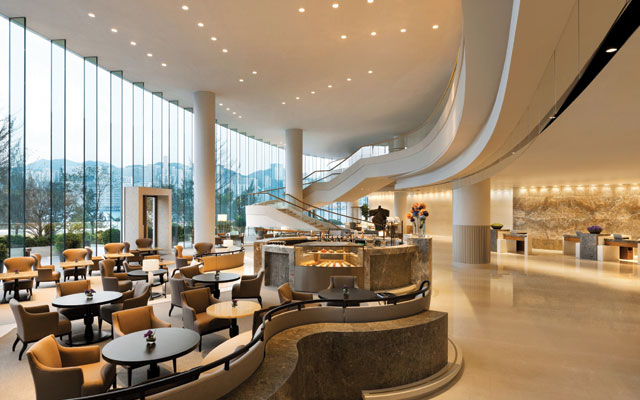
Kerry Hotel Hong Kong lobby and front desk
“Urban resorts sell well to those who visit the city and don’t have time to travel to a beach destination or a jungle resort. It does well with honeymooners, couples, business travellers and expatriates looking for a restful weekend,” Ally Bhoonee, executive director, World Avenues, told TTG Asia.
“Customers, especially families, love urban resorts as it makes them feel they are on holiday and at ease. The rustic décor, water elements, landscaping and interior design creates that atmosphere. At the same time, they are not too far away from the city,” he added.
Among foreign visitors to Asian cities, the European market shows a stronger preference for resort-type properties. “It is a trend for Europeans on holiday to get away from concrete blocks. They enjoy staying in smaller boutique properties that can offer a more relaxed environment such as Villa Samadhi Kuala Lumpur,” said Manfred Kurz, managing director, Diethelm Travel Malaysia.
Sharing Kruz’s observation, Kim Martin Rasmussen, product & contracting manager at Exo Travel Thailand, also sees the Western market placing a higher premium on resort stays in Bangkok. “The UK market especially likes Ariyasom Villa and Anantara Riverside, whereas all our French clients like this kind of resort-style (hotels), as they are not used to high-rise buildings in France, so they always like it small and boutique.”
In the city, but an escape from it
Prime examples of urban resorts, in the eyes of travel agents in the region, are the Aman Tokyo, Kerry Hong Kong, and The Siam in Bangkok.
A shared feature is the strong sense of retreat, and despite their urban setting flaunt a connection to nature, may it be in the ample indoor/outdoor spaces, extensive natural light or abundant greenery. These urban sanctuaries are also destinations unto themselves, combining unique design with a strong suite of health and wellness amenities.
In the Malaysian capital, The Saujana Hotel Kuala Lumpur makes a good urban resort example, Bhoonee suggested, as it offers ample greenery and space, an expansive lobby and rustic look that reinforces the “resort feel”. Easy access to the Saujana Golf & Country Club, with its two 18-hole golf courses, further elevates the resort experience.
Gloria Slethaug, managing director, Connexus Travel Hong Kong, remarked: “There is a limited number of hotels in Hong Kong that are considered as urban resorts. In fact, urban resorts can be thematic, e.g. The Landmark Mandarin Oriental Landmark, with its Oriental Spa concept, or Kerry Hotel, with an outdoor infinity pool.”
She added: “However, some clients may not consider a city hotel with a large outdoor pool as a resort. In my view, an urban resort is about providing an oasis from the hustle and bustle of a cosmopolitan city. The PuLi Hotel and Spa in Shanghai is a great example of an urban oasis, as are Aman hotels, which have the capability to create such ambience.”
In Bangkok, Ariyasom Villa and The Siam are urban resort standouts in the eyes of Soontarut Wattanahongsiri, founder of Blackrice Travel.
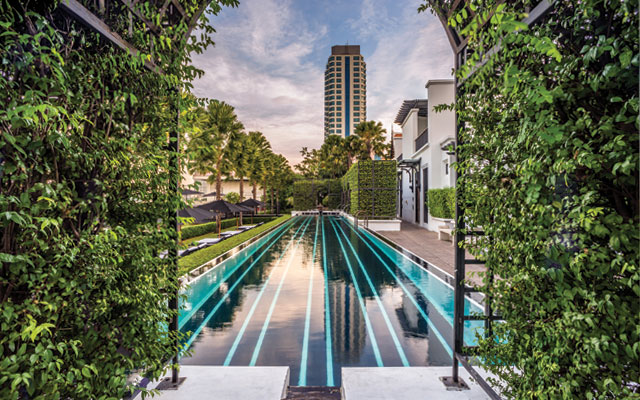
Swimming pool at The Siam, Bangkok
“Their architectural style, ambience, facilities and most importantly personalised service make (clients) feel more relaxed amidst Bangkok’s chaos. They don’t make guests feel like they’re in Bangkok,” she said. “These two properties are both my personal favourites as well.”
For Exo’s Rasmussen, other urban resort contenders in Bangkok include heritage properties like Chakrabongse Villa, which combines history and outstanding design by the riverside; Anantara Riverside, a riverside property in a resort-style setting; and The Sukhothai Bangkok and Siam Kempinski, both retreats from their surrounding bustle in the city’s downtown.
Still room to grow
Unlike other Asian cities, Manila, on the other hand, has few properties that can be considered urban resorts, according to Philippine agents Benjie Bernal, tour operations manager at Sharp Travel Service and Mike Hain, groups manager at Corporate International Travel and Tours.
Sofitel Philippine Plaza Manila, according to both, is the closest to what an urban resort is, but the luxury property enjoys greater popularity among local staycationers than international visitors, in part due to Manila’s transit hub status as inbound visitors rather head elsewhere in the country for resort stays.
Even for a highly urbanised market like Hong Kong, where the likes of Kerry Hotel and East Hong Kong make compelling urban retreats, most clients are still not aware of such offerings in the city and would head to neighbouring Macau for weekend resort stays, shared TLX Travel’s director and general manager Eliza Ma.
There is room to grow the awareness for urban resorts as staycation venues when Hong Kong Ocean Park Marriott Hotel launches in June, she admitted.
It’s a similar story for Japanese travellers, observed Shota Shinura, president and CEO of Tokyo-based Benefit Plus, who said the Kerry’s and Aman’s appear to have developed a firm following among other nationalities except the Japanese.
“If Japanese want a city holiday, they go to Bangkok or Taipei or wherever for that destination; if they want a beach, they go to Hawaii or Bali,” he explained.
Reporting by Xinyi Liang-Pholsena, S Puvaneswary, Prudence Lui and Julian Ryall
Japan’s travel industry is optimistic that new rules on accommodation offered by owners of private property will ease room shortage in some of the nation’s most popular destinations, although there are still concerns over inevitable “teething trouble” for the new system.
From June 15, the new minpaku law will allow anyone with anything from a spare bedroom to a luxury beach-front home to register their property with the local authority and rent it out to guests, eliminating the grey area in Japanese law that has shrouded the sector since property owners started the unregulated leasing of accommodation.
Some Japanese neighbourhoods are not be used to the presence of foreign visitors
Airbnb was granted permission to operate in Japan in 2017, but soaring visitor numbers at certain times of the year still mean that popular destinations – such as the ancient capital of Kyoto – experience shortfalls in rooms.
Carl Kay, president of Tokyo Way, said the new law is “a perfect fit for Japan”. “There is a serious shortage of hotels in many parts of the country and there are also properties in some areas that are not being put to the best possible use,” he said. “It seems to be a clear win-win situation.”
Masaru Takayama, CEO of Kyoto-based Spirit of Japan Travel, said: “There is definitely a shortage of accommodation in a city like Kyoto, so anything that helps make more rooms available has to be positive.”
Airbnb has already created more competition with hotels and ryokan, which has brought prices down for visitors, and the new minpaku regulations will provide more choices for travellers on different budgets in popular cities like Kyoto, he added.
Yet there are concerns, such as worries among some communities “that are not used to having foreign people living in their neighbourhoods,” he admitted.
These concerns include fears that they will not be able to communicate with foreign visitors and worries that they will make a lot of noise or fail to comply with Japan’s strict rules on the separation of household garbage.
“I think it might take a little time for (Airbnb) to be widely accepted,” Takayama told TTG Asia.
Cultural concerns aside, there are a number of other issues that will need to be overcome before added regulation can be declared a success.
The law limits the number of days that any property can be rented out to 180 a year, which some fear will not be sufficient to make their business profitable, while Kyoto has gone one step further by limiting the dates that minpaku can operate to the city’s low season between mid-January and mid-March.
Because of the restrictions, there are concerns that many property owners will attempt to get around the regulations by failing to register their properties. The Japan Tourism Agency only received 724 registrations between mid-March and mid-May this year, a fraction of the tens of thousands of properties that are available on websites.
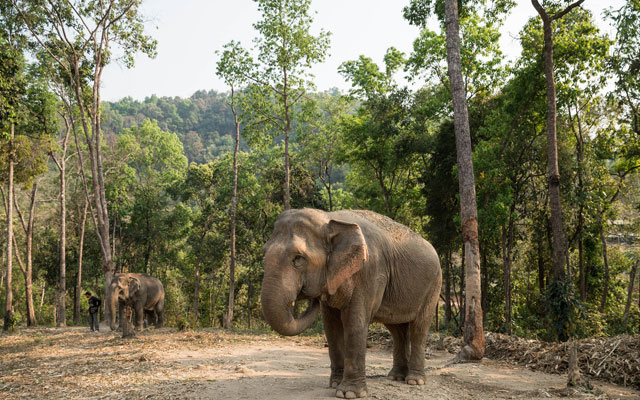
World Animal Protection and travel company leaders are working with Happy Elephant Care Valley to transition their current camp into a place where elephants will have the freedom to be elephants instead of entertainers. Photo credit: World Animal Protection / Nick Axelrod
Chiang Mai’s Happy Elephant Care Valley has entered an MoU with animal welfare charity World Animal Protection to end all physical interaction between tourists and elephants at the camp.
The transformation is supported by a coalition of leaders in the travel industry, including Tui Group, The Travel Corporation (TTC), Intrepid Group, G Adventures, Exo Travel and Thomas Cook Group.
World Animal Protection and travel company leaders are working with Happy Elephant Care Valley to transition their current camp into a place where elephants will have the freedom to be elephants instead of entertainers. Photo credit: World Animal Protection / Nick Axelrod
The elephants at Happy Elephant Care Valley were previously from farms and riding camps. Until recently it was possible for close interaction between tourists and the elephants at the venue, with tourists being able to ride, bathe and feed elephants. This stopped when the travel industry coalition presented a business case demonstrating the rise of elephant-friendly tourism.
The transition will take place throughout 2018, with the camp tentatively expected to be ready for re-opening by end-2018 or early-2019. Following the transformation, elephants at the camp will be able to behave as they would in the wild; free to roam the valley, graze and bathe in rivers as tourists experience these wonders, standing at a safe distance.
Josey Kitson, executive director at World Animal Protection Canada, said: “Through the support of the world’s leading travel companies we are proving that elephant-friendly venues, those without forced and dangerous interactions with wildlife, make both ethical and financial sense for camp owners.
“Happy Elephant Care Valley’s move is a huge step forward for both elephants and ethical tourists. It will provide an incredible opportunity for the growing number of tourists who want a positive experience seeing elephants behaving naturally and freely as part of a herd.”
Thousands of captive elephants in many venues across Thailand still give rides that are the result of a cruel and intensive training process. However, a 2017 KANTAR global poll shows a significant drop (nine per cent) in the number of people who find elephant riding acceptable compared to just three years ago.
The poll also shows that more than 80 per cent of tourists would prefer to see elephants in their natural environment, proving elephant-friendly tourism is on the rise.
Cloud is critical to Sabre's microservices architecture, Sabre CTO says
Sabre has sealed a long-term partnership with Microsoft to expand its cloud-based distribution and retailing solutions, weeks after it signed a similar agreement with Amazon Web Services.
The deal will see Sabre’s commercial applications migrated to Microsoft Azure. “The cloud presents an opportunity to rapidly innovate, create and deliver new business value for Sabre and our customers,” said Joe DiFonzo, Sabre CIO.
Cloud is critical to Sabre’s microservices architecture, Sabre CTO says
The agreement is also expected to help Sabre better harness the power of its data and apply artificial intelligence (AI) and advanced analytics to create new services for hotel, agency and airline customers.
As Sabre continues to evolve its cloud strategy, it says its customers will be able to offer travellers more personalised and integrated experiences – especially key as it works to innovate Beyond NDC and deliver next-generation retailing and distribution solutions.
“Cloud technology is critical to our development of a microservices architecture, which will offer our customers bite-sized functionality that can be used independently or combined to build large, complex applications with accelerated speed to market,” said Vish Saoji, Sabre CTO.
Through the Microsoft Azure agreement, Sabre’s cloud transition will enhance the stability and security of its products, and a multi-faceted cloud approach will allow Sabre products to intelligently distribute workload across geographies, resulting in better performance and ensuring continuous service availability.
Sabre and Microsoft partnered earlier this year on the pilot launch of an A.I.-powered chatbot, Ella, that explores how AI can help travel agencies better serve travellers by fulfilling their most common service and support requests with smart technology.
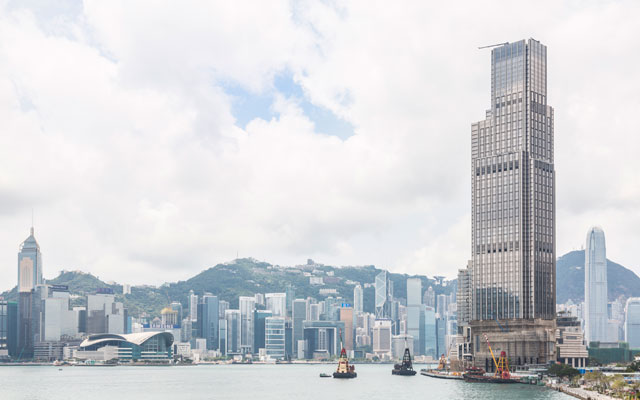
With the first phase of Victoria Dockside, an ambitious 27.9ha mixed-use project, launched last week, developer New World Development is touting the new US$2.6 billion attraction as a “game-changer” that will revive the Tsim Sha Tsui waterfront.
Adrian Cheng, founder of K11 and executive vice-chairman and general manager of New World Development, said: “Our vision is to make waves at this world-class destination by providing a blank canvas for artists, designers and businesses to maximise their creativity and help create one of the most exciting new neighbourhoods of tomorrow.”
Victoria Dockside, the city’s newest landmark
The site on which Victoria Dockside sits was known as Holt’s Wharf in the early 20th century, when it was instrumental to the city’s rise to the busiest port in the world. Following the opening of New World Centre in 1978, the area became a stronghold for international brands in the city.
Forty years on, Victoria Dockside is introducing elements including an ultra-luxury Rosewood Hotel and Rosewood Residences, as well as K11 Atelier, the first K11-branded Grade A office building and which holds two green building certifications.
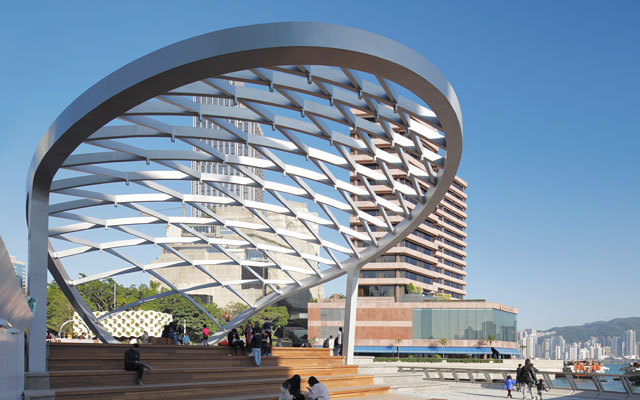
The revamped Salisbury Garden
Fringing Victoria Dockside are the newly relaunched green space Salisbury Garden and Avenue of Stars – the promenade is scheduled to reopen in February 2019 – both public spaces that are expected to host artistic installations, performances, open-air concerts and other cultural events such as movie screenings.
The entire district is set to fully open in 2019, with more updates on the development imminent, according to New World Development.