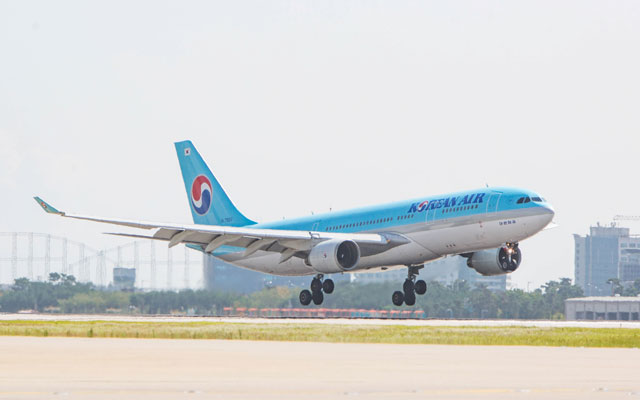
The Cathay Pacific Group is seeing progress from its three-year transformation programme, as a strong cargo business, a weaker US dollar and improved premium class passenger demand come together to deliver a less-than-expected annual loss for the company.
For 2017, the Cathay Pacific Group reported an attributable loss of over HK$1.2 billion (US$160 million), up from HK$575 million in 2016.
This is the airline’s biggest annual loss in nine years, but it was slimmer than expected as a rebound in the cargo market helped offset fuel hedging losses and stiff competition
However, recovery was underway in 2H2017 as the Cathay Pacific Group reported an attributable profit of HK$792 million, compared to an attributable loss of HK$2.1 billion in 1H2017 and an attributable loss of HK$928 million in 2H2016.
Cathay Pacific and Cathay Dragon reported an attributable loss of HK$1.5 billion in 2H2017, compared to HK$2.8 billion in 1H2017 and an attributable loss of HK$2.6 billion in 2H2016.
Changes implemented include a reorganisation of the head office, and appointing new management and leadership teams. Six hundred jobs were reportedly slashed as part of the redundancy plan last year.
The Cathay Pacific Group is determined to prioritise its transformation programme in 2018 to better contain costs and revive earnings.
Cathay Pacific chairman John Slosar said: “Our priorities for 2018 (include) our transformation programme, changing the way that we work so as to better contain costs which will strengthen our passenger business further. We are confident of a successful outcome from these efforts.
“We also look to benefit from a slowing of the decline in passenger yields as global economic conditions improve.”
Slosar added that the airline is improving its competitive position by expanding route network, increasing frequencies on popular routes and buying more fuel-efficient aircraft.
The airline will introduce services to Brussels in March 2018, to Dublin in June 2018 and to Washington D.C. in September 2018. It will start flying to Barcelona all year round in April 2018, and seasonal services will be introduced to Copenhagen between May and October 2018 and to Cape Town between November 2018 and February 2019.
HNA selling stakes in Hilton Grand Vacation and Park Hotels & Resorts
In the middle of an asset reorganisation, debt-ridden Chinese conglomerate HNA Group is selling its shares in Hilton Grand Vacations for US$1.1 billion and is transferring much of its tourism portfolio to its airline subsidiary, Hainan Airlines.
HNA sold 22.3 million shares at US$46.25 a share, or 1.6 per cent below the stock’s latest closing price. It also sold 2.5 million shares back to the timeshare company for US$44.75 a piece.
HNA selling stakes in Hilton Grand Vacation and Park Hotels & Resorts
The deal is scheduled to be completed March 19.
With the group having put its stakes in another Hilton spinoff, Park Hotels & Resorts, up for sale, Bloomberg reports there are speculations if Hilton Worldwide is next.
HNA reportedly still owns about a quarter of Hilton Worldwide, a stake valued at US$6.7 billion.
The group had in 2016 bought a quarter of Hilton Worldwide and the two spinoffs from the Blackstone Group for about US$6.5 billion.
Meanwhile, in a statement to the Shanghai stock exchange last weekend, HNA’s flagship carrier said it would take controlling stakes in HNA Hospitality Group, an unnamed overseas hotel operator, West Air, Guilin Airlines, among several other tourism and aviation assets.
Exceptional branding as an asset for travel companies
Several readers weighed in with their perspectives in response to senior editor Raini Hamdi’s Opinion piece on ‘Why can’t Singapore create an A&K?’.
Gaurav Sundaram, president, ProKonsul & regional director – India, Global Business Travel Association
“Very relevant thought…venturing beyond your comfort zone and taking calculated risks will allow for this. The Singapore model can sometimes cloud imagination and creativity.”
Anonymous
“A&K has masterfully created a brand that is bigger than its actual business size. Geoffrey Kent loves to repeat the story that there was never an Abercrombie, that he formed the name based on the nice ring to it. Marketing brilliance over product substance…My main points are these: that it shows the power of exceptional branding, making the brand appear greater and stronger than the underlying business, and that A&K may be an exceptional case of branding that transcends the product offering. So the lesson for others is not to expect massive growth at that high end of the market (which prefers custom solutions from intimate provider relationships).”
“Great article and I am sure the readers will really benefit from your thoughts and insightful perspectives.
Just a couple of comments and viewpoints:
a. At Dynasty Travel, we do take our brand seriously and had been very focussed on building it from the inside out brand vision of Dynasty Travel – Customer satisfaction is our first priority and we had successfully implemented it in our business strategies. We have a clear, compelling internal brand and provides direction and motivation to employees and partners;
b. We are also continuously building our brand externally with our corporate social responsibility, D&D, roadshows, brochures production to maintain brand consistency and brand identity;
c. On why companies stay domestic is primarily companies may not want to handle risks and uncertainties on unfamiliar environment and there is lack of resources and expertise to go global.”
What’s holding back bookings growth for Thailand?
After we wrote about why German-speaking markets’ “solid” appetite for the Far East hasn’t translated into increased bookings and longtime favourite Thailand lagging behind, readers offered their thoughts.
Manuel Gordillo, senior manager, travel channels, distribution partners South-east Asia, Amadeus Asia
“Good article. Sustainability is the key word here as far as Thailand is concerned. Mass tourism from China has a lot to do with what is happening here right now – easily one-hour queues in Suvarnabhumi airport upon landing, which is not good for leisure or business travellers. On the other hand, Thailand tourism has always proved resilient. The question is whether local island operators in Phuket and Samui pick up the signals.”
Anonymous
“You don’t suppose that rampant and egregious police corruption and mistreatment and gouging of tourists by the locals could be some reasons for the diminished arrivals in Thailand? In the article, why not tell the whole truth?”
Location
The 27-storey property is a new landmark for Hua Hin and stands just beside the 3.2ha Nava Vana Water Park. Located just south off the city centre on Petchakasem Road, the hotel has no beach access but provides regular shuttles to Bluport mall, True Arena sports complex, Hotel InterContinenal and the town centre.
Hua Hin itself is about a 2.5-hour drive from Bangkok, and from May 2018 onwards AirAsia will begin direct flights to this beach town from Kuala Lumpur four times a week.
Ambience
A relaxed and convival atmosphere greeted us as we approached the hotel in our car; what caught my eye was the colourful water park and the huge whale shark ‘leaping out’ of the fountain fronting the property. After being greeted by the concierge staff and bellboys who helped with our luggage, we proceeded to the lobby on the eighth floor, where I took in the panoramic vistas of the surroundings while waiting to check in.
The marine motif runs through the bright, airy hotel, anchoring a sense of place to Hua Hin’s beach resort background. Schools of fish swam on the open-air reception on the ground floor, while the wooden centrepiece at the lobby resembles a whale skeleton. In the room, paintings of boats added a pop of colours to the interiors while the bathroom wall was adorned with scallop tiles that remind me of fish scales.
Kid Suite
Rooms
The KidSuite was a real crowd pleaser with my three-year-old daughter – how not to be when this bright little room is decked out with bunk beds, a fire-engine red wardrobe, fish-themed blinds and books on adorable marine animals?
Meanwhile, the grandparents stayed in the Ocean View Room just next door, which could be connected to the KidSuite with the closing of a common front door, providing ample private space and family time.
With most rooms facing the Gulf of Thailand, the balconies naturally provide a great vantage point to catch the sunrise and the occasional train chugging past below (a railway track runs behind the hotel).
Other room categories are Vana Nava room, Ocean Suite, Panoramic Suite and Sky Suite.
Facilities
All guests have unlimited access to Vana Nava Water Park, which boasts 20 slides and attractions. Besides keycards, we were also given wristbands that made use of RFID technology to access the water park and unlock our rooms – payment for F&B will soon be added – which was a convenient touch.
Infinity Pool
In addition to access to the water park just next door, the hotel also boasts an expansive 36m-long infinity pool on level 26 that offers captivating panoramic views – think Marina Bay Sands’ Skypark but sans the skyscrapers, plus endless sea. Other recreational facilities include a kids’ club, Tea Tree Spa and 24-hour fitness centre.
For meetings and events, the hotel offers 950m2 of flexible event space, including five function rooms and a large ballroom, all named after marine animals in Thai, e.g. Plaa Too (mackerel), Plaa Krapong (sea bass) and Plaa Muek (squid).
F&B
The all-day-dining Plamong Restaurant offers a convival and bustling space to enjoy the good breakfast spread, alongside vistas of the surroundings.
An unforgettable highlight is clearly Vana Nava Sky, the restaurant and observation deck on the topmost 27th floor with a dramatic glass-bottomed deck that extends 110m above ground. My parents, attracted by the views of the surroundings at sunset, walked halfway across the deck before realising they could see the ground below and quickly retreated back in haste.
However, children under 12 are not allowed 20.00, which might be a damper for parents staying with young kids and hoping for a post-dinner cap.
Service
Pleasant despite the weekend crowds.
Verdict
This water park resort is a destination in itself. As well, the unlimited, complimentary access to Nava Vana Water Park certainly delivers value for families when a ticket for an adult already costs around 1,200 baht (US$38.50) per day and 800 baht for kids. Moreover, children below 12 stay and eat for free with their parents.
No. of rooms 300 Rates From 3,299++ baht per room per night, including water park access
Trevor Ranges – author of National Geographic Traveler: Cambodia, 1st Edition and other travel guides – has been named Exo Travel’s product manager in Cambodia.
In his new role, Ranges is expected to draw upon his expansive destination knowledge while heading up tour development within Cambodia.
In a statement, Exo Travel says this represents an “exciting development for the country’s tourism sector”, as Ranges has “significant sway in steering the direction of Cambodia’s visitors”.
Amari Vang Vieng, Laos
Onyx Hospitality Group has opened an Amari-branded property in Vang Vieng. The design in all the 160 rooms is inspired by the hotel’s location along the Nam Song River and limestone mountain surroundings. Aside from the all-day dining restaurant Essence, other facilities on the property include the Breeze spa, an outdoor swimming pool, a gym and a Kids’ Club.
The Millennials, Japan
Billing itself as an “upscale capsule concept”, The Millennials capsule hotel brings over 120 multifunctional Smart-Pod units spread over five floors of prime Shibuya real-estate. The Smart-Pods are controlled through an in-house app that allows guests to adjust the lighting, air-flow and even the incline of their mattress. Some pods also come with projectors. Each unit comes with underbed storage for luggage which can be locked, and free Wi-Fi throughout.
In addition, the third floor of the complex functions as a large co-working space which can be used for events, while the fourth floor is home to a lounge and common kitchen.
Fairfield by Marriott Belitung, Indonesia
The economy Fairfield chain has made its way to Belitung, an island east of Sumatra. Located on Tanjung Pendam Beach, the hotel’s architecture is inspired by traditional Rumah Panggung stilted houses. All 136 guestrooms, including 11 suites, are decked out with regular mod cons, flooded with natural daylight, and face either the swimming pool or ocean. Amenities include three F&B options, The Market retail store, swimming pool, kids pool and a 24-hour gym. For events and meetings, the property offers a range of meeting spaces, from the 113m2 Pelenduk Room to the 54m2 Labi Labi Room.
FV by Peppers, Australia
Standing on Fortitude Valley’s Alfred Street in Brisbane are three 30-storey towers, two of which have been completed and houses FV by Peppers. The property comprises 986 one- and two-bedroom apartments, all of which come complete with full kitchens, a laundry area, separate lounge and dining areas, and a private balcony.
Amenities include a heated u-shaped skyline pool, a moonlight cinema, yoga retreat, fully-equipped gym, and three private spa lounges available for hire. Six by FV is the onsite all-day restaurant located on level six, which will open for hotel guests and residents for breakfast and dinner. There is also 24-hour reception, valet parking, Wi-Fi, tour desk and concierge available.
Novotel Goa Dona Sylvia Resort, India
The famed beach destination of Goa recently welcomed a newly-refurbished 181-key Novotel property, a rebrand of the Dona Sylvia Resort. The resort offers no less than five F&B options, as well as recreational facilities such as a spa an outdoor pool, fitness centr, and activity area. For meetings and events, the property has two dedicated conference rooms with a capacity to serve about 200 guests, as well as two Seaside Lawns.
Pan Pacific Hotels Group has appointed Jeane Lim as general manager of Parkroyal on Pickering.
Prior to this appointment, Lim was most recently the general manager of Destination Singapore Beach Road.
Her career spans 30 years, where the first 18 was spent with Grand Hyatt Singapore in areas of guest services, business development and sales.
Tan then spent the next 12 years with Millennium Hotels & Resorts in various positions such as director of sales and marketing at Copthorne King’s Hotel, and vice-president global sales Asia.
Oakwood Premier OUE, Singapore, Lobby and Reception
Kevin Goh, CEO, Ascott
Market outlook There are significant opportunities for serviced residences to expand in Singapore, as the government ramps up efforts to attract MNCs and innovative startups. We added five properties in Singapore in 2017, making Ascott the largest and fastest-growing serviced residence operator in Singapore with close to 2,300 units across 13 properties.
New initiatives We are opening the first property under our new lyf brand that is designed by millennials for millennials – lyf Wu Tong Island Shenzhen and lyf DDA Dalian (both 2018), lyf Funan Singapore (2020), and lyf Cebu City and lyf Farrer Park Singapore (both 2021).
Ascott’s new lyf brand is targeted at millennials
Ascott is actively looking at other potential markets including Australia, France, Germany, Indonesia, Japan, Malaysia, Thailand and the UK. Our target is to have 10,000 units under the lyf brand globally by 2020.
We are also opening our first properties in cities such as China’s Nantong (Ascott Harmony City), Pattaya (Citadines Jomtien Beach), Danang (Citadines Blue Cove) and India’s Gurgaon (Ascott Ireo City).
Challenges Firstly, aggressive competition within the hospitality industry will continue to drive mergers and acquisitions. We have acquired an 80 per cent stake in Synergy Global Housing in the US. We also increased Ascott’s stake in Quest to 80 per cent, which leapfrogged Ascott to becoming the largest serviced apartment provider in Australasia.
Secondly, the sharing economy concept is growing driven by the increasing prevalence of mobile technology. Companies are likely to devote more resources towards this area to cater to the customers and sharpen their competitive edge. Ascott has invested in Tujia, China’s largest online apartment-sharing platform.
2018 expectations We are confident of achieving our global target of 80,000 units in 2018, well ahead of 2020 as we press ahead with our aggressive expansion plans. We will continue to focus on key gateway cities in markets such as Singapore, China, Australia, capital cities in South-east Asia, Seoul, Tokyo, Paris, London, key cities in Germany and the US.
Arthur Kiong, CEO,Far East Hospitality
Market outlook Specific market segments that serviced residences serve – project groups, corporate relocations and medical tourists, to name a few – have increased steadily in 2017 fuelled by various factors.
There is an improvement in product knowledge among corporate travel managers. Furthermore, organisations have cut back on their spending on business travel in response to the slow economy in 2017. This is where serviced residences come in to offer the flexibility of keeping travel expenses low, while balancing business travellers’ needs.
New initiatives We have improved our property management system across all properties. This allows for real-time rate proposals, room-availability checks as well as reservations, regardless of sales office closure, weekends or public holidays.
To cater to a new generation of business travellers, we launched the first serviced residence under the Oasia brand – Oasia Residences – in October 2016. The serviced residence houses amenities such as a fitness centre, tennis court and swimming pool to offer wellness-conscious individuals a chance to recharge.
Challenges Business travel is expected to pick up in 2018, according to the Global Business Travel Association, with spending growing by 6.1 per cent against 5.1 per cent in 2017. This trend, coupled with the ever-changing business traveller demand, will continue to be a challenge in 2018.
With the growth of bleisure travellers, an accommodation that only offers business elements such as Wi-Fi or a business centre will no longer appeal to them. It is important that serviced residences provide options that allow bleisure travellers to engage in fun activities and wellness opportunities throughout their stay.
2018 expectations Singapore is uniquely situated in a region where travel volume and potential is growing. It is key for hospitality players to be forward-thinking, in order to be ready for the uptick in tourism as well as the changing needs of business travellers.
Choe Peng Sum, CEO, Frasers Hospitality
Market outlook 2018 is poised to be a promising year for the hospitality sector in Asia-Pacific, as intra-regional corporate travel is expected to receive a boost from the stronger-than-expected growth in China, Japan, South Korea and South-east Asian economies.
Coupled with the structural shift in corporate accommodation requirements where travel managers are challenged to seek quality accommodation while stretching budgets, as well as the steadying supply growth in the market, we are confident that the serviced residence sector is set to deliver better performance in 2018. Both occupancy and rate are broadly expected to improve.
An apartment at Modena by Fraser, Bangkok
New initiatives To cater to the growing group of millennial travellers, Frasers will soon launch its flagship Capri by Fraser property in China Square, Singapore, which will serve as an innovation lab for cutting-edge hospitality concepts including the use of service robots to enhance customer experiences. This property will also focus on delivering e-efficiencies to tech-savvy guests with the use of iPad-activated check-ins, e-concierge, e-print facilities and high-speed Wi-Fi connectivity.
Challenges Disruption through the ongoing digital revolution and the sharing economy is the new constant, and staying nimble is a given. The flood of capital investment into the global travel ecosystem in the past two years has been significant and the possibility of having another Airbnb-like disruptor is high. We also cannot overlook Airbnb, given the changing nature of its business and its desire to expand into corporate travel.
2018 expectations We are on track to achieving our target of 30,000 keys under management by 2019, as we press ahead with strategic expansion via management contracts and investments in key regions such as China, South-east Asia and the Middle East. We have opened our first properties in Saudi Arabia and this year also marks our entry into Africa.
The group is on track to double its portfolio in China with presence in fast-growing cities such as Shenzhen and Shanghai as well as new cities like Dalian and Hefei.
Marc Hediger, CEO, Lanson Place Hospitality Management
Market outlook Despite a slowing regional economic growth, the market for quality serviced apartment remained strong last year, particularly within top and second-tier cities in China, and key gateway cities such as Singapore, Bangkok, Jakarta, Manila and Taipei.
Winsland Serviced Suites by Lanson Place
The latest mobility trends in these cities include shortened tenancies due to more temporary project assignments and corporate relocations to cheaper de-centralised CBD locations, and a shift of workforce and travel demographic towards millennials.
The industry has transformed from a pre-dominantly foreign expatriate market of seasoned travellers into a mixed market of local and foreign expatriates of varied seniority levels. The market demand has moved towards leaner and more affordable serviced apartments, as opposed to traditional serviced residences providing more upscale and extensive services.
New initiatives We are reopening our newly refurbished property in Singapore in spring 2018, now renamed as Winsland Serviced Suites by Lanson Place. The property offers a total of 109 studio to two-bedroom units, tailored towards millennials, young couples and small families.
Challenges The emergence of Airbnb, the sharing economy concept and a consumer landscape of instant gratification are challenges for the serviced residence industry.
Furthermore, with millennial travellers and the bleisure trend on the rise, we are poised to fine-tune our current products and services to offer unique and customised accommodation, and a social and authentic experience for this growing sector of tech-savvy and discerning customers.
2018 expectations We foresee expansion mainly in the South-east Asian region, with Bangkok, Kuala Lumpur, Singapore and Jakarta in the pipeline.
With shifting trends to inter-Asian and inter-China business postings, we see this business transformation being a regular phenomenon to keep up with.
Following the success of Two MacDonnell Road in Hong Kong, the group will continue to venture into the hotel and serviced suites hybrid this year, capitalising on online distribution channels and offering larger accommodation spaces.
Dean Schreiber, managing director, Asia-Pacific, Oakwood Worldwide
Market outlook Demand for serviced residences across an ever-widening geography continues to grow in line with the growth of the business travel market in Asia-Pacific, now the biggest travel market in the world.
Serviced apartments have progressively become the accommodation of choice for business travellers working on short-term assignments as cost-effective alternatives to traditional hotels. This factor, twinned with the continued rise in the ratio of short-term to long-term assignments, as companies increasingly choose to send employees on short-term secondments to fill skills gaps and save on relocation costs, indicates that the serviced residence sector will continue to grow robustly.
New initiatives In 2018, we will continue both to strengthen our regional and global presence and provide an increasingly flexible inventory of accommodation. This year will see us open seven properties in Surabaya, Ho Chi Minh City, Osaka, Tokyo (two), Sanya and Yangzhou.
Oakwood Premier OUE in Singapore
Challenges A key challenge for the industry is resourcing. As the average duration of an assignment falls, less client resources are usually allotted to manage each one. The time required to coordinate the logistics of a workforce on the move when amortised over three, six and 12 months, as opposed to five years, can begin to look prohibitive to companies. Ultimately, companies may need to place greater responsibility for the delivery of their mobility programmes on their accommodation solutions partners.
Our focus is therefore to continue to support our clients as a greater ratio of their employees move more regularly across a more complex international assignment landscape than before.
2018 expectations The serviced residence market will continue to be dominated by three main trends this year – an increasing number of millennials in the workplace, a rise in short-term assignments and globalisation.
As well, increased consumer awareness of serviced residences, a direct result of increased global inventory as well as platforms such as Airbnb, means Oakwood Worldwide is seeing a rise in uptake among leisure travellers.
Douglas Martell, president & CEO, Onyx Hospitality Group
Market outlook We are very positive for the serviced apartments market across Asia in 2018. The robust activities around our serviced apartments brand tells us that the market is indeed on the upswing with high consumer demand as well as increasing investor interest.
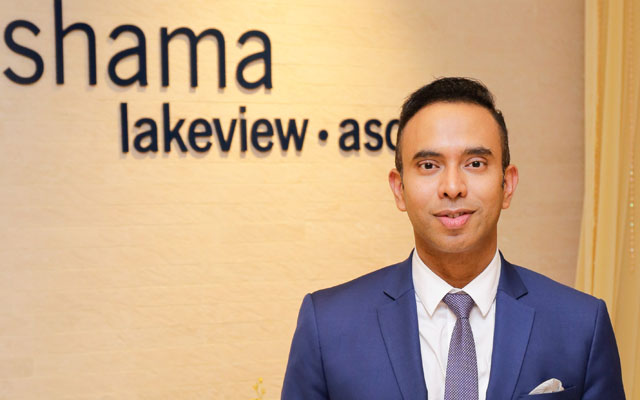
New initiatives Shama has been keeping us very busy and engaged lately. We kicked off 2018 with four new Shama signings in January 2018 alone and are now preparing to open five new Shama properties between January and August, namely Shama Island North Hong Kong, Shama Daqing Heilongjiang in China, Shama Lakeview Asoke Bangkok, Shama Hongqiao Shanghai and Shama Changfeng Shanghai.
These new openings will bring the brand to 13 operating properties, with seven in the development pipeline. From its beginnings as a China- and Hong Kong-centric brand, Shama now counts Australia and Malaysia among its pipeline destinations.
Challenges The changing demographics of the serviced apartment residents from larger families to couples or individuals is leading to a higher demand for studios and a lower demand for the larger multi-bedroom units. At our newer Shama properties in Shanghai and Daqing, a majority of our apartments are studio units and one-bedroom apartments.
With serviced apartments fast gaining popularity along short-stay leisure travellers, it is also essential for operators to balance the guest versus tenant mix to ensure that extended stay residents are not inconvenienced by the movements of the more transient guests.
2018 expectations The serviced apartments sector across Asia-Pacific is enjoying an upward momentum. This, coupled with the trend among more travellers opting to use serviced apartments even for short breaks or business trips, is changing the serviced apartment industry’s traditional long-stay model.
We target to have a minimum of 99 properties in our portfolio by 2024, and our serviced apartment brand Shama will represent a significant proportion of this growth.
Richard Tan, vice president, serviced suites, Pan Pacific Hotels Group
Market outlook Demand has stabilised as Asia-Pacific’s biggest market, China, eases into a more sustainable pace of growth. At the same time, the serviced apartment sector continues to be exposed to competition from the likes of home rental platforms and apart-hotels. The trend for shorter assignments continued, and so did the relocation of transnational corporations to lower-cost locations.
Performance was generally muted and uneven across markets in the past year. To illustrate, RevPAR for the serviced apartment sector in Singapore declined by nine per cent as at September 2017, whilst RevPAR grew by two per cent in neighbouring Kuala Lumpur.
New initiatives Later this year, we will debut our Pan Pacific brand in Malaysia with the opening of Pan Pacific Serviced Suites Puteri Harbour in Iskandar, Johor. In 2020, we will launch our first serviced suites property in Jakarta, as well as our flagship property, Pan Pacific London.
Challenges As a “traditional” accommodation provider, we will have to work harder to explain what customers can expect from us, which boils down to quality assurance.This is something we have to impress on millennials and post-millennials, who will shape the serviced suites sector as they join the workforce. This emerging generation of travellers also value customisation and flexibility over stunning décor and facilities, which has challenged us to look at – and also deliver – our service differently.
2018 expectations Asia-Pacific is expected to grow 6.2 per cent this year. Vietnam in particular stands out for its business travel boom and rapid economic growth. Similarly, in China, we anticipate more growth in 2018 as one in three Chinese companies expect travel budgets to rise over the next 12 months.
Pamela Chow, Rachel AJ Lee and Xinyi Liang-Pholsena contributed reporting to this article
Batad, northern Luzon, is home to some of the country's best preserved rice terraces
The Philippines may be a latecomer in developing agritourism as compared to some of its neighbours, but its tourism industry is not short of ideas on how it could compete for a slice of the market of farm-loving travellers.
Batad, northern Luzon, is home to some of the country’s best preserved rice terraces
The Department of Tourism (DOT) had begun taking notice of agritourism’s potential during the yearly gastronomy event, Madrid Fusion Manila. The Farm Tourism Development Act of 2016 soon followed, and the Farm Tourism Travel Guide was launched at the 2017 Madrid Fusion.
Building awareness and being heard over the competition is essential, said Patria Chiong, executive vice president of the Philippine Travel Agencies Association (PTAA), who acknowledged efforts to develop agritourism products should have begun 10 years ago.
For Afro Asian Travel’s president Angel Ramos Bognot, “farm tourism is viewed as a day package… You pick fruits, eat them, go home”. What she would like to see are more educational, creative and experiential farm stay products that stretch over several days, like those in Taiwan, Thailand, Malaysia and Australia.
“Tourists can plant the seeds and the farm can assign staff to take care of their plants, update them with photos, teach them Filipino cooking, then invite them to return after a few months to harvest what they planted,” Bognot suggested.
Also promising to change perceptions of farm tours as day packages is the DOT’s launch of a farm and faith tourism programme in December last year.
Roberto Alabado III, then tourism regional director, said Davao is the launch pad for agritourism because of its vast farms and plantations, and a farm tourism template is being prepared to be replicated across the country.
Alabado noted that the Calabarzon’s farm-to-table and organic farm concepts are already starting to get awareness, adding that there are also existing farm tours in Luzon and the Visayas.
Aida Briones, president, Batangas Alliance for Farm Tourism Development, comprising 20 organic and natural farming practitioners, noted the bright potential of the niche product, which can be combined with beach, heritage, culture, spa and wellness, and even faith tourism.
But she is pushing for tax breaks and reduced business permit fee for start-up farms, given that farming is capital intensive and return on investment can take time. For example, trees can take five to seven years to bear fruit.
Moreover, increased government support will be valuable especially in terms of staff training as well as marketing and promotions, she continued.
More players are jumping into this niche market. An example is Sheridan Organic Farm and Eco Village in Puerto Princesa, Palawan, run by Sheridan Beach Resort located in the area.
Resort director for sales and marketing Hannah Yulo said the 50ha agritourism farmstead has a hotel-standard dorm, in addition to activities such as tree planting, animal feeding, vegetable harvesting, field ploughing and farm-to-table dining to tempt guests to stay longer.
Newcomers could learn from farms and plantations that have successfully morphed into tourist destinations, including the Malagos Garden Resort in Davao, which became popular when its chocolate products won European awards.
Resort general manager Hermie Tabanag said that to meet the increasing demand, they have renovated the accommodation and added a new attraction, the Chocolate Museum, in March last year.
Costales Nature Farms in Laguna, which started organic farming of vegetables and herbs in 2005, offers accommodation, a convention hall, tour packages, workshops and an internship programme.
Spadon and Krupp (leftmost two in the front row) with the rest of Silversea's Eurasia team
Silversea Cruises says its new structure integrating Asia into Europe comes amid a growing business out of Asia towards the Mediterranean, and vice versa from Europe to the Far East.
Asia was under Australia/New Zealand previously but is now overseen from Frankfurt where a new managing director Europe & Asia, Alfredo Spadon, is based.
Spadon and Krupp (leftmost two in the front row) with the rest of Silversea’s Eurasia team
Spadon, in a phone interview from Tokyo where he and new vice president of sales Asia, Daniel Krupp, were meeting industry partners, said Silversea has every intention to step up efforts in the fast growing Asian luxury cruise market.
The appointment of Krupp as vice president of sales Asia is a new resource; Krupp said he would be travelling around Asia in the first year to meet partners. A hunt is on for a new regional director Asia, based in Singapore, to replace Melvyn Yap and report to Krupp.
“We are renewing our focus on Asia. Our objective is to enlarge and deepen the distribution channel, analyse our strategic partners, see where we can create new opportunities, both locally and for fly cruises,” said Spadon.
“There is a lot of potential business out of Asia towards the Mediterranean, and we’re also seeing the same from Europe towards the Far East, so we think the integration of Europe and Asia will allow us to share and exchange knowledge. We are at the beginning of this stage. We’re extremely happy with what has been done by our colleague, Melvyn, in the last 18 years, now we want to (strengthen) our positioning and evaluate new opportunities,” he said.
In Asia, Silversea has deployed four ships for this 2017/2018 winter season, including for the first time its new ultra-luxury ship and latest flagship, the Silver Muse.