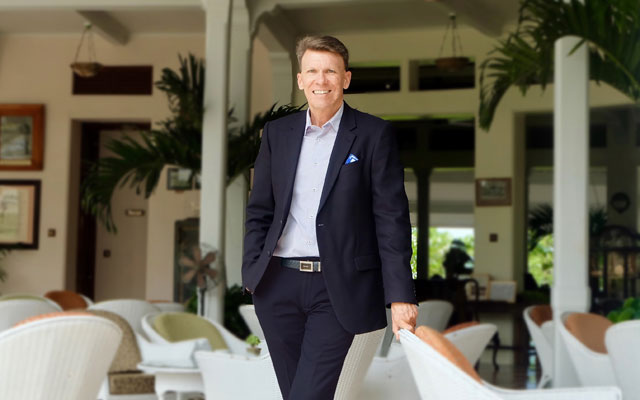
Centara Hotels & Resorts has recently promoted David Martens to corporate director of operations Hua Hin, Krabi and Samui.
In this new position, Martens will oversee multiple property’s operations in Hua Hin, Krabi and Samui. He will be responsible for the overall performance of multiple hotels and resorts in the chain, and oversee all activities associated with hotel operations.
The Australian will remain based in Hua Hin and continue as general manager of Centara Grand Beach Resort & Villas Hua Hin, a role which he assumed in December 2016.
He first joined Centara in March 2012 as general manager of Centara Grand Beach Resort and Villas Krabi. In 2014, he was promoted to area general manager and oversaw the Centra Anda Dhevi Resort and Spa, and the opening of Centra by Centara Phu Pano Resort Krabi.
The industry veteran has over 30 years of experience in the hotel industry in various destinations, including Maldives, Egypt, India, Vanuatu and Fiji.
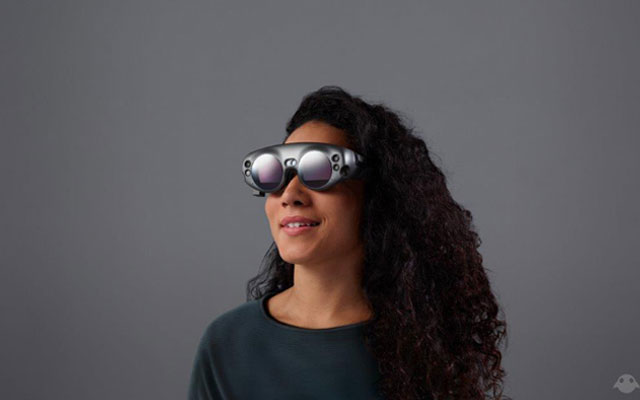
The new technology will bring guests up close and personal with New Zealand
Air New Zealand is entering a partnership with Magic Leap, a US startup that is building a spatial computing platform to power experiences that blend the digital and physical world.
Through leveraging innovative technology, the partners will develop experiences to highlight landscapes and activities in New Zealand that appeal to tourists.
The new technology will bring guests up close and personal with New Zealand
According to a statement from Air New Zealand, the airline will work with London-based creative studio Framestore to debut the Fantastical Journey Throughout New Zealand campaign with Magic Leap later this year, part of a longer-term programme to “redefine travel experiences”.
“Our goal with this partnership is to continue to encourage new visitors to experience the wonders of New Zealand with us,” says Jodi Williams, Air New Zealand general manager of global brand and content.
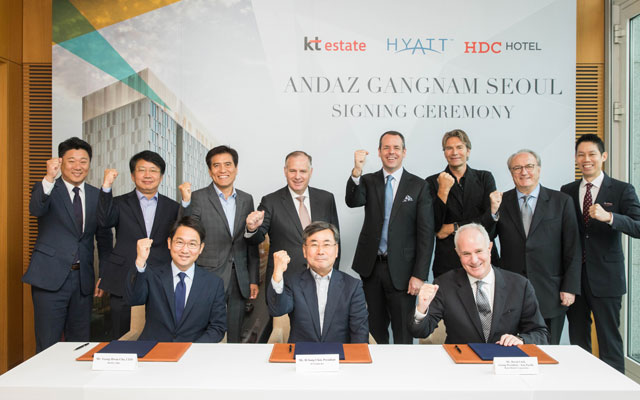
South Korea’s first Andaz-branded hotel is slated to open in Seoul’s Apgujeong neighborhood in Gangnam in 2019.
Andaz Gangnam, Seoul will comprise approximately 241 guestrooms, a lobby lounge (the Atelier), an all-day dining restaurant (the Tavern), 600m2 of meeting space, a pool, and a fitness centre with three spa treatment rooms.
Andaz Gangnam Seoul will be the first Andaz-branded hotel in South Korea; executives at the signing pictured
The hotel will rise blocks away from two subway stations and minutes from the Han River, with main restaurant and retail areas like Cheongdam-dong and Rodeo Street – lined with designer brands and high-end shopping – lying within close proximity.
The new-build will join other Andaz properties in Asia, including locations in Shanghai, Singapore and Tokyo.
For the development of Andaz Gangnam, Seoul, a Hyatt affiliate has entered into agreements with kt estate and Hotel HDC – the latter is a returning Hyatt partner in South Korea, with the two previously working together on Park Hyatt Seoul and Park Hyatt Busan.
The Ritz-Carlton Hotel Company has opened reservations for the inaugural season of The Ritz-Carlton Yacht Collection, set to take the seas in February 2020.
The first of three yachts in The Ritz-Carlton Yacht Collection will cruise a wide variety of destinations, including the Mediterranean, Northern Europe, the Caribbean, Latin America, Canada and north-eastern US. Voyages will range from seven to 10 nights with ports including Barbados, Cartagena, Bordeaux, Copenhagen, Mykonos, Portofino and more.
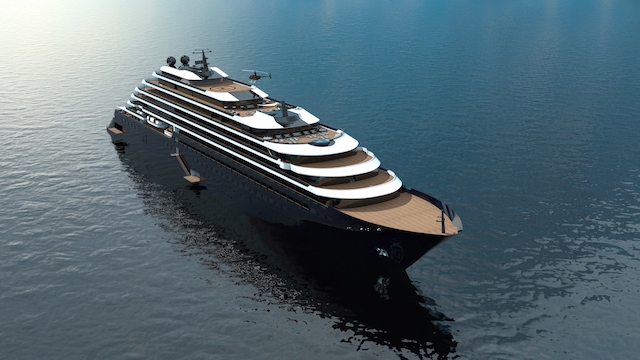
A rendering of the ship
The 190m-long yacht can accommodate up to 298 passengers and feature 149 suites, each with its own private terrace. There will also be two 158m2 Owner’s suites, each featuring its own whirlpool. Guests onboard will enjoy all-inclusive luxury sailing experience – which covers onboard activities, entertainment, beverages, meals, Wi-Fi, water sports and onboard gratuities.
Experiences available for an additional fee include a culinary experience at Aqua – the yacht’s signature restaurant by Michelin-star chef Sven Elverfeld – spa treatments and excursions offered through The Shore Collection.
The yachts of The Ritz-Carlton Yacht Collection are also available for private charter.
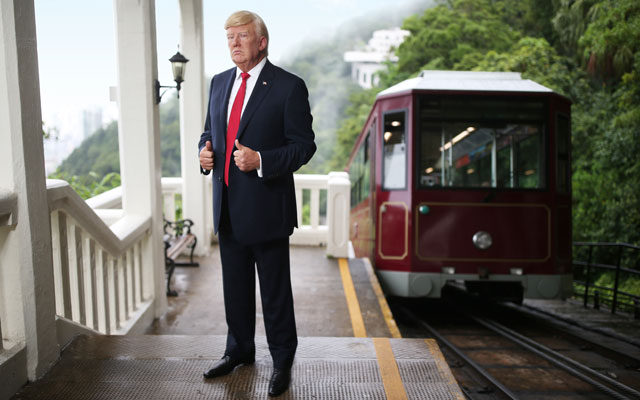
Madame Tussauds Hong Kong launched Trump Live in Hong Kong, making the US president the first to have his likeness brought to live by the brand’s Asian estate.
During his surprise visit, the live impression of president Trump tried his first ride on the Peak Tram and met the wax figure of himself at Madame Tussauds Hong Kong.
After greeting his friends president Xi of China and Indian prime minister Narendra Modi, “Trump” also jumped at the opportunity to discuss “social media strategy” with American supermodel, Kendall Jenner.
The new President Trump figure is dressed in his recognisable Republican red silk-tie, navy power suit and Made in America flag lapel pin.
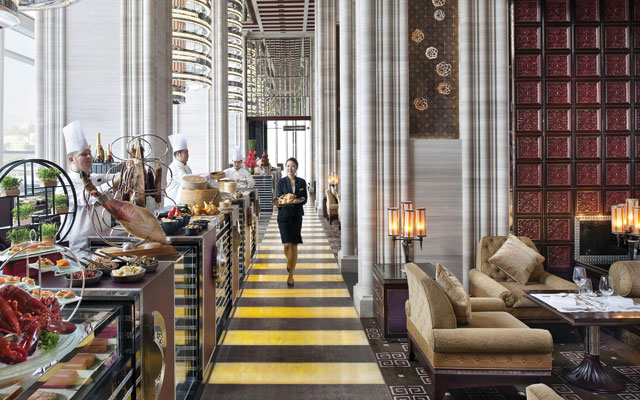
Constant fresh offerings at Mandarin Oriental, Macau
The plunge in mainland Chinese arrivals to Macau, coupled with the addition of 5,000 hotel rooms since 2015, created a challenging period for the territory’s hoteliers.
However, the industry is seeing the light at the end of the tunnel as average occupancy rates rose to 86.9 per cent in 2017 to match the 2014 heyday levels, based on figures from MGTO, with both integrated resorts and non-gaming hotels benefiting from the business rebound.
Constant fresh offerings at Mandarin Oriental, Macau
Jill Goh, general manager of The Mandarin Oriental Macau, said: “Since the downturn, various new initiatives have been introduced by the city and hospitality sector. Many attractive world-class resorts and hotels were opened in the last two years with diversified offerings that cater not just to (the gaming crowd), but also to families and meetings.
“We enjoyed a positive start to business this year, and I expect continued growth with the opening of the Hong Kong-Zhuhai-Macau Bridge,” added Goh, who has brought in wellness consultants, up-and-coming chefs and bartenders over the past two years to add to the hotel’s offerings.
Two years ago, Best Western Hotel Sun Sun readjusted its business strategy by reducing the target ratio of Mainland Chinese visitors to 60 per cent from 90 per cent, and has been refining its offers in the hopes of drawing more international traffic from South-east Asia, COO Charles Huang told TTG Asia.
After the successful debut of the Macau Street Art Festival last November, which brought the Praça de Ponte e Horta neighbourhood to life with artists, DJs, rappers and artwork, Huang intends to make it an annual event.
“Business started picking up in early 2017 and our occupancy hit 93 per cent on average,” he said. “Looking ahead, a full makeover in 2019 will give us a brand-new image and competitive products.”
Artyzen Hospitality Group’s area vice president, Macau operations Rutger Verschuren said: “After the challenging years of 2015-16, the overall hotel performance is living up to the sector’s expectations again. We look forward to good years ahead.”
Grand Coloane Resort, whose target markets are families and corporate travellers from nearby cities and South-east Asia, will roll out more outdoor activities to enhance its staycation and activity packages. “We need to show the other side of Macau besides gaming, luxury and bling,” Verschuren said.
Pattaya was given the spotlight as the host destination for Thailand Travel Mart Plus (TTM+) this year, with organiser Tourism Authority of Thailand (TAT) placing an emphasis on romance and luxury under the theme “Million Shades of Romance” at its annual tradeshow.
Commenting on the choice of Pattaya for TTM+ 2018, which was held last week at Ocean Marina Yacht Club, Tanes Petsuwan, deputy governor for marketing communications, TAT, said: “After two years of positive response in Chiang Mai, we wanted to show the new image of Pattaya and overthrow old perceptions of the city. Pattaya has reinvented itself for upscale travellers, with the Ocean Marine Yacht Club, Cartoon Network Amazone, F&B venues, Ramayana Water Park, international golf courses, etc.”
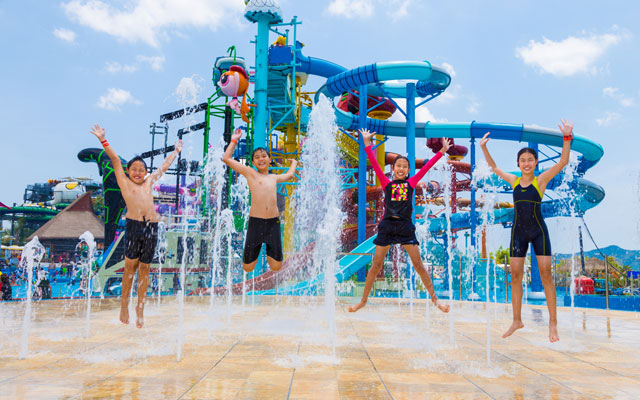
In recent years, Pattaya has been striving to show itself to be more of a upscale and family-orientated destination, with the opening of attractions such as Cartoon Network Amazone (pictured)
Located on the east coast of the Gulf of Thailand, Pattaya is expected to benefit from the Thai government’s “multimillion infrastructure investment” currently underway as part of the Eastern Economic Corridor development plan, Tanes added.
Key projects include the high-speed railway connecting Suvarnabhumi, Don Mueang and U-Tapao airports and the upgrade of the Sattahip commercial port, all of which will help to position the city as a high-end travel destination, according to Tanes.
It is also this new image of Pattaya that sellers were eager to present to the international travel business community at TTM+.
“It’s no longer fair to associate Pattaya as a sex tourism destination. The ‘nasty’ destination image is no longer apt,” said Pathira Nakngam Riley, director of sales & marketing at InterContinental Pattaya Resort, pointing to Cartoon Network Amazone and Flight of the Gibbon as examples of family-oriented attractions that have opened in Pattaya in recent years.
In addition to TTM+, other prominent international events like the Wonderfruit festival, LPGA golf tournament and International Fireworks Festival are also helping “to change travellers’ perceptions of Pattaya”, shared Jan Jeerapat, managing director of J Corp, which manages a trio of hotels in Pattaya.
However, responses were mixed among international buyers that TTG Asia spoke to at TTM+, with opinions split as to whether they would market and sell the destination to their clients.
Philippe Roussel, tour operator at Asia Voyages France, opined that the greater array of hotels, restaurants and activities has made Pattaya a “better” destination choice that can be paired with other parts of eastern Thailand for touring.
On the other hand, David Kevan, partner and product person at Chic Locations UK, thinks Pattaya’s seedy reputation still lingers and its mass tourism appeal unlikely to find favour especially among Western high-end travellers.
Likewise, Asia DMC’s managing director Thailand Andre van der Marck said that Pattaya is “for sure” not for families, a key market segment for his company. Furthermore, with the investment pumped into eastern Thailand, he foresees a huge influx of the Chinese market into Pattaya.
But InterContinental Pattaya’s Pathira urges the trade to give the city a chance. She said: “We cannot change the history of Pattaya but we can certainly change travellers’ impression.”
TCWTA will make its official debut at PATA Travel Mart later this year
A new tourism body, the Twin Cities World Tourism Association (TCWTA), will be launched at PATA Travel Mart (PTM) 2018, which will take place in Langkawi from September 12-14.
Twin cities, also known as sister cities, are collaborations between two cities to foster friendship and understanding between different cultures, and to form strategic international business links between them.
TCWTA will make its official debut at PATA Travel Mart later this year
TCWTA aims to support and increase tourism and travel between the two cities, support and increase the exchange of ideas and concepts related to tourism and travel, and enhance and strengthen relations between the two destinations through tourism and travel.
The association’s founding president, Thomas Binder, mayor of Gossau-Zurich in Switzerland, will formally make the announcement at the Twin Cities World Tourism Forum during PTM 2018.
The board will comprise 14 members, including 13 mayors from countries worldwide while Hüseyin Baraner, the only non-mayor member, will be appointed general secretary. The board is expected meet once a year in the city of the president to exchange ideas, concepts and plans. A board meeting will also be held in Zürich or Gossau at a later date in order to sign the TCWTA charter.
TCWTA also plans to publish a Twin Cities Almanac to be presented at ITB Berlin, which will include an editorial note of the president, reports on the tourism and travel activities of twin cities, and interviews with mayors of twin cities on topics like desiderata, plans, projects and the tourism development of twin cities.
The TCWTA president is expected to visit a developing country in Africa or Asia once a year in order to research opportunities to take part in projects to further and support tourism and travel in twin cities located in regions without large financial funds.
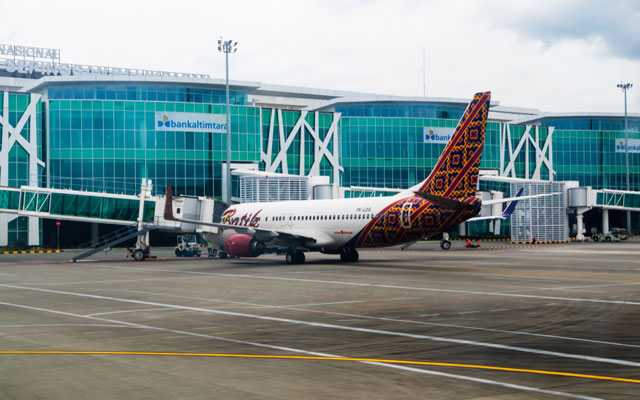
Europe lifts blacklist on Indonesian carriers; state-owned Garuda Indonesia at Amsterdam Airport Schiphol
The EU has removed all Indonesian carriers from its air safety blacklist following improvements in their air safety.
All Indonesian carriers were put on the EU air safety blacklist in 2007 over safety concerns but only seven were removed in recent years. This latest move sees more than 50 Indonesian companies taken off the list.
Europe lifts blacklist on all Indonesian carriers; Batik Air was removed from the EU ban much earlier
A total of 119 airlines remain banned in the 28-nation EU.
Not all banned carriers fly to Europe but blacklisting them has been a strong business incentive for companies to improve their standards and for countries to boost aviation safety, according to the EU.
The commission has also deployed a new warning system to prevent unsafe aircraft from entering the bloc without a valid safety authorisation.
Malaysia-based hospitality and tourism training provider Aariana Hospitality International will soon expand its services to Singapore and Thailand.
Aariana will partner with the American Hotel & Lodging Educational Institute (AHLEI) and local joint venture partners in Singapore and Thailand’s hospitality sectors to provide one-week certification courses aimed at addressing the shortage of certified hospitality professionals in the region, the company’s president & CEO, Reginald T Pereira, told TTG Asia.
Aariana’s courses will complement and not be a direct competitor of other institutions of higher learning
Singapore and Thailand were selected for Aariana’s expansion due to certification programme requests from hotels in these markets, Reginald revealed, adding that the institution will complement courses currently available in the market and not compete with institutions of higher learning.
Reginald: courses will help mitigate the shortage of certified hospitality professionals
“Our ultimate aim is to provide courses in supervisory roles, executives and general managers in both Singapore and Thailand, similar to what we offer in Malaysia. These courses are certified by AHLEI,” he added.
The training programme in Singapore will start in 3Q2018, whereas the one in Bangkok will begin in 1Q2019.
In Malaysia, Aariana Hospitality International has been providing training programmes to professionals in the hospitality and tourism sectors since its inception in 2014. Last year, 100 people received its professional certification.