TTG Asia
Asia/Singapore Tuesday, 7th April 2026
Page 1428

Emirates incorporates VR into digital booking experience

0
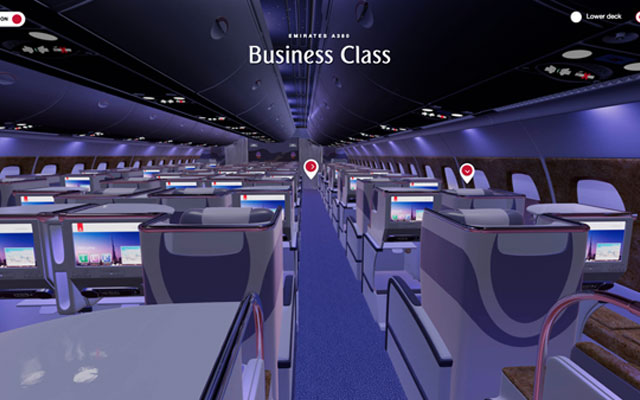
Emirates' business class

Emirates has introduced 3D seat models on its website, becoming the first airline to incorporate web virtual reality (VR) technology into its digital platform.

The visualisation engine displays a 3D 360-degree view of the Emirates’ aircraft interior, giving customers a chance to explore their seats, cabin and onboard products.

Emirates’ business class

The experience is now available for the three-class Emirates A380 but will soon include renderings of Emirates’ entire fleet comprising all configurations of the A380 and Boeing 777 aircraft.

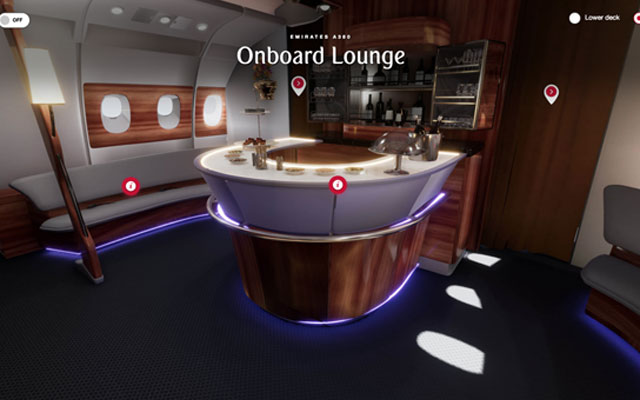
Using navigational hotspots, users can navigate through the economy, business and first class cabins, as well as the iconic onboard lounge and shower spa on the Emirates A380.

Emirates’ onboard lounge

Users can enjoy hands-free cabin navigation and seat selection by using any VR headset like Google Cardboard. This technology is compatible with all devices without the need for external applications or plugins.

The 3D seat models were created in partnership with Renacen.

Marco Polo Hotels names Helen Tan hotel manager for HK properties

0

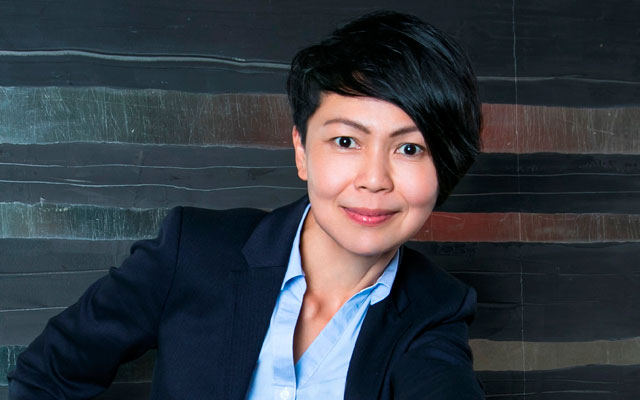
Marco Polo Hotels – Hong Kong has appointed Helen Tan as hotel manager of its three Hong Kong properties: Marco Polo Hongkong Hotel, Prince Hotel and Gateway Hotel.

In her new role, Tan will be assisting the general manager in supervising the operations departments of all three properties and managing their day-to-day operations.

She was most recently with Marriott International as the pre-opening executive assistant manager – F&B of The Sanya Edition in China.

Tan brings more than 25 years of knowledge and hospitality industry experience to the table. She has worked with several international brands, including Marina Bay Sands, Shangri-La Hotels and Resorts, InterContinental Hotels & Resorts and The Ritz-Carlton Millennia Singapore.

Knowing the rules of the road

0
Arrow indicating side road in mountain landscape

Brought to you by Avis

In our last post, we shared that going on a self-drive holiday lets one get off-the-beaten path and see the world on one’s own terms; inspiring the desire for adventure and autonomy.

With more than 5,500 locations in over 170 countries, it is easy to pick up an Avis car and embark on a road journey to embrace more of life’s exploits.

Driving from place to place in a foreign land to uncover the gems of the country is a fundamental part of a self-drive holiday. To ensure that the holiday is a fun and rewarding one, it is important to understand that every country is different and has its own rules of the road.

To help you and your customers appreciate the country’s “driver culture”, spend a moment to unlock Avis’ top-line road rules in different parts of the world**. Knowing the key rubrics can simplify the journey, reduce the stress and anxieties, while leaving more time to take in the sights and sounds of the foreign land.

Did you know that in Bulgaria, parking is only on the left side of the road on one-way streets?

While in Germany, there are no tolls to pay on the Autobahns (highways/expressways). And contrary to common belief (joke or otherwise!), there are speed limits on some German autobahns!

When driving in Norway, it is important to note that vehicles approaching an intersection from the right have the right of way even if it is entering from a small road onto a major thoroughfare. There are however, exceptions to this rule and these are indicated with appropriate traffic signs on both the small roads (stop signs) and large roads (a yellow diamond-shaped sign).

There are historical areas in Italy in which one cannot drive. Look out for signs that read “Zona Traffico Limitato” (Limited Traffic Zones). And like they say, when in Rome, do as the Romans do!

Interestingly in Romania, it is against the law to drive an excessively dirty car! This can result in an on-the-spot-fine. In addition, any person who gets out of the car to walk on the road must wear a reflective jacket, day or night.

America is full of Toll Roads, also known as Turnpikes. Always set aside spare change in the car as not all payment booths accept Debit and Credit cards.


In Israel, children under 13 years old are not allowed to sit in the front of the car… and the STOP sign is denoted by a red octagon with a white hand.


In some countries, we drive on the left side of the road and in others, we drive on the right side… so what does driving on the left and on the right mean? The terms Right-hand Drive (RHD) and Left-hand Drive (LHD) can be rather confusing. In brief, a RHD vehicle drives on the LEFT hand side of the road, while a LHD vehicle drives on the RIGHT hand side of the road. So who is right and who is wrong?

Thus, in Australia and New Zealand, as in Hong Kong, India, Malaysia and Singapore (where their British colonial history probably led to British driving rules being adopted in these countries), one drives on the left; hence, it means that the driver’s seat is on the right side of the car (i.e. RHD vehicle) – and that implies that the centre line is always on the right or on the driver’s side of the car.

It probably comes as no surprise to learn that all countries have their own rules, regulations and laws. There may be many, which are similar to and applicable in several countries – drink-driving, mobile phone usage, and right-of-way at pedestrian crossings and for animals…

But like everything else, a little homework can go a long way to help avoid potential bumps on the road; and it pays to ask questions when in doubt!

The open road lies ahead… so, unlock the world of Avis for your customers here, go through our Road Rules and have your customers take on a road trip to discover more of Planet Earth!

Safe driving!

**These are road rules put together to help bring awareness of different driving laws in foreign countries. These rules are to be used only as a guide. Please be aware that rules are subject to change in each country and the country’s laws prevail. It is always best to verify directly with the destination country’s traffic authority or ask an Avis representative if any queries arise.


About Avis


Avis Car Rental and its subsidiaries operate one of the world’s best-known car rental brands with approximately 5,500 locations in more than 170 countries. Avis has a long history of innovation in the car rental industry and is one of the world’s top brands for customer loyalty.

(Photos: Avis, Pixabay)

Giving Pattaya a second chance

0

A bad reputation is hard to shake. Just look at Pattaya. Owing to its notoriety as the Sin City, what comes to mind when Pattaya is mentioned often doesn’t veer far from red-light districts, drunken parties or dirty beaches. Its image as a seedy destination is what made many travel buyers hesitant to sell and promote this destination to their clients.

But is this assessment of Pattaya still valid, I wondered, during my visit to the city last month to attend Thailand Travel Mart Plus (TTM+). The Tourism Authority of Thailand (TAT), as TTM+ organiser, was keen to show the international travel community the ‘new’ Pattaya by hosting its annual tradeshow in the Ocean Marina Yacht Club – a strategic move to not only dissociate Pattaya from its sleazy image but to also showcase it as a destination for yacht tourism, luxury and romance.

Perceptions of Pattaya from international buyers attending TTM+ were decidedly more mixed though; some were keen to include the city as a stop in an eastern Thailand itinerary while it remains a strictly no-go zone for others.

I too used to share the perception of Pattaya as one raucous party town, but recent visits to this seaside city as well as conversations with members of the local trade, many of whom are residents of Pattaya, are convincing me to think otherwise.

“It’s no longer fair to associate Pattaya as just a sex tourism destination. The ‘nasty’ image is no longer apt,” said Pathira Nakngam Riley, director of sales & marketing at InterContinental Pattaya Resort, pointing to the massive infrastructure improvements that have been poured into Pattaya, stepping up the pace of gentrification in the inner city and attracting a wider demographics.

Indeed, Pattaya has been morphing into a cosmopolitan city along the coast, with a new crop of lifestyle attractions – think water parks, trick-eye museums and zipline canopy tours – offering a wider selection of things to do, not just for single males but also for families, couples and groups of friends. International and Thai hotel brands like Mövenpick, Renaissance and X2 have sprung up in recent years, especially in the southern Jomtien district.

Granted that the unsavoury part of Pattaya still exists, but most visitors won’t see it unless they specifically go looking for it – just like in most cities in the world. On the streets nowadays, visitors are more likely to see Chinese, Indian and Russian tourists, many of whom come as families with kids in tow.

It is this family-friendly image of Pattaya that TAT and the local trade want visitors to associate the place as. Said Pathira: “We cannot change the history of Pattaya but we can certainly change travellers’ impressions (of the city).”

However, cleaning up Pattaya’s sleazy image is a major undertaking. Its bad reputation wasn’t formed in one day, and clearly it will take time to convince visitors of its family-friendly image.

That said, Pattaya’s historical baggage should not be a life sentence. The much-maligned city has shown determination in wanting to rise from the shadows of its unsavoury past, and for its positive efforts we should give it an opportunity to turn over a new leaf. The spirit of travel is very much about keeping an open mind and heart, so why not give Pattaya a second chance.

Virtuoso CEO: What makes travel agents priceless?

0
Matthew Upchurch

You’ve just appointed an Asia regional director, Evan Pierce, based in Singapore. What’s your intent for Asia?
We want to grow relative to the growth of the market. But we will only grow as large as our values allow us to (i.e. having only members that share those values).

We’re an organisation that helps entrepreneurs come together to exchange information and share ideas. At our two-day APAC forum here (in Singapore, coinciding with ILTM Asia Pacific in May), it’s energising to see an exchange of ideas among members, be it about staff recruitment, marketing, service levels and other issues. If you don’t believe that sharing is actually more powerful than keeping something to yourself, then we’re probably not the right organisation for you.

We’re also an organisation with a greater purpose, which is, enriching lives through human connections. The centre of our value proposition is the power of relationships.
What excites you about the Asian market?
In Asia, we’re seeing a lot of boutique independent players and this is why I’m excited. We’re the perfect solution for them. There are two things that drove me to build this organisation. One is my love for travel. The other is because there are these amazing boutique agencies and I wanted for there to be an opportunity to bring these entrepreneurs together to compete with the giant multinational organisations.

Today, the number one competitor to our members is not other agencies. It is the customers doing it themselves.

Do travel agents get that by now?
Let’s look at an industry that evolved the way we’re evolving but 20 years earlier – the stockbrokers. Some people use them for transactions and a little advice; others have stockbrokers who give really good advice while the transaction is almost secondary.

The online revolution split the market. The market looked like it all went online, because there were these huge online players that became big consumer brands. A big chunk of business went there, because it was cheaper, this and that. But what gets lost is the fact that during the same period of time, there was this massive growth in true private wealth advisors, people who really were not trying to get you to transact, but whom you were paying based on the value of having an overall plan, strategy, making you feel comfortable, helping you and family identify your life’s priorities connected to your finances.

Well, the same thing has happened in travel. You’ve got this massive amount that’s about booking, but there’s also a huge growth in real trusted advisors.

Whenever I talk to advisors, I say if you tell people that you are in the business of booking travel, you’ve literally lost the game before you even start. Because booking travel is not the problem; there are hundreds of ways of booking travel and hundreds of new ways being invented everyday on how to book.

Your take on the difference between transactional and trusted advisor?
Our job is not booking travel. It is to help well-educated, savvy consumers, who want to focus on value rather than price, to optimise their life experiences through travel.

Trusted advisors do that by having a larger conversation with the client. Consumer research all around the world has validated that the single most important thing that differentiates a transactional agent from trusted advisor is having a conversation with the client after they return from their trip. If you don’t have a conversation, or some sort of exchange with your client to learn from that previous trip – what did you like, what would you change? – then you are transactional.

Every trip becomes a learning opportunity that grows the value of that relationship and makes it stickier.

In Asia, a refrain I hear is everyone now wants to be a luxury agent, or claim they are but are not. How do you qualify your members?
Our general philosophy around the world has been to go in and find the people who already have the best reputation, the best production.

So while we do help people improve their game, there is an element – a play-off of our name, Virtuoso (a person highly skilled in music or another artistic pursuit) – which is, if you put a Stradivarius violin in the hands of somebody who’s never played the violin, he would not tell the difference, right?

And why would the best want to join us if they are already the best? But why wouldn’t they want to be in a club with other people that are as accomplished as they are?

We look at two specific things: you have to have a certain amount of real luxury volume to be eligible. But it’s also the kind of volume, and your reputation. To be frank, we check the reputations of people who are joining us through our partners. We ask our partners, what do you think of these people, of their practices? It is an extensive process and the reality is by the time you get in, the other members and suppliers have already given you their endorsement, we know you’re a cultural fit and we know we’re not starting at zero.

We see the rise of new, younger entrepreneurs. Often they are a very small team. They see Virtuoso as being too big.
There are really two kinds of Virtuoso members. We have members that run ‘serious’ (in the sense of big or established) businesses, and members that own practices. We have boutiques all over the world, some where there are may be just five people, but they are well-designed and exclusive practices.

It’s the same with our hotel partners. We have 1,300 hotels worldwide. Forty-eight per cent are 100 rooms or less; 25 per cent are 50 rooms or less. We even have properties like the Minaret Station (Alpine Lodge) in New Zealand, which you can do only by helicopter, and it’s only four chalets. It’s not size; it’s quality and standards.

What’s an innovation or R&D that Virtuoso is working on to support members?
One project we’re doing is a digital tool that supports the interaction between an advisor and a client on longterm travel planning.

So instead of planning one trip at a time, we’ve developed this tool that curates for every person in the family their travel wishes, in a fun way, and has a backend system that will show all their travel dreams. So instead of the client thinking of one trip at a time, the advisor could lay out a strategy for the couple or family on how to optimise their free leisure time for the next five years – next year we’ll be here; three years from now will be the right time to take our kids to Africa, and so on.

The idea is, why would you go to a financial advisor and spend time and effort to have a conscious plan to optimise your financial assets, and not sit down with a Virtuoso advisor who can help optimise your most valuable non-renewal asset, which is your free leisure time? If you lose money, you can make it back. If you lose time, it never comes back.

What to you is a great travel advisor and do you champion him to consumers?
We do consumer PR. We explain what a real travel advisor does.

We tell them, a great travel advisor is a specialist. But they say, wait a minute, they can’t possibly know everything. Well, a really great advisor does not pretend to know everything. They are a specialist in YOU. Their job is to get to know you, who you are, what you like, what you don’t like. They may not know everything but that’s why they have this entry point to a global Virtuoso network that has the incredible connections that provide them with the knowledge and buying power.

If you think of how Asia will develop for Virtuoso in the next few years, what would you like to see?
That we have grown to a significant, relevant player relative to the overall size of the market, that we continue our philosophy of authentic, personalised, human-centric travel, rather than travel that focuses on price or deals, that we actually help members and suppliers in this market as we have in other markets.

If we could help Theng Hwee (founder, Country Holidays, which won Virtuoso Asia-Pacific Luxury Award, Hotels & Resorts Growth 2017) grow his business, just as we helped Valerie Wilson in America, that would mean we’ve done a great job for the industry and for the consumers in the market. The ultimate goal for us is to get up everyday and do something that has a positive impact on someone’s life.


New tourism minister from Sabah stokes industry’s hopes for revamp

0

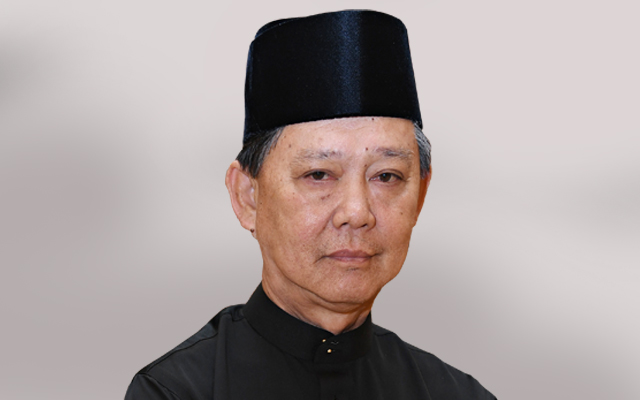
Mohamaddin Ketapi from Sabah has been named Malaysia’s new minister of tourism, arts and culture – replacing Mohamed Nazri Abdul Aziz – renewing optimism in travel trade members concerned with issues such as government spending and Sabah’s image.

Mohamaddin is a supreme council member of Parti Warisan Sabah and also a member of parliament for Silam, Sabah. From 1986 to 1990, he served as assistant to the chief minister of Sabah. He holds a law degree from Buckingham University in the UK.

Industry leaders in Malaysia tourism sector expect Mohamaddin’s background and experience in public service will serve him well in his new post and are hopeful that he will be able to take tourism to greater heights.

With Mohamaddin Ketapi (pictured) named tourism minister, travel industry members are optimistic for more prudent spending, Sabah’s comeback, etc.

Raaj Navaratnaa, general manager, New Asia Holidays Tours & Travel, commented: “He is a first-time full minister in the federal government and comes without baggage.

“I hope he will be able to enhance and mop up the ministry to make it function more orderly and effectively. I hope he will engage more with the private sector and listen to their views in shaping policies in relations with international tourism marketing, which was lacking in the previous administration.”

Morahols Travel’s managing director Eric Sinnaya believes that Mohamaddin, as a new minister in a new government, will be able to see things in a new light. “I hope he will bring a total revamp and rethink new ways of focus marketing that will further enhance the tourism industry,” he said.

Sinnaya also expressed his hope for the new minister to introduce a public audit of tourism expenses and the return of investments on expenses made so the public can gauge if money has been well spent. “He should be frugal and not overspend,” he added.

Meanwhile, Anthony Wong, group managing director, Asian Overland Services Tourism & Hospitality Group, thinks that Sabah’s “thriving tourism industry would have rubbed off (on the new minister)” to understand the value that the sector brings to his home state.

KL Tan, president of Malaysian Association of Tour and Travel Agents, shares similar sentiments. “The appointment augurs well for rural tourism in general and east coast of Sabah in particular, as Silam is located midway between Tawau and Sandakan. Our minister is from this area and could testify that residents and tourists feel just as safe and secure as any other city or town in the country, or for that matter, any other tourist spots around the globe.

He hence hopes for the new government to engage with foreign government organisations that have issued travel advisories against visiting the east coast of Sabah and have them lifted.

Tan says MATTA is eager to work closely with the new minister to “achieve tourism targets, modernise outdated laws, introduce incentives to spur the industry and step up enforcements against illegal and unlicensed operators”.

He further recommends for the ministry to step up on digital marketing, collaborate actively with industry bodies such as MATTA in overseas promotions, abolish the tourism tax and provide incentives to upgrade the quality of tourism vehicles that cater to high spending tourists.

Peter Feran to lead new Radisson Blu Resort Phu Quoc

0

Peter Feran has been appointed general manager of Radisson Blu Resort Phu Quoc, slated to open this month as the brand’s first property in Vietnam.

The Australian brings more than 22 years of hospitality experience to the table, having been involved with the Radisson brand for the last 10 years, where he first started as rooms division manager at the former Radisson Playford Hotel & Suites, Adelaide.

In 2008, he was appointed hotel manager of Radisson Blu Plaza Hotel Sydney, followed by his first general manager role in 2010 at Radisson Hotel Brunei Darussalam. Following five years in Brunei, Peter moved to Thailand to take the reins at Radisson Blu Plaza Bangkok.

Seletar Airport’s new passenger terminal to open by end-2018

0
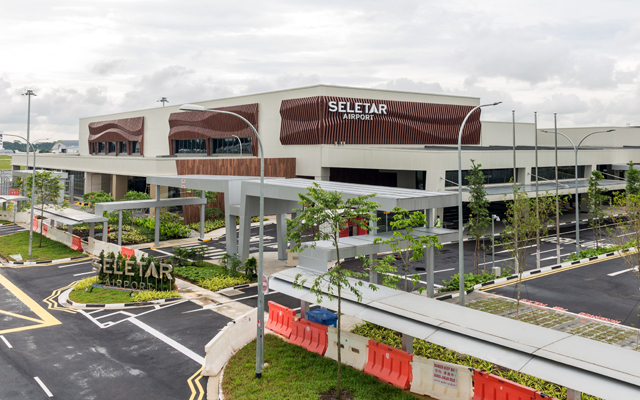
New terminal adds an enlarged departure and arrival area, allowing the airport to handle scheduled commercial flights

Seletar Airport’s new S$80 million (US$57 million) passenger terminal is set to be operational by end-2018.

Managed by Changi Airport Group, the new terminal building has a floor area of 10,000m2 – more than six times larger than the current terminal – and is expected to handle 700,000 passenger movements a year.

New terminal adds an enlarged departure and arrival area, allowing the airport to handle scheduled commercial flights

Associate general manager of Seletar Airport, Khoh Su Lim, said in a statement: “The new passenger terminal enables Seletar Airport to handle the expected growth of aviation activities in future.”

The new passenger terminal features an enlarged departure and arrival area, designed to handle scheduled commercial flights. The departure area will have four check-in counters, six immigration lanes, two security screening stations and a gate holdroom which can comfortably accommodate about 200 passengers.

The check-in, immigration and security screening counters are positioned in an intuitive straight route through the departure hall, enabling a quick boarding process for passengers.

The new terminal will also have a section for passengers travelling on chartered business flights and private jets, with its own waiting lounge area.

On the airside, there will be be three aircraft parking stands conveniently located next to the terminal. This allows passengers quick and efficient access to the aircraft, enabling greater operational efficiency and faster aircraft turnaround time.

As well, Firefly Airlines will shift its operations to Seletar Airport when the new terminal becomes operational. The low-cost subsidiary of Malaysia Airlines is currently operating 20 daily turboprop flights — to and from Subang, Ipoh and Kuantan — at Changi Airport.

SITA invites airline industry stakeholders to join blockchain project

0
SITA is in a position to work neutrally with multiple stakeholders to build the infrastructure

Singapore Zoo opens illuminated night-time walks

0
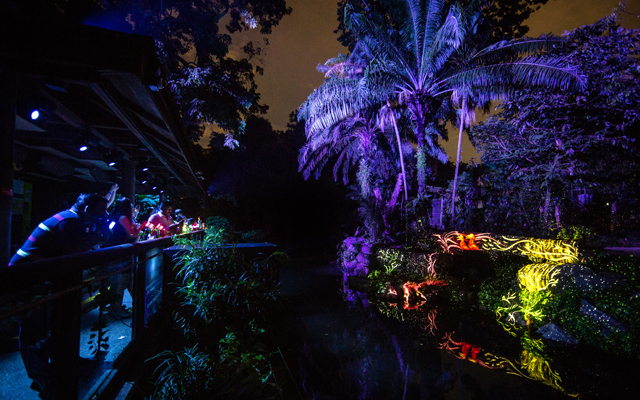
The Play Like an Animal zone encourages guests to stomp on light pads to bring projections to life

From this month until December, the Singapore Zoo will come alive at dusk with its latest nocturnal attraction – the Rainforest Lumina – a night walk unveiled in conjunction with its 45th anniversary.

The attraction is an illuminated one-kilometre-long trail decked out with interactive light, multimedia projections and sound installations, and covers about half of the zoo’s area. It is open from 19.30 to 00.00, with the last entry at 22.30.

The Play Like an Animal zone, where the projections hop along with participants

Rainforest Lumina is a collaboration between Wildlife Reserves Singapore and Moment Factory, a Canada-based multimedia entertainment company. It is the first Lumina instalment in South-east Asia, and the seventh in the world.

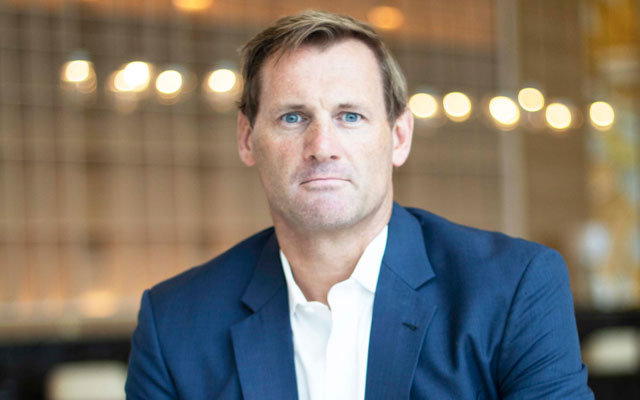
At a press event, Mike Barclay, group CEO of Mandai Park Holdings, called the Rainforest Lumina a “sizeable investment that was deliberated on for a long time”. While he declined to give the actual figure, Barclay did share that the Singapore Zoo had to “sell a lot of tickets to break even”.

Tickets cost S$22 (US$16) for adults, and S$16 for children ages three to 12.

Aside from spreading the message of wildlife conservation, Barclays shared that the Singapore Zoo presented an opportunity to activate the precinct after it closes at 18.00.

At the sing Like An Animal zone, the louder participants sing, the more colourful and elaborate the projection

“This is a wonderful way of showcasing the forest,” Barclays said. He also believes that this attraction would help to increase the zoo’s appeal to locals, as well as teenagers and adults.

He elaborated: “Many locals come to the zoo as kids, and after with their kids and grandchildren, but there are sections in between where we don’t get a lot of visitation. We are aware that there are certain segments where we don’t really have a strong appeal.”

When asked why this event runs from July to December only, as opposed to being a permanent attraction, Barclays shared: “We would like to keep it fresh as a scarcity product, where it won’t be around forever. If something is always there, people will put off visiting the space. We can run a season, take a step back, and see if it works. (If it does), we can assess how it went, and perhaps make a decision (in the future) to bring it back.”

While the walk doesn’t involve any interaction with live animals – which are moved back of house at night – visitors will have the chance to interact with eight virtual animals. These eight creatures – an orang-utan, flying fox, sloth, chameleon, otter, pangolin, hornbill and white tiger cub – appear in various exhibits.

There are 11 zones in total, a few of which are interactive. For instance, in the Sing Like An Animal zone, guests can sing (or hum, croak or yell) into a microphone, and the more sound made, the more vivid, colourful and elaborate the projection will be.

Other memorable zones along the trail included the countless dancing green fireflies, and a section dedicated to luminous stalks of flowers.