

Far East Hospitality expands brand lineage with new Clan

Accelerator scheme brings S’pore agencies onto digital transformation track
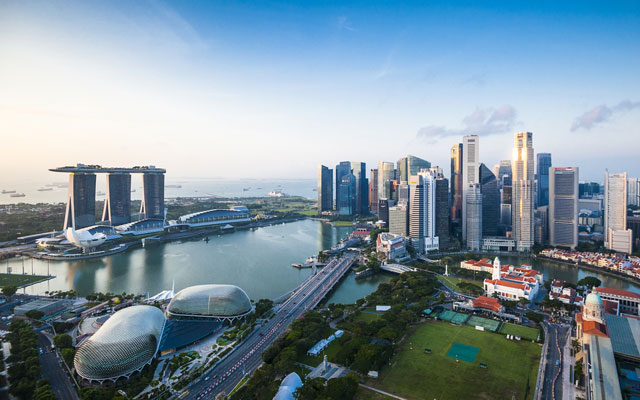
The FinLab accelerator – a joint-venture between United Overseas Bank (UOB) and SGInnovate – is collaborating with the Singapore Tourism Board (STB) and NATAS to roll out a digital transformation programme for four travel agencies, running from June to August this year.
EU Holidays, Pegasus Travel, Siam Express and Royal Wings are the four agencies selected to participate in the digital business transformation programme.
Through the three-month acceleration programme, the agencies will learn how to identify areas that hinder growth in their business and resolve them through technology. They will also be guided on how to apply digital solutions to address their needs.
During the programme, the travel agencies will draw on the expertise, resources and hands-on guidance provided by The FinLab and its network of industry experts, mentors and technology leaders.
The agencies will also be introduced to solution providers, particularly those in the areas of data analytics and digital marketing. These experts will then help pilot what they deem to be the most appropriate and innovative solutions to address challenges faced by the agencies.
Felix Tan, managing director, The FinLab, said: “Despite the shift to using online booking sites among consumers, there is an opportunity for travel agencies go beyond the usual issuance of e-tickets and vouchers to provide consumers with personalised services. As such, travel agencies need to understand how they can use digital solutions to understand their target audience and to connect with them more effectively.”
Steven Ler, president, NATAS, said: “As we move into the digital economy, it is important for the travel industry to innovate to ensure that it continues to benefit from growth opportunities in the long-term. One of the ways to do so is by collaborating with partners that have the expertise to help our travel agents develop digital competences.”
Ong Ling Lee, director, travel agents and tourist guides, STB, added: “We hope that with the practical guidance provided by this acceleration programme, travel agents will be encouraged to take the first step towards achieving their growth ambitions.”
EU to adopt new screening system for visa-free travellers

The EU has adopted the new European Travel Information and Authorisation System (ETIAS), a pre-authorisation requirement for visa-exempt third-country nationals planning to travel to the Schengen area.
Scheduled to come into effect in 2021, ETIAS assesses who is entering the EU, from where and if they pose a risk to EU security.
The enforcement is said to be aimed at easing travel to the EU and simplifying border checks.
In a statement congratulating EU on the move, WTTC said it welcomes how the needs of travel and tourism were taken into account while also ensuring enhanced EU security.
During negotiations, WTTC had stressed the importance of the process to be made as easy as possible for legitimate travellers.
In addition to the ease of process, WTTC also advocated for the fees to remain at a reasonable level, one that does not discourage travellers from coming to Europe. The final fee of seven euros (US$8.20) meets this balance, WTTC said.
ETIAS will be free for travellers under 18 and over 70.
“We see this as an important first step in the digitalisation of travel. The ultimate aim will be the use of biometric technology to ensure seamless, more efficient and more secure travel,’ stated Gloria Guevara, president & CEO World Travel & Tourism Council.
The aim is for ETIAS application to be quick and simple, requiring no more than a travel document, credit card and access to the Internet.
A majority of applicants will receive a positive reply within minutes, according to the WTTC statement. If additional information, documentation or an interview would be needed, different possibilities will be offered taking into account the situation of the traveller.
Millennium & Corpthorne kicks off partnership with Chelsea FC

Millennium & Corpthorne Hotels has been named official hotel partner of Chelsea Football Club as part of a three-year partnership beginning July 1.
With a multi-regional focus on Europe, China, South East Asia, North America and Middle East, the partnership will give MyMillennium members and corporate customers access to “close-to-the-action” football experiences including Chelsea FC home and European matches, VIP match-day hospitality at Stamford Bridge, and visits to the club’s training facilities at Cobham.
The move comes as the group is launching new brands – the Leng’s Collection and the M Collection – along with a brand-new set of loyalty programmes for its direct consumers, corporate clients and the planner/booker community.
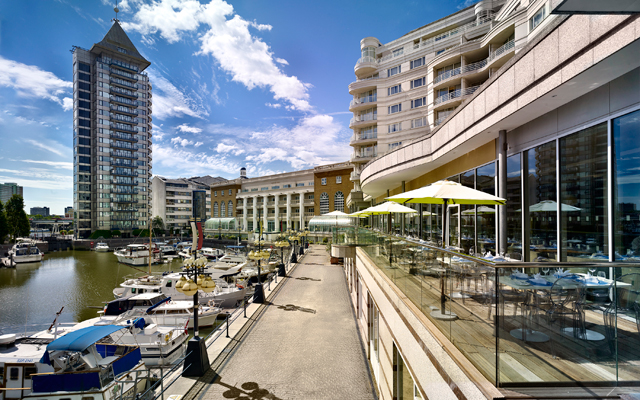
Expected to benefit from the partnership is The Chelsea Harbour Hotel, located a walking distance from Chelsea Football Club’s home ground stadium of Stamford Bridge in London, and part of Millennium’s upcoming Leng’s Collection.
The all-suite hotel will host events in coordination with the Club and their partners.
Best Western invites guests to Discover Asia with 2+1 night deal
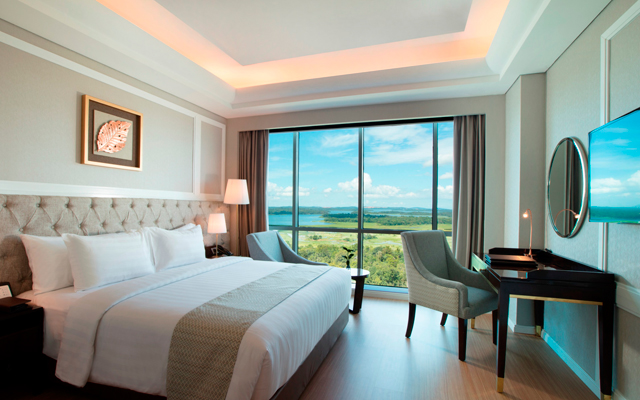
Guests booking two consecutive nights at participating Best Western Hotels & Resorts can enjoy a third night free from now until December 2018.
The Discover Asia offer applies to bookings made via the Best Western website for stays in participating hotels in Thailand, Japan, the Philippines, Indonesia, Myanmar, Laos and Malaysia.
Additional benefits include best available rate guarantee, automatic points for Best Western Rewards members and complimentary in-room Wi-Fi. Terms and conditions apply.
Agents reveal their most unusual customer requests

From locating the most obscure shrine in Japan to flying in a top pastry chef to bake an Instagram-inspired cake, no order is too tall for these travel agents. Read on to find out how they troubleshoot and customise to the most unusual requests received.
A pilgrim’s quest for the remote
A solo traveller requested a two-week trip in Japan, where he only wanted to stay in temples and shrines. Most of these were not popular temples in Japan, but were located in secluded and obscure areas. There was hardly anyone providing such accommodation services yet, but we managed to pull it off.
We contacted our Japanese offices, and had them liaise with local shrines and temples to make special arrangements for this client. He had a reasonable budget, so we were able to fulfil his request. I wasn’t sure if it was for a pilgrimage, or if it was just his special interest.
Recently, he’s been coming back to us to do some ‘research’, so we might be getting another interesting request soon!
– Eddie Kheng, outbound manager (Singapore market), H.I.S. Travel
Cooking for love
A client staying at an overseas resort for his wedding anniversary wanted to cook an Indian meal for his wife. However, the hotel didn’t have all the ingredients required for cooking the meal. We tried to explain to the client but he was unrelenting, so we put in a request to the hotel’s management, who thanks to our relationship not only secured all the ingredients, but also provided a space in their beach restaurant for the client to whip up the delicacies.
– Guldeep Singh Sahni, managing director, Weldon Tours & Travels
A safari-themed cake
We had a client who was celebrating a special anniversary while on safari. They bought out one of the luxury camps in Botswana exclusively. For their anniversary they wanted to arrange for their guests staying with them a specially decorated cake which had to be 10m long for the farewell dinner party. They had seen pictures of this cake on Instagram and loved it.
A2A Safari specialists flew in the ingredients and a top pastry chef from South Africa to bake, deliver and decorate the cake. Needless to say, the clients were very happy and through careful planning and logistical consideration we delivered a journey (and a party) of a lifetime!
– Faith Coetzee, general manager, A2A Safaris
The sky’s the limit
A US incentive operator with clients from an insurance company requested for a short orientation tour of Kuala Lumpur and Selangor but had only 2.5 hours to spare. As money was not an issue, we organised a helicopter ride for the small group of 10 people. Taking off and returning to Kelab Darul Ehsan golf club, the programme ended with high tea at Tamarind Springs and a cultural performance to showcase the diversity of cultures in Malaysia.
– Arokia Das, director, Luxury Tours Malaysia
An unfortunate passing
While handling a high-end Indian family travelling to Bhutan recently, a 75-year-old man in the group suffered a cardiac arrest on the penultimate day of the trip, unfortunately resulting in his death. He passed away at 16.00 and the group had a flight out the next morning (08.00). The challenge was how to get the dead body released in the time we had. Generally, it takes 24-48 hours to go through all the legalities related in such cases.
However, we along with our Bhutan partner worked tirelessly, and with the support of the local hospital, police authority and the Indian High Commission in Bhutan, managed to secure the release of the body on time.
This bitter experience taught us the importance of a strong local partner. Without that, one can face a hell of a time. It was also a lesson on dealing with elderly clients in the future. The deceased had done all medical checkups before travelling and was in a good health. Even then such an unfortunate situation came our way.
– Aditya Tyagi, founder, Luxe Escape
Asiatravel suspends trading on SGX
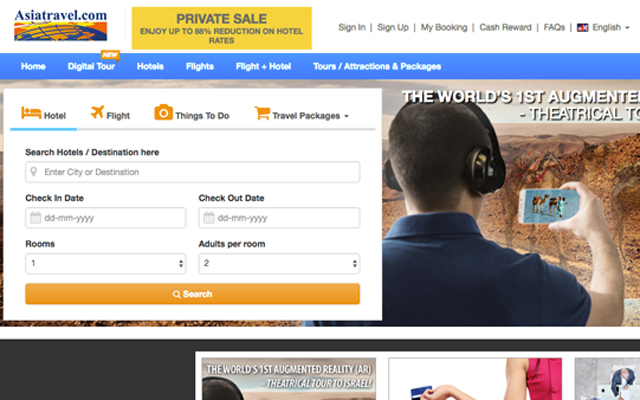
Asiatravel.com Holdings has ceased trading after its controlling shareholder missed an important payment late last month, Singapore’s Business Times reports.
Established in 1995, the Singapore-headquartered online travel company was listed on the Singapore Stock Exchange (SGX) in 2001. In 2012, it established a B2B division comprising TAcentre.com and Savio-Staff-Travel.
Business Times reported that Asiatravel.com Holdings’ controlling shareholder had missed a scheduled funding payment in the amount of S$7.35 million (US$5.42 million) due on June 30, and creditors, supplier and stakeholders proceeded to query the B2B travel company on its financial position.
The company’s independent auditor, Ernst & Young, also included a disclaimer expressing uncertainty as to the group’s ability to continue as going concern according to rules by Catalist, the secondary board of the SGX established to attract young and fast-growing firms, according to Business Times.
Business Times reported that the group incurred a net loss of S$34.6 million for the financial period ended Dec 31, 2017.
Asiatravel.com Holdings’ 2017 financial report was not available on its website at press time.
Data is new oil in travel, but extracting its value still confounds agents
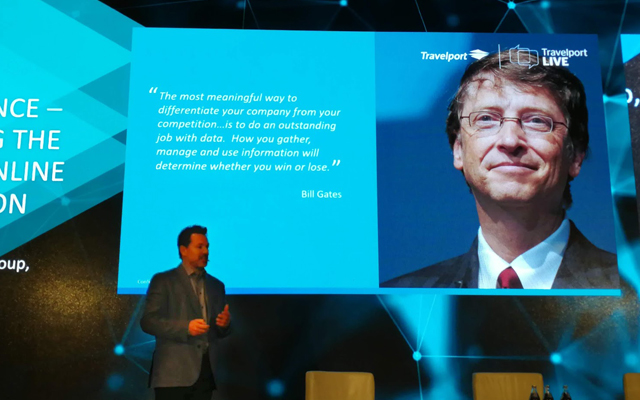
Data in the 21st century, like oil in the 18th century, will offer huge rewards for those who see its fundamental value and learn to extract it. In travel, data has the transformative potential to drive growth and change in the sector.
“Data is the new oil in travel. With data explosion, we know so much in the last few years than the entire previous history of the human race,” said Mike Croucher, chief architect, Travelport, speaking at Travelport Live 2018, which took place in Bangkok last week.
The importance of data in this digital age was continually underscored throughout the two-day conference, with Travelport executives repeatedly urging travel agents to be more proactive in adopting technology into their business, including data-centric strategies.
“It’s no longer about having a technology strategy but data strategy. If you don’t have a data strategy, you won’t be here long,” stressed Rob Brown, group vice president and managing director – OTA at Travelport.
Travelport’s business intelligence manager Matthew Webb also advised travel agencies to adopt “customer data first” strategies. In an age where travellers increasingly value experiences, having data will enable companies to differentiate themselves through personalisation and in turn earn loyalty, he explained.
Major OTA players like Expedia has already invested in data and the extraction of it for market intelligence. “We have invested a lot on data to make sure we are getting one source of truth, and that we’re talking in the same language,” said Expedia’s vice president partner services Asia-Pacific, James Marshall.
B2B travel consolidator Via.com also understands the importance of data mining as a backbone of the company’s growth. “Without data, we’re nothing,” noted product manager Syed Faizan Admed, as data is used to understand behaviour of agents, airline performance, market trends, among others.
Like oil, data needs refining before its true value can be unlocked. But for many agents, especially smaller players in the sector, what’s standing in their way is not their lack of appreciation of data as a valuable commodity but the costs of turning information into intelligence.
Mila B Suarez, executive vice-president, Classic Travelhaus, said her company has a “data strategy somewhat”. But automating the collection of data presents the greatest challenge for the Philippine outbound agency, and while there are solutions available on the market their costs are often prohibitive, she remarked.
Like Suarez, Kelli Hampstead, head of travel technology at Travel Beyond Group Australia, shared that the TMC has not been able to leverage data fully and that finding a most suitable solution to harness data are challenges faced.
And there’s also a dark side to data. Unbalanced data-mining can bring a whole set of problems – privacy issues as well as discrimination when the information is in the hands of a few people, industry members pointed out.
The EU’s new privacy law, which restricts how data is collected and handled, is a reflection of the morality issues surrounding the harnessing of data from customers.
“It’s a fine line,” Travelport’s Brown conceded.
Fatal boat disaster in Phuket highlights safety concerns

While Thailand’s northernmost district of Mae Sai came under global attention for the ongoing rescue of 12 schoolboys and their coach trapped in a cave, Phuket in the south bore witness to a fatal boat disaster in the Andaman Sea.
The Phoenix, carrying 93 Chinese tourists and 12 Thai crew and tour guides, on Thursday capsized in rough waters off Koh Hei (Coral Island), south of Phuket.
So far, 49 people have been rescued, while 42 are confirmed dead and another 14 still missing, according to reports.
Officials have been ordered to start scouring the beaches at nearby islands and as far away as Koh Lanta and even Trang for bodies from the Phoenix boat disaster.
Questions have surfaced as to why the boat was at sea during bad weather, with both the Chinese and Thai governments pressing for a quick investigation of the cause of the accident.
Tourism Authority of Thailand (TAT) governor Yuthasak Supasorn issued a statement about the boat incidents in Phuket, saying that TAT would heighten safety measures for Chinese tourists in Thailand to prevent such events from occurring again in the future.
What To Do In Cambodia can help hotels to sell activities

Ticket sales for activities and tours in Cambodia have received a transparency and visibility boost, thanks to the launch of a new software programme that allows hotels to sell activities.
To Do In Cambodia software developer, Stéphane Combre, was inspired to launch the project after noting guests at his hotel, The 252 in Phnom Penh, after were checking in for longer and seeking more things to do.
Hotels sign up to the platform, receiving their own page that runs in tandem with their website. A range of activities, entertainment and wellness options are selected by the hotel, which they can offer to guests through this page.
These range from apsara performances and cookery classes to tours, spas and transport. Each activity is listed with a photograph, short description and set price, and can be booked online.
Since launching in March, about 100 leading hotels in Phnom Penh and Siem Reap have signed up to the platform, with over 1,000 activities, entertainment options, spa treatments and transport route listings offered by September. Signing up is free for hotels, with businesses paying a one-off fee of US$50.
The To Do Software aims to provide a service where visitors can be sure they are paying the right price, while also offering a platform for hotels to sell tours and activities and drive more customers towards locally-run businesses.
Said Combre: “Everyone benefits, from guests to hotel staff and managers, as well as the small companies offering new activities and adventures to tourists.”
He said: “The goal is to be transformative so that more Cambodian businesses can directly benefit from the influx of tourists to Cambodia. The idea is essentially that the new software is the DNA of a progressive, responsible and equitable tourism industry, which I believe is the model that will distinguish Cambodia regionally and globally.”
As well as providing transparency, To Do In Cambodia cuts down on the time hotel staff spend explaining activities available to guests and then making reservations.
The software also gives real-time tallies on earnings as well as which activities and services are popular with their guests. It also gives tourists the option to book activities before landing in the country.
The software’s success has already led to the To Do In Cambodia team looking to expand into other tourist hubs in Cambodia, such as Battambang, Sihanoukville and Kampot. And Combre hopes to roll out across other Southeast Asian countries in the future, such as Vietnam.







Singapore-headquartered Far East Hospitality has announced a new brand under its portfolio – The Clan Hotel – and will be responsible for its overall management.
The Clan Hotel, with its first property slated for opening in mid-2020, targets affluent and tech-savvy business travellers in their late-20s to mid-40s who are drawn to hotels with compelling stories.
Located at Far East Square, the 324-room property will be a modern take of an era when settlers arrived from China Southern provinces and attempted to make it in Singapore, then a third world country.
To immerse guests in this era, The Clan Hotel’s interiors will be designed with monochromatic images of bustling streets and shophouses, samsui women and coolies, and warehouses bursting with exotic goods. This design concept takes its inspiration from various clan associations that lined the area of Far East Square, Amoy and Cross Street.
Guests will be treated as a member of an exclusive Club, with customised services relevant to the upper mid-tier clientele such as the serving of Chinese Tea in the Living Room upon check-in.
Arthur Kiong, CEO of Far East Hospitality, said in a statement: “Currently, there is a gap in the market for a hotel that offers an optimal combination of value for money, quality hospitality service, and a strong sense of place. With The Clan Hotel, we hope to address this gap as the property draws inspiration from the clan associations’ values of family, harmony, and companionship.”
As part of the hotel management agreement with its parent company Far East Organization, Far East Hospitality’s responsibilities will include hotel operations, and sales & marketing functions.