TTG Asia
Asia/Singapore Sunday, 14th December 2025
Page 1410

Vietnam’s ‘crazy’ growth keeps hotel investors guessing

0
Lots of real estate activity in Danang but little planning, Atkinson says; pictured, beach in Danang and skyscrapers in the background

While hotel investors do not believe that the bubble will burst for Vietnam despite an imminent 43 per cent increase in the number of room keys – a whopping 35,000 additional keys, according to STR – they do believe its popular tourist areas will be ruined unless proper planning and development is implemented.

“Phu Quoc is a Boracay in the making,” declared Kenneth Atkinson, executive chairman, Grant Thornton Vietnam, “because there is no solid waste management at all. You’ve got 17,500 hotel rooms in three- to five-star categories (based on completed projects, approved ones and those under construction) – that’s more than Sydney has. You have an airport with a capacity for 2.5 million people a year. There are 100,000 inhabitants on the island and you’re going to need at least 25,000-30,000 people to work in hotels alone. So (there are) serious labour shortage and infrastructure problems, particularly waste management, which is becoming a serious issue on the island.”

Lots of real estate activity in Danang but little planning; pictured, beach in Danang and skyscrapers in the background

Atkinson was on a panel at the just-concluded South-east Asia Hotel Investors’ Summit in Bangkok, where moderator David Keen, CEO of Quo Global, raised his worries about Vietnam’s “crazy” growth and found Halong Bay, which he had visited several times in the last few months “hideous, frankly”.

“If we look at Phu Quoc, Ho Tram, Danang, Hoi An, there is little planning ahead. What’s going to happen to these gorgeous destinations?” Keen asked.

In Danang, real estate developers are competing to build taller and larger skyscrapers. The local media reported that in the near future, the tallest building in the central region would be in the city. Developed by PPC An Thinh Da Nang, the complex will cover an area of 2.2ha and include four 50-57-storey towers.

In Hoi An, a UNESCO World Heritage Site just 60km2 in size, Atkinson who visited six months ago found the number of visitors and tourist buses “horrifying”.

Michael Piro, COO of Indochina Capital, who is “bullish” on Vietnam with the launch of a new select service, millennials-focused brand targeting the domestic market, Wink Hotels, admitted to his “fair share of concerns about the lack of vision in the development of these areas”.

He said: “Vietnam is very blessed from a geographical perspective. It’s a shame to see it get washed up in development, excitement and greed.

“The big risk we carry is the areas become too rundown, with not enough care to maintain what people come to see. We really need to band together to ensure that the government hear from us, and now we have the Boracay (cleanup) as an example.”

Gonzalo Meceda, vice president development of Melia Hotels International, said he and his company were also worried about a “lack of planning” in the country. “I don’t think Danang is a place where it makes sense to build a 50-60-storey buildings. Hoi An is next to it, so that’s the next one. Phu Quoc – there is still time to save it; the government should focus on that,” he said.

Quo Global’s David Keen moderating the session on Vietnam featuring (from left) Grant Thornton Vietnam’s Kenneth Atkinson, Melia Hotels International’s Gonzalo Maceda and Indochina Capital’s Michael Piro

How it got this way

The panel spotlighted key reasons how Vietnam got this way, including arrivals demographics that comprised big-volume markets China and South Korea and, ironically, a private sector that had taken on the mantle of marketing Vietnam aggressively and even got involved in making it more accessible to visitors in order to fill its rooms.

The figures speak for themselves.

It took Vietnam only eight years to get to 13 million arrivals (2017 over 2016), compared to Thailand, which took 25 years to get from six million to 15 million, Atkinson pointed out. But, more than half of the 13 million were group travel, with the top four Asian markets comprising by far China, followed by South Korea, Japan and Taiwan.

Even if the government had increased the marketing budget from US$1 million to US$5 million, as Atkinson asserted, this paled in comparison to Thailand’s US$100 million or Malaysia’s US$80 million marketing spend. This saw the private sector stepping in to be the destination marketeer, and continuing to, in order to protect its own investments.

Indochina Capital, for instance, privately underwrote the first charter flight on Dragonair from Hong Kong to Danang, where it was building furiously. “There were a lot of naysayers,” recalled Piro. “Now, it’s one of the busiest flights; you can’t get a seat on Hong Kong-Danang direct flights. That was something we had to and happy to do, which not only yielded serious results for us as asset owners but also for Danang and Vietnam.”

Melia’s Macedo also said that in Phu Quoc, the private sector had done all the marketing last year. “But the Vietnam government has to be clear what it wants for the country. We can help, but we have been making the decisions ourselves. It shouldn’t be like that,” he said.

The government hasn’t been able to keep up with the tourist arrivals uptrend. Atkinson said: “Vietnam is not good at planning ahead. We’ve been talking for 10 years now about the new international airport in Ho Chi Minh City and at last they are clearing the land, which is going to take another two years. We’re probably eight to 10 years away in getting a new airport in Ho Chi Minh City…so how do you increase the number of tourists coming into Ho Chi Minh City?”

In spite of the ‘craziness’, investors evidently are still crazy about Vietnam. At present, RevPAR is still up 12 per cent in the first quarter. They look to a domestic market size of 70-80 million people and a growing upper middle class that is upwardly mobile and travelling more; a relaxation in visas; and the highest level of government spending on infrastructure in South-east Asia (5.3 per cent of total GDP).

As well, they are heartened by the government’s intention to shift the arrivals demographics. Said Atkinson: “Vietnam wants to get the average spend up to US$1,080 by 2020. About 30 per cent of the inbound market is Chinese low-cost or zero-cost, and that does not help. But more and more, we’re seeing more travellers from high-spending countries like Europe, particularly now that Vietnam Airlines has direct flights to Paris, Frankfurt and London and is starting US flights later this year. We’ve got to change the demographics a bit; we’ve seen how (the China and Vietnam South China Sea disputes) saw Chinese tourists fell off overnight to zero.”

Piro also looks beyond the frontline data. He said: “What’s the actual reality? Of the 43 per cent increase in room keys, how much is actually going to be realised? Having over a decade of experience in Vietnam, my estimate is half probably. If you look at what the actual increase in supply is going to be, and the real increase in demand (from both domestic and international), I don’t see a big issue.”

Partnerships for a healthier sector

0
A Deluxe suite at Singapore’s Farrer Park Hospital

Singapore
One-stop services rule it all
When it comes to patient comfort and hospitality, several Singapore hotels have gotten that down to a tee, offerings suites and amenities that cater to guests seeking medical services in hospitals nearby.

A Deluxe suite at Singapore’s Farrer Park Hospital

Most of these hotels are clustered in Novena and Farrer Park, the seats of major medical campuses including Mount Elizabeth Novena Hospital, KK Women’s and Children’s Hospital and Farrer Park Hospital.

One Farrer Hotel & Spa, for example, introduced The Farrer Suites – the first of its kind in Singapore – to cater to patients of Farrer Park Hospital and Farrer Park Medical Centre in the same building.

These self-contained suites are equipped with features such as adjustable Volker beds with pressure-relieving mattresses, a built-in counter for hand washing, a companion bed and dedicated butler service. The suites are accessible through a private lift system connected directly to the medical wings of the building, and are sold only through the hospital.
Meanwhile, Park Hotel Farrer Park is awaiting the opening of Farrer Square Medical Centre, which will connect 42 medical units to the hotel and Farrer Park Hospital.

Courtyard by Marriott Singapore Novena, which offers two mobility-accessible rooms and six elderly-friendly rooms, does not limit its connections to just Mount Elizabeth Novena Hospital next door, but also works with Tan Tock Seng Hospital and KK Women’s and Children’s Hospital on various fronts.

Peter Khong, general manager of Courtyard by Marriott Singapore Novena, shared that the hospitals not only refer international patients looking for external accommodation options, but also overseas doctors and consultants.

While Indonesia is an enduring source market for medical guests, One Farrer Hotel & Spa’s executive assistant manager, sales & marketing and rooms, Jessie Khoo-Gan, also noted rising demand from China, Vietnam, Thailand and India.

She added: “There has been an increase in medical travellers seeking preventive healthcare services and wellness; and we see a greater demand for premium luxury accommodation and services to complete their patient experience.”

Hotels also extend other areas of their hospitality services to warded patients. One Farrer Hotel & Spa shares its kitchen with the adjoining Farrer Park Hospital, providing five-star cuisine for the hospital; while Park Hotel Farrer Park provides a breakfast package for Farrer Park Hospital’s health screening patients.

Park Hotel Farrer Park’s general manager Sharmini Moganasundram is certain that hotels can continue to grow and benefit from Singapore’s established position as “the premier medical destination in the region”.

Khong concurred: “We are always open to exploring opportunities with our partners to offer additional value-added services.” – Pamela Chow

Malaysia
Joint bid for Indonesians
With Indonesia accounting for 60 per cent of medical tourists to Malaysia, it’s no surprise that hotels located near major hospitals in Penang have their sights set on tapping this key South-east Asian source market too.

Glow Penang, which lies within walking distance to Loh Guan Lye Specialists Centre as well as a short drive to Island Hospital and Gleneagles Penang, already has strategies laid out with these private healthcare institutions in the pursuit of medical tourists from Indonesia.

Glow Penang’s hotel manager, Navintheran Sinarimuthu, said: “Most guests who stay with us and seek treatment from these hospitals are from Indonesia. They come here for health screening, dental, cosmetic procedures, eye and skin treatments.

“We promote our hotel directly to outbound agents in Indonesia who are involved in leisure and medical tourism as well as to the three (aforementioned) medical facilities in Penang. We provide special room rates with breakfast for the agents we work with,” he said.
Special brochures offering information about Glow Penang’s location and facilities are provided to agent partners as well as the reception areas of partner hospitals too, according to Navintheran.

The 320-key Berjaya Penang Hotel, likewise, takes advantage of its location opposite Penang Adventist Hospital as well as its easy access to other private hospitals in George Town area to attract medical tourists from Indonesia.

Amran Taib, executive assistant manager, Berjaya Penang Hotel, said: “We give corporate rates to the hospitals and also do joint promotions with them when we participate in medical fairs in Indonesia. We also promote the private hospitals in Penang by displaying their brochures in our hotel.”

He added: “We focus on cities that have direct flights to Penang as well as places without direct flights such as Balikpapan, Palembang and Jambi, where many medical tourists staying with us are from.

“Tourism authorities should further tap regional markets for medical tourism as these are our closest neighbours, and not just limit efforts to cities with direct air links to Penang,” Amran urged. – S Puvaneswary

Thailand
Natural advantage
In Thailand, where medical tourism is a growth industry, it makes natural sense for hotels located in the vicinity of major private hospitals to target the international clientele that these institutions are serving.

Medical centres are hence increasingly embracing hospitality concepts alongside a rising number of hotel-hospital partnerships, observed Olivier Berrivin, managing director of international operations – Asia at Best Western Hotels & Resorts.

He remarked: “In addition, global economic pressures on hospitals and patients, combined with broader medical tourism trends, are creating a growing niche for hotels located on or near hospitals.  This particular segment will only grow over time as some countries are now offering medical visas to encourage that trend.”

Medical tourists already make up a significant market for Best Western Premier Sukhumvit Soi 1 and SureStay Plus Sukhumvit Soi 2, thanks to their close proximity to Bumrungrad Hospital and its strongly established international reputation, according to Berrivin.
Amari Residences Bangkok, located within walking distance to the Bangkok Hospital, meanwhile, has “a collaborative working relationship” with the hospital as an affiliated hotel, providing additional services and support to guests requiring extra care and attention in consultation with the medical teams or accommodate patients who prefer to reside in a comfortable environment off the hospital premises, Onyx Hospitality Group’s senior vice president commercial, Debrah Pascoe, told TTG Asia.

While the Middle East is a dominant source market of medical tourists, the inbound medical tourism source market for Onyx is “gradually being balanced by medical tourism demand from other regional markets like Japan and South-east Asian countries”, Pascoe noted.
Down south in Phuket, Amatara Wellness Resort has already seized opportunities in Thailand’s thriving healthcare tourism  sector by linking arms with prominent Thai travel players to offer integrative wellness programmes.

Last year, it rolled out a brain health enhancement retreat with Bangkok Hospital Phuket to promote brain health in the prevention of Alzheimer’s disease and dementia. In February this year, it entered into an MoU with Royal Orchid Holidays and Vitallife Wellness Center, a subsidiary at Bumrungrad International Hospital, to tap the increasing level of interest in health and wellbeing among travellers worldwide.

Other hospitality players like Thanyapura Phuket, which was previously focused on the sports tourism market, is now enhancing its on-site healthcare offerings to step up its pursuit of Thailand’s flourishing medical tourism sector. It recently appointed Edgar Toral, a 15-year veteran in Thailand’s medical tourism sector, to head the Thanyapura Integrative Healthcare wing, and has in place treatments and services ranging from chiropractic and acupuncture to post-surgical care and and vitality therapies.

“We are not competing against hospitals but complementing them,” said Toral. More complicated treatments will be referred to Thanyapura’s partner hospitals in Phuket, he added. – Xinyi Liang-Pholsena

South Korea
Not just skin-deep interest
South Korea is well-known in the Asia-Pacific region as the place to go for everything from a quick nose tweak to procedures that are far more delicate. And many hotels are coordinating with hospitals and clinics to provide packages that meet guests’ needs throughout their visits.

The majority of overseas medical tourists to South Korea are from China, Russia, Japan, the US and Kazakhstan. Arrivals from Thailand in 2016 soared by an impressive 102 per cent, while the number of medical tourists from Mongolia, the UAE, Singapore and Vietnam also showed positive growth.

“We already have a selection of medical packages that we have developed in conjunction with the nearby Yonsei Severance Hospital,” said Jay Kim, sales manager for the Hotel Cappuccino. “Virtually all the guests staying with us for medical procedures are from Asia, including from Hong Kong and Singapore, and we are able to create tailor-made packages that meet guests’ needs and the requirements of the hospital.”

The hotel works closely with the hospital to devise programmes, and Kim anticipates demand to continue to rise in the medical tourism sector as more people across Asia receive word-of-mouth recommendations about the high quality and relatively low price of procedures in South Korea.

Other hotels prefer to work with specialist medical tourism agencies that operate websites to appeal to potential clients and offer full packages that include airport pick-ups, accommodation, shopping excursions, visits to some of the city’s must-see sights and the medical treatment.

“Recently we have had a lot of guests from the UAE coming for treatments, but we prefer to work through a specialist agency,” said an official of Hotel Artnouveau Seocho in the city’s Gangnam district.

The Walker Hill Hotel and Resort offers a selection of two-night-three-day packages and promotes the stays through advertorials in local media, its e-newsletter to guests who are in the hotel’s membership scheme or through companies that are similarly targeting the medical tourism sector.

Not all hotels are teaming up with medical institutions, however, with the Grand Hyatt Seoul happy to offer support for FIT guests who are visiting the city for a procedure or treatment, but preferring to steer clear of collaborating with medical institutions due to the “complexities” of managing medical packages, a spokesperson said.
– Julian Ryall

India
From traditional to hair-raising experiences
Hotels in key and secondary cities are benefiting from the growth of inbound medical tourism as the country sees the emergence of not only new markets like the US and the UK but also a wider range of treatments sought after in the country.

“Delhi-NCR is among top five popular medical tourism destinations in India as the region has a vast number of world-class private and government hospitals. We have collaborated with hospitals in our proximity like AIIMS and Safdarjung to tap international medical tourism clients,” said Manish Kumar, meetings director, Crowne Plaza New Delhi Mayur Vihar.

Hotel chains such as Crowne Plaza and Hilton offer facilities and services friendly to the needs of medical tourists like accessible rooms with roll-in showers and lowered beds, and F&B offerings customised to dietary requirements.

Many hotels have also sprung up in the vicinity of healthcare chains. The 201-room Hilton Garden Inn Gurgaon Baani Square is situated close to speciality hospitals like Medanta Medicity and Max Healthcare in Gurgaon. Lemon Tree Hotels has recently opened an 85-room hotel in Hyderabad’s Banjara Hills adjacent to the CARE Hospital.

“Medical tourism is a year-round business for Indian hotels. Besides offering special rates for medical tourists, we emphasise on meeting their dietary requirements,” said Sanzeev Bhatia, general manager, The Metropolitan Hotel & Spa.

With more than half a million medical tourists from abroad to India each year, hoteliers think more areas of medical treatments could be better promoted to grow this sector. Examples include traditional Ayurvedic naturopathy, dermatology or even hair transplants – the latter an increasingly sought after treatment.

“We have noted the trend that a large number of tourists from overseas want to know more about dermatology. So, speciality hospitals in these areas will be welcome,” said Kumar.

“As international medical tourism plays a big role in generating revenue in hospitality industry, hospitals should tie up with at least one hotel in the vicinity for their patients,” he urged.
– Rohit Kaul


NTOs’ medical tourism procedures

Sherene Azli, CEO, Malaysia Healthcare Travel Council
Through our collaboration with hospitals and travel agents, we started introducing healthcare travel packages. These packages are a combination of healthcare treatments (dental, cosmetics, general health screening, wellness) bundled together with a tour of Malaysia’s many attractions and accommodation.­

Apart from traditional marketing and promotions around the world, we also focus on strategic and niche marketing. We utilise digital marketing platforms to create more channels for two-way information exchange between global healthcare travellers and Malaysia healthcare players

Srisuda Wanapinyosak, deputy governor for international marketing (Europe, Africa, Middle East and Americas), Tourism Authority of Thailand (TAT)
For 2018, TAT will continue to emphasise our strong health and wellness position as “Thailand a Paradise for Longevity” and portray the country as the hub of health and wellness in South-east Asia.­

Longevity products and services are proving a popular trend among health-conscious travellers who want to maintain themselves in healthy conditions. They come from all over the world, so in particular TAT is aiming CLMV (Cambodia, Laos, Myanmar and Vietnam), China and South Asian countries like Pakistan and Bangladesh.­

For the Middle East countries, which we still consider a potential market, we will continue to promote our updated longevity products and services by penetrating possible cities.­

Having worked extensively with leading medical tourism partners and other related businesses, TAT recently attended the 9th International Health and Medical Tourism Conference and Expo 2018 in Shanghai to promote our health and wellness tourism.

India moves up on Indonesia’s tourism agenda

0
Things are looking up for Bali's hoteliers; Tanah Lot pictured

Indonesia’s Ministry of Tourism is refining its strategy to grow arrivals from India, with the market showing strong promise last year despite limited direct air connectivity.

Arief Yahya, Indonesia’s tourism minister, said in a statement: “India has become top five markets to Indonesia with the growth rate of 30 per cent, second highest growth rate after China (last year).”

Bali is currently popular but the ministry wants to help Indian agents promote other Indonesian destinations; pictured, Tanah Lot, a Hindu temple and tourist hotspot in Bali

Despite few direct air links between the two countries, arrivals from India last year totalled 485,000. In the first two months of this year, arrivals from India numbered 87,000, higher than the traditional markets of Japan (74,000 arrivals) and South Korea (63,000), according to the ministry’s data.

Commenting on the target of 700,000 arrivals from India this year, Nia Niscaya, deputy minister for tourism marketing development II (Asia, Africa, the Americas and Europe), said: “That is a high target to achieve. With limited seat capacity and direct service (Denpasar-Mumbai provided by Garuda Indonesia), we would like to optimise the available seats by making Singapore and Kuala Lumpur as hubs.”

The strategy to entice travellers to Singapore and Malaysia to extend their stays to Indonesia will be bolstered by the ministry’s Hot Deal packages to Batam-Bintam and Jakarta, as well as culture and heritage tours to Jogjakarta and beach resorts like Lombok.

In addition, the ministry is considering opening a Visit Indonesia Tourism Office (VITO) in Southern India, its third in the country after New Delhi and Mumbai.

Meanwhile, promoting destinations beyond Bali continues to be on the destination’s agenda.

“During our recent visit to India, major travel companies (Cox & Kings, Thomas Cook India, Yatra, MakeMyTrip and FCM Travel Solutions) told us Bali sold itself and asked us to come up with other destinations to promote. We plan to meet their needs,” Sigit Witjaksana, director of tourism marketing for Southern and Central Asia, Middle East and Africa, said.

Apart from participating at trade shows in India, the ministry intends to organise a sales mission to Mumbai, New Delhi, Calcutta, Chenai, Hyderabat and Ahmedabad in July.

Sigit said his department’s marketing budget was 17 billion rupiah (US$1.2 million). On top of that, the marketing communications department has three billion rupiah for digital marketing and ad placements for India.

New packages by MATTA in the works for diverse European market

0
Culture and heritage, adventure, along with other travel interests considered in the development of packages

The Malaysian Association of Tour and Travel Agents (MATTA) is working with its members to create at least 50 inbound packages for its affiliate member, the European Travel Agents and Tour Operators Associations (ECTAA), to sell in Europe.

MATTA’s president KL Tan said these packages, which will be ready by August, will cover a range of activities and attractions to meet the diverse interests of holidaymakers from 27 European countries.

Culture and heritage, adventure, along with other travel interests considered in the development of packages

Tan said: “There are more than 700 million travelling consumers and we are barely scratching the surface. Last year, Malaysia attracted only 1.1 million tourists from Europe. Our main challenges are the lack of direct air connectivity and lack of awareness about what Malaysia has to offer.

“To address the latter and to expand the market, our packages will include culinary, eco and nature attractions, adventure tourism, shopping, theme parks, culture and heritage.”

Tan revealed that MATTA will again organise a pavilion for its members at ITB 2019, where Malaysia will be the official partner country. In 2018, 29 MATTA members exhibited at the MATTA pavilion at ITB Berlin.

Improvements in air connectivity are also afoot, especially in 4Q2018 when Germany’s Condor Air commenced thrice-weekly services between Frankfurt and Kuala Lumpur, and TUI Group launched its Fly & Cruise programme.

Tourism Malaysia has also initiated joint marketing efforts with foreign airlines that service both Europe and Malaysia through their hubs, namely Turkish Airlines, Emirates Airline, Etihad Airways, Qatar Airways, KLM Royal Dutch Airlines and Singapore Airlines.

Langham Hospitality Group gets new CEO

0

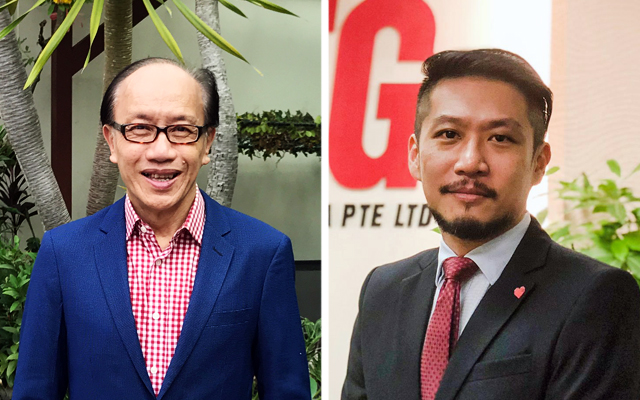
Stefan Leser has been named Langham Hospitality Group’s CEO, a post vacated by Robert Warman who retired last December.

Based in Hong Kong, Leser will oversee all aspects of the group’s global portfolio of hotels, resorts and residences. He will provide strategic guidance, implement organisational processes for all divisions and lead the global expansion drive.

Leser has nearly 30 years of experience in the travel and hospitality industries, most recently at Jumeirah International, where he was the group CEO and a member of the board of directors. At the Dubai-based company, Leser was responsible for several milestone projects, including inauguration of The Terrace at Burj Al Arab and the completion and launch of Jumeirah Al Naseem.

Prior to joining Jumeirah, Leser held senior roles for more than a decade at Kuoni Travel. As a member of Kuoni’s executive board and executive vice president of the outbound and specialists division, Leser directed the company’s travel businesses, covering the Nordics, the UK, Benelux, India, China, Hong Kong and Switzerland. He was also responsible for all businesses specialising in inbound destination management.

Leser also spent six years in the information technology industry with Swissair and EDS Corporation.

APAC airlines’ earnings climb on higher passenger volumes, load factor

0
Airlines

Asia-Pacific airlines achieved US$8.8 billion in net earnings in 2017, up 31.6 per cent from the previous year, underpinned by higher volumes and with load factors, according to preliminary figures released today by the Association of Asia Pacific Airlines (AAPA).

AAPA revealed that Asian airlines recorded 8.6 per cent increase in international passenger traffic, expressed in revenue passenger kilometre terms (RPK), supported by the widespread availability of affordable airfares and continued expansion in network connections.

Decline in passenger yields slowed in 2017

Passenger revenue increased by six per cent to US$135.6 billion. Intense competition led to a marginal one per cent decline in passenger yields to 7.9 US cents per RPK, although the decline was less severe compared to previous years.

Fuel costs rose significantly, by 19.6 per cent to US$40.6 billion, as global jet fuel prices climbed 24.5 per cent to average US$65.40 per barrel, while the share of fuel expenditure as a percentage of total operating expenses rose by 2.2 percentage points to 24.6 per cent.

Non-fuel expenditure also increased, by 5.6 per cent to US$124.4 billion, in line with higher traffic volumes, AAPA figures show.

Commenting on the 2017 financial results, Andrew Herdman, AAPA director general, said: “Nevertheless, the region’s airlines continued to face some significant headwinds in the form of stiff competition, and increased cost pressures from markedly higher fuel prices and rising labour costs.

“Reflecting the highly competitive business environment, the average operating margin was 6.6 per cent for the year, with net profits of just over US$6 per passenger.”

In addition to continued growth in passenger volumes going ahead, Herdman also forecasted: “Overall, Asian airlines continue to evolve in the face of changing market dynamics, implementing measures to increase efficiency and carefully control operating costs whilst seeking opportunities to maximise revenue. In addition, the region’s airlines remain focused on enhancing business performance through increased investments in new technologies and modern fuel efficient aircraft.”

Pandaw to make India debut with Lower Ganges cruise

0
The Victoria Memorial in Kolkata, one of many monuments lining the Lower Ganges

Pandaw will late this year deploy the Orient Pandaw on an expedition along the Lower Ganges, its first cruise in India.

From December 23 to the end of April 2019, the Orient Pandaw will sail weekly from Kolkata to Farraka and back on a seven-night itinerary. It will re-commence the itinerary in July 2019 through to April 2020.

The Victoria Memorial in Kolkata, one of many monuments lining the Lower Ganges

Starting in Kolkata, the upstream itinerary will set sail at noon, passing the old Danish colony of Serampore to Barrackpore, with sights including the Semaphore Tower, Government House, the Temple of Fame and Flagstaff House.

Guests will on day two sail up to Chandernagore, a French possession until 1950, and visit the 18th century church and Dupleix’s House of the former Governor-General of French India.

On the third day, the ship visits Kalna, where guests will be taken by rickshaws to see some of Bengal’s terracotta temples, as well as the Shiva temple with concentric rings made up of 108 lesser shrines, before continuing on to the new ISKCON (International Society for Krishna Consciousness) temple in Mayapur.

After mooring near the brass-working village of Matiari, guests will start day four with a visit a charming riverside village, where they can interact with the locals and witness the process of beating out brass water pots and other vessels. Later, they will cruise on and visit the historic battlefield of Plassey.

Day five brings guests on a morning walk to the Khushbagh, a Mughal-style garden that encloses the tombs of Siraj-ud-Daulah – the last independent Nawab of Bengal – and his family.

The next morning, guests will experience rural India with a walk through the fields of the sleepy village of Baranagar to visit its three miniature terracotta temples.

Finally, on day seven, the ship will cruise to a mooring by the Farakka lock and guests will disembark and go on a full-day excursion by road to Gaur, near the town of Malda, or English Bazar.

The Orient Pandaw features thirty veranda staterooms on two decks, indoor dining, a deck bar, a movie and lecture theatre and a spa.

Prices for The Lower Ganges itinerary start from US$1,890 per person for a twin-sharing cabin. The price includes seven nights’ accommodation aboard the Orient Pandaw, local transfers, all excursions as stated on the itinerary, entrance fees, guide services (English language), main meals, jugged coffee, selection of teas and tisanes, local soft drinks, local beer, local spirits, mineral water, crew gratuities and cycling equipment.

Early signs of travel worry after bombings in Surabaya

0
Travel agents say there's been little to no disruption to ongoing holidays, but some travel concerns are emerging

Reporting by Mimi Hudoyo and Tiara Maharani  

Following the suicide bombing attacks in Surabaya, the city remains on high alert, while concern surfaces in the travel community worldwide with advisories issued by the UK, Australia, the US, China, Hong Kong, Singapore and Ireland.

As the police and anti-terror squad step up security in and around the city, members of the travel trade in East Java are continuing to monitor the situation and keeping in close communications with clients and business partners overseas to provide updates.

Travel agents say there’s been little to no disruption to ongoing holidays, but some travel concerns are emerging

Arifudinsyah, chairman of the Association of The Indonesian Tours and Travel Agencies (ASITA) East Java chapter, said: “We are collecting data and information from members (on the impact), but it is still too early to determine the impact on business now.”

While inbound travel companies in Surabaya TTG Asia spoke with have not received cancellations for ongoing trips so far, there have been some concerns about future bookings.

Adjie Wahjono, operations manager of Aneka Kartika Tours and Travel Services, for example, which has several couples and small groups from the UK and Germany arriving between May 10 and 17, said the bookings were all intact and none suspended their travels ahead of time.

He has, however, received concerned enquiries from travellers intending to visit Indonesia in the coming months.

Adjie stressed that Surabaya is typically only a gateway into and out of the main destinations in East Java, which could be why his clients have had less qualms proceeding with their booked trips.

“Most of our clients are only in transit here, before continuing Mount Bromo or Ijen Crater,” he explained. For example, a group of eight from Germany were in Mount Bromo on the day of the bombing, and continued their trip to Makassar, through Surabaya airport as planned.

“Today, we have two travellers arriving from the UK going to Mount Bromo and Ijen Crater, too” he added.

However, this is no sign of travel impact in the months ahead as concern mounts in the travel community worldwide.

“Travellers are feeling very uncertain and we need updated information to let them know what the ground situation is. (As of now) the security forces have been acting very promptly and businesses in Surabaya are running as normal.”

Monas Tjahjono, managing director of Monas Tour, Surabaya shared that the company has also been in contact with partners in Singapore to keep them updated on the latest situation as well as set contingency plans for travellers.

He added: “We have had no calls from people wanting to change their future trip in East Java, however, we will do all we can to help them find suitable alternative tour packages or allow them to move their dates if they want to.”

In a statement, Arief Yahya, Indonesia’s tourism minster, said: “The Tourism Crisis Management Team will continue monitoring and will co-ordinate with all parties to ensure that the tourism ecosystem are conducive; (to ensure that) amenities and attractions in East Java, particularly in Surabaya run normally.”

Aussie arrivals soar on new Colombo flights, Sri Lanka-Maldives packages

0
Cancellations reported in February but impact expected to be felt in ensuing months, some resorts say

A new direct connection from Down Under has led to a sharp rise in Australian visitors to Sri Lanka and the Maldives, with operators further stoking the interest by offering joint Sri Lanka-Maldives tour packages.

After SriLankan Airlines commenced daily flights between Melbourne and Colombo in October 2017, Australian arrivals into Sri Lanka in the January-April period surged 58.3 per cent year-on-year to 38,100, while arrivals to the Maldives in January-March 2018 were up 40 per cent to 7,929.

Flights to the Maldives are boosting Australian inbound visitor volume from a small base

Suresh Dissanayake, assistant vice president – sales and marketing at Heritance Aarah and Adaaran resorts in the Maldives, said the Australian market is booming since the flights were launched. Prior to the new service, visitors mostly had to connect through Singapore on Singapore Airlines flights or Hong Kong on Cathay Pacific services.

“Previously we were getting many surfers from Australia mainly during the summer but with SriLankan Airlines’ direct flights, many groups are starting to come on tours combining Sri Lanka and the Maldives,” he said.

In Colombo, Nalin Jayasundera, managing director of Aitken Spence Travels, part of the group that owns Aarah and Adaaran resorts, said the direct flights have “helped tremendously”. He shared that more Australian operators are jointly promoting Sri Lanka and the Maldives.

Beyond Travel Group, one of Australia’s oldest tour companies is among those promoting joint packages, and has seen positive results this year.

“We knew Sri Lanka was going to be one of 2018’s hottest destinations, and the Maldives is always popular for those seeking a decadent stop-and-flop vacation, but we didn’t expect so many customers would be keen to combine the two,’’ Sri Lanka & Beyond general manager sales and marketing Bryce Crampton was quoted as saying in a recent media report.

After foreseeing growth from Australia last year, Maldives’ local brand, Coco Collection, recently appointed a GSA in Australia, said Andrew Ashmore, the company’s group head of sales & marketing.

The GSA is bringing down a press team later this month to the Maldives on a fam tour, he shared, noting that they have seen a 50 per cent growth in Australian visitors at their resorts, albeit from a small base.

Maldives’ seaplane operator, Trans Maldivian Airways also confirmed a rise in Australian traffic to the resorts, also attributing this to the new service from SriLankan Airlines.

Australia is the sixth largest source market for Sri Lanka and the 11th for the Maldives.

Who will fill the 900 new rooms at Resorts World Manila?

0
Hilton Manila (hotel suite pictured), scheduled to open in 3Q, will add 357 rooms

Resorts World Manila will swamp the market with 900 new rooms with the opening of three hotels – on top of the existing four within the IR compound – in the coming months, but industry observers believe the additional inventory can be absorbed by the growing number of business and leisure travellers to the metro.

The 357-key Hilton Manila is scheduled to open in 3Q2018, followed by a 191-key Okura and a 350-key Sheraton, adding to four existing hotels including a Maxim (to be rebranded Ritz Carlton next year), Remington (to be rebranded Holiday Inn Express), Marriott which added 227 rooms in late 2016, and homegrown brand Belmont.

Hilton Manila (hotel suite pictured), scheduled to open in 3Q, will add 357 rooms

Kevin Tan, executive director of Alliance Global Group, Genting Group’s partner in RWM, said in a CNBC interview last month that the new openings will be part of RWM’s phase three expansion, which also includes a new casino set to “almost double the current gaming capacity we have right now”.

Colliers International research manager Joey Bondoc said RWM’s new hotels are in keeping with his recommendation for operators to continue developing four- and five-star accommodations in key business districts as he foresaw continued arrivals from major visitor source markets with the improvement of the country’s infrastructure and aggressive tourism marketing.

Bondoc also said RWM’s new hotels will be “propelled by expanding activities in key business districts” in Manila, including the growing number of business process outsourcing offices, and an ideal complement to RWM’s gaming and retail shops.

Mike Hain, groups manager of Corporate International Travel and Tours, said RWM’s new hotels are ultimately good for the market, where “hotels dictate the price” due to the limited choices. That’s why “if you compare hotels here with those in Asia, even for the same hotel brand, we’re more expensive,” he remarked.

Hilton Manila general manager Simon McGrath said that apart from the corporate sector, the leisure market including staycation and tour groups will be drawn to the area’s proximity to airports, high-end shopping, F&B options, and what he says is the hotel’s unique selling point – a huge swimming pool and large jacuzzi that will be shared by Hilton and Sheraton.