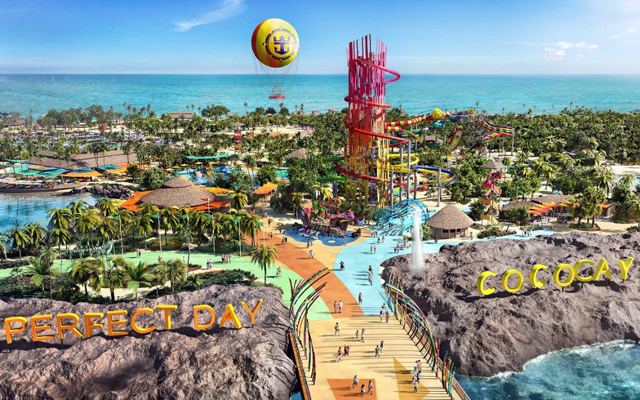
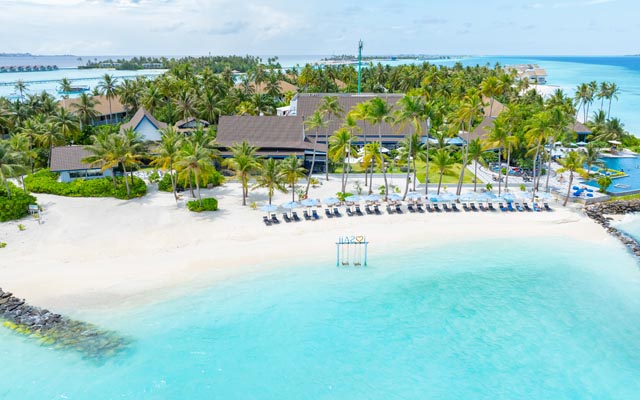
Private island experience expected to draw Asian cruisers to the Caribbean; pictured, Perfect Day CocoCay in the Bahamas
Royal Caribbean International is launching a series of private island experiences under the umbrella of Perfect Day Island Collection for its cruise passengers.
The first offering in the collection is Perfect Day at CocoCay in the Bahamas, which will be opening in phases from November this year until December 2019.
The pier at Perfect Day at CocoCay will be the first facility to be ready. At press time, Up, Up and Away helium balloon, Chill Island and Oasis Lagoon freshwater pool are scheduled for completion in December 2018; Thrill Waterpark, the Zip Line, Splashaway Bay aquapark, Captain Jack’s dining, Skipper’s Grill dining and Captain Jack’s Galleon in May 2019; South Beach, Coco Beach Club and the overwater cabanas in December 2019.
Private island experience expected to draw Asian cruisers to the Caribbean; pictured, Perfect Day at CocoCay in the Bahamas
Numerous Royal Caribbean ships will call at Perfect Day at CocoCay, with sailing duration ranging from three to nine nights. They include Navigator of the Seas, Mariner of the Seas, Symphony of the Seas, Allure of the Seas, Harmony of the Seas, among others.
Describing the Perfect Day Island Collection as an “exciting development” for cruising in the Caribbean, Sean Treacy, who has recently left the company’s Singapore office to take on the new role of associate vice president strategic planning for international at Royal Caribbean Cruises’ headquarters in Miami, believes that these private island experiences will “resonate with the Asian market”.
He explained that while Asian cruise demand is good for longhaul sailings in Europe and Alaska, interest is relatively weaker for the Caribbean. The Caribbean currently gets 10 per cent of the cruise line’s Asian fly-cruise bookings.
But Treacy hopes the Perfect Day Island Collection would “grow Asian interest by some 10 per cent especially for markets in Asia-Pacific which have a higher interest for the Caribbean sailings”.
He noted that cruise itineraries outside of Asia are typically booked by Asian experienced, repeat cruisers.
“As the number of our guests in Asia grows, we will be seeing more bookings for sailings in other regions,” he said.
Vynn Capital, a South-east Asia-based early-stage venture capital firm, and UNWTO have entered into a partnership to facilitate entrepreneurship and innovation in the region’s tourism sector.
The two will collaborate to create a framework and policies to support technology startups that are addressing opportunities and challenges in South-east Asia’s tourism.
Vynn Capital sees tourism as a key investment space
Both parties will also work together to encourage traditional industry players such as hotel groups, property groups and food companies to adopt digital strategies, as well as to encourage more investment by the private sector into technology companies.
“The tourism sector represents a huge opportunity for South-east Asia, where we see the emergence of a strong middle class. Vynn Capital has identified tourism as a key investment space and we will continue to work with entrepreneurs and industry players to promote the region’s tourism sector,” said Victor Chua, founding and managing partner of Vynn Capital and chairman of the Malaysia Venture Capital & Private Equity Association.
UNWTO secretary-general Zurab Pololikashvili commented that Vynn Capital “will help us to create real solutions for the much-needed digital transformation of tourism”.
“Such partnerships are key to continue generating opportunities all through tourism, and prove that venture capital has a role to play when we want to advance sustainable development,” Pololikashvili added.
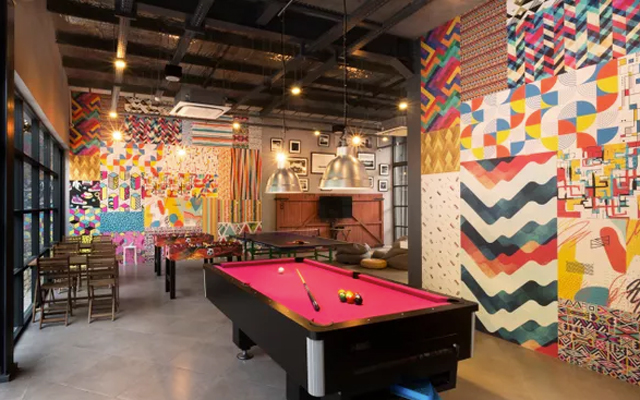
Common area at the newly opened Nomad Hostel Kemang
Common area at the newly opened Nomad Hostel Kemang
Archipelago International has unveiled its first wholly budget brand, Nomad Hostel, which made its debut in Jakarta last week.
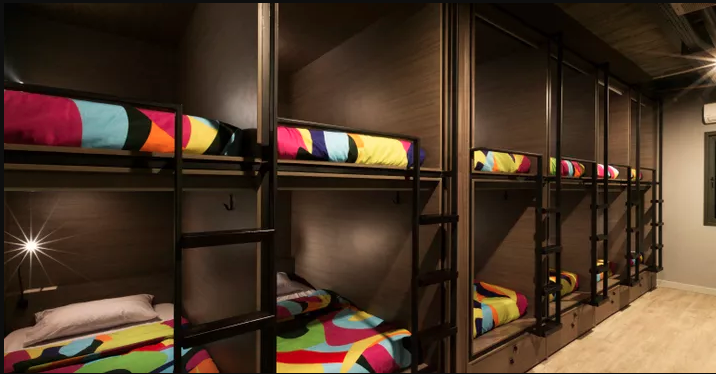
The Indonesia-based hospitality management company’s latest brand provides dormitory-style shared rooms and bathrooms as well as communal facilities such as a lounge, restaurant, laundry facilities and high-speed Wi-Fi.
Some Nomad Hostel properties will provide additional facilities, such as multifunctional spaces with connecting games rooms, vending machines, coin-operated laundry facilities and a public coffee shop.
Dormitory-style rooms at Nomad Hostel Kemang
Launched on August 8, Nomad Hostel – Kemang will offer 14 rooms, four room types, and 192 beds. The hostel will also feature common rooms with table tennis, billiards and a lounge, a coffee shop & bar, a basketball court and a Jacuzzi.
President and CEO for Archipelago International, John Flood said: “We are extremely excited to be breaking new ground with the launch of Nomad Hostel. Not only will Archipelago International be embarking on an entirely new venture, we’ll also be increasing our international presence with our sights set on the overseas market in the future.”
Nomad Hostel joins the groups’ other segments, including the select-service favehotel and Hotel NEO, the economy Quest Hotel and Harper, and the upscale Aston, Alana, Aston Heritage Collection and Kamuela.
The Nevis Catapult propels thrillseekers 150m out across a ravine before dropping them towards the valley floor
Behold the Nevis Catapult, a world-first experience for thrill seekers launched by bungy pioneer AJ Hackett Bungy.
The Catapult exposes adrenaline junkies to 3G of force and speeds of almost 100km per hour in 1.5s, propelling them 150m out across a ravine before their sudden drop towards the valley floor, ending with a series of jaw-dropping bounces.
The Nevis Catapult propels thrill seekers 150m out across a ravine before dropping them towards the valley floor (photo credit: @barekiwi)
Housed in a pod and between a series of cables, alongside the Nevis Swing, the Catapult is a combination of height, flight and speed using a high-speed winch system.
The launch brings to fruition “three decades of planning and development” by AJ Hackett Bungy New Zealand co-founder Henry van Asch and the New Zealand team.
Van Asch said he first came up with the idea when travelling around France during the 1980s with friend turned Bungy co-founder, AJ Hackett.
He remarked that the new product is an apt celebration of the company’s 30th anniversary. “In 1988 we took Bungy to the world, and put New Zealand on the world adventure tourism map. Thirty years on it’s wonderful to still be pushing the boundaries globally.”
According to a statement, technology for the multi-million-dollar Catapult was developed with the company’s research team before being built in an accredited testing facility in Christchurch and then brought to site for full scale installation, testing and commissioning.
Testing has been conducted out-of-sight over the past nine months – beginning with weighted barrels, before moving on to a test dummy phase and finally human testing.
The Catapult is developed to internationally recognised global safety standards and regulated under New Zealand adventure tourism and amusement device standards, the same statement highlighted.
MACAU A flurry of luxury hotel openings
Despite a raft of new hotel openings in Macau, particularly in the luxury segment, tourism players believe there is still room for more integrated resorts (IRs) in the territory.
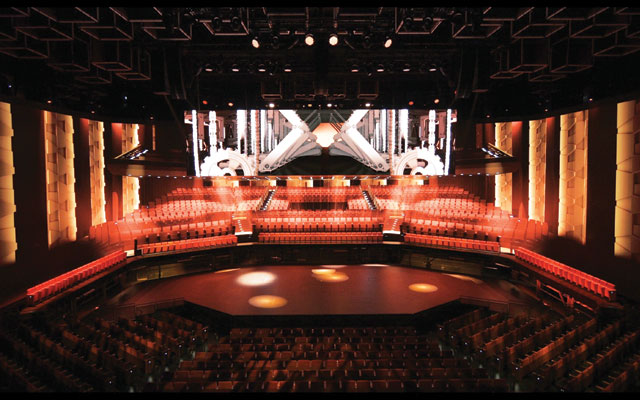
MGM Cotai’s entertainment centrepiece, make up Macau’s latest IR offerings
The US$3.4 billion MGM Cotai – the company’s second property in Macau – officially opened in February this year, offering 1,390 rooms and suites, plus a wide array of retail and F&B offerings in a 35-storey, multi-hued exterior that resembles stacked jewellery boxes.
The centrepiece of MGM Cotai’s entertainment attractions is the Spectacle, a 2,000-seat theatre with the world’s largest permanent indoor LED screens.
Two unique luxurious hotel types, Skyloft and the Mansion, are expected to be ready later this year, both featuring a hotel-within-a-hotel concept first introduced at MGM Grand Las Vegas.
Melco Resorts’ US$1.1 billion Morpheus, which opened its doors on June 15, marked a cornerstone of City of Dreams’ Phase III development. Designed by the late Zaha Hadid, the luxury hotel has been dubbed an architectural icon for Macau with 770 rooms, suites and villas wrapped in a free-form exoskeleton-bound high-rise structure.
Morpheus also makes a clear play for the premium market through its dining and leisure amenities – including an entire floor is dedicated to two Ducasse restaurants and a bar; the Pierre Hermé Lounge, the first collaboration between Maison Pierre Hermé Paris and a hotel in Greater China; Morpheus Spa, featuring an in-house spa butler concept and a snow garden installation; plus a sky-high pool perched 40 stories above the ground.
Melco Resorts & Entertainment’s CEO Lawrence Ho commented: “Looking back a decade ago, nobody believed Macau needed 30,000 to 40,000 hotel rooms. Today, the city is home to almost 40,000 rooms, with occupancy rate well above 90 per cent, so I believe there is still capacity for IR growth in future.”
The recent boost in Macau’s hotel supply has not exerted a downward pressure on room rates, asserted Gray Line Tours’ managing director Andy Wu.
Wu said: “Average occupancy hit over 80 per cent, even with a length of stay of less than two days. If tourists stay longer, there will not be enough rooms, so additional IRs are needed.
“However, it would be healthy to have more three- to four-star hotels since over 50 per cent of Macau’s 40,000 rooms fall into the luxury five-star grade.”
And given Macau’s proximity to China, a huge market source, Ho believes that Macau will remain “the number one IR destination”.
Furthermore, Macau is set to “benefit immensely” when the Hong Kong-Zhuhai-Macau Bridge opens this year, he stated. – Prudence Lui
SINGAPORE Established icons keep innovating
Eight years since they began operations, Singapore’s two major IRs, Resorts World Sentosa (RWS) and Marina Bay Sands (MBS), are pulling out all the stops to stay ahead of the game.
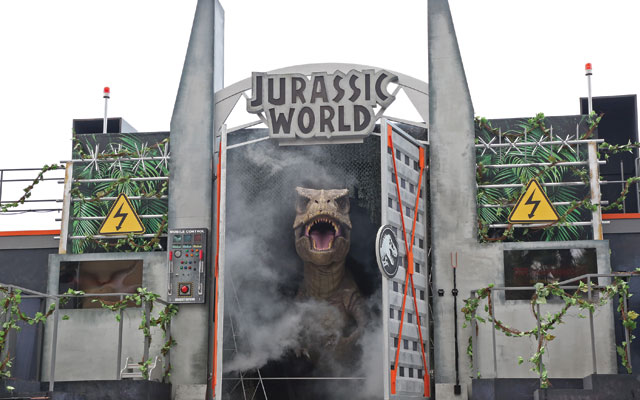
Jurassic World: Explore and Roar, the latest attraction at Universal Studios Singapore
RWS’ key attractions, Universal Studios Singapore (USS) and S.E.A. Aquarium, have rolled out thematic marquee events to boost repeat visitor volumes. For USS, these feature intellectual property such as TrollsTopia, Jurassic World: Explore & Roar, as well as Stranger Things content in the upcoming Halloween Horror Nights.
Meanwhile, S.E.A. Aquarium this year ran the month-long Ocean Fest!, a marketplace showcasing ocean-friendly products, immersive art installations, underwater performances and upcycling workshops to promote ocean conservation.
Outside of these key attractions, RWS has maintained a calendar of events to keep visitors hooked, including Football Fever 2018 to screen live World Cup matches, as well as food festivals RWS Street Eats and the GREAT Food Festival. In total, the IR sees more than 20 million visitors annually.
“From guest feedback, we found that visitors are drawn to lifestyle events that are immersive, engaging and offering experiences unique to Asia. RWS continues to reinvent our offerings and develop more unique and exciting programmes so we can differentiate ourselves from the competition,” said a spokesperson.
Likewise, MBS has kept a schedule of constant innovations. Following the refurbishment of its 2,561 rooms and suites, the IR has been leaning on a suite of technological enhancements with new multimedia attractions such as the Digital Light Canvas and Spectra.
Mike Lee, its vice president, sales, shared that “refreshing the diverse programming” has been a key investment for MBS. For example, the ArtScience Museum has been hosting “blockbuster exhibitions” featuring popular franchises like Marvel.
The Lavo Italian Restaurant and Rooftop Bar opened in January, and 2019 will see MBS launching the Marquee nightclub, which will span three floors and feature a full-sized indoor Ferris Wheel.
Maunik Thacker, senior vice president – marketing, shared that to reach out to guests, particularly the millennials, MBS has “shifted (its) marketing efforts to focus on more digital advertising”.
For example, data from MBS has shown that “the Chinese market is price sensitive, and discounts work well in driving bookings”.
To cater to audiences in China, Thacker explained that MBS “teamed up with WeChat to roll out (its) marketing messages and promotions via the app”.
Although IRs remain “hot” attractions for Chinese tourists, in particular for their shopping lures, Joseph Sze, project director, CSI Marketing, noted that tourist spots in Singapore must work harder to “create an atmosphere and environment integrated with attractions” as the Chinese market begins to skew towards “authentic and local” areas like the heartlands. – Pamela Chow
PHILIPPINES Still more rooms coming up
Resorts World Manila (RWM) will swamp the market with 900 new rooms with the opening of three hotels – on top of the existing four within the IR compound – in the coming months, but industry observers believe the additional inventory can be absorbed by the growing number of business and leisure travellers to the metro.
The 357-key Hilton Manila is scheduled to open in 3Q2018, followed by a 191-key Okura, and a 350-key Sheraton, adding to four existing hotels including a Maxim (to be rebranded Ritz-Carlton next year), Remington (to be rebranded Holiday Inn Express), Marriott which added 227 rooms in late 2016, and homegrown brand Belmont.
Kevin Tan, executive director of Alliance Global Group, Genting Group’s partner in RWM, said in a recent CNBC interview that the new openings will be part of RWM’s phase three expansion, which also includes a new casino set to “almost double the current gaming capacity we have right now”.
Colliers International research manager Joey Bondoc said RWM’s new hotels are in keeping with his recommendation for operators to continue developing four- and five-star accommodations in key business districts, as he foresaw continued arrivals from major visitor source markets thanks to the improvement of the country’s infrastructure and aggressive tourism marketing.
Bondoc also said RWM’s new hotels will be “propelled by expanding activities in key business districts” in Manila, including the growing number of business process outsourcing offices, and an ideal complement to RWM’s gaming and retail shops.
Mike Hain, groups manager of Corporate International Travel and Tours, said RWM’s new hotels are ultimately good for the market, where “hotels dictate the price” due to the limited choices. That’s why “if you compare hotels here with those in Asia, even for the same hotel brand, we’re more expensive,” he remarked.
Hilton Manila general manager Simon McGrath said that apart from the corporate sector, the leisure market including staycationers and tour groups will be drawn to the area’s proximity to airports, high-end shopping, F&B options, and what he says is the hotel’s unique selling point – a huge swimming pool and large jacuzzi that will be shared by Hilton and Sheraton. – Rosa Ocampo
MALAYSIA Massive remake of RWG underway
Since the launch of the Genting Integrated Tourism Plan in December 2013, Resorts World Genting (RWG) has undertaken major expansion and refurbishment efforts throughout the IR.
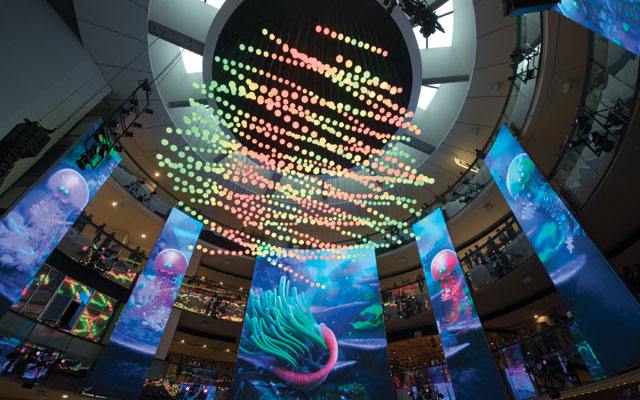
Resorts World Genting’s SkySymphony attraction
As part of the capital investment of RM10.4 billion (US$2.6 billion), upcoming attractions include the Skytropolis Indoor Park and Twentieth Century Fox World Malaysia Theme Park. No opening dates were given for these two much-anticipated offerings but TTG Asia understands that both would “open soon”.
The Skytropolis Indoor Park will boast 24 rides and attractions, while the Twentieth Century Fox World Malaysia Theme Park will feature rides and attractions based on movies such as Ice Age, Rio and Night at the Museum.
Several developments have already been launched, such as the SkyAvenue mall offering diverse shopping and dining options as well as SkySymphony, an orchestra of audio, visual and motion graphics using 1,001 winch balls suspended from a four-storey-high ceiling.
Other attractions include the Awana SkyWay cable car system with 99 gondolas that ply along a 2.8km-long track to allow visitors a bird’s-eye view of the 130-million-year-old rainforest.
In terms of accommodation, RWG currently has seven hotels totalling over 10,000 rooms. The five-star Crockfords opened in early 2018 with 140 keys, adding to existing hotels Awana, Genting Grand, Maxims, Resort Hotel, Theme Park Hotel and First World Hotel.
Rocky Too, senior vice president of sales & marketing at RWG, told TTG Asia: “Our target is to attract more people to come see the new RWG. Last year, we had over 23 million visitors. We believe that when the new theme parks open, there will be more tourists coming from India, China and neighbouring countries.”
Too further shared that RWG is working closely with key markets and travel agents to keep them updated on the resort’s offerings, and will be participating in tradeshows and travel fairs in target markets like China and India when the attractions are almost ready.
“As FITs and daytrippers are our priority market segments, we will also be working with OTAs and considering partnering with some hotels in Kuala Lumpur to offer room plus theme park tickets packages,” he added.
Inbound tour operators like Ally Bhoonee, executive director at World Avenues, believes that a “more exciting” RWG will “add value to the destination and make it easier for us to market internationally”. – S Puvaneswary
VIETNAM Playing catch-up in the IR game
The IR market is gaining momentum in Vietnam, as the country welcomes a swathe of developments to cater to growing demand from the domestic and regional markets – most notably China, South Korea and Japan.
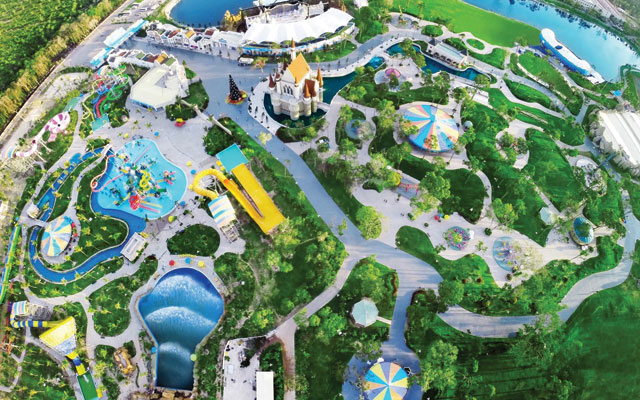
An aerial view of Vinpearl Resort
Jeff Redl, managing director of Diethelm Travel Vietnam, said the success of IRs in destinations such as Dubai and Singapore has fuelled the market’s growth in Vietnam.
He added: “The success of IRs in various locations has proven this particular model is pertinent and profitable. It has already found its clientele in certain markets and with the growth of Asian travellers, demand will surely increase. Vietnam has understood the needs for offering such IRs.”
Vinpearl is one of the country’s major players with its resorts in Nha Trang and Phu Quoc – two destinations where IR development is prominent. Other areas include Danang and Hoi An, Nha Trang and Cam Ranh, and between Hoi An and Tam Ky.
Another game-changer in the country’s IR market came in 2017 when the government lifted a long-time ban on Vietnamese nationals allowing them to gamble in two casinos on Phu Quoc, and at Van Don Special Economic Zone in Quang Ninh province. Both casinos are currently under construction.
In April, Laguna Lang Co beach resort near Hue was also awarded a casino license and is expected to welcome both foreign and domestic players by 2022.
Said Redl: “Gaming companies are interested in the casino business in Vietnam because the industry is still new, there’s little competition and those that arrive here first can easily dominate the market and maximise their profits.”
A study by academic Augustine Ha Ton Vinh, who extensively researched Vietnam’s gaming industry in late 2017, revealed Vietnamese spend an estimated US$800 million each year gambling abroad in places such as Macau, Singapore and across the border in Cambodia, making it a lucrative business.
Anton Jurgens, general manager of Exo Travel Vietnam, predicts that if gambling is fully legalised in Vietnam, there would be a huge growth in IRs with casinos. He added: “For now, we think this will be focused on Asian tourists and looks to be a strategy in developing the industry.”
Oleg Shafranov, general manager of Khiri Vietnam, commented: “This (lifting of the ban) will contribute to increasing the role, so far insignificant, of IRs for the domestic market,” she said. – Marissa Carruthers
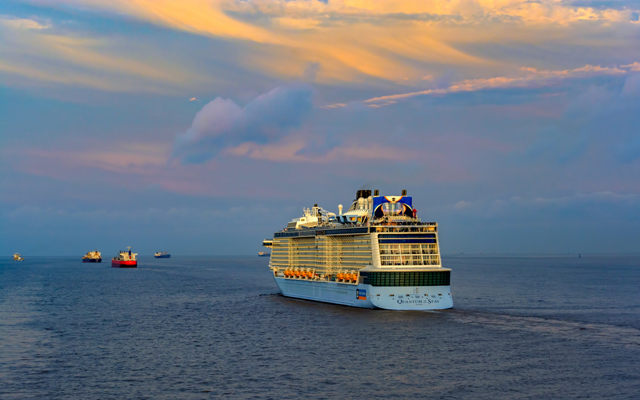
Quantum of the Seas sailing near Shanghai at twilight
Royal Caribbean International and Dream Cruises are two cruise lines that stand to benefit from Norwegian Cruise Line (NCL)’s decision to pull outNorwegian Joy from March 2019 and return to China to operate seasonally from summer 2020.
One successful ship which accommodates more than 4,000 guests is out of the way as the two companies ramp up on China homeporting. Royal Caribbean will introduce its first Quantum Ultra class ship, Spectrum of the Seas, which has room for 5,622 guests, from June 2019. By then, the line will be fully deployed in China with Spectrum in Shanghai, Quantum of the Seas in Tianjin, and Voyage of the Seas in Shenzhen and Hong Kong.
Quantum of the Seas sailing near Shanghai at twilight
Royal Caribbean International’s president China and North Asia, Zinan Liu, said Spectrum would reach “new milestones in the luxury cruise sector in China”.
Dream Cruises will continue to dual-homeport World Dream in Hong Kong and Guangzhou Nansha next year while waiting for a new Global Class ship, which will debut in 2020. Not only will the third ship be 25 per cent larger and double the capacity of her sister ships, it will be “a pace setter” with “focus on Asia, and more specifically China”, said Thatcher Brown, president Dream Cruises.
In the face of lower ticket prices as a result of explosive capacity increase during 2016-2017, both players have similar strategies: pump in more luxury, in the belief the Chinese consumer has evolved and will be swayed to cruise by more innovative products and destination experiences.
They also vow to continue training and educating smaller agents to sell cruises, so they can break through the predominantly wholesale charter distribution that is also partly responsible for China having few repeat guests compared to the US. Both acknowledge the need to create more enticing and longer itineraries.
Royal Caribbean, for instance, has planned “a more diversified” line-up of cruise itineraries sailing from China homeports. Among 117 open-to-sail sailings, guests can choose from 27 unique itineraries, featuring 23 destinations across four countries, Liu said.
Without revealing details, he said: “The exciting sailings include 17 well-selected long ones – six or more nights – taking guests to their favourite Asian destinations; eight warm-winter sailings bringing guests to sub-tropical and tropical destinations and providing an escape from the chilly winter weather; 12 weekend sailings, each of which lasts for three to four nights, tailor-made to meet millennials’ needs for a brief escape from the hustle and bustle of their urban life; and special holiday/festival sailings to discover new cultures and traditions.
“Instead of reducing the number of cruise ships or cutting down the sailing season, Royal Caribbean International has always sought a more sophisticated way to serve the Chinese customers, i.e. by offering new, groundbreaking and customised options such as top-choice staterooms, meals, entertainment, shops, and even destination tours,” Liu said.
“Chinese consumers’ needs have already evolved from cursory travels to an in-depth vacation experience. They prefer more customised products and services (so cruise companies will go) for more segmentation, tailor-made service, innovation and user-friendly technology.”
Echoed Brown: “China’s long period of sustained growth has spurred and expanded the middle class rapidly, simultaneously growing the cruise industry with more affluent Chinese consumers pursuing cruising as a vacation choice that offers value, convenience and enrichment.
“As the cruise market continues to evolve and mature, so will the need to provide a variety of cruise products that will be able to accommodate the various needs and tastes of a new generation of travellers. We must continue to educate and support our industry partners so that they can help us grow our addressable cruise market in China.”
Geopolitical crises such as the spat between China and South Korea which affected some routes could of course happen. But overall, they believe the market will continue to grow and evolve. In just four years, the number of Chinese cruisers has grown five-fold to almost 2.5 million, a rate of growth the cruise industry has never seen before.
“With advancements in high-speed rail connectivity and the continued growth of value regional carriers, there is opportunity to reach new audiences throughout China,” Brown added.
Read the full Analysis in TTG Asia, September 2018 issue
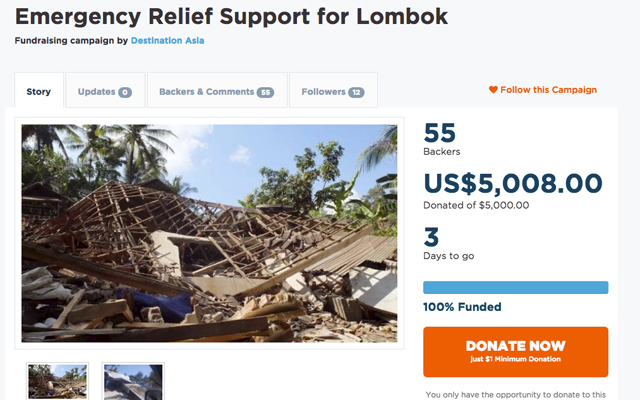
Destination Asia met its US$5,000 target in 24 hours, but is continuing to accept donations for more emergency supplies
Destination Asia is collecting funds to set up emergency stations for those affected by the earthquake that struck Lombok on August 5.
The death toll of the quake has climbed to over 300, as a 6.2-magnitude aftershock rocked the island yesterday.
Destination Asia met its US$5,000 target in 24 hours, but is continuing to accept donations for more emergency supplies
Each costing US$2,500 to set up, emergency stations comprise generators, water pumps, water filters, hoses, water storage tanks, tarpaulins, mats and tents, according to a statement from the DMC.
Proceeds will go directly to providing emergency support for those most in need on Lombok, Destination Asia said.
Contributions can be made here. The donation page will close Monday, August 13, 23.59 (UTC).
Destination Asia Indonesia staff are already working on the ground both with other local DMCs and partners to purchase and transport emergency supplies.
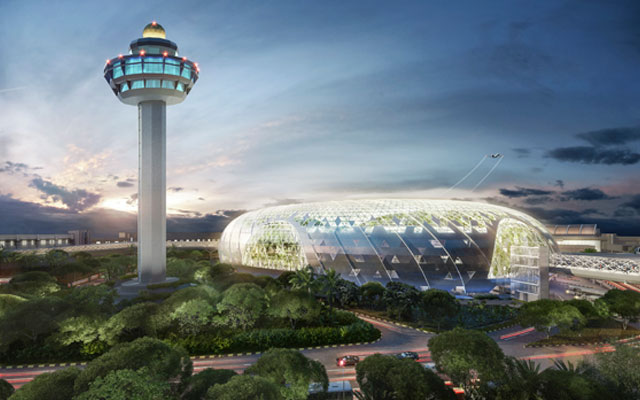
Singapore’s Changi Airport will soon introduce a lounge dedicated to fly-cruise, fly-coach and fly-ferry passengers.
To be located in the upcoming Jewel lifestyle hub, the “multi-modal transport lounge” will feature travel services such as ticketing and shuttle services to the cruise terminal, as well as passenger waiting areas.
The newly-built complex will be home to an integrated multi-modal transport lounge
The lounge will be managed by Changi Airport Group (CAG), which is currently in partnership talks with Royal Caribbean for this project.
Sean Treacy, Royal Caribbean’s managing director, Asia-Pacific, explained: “The lounge will be a place for cruise guests to relax before heading to the port, and for them to check in their luggage so they can remain free and easy. It is still being built. Royal Caribbean is keen on trialling it and we are still talking to them about how that’s going to work.
“This is still very early stages, but it is an exciting project because as a brand and company we are very focused on providing a seamless check-in and disembarkation process (for our customers).”
Ivan Tan, a spokesperson for the CAG, explained: “The cruise industry has been growing steadily, with passenger throughput at a high of 1.38 million in 2017. For fly-cruise specifically, CAG has signed various collaborations with cruise companies. This will allow airlines to capitalise on the opportunities presented by these passenger segments to enrich traffic sources and grow demand.
“With Changi Airport’s strong air connectivity, the multi-modal transport lounge at Jewel Changi Airport will strengthen Singapore’s position as a preferred hub for the region.”
Jewel, which is slated to open in the first half of 2019, will also include early check-in aviation facilities for travellers who arrive at the airport early. This will allow them to deposit their luggage and explore Jewel or terminal facilities prior to their flights.
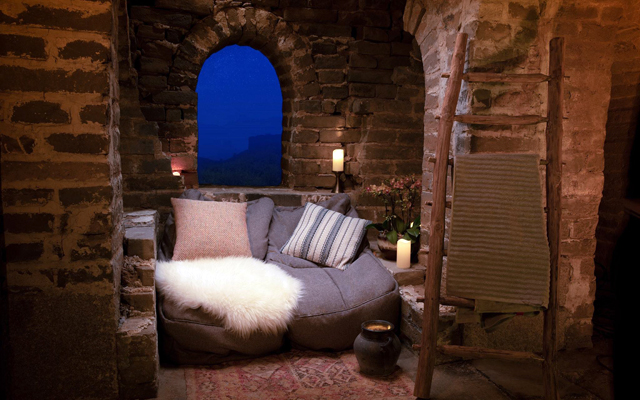
No green light from authorities for the overnight Great Wall of China experience
Home rental giant Airbnb has scrapped a contest for travellers to spend a night in an ancient watch tower on the Great Wall of China, following its failure to get the green light from the Chinese authorities for the project.
Beijing Yanqing Cultural Commission, which is responsible for the popular Badaling section of the wall, said that it did not support the project as it “is not in line with the Great Wall’s heritage conservation values”, reported the South China Morning Post.
No green light from authorities for the overnight Great Wall of China experience
Airbnb said in a statement: “We have made the decision to not move forward with this event and instead we are working on a range of other experiences and initiatives that showcase China as a destination and highlight how people-to-people travel can drive human connections.”
Airbnb has apologised to those who had already entered the contest launched last week.
Previously, Airbnb had conducted similar competitions such as the Catacombs in Paris, the Great Barrier Reef in Australia and Abbey Road Studios in London.
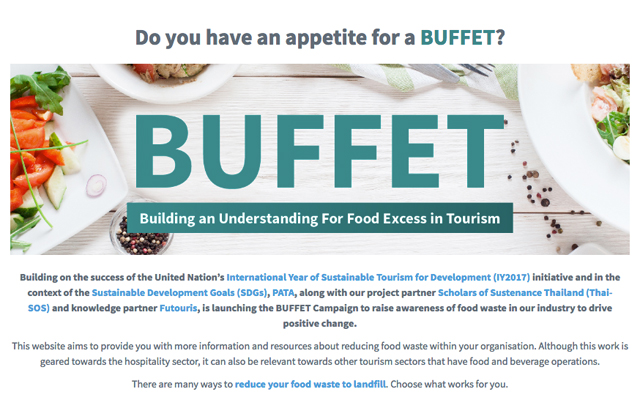
The Travel Corporation (TTC) is now a sponsor of PATA’s BUFFET (Building an Understanding for Food Excess in Tourism) campaign, launched in January to address food waste in tourism.
As an official sponsor of the initiative, TTC has committed to help raise awareness of food waste in the travel and tourism industry. It also intends to challenge other industry stakeholders, particularly the hospitality sector, to reduce food waste to landfill.
TTC is sponsoring the PATA initiative
Moreover, TTC will share best practice solutions that its various brands and partners have been implementing to reduce and prevent excess food waste in a PATA special report that will be published and distributed to the hotel and tourism industry.
Brett Tollman, chief executive, TTC, said: “The tourism and hospitality sectors have to take immediate action to find solutions that can help reduce food waste, ensuring a direct impact to reducing carbon emissions. Climate change has greatly affected some tourism destinations, and it is imperative that everyone takes on a proactive role to drive positive change and protect our planet for future generations.”
The company will also be a key sponsor for PATA’s BUFFET for Youth Challenge that will take place at the PATA Annual Summit 2019 in Cebu from May 9-12, 2019.