TTG Asia
Asia/Singapore Friday, 3rd April 2026
Page 1380

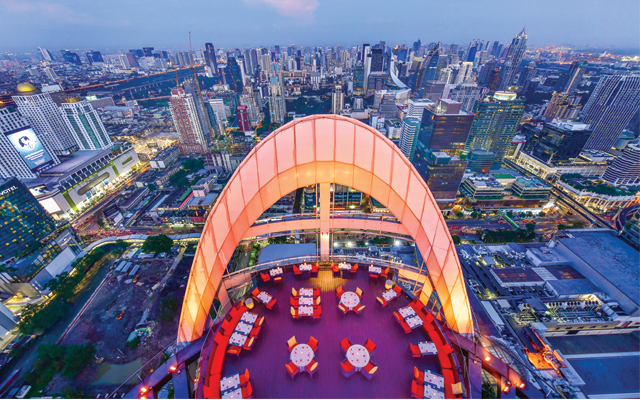
Bangkok hotel sector goes from strength to strength

0
Business optimsim runs high for Centara Grand at CentralWorld

Political stability and surging international visitors arrivals are proving a potent mix for Bangkok, as the Thai capital is poised to achieve its strongest performance in recent years in 2018 with no disruptive events anticipated.

Business optimsim runs high for Centara Grand at CentralWorld

“Thailand has seen a lot of ups and downs over the past 10 years but it’s on a clear path of growth (in the hotel sector),” STR’s area director Asia-Pacific Jesper Palmqvist projected at Thailand Tourism Forum earlier this year.

Bangkok’s hotel sector is “finding its strides”, reflected in the steady rise of its ADR and occupancy rates in the past three years. RevPAR, for instance, broke 10-year records for 10 months out of 12 in 2017, Palmqvist shared.

The growth momentum recorded for Bangkok’s hotels in the last two years is likely to be repeated in 2018, said Horwath HTL’s director Nikhom Jensiriratanakorn.

According to a recent HVS Market Pulse report, the overall stability in the market has contributed to the strong performance of hotels during the first two quarters of 2018. The outlook for the remaining months of 2018 is optimistic, driven by expected strong demand levels in international visitor arrivals, coupled with the political stability in the market with elections being postponed to 2019.

The positive outlook of Bangkok lodging sector is also apparent at Centara Grand and Bangkok Convention Centre at CentralWorld, which has enjoyed continued growth in all major metrics so far, Robert Maurer Loeffler, the hotel’s general manager and corporate director of operations told TTG Asia.

“Our Bangkok properties are enjoying a positive 2018. The first quarter was particularly strong and we have seen year-on-year growth in both occupancy and rates. Transient business has driven two-thirds of the growth while growth in the group segment has been led by double-digit increases from wholesale group business,” Loeffler commented.

“The remainder of 2018 is looking equally positive and while the transient growth will continue its trend from the first half of the year, the groups’ growth will be driven by increased MICE business, with other group segments remaining constant with last year. We hope to enter 2019 pacing ahead of prior years too,” he elaborated.

There is still considerable amount of new branded supply entering the Bangkok market in the foreseeable future, including much-anticipated brands like Capella, Edition and Four Seasons added to the city’s luxury segment.

Hilton, however, maintains “an extremely bullish outlook” on Thailand, including the luxury segment, said vice president, operations, luxury Asia-Pacific Daniel Welk. The hospitality giant has just launched its latest property, Waldorf Astoria Bangkok, in the Thai capital.

If there’s anything that growing competition has brought, it’s greater clarity for Hilton’s hotel brands, Welk stated.

“The swim lanes are more defined now,” he said.

Ascott Reit secures first co-living development in Singapore innovation hub

0
Rendering of Lyf one-north

Singapore’s Ascott Residence Trust (Ascott Reit) has acquired a prime greenfield site for S$62.4 million (US$45.6 million) for its maiden development project.

The property is expected to be managed by Ascott, under the co-living brand lyf. Lyf one-north Singapore, offering 324 units, is slated to achieve Temporary Occupation Permit by 2020 and open in 2021.

Rendering of Lyf one-north

This will be the first co-living property within Singapore’s research and innovation business hub, one-north. From its location at Nepal Hill, the property will sit amid 400 companies, 800 startups and 50,000 professionals,

The 60-year leasehold site was put up by the JTC Corporation for sale in a two-envelope concept and price tender. Ascott Reit’s concept proposal features the creative use of communal spaces, a holistic design centred on building a vibrant and collaborative community, as well as comprehensive programmes which promote social bonding, wellness, personal development and business networking.​

UNWTO releases report to help cities manage tourism growth

0
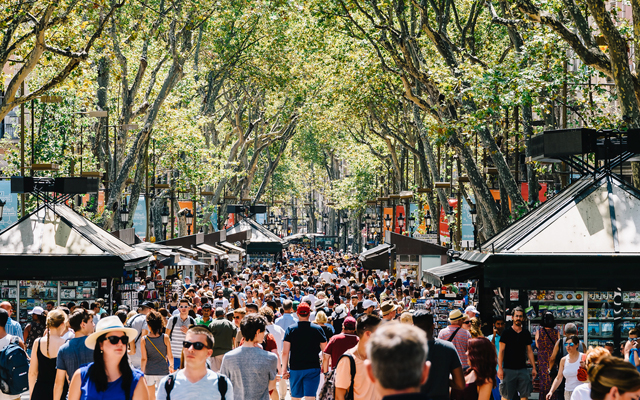
La Rambla Street, Barcelona

UNWTO has launched a report that aims to help manage growing urban tourism flows and their impact on cities and residents during the recent 7th UNWTO Global Summit on Urban Tourism in Seoul.

The ‘Overtourism’? Understanding and managing urban tourism growth beyond perceptions report proposes 11 strategies and 68 measures to help understand and manage visitor growth. The report is the result of collaboration between UNWTO, the Centre of Expertise Leisure, Tourism & Hospitality (CELTH), Breda University of Applied Sciences and the European Tourism Futures Institute (ETFI) of NHL Stenden University of Applied sciences.

La Rambla Street, Barcelona

The recent growth of urban tourism requires the sector to ensure sustainable policies and practices that minimise adverse effects of tourism on the use of natural resources, infrastructure, mobility and congestion, as well as its socio-cultural impact.

Increased reports of negative attitudes among local populations towards visitors, due to perceived overcrowding, noise and other issues, have led to the spread of terms such as ‘overtourism’ and ‘tourismphobia’ in the media.

“Governance is key. Addressing the challenges facing urban tourism today is a much more complex issue than is commonly recognised. We need to set a sustainable roadmap for urban tourism and place tourism in the wider urban agenda,” said UNWTO secretary-general Zurab Pololikashvili. “We must also ensure local communities see and benefit from the positive aspects of tourism.”

To better understand visitor management challenges in urban contexts, particularly the relationship between residents and visitors, the report includes an analysis of residents’ perceptions towards tourism in eight European cities – Amsterdam, Barcelona, Berlin, Copenhagen, Lisbon, Munich, Salzburg and Tallinn.

“There is no one-size-fits-all solution to deal with overtourism. Instead tourism needs to be part of a city-wide strategy for sustainable development”, Ko Koens of CELTH and Breda University of Applied Sciences concludes.

The report recommends a common strategic vision among all stakeholders involved, bringing residents and visitors together and adopting careful planning which respects the limits of capacity and the specificities of each destination.

“The involvement and support of local residents is key in achieving sustainable tourism”, professor Albert Postma of CELTH and NHL Stenden University of Applied Sciences explains. “Building shared responsibility amongst stakeholders directly or indirectly involved in tourism development is a key for ensuring long-term sustainability”, involved researcher Bernadett Papp concludes.

South Korea explores new growth markets

0
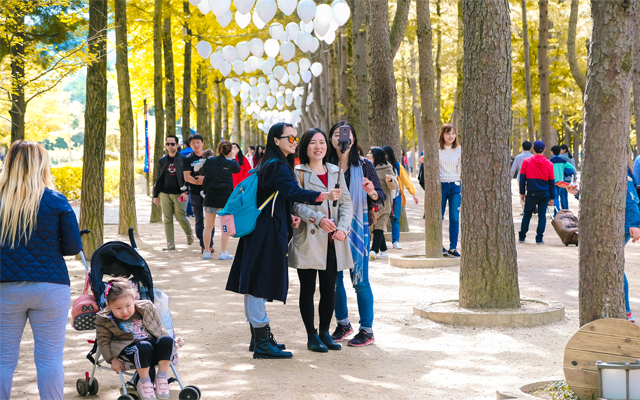
Tourists taking photos at Nami Island

South Korea is looking further afield to boost its inbound tourism figures.

In the first seven months of 2018, the country welcomed 5.7 million foreign visitors. China topped the table with nearly 2.6 million arrivals, followed by Japan with 1.5 million arrivals.

Tourists taking photos at Nami Island

With these two source markets representing more than 50 per cent of arrivals and China’s growth slowing – a 1.8 per cent year-on-year increase – due to geopolitical tensions with Beijing, the industry is stepping up efforts to woo other markets.

Jang You Hyun, director of Korea Tourism Organization, said: “We need to diversify our source markets. The Chinese market is becoming smaller and smaller. The Japanese market may be growing, but we are still hungry.”

Jang said huge investment is being ploughed into attracting visitors from alternative longhaul markets, especially from Europe. He added: “Markets such as these have huge potential. We need to target them more.”

Large-scale marketing campaigns are currently being launched in Europe – mainly the UK and Germany. “We have to hugely invest in advertisement in these inbound markets,” said Jang.

Soy An, operator manager of Us Travel, said her company regularly attends travel marts worldwide to stimulate interest in South Korea.

She added: “Many longhaul markets don’t have much interest in South Korea yet, but that’s because they don’t know much. We need to change that.”

Despite this, she noted a growing increase in interest from Europe, thanks to Korean pop culture influence trickling into Europe. For example, French travellers are being inspired by the popularity of K-pop, encouraging them to explore South Korea.

Another event that is set to be a global game-changer for South Korea’s tourism was the recent 2018 Winter Olympics in Pyeongchang. The company has put together a post-Olympic itinerary, which is proving popular with Europeans.

Said An: “The Winter Olympics is great marketing and we believe it will lead to many more tourists from Europe wanting to explore South Korea.”

New resort in Maldives to be part of Hilton’s Curio Collection

0

SAii Lagoon Maldives will open as part of Curio Collection by Hilton come 2019, managed by S Hotels & Resorts under a franchise agreement between Hilton and Singha Estate.

The resort will be located in Emboodhoo Lagoon and a 15-minute boat ride from Velena International Airport. The first and largest integrated tourist destination in the Maldives, Crossroads, is a stroll across a footbridge away.

The 198-key modern resort will offer a mix of deluxe rooms, beach villas and overwater villas.

Facilities include the The Hub, where guests have several options for relaxation. They can pick out their own treats from the Snack Box, which offers a complimentary collection of healthy, family-friendly refreshments, while the Aroma Lab will allow guests to create their very own bathroom amenities – selecting a base product, such as shampoo, shower gel or body lotion, and pairing it with one of the Lab’s scents.

The spread of in-house dining options at SAii Lagoon Maldives extends from a daily breakfast at Café del Mar, to gourmet coffees, specialty teas and meals on-the-go at the casual resort café, bean/Co. Guests will have a choice of stylish and uniquely distinctive themed eateries serving a combination of healthy fare, Mediterranean classics, fresh seafood and Thai-inspired creations.

Update [September 25, 2018; 14.26]: The original joint statement from Hilton and S Hotels & Resorts stated that the rooms would carry designs created by Bill Bensley, but a Bensley atelier representative reached out to clarify that Bill Bensley is not the designer for the project

Rosewood announces slews of promotions and hires

0
From left: Marc Handl and Andrew Turner

Rosewood Hotel Group has promoted the respective managing directors of its Beijing and Phuket properties Marc Handl and Andrew Turner to regional vice presidents, in addition to the appointment of new general managers for properties launching in the region soon.

From left: Marc Handl and Andrew Turner

With his promotion to regional vice president, Handl will additionally support Rosewood Sanya and the upcoming opening of Rosewood Guangzhou. Handl joined Rosewood in 2017 as area managing director of Rosewood Beijing, where he has been overseeing the group’s properties in Beijing, Shenyang and Langfang across its brands.

Handl has considerable luxury experience in East Asia, joining from Aman Group in Japan, where he was regional director based at its Tokyo property for almost two years. He previously held positions at Grand Hyatt and BC Fine Living in Beijing, as well as previous general manager posts at The Ritz-Carlton hotels in Osaka and Seoul.

Turner, following his promotion to regional vice president, will support existing Rosewood properties including Luang Prabang and Phnom Penh, as well as guide the upcoming Rosewood openings in Bangkok and Yangon.

The Australian joined Rosewood in 2016 as managing director of Rosewood Phuket. Turner has 22 years’ experience managing both city hotels and resorts across Asia, Middle East, Europe and the US, most recently at Baccarat Hotel & Residences in New York.

As well, three new managing directors have been appointed for Rosewood’s trio of upcoming properties in the region.

From left: Thomas Harlander, Stephan Tschuppik and Ed Brea

Thomas Harlander has been appointed managing director of Rosewood Bangkok (opening winter 2018). Bringing more than 18 years’ experience in the luxury hospitality industry, the German will manage and oversee all aspects of Bangkok property. Harlander’s career has taken him around the world to cities such as London, Washington DC, Los Angeles, Buenos Aires, Tokyo and most recently Seoul where he was general manager of the Park Hyatt hotel. Prior to joining Rosewood, his career extended throughout the Park Hyatt brand where he held hotel general manager and senior F&B management roles.

Stephan Tschuppik has been appointed managing director of Rosewood Guangzhou, which will be opening in Spring 2019. An Austrian native, Tschuppik’s hotel journey has taken him from his home country to the UAE, Oman, Vietnam, South Korea, Taiwan and China. He has over 25 years of industry experience, 16 years primarily across the Hyatt group in different destinations which includes Park Hyatt Saigon, Grand Hyatt Seoul, as well as a wealth of experience in pre-opening and opening China hotels, such as Grand Hyatt Shenyang and the Park Hyatt in Hangzhou.

Ed Brea has been appointed managing director of Rosewood Yangon, scheduled to open within 2018. With more than 30 years of experience in the luxury hospitality industry, Hawaii-born Brea has managed prestigious properties in Asia, most recently for Kempinski Hotels, as well as for Hyatt Hotels Corporation, Shangri-La Hotels & Resorts and One&Only Resorts.

New hotels: The Shanghai Edition, Novotel Ulaanbaatar and more

0
The Shanghai Edition, China

The Shanghai Edition, China
The Art Deco-style former headquarters of the Shanghai Power Company, with the addition of a new skyscraper on Nanjing Road, is now home to boutique hotel maverick Ian Schrager’s Shanghai Edition. The hotel offers 145 rooms and suites, many of which provide views of the Bund.

Restaurants, bars, and entertainment include Shanghai Tavern, Michelin-star chef Jason Atherton’s all-day dining, brasserie style restaurant; Hiya, a Japanese restaurant also by Atherton; Punch Room, a cocktail lounge first made famous at The London Edition; Canton Disco, a traditional Cantonese restaurant concept; The Club Room – a gentleman’s club-inspired lounge; and Electric Circus, a club, VIP lounge and nightclub rolled into one.

Communal spaces include a multipurpose space for meetings and events for up to 200, a fully landscaped tropical Roof Garden, equipped with a bar and cinema; a swimming pool sunk in stone; a gym, spa with six treatment rooms, and multiple terraces.

Novotel Ulaanbaatar, Mongolia
Novotel has set foot in the capital of Mongolia with a new 192-room property. Every room has been adorned with a picture of Mongolia taken by a famous local photographer, and designed in a Chinese minimalist style. Rooms from the 12th to the 16th floors will also have views of the mountain and city of Ulaanbaatar. Facilities include an indoor swimming pool, fitness centre, spa, three restaurants, two bars, a ballroom and a meeting room.


Joali, Maldives
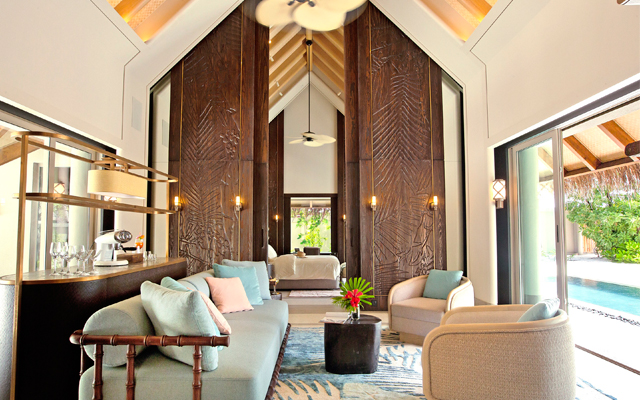
The island retreat Joali has opened in northern Maldives, situated on Muravandhoo Island in the Raa Atoll. The resort comprises 73 beach and water villas, ranging from two- to five-bedrooms. Amenities on the island include a whiskey lounge, curated library, ESPA spa, five F&B options, kids’ club and a chocolate and ice-cream store. The resort will create itineraries for its guests on request, where Dhoni excursions to meet local communities or snorkelling with manta rays can be arranged.

Holiday Inn Express Seoul Hongdae, South Korea
The second Holiday Inn Express in Seoul adds 294 guestrooms to the South Korean capital. Guests can enjoy amenities such as free and fast Wi-Fi throughout their stay, use of the business centre and laundry stations, and a 24-hour fitness room. There is also a Free Express Start Breakfast at the brand’s Great Room, or a Grab & Go option available. The property is on the main junction of Hongdae above the new AK Mall, and a 30-minute drive from Gimpo International Airport or a 50 minute drive (one hour by Airport Subway) from Incheon International Airport.

Selangor coming into its own

0
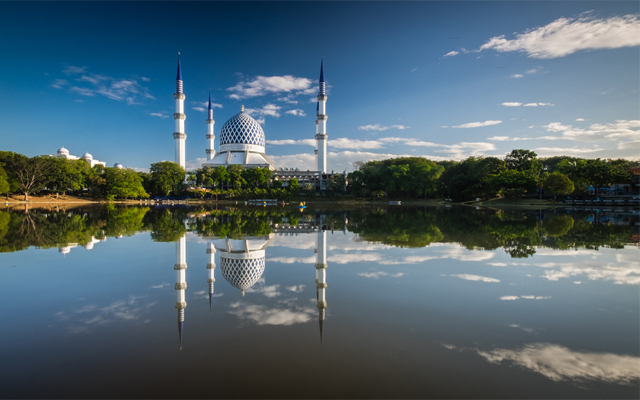
Sultan Salahuddin Abdul Aziz Mosque in Selangor's Shah Alam is known to be the largest mosque in Malaysia

While Kuala Lumpur remains a firm favourite in Malaysia thanks to its mature branding and iconic structures, agents are seeing neighbouring Selangor rising in popularity among tourists, fuelling demand for twin-destination programmes.

Yap Sook Ling, managing director, Asian Overland Services Tours & Travel, said new products in Selangor are driving interest for family travel from India, China, Hong Kong and the Middle East.

Sultan Salahuddin Abdul Aziz Mosque in Selangor’s Shah Alam is known to be the largest mosque in Malaysia

Itineraries span attractions such as Selangor Fruits Valley, Sekinchan paddy fields, Sky Mirror in Kuala Selangor and Sunway Lagoon, the oldest and largest theme park in Selangor.

She added: “We have seen demand for Selangor rising over the last two years, some from repeat visitors to Kuala Lumpur, and others who have heard about Selangor and were keen to explore beyond Kuala Lumpur.

“Selangor appeals to special interest groups as well as families with children because of its ecotourism attractions and educational experiences such as rice planting and harvesting and mangrove ecosystem in Kuala Selangor.”

In the past, Selangor was offered as a day trip component, but combination packages now include overnight stays both in Selangor and Kuala Lumpur, she shared.

Cherry Lee, executive director, World Express Tours, said: “Selangor’s appeal lies in its greenery and there are a number of resort hotels with green landscaping and space, which appeals to the leisure segment, unlike Kuala Lumpur which has more business class hotels.”

Lee added that hotels in Selangor are priced very competitively, with new hotels coming up in locations near shopping malls and theme parks. Sunway Clio Hotel, for example, is located within walking distance of Sunway Lagoon and Sunway Pyramid Mall, whereas New World Hotel in Petaling Jaya is adjacent to Paradigm Mall.

“We see growing demand for Selangor from the Middle East market, who in the past used to want to stay only in Kuala Lumpur and do day trips to Selangor,” shared Lee.

“(Seeing the changing trends), we have asked hotels in Selangor to give us bigger allotments to add into our distribution channels,” she added.

For Abdul Rashid Asari, Selangor state government chairman of standing committees for cultural and tourism, Malay tradition and heritage, however, “travel agents unforunately still tend to sell the same old tours emphasising Kuala Lumpur”, despite the abundance of ecotourism, culture and heritage offerings in Selangor.

To change this, there are plans to step up product briefings and fam tours for travel agents from 4Q2018 onwards, showcasing offerings in and around the big cities of Petaling Jaya, Subang, Shah Alam and Klang, he told TTG Asia.

A chief focus is to “develop the tourism infrastructure outside the main cities by building three- and four-star hotels in places such as Sabak Bernam, Sekinchan, Hulu Selangor and Kuala Selangor”.

“This year, we also initiated the Selangor Community Host Programme to train local communities to be local guides in the areas they live,” said Abdul Rashid.

Nazri Tashriq Rahmat, corporate communications manager, Tourism Selangor, said Selangor continues to be a day-trip option for many Asian tourists, but the state tourism board hopes to increase this to a few nights’ stay over time.

Another challenge lies in Selangor lacking recall as a geographically distinct destination.

Said Nazri: “Many travellers doing Selangor-Kuala Lumpur combination tours are unaware that some (attractions they visited) are in Selangor, as the guides don’t point this out. We are now educating inbound agents to (make the distinction clear).”

More travellers seeking a break from beaches in Asia

0
Borneo in the Malay Archipelago

Ecotourism and wildlife offerings are holding more sway among European travellers as they start to tire of the traditional beach holidays in Asia.

Diana Lozanova, director of Sofia Luxury Travel in Bulgaria, said while Asia remains the most popular destination, she has seen a recent rising trend in clients wanting more than the usual popular Asian beach destinations that initially drew travellers to the region.

Borneo in the Malay Archipelago

She said: “Bulgarians love the beach, but now they want to explore something new. They normally go to Phuket or Bali for the beach. They want wildlife and nature, so we are looking for destinations that can provide that.”

Lozanova noted that interest in wildlife, adventure and trekking trips are on the rise, with Cambodia and Japan on their radar. She added: “Japan is a new market and is very different, but it has been hard to find a travel agent with reasonable prices.”

Jana Oberreiterova, product manager of Fun Express in the Czech Republic, said while Asia remains the most popular longhaul destination with clients, they are searching for emerging destinations.

Said Oberreiterova: “They are no longer looking at Thailand and Indonesia and the beaches. (These beaches are) too touristy now and people looking for somewhere else. They want wildlife and nature.”

A strong economy in the Czech Republic is fuelling demand for longhaul travel, with 40 per cent of clients at travel agency Jedu interested in Asia. Project manager Martina Patova said while Bali is one of the top destinations, Czechs’ desire for something different is shining through.

She believes countries such as Laos and its wealth of nature and expanding ecotourism options as well as the Philippines will fit the bill.

Micheline Hardy of Toronto-based Club Voyages Mont-Tremblant, hopes to beef up his Asian offerings while catering to travellers’ changing needs for more nature-based activities such as scuba diving, trekking and golfing.

“Travellers are looking for more exotic destinations where they haven’t been before. They want to do more active travel.”

Courting China’s wired travellers

0

With a completely unique digital playground, travel and hospitality brands need to engage with their affluent Chinese customers according to their app-based, mobile preference.

Players in the hospitality or travel sector should already realise the importance of Chinese travellers – Chinese tourists made 130 million overseas trips in 2017, with total spending amounting to US$115 billion, according to a report from China Tourism Academy, and the number is projected to jump to 390 million in the next decade.

Life in China is digital, and it’s mobile. If you’ve visited China then you would have noticed that everything is paid for via mobile phones. WeChat Pay logos are popping up in many airports around the world. Research from Neilson shows 65 per cent of Chinese tourists use mobile payments while travelling overseas, compared with only 11 per cent of non-Chinese tourists; 90 per cent of Chinese tourists use mobile payment overseas when given the option.

A survey in 2017 revealed that 95 per cent of millennials had not bought print media in the last year. China is the global leader in proximity mobile payment adoption, accounting for 61.2 per cent of the worldwide user base in 2018.

When planning, booking and reviewing their travel, Chinese consumers seldom browse websites or the Internet, let alone print – they live on apps alone. And in China’s singular world of travel apps, who are the key players engaging Chinese luxury travellers in sales, marketing, reviews and content platforms?

Booking Platforms
Ctrip and HH Travel (High to Heart)
As China’s biggest OTA, Ctrip not only offers the most choices at the best prices, but also produces content in collaboration with travel key opinion leaders (KOLs). HH Travel, a luxury travel agency owned by Ctrip, books packages for wealthy clients via their own app and WeChat mini-programme. It serves approximately 10,000 customers each year, who typically fly business or first class, spend an average of RMB100,000  (US$14,639) per person, per trip on accommodation, and favour exotic destinations like the North and South Poles.

8 Continents
8 Continents Travel is one of the leading ultra-luxury travel agencies in China. Founded in 2012 and headquartered in Shanghai with offices in Beijing and Chengdu, 8 Continents provides customised worldwide travel for HNWI clients, from honeymoons and tours to adventurous destinations such as the Antarctica.

TuNiu
TuNiu is the largest booking platform in China. While it’s not luxury-specific, its sheer size means that all forms of travel bookings take place there. Founded in 2006, TuNiu’s sheer size makes it one of the strongest places to be seen.

Review Apps
XiaoHongShu (Little Red Book)
Launched in 2012 as a community for users to share recommendations of fashion and beauty products from overseas, XiaoHongShu shot to popularity to reach 70 million users at the end of 2017.

XiaoHongShu works very well as a place where sharing a love of products is the sole purpose. It is viewed as a ‘safe place’ for users, who do not like the ‘open’ nature of Weibo or want to refrain from appearing overly showy on WeChat.

The app now also includes travel reviews published by KOLs, angling at the user-base of females aged 18 to 35; i.e. millennials.

MaFengWo
MaFengWo is a travel review app with over 120 million users, with its gross merchandising revenue valued at four billion  renminbi according to analysis company Qianfan. Its success comes from a neat blend of KOL blogs, user-generated reviews and a Q&A section where tourism bureaus and businesses can get involved, as well as peer-to-peer responses.

The reviews and information go beyond hotel reviews, offering guidance on shopping, visas, insurance, with integrated booking into any form of travel service, ticket and so on.

In the blog section, Feng Show, there are approximately 5,000 contributors, with daily editorial picks highlighted. Users can comment on favourite posts. While not luxury specific, the opportunities for engagement on MaFengWo are vast and the savviest travel and hospitality people are wise to this – Tourism Australia just signed a strategic partnership agreement with MaFengWo in August.

FeiZhu (Fliggy)
While it’s categorically not a luxury app, the user base is high due to Fliggy being a booking and review-based app. Fliggy used to be called AliTravel, but it was rebranded a few years ago. The app’s ownership under Alibaba gives it easy reference to Taobao, prompting travel shopping.

With 10 million daily active users, the overall mass popularity is clear. While it’s not specifically for luxury travel, Fliggy has been making waves in the travel world with a number of headlining partnerships. It is collaborating with Singapore Airlines on the carrier’s Krisflyer mileage points programme, and has entered into several partnerships with NTOs such as Dubai Tourism. With support from the Alibaba Group, Fliggy is definitely one to watch as it continues to strengthen.

WeChat
Comparing the various options for content and commerce, WeChat is still the leader of the China digital landscape.

Anyone who lives in China will understand that WeChat is still first – first for daily usage of your consumer, but also first for any brand, destination or bureau to build a robust foundation. Think Google + Facebook + Instagram + your credit card = WeChat.

WeChat is the first place that travellers will share their holiday photos, experiences and reviews; the app that they will use to pay with and plug into your CRM and join your loyalty programme on; and the channel for them to speak to your customer service. All these are within WeChat, as should be your content via an official account to begin with, followed by a mini-program eventually. Build a rock-solid WeChat offering and the possibilities are endless for your luxury Chinese traveller.