TTG Asia
Asia/Singapore Thursday, 2nd April 2026
Page 1317

Focus on tourist spend as Indonesia struggles with arrivals targets

0
The disaster mitigation agency says 'hundreds of smaller quakes to come', but Lombok and Gilis are 'safe'

Reporting by Mimi Hudoyo and Tiara Maharani

After a series of natural disasters last year put a spanner in the works of Indonesia achieving its visitor arrivals target in 2018, key tourism decision-makers are now steering the focus away from volume and onto revenue for 2019.

Visitor arrivals to Indonesia last year is estimated to be around 16.2 million, around five per cent lower than the target of 17 million.
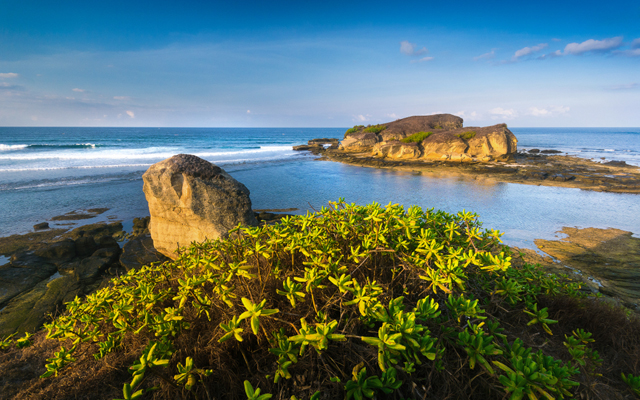
Batu Payung beach in Lombok

The full 2018 data is not available at press time, but figures from Statistics Indonesia issued on January 2 showed that January-November arrivals totalled 14.4 million.

Indonesia minister of tourism Arief Yahya said the country was on track to meet the arrival target in the first half of the year – until an earthquake and tsunami hit Lombok late July and early August. “There were huge cancellations, up to 75 per cent. Between August and December, (arrivals) dropped by around 500,000,” he shared.

Achieving the 2019 arrivals target is likely to be a challenge, with devastating tsunamis hitting Palu and on Sunda Strait in the last weeks of 2018, while the travel industry also expects the national and presidential elections taking place in April to affect inbound numbers.

Arief said: “Although the arrival target for 2018 was not reached, we managed to reap total revenue of US$17.6 billion, (slightly) higher than target.

“The good news is, with this revenue, tourism has become the biggest foreign exchange earner, surpassing or at par with crude palm oil, which (brings in around) US$16 billion.”

Bambang Brodjonegoro, Indonesia’s national development planning minister, opined that the tourism sector should shift its focus from volume to boosting revenue.

He said during a tourism coordinating workshop: “We should not be content with seeing long queues of tourists at immigration counters at the airports anymore. It is not recorded in the current account. To increase foreign exchange earnings, we need more tourists to spend more money in Indonesia and as much as possible, stay longer.”

Bambang said his office was currently developing a tourism development plan, where a strategy would be drawn up in line with these priority areas.

However, Faisal Basri, chief of the advisory board of Indonesia Research & Strategic Analysis, pointed out that the net revenue from the tourism sector was small when discounting expenditure by Indonesian travellers, which according to the Ministry of Finance, reached a total of US$8 billion.

Faisal said: “There is (revenue surplus) but very small. So when we talk about the target, this should be in net income. The success of tourism is when we succeed in making tourists shop and spend their money in Indonesia.”

Breaking down the travel trends between baby boomers, millennials: TripAdvisor

0
TripAdvisor's TripBarometer study unveils top travel trends for 2019

TripAdvisor has released its annual TripBarometer study, revealing a significant gap in spending habits between older and younger generations, as well as how travellers choose destinations and accommodation.

TripAdvisor’s TripBarometer study unveils the top travel trends for 2019

Hotel brands
When selecting hotels, Asian travellers, particularly those from China, value hotel brands much more than Europeans, with 82% of Chinese travellers reporting that it is important to stay in a hotel with a brand name they know and trust.

Travellers from the UK are the least interested in hotel brands (22%), according to the report.

Families are also more likely to prefer a hotel with a brand they trust (44%) compared to other traveller groups.

The generation gap – spending and pre-booked attractions
The TripBarometer results show the divide in spending habits between generations, with participating baby boomers spending almost twice as much on accommodation (S$1,540, or US$1,137) when compared to their children’s generation.

Millennials have the smallest accommodation budget by a significant margin, spending an average of just S$675 on accommodation on their most recent trip. However, while younger travellers are more cautious with their finances, they are just as willing as their parents’ generation to pay a little more for luxury, with 54% of millennials and 56% of baby boomers prepared to pay a little more for a luxury trip, TripAdvisor said.

The 25-34 age group is also more likely to be attracted to a great deal, with 16% being prompted to think about their trip because of a bargain – however, this declines with age; 65+ age group are less tempted by a deal (9%).

Younger people are less fixed on a destination when they start thinking about a trip, with 46% of participating 18-24 year olds having decided on their destination before starting their research. For the 65+ age group this is a lot higher; 70% have already decided where to go.

Millennials are more likely to book attractions than older travellers, with almost half (49%) pre-booking things to do before embarking on their trip. Baby boomers are far less likely to book in advance with just over one third (35%) pre-booking attractions. However, across all respondents, the majority (57%) do not take advantage of bookable experiences, potentially meaning longer time spent queuing for tickets and entry while on holiday.

Choosing a destination
When it comes to choosing a destination, culture is more of a factor than weather for participating travellers. One third (34%) choose their destination to experience the culture, society and people, compared to just one fifth (20%) of travellers who are seeking good weather.

City breaks are the most popular type of trip, with nearly one in three travellers (30%) taking a city break, and this type of trip is even more popular among millennials (42%). Millennials are also far more likely to conduct thorough research to find the right accommodation and flight combination to make their city break a more economical trip, and to stay within their limited budget.

Most expensive holidays
Surprisingly, cruises came out as the most expensive type of holiday, at an average cost of S$5,442 per person, even more than safaris (S$4,626) which might traditionally be seen as one of the most expensive types of trips. Unsurprisingly, some of the cheapest trips were taken by travellers visiting family or friends (S$3,017).

The TripBarometer survey, conducted by independent research firm Ipsos MORI in partnership with TripAdvisor, is the analysis of more than 23,000 responses from TripAdvisor travellers across 33 markets worldwide. They were quizzed about their most recent trip, including their destination, budget, activities and concerns while travelling.

Singapore, South Korea take second place in Henley Passport Index

0
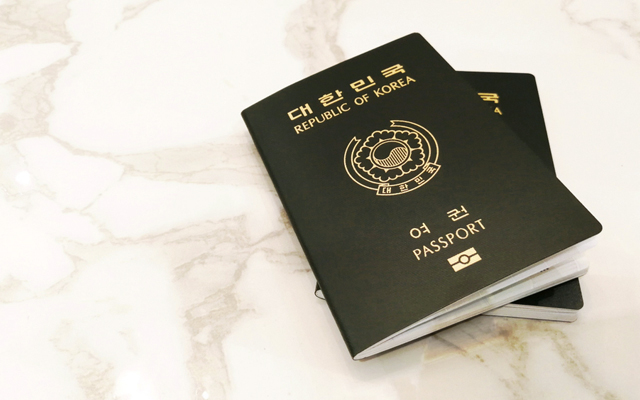
South Korea scored 162, tied with Singapore

Japan tops the world’s most powerful passport list in the latest Henley Passport Index, while South Korea is now tied with Singapore in second place.

Citizens of both Singapore and South Korea enjoy visa-free/visa-on-arrival access to 189 destinations around the globe. Japan, which overtook Singapore to take the lead on the index last October, scores 190 on the same measure.

South Korea shares second place with Singapore on the Henley Passport Index

Germany and France remain in third position, with citizens able to access 188 countries and territories.

The US and the UK – which were tied at the top of the index in 2015 – continue sliding down the ranking, and now sit in joint sixth place with a score of 185.

As they have done for much of the index’s 14-year history, Iraq and Afghanistan remain at the bottom of the ranking, with access to just 30 visa-free destinations.

Dominic Volek, managing partner of Henley & Partners Singapore and head of South-east Asia, commented that this latest ranking shows that despite rising isolationist sentiment in some parts of the world, many countries remain committed to collaboration.

“The ascent of countries such as South Korea and the UAE on the Henley Passport Index reminds us that opening your borders to others results in reciprocal benefits and improved passport strength for your own citizens. The countries that perform well on the index are those that are embracing new models of global citizenship and adapting to, rather than shrinking away from, an increasingly globalised world. The general spread of open-door policies has the potential to contribute billions to the global economy, as well as create significant employment opportunities around the world.”

Asian countries’ continued dominance of the Henley Passport Index reflects the remarkable effect that international mobility and migration has had on the region.

China’s steady ascent up the rankings over the past few years is a clear demonstration of this, Henley noted. In 2017, the country was ranked 85th, with citizens able to access just 51 destinations. Going into 2019, China sits in 69th place, with its nationals now able to access 74 countries and territories around the world.

Going forward, Henley cited experts sentiment that neither the US nor EU member states are in line to substantially revise their current visa policies, whereas countries in other parts of Europe (such as citizenship-by-investment newcomers Moldova and Montenegro), as well as those in Asia and the Middle East, look set to continue seeking visa-waiver agreements with diplomatic allies.

A question mark remains over the ultimate impact of Brexit. While the deal hangs in the balance, it is difficult to anticipate what the ultimate ramifications will be for EU and UK citizens, as well as for EU and UK trade and co-operation.

Finally, insights from the report show that the ever-growing trend towards visa-openness is unlikely to slow down. Overall, 2019 looks set to hold some surprises in the travel freedom space as more countries and citizens embrace the benefits of global mobility.

2018 marred by fatal accidents but air travel still ‘extraordinarily safe’: AAPA

0
Amadeus says it is one of the first providers to have achieved level three certification both as an aggregator and IT provider

Air travel is “extraordinarily safe” despite the fatal accidents that took place last year, said the Association of Asia Pacific Airlines (AAPA) while reflecting on 2018.

Last year’s air transport safety performance marked a departure from 2017, which was declared the safest year in the history of commercial air travel.

AAPA says flying is still very safe with 2018 seeing a loss rate of one major accident for every three million flights

Worldwide, in the calendar year 2018, more than four billion passengers were carried safely on 38 million flights, according to AAPA. There were 13 major accidents involving commercial airline operations, which resulted in a total of 523 fatalities.

This represented an overall loss rate of one major accident for every three million flights, AAPA said.

Looking more closely at the data, there were seven major accidents involving large western-built commercial airline jets, which resulted in a total of 304 fatalities, representing a loss rate for this category of operations of one major accident for every five million flights.

Asia-Pacific carriers experienced two major accidents involving large western-built commercial airline jets, which resulted in 190 fatalities. AAPA member airlines experienced zero major accidents during 2018.

Turning to turboprop aircraft operations, worldwide there were five major accidents in 2018 involving commercial airlines, which resulted in a total of 148 fatalities, including one accident involving an Asian operator which resulted in 51 fatalities.

Turboprop operations play an important role in the development of new routes and connectivity to relatively inaccessible regions. Overall safety performance for turboprop operations has benefitted from collective efforts to address specific risk factors and operational challenges.

Andrew Herdman, director general of AAPA, commented: “Flying is extraordinarily safe, and major accidents are rare events, but the industry experienced a number of fatal accidents in 2018 which reinforce the need to maintain and further enhance the highest safety management practices and standards.

“Attaining ICAO’s global aviation safety objectives requires active collaboration of regulators and industry, at all levels, to establish proactive safety management systems across the industry, identify evolving safety priorities and address common operational challenges.”

The booming demand for air travel comes with added challenges, again reinforcing the importance of collaboration between governments and the industry to “tackle existing aviation infrastructure capacity constraints and congestion, while investing in the future to ensure that the air transport system is able to meet the expected growth in demand”, he added.

Sri Lanka tourism on rebound as political crisis tapers

0
Galle, Sri Lanka

Sri Lanka’s tourism industry is starting to recover from the recent political crisis, which resulted in dampened inbound arrivals for the traditional peak season.

The country now has a new cabinet, with the reappointment of Ranil Wickremesinghe as prime minister on December 16 ending a 52-day political impasse that followed president Maithripala Sirisena’s sacking of Wickremesinghe and replacing him with former president Mahinda Rajapaksa.

Galle, Sri Lankagalle

Tourism minister John Amaratunga, who was reappointed along with many other cabinet ministers, said the new So Sri Lanka destination marketing campaign will be launched at ITB Berlin in March along with plans to target an ambitious four million arrivals by 2020. Sri Lanka received 2.3 million arrivals in 2018, short of the expected 2.5 million.

“All promotional campaigns were in limbo (due to the political crisis) but we’ll roll them out again,” he told reporters last week. Campaigns in the next few weeks include participation in travel fairs in Mumbai and Delhi, and the Arabian Travel Mart in Dubai.

Several countries, including the UK, the US and Canada, had earlier issued travel alerts advising their citizens to be wary when visiting Sri Lanka. Tourist Hotels Association of Sri Lanka president Sanath Ukwatte is optimistic that with a cooling of tensions, travel advisories are now more likely to be relaxed.

Still, Ukwatte pointed out that the usual tourism flows have restarted and noted that travellers don’t generally follow travel advisories to the tee. “Look at the Maldives last year, despite travel advisories due to a state of emergency, arrivals didn’t fall,” he said.

“Things are looking good,” Ukwatte added, revealing his projections for bumper year in arrivals following Lonely Planet’s endorsement of Sri Lanka as one of the best places to travel in 2019.

Minister Amaratunga was quoted as saying Lonely Planet officials were to visit Sri Lanka to launch a fresh programme to showcase Sri Lanka, which too was delayed. No details were available but Ukwatte said the authorities should publicise the Lonely Planet endorsement in Sri Lanka’s overseas markets. “We need to be publicising this a lot overseas (tradeshows and roadshows),” he said.

There remains some lingering uncertainty in the country though. Appointments to the position of chairman of the four tourism institutions – Sri Lanka Tourism Promotion Bureau, Sri Lanka Tourism Development Authority, Sri Lanka Institute of Tourism and Hotel Management, and Sri Lanka Convention Bureau – are yet to be finalised.

The appointments, all affected by the political upheaval, are expected to be finalised in the coming week.

Aviation roundup: Bangkok Airways, SilkAir and more

0

Bangkok Airways joins growing list of airlines flying to Cam Ranh
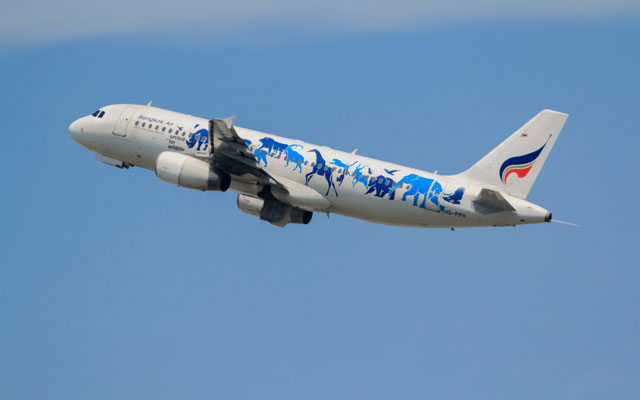
Starting January 25, Bangkok Airways will operate four-times weekly flights between Bangkok’s Suvarnabhumi Airport and Cam Ranh International Airport, gateway to the Vietnamese beach destination of Nha Trang, aboard a 144-seat Airbus 319 on Mondays, Wednesdays, Fridays and Sundays.


SilkAir boosts Singapore-Cairns flights to daily frequency
SilkAir will increase flights between Singapore and Cairns, Australia to daily frequency with effect from June 2019, up from the current five flights per week. The additional flights will be operated on Tuesdays and Sundays with Boeing 737 MAX 8 aircraft, fitted with 12 Business Class and 144 Economy Class seats.

From June 2 to October 26, Flight MI811 will depart Singapore at 01.10 on Mondays, Thursdays and Saturdays for arrival in Cairns at 09.55. On the return, MI812 will depart Cairns at 10.45 the same day, to arrive back in Singapore at 15.25.

On the remaining days of the week, MI813 will leave Singapore at 08.45 to arrive in Cairns at 17.15. MI814 will then depart from Cairns at 18.15 for arrival in Singapore at 23.05.


Vietjet to link HCMC and Quang Ninh
Vietjet will launch a new domestic route connecting Ho Chi Minh City (HCMC) and Van Don, Quang Ninh Province starting January 20. Every Monday, Wednesday, Friday and Sunday, the flight departs from HCMC at 07.00 and arrives in Van Don at 09.15. The return flight takes off at 09.50 and lands in HCMC at 12.05.


Cathay Pacific launches seasonal flights to Japan’s Komatsu
Cathay Pacific will introduce a new twice-weekly seasonal service from Hong Kong to Komatsu in Japan’s Ishikawa Prefecture, gateway to the Hokuriku region and coast of central Honshu.

From April 3 to October 26, CX574 will depart Hong Kong at 09.45 on Wednesdays and Saturdays, for return to Komatsu at 14.55. CX575 will then leave Komatsu at 16.30 and land in Hong Kong at 20.00.

The flights will be operated with Cathay’s Airbus A330 aircraft.


AirAsia takes over Borneo connections as MASwings withdraws eight services
MASwings has cancelled the following Borneo routes:
Kuching – Sibu
Kuching – Bintulu
Kuching – Miri
Kota Kinabalu – Miri
Kota Kinabalu – Sibu
Kota Kinabalu – Bintulu
Kota Kinabalu – Sandakan
Kota Kinabalu – Tawau

Transport minister Anthony Loke announced last November that the Air Asia Group was to take over the Kota Kinabalu – Sibu and Kota Kinabalu – Bintulu routes starting January 2019. The LCC was previously already flying the Kuching – Sibu; Kuching – Bintulu; Kuching – Miri, Kota Kinabalu – Miri; Kota Kinabalu – Sandakan; and Kota Kinabalu – Tawau routes.

Quoting an MASwings statement, media reports shared that the decision to withdraw from the eight routes was decided by the government of Malaysia, represented by the Ministry of Transport (MoT), as part of the new Public Service Obligation Agreement between MASwings and MoT.

China development head named for Rosewood Hotel Group

0

Franck Huang has been appointed head of development, China for Rosewood Hotel Group, which currently operates 14 hotels spanning its trio of brands – Rosewood Hotels & Resorts, New World Hotels & Resorts and penta hotels – in China.

Huang brings with him 15 years’ experience in the luxury hospitality industry and he was most recently vice president of development China at Marriott International.

The hospitality veteran has also held senior development roles at Starwood, where he spearheaded partnerships and deals for hotel brands such as Aloft, W Hotels and St Regis.

HK seeks answer to visitor surge, capacity strains arising from mega bridge

0

With mainland Chinese arrivals into Hong Kong spiking since the inauguration of the Hongkong-Zhuhai-Macao Bridge (HZMB) in October 2018, the ability of service providers and tourism stakeholders to respond to the growth is being put to the test.

Last November, visitors from the mainland surged 25.8 per cent to reach 4.6 million.

Travel Industry Council (TIC), executive director, Alice Chan said: “The number of inbound tours registered with the TIC from January to October 2018 dropped 10 per cent when compared with the same period in 2017. However, the number for October and November surged 18 per cent and 25 per cent respectively.

With the bridge up, travel agents in Hong Kong say it is now about preventing crowding in popular tourist spots and having chartered coaches between Hong Kong and Macau

“We believe the increase in October and November was mainly brought about by the HZMB opening.”

While the new bridge has enhanced connectivity to mainland China and made Hong Kong a bigger draw for foreign visitors, this has introduced strain to the city – for example, the hordes of mainland tourist groups that flooded Tung Chung on Lantau Island caused disturbance to the local community.

“There is no more congestion in Tung Chung area since early December. However, since most groups would go to Kowloon City District for meals, shopping and night cruises, there were lots of complaints from the local residents about congestion in that area.

“The challenge for the trade is to find ways to divert some of the groups to other parts of Hong Kong to alleviate the impact on the local residents,” Chan remarked.

And while the bridge has introduced new itinerary possibilities for tour groups, there are still logistical issues to be ironed out before these can materialise.

One of these difficulties is the lack of charter bus service between Hong Kong and Macau.

For small groups, Holiday World Tour books individual seats on One Bus Hong Kong Macau, which runs 19 round trips daily for the public from Kwun Tong to The Parisian of Cotai, the agency’s managing director Paul Leung told TTG Asia.

He added: “At this stage, there is no chartered coach buses and demand for border-crossing bus tickets is high. Thus, we avoid booking seats on weekends or particularly Sundays. We are in talks with One Bus to open up alternative pick-up points in downtown Hong Kong.”

Although shuttle service by Golden Bus is available at the border crossing, Leung said that is not a viable option to “not risk our clients having to queue with the public”.

He further expressed hopes for the government to create more transportation options in the near future.

W Travel’s managing director, Wing Wong, remarked that until chartered coach services are made available, clients’ requests to use the bridge to connect from point to point will remain unfulfilled.

“Even if you manage to find (a charter service), it’s to Zhuhai and (comes at a high price), at about HK$7,000 for round trip. We can also create a new tour route combining Zhuhai and Macau, but the would be higher than taking a ferry.”

Overall, chairman of the Ocean Park Corporation board, Leo Kung Lin-cheng, contended in the first International Tourism Convention Hong Kong last month: “The city has a lot of tourist arrivals already. If we want to double and triple (arrivals), we have to have capacity. In order to handle additional arrivals, capital investment has to be added as well as infrastructural facilities like hotels and roads. In fact, infrastructural facilities take time to build so we should research and plan ahead.”

New government ushers in fatter promotion budget for Maldives tourism

0
Cancellations reported in February but impact expected to be felt in ensuing months, some resorts say

The Maldives’ new administration is aiming to take promotion of tourism, the country’s main foreign exchange earner and chief employer, to the next level with an increased budget and broadened scope that also includes guesthouses.

In a series of announcements, the new government said it plans to triple the 2019 tourism promotion budget to US$6.7 million, up from US$2.2 million in 2018.

The new government announced pro-tourism plans including a bigger budget for destination promotion

The Maldivian tourism trade has in recent years urged the government to increase tourism marketing budget, especially in light of a proliferation of new resorts opening in the past 18 months.

Ahmed Karam, president of the Guesthouses Association of Maldives, who revealed that some guesthouses were overbooked during December, is hopeful that the government will expand this year’s tourism promotion efforts to the lower-end accommodation sector.

“Also, the industry has been clamouring for money to be spent on destination marketing, not just hotels taking part at travel shows and promoting their own properties. I believe this would also be part of this year’s campaign,” he said.

Abdulla Ghiyas, president of the Maldives Association of Travel Agents and Tour Operators, also lauded the pro-tourism moves by the new regime, which announced an increase in promotional budget and reaching out politically to Western Europe.

At a tourism conference last month, recently elected president Ibrahim Mohamed Solih said the government planned to open a SME bank in February to provide loans to expand guesthouses.

He was quoted as saying that the guesthouse development has shown that the Maldives must not be marketed only as a high-end, luxury destination, but as a mid-market and budget-friendly holiday destination as well.

At present there are 145 resorts, 515 guesthouses and 12 hotels with over 42,000 beds. Arrivals in January-November 2018 rose by seven per cent to over 1.3 million, with Australia showing the largest growth of 39.3 per cent to 34,523 arrivals owing to new direct flights between the two countries.

Overall, travel operators are anticipating quick tourism recovery after a troubled few months in 2018 when a state of emergency was imposed, hurting a few markets including China, the country’s biggest tourism source, while several Western countries increased travel advisories.


“December was a very good month with the airport extremely busy. It looks like we would have had a record month in December,” said Abdulla.

December arrivals figures were not available at press time. However, Maldivian airport authorities said the main international airport accommodated 83 private jets during peak December 25-31 Christmas and New Year period, up from 55 private jets in the same 2018 period.

IATA tests new direct debit payment method

0
IATA Pay is an industry-wide initiative to develop a new payment option for consumers purchasing a ticket directly from an airline website

The first IATA Pay ticket purchase transaction has been completed in a live test environment.

The live test conducted with UK-based fintech company ipagoo was done under the UK’s Open Banking framework with IATA Pay pilot airlines, including Cathay Pacific Airways, Scandinavian Airlines and Emirates.

IATA Pay is an industry-wide initiative to develop a new payment option for consumers purchasing a ticket directly from an airline website

IATA Pay is an initiative to develop a new payment option for consumers purchasing a ticket directly from an airline website. It is made possible by the European Commission’s second Payment Services Directive (PSD2), and the UK’s Open Banking regulation. These regulations encourage use of direct debit transactions, where payments are made from the customer’s bank account directly into the bank account of the merchant.

IATA says its role is to develop an industry solution enabling airlines to make this payment option available on their websites.

In a statement, IATA touts user and recipient security as well as instant/near instant payment as some benefits of the new method.

IATA Pay is said to offer airlines a cheaper alternative and simpler payment process resulting in fewer lost sales, according to the association.

“Today’s consumers, and especially millennials, have expectations of multiple payment options including mobile and peer-to-peer. IATA Pay responds to these expectations. At the same time, airlines are trying to manage significant card payment costs – US$8 billion per year and rising. A large part of this cost is incurred in direct purchases from airline websites,” said Aleksander Popovich, IATA’s senior vice president of financial and distribution services.

IATA is also working with Deutsche Bank on a prototype for Europe (excluding the UK), starting with the German market, which is expected to undergo testing in early 2019.

Following this, IATA will validate the concept with the intention to expand to other regions.