TTG Asia
Asia/Singapore Thursday, 2nd April 2026
Page 1304

Ctrip, Shangri-La deepen partnership to target Chinese travellers

0
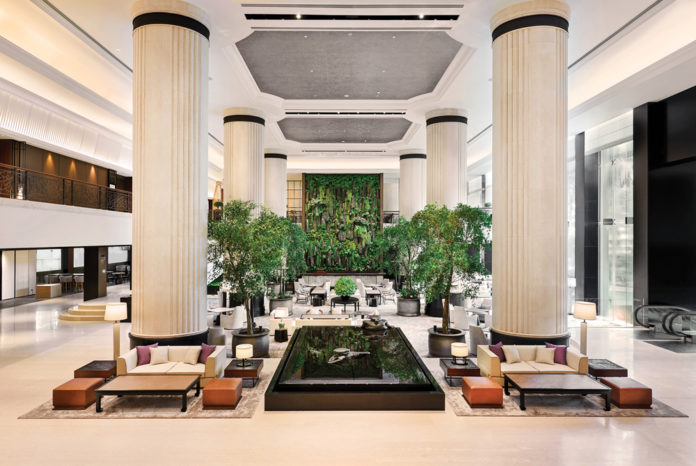
Shangri-La Hotel Singapore

After its recent Klook deal, Shangri-La Hotels and Resorts is announcing another online travel partnership, this time with Ctrip.

The agreement enables Shangri-La Group’s brands – including Shangri-La, Kerry, Hotel Jen and Traders – to be directly connected and promoted on Ctrip’s platform.

Shangri-La Hotel Singapore

For the Hong Kong-based hotel group, the partnership also means “working with (Ctrip’s) robust network of resources to help broaden the distinctive experiences Chinese travellers are increasingly looking for”, said Oliver Bonke, Shangri-La president and COO.

For Ctrip, the alliance is a reflection of the Chinese OTA giant’s effort to provide better hotel services and products to its users which number more than 300 million.

Princess Cruises touts largest at-sea balconies

0
Sky Suite Princess Cruises

Aviation roundup: NokScoot, Jetstar and AirAsia

0

NokScoot zips off to Shanghai
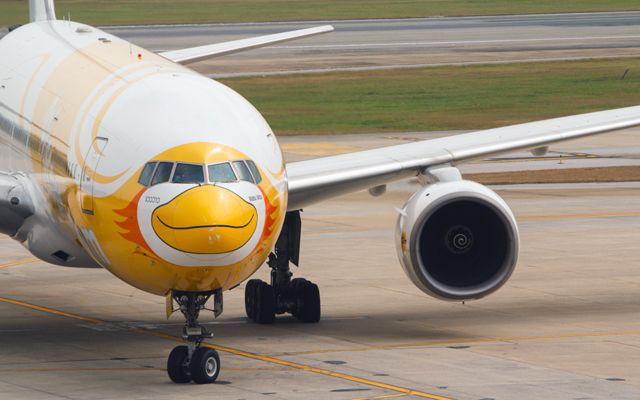
NokScoot has expanded its route network in China with the launch of direct flights from Bangkok to Shanghai.

The inaugural flight will take off from Bangkok’s Don Mueang International Airport on February 25, 2019 with four flights a week, with the route set to become a daily service from March 4, 2019.

The airline will use a Boeing 777-200 jet with a total of 415 seats on this route. There will be 24 seats in Scootbiz and 391 seats in Economy.


Jetstar adds Xuzhou to route network
Jetstar Asia has launched a thrice-weekly service from Singapore to Xuzhou in China’s Jiangsu province, in partnership with Nanjing Oriental International Travel Agency.

The route is the only direct service between Singapore and Xuzhou, and will be operated using an A320 aircraft.

Flight 3K831 will depart Singapore on Tuesdays, Thursdays and Saturdays at 05.00, and land in Xuzhou at 10.20. Return flight 3K832 will depart on the same days at 11.20, and arrive in Singapore at 16.40.


AirAsia links Bangkok and Can Tho
Starting May 2, AirAsia will start flying between Bangkok’s Don Mueang airport and Can Tho, the largest city in southern Vietnam’s Mekong River Delta.

FD680 will depart Bangkok at 11.20, and arrive in Can Tho on Tuesdays, Thursdays and Saturdays. Return flight FD681 will depart on the same days at 13.30, and arrive in Bangkok at 15.00.

EU Holidays looks to net high-value clients from new address

0
EU Holidays' new service centre at Suntec City

Singapore’s EU Holidays, which moved to a larger space in Suntec City Convention & Exhibition Centre earlier this month, is looking to capture more high-value customers including PMETs.

“With the current major competition from online players, expanding as a traditional travel agency with this physical space is a very bold move,” expressed Ong Han Jie, managing director of EU Asia, the regional travel arm of EU Holidays.

EU Holidays’ new service centre at Suntec City

The relocation was cemented after a series of client surveys conducted last year showed “that we have a steady flow of regular customers”, explained Ong.

It is also in line with the agency’s move towards the higher-end segments – both by allocating space for greater comfort and better service, and by placing itself in proximity to PMETs and corporate clients.

Ong elaborated: “We’re coming here to a different league. Suntec sees more PMETs, so we must grow in our service level to match higher expectations of service. At Suntec, we should have enough space to grow our staff strength as well.”

“There’s been a rise in demand for customisable tours. People who can pay, and large groups like a family of eight, want something that’s customised to their own liking, and they want to be served in a VIP room.

“With the lounge, we will be able to serve them in a closed-door room with sofa seats and WMF coffee, letting them feel like they are already taken care of before the tour,” he said.

From its new location, EU MICE will also be able to gain exposure and access to potential corporate clients in the area, whose banks are situated nearby.

The new centre, named EU Travel Expo, is more than double the size of its previous centre at Chinatown Point. The 1,022m2 space comprises service counters each specialising in a destination region, tour packages or cruise products; a private coffee and reading lounge; a conference room sitting up to 100; a briefing room with a capacity of 35 seats; as well as EU Holidays’ corporate office.

The conference room is supported by Genting Cruise Lines, and the smaller briefing room is supported by Europamundo. These are used for pre-tour briefings, as well as events or training sessions.

ASTA calls on industry to switch from travel ‘agents’ to ‘advisors’, sets up new Myanmar chapter

0
From booking agents to travel advisors

The American Society of Travel Agents (ASTA), which rebranded as the American Society of Travel Advisors in August 2018, is urging the travel industry to “speak with one voice” by making the terminology switch from ‘travel agents’ to ‘travel advisors’.

This name switch, according to ASTA, is a reflection of the revitalisation that has been underway in the travel industry for several years and sends a key message to the travelling public and the broader industry, as consumer media and travellers themselves are also embracing this shift from agent to advisor.

From booking agents to travel advisors

“Today’s travel agents are no longer mere booking intermediaries. They have become trusted advisors — akin to financial planners and CPAs — who make the overall travel experience better and provide both leisure and business travelers maximum value for their travel dollar,” the ASTA wrote in an open letter to the travel industry.

“The term ‘advisor’ not only more accurately describes the value our members provide to consumers but also serves as a distinct declaration of who we work for: the travelling public,” the society added.

“Terminology still matters”, and it is hence critical that “all industry stakeholders speak with one voice when it comes to describing our business”, wrote ASTA.

Earlier this month, ASTA announced on its Facebook page the launch of its newest chapter in Myanmar. ASTA’s vice president of international membership & expansion Bob Duglin met with the ASTA Myanmar Chapter president Kyaw Bohne Naing, several of the 100 chapter members, and Myanmar’s minister of tourism Ohn Maung in a recent meeting in Yangon.

Myanmar is the latest addition to ASTA’s existing Asia chapters in China, the Philippines, Nepal, Sri Lanka and the Maldives.

Greater state incentives to help Malaysian airports lure international flights

0
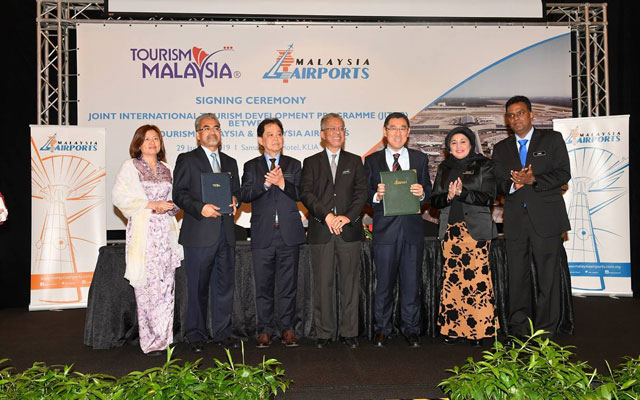
From left: Malaysia Airports' Emelia Tay Ling Imm; Tourism Malaysia's Musa Yusof; Minister of tourism, arts & culture Malaysia Mohamaddin Ketapi; Ministry of Transport Malaysia's Kamaruddin Jaafar; Malaysia Airports' Raja Azmi Raja Nazuddin; Ministry of Tourism, Arts & Culture Malaysia's Haslina Abdul Hamid; and Ministry of Transport Malaysia's Jana Santhiran

Malaysia Airports Holdings (MAH) and Tourism Malaysia yesterday sealed an MoU for an enhanced version of the Joint International Tourism Development Programme (JITDP), which aims to increase inbound arrivals by incentivising airlines and charterers on their Malaysia campaigns and tacticals.

Following the successful launch of the pilot project last year, the programme’s budget has been increased by another RM5 million (US$1.2 million) this year, bringing it to a total of RM20 million, which will be shared equally between the two government entities.

From left: Malaysia Airports’ Emelia Tay Ling Imm; Tourism Malaysia’s Musa Yusof; Minister of tourism, arts & culture Malaysia Mohamaddin Ketapi; Ministry of Transport Malaysia’s Kamaruddin Jaafar; Malaysia Airports’ Raja Azmi Raja Nazuddin; Ministry of Tourism, Arts & Culture Malaysia’s Haslina Abdul Hamid; and Ministry of Transport Malaysia’s Jana Santhiran

In its second year, JITDP aims to further increase arrivals particularly from medium- and longhaul markets.

Tourism Malaysia director-general, Musa Yusof, is looking at attracting more arrivals from Russia and CIS countries, as well as the Middle East, which are both long-stay markets for Malaysia, with the latter among the top spenders in the country.

While there is no target number set, Musa hopes that all the allocated funds will be used by the end of the year.

To utilise the funds, airlines and charterers will have to submit their plans for campaigns or tacticals for inbound flights to Malaysia, which will be reviewed by both Tourism Malaysia and MAH.

Once approved, the funds can be used to cover 50 per cent of the total cost of marketing and promotions of Malaysia, with the airline bearing the remaining 50 per cent. Last year, 10 airline companies benefited from the programme.

Malaysian Association of Hotel Owners executive director Shaharuddin Saaid said the onus of success of JITDP rests on Tourism Malaysia.

He told TTG Asia: “Tourism Malaysia has to work hard to promote Malaysia to ensure the flights coming in are full or nearly full. If JITDP manages to attract new airlines, but the flights coming in are half full, there is no point as the airline will not sustain its services for long.”

Uzaidi Udanis, president, Malaysia Inbound Tourism Association also urged local tour operators to actively take part in and support JITDP by promoting Malaysia to their overseas partners to stimulate interest, which will in turn attract new airlines and charter flights to consider flying to Malaysia.

“We are going to educate our members on this programme and identify overseas airlines and partners who can benefit,” Uzaidi said.

Outrigger unveils new corporate name, brand structure

0
Giving greater clarity to portfolio of Premier Beachfront Resorts, 'by Outrigger' branded locations and third-party managed properties

Outrigger Enterprises has announced the brand’s change of name to Outrigger Hospitality Group in line with a company-wide initiative to restructure its multi-brand portfolio and solidify its position in the beach resort segment.

In a statement, Outrigger said its corporate name change provides the brand clarity and structure for strategic growth of its domestic and international collection.

Giving greater clarity to portfolio of Premier Beachfront Resorts, ‘by Outrigger’ branded locations and third-party managed properties

Three core categories under Outrigger Hospitality Group include its Premier Beachfront Resorts in Hawaii, Fiji, Thailand, Guam, Mauritius and the Maldives; its “by Outrigger” branded locations and its third-party managed properties.

The new structure also delivers opportunities for Outrigger Hospitality Group to impart its retail, development and management expertise, according to the company.

Outrigger Hospitality Group is already moving forward with executing developments within this structure, including a US$200 million Waikiki modernisation masterplan over the next two to three years, incorporating the transformation of the flagship Outrigger Reef Waikiki Beach Resort and opening of the new Voyager 47 Club lounges.

Brand new for 2019 is the debut of Outrigger’s first lifestyle hotel, Waikiki Beachcomber by Outrigger – which underwent a $35 million full makeover and now offers a modern Waikiki vibe.

Outrigger recently acquired Honua Kai Resort & Spa’s on-site resort rental programme interests. The Maui condo resort offers guests luxurious suites alongside a full-service concierge, Ho’ola Spa and Duke’s Beach House restaurant.

“The evolution to Outrigger Hospitality Group is a bold beginning for 2019 that bridges our company’s 70-year legacy of hospitality with a brand strategy centred on delighting today’s (travellers),” said Jeff Wagoner, president and CEO.

ANA purchases 9.5% stake in Philippine Airlines

0
Philippine-Airlines

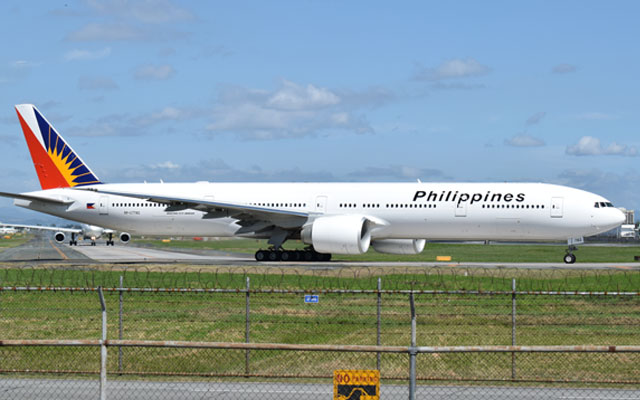
ANA Holdings, parent company of All Nippon Airways (ANA), will be investing US$95 million dollars – equivalent to 9.5 per cent of shares – in Philippine Airlines’ (PAL) parent company, PAL Holdings.

The shares will be acquired from Trustmark Holdings, owned by the Lucio Tan family and the largest shareholder of PAL Holdings. Completion of the investment is subject to certain closing conditions.

The investment by ANA heralds the dawn of a new era of growth for PAL, which has embarked on a full-scale expansion programme

Shinya Katanozaka, president and CEO of ANA Holdings, said: “Asia is a key growth market and we believe PAL is in an excellent operational position to capitalise on both the strong uptick in air traffic growth as well as the vibrant, expanding Philippine economy.”

This investment is in line with ANA Group’s mid-term corporate strategy for FY2018-2022, as it seeks to expand its international group network, and strengthen partnerships with foreign airlines.

ANA operates 14 flights weekly on two routes to the Philippines and PAL currently operates 84 flights weekly on nine routes to Japan. The two carriers have codeshare operations on Japan – Philippine routes and domestic routes within Japan and the Philippines, linking a total of 16 Japanese and 11 Philippine destinations.

This also marks ANA’s second investment in a South-east Asian airline, following its US$108 million stake in Vietnam Airlines in 2016.

SIA, Lufthansa neck and neck in tech push as innovation labs take off

0
KrisLab

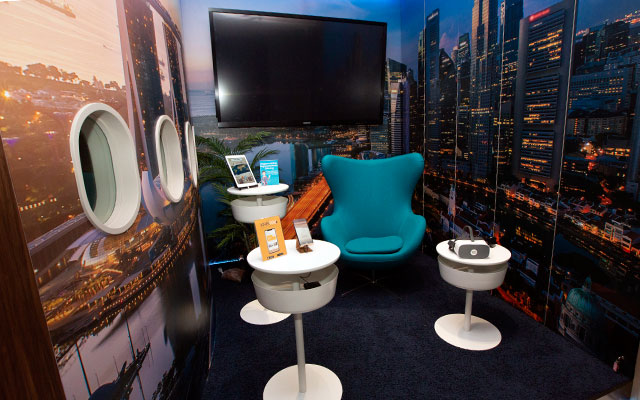
Bragging rights for digital leadership in aviation were up for grabs as Singapore Airlines (SIA) and Lufthansa both talked up their respective innovation labs opening in Singapore earlier this week.

SIA opened KrisLab at the SIA Group Sports Club yesterday, a move that it believes will make it “the world’s leading digital airline”.

In a statement, SIA said that the lab will serve as a collaborative workspace for staff of the group to develop new ideas and co-innovate with external partners.

The airline added that technology such as blockchain, mixed reality devices, artificial intelligence and data analytics are “used and explored by staff” as they develop digital initiatives. For approved ideas, seed funding and expertise are provided to help develop the idea into a prototype, before moving it to the implementation stage.

Aside from helping bring innovative ideas to fruition, the lab team has also been working with institutions such as A*Star and the National University of Singapore on research in “deep-tech areas”.

For the Lufthansa Group, the opening of the Singapore office on Monday marked the first overseas Lufthansa Innovation Hub (LIH).

Lufthansa said that expanding its digitalisation and innovation unit, established in 2014, is “a strategic response to the rapidly increasing importance of the Asian technology sector”.

The focus of LIH Singapore will initially be on an exploration of specific market developments in the context of the digitalisation of travel and mobility, as well as on establishing a network of relevant tech players and the first strategic partners on site.

LIH and INSEAD business school in Singapore have already concluded a research alliance on the topic The Future of Work and its relevance for the transformation of business travel.

The research findings obtained are to be immediately validated under real-world conditions. In this context, LIH is in in discussions with WeWork, Singapore’s Changi Airport and also the Munich Airport, which operates its Terminal 2 together with Lufthansa Group.

“We look forward to exploiting the dynamism of the Asian technology ecosystem even more consistently in the future and to leveraging the established position of the Lufthansa Group. Singapore is clearly a pioneer of mobility innovation and our first collaboration with INSEAD and other players attests to how eager established local players are to experiment and explore,” explains Gleb Tritus, managing director of the Lufthansa Innovation Hub.

The opening of an additional office in Shanghai is planned over the course of the year.

“More than ever, Asian startups, but also digital enterprises, are the driving force behind fundamental changes along the travel chain. With the expansion of the Lufthansa Innovation Hub, we want to become a part of this emerging ecosystem, just as in our home markets,” said Christian Langer, vice president digital strategy of Lufthansa Group and managing director of Lufthansa Innovation Hub.


From data to actionable insights

0
Olivier Ponti


Olivier Ponti

Why data?
Data is an essential part of the professionalisation process we currently see at work in the travel business. In the past years, a lot of progress has been made across the whole sector, with an increasing number of organisations understanding the need to switch from guts-based to data-based decisions. However, there is still a long way to go. This is unfortunate because, like any other businesses, travel companies and DMOs require insights to make the right strategic and tactical choices. They also need to monitor the impact of these choices so that they can build on what works and discard what doesn’t.

Sieving through a sea of data
At the most basic level, the data which is relevant to you is the data that your organisation can use to act. My piece of advice would thus be to start by having a clear picture of what a business can do, and then to invest in data which can help this particular business do it better. In other words: focus, get the right people on board to analyse your data and start doing something with it.

Positive examples
Tourism Australia provides a good example of a company looking beyond the data to get actionable insights. As the government agency responsible for attracting international visitors to Australia, Tourism Australia runs a year-round programme of marketing activity internationally to increase the economic benefits generated by tourism. It is therefore particularly keen on monitoring both the effectiveness of its activities as well as the direct impact of external factors and events in its key markets. Tourism Australia uses data for various sources and in different ways to monitor and measure the performance of the sector.

Visitor arrivals in the country’s airports are an excellent indicator of how the international visitation is tracking and are used by Tourism Australia as the most immediate guide on overall arrivals performance as well as that of specific markets, given the figures can be available near real time.

Tourism Australia also uses airline data such as bookings to enable them to anticipate future visitor flows. This proves particularly helpful for peak seasons like the Lunar New Year for example, when Australian cities like Sydney or Melbourne know they can expect a surge of Chinese visitors but need to quantify the increase to elaborate an appropriate response. Based on the status of airline bookings during the key period prior to the Lunar New Year, Tourism Australia decides whether to intensify marketing in China or shift the focus instead on dispersal strategies to encourage Chinese visitation to destinations in Australia where there is more capacity.

The insights made possible by airline data are all the more useful, particularly forward bookings, to shed light on future opportunities and challenges so that activities can be adapted accordingly.

Next step to actionable insights
To me, this is clearly not a technical issue: the data is there and so are the tools to mine it. What is most needed is a more resolute move, on the part of travel businesses, to tap into these new resources and be ready to accept that the way they work will change dramatically.

From the moment you stop looking at past figures and start focussing on real-time data or even predictive analytics, you are compelled to put a premium on action. Is my campaign producing the expected results? Do I need to change anything underway? What is the new challenge my business will face and how do I prepare for this? This is very different indeed from using research to justify past choices and, quite frankly, it is also much more exciting.