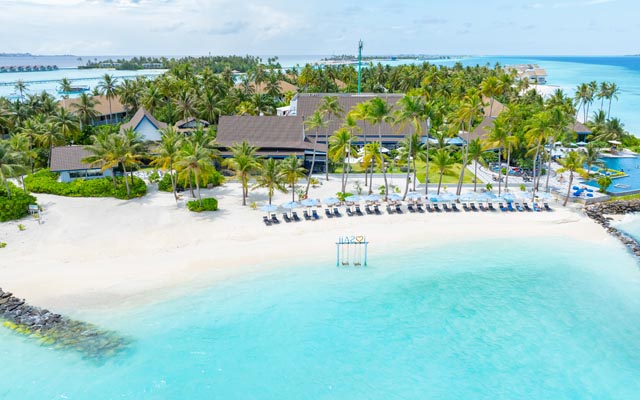
Oakwood Premier OUE Singapore has launched the Weekend Staycation package following its successful application of a hotel license, which allows the serviced residence to now offer daily stays as opposed to a minimum of six nights stay previously.
Studio Apartment
Starting with an introductory rate from S$280++ (US$208++) per night for a Studio or One-Bedroom Apartment, the package includes privileges such as complimentary room upgrade to the next sub-category and late check-out (subject to availability); complimentary breakfast for two persons at Se7enth; welcome cocktails for two; and 30 per cent off for a la carte dinner or a complimentary bottle of sparkling wine with a minimum spend of S$50++ at Se7enth (for dine-in only).
The Weekend Staycation is available for bookings and stays from now until June 30, 2019 on Fridays, Saturdays and Sundays. This offer is valid for the Studio, One-Bedroom Deluxe and One- Bedroom Executive Apartments. Other terms and conditions apply.
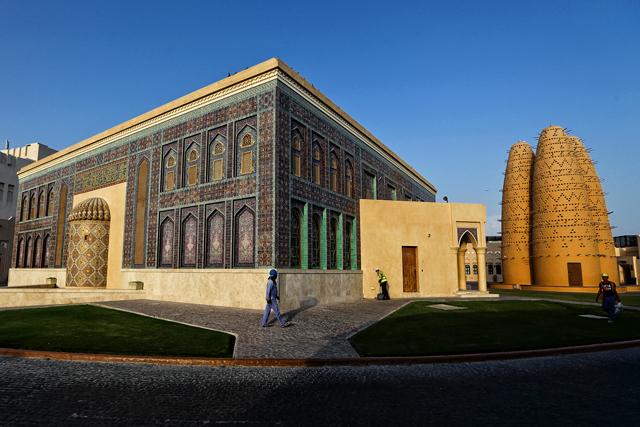
Strategically located between major Far Eastern, European and African capitals, Qatar serves as a perfect stopover and deserves a couple of days in your next itinerary. This Middle Eastern country is home to the world’s richest population, host of the 2022 FIFA World Cup™ and the hub for one of the world’s best airlines, offering its visitors a lot to be explored.
So wherever you may be travelling to next, stretch your holiday a little longer, collect an additional stamp in your passport and visit this rapidly-developing country in the Gulf.
Beyond A Transit Airport
Qatar Airways, with numerous awards for quality and service under its wings including three ‘Airline of the Year’ awards by Skytrax, has the most luxurious Hamad International Airport as its hub and connects more than 150 destinations across six continents.
Passengers making a stopover can also choose from a selection of pre-bookable city and desert tours including the popular Doha City Tour, Monster Bus Desert Experience, Private Desert Safari, Stop & Shop as well as chauffeur services for those who wish to explore Qatar at their own pace. In addition, all transit passengers travelling on the national carrier can venture out of the airport and explore Doha through the +Qatar program, which offer the option of a free overnight-stay or two nights’ stay for an additional $100 USD.
Most Open Country in the Middle East
Qatar is the most open country in the Middle East and the 8th most open in the world in terms of visa facilitation. More than 80 nationalities can enjoy visa-free entry and stay up to 30 days in Qatar! These developments come as part of a series of measures that Qatar has taken to facilitate visitor access to the country. Now travellers interested in a stopover to explore the country will find it convenient, at no cost and without the hassle of obtaining a visa.
A Safe Country
Qatar is blessed to be among the countries with the lowest crime rates and is a safe destination where visitors need have little concern walking in any part of the city. The country is consistently ranked as one of the safest countries in the world and is also the least vulnerable country to be affected by natural disaster.
A Country of Contrasts
Qatar surprises its first-time visitors with an array of experiences that seamlessly juxtapose both the ancient and contemporary. Visitors find themselves admiring a glistening skyline of modern metal and glass skyscrapers and centuries-old, well-preserved heritage sites; futuristic cities and luxury resorts dotting the coasts sitting side by side with traditional bazaars offering authentic shopping and dining experiences further inland.
Qatar houses many major cultural institutions such as the Museum of Islamic Art, Mathaf Arab Museum of Modern Art, Msheireb Museums, Katara Cultural Village galleries, theatres and performance venues. For travellers interested in culture and heritage, the country offers experiences that are equal parts alluring and intriguing.
Are you from the travel industry and want to learn more about Qatar? You can sign up for Qatar’s online specialist programme Tawash. Click here to find out more.
Traditional Kathakali dancers during a New Year carnival in Kerala
The severe flooding that ravaged Kerala in August 2018 might have washed out the tourism sector in its immediate wake, but the keen sense of collaboration and optimism from the state’s travel and hospitality players are buoying recovery progress.
Key among the promotional efforts the local trade undertook was the Kerala Travel Mart, which took place in September 2018, not long after the devastating floods.
Traditional Kathakali dancers during a New Year carnival in Kerala
E M Najeeb, chairman of Airtravel Enterprises, said: “Tourism and hospitality players (in Kerala) came together and showcased their products in the event. More than 600 overseas buyers and 1,100 domestic buyers attended the mart. The We Are Ready campaign was also projected by the industry and the government on media platforms.”
Najeeb – who is also senior vice president of the Indian Association of Tour Operators – added that it was a message of readiness shown among tour operators and hoteliers at the mart, as they sought to convince overseas buyers and partners to continue selling Kerala to their clients.
Going ahead with the Kerala Travel Mart was also deemed a good move by Dipak Deva, managing director of Sita – the inbound arm of Thomas Cook India – as it gave a “positive sign to foreign tour operators” that it was business as usual in the state.
The DMC “did not receive a single cancellation from the Kerala floods”, suggesting the “confidence” clients had of the state as well as in the company, said Deva.
“The best way forward would be for the entire industry to come together and send a positive message about Kerala being an important tourism destination of India, and encourage travellers to take a holiday to Kerala, thereby contributing to its recovery,” he opined.
Meanwhile, Thomas Cook India has lent its support to Kerala’s tourism players during the crisis period by pre-paying, as well as making deposits to its ground suppliers and vendors. The company also undertook the pre-purchasing of inventory for its 4Q winter bookings way in advance, as early as September 2018.
With recovery now underway in the state, the tourism authorities are also keen to brandish an image of normality for Kerala.
P Bala Kiran, director, Kerala Tourism shared: “We have restored the connectivity, infrastructure and tourism experience… All the major tourism destinations – Kochi, Munnar, Thekkady, Athirapally, Wayanad, Alappuzha, Kumarakom, Varkala, Trivandrum, Kovalam and Poovar – are back to normal and receiving guests.”
Hospitality players in the state have also reported an uptick in business, a result of active efforts to rebuild tourism to Kerala from both the government and private sector players.
“We have many Germans and Russians clients coming in for Ayurveda (packages) and staying a minimum of 14 days,” shared Raja Gopaal Iyer, CEO, UDS Group of Hotels.
The continued arrivals of these foreign tourists in turn helped to spread the word that Kerala is fine to visit, Iyer pointed out, as the hotel group also shared guests’ testimonies on social media platforms.
Iyer added: “We are seeing a lot of foreign tour operators coming to Kerala for finalisation of the properties that they are working on. We are also working with tour operators to come up with competitive packages for international markets.”
While Najeeb foresees “natural calamities like floods have only a short-term impact on tourism” for Kerala, an effective international promotional campaign could be a much stronger strategy to improve Kerala’s branding on the global stage.
The Kerala Department of Tourism is far from idle though, as it has participated in 12 international tradeshows beginning with Saudi Arabia and Bahrain since October 2018 to aggressively promote the destination on the global stage.
Although tourism has not been affected by the smog in Bangkok, travel industry players believe that unless a long-term solution is put forth, it is only a matter of time before pollution takes its toll.
Supawan Tanomkieatipume, president of Thai Hotels Association (THA), told TTG Asia that there have been enquiries from concerned travellers, but none so far have cancelled their hotel reservations.
Photo taken in Bangkok this month
She did not think that ongoing air pollution was so serious that it would affect tourism, although the problem is particularly bad for Bangkok as particulate matter of 2.5 microns or less in diameter reaching hazardous levels in recent weeks.
The Association of Thai Travel Agents (ATTA) similarly reported that no cancellations were recorded from tourists with visits planned up until March, including Chinese tourists expected to arrive in Thailand during the Lunar New Year period. The association expects as many as 300,000 visitors who are likely to spend about 10 billion baht.
However, ATTA vice president Mingkwan Metmowlee remarked that unless the government has clear and effective solutions to tackle the hazardous dust particles, there could be impact on foreign tourists’ decision to visit from April onwards. This is particularly the case of travellers who tend to make last-minute bookings to Thailand, such as those in South-east Asia.
Surawat Akarawaramat, managing director of KTK Tour Enterprise, urged the government to elaborate on the true causes of the air pollution and issue clear measures to handle the situation.
According to Surawat, there had been misleading reports of the smog in the news. If the relevant organisations provided facts, the amount of false information circulating would drop, he said.
Both Surawat and THA’s Supawan cautioned about the potential impact that reports on pollution and misinformation could have on tourism.
Supawan added that air pollution is a concern not just for the industry, but for general public health. To address this would be an exercise in social responsibility, requiring effort from not only the government but from all parties.
Along with efforts to tackle the smog problem, Surawat pointed out that tourist destinations in other Thai provinces should also be promoted.
Mingkwan suggested for there to be better air pollution control at construction sites and requirements for minimum number of passengers in each vehicle entering tourist-crowded zones. Such measures would show that the government was not turning a blind eye to air pollution, Mingkwan said.
Komodo National Park will remain open throughout the year, according to a statement from the Ministry of Environment and Forestry issued earlier this week, dispelling widely circulated rumours that the park will soon be closed.
East Nusa Tenggara governor Viktor Laiskodat recently made a statement that the regional government planned to close down the park for one year for conservation.
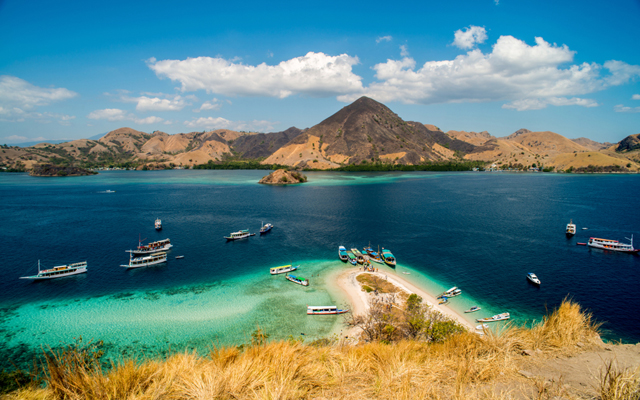
Tourist boats in Gili Lawa, Komodo National Park
Stressing that such decisions fall under the jurisdiction of the central government, Siti Nurbaya, Indonesia minister for environment and forestry (LHK), said the ministry had no plan to close Komodo National Park.
“The regional government needs to consult with, and (the plan needs to be) in accordance with the portfolio of the Directorate General of Conservation of Natural Resources and Ecosystem,” she said.
Wiratno, director general of Conservation of Natural Resources and Ecosystem, added: “If the government intends to temporarily close parts or the whole area of the park, it will be done in a well-planned way, with sufficient lead time given due to the big social and economic impacts it will entail.”
However, the regional government’s intention to close the national park has taken a hit on the tourism industry sector. Some travel companies have reported receiving cancellations due to the governor’s statement.
Donatur Matur, caretaker of the chairman of the Association of the Indonesian Tours and Travel Agencies (ASITA) West Manggarai Regency, said: “We have received emails and Whatsapp messages in relation with the plan to close Komodo. Many international travellers have cancelled their plans to visit Komodo National Park.
“The regional government should do their research before making a public statement.”
The World Tourism Association for Culture and Heritage (WTACH) has been formed to protect local cultures, heritage and historical sites that are in peril from overtourism.
The new association will promote ethical practices and better management relating to culture and heritage destinations that are now buckling due to unrestricted visitor growth.
Flynn (left) and Childs
WTACH will also encourage the implementation of sustainable practices at locations that are still in a “honeymoon phase” of tourism development.
The creation of WTACH comes as the UNWTO reports that international tourism arrivals hit 1.4 billion in 2018, two years ahead of its previous forecast of 2020. The global economy grew 3.7 per cent in 2018, says UNWTO, propelling international tourism arrivals growth to six per cent for the year.
To advance its agenda, WTACH has been launched with 15 specialist advisors from diverse backgrounds relating to the culture and heritage tourism sector. They will work with destinations that need help now or want to put plans in place before running into trouble.
Emerging tourism destinations need more help, according to WTACH’s founder and CEO, Chris Flynn, a former director for the Pacific region at PATA, a role he held for 15 years.
While there are overtourism abuses in economically developed, highly regulated destinations, Flynn argues that it is in lesser economically developed destinations where overtourism has disproportionately greater negative impact.
“WTACH works with destinations to provide development strategies and policy framework recommendations to avoid the kind of tourism meltdown we are seeing at Angkor Wat, Phi Phi Island and Mt Everest,” said Flynn.
Social media and mobile devices aren’t helping. Carolyn Childs, CEO of MyTravelResearch.com, and a member of the WTACH advisory specialising in analysing data and trends, said: “A unique image can ‘create’ a destination in moments – often leaving it unprepared or wrong-footed.
“This is particularly true if the image runs counter to cultural values. It risks tourism losing its ‘social licence’ with host communities. Ironically, these ‘instadestinations’ risk destroying the very thing travellers are seeking,” she warned.
The desire for ‘authenticity’ in travel is also problematic, WTACH said. Childs cited an Airbnb survey which found that over 80 per cent of millennial travellers seek a “unique” experience and want to “live like locals” while on holiday.
“The pressure on destinations and tour operators to find and monetise ‘unique’ and ‘authentic’ experiences will only increase as both millennial and mature travellers work through their ‘been there done that’ bucket lists,” she says.
On the supply side, WTACH believes that destinations should no longer make arrival numbers their holy grail.
The new association is deeply concerned that Turkey, for example, has decided to expand tourism arrivals from 40 million in 2018 to 70 million by 2023 – less than four years away.
“What interpretive and cultural safeguards have been put in place?” Flynn asked. “Have local communities been consulted? Is there an actual plan that involves a holistic government approach and key stakeholder and community engagement?”
“At WTACH we know there’s a better way. We are now seeking like-minded organisations and individuals to help us advance responsible tourism in culturally sensitive host communities.”
99 per cent of Chinese travellers surveyed have Alipay downloaded
Last year, the average budget and actual spending of 2,806 Chinese outbound travellers surveyed in a study by Nielsen and Alipay increased to US$6,026 (+6%) and US$6,706 (+15%) respectively.
Outbound Chinese tourists travelled to more destinations in 2018, with respondents visiting an average of 2.8 countries/regions, up from 2.1 in 2017.
Of those surveyed in the Alipay study, more transactions were made using mobile payment than cash
The study further showed that more Chinese tourists are adopting mobile payment while travelling overseas with more than two-thirds (69%) paying with their mobile phones abroad, up 4% from the previous year.
On their most recent overseas trips, Chinese tourists paid for 32% of transactions using mobile payment, overtaking cash for the first time.
In 2018, about three-quarters of Chinese tourists used mobile payment on their most recent trips to Singapore, Thailand or Malaysia, surpassing that for the US and Canada (61%), the UK, France and Germany (60%), as well as Australia and New Zealand (68%).
What this indicates, according to Alipay, is that South-east Asian merchants are leading when it comes to benefiting from Chinese mobile payment.
The study revealed that 90% of surveyed merchants in Singapore, Malaysia and Thailand reported encountering Chinese customers who asked if mobile payment was accepted in their stores. Meanwhile, 93% of surveyed Chinese tourists indicated they would likely increase their spending if mobile payment was more widely accepted – a higher figure than that in 2017’s survey.
Some 58% of surveyed merchants located in areas frequented by Chinese tourists in Singapore, Malaysia and Thailand accept mobile payment, with 70% of that number accepting Chinese mobile payment. By comparison, only 12% of them accepted Chinese mobile payment in 2016.
Retail merchants in particular, saw the highest adoption rate of Chinese mobile payment solutions, with 75% of supermarkets and convenience stores and 71% of duty-free stores now accepting mobile payment.
Red Planet Japan will acquire Thailand-based hotel operations from its parent company Red Planet Hotels for 6.6 billion yen (US$60.4 million), with the deal expected to be completed by the end of 1Q2019.
The acquisition includes five operating hotels, located in Bangkok’s Surawong and Asoke, Phuket’s Patong, Pattaya, and Hat Yai, and a sixth property under development in Bangkok’s Sukhumvit Soi 8. The operating hotels being acquired in Thailand recorded sales equating to 693 million yen in 2017 and 787.1 million yen in 2018.
The acquisition includes five operating hotels and one under development
This will increase Red Planet Japan’s portfolio to a total of 15 hotels in Japan, Thailand and the Philippines, including five hotels under development.
“Bilateral tourism is showing sustained growth, particularly among millennial customers who are Red Planet’s core customer base,” said Red Planet Japan’s CEO, Tim Hansing, in a statement. “This acquisition allows us to spread our geographical coverage and, in particular, penetrate key source markets for inbound visitation to Japan.”
This acquisition follows a series of expansion announcements by Red Planet Japan, including the planned opening of Red Planet Hiroshima Nagarekawa in summer 2020, and acquisition of two flagship properties in Manila in June 2018. The brand also opened Red Planet Sapporo Susukino South, its fifth hotel in Japan in June 2018, and expects to open its second property in Sapporo, Red Planet Sapporo Susukino Central, in October 2019.
Simon Gerovich, chairman of Red Planet Japan, added that its recent joint venture with GreenOak has enabled the investment of 22 billion yen in six new hotels over the next two years, as the company now has “the scale to attract new growth drivers such as franchising, management contracts, and joint ventures in both existing and new markets”.
APAC airlines carried a combined total of 356.6 million passengers last year
The region’s airlines recorded a firm 7% increase in number of international passengers carried to 356.6 million in 2018, a stronger growth than was seen in the preceding year, according to preliminary figures released by the Association of Asia Pacific Airlines (AAPA).
In revenue passenger kilometres (RPK) terms, demand increased by 6.9%, reflecting broad-based demand on both short- and longhaul markets. After accounting for a 6% increase in available seat capacity, the average international passenger load factor edged 0.6 percentage points higher to 80.6% for the year.
APAC airlines carried a combined total of 356.6 million passengers last year
Commenting on the improved growth, Andrew Herdman, AAPA director general, said: “New routes and frequencies provided more options to travellers, sustaining the growth in demand. In addition, while airfares rose in response to higher oil prices, ticket prices remained relatively affordable, capped by stiff competition.”
After several years of declines, passenger yields were lifted by higher average airfares and record high load factors, he further shared.
However, cost pressures continued to increase, with higher fuel expenditure driven by a 30% increase in jet fuel prices which averaged US$85 per barrel for the year, despite falling back significantly towards the end of the year.
Looking ahead, Herdman said: “Whilst expectations of continued moderate growth in the global economy should lend further support to travel markets in the coming months, there are some downside risks including weakness in trade activity and potential erosion in business and consumer sentiment. The region’s airlines are alert to such factors which may affect the market environment, but remain focused on cost management, and investing in future growth opportunities.”