TTG Asia
Asia/Singapore Saturday, 4th April 2026
Page 1205

Legal or illegal lodging? The choice is yours, says hospitality chief

0
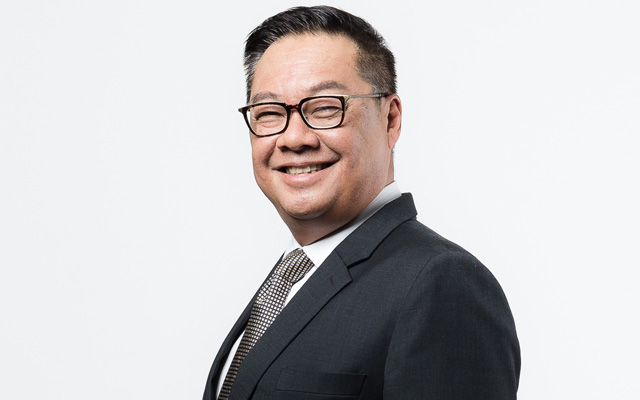
Kiong: there will always be a market for serviced residences despite homesharing enroachment

Home-sharing platforms have been steadily gaining traction since its commencement as an affordable “couch-surfing” accommodation option. It has become one of the preferred ways for the “I want to live like a local” traveller demographic – the group of travellers who wish to experience how the people of the destination live, and become one of the locals.

However, governments and the hospitality industry were unprepared for this rapid growth in home-sharing platforms. Rules had to be enforced, but how and what to put in place was a concern. Existing residents were raising complaints against strangers entering their residences. And most importantly, security has been an ongoing issue for the guests. In fact, a recent report by Investment Property Exchange Services found that one out of 10 home-sharing guests have found a hidden camera during their stay.

From licensing to the minimum-stay period for rentals – countries in South-east Asia have been setting strict regulations on home-sharing platforms. But hospitality industries need to work in tandem with the governments as well.

The need for hospitality players to step up
As hospitality players, it is important for us to understand travellers’ psychographics and preferences. Knowing and catering to guests’ needs is one of the key driving factors of industry growth.

Today, people travel for work, for leisure or for memorable family staycations – the reasons vary. And hotels need to recognise these different profiles in order to stay relevant.

Take, for instance, a family of six travelling for two-weeks in Singapore. Chances are, a standard hotel room will be too small, and an extra room will be costly. But this doesn’t mean that this family needs to turn to a home-sharing platform. Instead, they can consider a serviced residence.

Changing the perception of serviced residences
Many view serviced residences to be for business or relocating travellers, but they aren’t limited to just these profiles.

They can be for anyone who prefer more space, less amenities that they do not need, and a bit more privacy than from hotels.

By 2030, it is predicted that travellers will travel to experience life as a local for a unique and personalised trip. A growing number of travellers prefer an accommodation that makes them feel at home while having the comfort of a hotel.

Serviced residences are one growing accommodation option that can provide guests the “home-away-from-home” sentiment. Simply put, they offer guests the chance to live like a local, with more freedom to stay as they would at home. They have the room to cook, do laundry, personalise the space as if they are continuing on with their daily routine, all with security as a standard.

Serviced residences are also unique in the sense that it serves different target markets and opens up new expansion opportunities for the industry. They can be catered towards modern travellers and offer contemporary living spaces. Or, for travellers who are conscious of their wellness, there are serviced residences that provide amenities such as fitness centres, tennis courts and swimming pools for use.

“Better safe than sorry”
Countries like the US, Canada, France, England may be more welcoming to home-sharing platforms because they have the space to host. However, home-sharing platforms bring about an immense challenge in Asia, largely because there is an uneven playing field.

Asia has strict property regulations due to our environment. There is limited land to build residential areas, and owning property is scarce and viewed as a privilege. As such, these nations often have strict minimum rental periods – not just for tourists, but for citizens as well.

So, for anyone planning a trip to Asia any time soon, remember this – no one has the answer to how long home-sharing platforms will be regulated. But we do know that our industry is, and always will be, legal.

Oyo founder invests US$2 billion to raise stake in company

0
Agarwal: excited about the potential impact that Oyo's continued expansion will bring

Oyo Hotels and Homes’ founder and CEO Ritesh Agarwal will be investing US$2 billion, through the entity RA Hospitality Holdings (Cayman), to increase his stake in the startup he founded.

Agarwal will be buying shares from existing investors Lightspeed Venture Partners and Sequoia India, which will remain backers of the startup, the company said in a statement.

Agarwal: building a brand that is focused on bringing a better lifestyle for the common man

The deal is currently remains subject to shareholder and regulatory approvals.

Agarwal said in a statement: “It is a very exciting time for Oyo right now as we make great living spaces come alive across all corners of the world from Texas to Tokyo. Our endeavour continues to be to become the most loved hospitality brand in the coming years.”

Both Lightspeed India Partners Advisors and Sequoia Capital have voiced their support for the move, and have indicated they remain committed to supporting Agarwal and his company.

This year, the India-based company has seen a 4.4 times year-on-year growth in revenue in June 2019 (vs June 2018), with one million rooms under management across hotels and homes; with over 200,000 rooms in India.

Earlier this month, Oyo published a statement hailing itself the world’s third largest hotel chain by room count as of June 2019, where its portfolio comprises more than 23,000 hotels and 46,000 vacation homes.

AirAsia, AirAsia X to appeal against passenger service charge ruling

0
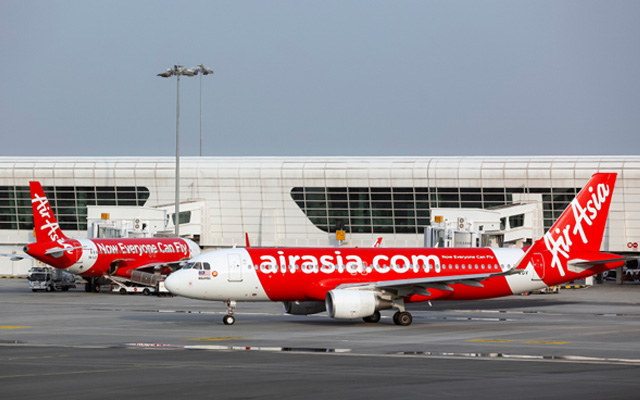
AirAsia planes at klia2

AirAsia and AirAsia X will appeal against the High Court ruling on July 18, 2019 to pay the outstanding passenger service charges (PSC) to Malaysia Airports (Sepang) (MASSB).

In a statement issued last Friday, AirAsia founders Tony Fernandes and Kamarudin Meranun have indicated that they will be appealing the court’s decision, and apply for a stay of execution to “challenge MASSB’s and its parent Malaysia Airports Holdings (MAHB’s) actions”.

AirAsia planes at klia2

The monies being claimed against AirAsia by MAHB were to be collected from the passengers. AirAsia has said it did not collect the differential amount or withhold its payment to MAHB.

MAHB had imposed a new PSC of RM73 (US$17.80) for passengers using klia2 to destinations out of South-east Asia effective July 2018. This amount is RM23 higher than the previous rate of RM50 that AirAsia has continued to collect from passengers.

“AirAsia has since the beginning opposed this increase in PSC arguing that passengers using the inferior klia2 cannot be forced to pay the same charges as that of the better-equipped and more luxurious KLIA. On that principle, AirAsia has not collected the extra charges imposed by MAHB,” they said.

Both founders also stated that they have sought help from the Malaysian Aviation Commission (Mavcom), but Mavcom “refused to intervene”, insisting that this “goes against the provisions of the Mavcom Act”.

AirAsia X’s CEO Benyamin Ismail said: “MAHB is painting an inaccurate picture to the Malaysian public by suggesting that klia2 and KLIA are on par in terms of quality and service. Anyone who has used both terminals knows that this is an untruth and an attempt to justify higher earnings for MAHB, whose profits have been growing considerably because of such arbitrary decisions.

“AirAsia has also been facing numerous operational issues with klia2, including frequent unplanned runway closures, uneven aprons and taxiways, and a poor airport design that requires long walks to gates causing passengers to be delayed or lose their way,” Ismail added.

“We would like to reiterate that these legal challenges are not simply a matter between AirAsia and MAHB. In the event we lose in the highest courts of appeal, it is passengers especially Malaysian travellers who will have to pay the differential MAHB is charging. We believe that the people of Malaysia should have the right to a fair deal,” Fernandes and Meranun stressed.

New Holiday Inn in Sepang to open near KLIA

0

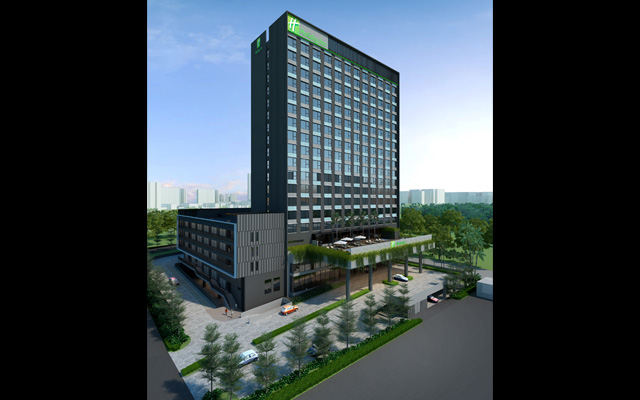
InterContinental Hotels Group (IHG) has signed a management agreement with Warisan City Development – part of the Kienta Group of Companies – for a Holiday Inn within the Kuala Lumpur International Airport (KLIA) vicinity.

Slated to open in 2021, Holiday Inn Sepang will feature 250 rooms, alongside facilities such as a cafe, restaurant, lounge-cum-cocktail bar, pool, restaurant, gym and business corner.

A rendering of the upcoming Holiday Inn

The hotel’s “substantial” events capabilities will include four state-of-the-art meeting rooms, including a ballroom that can host banquets of up to 400 people. The property will also feature an event space that opens out to the hotel’s pool area where receptions can be held.

The new-build will be located in Kota Warisan, a 15-minute drive from the airport’s main terminal. Also in the vicinity is the Xiamen University Malaysia, Mitsui Outlet Park KLIA and the Sepang International Circuit. In 2020, E-commerce giant Alibaba will also be launching the Digital Free Trade Zone within the airport compound, serving as a regional logistics hub for SMEs.

IHG has five hotels operating across three brands in Malaysia, including: InterContinental, Holiday Inn, and Holiday Inn Express, with a further 10 in the development pipeline due to open within the next five years.

Tan Kok Liang re-elected as MATTA president

0

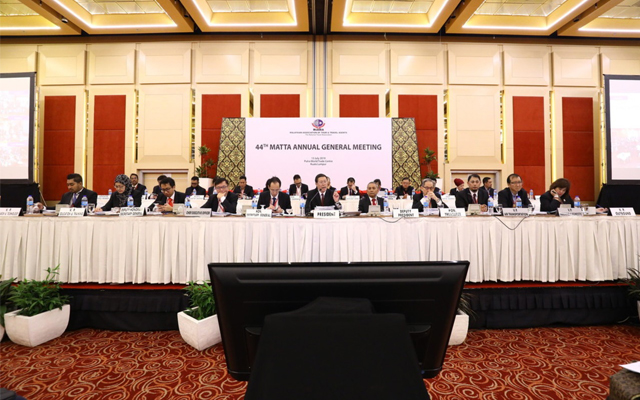
Tan Kok Liang of Borneo Trails Tours & Travel was re-elected as the president of the Malaysian Association of Tour and Travel Agents (MATTA) for the second consecutive term (2019 – 2021), following the association’s 44th annual general meeting on July 13.

Tan has voiced his intention to continue his work in creating more opportunities and fighting for better regulatory and business conditions for MATTA members. This will involve leveraging technology to help members maintain a competitive edge in an increasingly disruptive business environment.

Priorities for the next two years include development of the MATTA Tourism Industry Distribution and Booking Platform, leveraging e-hailing platforms, collaborating with Petronas for members incentives and combating illegal travel agents in collaboration with Radio Televisyen Malaysia.

The newly elected executive council for the 2019-2021 term will be stepping up engagement with all major industry principals and stakeholders at both national and state level to up-scale the standard and delivery of travel and tourism services in Malaysia.

Council members include:

  • Deputy president – Akil Bin Mohd Yusof (Triways Travel Centre)
  • Honorary treasurer – Mohammad Faeez Bin Mohamad Fadhlilah (Tripfez Travel)
  • Vice president inbound & domestic – Jimmy Thoo Choy (Pearl Holiday (M) Travel & Tour)
  • Vice president outbound – Cynthia Tan Bee Sim (Roystar Travel & Tour)
  • Vice president air transportation – Shazli Affuat Bin Ghazali (Legend Vacations)
  • Vice president land rransportation – Subramanian A/L Kandasamy (SC Southern Tours & Travel)
  • Vice president Umrah & Hajj – Azri Bin Abd Razak (Al-Hijjrah Vacation)
  • Vice president education & training – Kong Chun Yen Christina (Sensational Holidays (Borneo))
  • Vice president research & technology – Mohd Hizzat Bin Mohd Shah (Al Furqan Travel & Tours)
  • Kedah/Perlis chapter chairman – Mohd Yusin Bin Mohd Yatim (Tropical Charter)
  • Perak chapter chairman – Chong Yu Ken (Global Net Travel)
  • Selangor chapter chairman – Gopalan Mariappan (Sanubary Travel)
  • KL chapter chairman – Rocky Kho Kwang Peow (Skyzone Tours and Travel)
  • KL deputy chapter chairman – Eng Kin Hoong (Mi Escapade)
  • Negeri Sembilan chapter chairman – Lee Fook Moi (Mewah Travel Services)
  • Melaka chapter chairman – Madelina Kuah Wey Lee (Kenzar Travel & Tours)
  • Johor chapter chairman – Kenny Ngi Chin Soon (CK Vacation)
  • Kelantan chapter chairman – Rosdi Bin Ibrahim (Doremi Travel & Tours)
  • Terengganu chapter chairman – Roslan Bin Idris (Alam Travel & Tours)
  • Pahang chapter chairman – Jazmawar Binti Jaffar (JAZ Holiday Services)
  • Sarawak chapter chairman – Lina Tsen Pei Tsin (Ibanika Tours & Travel)
  • Sabah/Labuan chapter chairman – Lawrence Chin Choon Leong (Tabin Wildlife Holidays)
  • Penang chapter chairman – Vergis Mathews VV Mathew (Eco-Coach & Tours)
  • MATTA CEO – Phua Tai Neng

Genting Dream makes maiden call at Brunei’s Muara Port

0

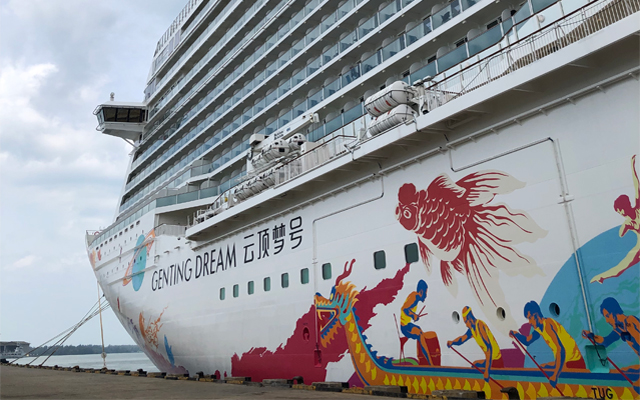
Dream Cruises’ Genting Dream last week made its maiden call at the Brunei Muara Port with around 3,000 international passengers.

The call was the third stop of a five-night round-trip cruise from Singapore to Kota Kinabalu, Malaysia and Muara in Brunei.

Brunei’s deputy permanent secretary, Awang Wardi bin Mohammad Ali at the Ministry of Primary Resources and Tourism hosted a welcome reception for those arriving.

Earlier this year, the Tourism Development Department at the Ministry of Primary Resources and Tourism launched the Discover Muara package, as part of its efforts to introduce more attractions in Muara Town and near to the Cruise Ship Centre and Ferry Terminals to create more offerings and options for the tourists arriving into Muara Port.

On average, 15 cruise ships sail into Brunei Muara Port every year, bringing about 400 to 3,000 passengers with each call.

JNTO and SIA ink tourism promotion pact as Japan sprints towards 40 million mark

0
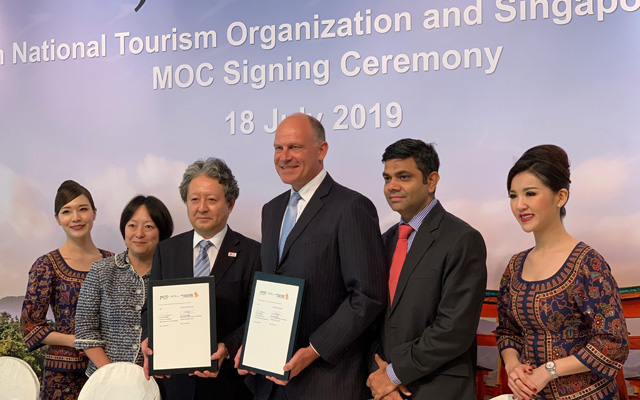
From left to right: FSS Sayuri Kawase; Ms Reiko Fujita, Executive Director Overseas Promotion Department, JNTO; Mr Akira Ninagawa, Executive Vice President, JNTO; Mr Campbell Wilson, Senior Vice President Sales & Marketing, SIA; Mr Ranjan Jha, Senior Manager Brand & Marketing, SIA; FSS Mandy Ng

Japan National Tourism Organization (JNTO) and Singapore Airlines (SIA) yesterday signed a Memorandum of Cooperation (MOC) to further promote travel and tourism to Japan from five key markets in the region – Singapore, Australia, India, Indonesia and Malaysia.

As part of the partnership, JNTO and SIA will roll out joint promotional activities such as fam trips and marketing activities. The two-year agreement has been pegged at ¥48 million (US$445,536) for the first year, with the second year of funding currently undecided.

From left: JNTO’s Reiko Fujita and Akira Ninagawa; SIA’s Campbell Wilson and Ranjan Jha

This collaboration also marks the first time JNTO is partnering with an airline, coming at a time as Japan works towards its goal of 40 million inbound visitors by 2020.

“Inbound passenger traffic from South-east Asia and the neighbouring region have been growing steadily, and these regions are some of the most important markets for Japan. Through this partnership with SIA, we hope to boost the number of visitors to Japan not only from Singapore but from all over South-east Asia and the other regions including those who transit in Singapore,” said JNTO executive vice president Akira Ninagawa.

The number of tourists to Japan from Singapore increased 2.3 times over the past five years. In 2018 alone, traveller numbers from Singapore climbed 8.2% year- on-year to 437,280. Similarly, there was a 14.7% year-on-year jump in tourists from India to Japan, 11.6% from Australia, 6.5% from Malaysia and 12.7% from Indonesia.

SIA senior vice president sales & marketing, Campbell Wilson, elaborated: “This part of the world may not be our largest contributing market for Japan tourism… but this agreement was initiated by SIA because we felt that there was more opportunity. Looking at the key markets covered by this MoC, all of them have grown by double-digit rates so far this year.”

He further revealed that more than 70 per cent of Singaporeans have already been to Japan more than once, a figure significantly higher than other markets covered under the MoC. For instance, 56 per cent of Indians have only travelled once to Japan; while 48 per cent of Indonesians and 45 per cent of Australians have never been to Japan, so there’s “definitely plenty of opportunities”.

But as the Japanese government charges towards its target of 40 million inbound tourist arrivals by 2020, wouldn’t overtourism become a greater challenge for already-popular destinations such as Kyoto, asked TTG Asia.

Ninagawa remarked: “Actually, (the number of) tourists who head to the northern part of Kyoto, are not that great yet. There are also a lot of hidden places there, which is what we’re trying to promote. We’re also trying to get temples to open for longer hours to the public, so that they can be visited at different times in the day (to spread out the visitor traffic).”

To help combat overtourism in popular locations, Ninagawa revealed that a brand-new travel brochure, 100 Experiences in Japan, was launched last month to feature lesser-known experiences, such as training with a mountain mystic in Yamagata Prefecture and spending a night in a funaya boathouse in Gifu Prefecture.

When asked if SIA is planning to fly to more Japanese cities, especially to lesser-known areas to help disperse tourism, Campbell told TTG Asia: “We currently fly to seven cities in Japan (across the SIA group). For the moment we feel like we’ve geographically covered north to south, so there are no immediate plans to add new cities.”

Instead, SIA will be adding flights, such as a third daily flight to Osaka and a fourth daily flight to Tokyo Haneda; as well as upgrading the sizes of its aircraft to Nagoya and Fukuoka; so there’s “plenty of additional capacity”.

“Given Japan’s fantastic land transport network, any of those gateways can get you to anywhere in Japan pretty easily,” Campbell noted.

Asian travellers are embracing alternative payment methods

0
More travellers

Travellers around the world are increasingly paying for their travel with alternative payment methods such as e-wallets and bank transfers, more often than cards and cash combined, a new report jointly commissioned by Amadeus and cross-border payment specialist PPRO revealed.

According to The Travel Payments Guide report, this growth is occurring across the world with e-Wallets now twice as popular as cards in China, accounting for 49% of the country’s US$155 billion digital travel spend. In the US, e-wallets may replace cards as the most popular way to pay by 2025, having gained an additional 4% share of the market in the last 12 months.

Alternative payment methods such as scanning QR codes with a smartphone are becoming an increasingly convenient way to pay while travelling

Data from the report also showed that Asia leads the way in alternative payments, accounting for 58% of the region’s spend, closely followed by Europe where alternative payments represent 53% of spend. In North America, cards remain the most popular way to pay, representing 58% of all e-commerce spend, although that share has fallen from 62% just 12 months earlier.

James Booth, PPRO’s vice president – head of partnerships (EMEA), said in a statement: “Travel has always been at the forefront of e-commerce and our data shows it commands a significant share of the pie. Some of the largest markets in the world are seeing alternative, local payments take more than 7% market share in a single year so travel merchants really do need to move quickly now.”

Bart Tompkins, managing director, payments, Amadeus, commented: “This data highlights how quickly the payments landscape is changing and the increasing complexity facing travel merchants.

“It should be noted that despite less travellers paying with cards directly, many do rely on the card networks in the background. So, cards will continue to be essential payments infrastructure for our industry,” he noted.

There are now more than 300 different ways to pay for travel around the world, according to the Amadeus PPRO Travel Payments Guide which analysed e-commerce and digital travel spend across 40 of the world’s largest markets.

The report relied on a range of data sources including central banks, national e-commerce associations, IATA, PYMNTS.com and globally-recognised publicly available databases.

Glowing and growing

0

Wellness tourism, the pursuit of maintaining or enhancing one’s personal wellbeing while on vacation, is no longer a hippy concept sought out by the spiritual or backpacker types.


It has become a US$639 billion global market in 2017, more than double the 3.2 per cent growth rate for tourism overall, according to the 2018 Global Wellness Tourism Economy report released by non-profit Global Wellness Institute (GWI).

This fast-growing tourism segment has been posting healthy growth, expanding by 6.5 per cent annually from 2015 to 2017. Travellers made 830 million wellness trips in 2017, which is 139 million more than in 2015. Furthermore, wellness tourism looks set to continue its rapid growth trajectory at 7.5 per cent annually through 2022 to reach US$919 billion.

At the root of this robust growth is a confluence of factors – a burgeoning global middle class, stronger appreciation and desire for a healthy lifestyle, greater interest in experiential travel, and growing ease and affordability of flights and travel options – all of which are steamrolling the demand and development of wellness tourism worldwide.

“Once upon a time, our contact with wellness was occasional: we went to the gym or got a massage. But this is changing fast: a wellness mindset is starting to permeate the global consumer consciousness, affecting people’s daily decision-making – whether food purchases, a focus on mental wellness and reducing stress, incorporating movement into daily life, environmental consciousness, or their yearning for connection and happiness,” noted Katherine Johnston, senior research fellow, GWI.

“Wellness, for more people, is evolving from rarely to daily, from episodic to essential, from a luxury to a dominant lifestyle value. And that profound shift is driving powerful growth.”

While North America leads in wellness tourism expenditures and Europe remains the top destination for wellness trips, it is Asia-Pacific where the most gains in the number of wellness trips and expenditure has been made.

China, Japan and India reign as the top three wellness markets in Asia-Pacific in 2017, recording expenditures of US$31.7 billion, US$22.5 billion and US$16.3 billion respectively.

Amid the eye-popping growth that wellness tourism is seeing, GWI also reports the convergence of wellness, hospitality and travel businesses in unprecedented ways, as businesses experiments with new partnerships and business models to help travellers incorporate wellness into every aspect of their trips.

Here’s a look at key trends in Asia’s wellness tourism sector and what to expect in 2019 and beyond.

Beyond skin-deep treatments
As medical tourism expands beyond cosmetic surgery procedures like facelifts and liposuction to body sculpting and facial rejuvenation, established medical hubs like Thailand are especially well-placed to capture the high-value medical and wellness tourism segments.

While many top-notch hospitals in the region have checked into hospitality – think Singapore’s Farrer Park Hospital, which has an adjoining hotel for patients to recuperate – the converse is also true as more wellness resorts expand beyond traditional spa treatments and therapies into high-tech offerings.

Just look to the newly-opened Mövenpick BDMS Wellness Resort Bangkok, which is tapping world-class physicians and latest molecular science in its lifestyle and wellness destination resort proposition.

By leveraging its connection with owner Bangkok Dusit Medical Services (BDMS) – Thailand’s largest private hospital group – this 293-key destination spa resort seeks to tap the clientele at next-door BDMS Wellness Clinic, as well as the growing ranks of health-conscious travellers looking to rejuvenate their bodies and minds while on vacation.

Guestrooms are outfitted with wellness amenities like mood lighting, yoga mats and bouncing balls, while an established nutritionist has been roped in as consultant to develop healthy, GMO-free menus for F&B offerings, as well as coffee breaks for corporate events.

Mövenpick BDMS Wellness Resort Bangkok is not alone in pursuing the lucrative synergies between wellness and medical tourism.

Dedicated wellness resort pioneer Chiva-Som International Health Resort will complete a top-to-toe revamp in October this year that will see the addition of a new hydrotherapy suite and flotation chamber to its wellness facilities.

Urban push for wellness resorts
While wellness resorts were once the domain of destination spas in tranquil resort locations, the growing bleisure trend, as well as desire of travellers to have access to self care vacations, have led to a growing number of urban hotels in Asian cities to roll out wellness programmes and positioning themselves as wellness retreats.

Aman already moved into this space in Tokyo, while Six Senses recently forayed into Singapore with two properties in the city’s commercial district; both wellness hospitality brands are expected to launch in New York City come 2020. Meanwhile, One&Only is set to debut its first urban resort in Dubai’s One Za’abeel.

While cosmopolitan cities may not be typically perceived as wellness retreat locations, it’s the very proximity of accessibility and serenity that draw hospitality companies to set up shop in some of Asia’s busiest cities.

What Singapore has is the alluring marriage of accessibility and serenity, managing director of The Capitol Kempinski Hotel Singapore, Christian Gurtner, told TTG Asia.

He explained: “It’s clearly the best of both worlds combined in one place. While you are able to retreat from hectic daily life and get a good rest with a relaxing ambiance, you are at the same time in the middle of everything and just steps away from entertainment, shopping, cultural events, bars and restaurants.”

For Fivelements, which runs an eco-wellness resort in Bali, it’s with the vision of addressing the growing prevalence of mental health and physical wellbeing issues in urban centres that founders Lahra Tatriele and Chicco Tatriele brought its brand to Hong Kong.

“We see that people in Hong Kong are living highly demanding lives and are seeking greater balance, stress reduction and authentic, personalised wellness experiences. So we intend to create a home or ‘habitat’ for the growing ‘urban wellness tribe’ and cultivate it as the second most important place for urban dwellers, creating a bridge between their first, being their residence, and their third, being their workplace. We believe that urbanites are now ready for a city wellness concept,” said the founders.

The first Fivelements Habitat has just launched in Hong Kong’s Times Square in July 2019, and the brand will plant two more locations in the CBD over the coming 18 months.

Featuring a rich collection of holistic practices inspired by Balinese healing philosophy, Tri Hita Karana, to foster self-exploration, mental and physical health and wellbeing, Fivelements Habitats in Hong Kong offer a diverse array of formats, ranging from classes to private sessions, corporate groups, trainings and workshops, events and day retreats.

Airport wellness ventures take to new heights
As the numbers of people travelling by air surges around the world, airports are no exceptions to the wellness trend as they become wellness destinations in their own right, rolling out health-minded services that are a step beyond one restaurant menu or spa, varying from swimming pools to nap pods to full-service spas.

For example, Frankfurt International Airport touts dedicated silent chairs, which enable passengers to get some peace and quiet with their arched backrests and soundproofing glass panels, alongside facilities like yoga studios and an open-air rooftop terrace.

In Doha, Hamad International Airport’s dedicated Vitality Wellbeing & Fitness Center is an oasis of therapeutic services, ranging from a glass-encased indoor pool to a hydrotherapy tub and nail salon.

Fitness, beauty and relaxation brands are making a push for their services into airports, according to a CB Insights report on wellness trends for 2019. Most recently, US-based airport spa brand BeRelax has raised US$24 million for post-security relaxation and beauty treatments, feeding into the growing trend of airports becoming more like shopping malls.

Leading fitness membership network ClassPass, which recently expanded into Asia, has entered into the travel wellness market with its launch of ClassPass Getaways to offer day-long wellness experiences such as workouts or spa services, among other options, CB Insights noted.

Clearly, airports are on their way to becoming the stepping stone to a wellness-theme travel journey.

A new fleet of floating retreats
With the significant uptick in fitness-oriented vacations increase, cruise lines are also responding by offering a gamut of wellness experiences on board, from indulgent pampering to fitness classes to oxygen bars.

In fact, total restoration has been identified by Cruise Lines International Association as one of the key cruising trends in 2019, as travellers seek ways to relieve the stress of the daily lives, and more cruise lines are responding to such growing passenger demand than ever before.

Cruise line Lindblad Expeditions joined hands with New York-based Exhale Spas to roll out its first wellness retreats at sea. Seaboard, meanwhile, has tapped the expertise of integrative medicine guru Andrew Weill in its new programme that centres on holistic, mindful living across its entire fleet. Other major cruise lines Oceania Cruises, Regent Seven Seas, Cunard and Celebrity Cruises have all partnered with Canyon Ranch to offer health-centric activities at sea and on land.

In Asia, Dream Cruises has also teamed up with ClassPass to offer special fitness-theme cruises earlier this year. Designed for millennial travellers and fitness fanatics, the three-night cruise programme was jam-packed with a wide range of classes, from high-intensity interval training and boxing lessons to chilled-out yoga sessions and aerobic Latino jam sessions.

“We’re seeing an increasing demand for holistic health and wellness options in Singapore, so fitness was an obvious choice for our first themed cruise in the Dreamer Series,” said Michael Goh, senior vice president – international sales of Genting Cruise Lines in a statement.

Additional reporting from Pamela Chow and Tiara Maharani

Anantara’s new luxury cruise boat to set sail later this year

0
Manohra River Song

Anantara Riverside Bangkok Resort has unveiled plans to roll out a second luxury cruise vessel, Manohra River Song, by end this year to capitalise on the high-end travel market in Thailand.

Mark O’Sullivan, complex general manager, Anantara Riverside Bangkok Resort and Avani+ Riverside Hotel, said: “The vessel will be the most luxurious in the destination, helping us to activate the Chao Phraya River waterfront and hopefully drawing increased economic activity to the area.”

Manohra River Song

The new US$1.5 million boat will complement Manohra Dream, which currently offers cruises along the Chao Phraya River.

The 30m-long Manohra River Song will boost three decks, including an open-air deck, and four cabins that can accommodate up to eight guests. It will feature round-the-clock butler service onboard as well as a design inspired by traditional Thai architecture.

Manohra River Song will initially provide overnight cruise journeys from Bangkok to Ayutthaya.

“Another option that we may introduce is a downstream cruise from Bangkok to Pattaya. The cruise boat is designed to a standard that allows it to sail out into the ocean, hence a four-day, three-night cruise to Pattaya is possible,” O’Sullivan said.

These features make Manohra River Song a unique and exceptional cruise experience that combines an exotic itinerary comprising views of land, river and ocean with world-class dining, luxurious accommodation and an elite butler service, he added.

The new cruise boat will be available for special events and private charters. Charter fees will be priced approximately 230,000 baht or US$1,787 per private charter during high season.