Following its cancellation of ITB Berlin 2020, Messe Berlin has launched itb.com, a new year-round online networking platform for the world’s travel industry.
The global website spans a bridge between real-life meetings and digital networking, and features innovative tools for business, networking and exclusive content, said Messe Berlin in a statement.
itb.com will allow travel and tourism businesses to continue networking 365 days a year
Martin Buck, senior vice president, Travel+Logistics, Messe Berlin GmbH, said: “In these very difficult times, the tourism industry needs ITB more than ever. That is why, at the forward-looking events of the ITB Virtual Convention, leading speakers from ITB will be discussing how the world’s travel industry can harness intelligent strategies to make sure it remains future-proof even in a challenging environment.”
During the ITB Virtual Convention, which will run from March 5 to 11, 2020, viewers can follow more than 20 exclusive live streams and videos in English and German, some in real time, some time-shifted, on itb.com. Afterwards, they will be made available as videos on demand.
All registered attendees at ITB Berlin 2020 may access the AI-based Travel Network, which is a self-teaching system which continually offers users relevant travel industry contact information. Those who had not previously planned to visit the show in Berlin can also register now.
Travel Network users can set up a profile, match interests, be contacted and network. They can also follow other users, exchange contact details, chat and set up appointments.
“Virtual rooms” are being made available online where users can hold meetings which they had scheduled prior to ITB Berlin 2020. A video link enables face-to-face meetings – it is also possible to communicate via an audio link only.
As well, itb.com has the latest news from the World Travel Trends Report and ITB Berlin News, the official Show Daily of the event – which this year will be a weekly edition.
Memories Group has made appointment changes to two of its properties in Myanmar.
From left: Thibaut Stettler and Eric Laurent
Thibaut Stettler has been appointed hotel manager of Awei Metta resort in Yangon. With more than 12 years of experience in the hotel sector, the Swiss national began his career with Memories Group as a business development associate before taking on the position of hotel manager, Keinnara Hpa-an, an eco-lodge situated in Karen State.
Outgoing general manager Eric Laurant will assume the same position at sister resort, Awei Pila, situated in the Mergui Archipelago. The Frenchman was previously general manager for JA Resorts & Hotels in Dubai and several luxury resorts across Myanmar, and is also an experienced sommelier.
Following its travel ban on China, Indonesia has now expanded its ban to travellers from Italy, South Korea and Iran – regions hardest-hit by Covid-19 – as it seeks to curb the spread of the deadly disease.
The new travel restrictions, which started yesterday (March 8), will leave Indonesian trade players to fall into even deeper limbo after the loss of the Chinese sector – their second-biggest source market.
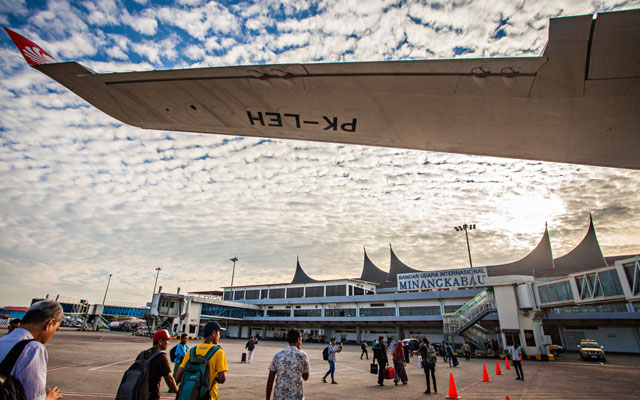
Indonesia expands travel ban to include Italy, Iran, and South Korea; passengers in Minangkabau International Airport in West Sumatra, Indonesia pictured
The banned regions are Tehran, Qom, and Gilan in Iran; Lombardi, Veneto, Emilia Romagna, Marche and Piedmont in Italy; and Daegu and North Gyeongsang in South Korea.
Travellers who have been in those regions in the last 14 days would not be allowed to set foot in Indonesia, according to Retno Marsudi, minister of foreign affairs, who announced the policy on March 5. She explained that this was in response to WHO’s latest report on the spike in reported Covid-19 cases in the three countries.
The diplomat added that travellers with no travel history to the aforementioned regions had to show a valid health certificate issued by health authorities in those three countries to airline officers during check-in process.
Before arriving in Indonesian airports, travellers are required to declare their travel history in health alert cards distributed by the Health Ministry of Indonesia.
Indonesians returning from Iran, Italy, and South Korea, especially from the aforementioned regions, are required to undergo additional medical examinations at entry points.
AB Sadewa, corporate secretary of Panorama Destination, expressed anxiety over the travel ban as it could possibly extend to other European countries if the outbreak remained.
He said that the bulk of his inbound guests traditionally came from Europe, with Italy making up 20 per cent in the West Europe market alone.
“Italy ranks the fourth after the Netherlands, Germany, and France,” he said.
Sadewa said that he had sent a letter to his business partners in Italy, asking them to prepare a health certificate.
He added, however, that the technical details about the ban remain unclear as it does not state whether it applies to citizens who happen to be based in the aforementioned regions, or for those who are official residents there with identity cards as evidence.
Posing a similar question is Adjie Wahjono, operation manager of Aneka Kartika Tours, who said that it would be hard for Indonesian authorities to check the area of origin of foreign tourists from those three countries.
Although Italy was not his market, Adjie was worried about the possible restriction that Indonesia might impose in the future on travellers from his major markets, such as Germany, France, and Scandinavia, in the event of a surge in the number of reported Covid-19 cases there.
However, he noted that the safety of the locals is key in the authorities’ handling of the epidemic. “Local tour operators need to understand that this restriction is made to protect us. (If the number of cases of Covid-19) soar in Indonesia, do we have the capacity to solve that issue?” he said.
Following the minister’s announcement, Santika Indonesia Hotel and Resorts in Bali received a deluge of cancellations from Italy, Iran and South Korea for room bookings from March to May, revealed its general manager of business development and marketing communications, Sudarsana.
Both South Korea and Italy make up eight to 10 per cent of Santika’s markets, respectively, while Iran comprises less than that. However, Sudarsana said that cancellations made by FITs and groups from those three countries were impactful because they happened after the huge loss of Chinese tourists.
Similarly, the Ramayana Hotel in Bali has also been hit by a wave of cancellations, especially from Iran.
“Honestly, I am sad and disappointed. But I can understand (the travel ban) because this is a (force majeure). We are also aware of the risks that Iranian clients face if they were to visit Indonesia. In general, in Bali, (tourism businesses) are incurring financial losses (from the loss of the inbound Iran market) as the holiday season for the Iranians starts on March 15,” said Susiati, business development manager of Ramayana.
It has been a booming trend for Iranians to take a vacation in Bali during their holiday season, and their visitorship can soar up to around 20 per cent, according to Susiati.
The ban is especially painful for Susiati as she had just returned from Iran from promoting her properties there, where she sought to attract Iranians to fly to Bali during their holiday seasons, which take place from March 15 to April 15, as well as in September and October.
She said that the cancellations from her Iranian clients came from the entire country, and not just blacklisted regions like Tehran, Qom, and Gilan.
Susiati further shared that the loss of the Iran market was of huge concern since they typically opted for week-long stays. “And they visit Indonesia during the low season, as opposed to the Australian and European tourists who come during the peak season,” she added.
She suggested for the government to help the tourism industry by allowing healthy travellers to enter Bali, instead of banning all travellers from the aforementioned countries.
After the launch of the travel restriction, Garuda Indonesia announced that regular direct flights from and to Incheon, Seoul, would not be affected by the government’s travel ban.
The seven-times-weekly flights connecting Seoul to Jakarta and Denpasar will run as per normal, according to Irfan Setiaputra, president director of Garuda Indonesia.
The airline said in a statement that it will continue to coordinate with the ministry and related authorities to follow up, especially in terms of what preventive actions airlines can have to mitigate the risk of the spread of Covid-19 from and to the affected regions.
For instance, Garuda Indonesia disinfects its aircraft as well as provides hand sanitisers and masks for crew and passengers. It also replaces the HEPA filter in aircraft from and to destinations affected by the outbreak, and checks its on-duty cabin crew members routinely.
Six more Asian Trails branches – Cambodia, Laos, Myanmar, Thailand, Indonesia and Malaysia – have received the Travelife Partner award in recognition of their long-term efforts in sustainability and Corporate Social Responsibility.
To be awarded, organisations must comply with more than 100 criteria relating to an operators’ office management, product range, international business partners and customer information.
Asian Trails earn Travelife credentials across six destinations
The Travelife standard covers the ISO 26000 Corporate Social Responsibility (CSR) themes, including environment, biodiversity, human rights and labour relations; and is formally recognised as being in full compliance with the United Nations-supported Global Sustainable Tourism Criteria.
Describing the new awards as a milestone for the company – as all of Asian Trails’ offices in South-east Asia are now Travelife Partners – CEO Laurent Kuenzle said Asian Trails’ commitment to sustainable practices has always existed.
“Whereas many of these criteria were already part of Asian Trails’ processes for years, others had to be newly implemented,” he told TTG Asia.
“Awareness and education are key criteria that needed to be addressed with managers and staff, suppliers and clients. Many of these may be understood in the Western world, but not in the Asian context of doing things today,” he added.
Kuenzle: Sustainability is an ongoing process that requires constant refinement and raising awareness among supply chain partners
The latest achievement follows Asian Trails Vietnam’s acquisition of the award in 2018. With this, Asian Trails China is the only branch within the group that has yet to be awarded.
Kuenzle explained: “Due to the Covid-19 situation in China and the resulting skeleton crew at our China office for many weeks, we were not able to formalise all the necessary criteria in time to achieve Travelife Partner status in China. We will work on this during the course of 2020 and hopefully achieve our sustainability objectives in China in the next few months.”
Achieving Travelife Partner status is not the end of the road for Kuenzle’s team.
“Sustainability needs constant and continuous efforts in improving processes, raising awareness among suppliers, and education, etc. The Travelife Partner status is a recognition of our efforts towards sustainability, but it doesn’t end there,” he remarked.
“I believe that as good citizens on this planet, our industry needs to work towards more sustainable operations. This is the main objective.”
In a press statement, Naut Kusters, manager of Travelife for tour operators, said: “I am delighted to see that sustainability in the tour operators sector is gaining momentum. The award of… Asian Trails Cambodia, Laos, Myanmar, Thailand, Indonesia and Malaysia will inspire other companies in those countries to follow the same path.”
Travelife, which has been established with the support of the European Commission, is the leading international sustainability certification for the travel sector. More than 35 national travel associations are promoting the scheme to their members, including the British Travel Association and the Pacific Asian Travel Association.
Since 2012, more than 600 Asian companies have been trained in CSR with the support of the Dutch government CBI programme. They are now working step-by-step towards more sustainable operations.
Germany-headquartered Protel Hotelsoftware has unveiled the latest version of its property management system (PMS), souped-up with voice capability, a digital registration that is PDPA compliant, as well as an integrated passport and ID scan.
Linda Vallner, vice president business development, Protel Hotelsoftware, told TTG Asia: “All hotels talk about wanting to better the stay experience for customers, but no one is talking about making the job easier for employees and helping them function more efficiently.”
Protel Hotelsoftware pushes out the latest version of its property management system
Illustrating ways the upgraded PMS could be used, Vallner said a hotel general manager who had just spoken to an unhappy guest regarding his stay could simply narrate the complaint into the PMS system on his phone. “The system will then transcribe and save the information for future use,” she said.
A housekeeper could also use the same PMS system to mark a guestroom as dirty or clean in her own language.
Protel also unveiled a digital registration card which allows front desk staff to see guest changes in real-time during check-in, such as an update of an email address or passport number.
“This is a very important feature because guest data is everything. Aside from reporting to the authorities, that data is also used for marketing purposes,” Vallner explained.
The third major update to the PMS is an integrated passport and ID scan. While some properties have some level of digital registration through another proprietary software, others manually photocopy passports, which isn’t as safe. With the PMS, hoteliers can now just take a photo of the passport, which the system will store confidentially.
Currently, there are 14,000 hotels in 90 countries which are using Protel’s PMS, about a quarter of which are located in Asia-Pacific. Most of protel’s cloud-based software user base are independent three-star hotels and below, while the protel on premise software user base includes four-, five- and six-star hotels globally.
When asked why the cloud-PMS adoption rate in Asia-Pacific isn’t higher, Vallner said the application of Protel’s PMS requires customisation and the market prefers dealing with someone who “speaks and understands the local requirements”.
“That’s why we have a distributor based in Asia,” she added.
Protel’s Asia-Pacific representation is headed by Greg Spicer, chief executive of Xn Protel Systems, who established operations in Sydney in 2004.
Spicer explained that it is “initially more challenging to implement a cloud PMS in Asia-Pacific, due to factors including localisation, language, government and tax rules being different in many countries”.
For the same reason, Protel’s new “weapons-grade” cloud PMS will be rolled out “one country at a time”. It will be released in 1Q2020 in Australia first, then progressively in Singapore, Vietnam, Thailand, India, China and other country markets. Existing protel Air hotel users will get a free programme upgrade along with user training for their staff. All protel on premise clients will be offered upgrade paths to migrate to the cloud version.
Existing hotel users will get a free programme upgrade along with user training for their staff.
“This significantly upgraded product will give us the functionality for larger chains including tier-one hotel clients, the kind with thousands of rooms in their global inventory,” commented Spicer.
Maldives is currently re-evaluating its marketing efforts to include strategies that double up as efficient recovery measures for the ongoing Covid-19 crisis.
The Maldives Marketing & PR Corporation (MMPRC) will revise campaigns from what was previously a “packed calendar of marketing events in different markets”, shared Thoyyib Mohamed, its managing director.
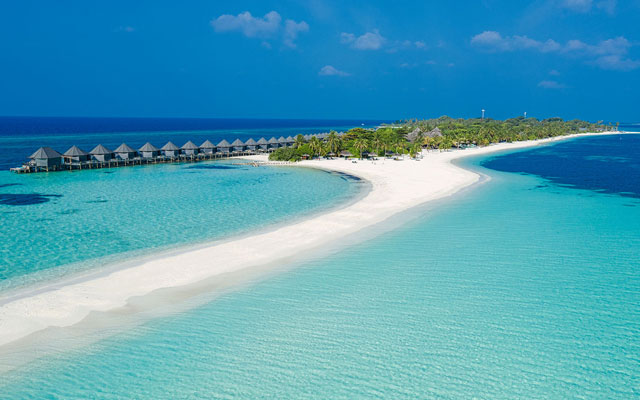
Maldives hopes to boost arrivals from non-affected markets during the Covid-19 outbreak
Instead, the destination’s new marketing strategies will focus on being “more relevant and effective to its significant markets” such as China, India, Italy, France and Germany, which were Maldives’ top sources before the outbreak.
Promotional activities will also be rolled out “in order to recover the loss” of arrivals from these countries and “to keep Maldives visible” across both key and non-key markets, shared Thoyyib.
He described: “We foresee a significant impact on the tourism sector and arrivals. Chinese tourism previously contributed more than 16 per cent of total arrivals, hence the travel ban on Chinese tourists will deal a massive blow.”
Moreover, for some resorts whose market share of Chinese tourists stood at 50 per cent or more, they will definitely take a “massive hit”.
Aside from Chinese tourists, as South Korea and Italy are also affected by Covid-19, other resorts have also been reporting slow pick-up in terms of arrivals.
“In coming days, we will re-evaluate the impact and bring necessary changes to our strategies. We will employ various marketing techniques and activities to reach our top markets that have been affected by Covid-19, while targeting other (non-affected) markets.”
The hope is to boost the market share from non-affected markets by promoting Maldives as a safe destination, a measure that is expected to help the destination “maintain similar arrival numbers as 2019”.
Resorts in the island nation are also undertaking measures such as allowing flexibility in cancellation – which can encourage customer bookings – while further increasing digital and social media marketing activities.
This is as the Maldives moves away from its traditional image as a romantic honeymoon destination, and is gaining popularity as an adventure, culinary and wellness destination. Such experiences will also be marketed in MMPRC’s activities this year, alongside a strengthening of 2019’s visibility campaigns.
Thoyyib shared: “With the current travel ban and the cancellation of trade fairs and mass gatherings, we will have to further explore the marketing and promotions on digital platforms.”
Keen to grow the number of guests from Europe and the US, Bintan Lagoon Resort (BLR) in Indonesia has created a number of special packages that are attuned to what travellers from these markets favour.
Gerald Hendrick, senior vice president and general manager of Resort Venture and BLR, told TTG Asia that these packages were crafted with their travel trade partners in the western markets, so as to address the specific needs of their customers.
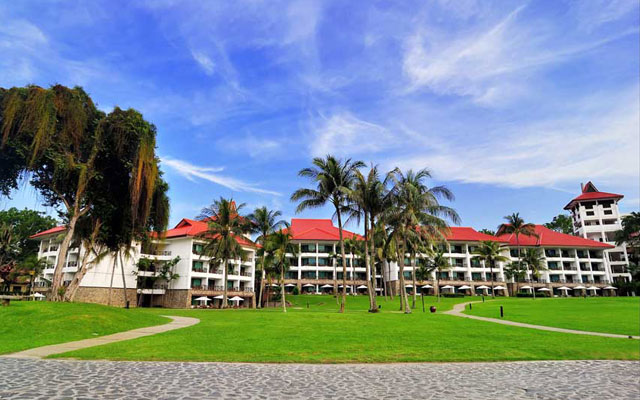
Bintan Lagoon Resort hopes to attract more European and American travellers with its western-centric packages
An example of such a package is a daily half-board programme that comes with free flow of alcohol during meals, spa treatments, and unlimited daily golfing.
“This is one of the most sought-after package for longhaul guests, and it is heavily promoted by our travel trade partners,” Hendrick shared.
Furthermore, as the resorts are positioned like “gathering resorts”, targeting families, friend groups, honeymooners, and business events, Hendrick said a longer-stay full-board package of five days/four nights has been created.
The comprehensive package features access to a wide range of meals, from international cuisine to Japanese bento sets, free flow of selected alcohol beverages, spa treatments, outdoor tours, as well as leisure activities. A game of golf is offered as an optional addition.
Hendrick said this package can easily be incorporated with travel trade partners’ own Singapore programme to create a dual-destination itinerary.
He expressed confidence in the performance of the European and American travel markets this year, and said Bintan Island would appeal to those seeking a retreat that offered pristine coastline, tropical jungles and unspoiled natural landscapes.
And for those wanting a glamorous getaway, BLR is the perfect choice, opined Hendrick. He explained: “BLR is the largest five-star resort in Bintan. Our double-storey villas with a private pool are perfect for families, where they can have a barbecue party and fun under the sun. Meanwhile, our exclusive suites, which come with top-notch service and postcard-perfect views, are the ultimate luxurious, romantic escape for couples.”
The outbreak of the Covid-19 virus in Italy during the final week of February has triggered a wave of cancellations to Italy and a collapse in new bookings to Europe from intercontinental source markets, according to a report by ForwardKeys, which is commissioned by European Cities Marketing (ECM).
From the moment China imposed restrictions on outbound travel, in the week of January 20, until February 22, when the outbreak of Covid-19 cases in northern Italy began, bookings to Europe from intercontinental source markets had decreased by 23.7%.
Flight bookings to Europe plummeted by 79% in the wake of the Covid-19 outbreak in Italy
However, in the final week of February, the situation worsened considerably, as the number of new bookings to Italy was suddenly outpaced by the cancellation of existing bookings. The impact on travel was not confined to Italy; simultaneously, the overall number of new flight bookings to Europe fell by 79%.
The first Covid-19 case confirmed in Italy occurred on January 31, 2020, when two Chinese tourists tested positive in Rome. It led to an immediate dip in bookings to Italy. Bookings swiftly reverted to trend after few new cases were reported there in the following three weeks.
However, everything changed almost immediately after a cluster of cases was detected in Lombardy on February 21 – and Italy’s first deaths were reported the following day.
Since then, the number of cases in Italy has grown exponentially to over a thousand; and, as rapidly as they have increased, flight bookings to Italy have decreased. Bookings to Italy, in the final week of February, fell by 138.7%, meaning that the number of cancellations exceeded the number of new bookings.
An analysis of Europe’s various source markets showed a double-digit decline in bookings in the final week of February from every major region of the world.
Bookings from the Asia-Pacific region fell by 114.2% (cancellations exceeding new bookings), followed by the Americas which fell by 68.1%, and Africa & the Middle East, which fell by 49.9%.
Breaking the global origin markets down into sub-regions, in order of least to worst affected, revealed that bookings from North Africa decreased by 30.4%; from Sub Saharan Africa, by 33.3%; from Central America, by 63.6%; from North America, by 63.7%; from Middle East, by 66.1%; from the Caribbean, by 66.5%; from Oceania, by 81.5%; from South Asia, by 85.9%; from South America, by 87.1%; from South-east Asia by 133.2%; and from North East Asia, by 133.5%.
Whilst the analysis of bookings reveals people’s travel plans, the analysis of arrivals reveals how many have actually travelled. Looking back over the first two months of the year, from January 1 to February 29, visitor arrivals in Europe have shown a two-phased decline owing to the Covid-19 crisis.
Initially, intercontinental visits to Europe tracked collectively 1.3% above 2019 levels in the period from the start of the year to January 28. The first phase of decline in Europe began on January 29 – nine days after the beginning of the crisis in China – when European destinations started to suffer, and arrivals decreased by 17.6% from January 29 to February 23.
Phase 2 began with the sharp slump in visits which happened in tandem with the explosion of Covid-19 cases in northern Italy. In Phase 2, arrivals in Europe collapsed by 25.9% between February 24 and 29 alone, leaving the year-to-date results 10.5% below the same period last year.
Olivier Ponti, vice president insights, ForwardKeys said: “The arrival of the Covid-19 virus in Italy marks a new phase in the travel crisis in Europe. The drop-off in bookings to Italy is even worse than we have observed in the past for some of the most disruptive events such as terror attacks. The booking behaviour appears to be disproportionate, as parts of Europe other than Italy are experiencing very substantial declines in visitor interest.”
Petra Stušek, president, European Cities Marketing, concluded: “When it comes to tourism, we should bear in mind that the more people travel within Europe, the more stable the travel economy will be. It is important to stay calm, not to overreact and work to keep ourselves and our communities safe, but also functioning, until the recovery.”
Kuredu Island Resort in the Maldives has been locked down since Friday, following two Covid-19 infections – the first positive cases for the destination.
The government’s Health Protection Agency said in a statement on Saturday that two resort staff had come in direct contact with an Italian guest who was found to be positive with the virus on his return to Italy on March 5.
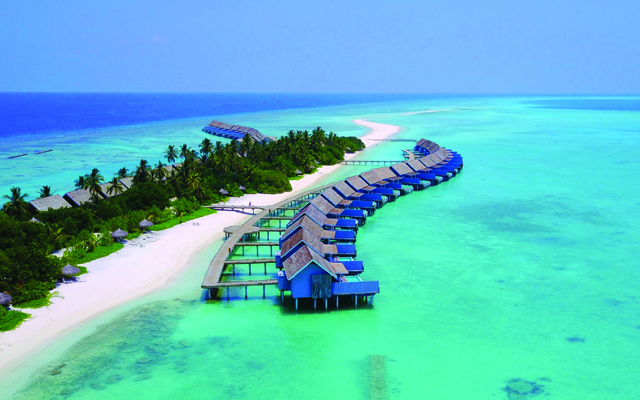
Kuredu Island Resort & Spa has been locked down after two staff tested positive for Covid-19
The two unidentified staff are now in an isolation facility and being treated.
With the lock-down, no one is allowed into or out of Kuredu Island Resort.
Two other resort islands were locked down temporarily, and had their restrictions lifted after some suspected cases were tested negative.
Managing director of state-run Maldives Marketing & Public Relations Corporation, Thoyyib Mohamed, said destination authorities were taking all precautionary measures to prevent the spread of the virus.
“One of the advantages we have is that all the island resorts are isolated and not connected to one another, which helps in preventing any spread of the virus,” he said.
The Singapore Sports Hub (SSH) has been slapped with financial penalties of an undisclosed sum for failing to meet certain standards.
This was revealed in Parliament by the senior parliamentary secretary for culture, community and youth & transport, Baey Yam Keng, last Friday.
Singapore Sports Hub has been fined by the government for failing to meet certain standards
The S$1.3 billion (US$973 million) SSH facility at Kallang is owned by SportsHub (SHPL), which comprises four partners – Global Spectrum Pico; Dragages Singapore; DTZ Facilities and Engineering; and InfraRed Capital Partners, the majority equity partner.
Noting that the SSH hosted 212 events last year, Baey cast doubt over whether that brought in sufficient revenue for Singapore during the debate on his ministry’s budget, reported The Straits Times (ST).
He added that the government regularly communicates with the top management and closely tracks deliverables, such as the number of sporting events it hosts each year.
Under the public-private partnership (PPP), the Singapore government makes annual payments of S$193.7 million to SHPL over a period of 25 years starting from 2010, to run the SSH, said the ST report.
In response to Nee Soon GRC Lee Bee Wah’s supplementary question, Baey said: “There is a commercial contract that we have with SHPL. There are deliverables, there are penalties that are part of the contract.
“They have been taken to task over areas that they have not met the KPIs and we are in continuous discussions with them, monitoring their performance and having their assurance that they’re committed to building Sports Hub as what we envisaged.
“I’d like to see that Sports Hub will have value for money for Singapore. It is our national sports icon.”
The local sports industry contributed S$1.7 billion to Singapore’s GDP in 2018, according to Baey. This figure excludes growth areas like sports broadcast, infrastructure projects, sports events and conferences, as well as e-sports.