India’s industry players are banking on domestic tourism to revive their sagging fortunes amid travel slowdown, in view that local holidaymakers may prefer to travel domestically in the near term, due to global concerns over the coronavirus pandemic.
The shift towards localism follows Indian prime minister Narendra Modi’s extension of the country’s nationwide lockdown, the biggest in the world covering 1.3 billion people, until May 3.
Indian trade eyes domestic tourism amid pandemic; group of Indian tourists in front of Taj Mahal pictured
Tourism stakeholders in India told TTG Asia that post-pandemic, international travel will take a backseat once travel restrictions have been eased or lifted, and domestic tourism will lead the industry’s recovery.
Sarbendra Sarkar, founder and managing director, Cygnett Hotels and Resorts, said: “Internationally, for both business and leisure travel to normalise and to start growing, the larger world economy needs to start healing. Domestic tourism will be the only area of focus for the first few quarters once this pandemic is over.
“Also, considering that India is a key outbound tourism market, there is a good opportunity to attract this segment to domestic destinations.”
With that in mind, some stakeholders are urging the Indian government to do more and offer incentives to spur domestic tourism.
“This is the time that the Ministry of Tourism and state tourism departments should (come together to) brainstorm how to propel domestic tourism once the pandemic goes away,” said Ashwani Lohani, chairman, Andhra Pradesh Tourism Development Corporation.
Jyoti Mayal, president, Travel Agents Association of India, added: “The revival of our industry will begin if the government incentivises domestic travel because this segment will be the first to open business prospects for us. We have already requested the authorities to provide incentives for holding corporate events in India.”
The post-pandemic era will surface a further retreat from globalisation, which will favour domestic and regional travel, with Asia-Pacific likely the first region to see a recovery in travel demand once the Covid-19 situation subsides, accompanied by a projected surge in domestic travel.
Insights released by Sojern revealed that already, South Korea has been exhibiting signs of recovery over the past month, as domestic searches and bookings at hotels for the following months have slowly bounced back. The number of searches are nearly back to last year’s figures, and bookings have been on the rise since the week of February 23.
Domestic and intra-regional travel will lead the recovery of tourism markets, according to a Sojern study
In the larger Asia-Pacific picture, Thailand, New Zealand, Australia and Japan have registered an increase in domestic flight searches for immediate travel in the month of March. While this could signal locals flying back to their hometowns within the country, the trend is worth monitoring.
“Sojern’s data shows that domestic travel will bounce back first,” noted Amber Kuo, director of travel insights & analytics.
“Some parts of Asia-Pacific have been ahead of the world in their vigilance, so we expect that Asia-Pacific will be the first region to recover. Already, China’s situation is largely under control and they are able to schedule domestic flights to fly travellers throughout the country.
“If the rest of the world controls the virus at a slower pace than Asia-Pacific, that means that their economies may recover slower also. Asia-Pacific would at least be able to fall back on rebuilding a vibrant domestic, intra-regional tourism and travel market. At a global level, Asia-Pacific may open up first, followed by Europe, the Middle East, Africa (EMEA) and then the US and Latin America.”
Kuo added that while data may show increasing domestic travel within China, its “mixed signals” do not conclusively signify recovery. For instance, the increase in hotel stays in Beijing could be a result of more people in quarantine, and the influx of Chinese nationals returning from overseas can only definitively indicate successful virus containment.
However, Sojern is keeping a close watch on China for any hints at travel demand picking up. Kuo shared: “Specifically, we are interested to identify increases in domestic flight bookings and hotel bookings throughout many first- and second-tier cities. We are also watching for significant signals of trip planning around upcoming Chinese holidays.”
She asserted that the period immediately after quarantine – when “people will be looking to get out of the house in a variety of ways” – is crucial for travel marketers to ensure visibility as consumers are making decisions.
“It’s in everyone’s best interests that brands are talking to their customers during this time, be it to empathise with them; share stories of what your brand, your customers, or your communities are doing; or to show you are simply still around for when this all passes.
“At a minimum, (companies) should remain aware of domestic and international trends that are changing daily, sometimes hourly. Our data shows travellers are still searching and many are booking trips for 4Q2020 and early 2021. Think about how you want to come across as people start exploring the idea of travel again, and have new creatives ready.”
Examples include Singapore’s hotels recently targeting local interest in staycations, families looking for things to do during the March school holidays and offering room packages to temporarily house displaced Malaysian employees.
Some hoteliers around Asia have also started offering curbside pickup from their restaurants, and certain airlines are announcing winter timetables early, while relaxing cancellation and booking policies to increase consumer confidence and control.
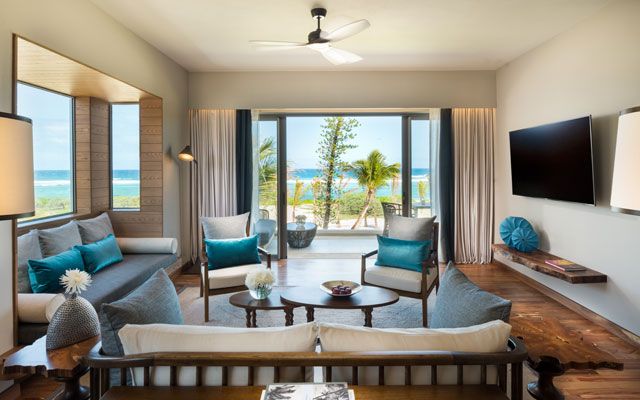
Tucked away on the southeastern coast of Mauritius on Le Chaland Beach, Anantara Iko Mauritius Resort & Villas is a tranquil hideaway offering secluded luxury. Set around manicured tropical gardens, the upscale beachfront hotel offers 164 guestrooms and suites, with eight additional pool villas set to launch in 2H2020. Resort facilities include a 30m infinity pool, four F&B outlets, spa, fitness centre and a library filled with classic fiction and historical and cultural books of Mauritius.
Nirjhara, Indonesia
Sustainable meets luxury at Nirjhara, which sits slightly further afield from the popular Balinese villages of Canggu and Seminyak. Nirjhara means “waterfall” in Sanskrit, which is befitting of the space nestled amidst natural wonder and mere minutes from tourist haven Tanah Lot Temple and scenic beach Pantai Kedungu. The 25-suite luxury hotel in Tabanan offers eight River Pavilions, four River Pool Pavilions, seven Canopy Suites, five Two-Bedroom Pool Villas, and private haven The Residence.
Nirjhara has launched a variety of eco-initiatives. Among others, Ambu, the hotel’s main restaurant, sources over 95 per cent of its ingredients locally, primarily from neighbouring farms in Tabanan. The resort’s menu of spa treatments draws inspiration from Bali’s rich tradition of village healers. Complimentary yoga and meditation classes are also available on-site.
Maven Stylish Hotel Hua Hin, Thailand
MJ One Group by Major Development has launched the Maven Stylish Hotel Hua Hin, located right in the heart of the resort town of Hua Hin, next to the famous Night Market on Petchakasem Road. The 59-key Maven Stylish Hotel Hua Hin offers three types of rooms: Superior, Deluxe and Corner Suite. On-site facilities include a cafe serving Thai delicacies, a pool bar, and a versatile function room. The hotel is located near tourist attractions such as Cicada Market, Hua Hin Market Village, Bluport, Vana Nava Water Jungle, and Hua Hin Beach.
Oakwood Apartments PIK Jakarta, Indonesia
Oakwood, a wholly owned subsidiary of Mapletree Investments, has opened its third property in Jakarta, Indonesia. Oakwood Apartments PIK Jakarta is also the first international serviced apartments brand to debut in the hip culinary district of Pantai Indah Kapuk in North Jakarta. The 151-key property offers direct access to the CBD, and is a 15-minute drive from the Soekarno-Hatta International Airport. Residential facilities include both indoor and outdoor swimming pools, fitness centre, restaurant, as well as a kids’ swimming pool and playground.
The Philippine Department of Tourism (DOT) on Wednesday pledged its support for the travel and hospitality sector hard hit by the coronavirus pandemic, saying that it has lined up a host of incentives and will extend financial assistance to cushion the impact of the crisis on the industry.
The DOT’s statement was in response to an appeal from the Philippine Travel Agencies Association (PTAA) for relief and stimulus packages.
Philippine’s tourism board throws a lifeline to struggling tourism businesses; Boracay island pictured
Currently, the DOT said that it is in talks with the Development Bank of the Philippines (DBP) and the Land Bank of the Philippines (LBP) to provide rehabilitation financing support, such as extending low interest loans, for tourism enterprises that have been severely affected by the Covid-19.
The DOT noted that the DBP has already identified the tourism industry as eligible for its programme called Rehabilitation Support Program on Severe Events (RESPONSE), which aims to aid businesses affected by calamities.
The LBP will also assist tourism stakeholders under its programme called Rehabilitation Support to Cushion Unfavorably Affected Enterprises by Covid-19 (I-RESCUE) Lending Program.
Furthermore, the DOT has also made representation with the Social Security System, Pag-IBIG Fund, and PhilHealth for the deferment of tourism workers’ contributions.
“Upon these representations, Philhealth has agreed to extend the deadline to remit the members’ savings/contributions until two weeks after the lifting of the ECQ (enhanced community quarantine) without any penalty,” said DOT in a statement.
It added: “Pag-IBIG has also agreed to extend its deadline for payment of premium contributions for the first quarter of 2020 to April 30, 2020. Social Security System agreed to extend the deadline for the remittance of contributions until June 1, 2020.”
The DOT also said that it is liaising with the relevant government agencies for the requested deferment of corporate income tax payments by the Bureau of Internal Revenue, among other interventions.
Pertaining to the PTAA’s request for rent and utility discounts, travel agency commission from airlines, as well as salary and travel tour expo subsidies, the DOT said that “these are normally matters governed by contracts between private parties, and not subject to government intervention, but they can be a subject of legislation which can provide financing or subsidies”.
The tourism board added that it will raise all these issues with the Congress “which is also currently considering a bill granting a fiscal stimulus package to the tourism industry”.
In the same statement, tourism secretary Bernadette Romulo-Puyat highlighted that the DOT and its attached agencies had previously rolled out a series of measures to help tourism businesses early on in the outbreak.
This includes the implementation of a moratorium on the collection of accreditation fees from new and renewing applicants from Tourism Enterprises and Tourism-Related Enterprises for this year.
The DOT and the Tourism Promotions Board have also waived the participation fees for international fairs and exhibitions until the end of 2021, and mounted 20 sweeper flights to assist many of the travel trade’s clients to leave the country, among other initiatives.
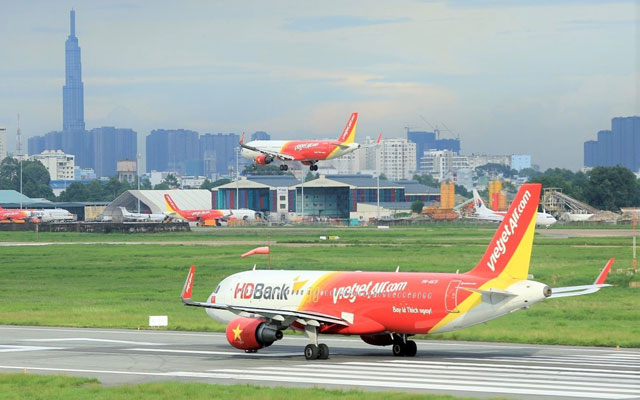
Vietjet has launched the Power Pass, allowing its holders to take unlimited flights within Vietnam and plan their travels up to a year ahead, in a bid to boost travel demand as it reels from a plunge in air traffic.
Normally, the airline operates nearly 300 flights daily covering 45 routes across the country.
Vietjet rolls out Power Pass for unlimited domestic flights up till 2021
Travellers can buy the pass on powerpass.vietjetair.com or vietjetair.com. The exclusive Power Pass account offers passengers with free air ticket fares, 15kg checked baggage and 7kg hand luggage on an unlimited number of domestic flights during the validity of the pass.
Passengers are able to change their flight schedule as many times as desired for only VND100,000 (US$4) per change.
The airline offers two options: Power Pass Sky6 (priced at VND8,999,000) for unlimited domestic flights until the end of September 30, 2020; or the Power Pass Sky12 (priced at VND16,999,000) for unlimited domestic flights until the end of March 31, 2021. Terms and conditions apply.
Crystal Expedition Cruises has postponed the launch of its luxury expedition ship, Crystal Endeavor, till November.
The delay comes after the temporary closure of the MV Werften shipyards, which halted operations due to the Covid-19 global pandemic.
Crystal Endeavor’s launch has been postponed to November due to Covid-19
Debut of the ship, initially slated for this August, has been pushed back, with all scheduled itineraries through October 31, 2020, cancelled.
The ship’s maiden voyage will now be the Tasmania & Fjords of New Zealand 14-night cruise embarking on November 14, 2020.
“We know that, like us, our guests have been eagerly awaiting the opportunity to explore anew with Crystal aboard this groundbreaking ship, and we deeply regret that this change has become necessary and has disrupted our guests’ travel plans,” said Crystal’s president and CEO, Tom Wolber.
The company said that it is reaching out to guests and their travel advisors directly with rebooking options.
Japan National Tourism Organization (JNTO) has appointed Hatsume Nagai as executive director for the Singapore market, effective April 1, 2020.
In her new role, she will be responsible for leading the development and implementation of strategies to promote Japan as a preferred tourist destination among Singaporean travellers.
Nagai joins JNTO at a time when the global tourism industry is undergoing its biggest crisis yet due to the coronavirus pandemic, and she will be helming the organisation’s recovery efforts for when travel resumes.
Furthermore, Nagai said that the NTO will also be strengthening promotional efforts such that the Singapore market will prioritise Japan as their first travel destination when the situation improves.
ASITA West Java's Yunarto (one-word name) (2nd from left) hands out grocery package to staff of ASITA members who are affected by covid 19 .jpeg
Even as the scourge of coronavirus tightens its grip on the tourism sector, a bright spot has surfaced in these bleak times – and that is players in travel showing solidarity amid their struggles, by donating food essentials and medical supplies to support the community during the pandemic.
In Indonesia, trade bodies and travel agencies have rallied together to fight the virus crisis. The Association of the Indonesian Tours and Travel Agencies (ASITA), through its subsidiary Asita Care, has been distributing food to medical workers at government referral hospitals.
ASITA West Java’s Yunarto (second from left) hands out grocery packages to staff of ASITA members affected by Covid-19
Budijanto Ardiansyah, vice president of ASITA, said the initiative by the national board of ASITA was then followed by its chapters. ASITA East Nusa Tenggara (NTT), for example, has donated 300 masks to the community through the NTT Covid-19 Handling Acceleration Task Force. Elsewhere, Asita Riau Islands has distributed 500 boxes of rice directly to motorbike taxi drivers, taxi drivers, street sweepers, and other needy people.
“There are four chapters that have carried out acts of solidarity – North Sulawesi, East Nusa Tenggara, Riau Islands, and West Java. Other regions may soon follow suit,” said Budi, who is also ASITA’s West Java chairman.
He added: “The form of assistance varies, depending on the conditions and needs in the region. Like in West Java, we chose to focus on helping affected travel agent employees by giving them grocery packages.”
Also contributing towards pandemic relief efforts is Panorama Group which has donated 100 personal protective equipment (PPE) for medical teams working in Covid-19 referral hospitals. The group also makes portable sinks to be placed in public areas, along with spray equipment and disinfectants.
AB Sadewa, vice president brand and communications at Panorama Group, shared that they are in the midst of collecting donations. “The target is to prepare 1,000 grocery packages for people in need. We hope this will help them to get healthy and nutritious food in the midst of Covid-19.”
Previously, WEHA Transportasi Indonesia, a subsidiary of the Panorama Group, has pledged to provide shuttle services between specially designated Covid-19 hospitals and hotels designated for medical staff.
Sadewa said: “We’re doing everything we can to lend a hand and speed recovery from Covid-19 in Indonesia.”
Meanwhile, Tiket.com has launched a campaign called Berbagi Sehat (Sharing Health). Through this programme, users can exchange a certain number of TIX Points (membership reward points) on the platform, which the OTA will then use to buy PPE for medical workers across Indonesia.
Eric Waldburger, the former president of Marco Polo Hotels and founding president of the Macau Hotel Association, has passed away on April 10 in Ueda, Nagano, Japan after battling a short and sudden illness.
He was 70 years old.
Eric Waldburger
Born and trained in Switzerland, Waldburger started his rich hospitality career as a kitchen apprentice in a hotel. He ventured into Asia in 1973 as a restaurant manager at the newly-opened Furama Hong Kong, before rising through the ranks at prestigious hotels such as Mandarin Oriental Macau, The Peninsula Hong Kong, The Ritz-Carlton Hong Kong, and Hutchison Whampoa’s Harbour Plaza Hotel Group.
He was the president of Marco Polo Hotels before retiring in January 2016.
Waldburger also founded the Macau Hotel Association.
In his semi-retirement state, Waldburger presided over his consulting firm, i Solutions and Concepts as well as SPICE Coaching.
In a tribute to Waldburger on April 15, Jennifer Cronin, president of Wharf Hotels, wrote: “Through these roles it was his mentorship and innate leadership skills that have fostered more than one generation of passionate and dedicated hoteliers, providing the stepping stones of opportunity to grow and develop with the same enthusiasm and vitality as Eric himself.
“The many heart-warming and grateful messages are flowing around the global hospitality network, from legends of the industry, hotel owners and aspiring hospitality students to academics and corporate leaders, as we share and celebrate Eric’s lifetime of experiences.”
Describing Waldburger as “one of our industry’s legends and statesmen”, Cronin said: “The world has lost an advocate of knowledge-sharing and an accomplished ground breaker, he was definitely a frontrunner in the disruptor movement, a man ahead of his time.”
Peter Borer, COO of Hongkong and Shanghai Hotels, recalled Waldburger as being “very passionate grand hotelier” who possessed “great charm”.
“His leadership style was admired by all staff and colleagues like myself,” said Borer.
Veteran hotelier James Smith, former general manager of Hilton Hong Kong and who had recommended Waldburger for the position at Hutchison Whampoa, said: “Eric being exposed to top quality operation in his formative career had high standards, was committed to having excellence and producing what the owners required. I don’t believe he had any other goal except dedication to his family.”
Duncan Palmer, the former managing director at The Murray, Hong Kong, a Niccolo Hotel, recalled: “I first worked with him on the opening of Macau Excelsior. As a general manager, he put a very young team together, giving them opportunity and space to be creative. In fact, he groomed leaders and left a legacy (of leaders) with very good managers around the world.”
Kevin Murphy, director of asset management, AHS Advisory Australia, recalled his first encounter with Waldburger in the ’70s. “Eric was never one to seek the limelight among his industry associates. He will be well remembered for his quiet nature, gentle manners and sartorial elegance, as well as a dignified calmness and professional assurance under all circumstances throughout his successful career,” remarked Murphy.
“I was always happy to see his wry smile and accepting manner whenever he supported change in ways that might have ruffled some of his early superiors in Hong Kong circles. He sometimes seemed an old soul gliding well through a modern century environment while his work did much to introduce the more modern approach in personnel management in particular that he was well noted for,” he added.
In lieu of flowers, people can make a donation in name of the Eric Waldburger Memorial Scholarship. Cheques, marked payable to The Hong Kong Polytechnic University, should be sent to Pauline Ngan (pauline.ngan@polyu.edu.hk) at School of Hotel & Tourism Management, 17 Science Museum Road, TST East, Kowloon, Hong Kong.
Alternatively, an online donation can be made. Purpose of donation to be specified as SHTM – The Eric Waldburger Memorial Scholarship.
Waldburger is survived by his wife Naoko and children Marc and Tanya.
What has Oakwood done to achieve greater gender equality across the company?
Oakwood’s initiatives to support gender balance include a gender-diverse recruitment process; a merit-based rewards and promotions system; fair assessment of results; mentorship for all potential talents; and look at promotions from within.
How was Lina Abdullah selected for the position of regional general manager for Cambodia, Myanmar & Thailand?
We recognised Lina’s leadership competency five years ago when she was tasked to manage the former Oakwood Residence Garden Towers Bangna, Bangkok. Within two years, Lina led the pre-opening team at Oakwood Hotel & Residence Sri Racha to great commercial success and acclaim in 2017. By 2018, she was named as Thailand’s Best General Manager for the Hospitality Category conferred by CMO Asia in 2018.
She was also recognised as Rising Star of 2020 during the annual Serviced Apartment Awards in London.
Oakwood has a robust management programme to cultivate leaders for the future. Given our aggressive expansion plan to double Oakwood’s portfolio by 2025, there is an urgent need for senior leaders who embrace our Oakwood values and service philosophy. The best strategy for us to achieve this is through the promotion of internal talents.
Instead of applying for this management training programme, candidates are shortlisted and assessed based on a set of performance criteria. Team leaders are responsible for identifying and nominating candidates for career advancement.
How does Oakwood show its commitment to having more women in leadership positions?
Oakwood is committed to being a fair employer and strong advocate of gender equality.
We have a structured annual performance appraisal system that helps us recognise rising stars within the organisation. With every potential talent, a carefully crafted career advancement plan is developed according to individual strengths and weaknesses. This talent development process is gender-neutral.
In recent years, we have nurtured five celebrated women leaders in Asia-Pacific aside from Lina.
Patty Luo – executive assistant manager, Oakwood Premier Guangzhou. Luo is also the winner of the Stelliers Greater China 2019: Hotel/ Resident Manager of the Year 2019
Tamaki Okoshi – executive assistant manager of Oakwood Apartments Azabudai, Tokyo and Oakwood Residence Azabujyuban, Tokyo
Tomoko Watanabe – executive assistant manager, of several Oakwood properties in Tokyo, namely Oakwood Apartments Minami Azabu, Oakwood Apartments Roppongi Central, Oakwood Apartments Shirokane, Oakwood Residence Aoyama
Kyoko Terada – executive assistant manager of Oakwood Apartments Nishi-Shinjuku and Oakwood Residence Shinagawa
How do you think the industry will evolve in terms of gender balance?
At Oakwood, we have noticed a significant increase in women leaders across the organization. In addition, the change in perception towards women in society, especially within Asia, as well as our results-driven appraisal system contribute to the emergence of women leaders.
Most importantly, organisations that are committed to operational success would recognise leadership potential, be it male or female.