


Philippine travel agency steps up to train next-gen players

Manila-based Rajah Travel Corporation (RTC) will launch a travel management programme covering aspects that are usually not taught in hospitality schools, so as to groom a new generation of industry-ready graduates.
Titled Remote Practicum Mentorship, the programme is touted as an alternative learning activity for tourism and hospitality students aimed at “bridging the gap between what is being taught in schools and what is happening in the workplace”, said RTC chair and president Aileen Clemente.
 Slated to launch on October 5, the course is the only one of its kind in the Philippines, as most schools’ curriculum and on-the-job training are less focused on tourism (travel agencies, tour operators), and more on hospitality (hotels, culinary, cruise ships, etc.), Clemente claimed.
In a recent Tourism Industry Board Foundation webinar, Clemente said the online programme will include topics not taught in schools, such as corporate travel, programme management and supplier negotiations.
Sessions will range from understanding the jargon, fares, pricing and tariffs to content platforms beyond GDS. Students will also be able to put theory into practice with application exercises, situational analysis, simple business simulations and complex business situations.
“We are concentrating a lot more on soft skills… Even if you consider booking a menial task, it isn’t really because it is a core business if you put critical thinking into play,” Clemente said.
Practicum advisers, or professors, are allowed to participate in the practicum sessions, she added, so “they can also experience what their students are experiencing and for them to know whether it is a good programme or not”.
Students will be rated based on their analytical skills, critical thinking, attendance and participation, among other things. According to Clemente, the programme with 21 different sessions spanning a total of 540 hours, has been getting a good response from schools.
New GM for Sheraton Grand Mirage Resort, Gold Coast
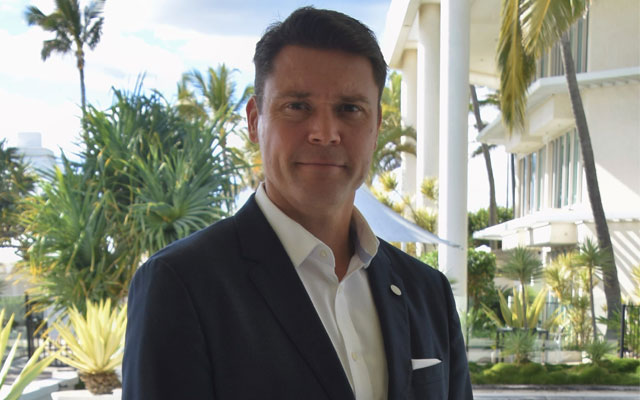
The Sheraton Grand Mirage Resort, Gold Coast has appointed Keith Massey as its general manager.
Boasting over 25 years’ experience in the hospitality industry, Massey was most recently the general manager of the JW Marriott Khao Lak Resort & Spa in Thailand. Prior to that, he has held various positions across the globe in Singapore, China, India, France, Hong Kong and Malaysia.
Singapore, Brunei open green lane for essential travel
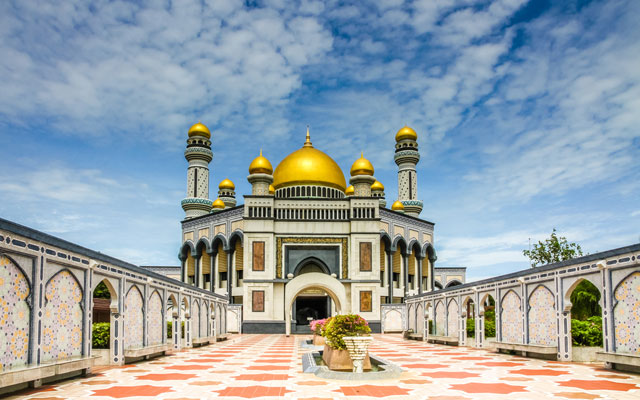
Singapore and Brunei have agreed to establish a reciprocal green lane (RGL) to facilitate essential business and official travel between both countries.
This comes after Singapore announced last month that it would ease border restrictions to allow general travel to and from Brunei and New Zealand from September 1.
Singapore is the first country that Brunei has reopened its borders to, since the sultanate imposed a travel ban in March to curb Covid-19 spread.
Applications are now open. Under the RGL arrangement, travellers will have to adhere to a set of safety guidelines including contact tracing, controlled itineraries, and mandatory Covid-19 swab tests.
For applicants travelling from Singapore to Brunei, and vice versa, the receiving enterprise or government agency in either country need to apply for a travel pass – SafeTravel Pass for Singapore, and Entry Travel Pass for Brunei – on their behalf to obtain an approval letter to enter their host country.
The receiving party will be required to submit the traveller’s controlled itinerary in either Singapore or Brunei for the first 14 days.
In addition, for those travelling to Brunei, the receiving enterprise or government agency in Singapore will have to log onto the SafeTravel Pass portal within 72 hours before the traveller’s scheduled departure to submit his or her negative Covid-19 test result.
Approved applicants travelling from either country who are visa-required passport holders can proceed to apply for a visa for travel to their host country through the usual channels. Those with an existing valid visa need not apply for a new visa as the visa suspension that was in place due to Covid-19 will be automatically lifted when their SafeTravel Pass or Entry Travel Pass is approved.
Eligible travellers must have remained in either Singapore or Brunei for at least 14 days prior to departure. They must undertake a Covid-19 swab test at least once within 72 hours before departure, and obtain a negative Covid-19 certificate from the relevant health authorities. They must also ensure that they are in good health before boarding the flight.
Prior to boarding, travellers from either Singapore or Brunei will be required to produce the approved travel pass (SafeTravel Pass for Singapore, and Entry Travel Pass for Brunei), negative results of a Covid-19 swab test taken within 72 hours before departure, and a valid return air ticket.
They are also required to submit pre-trip health and travel history declarations, and have a valid visa (for visa-required passport holders) at check-in at the airport in either Singapore or Brunei. Additionally, travellers from Singapore to Brunei will also need to show valid proof of payment for post-arrival swab test.
Those who do not meet the requirements may be refused boarding. Users of the RGL between Singapore and Brunei will bear the cost of their respective pre-departure Covid-19 swab tests.
Upon arrival in either Singapore or Brunei, travellers must produce a valid travel pass, negative results of a Covid-19 swab test taken within 72 hours before departure, and a valid visa (for visa-required passport holders) for immigration checks. Otherwise, the traveller may be refused entry.
They are also required to undertake a Covid-19 swab test, and remain in isolation at the pre-declared accommodation until they receive their test results. Transportation from the airport to declared accommodation will have to be provided by the receiving enterprise or government agency, subject to prevailing health measures. Travellers will bear the costs of the post-arrival Covid-19 tests in either Singapore or Brunei and stay in the declared locations.
If the test result indicates that the traveller from either Singapore or Brunei has tested negative for Covid-19, the receiving enterprise or government agency will transport the traveller directly from the declared accommodation to their workplaces or residences.
Travellers are also required to download and use their respective host country’s contact tracing apps – TraceTogether in Singapore, and BruHealth in Brunei – for the duration of their stay.
If the test result indicates that the traveller has tested positive for Covid-19, he or she will be promptly accorded the necessary medical treatment by either the Singapore or Brunei government, with costs to be borne by the traveller.
Travellers must adhere to a controlled itinerary that is supervised by the receiving enterprise or government agency for the duration of or the first 14 days of the visit, whichever is shorter. Returning travellers will be subject to the prevailing health measures for RGL travellers in either country.
Japan moves to ease travel ban on Singapore, Cambodia, Malaysia

Japan will grant entry to expatriates and businesspeople from Singapore and Cambodia from September, as part of the country’s reopening efforts that is expected to provide a small measure of relief to its battered hospitality sector.
Since the start of the pandemic, Japan has tightened entry restrictions, which apply to nationals of 159 countries and regions as of August 30. But in August, it began talks with 16 nations, including Singapore, Malaysia and Cambodia, to discuss resumption of travel.
Singapore and Japan will resume cross-border travel for expatriates and businesspeople under two schemes starting in September. Business travellers will be allowed to move and work within a limited area, and will be confined to their accommodations during their first 14 days of stay.
Cambodian prime minister Hun Sen and Japan’s foreign minister Toshimitsu Motegi have agreed for the two countries to reopen borders for expatriates. Expat arrivals from Cambodia will be granted entry from early September, provided they observe a 14-day self-quarantine period.
In addition, Motegi and Prak Sokhonn, Cambodia’s deputy prime minister, will work towards easing entry restrictions on short-term business travellers.
Japan has also agreed to permit entry to Malaysian expatriates within September, with efforts underway to extend entry to students from Malaysia.
Following the announcements, Japan’s largest travel agency, JTB Corporation, has received numerous requests from businesspeople to travel to Singapore, Cambodia and Malaysia, a JTB spokesperson told TTG Asia. Of those inquiries, customers have asked JTB to handle flight tickets, hotel reservations and local tours, he said.
While Japan’s easing of entry restrictions will likely have limited impact on its wider tourism industry, the move is expected to provide some relief to the struggling hotel sector, particularly in major cities.
Pre-Covid-19, the South-east Asian markets were growing in importance for Japan. However, in July 2020, the country welcomed a mere 10 arrivals from Singapore, down from 21,716 in the previous corresponding period, while less than 10 people entered Japan from Malaysia, down from 22,957 over the same period the year before.
On September 1, Japan Airlines increased its flights to Singapore from two to three roundtrip flights per week between Tokyo Narita and Singapore Changi.
Grab and Klook team up for region-wide attractions push
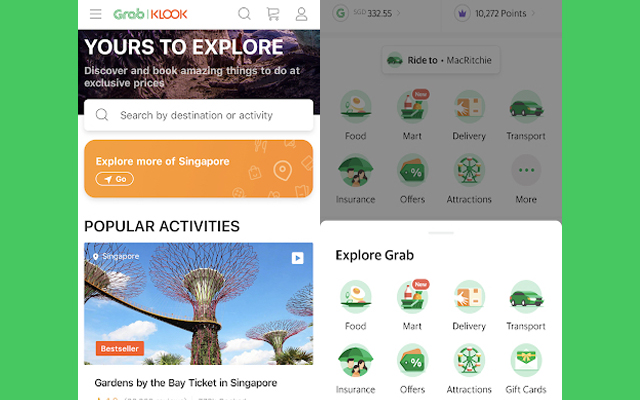
Ride-hailing app Grab has entered a partnership with booking platform Klook to launch a new Attractions feature on the Grab app, encouraging users to book domestic experiences and promotions across South-east Asia.
The new Attractions tile will give Grab users access to Klook’s catalogue of more than 100,000 attractions, tours, F&B outlets, local activities, as well as offers from partners such as Disneyland and Legoland.
In Singapore, attractions available for booking include the AJ Hackett Sentosa Bungy Jump, NERF Action Xperience as well as island-hopping at St John’s Island and Kusu Island. Users can also support small businesses through activities such as a pottery class at Thow Kwang Pottery Jungle, one of Singapore’s oldest dragon kilns.
“The pandemic has hit the tourism sector hard and made travel difficult, but we know that many South-east Asians still harbour a deep-rooted desire to explore and discover new adventures. Our partnership with Klook gives our users the best way to uncover new experiences locally, which we also hope will drive more support towards businesses that depend on tourism,” said Jerald Singh, chief product officer and head of geo, Grab.
Marcus Yong, vice president of APAC marketing, Klook, added: “With months of pent-up demand and staying indoors, travellers are eager to turn to their next accessible and available option: domestic experiences. This integration will provide both Grab and Klook users with a more seamless, mobile-first experience to discover and book unique experiences right in their backyards.”
Grab users can book and checkout these activities with GrabPay, and earn GrabRewards points. The reservations and promotions can be redeemed through the Grab app without the hassle of physical receipts or tickets.
More features and initiatives will be rolled out in the coming months, including a wishlist function, reviews and integration with other Grab services, such as booking a ride to the attraction or booking an admission ticket while on the ride to a theme park.
Malaysia bans long-term pass holders from three countries
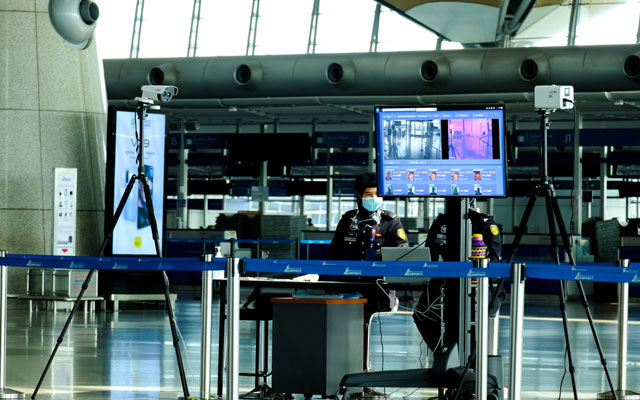
In a bid to tighten border controls, Malaysia will deny entry to long-term pass holders from India, Indonesia and the Philippines from September 7.
Senior minister (security cluster) Ismail Sabri Yaakob said during a press briefing that the move was in response to a spike in Covid-19 cases in these countries.
He added that the restriction includes those who are permanent resident pass holders, Malaysia My Second Home participants, expatriates with Employment Pass category 1, professional visit pass holders, Resident Pass and Spouse Visa and students.
Ismail Sabri did not rule out the possibility that similar restrictions might be extended to citizens of other countries experiencing surges.
“We have asked the Health Ministry to make detailed planning on how Malaysia should face threats and challenges in view of the possibility of an increase in cases during winter,” The Star quoted him as having said.
Another issue that needs to be looked into is the precaution measures that need to be taken in anticipation of the return of Malaysian citizens from countries experiencing winter, he added.
Genting to commence domestic cruises from Hainan
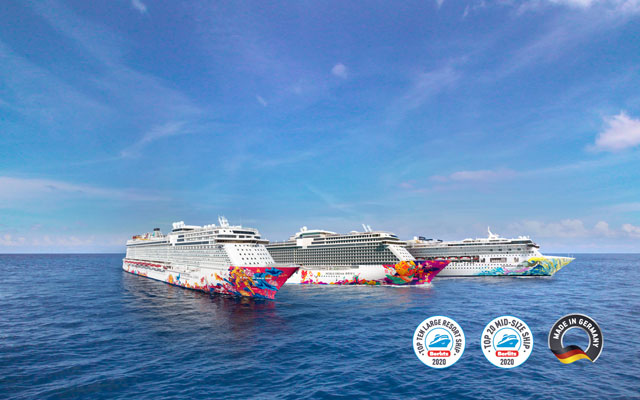
Genting Cruise Lines (GCL) is forging a strategic partnership with the Sanya CBD Administration and a national travel industry corporation to establish a joint venture company to facilitate operations of Dream Cruises’ flagship in Sanya.
The goal of the new joint venture will be to launch domestic cruise itineraries out of the central cruise hub of Hainan, and to support the development of a free trade, pilot cruise tourism zone on Hainan Island.
GCL said in a press release that Sanya boasts an abundance of advantages to complement the pilot implementation of the Hainan Cruise Port Sea-Upstream Route plan, such as the first dedicated cruise terminal providing the only cruise itineraries to the Xisha islands in the country. The city’s location also allows for the longest number cruising days for domestic sailings, and there are plans to further develop Sanya into the largest cruise homeport in China, it added.
The Sanya CBD, one of the 11 districts and parks implementing Hainan’s free trade port policies, manages the Sanya Headquarters Economy division, the CBD division and the cruise and yachting division.
To further boost tourism and reinforce the positioning of the Hainan Free Trade Port, the Hainan government announced earlier this year the pilot plan for the Hainan Island Cruise Itineraries for Chinese-funded Flag of Convenience Ships, providing more options for cruise companies.
GCL president Kent Zhu said: “The establishment of a joint venture company in Sanya demonstrates our commitment and determination to further drive the development of cruise tourism in Hainan. Our aim is to provide a dedicate presence in Sanya, focused on promoting the rich cultural heritage of the island coupled with the wealth of cruise experience of Genting Cruise Lines.
“In the post-pandemic era of travel, we hope that the authorities will further relax their policy for cruise companies operating domestic cruises and we will leverage on policies in Hainan, such as the Flag Of Convenience pilot programme, to entice inbound international travellers.”
Diethelm Travel’s e-market platform connects artisans with buyers

Diethelm Travel Group has launched an online marketplace showcasing handcrafted products sourced from its staff and partner communities.
The curated marketplace, marketplace.diethelmtravel.com, seeks to connect Asian artisans and makers with a worldwide audience, during a time when many Asian borders remain closed to foreign tourists.
Available for international orders, the marketplace currently features a variety of high-quality, handcrafted goods, sourced by Diethelm Travel Thailand. The company plans to expand its product line by sourcing from all 13 Asian countries it operates in, with profits from each sale going directly to the makers.
One such community providing goods is a village in Thailand’s Sukhothai province that usually benefits from Diethelm Travel guests participating in community-based tourism programmes. The village is also known for its unique way of using natural mud to dye cotton fabric to create distinctive hues and a soft feel. With the evaporation of tourism-generated income, the community is turning to selling its fabric goods for financial security.
Stephan Roemer, CEO of Diethelm Travel Group, said: “As the Asian travel industry continues to be at a standstill due to the Covid-19 pandemic and strict government restrictions, we’re still committed to connecting people across borders and supporting both our team and the communities we work in. By making a purchase through Diethelm Marketplace, you’re not only receiving a unique handmade good – or “souvenir” – but helping support people whose livelihoods have been greatly affected by the current global situation.”
Select accommodation deals available for people already in Thailand are also listed on the marketplace website for easy online local bookings.
AirAsia India strikes car rental deal with Avis
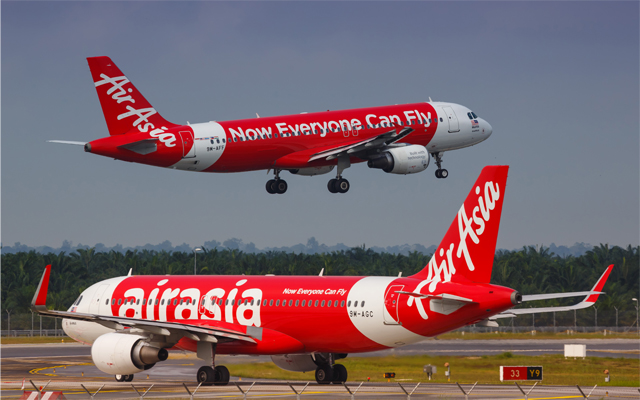
AirAsia India has partnered with Avis India to offer the airline’s passengers discounted car rental services, as travellers increasingly seek private modes of transport.
AirAsia India guests can opt to hire airport transfers, chauffeur-driven vehicles, long-term car rentals or self-drive cars from Avis’s fleet of mid, premium, luxury and SUV cars.
Through this partnership, AirAsia India guests can use the services of Avis across 14 cities – Delhi, Noida, Gurugram, Faridabad, Bengaluru, Mumbai, Hyderabad, Chennai, Kolkata, Chandigarh, Kochi, Pune, Bhubaneswar, and Jaipur. They will also be able to enjoy other benefits such as complimentary upgrades in India and internationally.
Sunil Gupta, managing director and CEO, Avis India, said: “In the wake of coronavirus, many people remain apprehensive about taking public transport or booking cabs. With this partnership, we are happy to take forward the responsibility to offer a hassle-free and safe travel experience once our travellers depart the airport.”
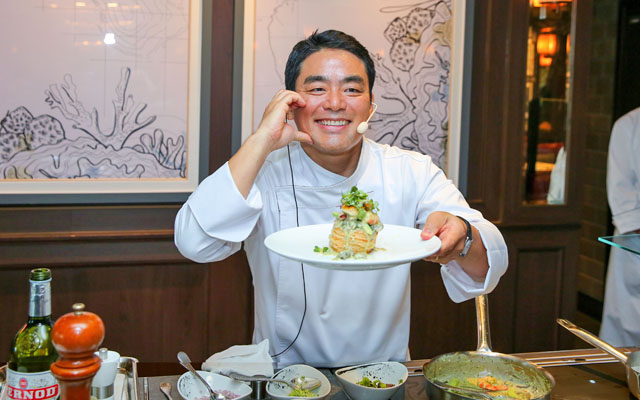







Singapore and South Korea have concluded bilateral negotiations on a fast lane that will allow for essential business and official travel between the two countries from Friday (September 4).
The agreement, which will have necessary public health safeguards in place, will help restore connectivity and support economic recovery, the Ministry of Foreign Affairs (MFA) said in a press statement on Wednesday.
Eligible travellers will have to abide by the mutually agreed terms and prevailing public health measures in the respective countries, such as health safeguards in the form of pre-departure and post-arrival testing as well as the need to adhere to a controlled itinerary for the first 14 days in the receiving country.
Operational details including the requirements, health protocols and application process will be published on the SafeTravel website by September 4.
Singapore’s foreign minister Vivian Balakrishnan and his South Korean counterpart, Kang Kyung-wha, welcomed the conclusion of the fast lane talks, when they spoke via telephone on September 2, said MFA. The ministers also reaffirmed the importance of bilateral cooperation to jointly overcome both countries’ common challenges amid the pandemic.