

IATA Travel Pass Key in final development phase

The International Air Transport Association (IATA) Travel Pass, a digital health passport that will support the safe reopening of borders, is now in the final phase of development and will see its first cross-border pilot later this year as well as a launch slated for 1Q2021.
As governments begin to rely on testing as a replacement of quarantine measures to limit the risks of Covid-19 importation when reopening their borders to travellers, the IATA Travel Pass will support the procedure by managing and verifying the secure flow of necessary testing or vaccine information among governments, airlines, laboratories and travellers.

The IATA Travel Pass incorporates four open sourced and interoperable modules which can be combined for an end-to-end solution. The first module covers a global registry of health requirements, which enables passengers to find accurate information on travel, testing and eventually vaccine requirements for their journey.
The second covers a global registry of testing / vaccination centre, enabling passengers to find testing centres and labs at their departure location which meet the standards for testing and vaccination requirements of their destination.
The third module takes in the Lab App, which enables authorised labs and test centres to securely share test and vaccination certificates with passengers.
Lastly, the Contactless Travel App enables passengers to create a digital passport; receive test and vaccination certificates and verify that they are sufficient for their itinerary; and share testing or vaccination certificates with airlines and authorities to facilitate travel. This app can also be used by travellers to manage travel documentation digitally and seamlessly throughout their journey, improving travel experience.
IATA Travel Pass is based on industry standards and IATA’s proven experience in managing information flows around complex travel requirements. IATA’s Timatic, which is used by most airlines to manage compliance with passport and visa regulations, is the base for the global registry and verification of health requirements.
IATA’s One ID initiative, which was endorsed by a resolution at its 75th Annual General Meeting in 2019 to securely facilitate travel processes with a single identity token, is the base for the IATA Contactless Travel App.
IATA and International Airlines Group (IAG) have been working together in the development of this solution and will undertake a trial to demonstrate that this platform combined with Covid-19 testing can reopen international travel and replace quarantine.
“Today borders are double locked. Testing is the first key to enable international travel without quarantine measures. The second key is the global information infrastructure needed to securely manage, share and verify test data matched with traveler identities in compliance with border control requirements. That’s the job of IATA Travel Pass. We are bringing this to market in the coming months to also meet the needs of the various travel bubbles and public health corridors that are starting operation,” said Alexandre de Juniac, IATA’s director general and CEO.
Nick Careen, IATA senior vice president, airport, passenger, cargo and security, commented: “Our main priority is to get people travelling again safely. In the immediate term that means giving governments confidence that systematic Covid-19 testing can work as a replacement for quarantine requirements. And that will eventually develop into a vaccine programme. The IATA Travel Pass is a solution for both.”
Careen explained that the IATA Travel Pass’s interoperability will allow it to be used in combination with other providers or as a standalone end-to-end solution.
Throughout the travel and tourism crisis, IATA has advocated the use of rapid, accurate, affordable, easy-to-operate, scalable and systematic Covid-19 testing for all passengers before departure as an alternative to restrictive quarantine measures in order to re-establish global air connectivity.
Earlier in June, Juniac had expressed: “Imposing quarantine measures on arriving travelers keeps countries in isolation and the travel and tourism sector in lockdown.”
Big push for micro-tourism

Even with the halt on inbound tourism, new opportunities are emerging for luxury providers in Japan as the micro-tourism trend gains steam among domestic travellers.
The small-scale style of travel has seen an uptick across the country, given impetus by the government’s July launch of a subsidised travel campaign offering 50 per cent off trips. Most participants so far have opted for single-destination trips within a few hours’ drive of home and, due to the discount, have been happy to splurge.
Keen to shun crowded attractions and facilities, many travellers with mid to high disposable income have been seeking hotels that can offer an all-rounded experience, including relaxation (a hot spring or spa), various F&B options, activities (a pool or gym) and local interaction (exclusive mini-tours). This trend is enabling luxury hoteliers to maximise on the rebound in the domestic market.
Hoshino Resorts, for instance, is targeting locals living within a 60-minute drive from its properties, with the lure of meals, hot springs and relaxation in a private space. Footfall has risen, with more Japanese consumers favouring “travel closer to home and in a safe space”, said Jiseon Lee, the company’s area manager of global marketing.
At Small Luxury Hotels of the World (SLH), guests are showing a keen interest in enjoying their hotel and its surrounds in a way that suits the new normal.
Mark Wong, SLH’s senior vice-president Asia-Pacific, said: “The reservations team has been receiving more requests to make restaurant reservations, spa appointments and local city excursions.
“We are also partnering with local experiential travel providers to curate activities that are off-the-beaten-track. (Our) partners have specifically identified and curated safe tour itineraries that avoid crowded places, so guests have that added security.”
Properties that average about 50 rooms are also enjoying a resurgence in hotel buyouts as social distancing becomes the norm. Since the pandemic, SLH’s trio of Japan hotels that offer buyouts have seen an uptick in enquiries from families and groups of friends for exclusive use at the end of 2020 and into 2021.
In response to that demand for privacy and seclusion, the company launched its Stay Small, Stay Exclusive programme to offer enhanced health and detailed safety guidelines, promising peace of mind to potential guests. Standards established under the programme are safeguarded by SLH’s partnership with the Global Biorisk Advisory Council and the latter’s GBAC STAR accreditation.
Even before the coronavirus struck, most luxury providers had placed a premium on small-scale, bespoke trips to off-the-beaten-track destinations, rendering them particularly poised to tap rising demand for micro-tourism.
Case in point: Bespoke luxury DMC Discover Shikoku, which has always put privacy and separation at the heart of its operations. Managing director Sean Brecht noted that no “significant leap” was needed for the company to adapt to the realities of travel in a post-pandemic world.
Some luxury travel providers who once solely targeted foreign visitors have successfully pivoted to the domestic market, thanks to micro-tourism business opportunities.
One such provider is itinerant hotel brand 700,000 Heures, whose properties operate in each location for six months. After launching near Kyoto in May, the hotel began to attract locals keen on micro-trips due to its European atmosphere.
In the face of prevailing uncertainty around inbound tourism, the owner saw an opportunity, dialling up the hotel’s European elements, and even making the switch from Japanese to European cuisine.
Julia Maeda, co-founder of boutique travel agency Okuni, which utilises 700,000 Heures in its trips, said the hotel was booked solid by Japanese residents following the pivot.
In the long run, the rise of micro-tourism in Japan is expected to provide a welcome boost to the luxury market via a greater number and variety of products and services.
Moreover, as micro-tourism also enhances collaboration among nationwide and regional companies and local experts, this approach can improve industry operations, according to Hoshino Resorts’ Lee.
Air Astana to mount flights to the Maldives
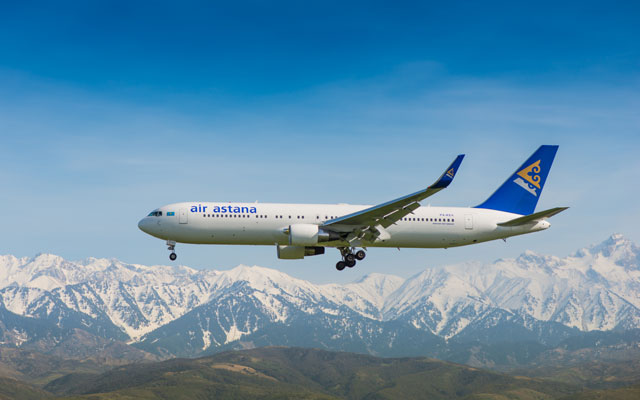
Air Astana, the national carrier of Kazakhstan, will commence twice weekly flights between Almaty and Male from December 5, with a third new service December 21 to cope with the high demand expected this holiday season.
The flights on Wednesdays and Saturdays will be operated by an Airbus A321LR aircraft, configured with 16 Business class seats and 150 Economy class seats. They will depart Almaty at 01.20 local time and arrive in Male at 07.05 local time.
The additional service for the high season will depart Almaty every Monday at 01.30 local time and arrive in Male at 07.15 local time.
During the high season from December 16, 2020 to January 16, 2021, flights will be operated by the wide-bodied Boeing 767 aircraft, providing additional seat capacity.
Passengers are required to comply with national immigration regulations, which include submission of a compulsory medical health declaration 24 hours before arrival in the Maldives, and a mandatory PCR Test certificate in English with a negative result and which will remain valid for 96 hours from the moment of taking the test until the scheduled flight arrival time.
Japan suspends domestic tourism campaign as infections hit record levels
Japanese prime minister Suga Yoshihide announced on Saturday a partial pause on the country’s Go To Travel subsidy programme to boost domestic travel and tourism expenditure, as local infections climb to record levels.
According to local media reports, Japan has confirmed more than 2,500 new daily cases of Covid-19. As of November 22, there were 2,514 cases.
Following advice from an expert panel on the coronavirus, convened on Friday, Suga determined that new Go to Travel reservations to regions seeing a resurgence of Covid-19 cases will be suspended. Prefectural governors will also be asked to stop issuing discount coupons for a similar campaign, Go To Eat, which is meant to encourage dining out expenditure.
Pandemic forces reassessment of trips, destination choices: Tripadvisor, Phocuswright study

A new research paper into the shifting trends in global travel demand and traveller behaviours has unveiled a strong and persistent desire to travel although consumers are reassessing the type of trips they want to take and the destinations they have their eyes on.
The research paper, conducted by Tripadvisor and Phocuswright, is entitled 2020 – A Year in Travel: Charting the Travel Industry’s Path to Recovery. It analyses Tripadvisor’s first-party data on travel planning behaviours around the globe, as well as consumer sentiment across six major markets, to provide a unique insight into global travel trends.
The results intend to chart the industry’s road to recovery in the wake of the ongoing pandemic.
Key findings from the report include:
- After positive signs of recovery in domestic leisure travel over the summer, demand for accommodation is now falling back in a number of markets as infection rates rise.Signs of recovery in Asia-Pacific were less obvious across the region as a whole between June and October, although some markets – such as Singapore – saw a surge in demand for domestic stays
- Travellers are reassessing the type of trips they want to take. Two-thirds of consumers surveyed (65 per cent) say the ability to avoid crowded places when traveling is now a more important factor in their choice of destination than it was pre-pandemic, and more than half (52 per cent) say they are more likely to take an outdoor/nature trip than they were before the pandemic. Between May and September, outdoor activities, nature and parks accounted for 34 per cent of all attraction page views on Tripadvisor, up from 25 per cent in 2019.
- Destination choice is changing as a result. Looking at year-on-year data over the October period, ski and seaside resorts, as well as other rural destinations, dominated the list of fastest recovering destinations in Europe for domestic accommodation searches on Tripadvisor, with Zermatt in Switzerland and Adler in Russia topping the list based on year-on-year demand.
- Despite continuing consumer uncertainty, the desire to travel remains very strong. Nearly two-thirds (65 per cent) of respondents are still thinking about where they want to travel next.
- Last minute trips are in, but so is meticulous planning. The advanced planning window has shortened as travellers are eager for last-minute, local getaways. In October 2020, nearly two-thirds (62 per cent) of travellers looking for accommodation on Tripadvisor were planning to check-in less than 30 days out, compared to just over half (51 per cent) of travellers during the same period in 2019.However, people’s desire to plan travel more diligently is now higher than pre-pandemic times. More than two-thirds (69 per cent) of respondents agreed they were going to research their next trip more than they did in the past.
“While there was positive progress over the course of the summer, the re-introduction of tighter restrictions on travel in many countries is clearly having an impact on demand in the short-term,” said Steve Kaufer, chief executive officer, Tripadvisor.
“The good news is that consumers’ desire to travel remains incredibly resilient, and that pent-up demand bodes well for the travel industry in the long run, especially considering the advances announced last week in the development of a vaccine,” added Kaufer.
“The industry has shown incredible adaptability and resilience in what has been a long and difficult year for travel,” said Charuta Fadnis, senior vice-president of research and product strategy, Phocuswright, adding that results have shown that “travel remains a key part of consumers’ lifestyles”.
The full report can be accessed for free here.
Tourism Fiji chief to head up Visit Sunshine Coast
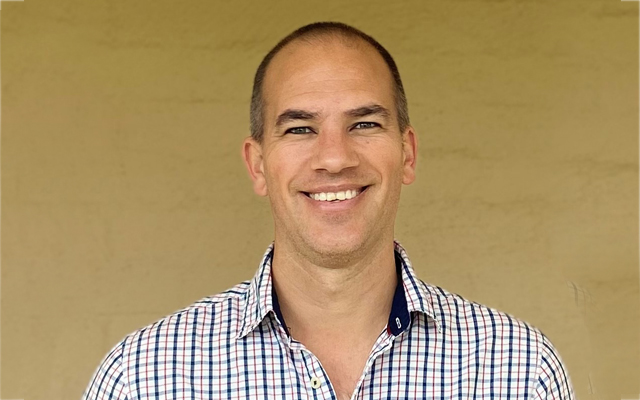
Current CEO of Tourism Fiji, Matt Stoeckel, will swap one idyllic destination for another at the end of the year following his appointment as CEO of Visit Sunshine Coast, which will take effect from the beginning of 2021.
Stoeckel will take over from Craig Davidson, who has been interim CEO of Visit Sunshine Coast since June 2020.
Prior to taking up his role at Tourism Fiji in 2016, Stoeckel spent two years with Destination NSW, following several years working for the Swire Group and in tourism consultancy roles with TRC Tourism and Hyder Consulting.
In his consultancy roles, he worked with Fiji’s Ministry of Industry, Trade & Tourism to develop the Fiji Tourism Development Plan 2014-2020, which he was then able to put into action as CEO of Tourism Fiji, including rolling out a new brand marketing campaign in 2019.
TTG Conversations: Five questions with I Putu Astawa, Bali Government Tourism Office

With international travel restrictions blocking Bali’s usual fans from seeking out the famed resort destination, the Bali Government Tourism Office has turned to a unique segment of consumers to keep hospitality businesses alive: the digital nomads.
In this new episode of TTG Conversations: Five questions video series, I Putu Astawa,director of the Bali Government Tourism Office, details why Bali makes a conducive destination for digital nomads to get work done, what procedures are in place now to facilitate their entry into Bali, and what needs to be done to ensure this segment contributes to hospitality businesses.
Indonesian trade players seek end to capacity restrictions
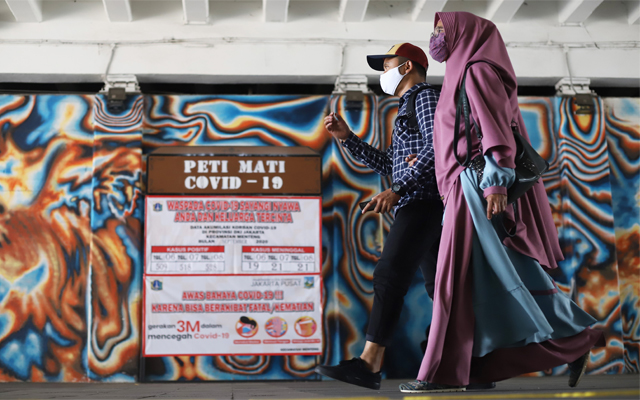
Indonesian travel associations are pushing for a revocation of the government’s Large-Scale Social Restriction (PSBB), saying that enforcement is weak among the public and commercial entities should not be the only ones made to comply.
The request surfaced after a number of mass gatherings were held, including a 10,000-pax wedding ceremony for the daughter of Rizieq Shihab, the leader of the Islamic Defenders Front.
Hariyadi B Sukamdani, chairman of the Visit Wonderful Indonesia Board, noted that there were gaps in enforcement. While firm action is taken against violations of health protocols committed by industry players, enforcement appears less stringent in the community.
Citing an example, he said the Jakarta regional government had fined and closed several cafes that failed to comply with the 50 per cent capacity limit. “Yet, the mass gathering of up to thousands of people was allowed to take place,” he remarked.
“The PSBB does not need to be continued because is it not running as it should. We request that all activities in the tourism sector be returned to normal conditions, where there are no restrictions on business hours and (capacity),” he said.
Budihardjo Iduansjah, chairman of the Indonesian Shopping Center Tenants Association (Hippindo), also questioned the government’s quality of enforcement. He expressed that Hippindo members have been obeying health and safety protocols and investing in assurance tools, in addition to maintaining visitor limits. “Meanwhile, (crowding in the) community without health protocols is left (unchecked),” he said.
Budihardjo also took issue with the Jakarta government’s Rp50 million (US$3,533) penalty for Transitional PSBB violations, saying that “it is unclear how (they) are imposed”.
Despite challenges to business the health and safety restrictions pose, Tony Sumampau, president director of Taman Safari Indonesia II Prigen, stressed that his team has been compliant, as they recognised that they must provide a sense of security to visitors.
But for the health and safety protocols to be effective, both commercial entities and members of the public must abide by them, noted Hariyadi.
Echoing the views of fellow industry stakeholders, Elly Hutabarat, chairman of The Indonesian Travel Agents Association, said the revocation of PSBB would allow the travel and tourism industry to recover its operational capacity and begin mending business dents.
Association heads emphasised that with or without PSBB, travel and tourism players will continue to maintain strict health and safety protocols in accordance with government regulations.
AirAsia goes live with new contactless clearance procedure
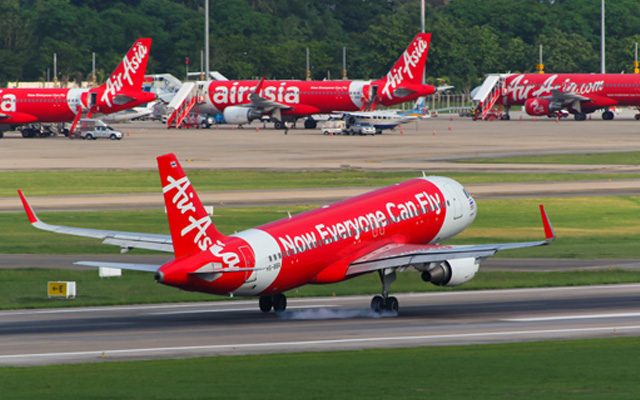
AirAsia has partnered with digital transformation company GrayMatter to launch Scan2Fly, a cloud-hosted technology that determines a passenger’s eligibility to fly before they arrive at the airport, thus facilitating a more seamless and contactless clearance procedure for travellers and staff.
With Scan2Fly, AirAsia passengers can scan and upload their medical certificates during the online self check-in process. This includes the corresponding processing of any required documents to verify whether the passenger is approved to fly by the various authorities and possesses a valid Covid-19 Negative Certificate.
The system has gone live for a number of AirAsia flights from Malaysia’s KLIA2 Airport to/from Singapore as well as to/from Surabaya. It will soon be offered for flights to and from Jakarta, as well as other AirAsia destinations where valid travel documents are required prior to travel.
Scan2Fly is among the airline’s latest technological enhancements to improve the customer journey in pandemic era. Other recent enhancements include automated bag drop services, roving technology for temperature checks, and biometric facial recognition technology for its passenger processing system through its strategic partner Vision-Box.
The airline is also working with Vision-Box to further deploy numerous other touchless experience systems, such as digital identity management across the airline’s travel and finance ecosystem.
Javed Malik, COO of AirAsia Group, said: “Innovation has always been in our DNA. Our digital transformation continues to gain momentum as we work hard to make travel in this new world more secure, hygienic, contactless and seamless than ever before by improving our digital capabilities which reduce costs and further enhance the customer journey. As we pivot into a one-stop travel and lifestyle platform, there are many more innovations in the pipeline which we will announce in due course.”

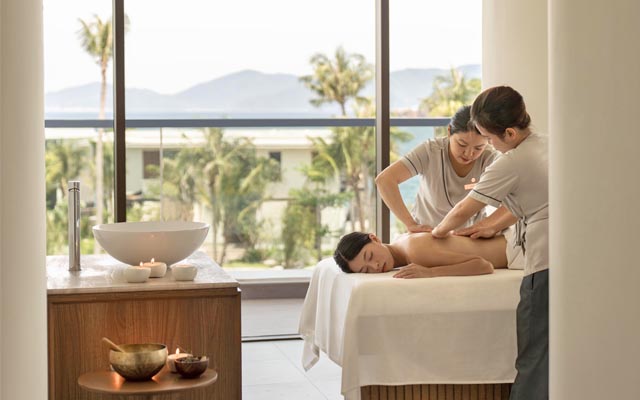






Visit Maldives has commenced a month-long global media campaign to promote the island nation as one of the most preferred tourist destinations to key global markets across various platforms.
These markets are India, the UK, Russia, Middle East, France, German-speaking markets, Turkey, Singapore, South Africa, Italy, Hong Kong and Asia-Pacific.
Under the slogan “Rediscover Maldives…the sunny side of life”, the campaign will utilise local and international media channels in mainstream and travel trade print to promote the destination in these key markets, said the Maldives Marketing and Public Relations Corporation (MMPRC) in a statement.
Key points highlighting the safety and unique selling points of the destination will be featured across several mediums including ads and advertorials placed on leading global publications. Alongside digital media publications, the decision to utilise print media was made as it remains a vital source in reaching travel trade across various markets. Emphasis will also be placed on all tourism products in the Maldives to showcase the unique experiences available to tourists.
An online brochure will be circulated which details essential information for tourists before their visit to the Maldives, including an introduction on the destination’s loyalty programme and Covid-19 travel insurance for tourists, as well as data on flight connectivity from various parts of the world. Furthermore, it will touch upon the international safety recognition the Maldives has received; the Safe Travels Stamp granted by the WTTC; and the Airport Health Accreditation by the Airport Council International.
According to recent data, over 50,000 tourists have arrived in the Maldives since the reopening of borders. With the gradual increase in tourist arrivals, MMPRC anticipates that this rate will “peak in the foreseeable future”.