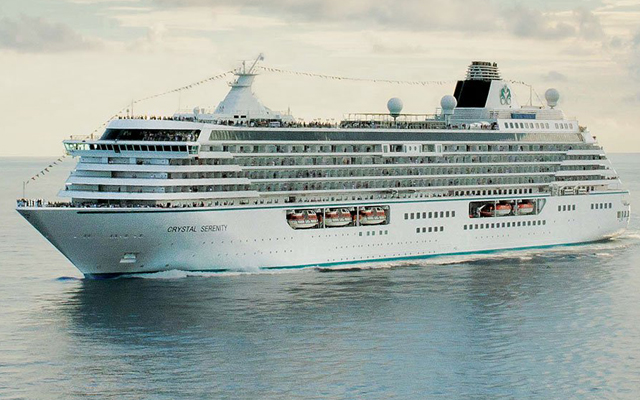
Crystal Serenity will sail 32 itineraries in 2023, including the 140-night Wild Kingdoms & Exotic Discoveries World Cruise
Crystal Cruises is now accepting bookings for her 2023 itineraries on board the 980-guest Crystal Serenity.
In 2023, the luxury ship will sail 32 individual itineraries, ranging from seven to 23 nights, covering the South Pacific islands, Africa, Egypt, Americana, New England & Canada, Mediterranean and the Caribbean.
Crystal Serenity will sail 32 itineraries in 2023, including the 140-night Wild Kingdoms & Exotic Discoveries World Cruise
Crystal Serenity’s 2023 voyages is now available for booking, with Crystal’s new Easy Book programme offering reduced deposits and waived admin fees for all new bookings made through June 30, 2020.
Highlights of Crystal Serenity’s 2023 deployment include the 140-night Wild Kingdoms & Exotic Discoveries World Cruise, which visits 73 destinations across 40 countries, departing from Miami, with alternative disembarkation options in Venice and Athens for 128- and 119-night itineraries, respectively.
From June through August, A connoisseur’s collection of the Black Sea, Mediterranean and Western Europe sails to Italy, Greece, Spain and Portugal, plus sojourns through the Black Sea, calling in Bulgaria, Romania, Georgia and Turkey.
Come September through October, the Autumn beauty in New England & Canada sailings journey to the epicentres and bastions of American history like Newport and Bar Harbor, the majestic forests, trails and waterfalls that cloak the coastline, and the contrasting big city life found in Manhattan, Boston and Québec City.
Year-end, from November through December, the Caribbean island escapes sails from one sun-kissed shore to another, stopping over at boutique ports like St. John, St. Barts, Antigua, St. Kitts, and St. Maarten.
Guests seeking extended journeys throughout the year, outside the full World Cruise, can combine multiple voyages for up to 100 days of luxury exploration without repeating a port.
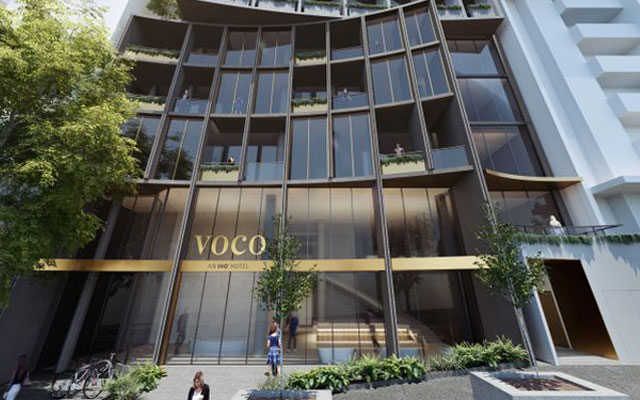
InterContinental Hotels Group (IHG) has signed its seventh voco in Australasia, partnering BEKL to open a new property in South Melbourne come 2023.
Rendering of voco South Melbourne which is slated for a 2023 opening
Situated at the northern end of St Kilda Road, the new-build voco South Melbourne will feature 171 guestrooms, restaurant and bar spaces, four meeting rooms, and a gym.
The hotel will be the brand’s second property in Melbourne, after voco Melbourne Central, which is currently under construction and slated to open later this year.
There was this joke I saw on Facebook a while ago about what pushed a company towards digital transformation. The options were: COE, CTO and Covid-19. Guess which ‘C’ was the catalyst?
Without downplaying the evil of the pandemic, we should also acknowledge how it has forced us into new ways of thinking that we may not have otherwise considered in good times.
In a short few months since the onset of Covid-19, people have acceleratated their technology adoption.
Those who had never worked from home are now remotely performing their tasks as they would in the office.
Those who had shied away from virtual calls are now familiar with Zoom, WebEx, Skype and other platforms used for official communication, and are even participating in virtual game nights with family and friends. Companies that had never seriously considered online meetings are going down that route swiftly and learning ways to make their next session better.
Those who had never participated in online shopping have now discovered a glorious new world of consumerism at their fingertips (save me!).
For Vox Group’s John Boulding, Covid-19 and the growing need for safe distancing have enhanced the appeal of self-guiding products. He has seen an about-turn in marketplace acceptance and his team has smartly sped up innovation to bring two new products to market. You can read about this on TTGAsia.com.
Covid-19 does not only have a hand in digital transformation. Between the human survival instinct of fight or flight, some travel companies have chosen to fight back in innovative ways, pivoting away from travel while retaining the flexibility to bring back its tourism arm or enhance its original forte as soon as the world is ready to wander again.
Trazy – Travel Crazy Korea, MAD Travel Philippines, and Joy Paradise Solution Japan have been exemplary in this regard.
Once tour operators, these companies are now raking in vital income through proxy shopping services offered in popular destinations people cannot visit at the moment, grocery and food delivery services that support local farmers and SMEs, and virtual educational tours that facilitate safe interactions with local communities and social entrepreneurs. Again, you can read about these on our website.
Such pivots require an open mind and courage – something we all need in times of crisis when normal ways of doing things can no longer work.
Here’s another thing we all need now – kindness. Remote working now is nothing like remote working pre-pandemic. Schools and child-minding services may be closed, jobs and income may be at stake, and people are stuck at home all day. Working from home really is taking care of the family first and foremost while trying to work. So if your colleagues or business partners have fallen short of usual standards, patience and kindness can save the day and everyone’s sanity.
What are you bringing from your time at Cathay Pacific to this new executive director role with Hong Kong Tourism Board?
I started in 1986 as a Cathay Pacific management trainee and spent half of my time overseas in postings to Mainland China, Thailand, Taiwan, Japan and New Zealand/Australia. During those times, one of my roles was to promote inbound traffic to Hong Kong which gave me some valuable experience in destination promotion.
After moving back to Hong Kong, the city saw a change of sovereignty in 1997 and fought against SARS in 2003. Throughout those days, I worked closely with Hong Kong Tourism Board (HKTB), serving as a board member for three years.
You stepped into the new role in such challenging times!
When this job was posted last year, I said to myself: ‘You can do that”. Many critics told me that it was the worst time to take on such heavy responsibilities, as a year’s worth of tourist traffic has being cut in half (by the civil unrest).
There were also others who said it was the best time to join as things couldn’t get any worse. Of course, at that time, nobody knew that the world’s tourism would collapse (because of the Covid-19 pandemic).
The gloom was a blow to me at first, but I’ve learnt to treat it as a test presented by Fate. I’m thankfully to be supported by a big team.
What do you hope to do at HKTB?
We need to renew our tourism branding. It’s not because of Covid-19, but because it is time for change since Hong Kong has been so successful in the last 15, 16 years.
It is time to reset, review and reposition ourselves. This includes changing some propositions and visitor experiences. For instance, we have a splendid harbour but our water activities have been weak in attracting tourists. The upcoming water taxi concept can reinvigorate the harbour experience.
Right now we are about to appoint a project manager – an outsourced firm – to manage this massive destination rebranding for us. Some exciting ideas will emerge within the next 12 months.
HKTB has unveiled a recovery plan for Hong Kong tourism. What aspects are you most excited about?
The three-stage tourism recovery plan will focus first on domestic tourism before expanding to create travel bubbles, where limited travel is allowed between specific tourist destinations where the outbreak is under control. Finally, the plan will tackle full resumption at the international level.
The HK$40-million (US$5.2 million) Hello Hong Kong campaign is scheduled to kick off in mid-June. It will encourage locals to explore the city, not just through wining and dining but also to discover the many hidden gems Hong Kong has.
The campaign has three main components.
First, we are giving away tips on in-depth, immersive travel across six themes. Next, we will have a first-ever one-stop online platform spiced up with over 11,000 offers from dining, shopping and entertainment merchants. That is followed by a spend to redeem free local tours exercise.
These are what we can do at this point when the city is ahead of the curve in combatting the virus.
We intend to use this down-time to rekindle our interest in and love for our home city. I hope to set the right ambience and send a positive message to overseas markets that Hong Kong is doing well and life is pretty much back to normal.
Establishing the right ambience is important because if it is not positive, people may hesitate to come
Is Hong Kong ready to form travel bubbles?
There are cities and countries that are considering bilaterally- or multilaterally-accepted travel protocol.
In fact, HKTB and the Hong Kong government are closely monitoring the situation in various tourist source markets. Factors that will be considered include quarantine, travel and immigration measures between Hong Kong and selected markets that are suitable for travel bubbles. So far, possible candidates include Mainland China, Macau, South Korea and Thailand.
But for longhaul markets, it will take a longer time to rebound as the US and Europe are still in different stages of lockdowns and border closures.
Do you think the road to recovery will be hard and long for tourism?
That’s a question on many destination players’ mind. The path to recovery will, undoubtedly, be very long. We are still talking about whether Hong Kong can start easing health and safety restrictions, such as social distancing, by the end of June or early July.
HKTB spoke about a relaunch in October with such big events as the Hong Kong Rugby Sevens and Clockenflap Music and Arts Festival. While I hope such drawcard events can be a reality, we need to think if, as we move closer into June, a full recovery is possible by October.
But as long as the situation permits, we would continue to push for these events to happen. They can also be major attractions for the domestic market to enjoy.
What is HKTB doing in terms of regional marketing?
We launched the #MissYouToo online social campaign to convey hopes of better times ahead. Our initial target is the local community and their social network overseas.
Our plan is to roll out this campaign in global markets in stages, and in consideration of the market’s pandemic control and containment. As soon as people in a specific source market are able to travel again, we will deploy targeted promotions and distribute information and offers under the Hello Hong Kong campaign. The offers will include special tour packages.
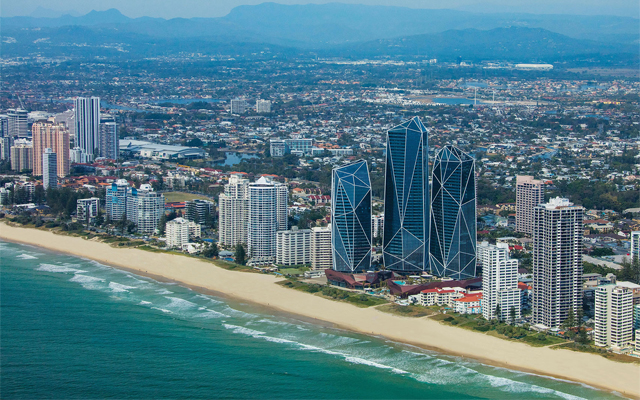
Langham Hospitality Group will be opening its third luxury hotel in Australia with the signing of a new property in Gold Coast.
Slated to open in late 2021, The Langham, Gold Coast will feature 169 rooms and suites in a beachfront property in Surfers Paradise. The group will also manage the Jewel Residences by The Langham which will consist of 170 serviced apartments.
The Langham, Gold Coast is slated to open in late 2021
Both the hotel and serviced apartments will be located in the central and tallest of the three towers of the Jewel development.
Catering to corporate and leisure travellers, The Langham, Gold Coast has a range of accommodation, from the deluxe room to the Presidential suite, offering a 180-degree vista of the Pacific Ocean.
Developed by AW Holding Group, the property will feature restaurants, a casual grab-and-go café, a lobby lounge, a pool bar, and a podium sky terrace with bar overlooking the ocean.
Headlining the culinary offerings will be T’ang Court, the signature Cantonese restaurant, which will feature a 90-seat main area, and two private dining rooms. Other F&B venues will include Palm Court, the lobby lounge and bar; an all-day dining restaurant serving international cuisine, a pool bar, and an 80-seat outdoor bar.
On the wellness front, a 500m2 spa will offer seven private treatment rooms, a health and beauty centre, a fitness centre, as well as an indoor free-form and outdoor swimming pools.
For social or corporate events, the hotel will showcase a 700m2 ballroom, a 500m2 multi-function room, and four meeting rooms spanning a combined 450m2.
The Jewel Residences by The Langham offers options for one-, two-, three- and four-bedrooms, each featuring living and dining rooms, a kitchen, and a private balcony. All guests staying at the residences also have full access to the hotel’s facilities.
Travel agencies using Amadeus’ B2B Wallet for virtual payments now benefit from advanced process automation
Amadeus has integrated Troovo’s advanced Robotic Process Automation (RPA) engine into its B2B Wallet, allowing its travel agent users to benefit from faster automated payments.
The introduction of RPA means key data relating to each payment and booking can be moved between the booking system and the airline passenger service system (PSS) or the hotel property management system (PMS) automatically by a software robot.
Travel agencies using Amadeus’ B2B Wallet for virtual payments now benefit from advanced process automation
Software robots are a light-weight tool that can quickly be configured to complete basic business processes, such as entering a 16-digit virtual card number, or travel booking details, from a travel agency system into an airline or hotel system to complete a payment.
This automation avoids error-prone human processes or traditional systems integration work, which can take longer. The data transferred includes virtual card information that is written back to the booking system as well as transaction data provided to the travel supplier and the card-issuing bank.
Combined with Amadeus’ B2B Wallet solution, it enables travel agencies to pay suppliers using the right virtual card for that specific booking scenario – be it pre-paid, credit or debit – in the most efficient way.
Troovo can be deployed easily within the travel provider’s payment processing workflow to provide a completely virtual solution for generating and processing payments.
Amadeus B2B Wallet customers can now enjoy the significant commercial, risk management and data visibility benefits of B2B Wallet, alongside the operational cost savings and simple integration capabilities of Troovo Payments.
Damian Alonso, head of payer services, payments, Amadeus, said: “Even though our industry is in challenging and uncertain times, payment innovation has remained resilient given the typically low implementation burden and incremental contribution towards both cost reduction and revenue collection. As we navigate the pandemic and begin to reimagine how travel agencies pay providers, it’s important we strive for the most automated and efficient approach possible.”
Troovo’s co-founder and CEO Kurt Knackstedt added that virtual payments “eliminate inefficiencies while providing a whole new level of security, data richness and ease of use, thanks to RPA”.
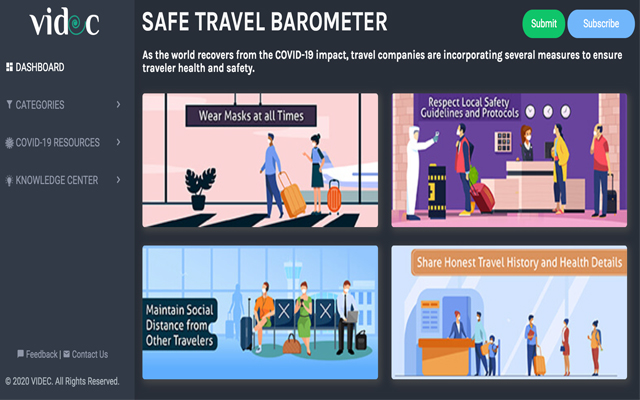
Advisory and analytics firm VIDEC has launched the Safe Travel Barometer, an interactive dashboard that charts the Covid-19 health and safety initiatives of over 100 travel companies worldwide as part of efforts to restore consumer confidence.
The free-to-use dashboard includes the latest updates of various safety measures for travellers rolled out by the companies, with more than 100 entries across airlines, hotels, cruises, airports, and amusement parks.
Travellers can now track health and safety measures rolled out by destinations with VIDEC’s safe travel barometer
Virendra Jain, co-founder and CEO, VIDEC, said: “Covid-19 has changed how we travel. Traveller health and safety measures are at the heart of our new normal, but it is also a complex maze.
“The Safe Travel Barometer is an independent dashboard of the initiatives announced and enacted by various companies and destinations, applicable to both travellers and the industry.
“It is heartening to see the industry implement traveller safety measures, even as they may vary widely by categories, and often within the same market! Having an overarching view of the implemented measures is essential for our industry to revive traveller confidence and regain trust.”
Travel companies are invited to submit their own related entries via Microsoft Forms to be included in the Safe Travel Barometer.
Hotels, resorts in the Philippines who want to operate under the MGCQ will need to secure certification from DOT
The Philippine Department of Tourism (DOT) and Tourism Congress of the Philippines (TCP) on Tuesday said all hotels and other accommodation establishments in areas under the modified general community quarantine (MGCQ) need to secure a certificate from the DOT prior to resuming operations.
Application for such accreditation is free; and businesses who resume operations without the certificate will be subjected to relevant penalties under applicable laws, the duo said in a joint statement.
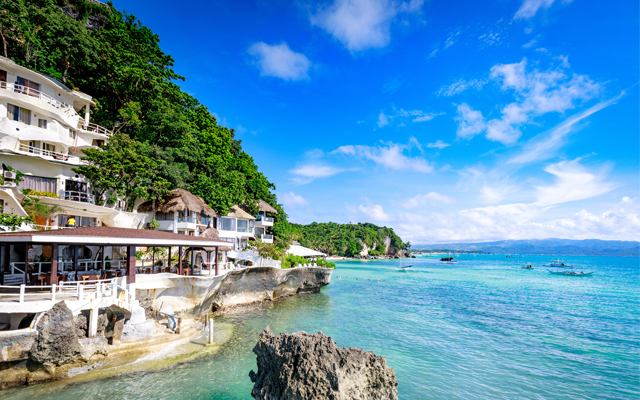
As Philippine destinations like Boracay (pictured) ease into modified general community quarantine, hotels and resorts across the country who want to resume operations will need to secure certification from DOT
DOT–accredited hotels and other AEs need only to submit to the DOT Regional Office with jurisdiction over their area the Letter of Intent to Operate, while Non-DOT-accredited hotels and AEs will need to apply for accreditation to ensure compliance of basic requirements, it added.
As the country gears up to push domestic tourism, all AEs are required to comply with the DOT’s health and safety guidelines for accommodation establishments, based on protocols issued by WHO and the Department of Health.
Tourism secretary Bernadette Romulo-Puyat reiterated that tourism stakeholders must work closely with their respective local government units to assess the readiness of their areas to support resumption of tourism activities.
Moreover, the DOT and TCP enjoined tourism stakeholders to defer to the strict guidelines issued by the Inter-Agency Task Force on Emerging Infectious Diseases on reopening of businesses while transitioning from one community quarantine level to another.
To reduce the environmental impact of single-use glass bottles for high-end spirits, Four Seasons Hotels and Resorts (FSHR), Asia-Pacific, is teaming up with ecoSPIRITS to implement an innovative packaging and distribution system for its properties in the region.
The pioneering low-carbon and low-waste distribution technology by ecoSPIRITS can lower the carbon footprint of spirit consumption at the group’s regional properties by up to 80 per cent, said FSHR in a press statement.
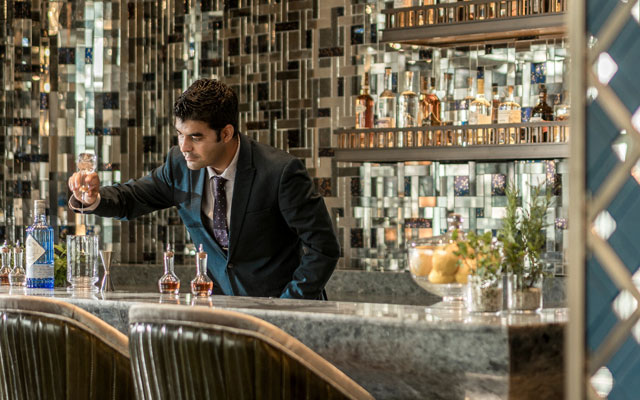
Four Seasons Asia Pacific leverages ecoSPIRITS low-carbon, low-waste distribution technology to reduce carbon footprint of alcohol consumption in its properties; Bar Trigona, Four Seasons Hotel Kuala Lumpur pictured
Not only does the technology take away the need for glass bottles – typically used once to contain high-end spirits and discarded to landfills – it also removes the need for cardboard packaging by using a reusable, stackable container called ecoTOTE.
At small-scale, local ecoPLANT facilities, the premium spirits are poured from bulk containers into the four-and-a-half-litre ecoTOTEs. Bartenders then refill their bottles using the totes. The packaging and distribution method helps to improve shipping efficiency.
The hospitality group has kicked-start the switch to the new technology at fourteen of its properties in the region, with more properties to follow, shared Philipp Blaser, vice president-food and beverage, FSHR, Asia-Pacific, in the press statement.
Of the transition process, Blaser said it was “seamless with very few changes required in back-of-house”.
Paul Gabie, CEO, ecoSPIRITS, said in the statement that the technology will help to “eliminate a small portion of the 22 million tons of carbon emissions that (such bottles) will generate in 2020” worldwide.
Travellers will have to jump through several hoops before getting onto a flight.
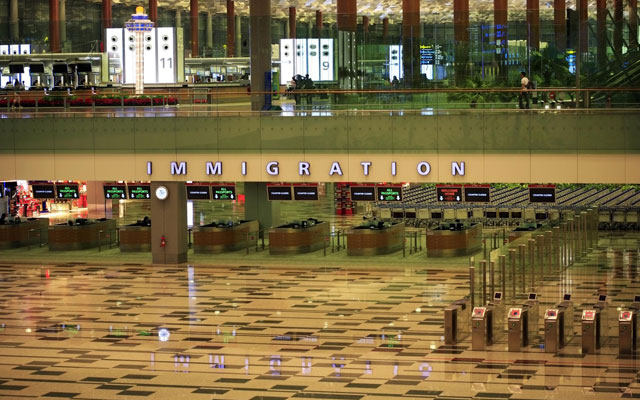
immigration lanes at Changi Airport
Access available only for essential business and official travel
Layers of approvals as well as health and safety measures in place as safeguards against cross-border transmissions
Trade desires for “fast lane” to be created for select Asia-Pacific cities too
Singapore’s move to launch a “fast lane” between the city-state and China to facilitate essential business and official travel between both countries offers a glimmer of hope for travel agents in Singapore.
Launching on June 8, 2020, the “fast lane” will be first established between Singapore and six Chinese provinces and municipalities – Shanghai, Tianjin, Chongqing, Guangdong, Jiangsu and Zhejiang – and gradually expanded to other Chinese provinces and municipalities.
Business travellers on Singapore-China “fast lane” will have to jump through several hoops prior to flying; immigration lanes at Changi Airport pictured
As well, both parties have agreed to explore the increase of air links between the two countries for the “fast lane”.
The move comes as Singapore enters phase one of its post-circuit breaker, and moves cautiously to reopen its borders by exploring “fast lane” arrangements with a few other countries, allowing for quarantine-free, cross-border travel to reboot their economies.
China is the first country to establish a green lane with Singapore. With the arrangement, Ker Joo Kheng, general manager of Prime Travel & Tour, said that he is “seeing light at the end of the tunnel”, adding that the move is “essential to reactivate our economy and people’s livelihoods” and will “inject a booster to the aviation sector”.
Agreeing, Simon Er, general manager, business events & marketing, Global Travel, said: “This is a positive step towards reopening of borders for travel, especially business travel as China is a major trading partner of Singapore. It might also form the basis of opening more green lanes with other countries.”
He added: “Opening of green lanes will provide some form of business, especially to corporate travel management companies. As for the aviation industry, we might see more airlines restoring some flights.”
However, Er noted that the move is unlikely to have a major impact on the general tourism industry as it is currently limited to essential business travel.
Martin Zhao, chairman & CEO of Sino Elite Travel Services, which specialises in bringing Chinese delegates to Singapore for conferences and exhibitions, said though the “fast lane” is only limited to essential business travel, the move “heralds a good start” and signals the determination of the two governments to resume exchanges.
Zhao added: “Part of our company’s inbound sales belongs to business travel, and we hope that under this agreement, our related business can be gradually restored.”
Limited and heavily-controlled access
While the travel trade applauds the bilateral pact, the move has drawn sharp criticism among nervous netizens in Singapore who regard the travel bubble with the birthplace of the global pandemic as unwise and “risky”.
Downplaying these concerns, Ker stressed: “I believe the majority will agree that China has contained the virus well and domestic travel is recovering. It’s not an easy decision, but eventually, the border needs to be reopened in order to activate the economy.
“Reasonably, China has progressed with low community infections and imported cases; whether or not it links to the outbreak is no longer important.”
Er echoed that sentiment: “Singapore must have considered all factors and procedures before embarking on opening this green lane with China. One factor could be the ability and speed in formalising procedures and protocols between the two governments to ensure safe passage of travellers.”
On June 3, the Singapore government outlined the necessary safeguards for the Singapore-China “fast lane” to prevent cross-border transmission.
For starters, the company or government agency sponsoring the trip must apply for approval with the local authorities on behalf of the applicant, announced Singapore’s Ministry of Foreign Affairs and Ministry of Trade and Industry in a joint press statement.
Approved applicants from both sides must then apply for a travel visa, if required, and submit their health declaration to the local authorities before arrival at the host country.
Travellers from either country must take a Covid-19 swab test 48 hours before departure, and another upon arrival at their destination, after which they must remain in isolation at specified accommodations for one to two days until the test result is out. They are also required to use the respective country’s contact tracing app for the duration of their stay.
In addition, travellers must adhere to a controlled itinerary for the first 14 days, and may not use public transport, except for private hire cars/taxis or cohorted company transport.
In a Facebook post on Wednesday, Singapore’s foreign minister Vivian Balakrishnan said: “The gradual and safe reopening of our borders will help underpin Singapore’s position as a safe and reliable business, financial and aviation hub for the region.”
Hopes for expanded “fast lane”
To further stimulate the faltering tourist industry, both Ker and Er expressed hopes that Singapore will extend the travel bubble to its regional neighbours.
Said Ker: “South-east Asia and Japan are the top destinations for business travel for many Singapore firms as well as foreign companies. In our case, up to 70 per cent of corporates travelled to these countries.”
Er added: “Singapore should look at (bubbling with) regional countries such as South Korea, Taiwan, Australia, New Zealand and some South-east Asian countries which show promise in managing the pandemic as well as being major trade partners.”
Singapore’s Health Ministry on Wednesday reported 569 new Covid-19 cases, bringing the country’s tally to 36,405. Its death toll stands at 24.