TTG Asia
Asia/Singapore Monday, 12th January 2026
Page 980

Malaysia’s trade says US$8.2 billion stimulus “insufficient” to buoy tourism sector

0
Malaysia's fresh US$8.2 billion stimulus not enough to buoy the tourism sector, which is only poised to recover from the pandemic in 2021, says trade

Tourism players in Malaysia have criticised the RM35 billion (US$8.2 billion) stimulus package unveiled on Friday to boost the economy reeling from the impact of Covid-19 as inadequate to sustain the hard-hit sector.

The package was announced by the prime minister, Muhyiddin Mohd Yassin, on Friday, and encompasses 40 initiatives. Out of the total, RM10 billion will be used as direct fiscal injections.
Malaysia’s fresh US$8.2 billion stimulus not enough to buoy the tourism sector, which is only poised to recover from the pandemic in 2021, says trade

Among initiatives of the short-term economic recovery plan unveiled on Friday included a three-month extension of the wage subsidy programme which allocates RM600 per worker. Employers in the tourism and other sectors who are not allowed to operate during the conditional movement control order can apply for the subsidy.

To assist the tourism sector, various tax incentives will be rolled out. For starters, a RM1 billion Penjana tourism financing (PTF) scheme will soon be made available to finance the transformation initiatives by SMEs in order to boost their competitive position in the new normal. Details of this scheme will be announced in July.

Other initiatives that will benefit the tourism and hospitality sector include a three-month extension of the deferment of tax instalment payments to December 31, 2020; a one-year exemption of tourism tax from July 1, 2020; and further exemption of service tax on lodging and accommodation services until June 2021.

As well, the government will grant individual income tax relief of up to RM1,000 for domestic travel expenses until December 31, 2021.

Although the trade welcomes the initiatives, they were quick to point out inadequacies and shortcomings of the plan.

The Malaysian Association of Tour and Travel Agents president, Tan Kok Liang, said: “We seek details on the mechanism of the PTF facility where we are looking at extremely low-interest rates or interest-free loans for digitalisation under the new norm where most procedures and sales are contactless, and are also done extensively through e-marketing platforms.

“Also, in order to remain competitive, investment in health and safety protocols is necessary to boost travellers’ confidence and simultaneously safeguard both employees and tourists.”

However, Tan pointed out that to date, for the allocation of the special relief facility fund under the previous economic stimulus package, there has been no drawing down of the fund yet for tourism players.

He added that he has received complaints from members that they were either disqualified for the fund or the allocation had been fully used up, urging the government to “monitor and supervise this funding facility to ensure fairness to all”.

He added that the tourism tax and service tax exemptions will inject a booster to the tourism industry in 2021 when demand picks up, with the reopening of regional and international borders.

Extension of income tax relief for tourism expenses will also “rejuvenate the local tourism industry”, but Tan said that “the conditions should include spouse and children”. “The eligibility should also be limited to tour packages bought from licensed travel agents and tour operators which include hotels, tours and transfers to ensure effectiveness,” he added.

On the extension for deferment of tax instalment for the tourism sector, Tan pointed out that it would be more helpful if taxes made payable for year of assessment 2019 was set off against current period losses.

“As tourism companies are in a tax loss position, they will also not be able to enjoy tax relief or incentives for Covid-19 testing and purchase of PPE and thermal scanners, and renovation of business premises. Government grants or subsidies would be more appropriate under these circumstances.”

He also said that the three-month extension of the wage subsidy programme has to be reviewed again as the tourism industry will only recover by year-end. He also hoped that the government will continue with the staff retention programme.

Malaysian Association of Hotels CEO, Yap Lip Seng, said in a press statement that while the industry welcomes the new initiatives and extension of the wage subsidy programme, he deemed the amount of RM600 for another three months as “insufficient” to sustain the industry.

Yap elaborated: “The hotel industry has long proposed a 50 per cent wage subsidy for employees with monthly pay of RM4,000 or below, and 30 per cent for those between RM4,000 to RM8,000.”

He added that the government needs to develop a concrete plan to stimulate both domestic and international travel, ahead of the country’s reopening of borders.
SIA lands US$7.1b in fresh funds

0
SIA has raised US$10 billion in total to fight the coronavirus crisis.

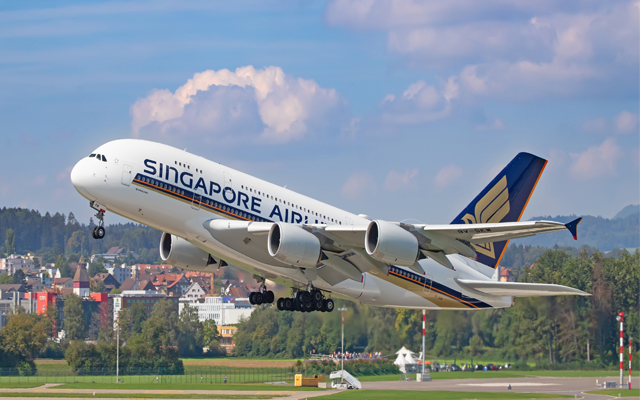
Singapore Airlines (SIA) has raised S$10 billion (US$7.1 billion) in liquidity through its recent rights issue, as well as a mix of secured and unsecured credit facilities, putting the national carrier “on a steady footing” to weather the Covid-19 storm.

On top of the S$8.8 billion the company secured via a rights issue on June 5, which was backed by Temasek Holdings, a further S$900 million was raised through long term loans secured on some of the airline’s Airbus A350-900 and Boeing 787-10 aircraft.

SIA has raised US$10 billion in total to fight the coronavirus crisis

The total of S$10 billion in financing secured by SIA is among the largest raised by any carrier to tackle the global pandemic.

In addition, the company said that it has also arranged new committed lines of credit and a short-term unsecured loan with several banks, which provide further fresh liquidity amounting to more than S$500 million.

As well, the maturity dates of all its existing committed lines of credit have been extended till 2021 or later, ensuring continued access to more than S$1.7 billion in liquidity, it added.

For the period up to July 2021, the company also retains the option to raise up to a further S$6.2 billion in additional mandatory convertible bonds, which will provide additional liquidity if necessary.

SIA also said that it “will continue to explore additional means to shore up liquidity as necessary” amid these uncertain times.

SE Asia tourism casts eager eye on Middle East

0
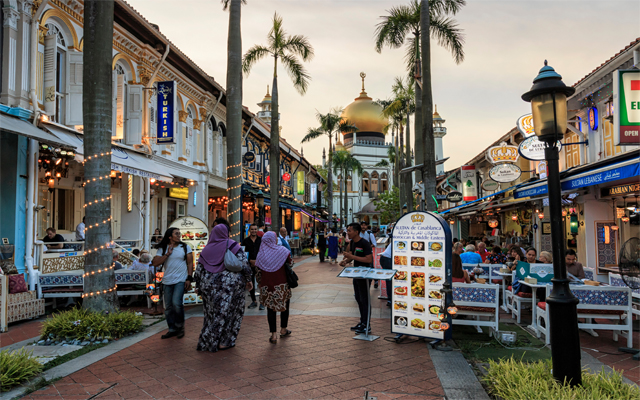
Singapore among South-east Asian destinations eager to capture the Middle-East market once travel resumes

South-east Asian destinations are prepping to grab a share of the burgeoning Middle East market once travel resumes by rolling out digital campaigns and holding talks with airlines.

At the inaugural Arabian Travel Market Virtual, representatives of national tourism boards from the Philippines, Nepal and Singapore said they are currently putting plans in place to tap into the huge potential the Middle East holds.

Singapore among South-east Asian destinations eager to capture the Middle-East market once travel resumes

According to a UNWTO study held before the pandemic, Middle East outbound numbers were slated to hit 46 million this year and 61 million by 2030. The region also boasts the highest average expenditure in the world, with Saudi Arabia alone expected to reach US$43 billion by 2025.

Nandini Lahe-Thapa, senior director at Nepal Tourism Board, said they are creating packages and revival strategies aimed at the region. The market has been split into three groups: expats, Indians working in the region who regularly send their family to Nepal, and Middle East citizens.

Direct marketing programmes are being built to target them and talks held with airlines and trade partners on the ground.

Said Lahe-Thapa: “This is a market we have strongly been looking at as we’re very well-connected with the Middle East with many flights. This is a huge potential market waiting for us.”

Beverly Au Yong, area director for the Middle East at Singapore Tourism Board, said the Middle East’s population is digital-savvy – an element they are using creatively to capture the market.

She added: “Our marketing campaign will continue to have a strong focus on the digital front. The Middle East market also rely on information from influencers and word-of-mouth from key opinion leaders, so these are things we will work on.”

Philippines to promote nature-based attractions and remote islands to the Middle East market post-Covid: Gonzales

Daks Gonzales, head of the office of product and market development for India and the Middle East at the Philippines Department of Tourism, said they plan to promote the Philippines’ wealth of nature and remote islands to the market.

He added that marketing stakeholders in the Middle East reported more than 70 per cent of clients are already looking into travel arrangements. He said: “As soon as regulations in place and supply chains start to open, I’m sure there will be demand from the Middle East region and we are ready.”

New GM and DOSM for Six Senses Con Dao

0
From left: Eric Hallin; and Hannah Loughlin

Six Senses Hotels & Resorts has appointed Eric Hallin as general manager and Hannah Loughlin as director of sales and marketing of Six Senses Con Dao.

With more than 40 years of international hospitality experience, Hallin’s management expertise spans an impressive list of countries, including France, Greece, Maldives, Spain and Thailand.

From left: Eric Hallin; and Hannah Loughlin

Aside from contributing to the success of properties such Six Senses Samui in Thailand, Hallin has also held leading positions in PATA, chambers of commerce and Skål.

On the other hand, Loughlin began her sales and marketing career in 2002 at London’s Grosvenor House before moving on to join Design Hotels, and spearheading the field team of prestigious hotels including Sofitel London St James, InterContinental, and Anantara Angkor Resort & Spa.

The British national was most recently leading the sales, operations and finance team in Cambodia as general manager for Trails of Indochina, a luxury inbound agency across Indochina.

Japan hotels, restaurants seek new revenue streams

0

Japan’s hospitality sector is adapting its offerings to include daily room use and takeaway services to bring in much needed revenue during the ongoing Covid-19 crisis.

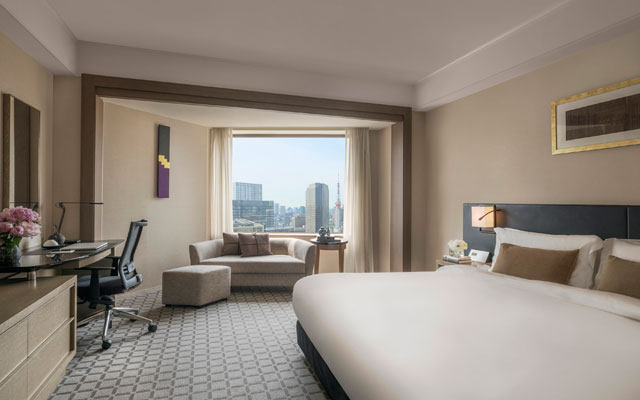
High-end hotels have rolled out campaigns inviting businesses to use their spacious, Wi-Fi-equipped rooms for telecommuting. The move is in response to the Japanese government’s call upon its people to work from home where possible to minimise viral transmission. Cramped homes or co-living with extended family has made this a challenge for some workers, prompting them to look for options outside the office.

ANA InterContinental Tokyo offers its guestrooms to businessmen who need a conducive space for telecommuting

In Tokyo, the ANA InterContinental offers half-day (three hours) and full-day (nine hours) plans for one or two people to use its twin or double rooms for remote working. The half-day plan costs 12,000 yen (US$110), while the full-day plan is priced at 19,500 yen. Users can also enjoy a 20 per cent discount for in-house restaurants and bars as well as room service.

Naomi Mori, manager of public relations and communications at the hotel, told TTG Asia she hopes the plans will increase the number of guests even a little at this difficult time.

The Hotel Granvia Osaka is also offering daily plans (nine hours) for remote working, from 8,500 yen for a single room and 10,000 yen for a deluxe single room. Extensions are available at 1,000 yen per hour until 20.00.

Full-service hotels are also providing dishes for takeout from their restaurants. Grand Hyatt Tokyo’s Fiorentina Pastry Boutique, for example, is serving seasonal soups and baked goods for takeout.

Caterers, meanwhile, are moving into B2C food delivery following the cancellation of in-person events.

Marybeth Boller, who trained in the kitchens of Michelin-starred restaurants and creates high-end cuisine for events in Tokyo, launched custom meal delivery service Nokasoul in April.

Although the idea for a custom meal business came last year, the pandemic forced Boller to “jump into the delivery service plan”.

She said: “I saw how every restaurant in New York closed in a matter of weeks. This made us move faster to launch.”

Once Nokasoul gets a regular customer base, Boller plans to offer catering again under the brand.

Global aviation downturn likely bottoming out: IATA

0

Demand for air services is beginning to recover after hitting bottom in April, driven by the uptick in domestic travel, according to IATA.

In what is an unprecedented decline, passenger demand in April (measured in revenue passenger kilometres or RPKs), plunged 94.3% compared to April 2019, as the Covid-19-related travel restrictions virtually shut down domestic and international air travel.

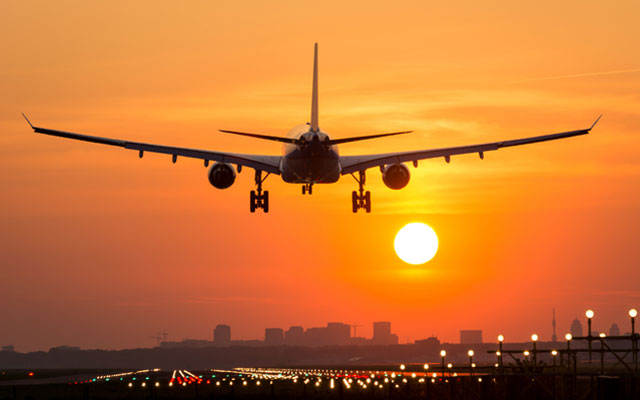
After April’s passenger demand trough, IATA reports first signals of uptick

More recently, figures show that daily flight totals rose 30% between the low point on April 21 and May 27, primarily in domestic operations and coming off a very low base (5.7% of 2019 demand).

While this uptick is not significant to the global dimension of the air transport industry, it does suggest that the industry has seen the bottom of the crisis, provided there is no recurrence, said IATA in a statement.

In addition, it is the very first signal of aviation beginning the likely long process of re-establishing connectivity, it added.

Alexandre de Juniac, IATA’s director general and CEO, said: “April was a disaster for aviation as air travel almost entirely stopped. But April may also represent the nadir of the crisis. Flight numbers are increasing. Countries are beginning to lift mobility restrictions. And business confidence is showing improvement in key markets such as China, Germany, and the US.

“These are positive signs as we start to rebuild the industry from a standstill. The initial green shoots will take time – possibly years – to mature.”

IATA calculated that by the first week of April, governments in 75% of the markets tracked by IATA completely banned entry, while an additional 19% had limited travel restrictions or compulsory quarantine requirements for international arrivals. The initial flight increases have been concentrated in domestic markets.

Data from late May show that flight levels in South Korea, China and Vietnam have risen to a point now just 22-28% lower than a year earlier. Searches for air travel on Google also were up 25% by the end of May compared to the April low, although that’s a rise from a very low base and still 60% lower than at the start of the year.

April international passenger demand collapsed 98.4% compared to April 2019, a deterioration from the 58.1% decline recorded in March; while capacity fell 95.1%.

Asia-Pacific airlines’ April traffic plummeted 98.0% compared to the year-ago period, worsened from a 70.2% drop in March; while capacity fell 94.9%.

European carriers’ April demand toppled 99.0%, a sharp decline from the 53.8% decline in March; while capacity dropped 97%.

Middle Eastern airlines posted a 97.3% traffic contraction for April, compared with a 50.3% demand drop in March; while capacity collapsed 92.3%.

North American carriers had a 98.3% traffic decline in April widened from a 54.7% decline in March; while capacity fell 94.4%.

Latin American airlines experienced a 98.3% demand drop in April compared to the same month last year, from a 45.9% drop in March; while capacity fell 97.0%.

African airlines’ traffic sank 98.7% in April, nearly twice as bad as the 49.8% demand drop in March; while capacity contracted 87.7%.

On the domestic front, traffic fell 86.9% in April, with the steepest declines registered in Australia (-96.8%), Brazil (-93.1%) and the US (-95.7%). This was a sharp deterioration compared to a 51.0% decline in March. Meanwhile, domestic capacity fell 72.1%.

China’s carriers posted a 66.6% year-on-year decline in traffic in April, little change from a 68.7% decline in March, but an improvement from the 85% decline in February.

Russian airlines’ domestic traffic fell 82.7% in April compared to April 2019. The slower shrinkage compared to the other markets is attributable to the later timing of the outbreaks in the country.

“For aviation, April was our cruelest month. Governments had to take drastic action to slow the pandemic. But that has come with the economic cost of a traumatic global recession. Airlines will be key to the economic recovery. It is vital that the aviation industry is ready with bio-safety measures that passengers and air transport workers have confidence in. That’s why the speedy implementation of the International Civil Aviation Organization’s (ICAO) global guidelines for safely restarting aviation is the top priority,” said de Juniac.

Accor sets to Reignite the Love of Travel

0

As travel demand starts to pick up, and hotels and resorts worldwide begin to reopen, Accor is preparing to launch a global campaign, Reignite the Love of Travel, in key markets worldwide this summer.

Introduced by its lifestyle loyalty programme, ALL – Accor Live Limitless, the campaign kicks off with a short film designed to reassure travellers, while creating desire to travel.

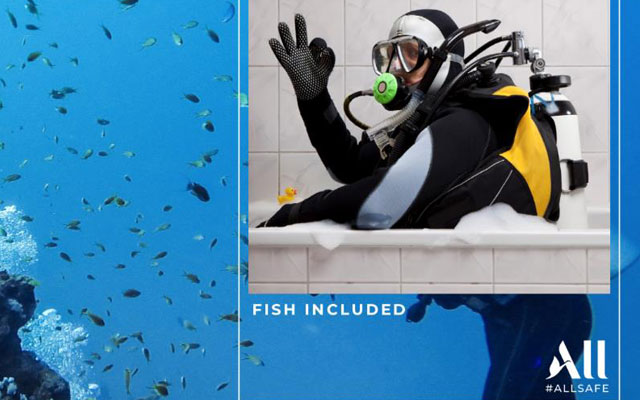
Accor’s Reignite the Love of Travel campaign will launch in key markets worldwide this summer

The initiative will launch with a social media campaign, inviting travellers to share their travel dreams and inspiration, which will be combined to create a montage-style travel film.

Steven Taylor, CMO, Accor said: “During the lockdown periods everywhere, we have been surprised to see so many people on social media sharing their cravings for travel with such uplifting humour and creativity. It was heart-warming for us to see that they were missing us as much as we were missing them.

“The message of our campaign then came naturally as we invested to prepare for the immediate holiday season as well as for longer-term bookings. Seeing the quick business recovery in China, we wanted to do our part to reassure our guests and to reignite the travel desire.”

Evolving to meet APAC travellers’ changing needs

0

Before unforeseen circumstances altered life as we knew it, travel in Asia-Pacific was booming. Valued at US$446 billion in 2019, Asia-Pacific’s travel market led North America and Europe and was projected to grow further in 2020. But the coronavirus pandemic changed all that – halting non-essential travel around the world.

This grinding halt touched every element of the market. In the airline industry alone, the fall in passenger numbers has resulted in global revenue loss in excess of US$63 billion. However, with travel restarting in regions like China, consumer confidence isbeginning to grow.

Covid-19 has changed the way people in Asia-Pacific travel, with a greater focus on safety and cleanliness, and demand for more booking flexibility

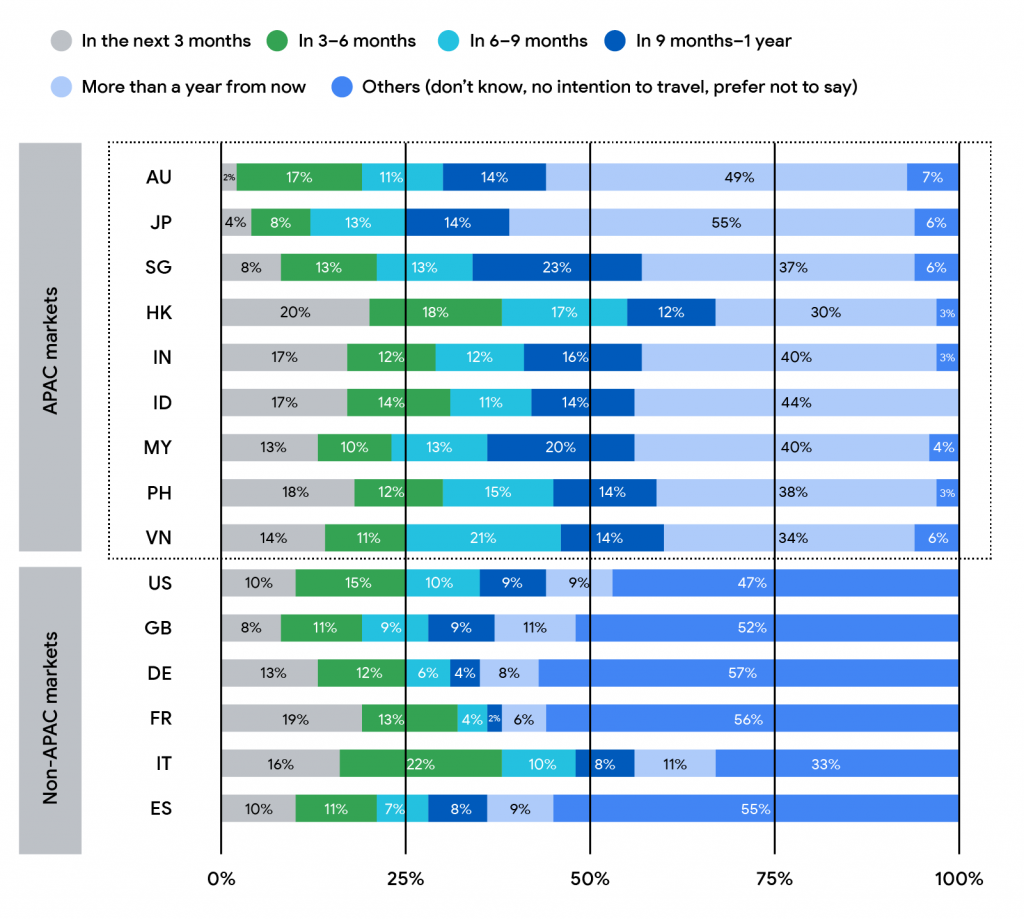
To better understand consumer sentiment around travel during the Covid-19 crisis, we’ve been conducting travel intent surveys across the world. While the majority of Asia-Pacific respondents said they don’t expect to travel in the next nine months, we identified pockets of shifting sentiment where respondents showed a higher willingness to travel sooner.

Paired with insightful data from a recent Global Web Index (GWI) study, our findings highlight emerging trends that travel companies should consider as we all navigate the road ahead.

Consumer sentiment around travel is shifting
According to our research, some markets in Asia-Pacific are expressing interest in future domestic travel. In Indonesia, India, the Philippines, and Vietnam, more than 25 per cent of respondents expressed plans to travel domestically in the next three months, compared with countries like Australia and Japan, where less than 14 per cent of them plan to do so.

Survey question: When are you next planning to travel domestically for a holiday?

This differing sentiment is also reflected in future international travel plans: Respondents in Indonesia, India, the Philippines, and Vietnam have indicated they are 1.5 times more likely than those in Australia, Singapore, and Japan to travel internationally in the next six months.

Travel is a priority for most consumers post-lockdown
According to the GWI study, booking a vacation is the top priority for nearly all surveyed markets with the exception of India, where buying consumer goods such as clothes and personal electronics has greater appeal. This sentiment is reflected around the world, with 45 per cent of people who delayed a vacation due to Covid-19 planning to prioritise booking a vacation or trip after the pandemic ends.

Search data indicates some early signs of recovery as well. In some Asia-Pacific markets, we’ve seen a gradual rise in searches around holiday planning. In Taiwan, searches for “hotels” are gaining momentum, while searches for “resorts” or “all-inclusive travel deals” are starting to pick up in Vietnam and the Philippines.

Consumer research has also highlighted some interesting age patterns: The older the consumer, the more likely they are to prioritise booking a vacation. While 29 per cent of baby boomers prioritise booking a vacation, Gen Zers are more inclined to focus on clothing (25 per cent) and smartphones (20 per cent).

People in Asia-Pacific expect to change the way they travel
The coronavirus pandemic has impacted the way people will approach travel-related decision-making: a whopping 87 per cent of Asia-Pacific consumers expect to make changes to the way they travel, compared with 67 per cent and 70 per cent in North America and Europe, respectively.

With consumer behaviours and expectations changing rapidly, travel companies need to adjust their strategies to meet consumers’ needs in meaningful ways. In addition to revealing how people currently feel about travelling, our research also uncovered three key ways for travel companies to approach their marketing efforts based on consumer insights.

1. Prioritise safety and cleanliness
Safety is top of mind for consumers around the world, especially as they get older: 65 per cent of baby boomers say a personal feeling of safety is by far the top confidence booster for resuming travel. But only 28 per cent of consumers say reopening borders will make them feel confident enough to travel again, so travel companies have to do more to make them feel safe.

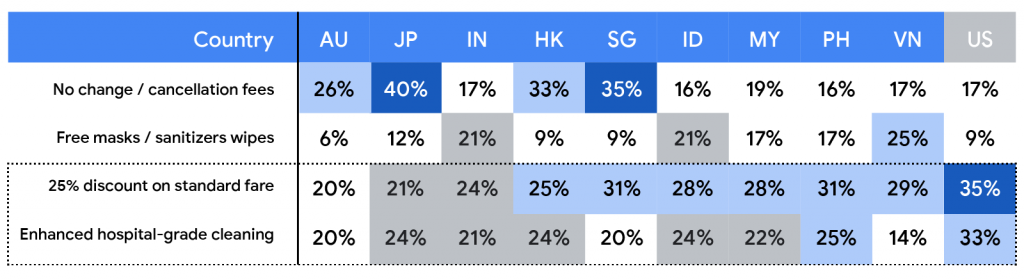
Survey question: Which of the following would make you most likely to book a hotel in the next three months?

One important contributor to this feeling of safety is assurance of higher cleaning standards. On average, 25 per cent of all people looking to travel in the next three months mentioned “hospital-grade cleaning” as a key driver for making a hotel booking.

2. Promote discounts and flexibility
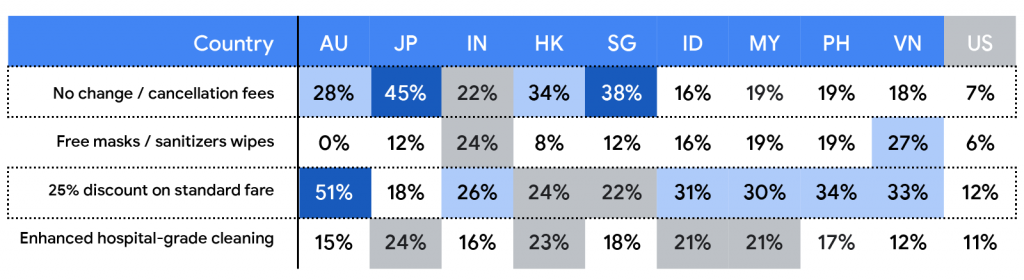
When Asia-Pacific consumers begin to consider travelling again, a key motivator for booking will be both the flexibility to make changes to bookings and the promotional discounts available to them. The chart below shows Asia-Pacific consumers listed discounted fares and waived cancellation fees as key factors for booking a flight within the next three months.

Survey question: Which of the following would make you most likely to book a flight in the next three months?

But just because Asia-Pacific consumers want discounts doesn’t necessarily mean they’re looking for cheap places to travel. While 25 per cent of respondents indicated plans to make more use of promotions, only 15 per cent claimed they were looking for cheaper vacations in the future. This indicates people are looking for more premium travel experiences that are still within their budgets.

3. Consider consumers’ short-term preferences
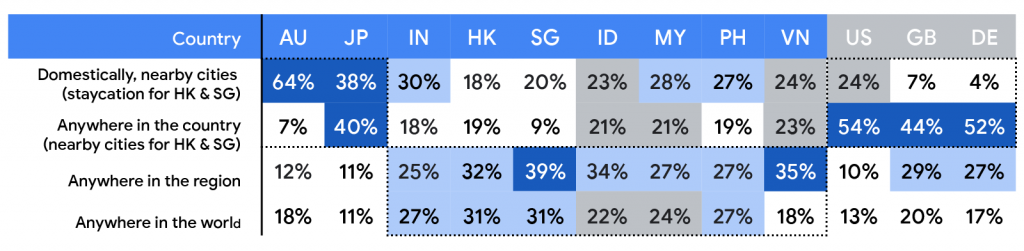
Both research studies indicate that 25–35 per cent of consumers’ first trips will be to nearby destinations such as staycations or places within driving distance. According to the GWI study, 42 per cent of Chinese consumers are planning to take more trips in their local area than they did before the coronavirus pandemic.

Survey question: If you were to travel in the next three months, where would you most likely travel to?

In addition to short-haul domestic travel, outdoor destinations are more appealing to people around the world: More than 50 per cent of all survey respondents said they would travel to a beach or other natural destinations if they were to book travel in the next three months.

Planning a path to recovery
As sentiment around travel begins to change, travel marketers need to stay agile to meet consumers’ needs in meaningful ways. By listening to people and reaching them with relevant information during this difficult time, travel companies can earn their trust and put themselves on the road to recovery. Below are three cost-neutral actions travel marketers can take to set themselves up for success in a post-Covid world:

1. Monitor trends
While complete global recovery is a long way off, travel “bubbles” offer a potential way forward in the meantime. Tools like Google Trends can help marketers navigate these bubbles and track consumer sentiment with real-time search data. For example, there has been a gradual rise of searches for “international flights to India” in Singapore. Marketers can also keep their fingers on the pulse of wider industry trends by attending virtual events like Google’s SME Leadership Academy travel webinars.

2. Rethink your messaging and targeting strategies
As seen in the data above, consumer behaviours and expectations can vary from market to market (and user to user). To succeed, marketers need to highlight what matters most to different people at each stage of recovery and adjust their messaging accordingly. With Director Mix, marketers can create customised videos at scale and swap out different elements to tailor content to specific audiences.

3. Improve your digital hygiene
Use this as an opportunity to restructure your marketing to be best in class. Clean your technical feeds and underlying account and campaign structures. Boost your coverage with auto-bidding and use tools to proactively communicate with travellers. To help our clients and users during the Covid-19 crisis, we are focusing on initiatives like updating ads to show when hotel rates are refundable and indicating whether hotels are temporarily closed on their Google My Business profiles.

Rohan Dhanuka, industry analytical head, travel and finance; and Christopher Siantar, analytical consultant, travel contributed to this piece.

Quarantine, inconsistent protocols hinder aviation recovery, say experts

0

As the aviation sector readies for take-off again, some experts assert that certain measures currently in place will significantly stifle the rate of recovery.

Speaking at a CAPA Centre for Aviation masterclass, Alexandre de Juniac, director general & CEO, IATA, opined that the 14-day quarantine measure for foreign arrivals – currently instituted in as many as 150 countries – poses a “complete destruction of air travel”.

Aviation experts say that Covid-19 quarantine measures will choke air travel demand

He expressed: “With published guidelines for health control and sanitisation for passengers, it is absolutely useless to have any quarantine measures. We are now strongly against them.”

de Juniac’s assertion references ICAO’s recently-released “Takeoff: Guidance for Air Travel through the COVID-19 Public Health Crisis”, an authoritative and comprehensive framework detailing a series of risk-based measures for air transport operations during the Covid-19 crisis.

Tourism bigwigs have rallied behind the Takeoff guidelines. IATA has joined hands with Airports Council International to develop a manual that can help airports and airlines integrate ICAO’s guidelines into their own operational manuals. As well, IATA will develop a certification to ensure that aviation players are properly implementing the guidelines.

In addition, WTTC is pushing its member states to implement and work with the ICAO guidelines. Gloria Guevara, CEO & president of WTTC, pressed that standardising such procedures is critical in rebuilding tourist confidence.

She said that transparent and consistent protocols across the entire travel journey is key to reviving trust in travel, much more than cheap airfares.

Standardised guidelines for air travel worldwide key to driving sector’s recovery, says WTTC’s Gloria Guevara during a CAPA Centre for Aviation masterclass

“Consumers want to know exactly what experience to expect, and (discrepancies) can create uncertainty. Looking to the past, after 9/11, travel took four-and-a-half years to fully recover because the governments didn’t work in a coordinated approach. (Customs clearance) standards were different around the world. That created uncertainty, which was one of the factors that impacted recovery,” Guevara added.

Standardised protocols could expedite the upswing of international travel, which she predicted could return as early as September 2020.

de Juniac forecasted that while 3Q2020 will see an expansion of domestic travel and restarting of continental markets, 4Q2020 will possibly see the return of intercontinental travel. He anticipated that by year-end, the volume of air traffic will reach 50 to 60 per cent of 2019’s numbers.

Crystal Serenity unveils 2023 voyages

0
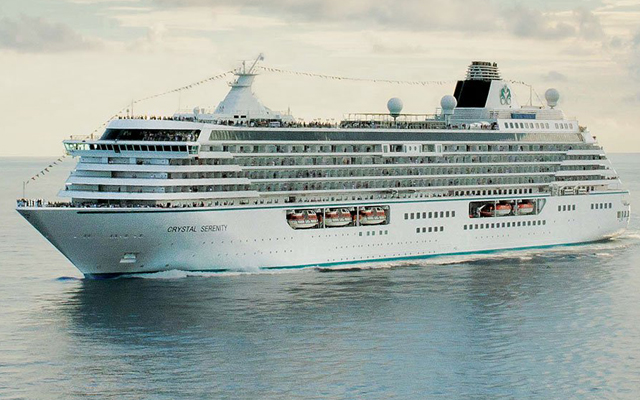
Crystal Serenity will sail 32 itineraries in 2023, including the 140-night Wild Kingdoms & Exotic Discoveries World Cruise

Crystal Cruises is now accepting bookings for her 2023 itineraries on board the 980-guest Crystal Serenity.

In 2023, the luxury ship will sail 32 individual itineraries, ranging from seven to 23 nights, covering the South Pacific islands, Africa, Egypt, Americana, New England & Canada, Mediterranean and the Caribbean.

Crystal Serenity will sail 32 itineraries in 2023, including the 140-night Wild Kingdoms & Exotic Discoveries World Cruise

Crystal Serenity’s 2023 voyages is now available for booking, with Crystal’s new Easy Book programme offering reduced deposits and waived admin fees for all new bookings made through June 30, 2020.

Highlights of Crystal Serenity’s 2023 deployment include the 140-night Wild Kingdoms & Exotic Discoveries World Cruise, which visits 73 destinations across 40 countries, departing from Miami, with alternative disembarkation options in Venice and Athens for 128- and 119-night itineraries, respectively.

From June through August, A connoisseur’s collection of the Black Sea, Mediterranean and Western Europe sails to Italy, Greece, Spain and Portugal, plus sojourns through the Black Sea, calling in Bulgaria, Romania, Georgia and Turkey.

Come September through October, the Autumn beauty in New England & Canada sailings journey to the epicentres and bastions of American history like Newport and Bar Harbor, the majestic forests, trails and waterfalls that cloak the coastline, and the contrasting big city life found in Manhattan, Boston and Québec City.

Year-end, from November through December, the Caribbean island escapes sails from one sun-kissed shore to another, stopping over at boutique ports like St. John, St. Barts, Antigua, St. Kitts, and St. Maarten.

Guests seeking extended journeys throughout the year, outside the full World Cruise, can combine multiple voyages for up to 100 days of luxury exploration without repeating a port.