Enhanced safety measures, contactless travel, pandemic preparedness and flexible air tickets are expected to take root in the future of air travel and transform the passenger journey, predicts Rashid Al Ardha, country manager for Singapore & Brunei with Emirates.
In this new episode of TTG Conversations: Five questions video series, Rashid also discusses how the airline is responding to these projected aviation trends, the critical need for airlines and governments to work together to reopen air routes to facilitate travel recovery, and how airlines have a positive contribution to the global fight against Covid-19.
Hong Kong-based airport services specialist, Plaza Premium Group (PPG), has entered into new partnerships that allow it to improve customer experiences at the airport lounges it operates.
Speaking to TTG Asia on its operational and strategic change, PPG’s global business development director, Jonathan Song, said the company’s move was encouraged by its consumer survey where 83 per cent of respondents said airport lounges and in-terminal hotels would be essential when travel resumes, due to the need for private spaces. Respondents also identified hygiene and safety in the airport as their highest priority.
Plaza Premium Group is expanding its global services network through partnerships and bringing O2O duty-free shopping possibilities to lounge guests
Bearing in mind new travel needs that have been shaped by new normals, Song said PPG has enhanced safety and hygiene protocols for its operations; brought in new digital initiatives such as self check-in capabilities, digital reading materials and smart F&B ordering processes; established a flexible refund policy for guests; and launched the Smart Traveler loyalty programme. For the latter two initiatives, PPG allows customers to convert unused lounge access purchased ahead of time into points that can be used to redeem for meet-and-greets, hotels and other services it offers.
It has also “embraced strategic partnership with various stakeholders”, added Song, citing collaboration examples with Dnata’s Marhaba to provide meet-and-greet services as well as airport lounges in markets that are not already on PPG’s network; and with UK-based YQ Now to further augment PPG’s airport meet-and-greet as well as airport concierge capabilities.
For airlines that are finding it hard to justify running their own airport lounges at the moment, PPG has struck contracts to help manage their premium passengers.
Song added: “Another interesting initiative is to integrate duty-free shopping and airport hospitality experiences by collaborating with travel retailer using O2O e-commerce. Instead of physically hopping around shops, guests come stay in our lounges and (access merchandise) at their fingertips. Their shopping is then delivered to the lounge or at the gate.”
Song told TTG Asia that PPG is keen on partnerships across a broad spectrum, from travel retailing, carparking and even currency exchange.
“(We want to provide a) one-stop-shop solution that will enhance the airport experience or help (our airport partners make) non-air revenue. From there, we will be able to sell and bundle lounge and hotel access with meet and assist services across different airports, extending our ability to take care of travellers throughout the airport journey,” he elaborated.
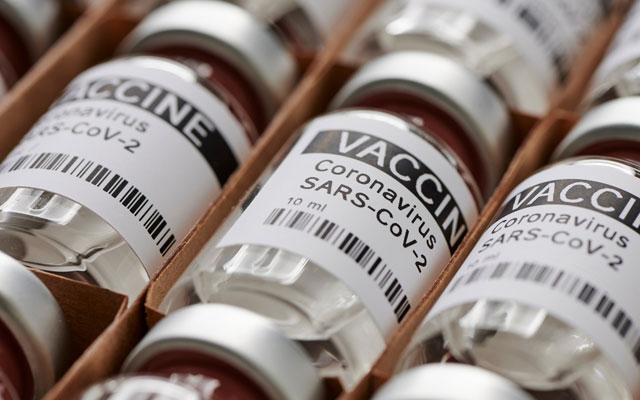
Malaysia’s National Covid-19 Immunisation Programme will kick off on February 24, two days ahead of schedule to drive the country’s economic recovery.
The first phase that runs up to April will inoculate frontliners, which could include teachers. The second phase, from April to August, is reserved for high-risk groups while the third phase, scheduled to start in May, are for the general public, aged 18 and above.
Malaysia will begin its national vaccination programme this Wednesday, ahead of schedule
By 1Q2022, an estimated 27 million Malaysians representing 80 per cent of the population, would have received their shots.
Tourism players say the national vaccination rollout spells a new beginning but the process of tourism recovery will be a drawn out one.
N Subramaniam, president, Malaysian Association of Hotels (MAH), told TTG Asia: “The national vaccination programme is surely the light at the end of the Covid-19 tourism tunnel but domestic travel recovery will only be felt from 2H2021 as vaccination for the general public is only scheduled to start in May. The timing of release of interstate travel is also a key to domestic travel recovery.”
MAH has projected average hotel occupancies to fall below 20 per cent in the first quarter this year.
Subramaniam did not foresee international borders reopening this year, other than for some business and essential travel. Thus, recovery for leisure arrivals and large-scale business events will be hindered, he opined.
Uzaidi Udanis, president, Malaysian Inbound Tourism Association president, was more hopeful. As many other countries had started their vaccination programmes ahead of Malaysia, he hoped Malaysian borders would reopen in 4Q2021, at least to allow intra-ASEAN travel.
Nigel Wong, honorary secretary-general at the Malaysian Association of Tour and Travel Agents, opined that the global roll-out of Covid-19 vaccines would boost people’s confidence to travel, both domestically and abroad, as well as bring about the resumption of life as normal at home.
Wong said the national vaccination programme would lead the recovery of domestic tourism first, followed by international travel.
The government is also looking into developing a Covid-19 vaccine passport for those who have been inoculated, something which Uzaidi said would further strengthen consumers’ travel confidence.
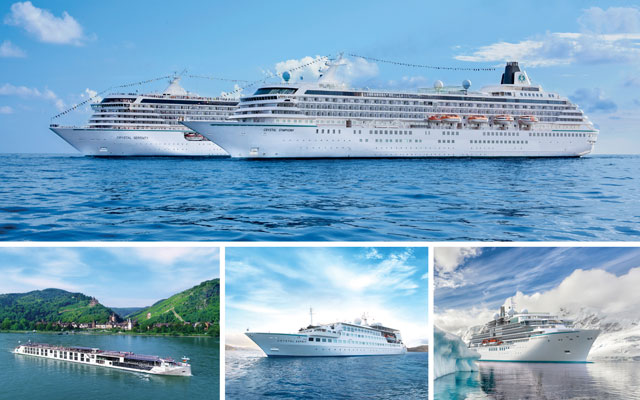
Crystal, which manages a range of luxury cruise lines, now requires all guests to be fully inoculated with a Covid-19 vaccine at least 14 days prior to their cruise, with proof of vaccination to be provided before embarkation.
The updated health and safety protocols also specifies that guests must have received both doses of the vaccine if recommended by the manufacturer by that timeline.
All guests wanting to sail with Crystal must show proof of vaccination
The compulsory vaccine requirement augments the company’s comprehensive Crystal Clean+ 4.0 measures, which includes negative Covid-19 tests for both guests and crew, pre-boarding temperature checks at the terminal, a nimble mask policy, social distancing, enhanced cleaning and disinfection measures, reduced capacity and more.
“We are encouraged by the progress being made with the Covid-19 vaccines and what this means for our Crystal Family and the travel industry as a whole as we eagerly look forward to exploring the world again,” said Crystal’s interim president and CEO, Jack Anderson in a press statement.
“We know that peace of mind is the greatest luxury, and the vaccine requirement is simply the best way to ensure the safest possible Crystal Experience for all on board. This sentiment is underscored by conversations with our guests and travel partners and a recent of (study) that revealed that more than 80 per cent of respondents would cruise if a vaccine were required,” Anderson added.
As of February 18, the company has voluntarily paused operations through May 2021 for its River fleet, into June for its Ocean ships, through August 1 for Crystal Esprit and through August for Crystal Endeavor, allowing most travellers sufficient time to get fully vaccinated before sailing resumption.
Crystal’s crew are expected to be vaccinated as well when the company resumes sailing, subject to their age and/or the availability of vaccines in their home countries.
“As part of the company’s Crystal Clean+ 4.0 measures, crew members will be tested for Covid-19 prior to leaving their home location to join the ship and must receive a negative result. They also will take a test at embarkation; quarantine for seven days upon arrival; be tested again at the end of that seven-day period and must receive a negative result before beginning their duties,” Anderson noted. “When vaccines are widely available, it will be a requirement of employment for crew, which must be completed at least 14 days prior to service.”
Crystal will continue to evaluate and update its health and safety protocols according to the latest scientific data and expert guidance.
The Standard, Huruvalhi Maldives, has appointed Jesper Soerensen to general manager for the property.
The Danish national with over 20 years of experience in the hospitality industry moved to The Standard, Huruvalhi Maldives from his role as general manager at the Six Senses Hotels and Resorts in Singapore.
Prior to that, Soerensen was general manager at the Shore Club beachside resort under the Morgans Hotel Group in Miami Beach.
Before moving to Miami, Soerensen served as the director of rooms for St Martins Lane, a Morgans Hotel Group property in London. He was recruited as front office manager and promoted to be responsible for the performance of the room division.
I Gede Ardika, who was Indonesia’s minister for culture and tourism from 2000 to 2004 has passed away on February 20, 2021, just five days after celebrating his 76th birthday.
He had been battling leukemia for some time.
I Gede Ardika passes on
Sandiaga Uno, the country’s present minister of tourism and creative economy, said Ardika has contributed much to Indonesia’s tourism industry development.
“He laid a strong foundation for the national development of tourism, (one that was based on) nature and culture. He was one of the pioneers in the development of rural tourism in Indonesia,” Sandiaga said.
Sandiaga noted that Ardika’s Village Tourism concept was presented to delegates at the UNWTO General Assembly in Santiago, Chile, with the endorsement of the Global Code of Ethic in 1999.
The former minister took a broad view on sustainable tourism and had consistently stressed the importance of this approach throughout his tenure as well as after, through seminars, lectures and articles in various media.
At one of his last keynotes for a webinar on responsible and sustainable tourism in Bali last year, Ardika said: “In developing tourism, we often forget the fundamental principles. We must must have a holistic view of tourism and not only from the economic point alone.”
He had also underscored the five Ps – People, Planet, Prosperity, Peace and Partnership – of UNWTO Sustainable Development Goals. “Tourism development must be able to empower the local community. In fact, they should be the one leading the industry,” he had said.
Accor will plant a Mondrian property in Singapore come early 2023, one of the first to open in the company’s next-phase expansion plans for the brand since its acquisition of sbe’s hotel brands in November 2020.
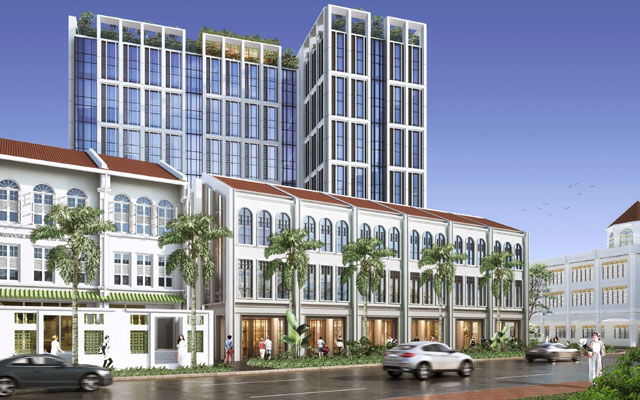
The 300-key Mondrian Singapore will be a luxury lifestyle hotel that combines historic architecture from Singapore’s centuries-old shophouses with a new build of modern, contemporary influences. Located in Duxton Hill, the property is being developed by Craig Road Property Holdings.
Mondrian Singapore promises various F&B experiences
Chadi Farhat, COO of sbe, said: “Mondrian is a natural fit for a global destination like Singapore. The property will provide a cultural hub of food and beverage experiences for locals and travellers alike. Mondrian Singapore will be more than a hotel; it will be a destination.”
A collaboration between DP Architects and Studio Carter, Mondrian Singapore will feature a three-story building in a contemporary take on Singapore shophouse building typology. This portion of the hotel features a terracotta roof and colonial-style window shutters, and will include the hotel’s premier guest accommodations in loft suites. There will also be a new, contemporary tower housing the majority of the hotel’s guestrooms as well as a rooftop pool, bar and signature restaurant. The two buildings will be united by an urban oasis landscape deck to remind guests of their location, as Singapore is known as a Garden City.
In addition to the rooftop pool, the hotel will also feature a speakeasy bar with a hidden entrance.
Besides Mondrian Singapore, Accor has recently announced the upcoming opening of Mondrian Shoreditch London in 2Q2021, Mondrian Bordeaux and Mondrian Cannes in France in 2022, and Mondrian Gold Coast in 2023. There will be more announcements coming soon for Mondrian properties in the Dominican Republic, Germany, the Maldives, Puerto Rico, Switzerland, Thailand, and Vietnam.
Demand for experience-based travel, particularly in the areas of well-being and the great outdoors, has been growing pre-pandemic, prompting Tokyo’s tourism sector to work hard at securing its share of the market. Opportunities for unique experiences and activities now abound in the Japanese capital, including in rural and off-the-beaten-track parts of the city, giving even the most adventurous and curious travellers something new to try.
As Tokyo has more than 100 rivers and canals flowing beneath her, experiences centred on her waterways have enjoyed particular growth. Tokyo Great Kayaking Tour offers day and evening tours in the canals while Outdoor Sports Club Zac offers SUP (stand up paddle) experiences and tours in the vicinity of Tokyo Sky Tree.
Wide, open landscape on Hachijojima island, Tokyo
Before the outbreak of Covid-19, Tokyo Great Tours, which operates outdoor sightseeing tours on kayaks and bicycles as well as by running, had enjoyed a boom in sales. Yukiko Koezuka, owner and guide, attributed growth to an increase in the number of visitors to Tokyo and demand from repeat visitors seeking new activities.
Once international travel resumes, she expects sales to rebound and continue to experience an uptick as people seek outdoors activities that promote a sense of well-being and allow for social distancing.
“Even during the Covid-19 situation, (local) people who have booked our kayak tours say they feel safe to join as they can keep their distance from others,” she said.
Tokyo is also preparing to welcome more tourists to her subtropical chain of islands, located about an hour by plane from Haneda Airport or up to 11 hours by boat from Takeshiba port in central Tokyo.
Tokyo Metropolitan Government has stepped up its promotion of the archipelago to tourists, while travel marketplaces like Voyagin have packaged itineraries and experiences under the slogan of “Tokyo’s Island Getaway.” These experiences include outdoor pursuits such as hiking, scuba diving and meeting sea turtles as well as classes to make island silk or prepare fresh mountain herbs. There are also night activities such as night snorkelling and a starlight and forest exploration tour.
Tokyo can expect to see more of such unique offerings as travel businesses prepare to attract tourists back in confidence after the pandemic, according to industry experts. Options that allow people to be outside or in small, well-managed groups with infection control measures are likely to be the first to recover, even more so if those options are for something that visitors cannot enjoy elsewhere.
Kyoko Nagano, founder of Mypal Inc, a Tokyo-based agency for Japanese cultural experts and tourism-related business, hopes to resume the company’s vast range of traditional craft, cooking and cultural classes, some of which attracted more than 200 tourists per month in 2019.
Two classes popular for their uniqueness were incense making and kodo (the way of incense), one of the three major classical arts along with sado (tea ceremony) and kado (flower arrangement) that women of refinement were expected to learn in ancient Japan. Kodo involves burning incense and guessing its fragrance.
“Tea ceremony has become popular among tourists, but incense is not so known and there are few teachers of it in Japan,” Nagano said, adding that beginner classes hosted by a 90-year-old kodo master pre-pandemic were mostly attended by travellers from the Middle East and France.
Independent travel options and self-contained or exclusive accommodation are also seeing a boom due to the pandemic.
Jared Campion, founder of Tokyo-based campervan rental company Dream Drive, has seen a rise in bookings in 2020 and expects even better numbers this year.
“Japan has great roads, (many) hot spring bathhouses and amazing places to explore, so (she is) perfect for campervan travel,” he said.
And with so much to see and do in the capital, tourism players are working hard to encourage visitors to travel around rural as well as central Tokyo.
After a year of being homebound, travellers are looking to level up their travel plans in 2021 by splurging on luxury accommodation and destinations, and taking multiple trips, according to a TripAdvisor study.
The research was based on global traveller search behaviours and sentiment data across six markets, namely, the US, the UK, Australia, Italy, Japan and Singapore.
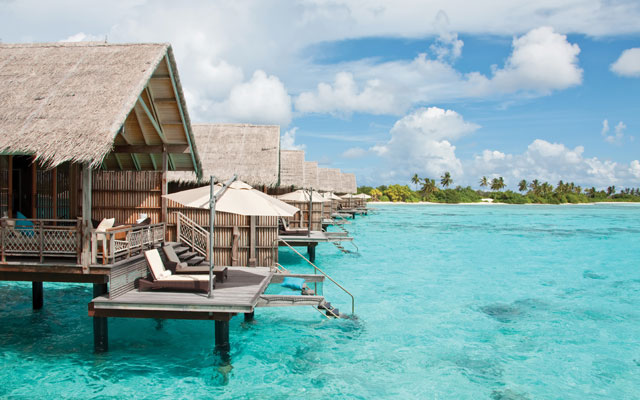
TripAdvisor search data reveals travellers in Brazil, Germany and Spain dreaming of a vacay in the Maldives
It found that having sacrificed vacation time in 2020, people want to make this year count by spending more on luxury lodging and far-flung destinations. Out with the weekend backpacking and budget hotels, and in with the beachside villas and picture-perfect locations.
Despite the financial impact of Covid-19 hitting many hard, in the first three weeks of January, global travellers on TripAdvisor were searching for pricier trips than they had during the same period in the past two years.
In fact, the average cost of a single future trip in 2021 that travellers globally are planning on TripAdvisor has jumped 13 per cent since January 2019. In the UK and Singapore, that rises even more significantly, to an increase of 64 per cent and 45 per cent, respectively, since 2019.
When looking at the international destinations showing the biggest increase in hotel searches for trips planned in 2021, based on searches in the first two weeks of January (versus the same period in 2020), it is clear to see where some of those dollars may be going.
In Asia-Pacific, travellers are longing for high-end trips to visit cities like Singapore, Bangkok and Dubai. Meanwhile, travellers in Brazil, Germany and Spain prefer the overwater bungalows and pristine waters of Bora Bora and the Maldives.
These same trends can be seen in the destinations that are popping up on the TripAdvisor travel wishlist – spots people have been “saving” on the platform in the last 12 months.
Some of the projected increased travel spend seen on TripAdvisor extends to the choice of accommodation, with more than one in ten (11 per cent) global travellers planning to go luxe on accommodation in 2021.
In fact, of the six nations surveyed, travellers from Singapore and the US are the most likely to have already booked a luxury hotel stay in 2021 – almost one in five have already done so (19 per cent and 18 per cent, respectively), compared to the global average of one in seven (14 per cent).
Search behaviour for luxe accommodations on TripAdvisor in January 2021 also reveal high search demand for luxury beach resorts and luxury spa resorts – which appeared to be recovering the fastest year-on-year.
The 2021 travel splurge is also apparent in the number of trips travellers plan to take throughout the year. More than a quarter of Singaporeans (28 per cent) surveyed said that they plan to take three or more international trips in 2021 – this is ahead of the global average of 24 per cent.
Val Anthony, senior research analyst, Tripadvisor, said: “2020 was a year the world’s horizons narrowed by necessity, but that has only made travellers everywhere more determined than ever to spend big on adventure and exploration in 2021, and we are seeing that in the trips millions are planning around the world.”
Accor is expanding its presence in the Philippines with the signing of Sofitel Cebu City, a 195-room luxury hotel which will debut in 2025.
A rendering of Sofitel Cebu City
Situated in the Cebu Business Park, the hotel will form part of the landmark mixed-use tower designed by architecture firm SOM.
The hotel’s entertainment amenities will include two restaurants, a lobby lounge, executive floor lounge and rooftop bar. Business travellers can benefit from a business centre, fitness centre, swimming pool and spa, while events come to life in the hotel’s meeting rooms and ballrooms.

















Crystal, which manages a range of luxury cruise lines, now requires all guests to be fully inoculated with a Covid-19 vaccine at least 14 days prior to their cruise, with proof of vaccination to be provided before embarkation.
The updated health and safety protocols also specifies that guests must have received both doses of the vaccine if recommended by the manufacturer by that timeline.
The compulsory vaccine requirement augments the company’s comprehensive Crystal Clean+ 4.0 measures, which includes negative Covid-19 tests for both guests and crew, pre-boarding temperature checks at the terminal, a nimble mask policy, social distancing, enhanced cleaning and disinfection measures, reduced capacity and more.
“We are encouraged by the progress being made with the Covid-19 vaccines and what this means for our Crystal Family and the travel industry as a whole as we eagerly look forward to exploring the world again,” said Crystal’s interim president and CEO, Jack Anderson in a press statement.
“We know that peace of mind is the greatest luxury, and the vaccine requirement is simply the best way to ensure the safest possible Crystal Experience for all on board. This sentiment is underscored by conversations with our guests and travel partners and a recent of (study) that revealed that more than 80 per cent of respondents would cruise if a vaccine were required,” Anderson added.
As of February 18, the company has voluntarily paused operations through May 2021 for its River fleet, into June for its Ocean ships, through August 1 for Crystal Esprit and through August for Crystal Endeavor, allowing most travellers sufficient time to get fully vaccinated before sailing resumption.
Crystal’s crew are expected to be vaccinated as well when the company resumes sailing, subject to their age and/or the availability of vaccines in their home countries.
“As part of the company’s Crystal Clean+ 4.0 measures, crew members will be tested for Covid-19 prior to leaving their home location to join the ship and must receive a negative result. They also will take a test at embarkation; quarantine for seven days upon arrival; be tested again at the end of that seven-day period and must receive a negative result before beginning their duties,” Anderson noted. “When vaccines are widely available, it will be a requirement of employment for crew, which must be completed at least 14 days prior to service.”
Crystal will continue to evaluate and update its health and safety protocols according to the latest scientific data and expert guidance.