Designing the hotel of the future

Good hotel design transcends ‘soft’ power and appeal; they can heavily impact a brand’s return on investment and guest loyalty. As economies around the world gradually reawaken and travel returns, the future of hotel design may be forever altered.
“Increasingly, the (hospitality) essentials will relate to hygiene, sanitation and operational reliability. In terms of Maslow’s hierarchy of needs, we’ve moved right back to the bottom of the pyramid – in the short term, at least – where safety and security are much more important than self-actualisation. Brands seen as able to guarantee standards of cleanliness will benefit,” opined Matt Turner, founder, AHEAD Awards.

AHEAD Asia recognises hotels and hotel facilities in the region that have effective design and features, and this year’s edition saw the judges convene via a virtual meeting.
While transparent and consistent hygiene standards are expected to become a mainstay in hospitality, customers are likely to continue to favour flexible, engaging spaces.
Turner added: “Effective design today must be from the point of view of delivering great guest experiences, rather than just design for design’s sake which (is to look) nice, eye-catching or unusual in some way.”
Meanwhile, Toby Smith, managing director of Swire Hotels and judge of AHEAD Asia 2020, remarked: “Appropriate design can have a huge influence on business performance, whether that be through maximising space, optimising efficiencies or (effecting) more aesthetic influences that shape a brand.”
Flexible and sustainable
A key feature that many customers are drawn to now is the appeal of flexible common spaces for both leisure and corporate guests.

Smith told TTG Asia: “Something that was repeatedly raised in our discussions was versatility in design or creating spaces that effectively accommodate guests at various points of their day or life.”
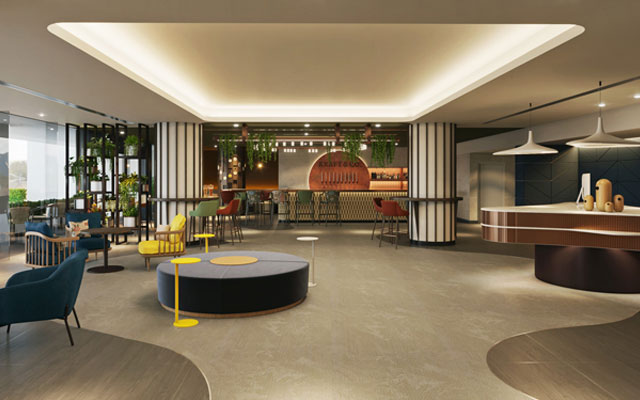
Notable examples of this include EAST Hotels’ Domain spaces, which function as cafés, meeting spaces, co-working zones and early evening bars, as well as UNION at The Opposite House in Beijing that provides an elegant environment with a variety of seating arrangements.
Consumers are also getting smarter when it comes to choosing sustainable stays. Providing environmentally-responsible amenities alone is no longer adequate; guests now pay attention to a hotel’s commitment to minimising waste and impact, even in its design.
“A sustainable approach is now table stakes. The degree to which sustainability is achieved is becoming more important and distinguishable, especially (among the) younger generations,” observed William Harris, founding partner, AvroKO and judge, AHEAD Asia 2020.
According to Harris, needing to be sustainable has driven hotels towards solutions that are more unconventional or register as more authentic. This has spurred hotels to redefine their offerings and do their part for the community, making the need for sustainability a “positive challenge”.
For instance, more properties are using natural and recycled materials, LED lighting, as well as renewable energy technology in their design. “Less talked-about features that are equally important include innovative water treatment and waste management systems,” said Nicholas Clayton, CEO, Capella Hotel Group, and judge, AHEAD 2020.
Visually, sustainability efforts can be communicated through “biophilic forms in hotels”, said Harris. These include outdoor experiences brought into the public spaces of hotels and resorts, such as indoor waterfalls, all-season terraces, rugged outdoor-style furnishing, oversized plants and panoramic views.
Such features also serve to help guests “feel soothed and balanced in a world where many people in urban settings can be spending up to 90 per cent of their days indoors”, explained Harris.
Personalised tech matters
No talk of the younger generation is complete without mentioning the need for technological integration.
As personalisation climbs in importance among well-heeled and discerning consumers, the use of technology has become ever more critical in creating the ultimate guest experience.
Casting his eyes into the future of hotel design, Clayton predicted: “Technology and personalisation will work in tandem. Going beyond pillow selection and customised toiletries, guests can expect to arrive in a room that’s set to their preference, from desired lighting to work and entertainment systems that mirror their standards back home.”
The main challenge, posited Smith, is being able to “successfully blend the digital with the human”, as people are ultimately social creatures who “thrive (on) face-to-face interaction”.
He added: “Creating vibrant, interesting spaces that ignite conversation is key, while at the same time harnessing the benefits of technology.”
Wave of the techno-future
The future has arrived, with the innovative use of artificial intelligence (AI) and technology in hotel spaces birthing automated experiences such as contactless check-in and check-out, facial recognition room entry, mobile controlled in-room services, as well as robots delivering housekeeping amenities and in-room dining.
What once was science fiction is now helping many hotels to improve the guest experience. Hilton’s Connected Room, being piloted in the US, for example, allows occupants to utilise a smartphone to control the room temperature and lighting, and even sync Netflix shows on the TV set.

Ben George, senior vice president and commercial director, Asia-Pacific, Hilton, said: “What I enjoyed most (about the Connected Room) was the fact that I was empowered and could control everything around the room swiftly and seamlessly without taking away the warm service and hospitality.”
That, he said, freed the concierge up to recommend and curate local activities, and for the hotel barista to better engage with guests about coffee preferences.
But even if travellers of the future have higher digital expectations, Ong Wee Min, vice president of conventions and exhibitions, Marina Bay Sands, believes technology will only remain an enabler to help companies improve operational efficiency and enhance guest experiences.
Ong stressed that it still boils down to the emotional bonds forged to retain guest loyalty.
For Pan Pacific Hotels Group (PPHG), its Guestroom Management System leverages smart devices and the Internet of Things (IoT) connectivity to provide an integrated and seamless automated solution to enhance operational efficiency and guest convenience.
Cinn Tan, the group’s chief sales and marketing officer, elaborated: “When rooms are vacant, the system sets the air-conditioning to an energy-efficient temperature.
“When a guest checks in and the room’s PMS (property management system) status changes to occupied, the system lowers the temperature so the room is comfortably cool when the guest enters. As the room’s motion sensor detects occupancy, lights come on automatically.
“When the guest leaves, the system switches off the lights and saves his/her preference, so the guest’s favourite ambience setting is launched the next time he/she returns.
“If there is a malfunction in the room, or when guests request for the make-up-room service, engineering and housekeeping staff receive real-time updates on their mobile, ensuring quick response time. The occupancy status on the system also allows them to service the room when it is vacant, minimising guest disturbance.”
Tan shared the system would be rolled out at the renovated Parkroyal Collection Marina Bay when it reopens in 3Q this year, adding that the system contributes to the hotel’s energy conservation efforts.
Looking ahead, Hilton’s George envisaged mobile-first experiences becoming the new normal. He noted digital services on the Hilton Honors app would continue to evolve and become more sophisticated for guests to personalise their experience.
He said: “By 2030, we will see these high-tech features being implemented widely around the world, potentially with added elements of VR (virtual reality) or AR being integrated into the rooms to provide personalised travel insights and recommendations.
“We are always excited to test-bed novel solutions that help to address guests’ needs and pain points. We launched our Innovation Gallery in 2017 to pilot new technologies, incubate, and prototype cutting-edge products – like noise cancellation and sleep improvement devices – to offer more options to enhance the travel experience.”
In the case of World Hotels, Melissa Gan, managing director, Asia-Pacific, said trial proof of concept for an AR experience was being carried out at member property, The Garden Hotel in Guangzhou.
Gan explained: “This hotel is extremely historical with many amazing stories and artifacts. AR (augmented reality) was used to enhance the guest experience to learn about the stories and artifacts (via) the guest’s personal smartphone and also to capture and record the experience.”
Gan predicts evolving technology will give rise to a-la-minute in-room cooking and housekeeping, health and wellness value adds.
“I envisage hotel rooms of the future in health and wellness resorts being able to use technology to plan individual experiences and goals on a great scale and with greater accuracy,” she said, adding that AR experiences and memories would be captured with AI.
In addition, PPHG’s Tan believes voice activation service would become more common.
“We already see the likes of Apple Homepod, Amazon Alexa and Google Home, where AI is leveraged to allow us to search and activate services through voice commands,” she remarked.
“In time to come, this will become more widely accepted with technology advances, lower costs and greater security, and we will assimilate this into our lifestyle.”
US loses its shine with Chinese tourists amid Covid-19
Short-term interest in travel to the US is down across most of the country’s key inbound markets, with the Chinese market posting the steepest fall, amid a continued rise in Covid-19 cases in the US.
Travel intent from China to the US in the year ahead tumbled by 18 per cent, shared Caroll Rheem, vice president of research and analytics for Brand USA, the DMO dedicated to marketing the US to international markets.

She was citing a recent customised study by Engine/ORC International at Brand USA’s recent Covid-19 Research Update webinar. Specifically, the year ahead referred to the 12-month period from the date the survey was held (June 11, 2020).
The survey compared travel intent at time of study to the 2019 average, with average probability proportional to size (PPS) figures. The decline of travel sentiment in the Chinese market surpassed that of Asia-Pacific markets Australia, India and South Korea, where intent dropped by five, six and two per cent, respectively.
Though travel intent to the US in Japan grew by three per cent, Rheem cautioned that much of that sentiment is likely directed towards the Pacific Islands such as Hawaii, Guam and Saipan – destinations familiar with the Japanese.

Amid the volatile tourism landscape, travel sentiment among Chinese travellers towards most of the US’ competing destinations also declined, falling to between zero per cent to eight per cent. This is a markedly lower decline than the -18 per cent fall in Chinese travel intent to the US.
This means the US’ market share in China outbound travel is set to shrink, even as Chinese outbound travel sentiment begins to stabilise. Intent to travel internationally among Chinese respondents for the year ahead has remained at -37 per cent for studies done across April, May and June, relative to the 2019 average.

Beyond the significant number of Covid-19 cases in the US, which affected travel intent to the country across all markets, specific reasons were not given for the drop in Chinese travel sentiment.
Chinese respondents who expressed uncertainty in making decisions to travel internationally over the next 12 months cited concerns over Covid transmission (more than 50 per cent). A dip in availability of activities and experiences and travel restrictions were also significant reasons, each selected by more than 40 per cent of respondents.
Nearly 20 per cent of respondents cited doubt over financial stability as the reason, while a similar number shared that they were unable to afford international travel in 2020.

Among those keen to travel in the year ahead, 80 per cent of respondents said rest and relaxation was the most important consideration when deciding on a destination.
This was followed by learning about different cultures, visiting distinctive attractions, getting in touch with nature, and keeping within comfort zones, each chosen by more than 70 per cent of respondents.

According to Rheem, travellers in general are expected to oscillate between the experimentation and decision stages of the Kübler-Ross Emotional Response to Change – a model of emotions and states that arise when faced with change – where they have information to make plans and decisions, but the environment remains volatile, leaving many still experimenting with new ways of adapting.
Travellers will likely start by engaging in smaller “experiments”, such as going on domestic road trips, before moving on to larger “experiments”, such as international travel, she reckoned.
As global consumers adjust to new travel norms, Oxford Economics predicted that the US international tourism market could take five years to recover to 2019 levels.
International arrivals and tourism spending are expected to bottom out in 2020, after plunging by 50 million and 75 per cent, respectively this year, shared Rheem.
US hospitality industry demand is expected to recover to 88 per cent of 2019 levels by end-2021, with a full recovery expected only in end-2023.
Recovery is set to be gradual amid border controls, continued hesitancy about international trips, and lingering effects of the worldwide economic recession, said Rheem.
Rheem cautioned the figures from Oxford Economics is based on the likelihood that pandemic conditions will improve through 2020, and that a downgrade would be necessary if cases in the US continue to increase.
For consumers, being equipped with information on pandemic conditions and having the confidence that risks and costs are of an acceptable level are pertinent prerequisites before international travel can resume, reckoned Rheem.
Some travellers may even want to go through Covid-19 tests before entering the destination and be willing to be tracked in their time there.
Destinations and tourism suppliers also need to work on increasing flight availability and working out procedures to ensure primary attractions and experiences can reopen and maintain a certain level of capacity.
On a policy level, promoting the recovery of international travel would involve removing travel restrictions for most travellers – including the widespread two-week quarantine measures – as well as ensuring cases remain low at both the origin and destination.
Rheem shared that the US Travel Association is working to standardise health and safety expectations and processes across various states, to avoid traveller confusion.
– Translated by Angela Teo; this article was first published in TTG China
Destination Capital plots acquisition spree in Thailand and APAC
Bangkok-based real estate advisory firm Destination Capital will join forces with its capital partners to acquire, manage and rebrand hotel assets in Thailand and across Asia-Pacific in a bid to revitalise the hospitality sector.
Destination Capital (DC) was recently formed as an investment fund to partner with private equity and institutional funds to source hotel acquisition opportunities and asset manage in the Asia-Pacific region, with an emphasis on Thailand. The company is part of Asia’s leading hospitality operator, Destination Group, which has a 24-year track record in Thailand of buying, repositioning, asset managing and selling hotels.

Destination Capital CEO James Kaplan said in a statement that the company will source assets that will reap higher returns after renovation and repositioning, with a focus on prime-located freehold hotels and resorts of approximately 200 rooms located in key urban and resort locations.
The company plans to acquire a portfolio of 12-15 four-star hotels over the next 18 months, with capital values ranging up to 1.5 billion baht (US$47.1 million).

Kaplan will leverage his global hospitality experience alongside the resources of Destination Group and its capital partners to attract domestic and international private equity, with a focus on acquiring, repositioning, and managing hotel assets in Thailand and elsewhere in Asia.
Thailand welcomed almost 40 million international tourists last year. However, recent estimates indicate 2020 international arrivals may plummet to as low as eight million, of which seven million have already arrived prior to the Covid-19 lockdown. The aviation and tourism industries have been disproportionately impacted, particularly in Thailand, where tourism accounts for almost 18 per cent of GDP.
Millions of people are unemployed, and thousands of hotel rooms are now shuttered, prompting the immediate need for fresh capital injections for hotels to re-employ and re-open as well as sustain operations during the projected prolonged recovery cycle.
Although the hospitality industry will be slow to recover as a result of the current situation, historically, Thailand has successfully rebounded from past crises, emerging more robust and more resilient.
“We believe a similar rebound story will be true with a full recovery in three to four years. We will deploy our resources to source and acquire hotels which present a turnaround story during this period of rebound,” said Kaplan who alongside his hospitality and real estate teams have a proven track record of asset acquisition and management of hotel turnarounds over the past several decades.
Kaplan added that the resilience of the Thai economy and tourism industry is a key factor to revive hotel and hospitality industry in the medium-term in line with company’s investment strategy.
Airlines brace for long haul to recovery
The global aviation industry is slowing emerging from the Covid-19 doldrums, with more flights returning to the skies, but widespread recovery could take up to three years.
That was the consensus from a major industry poll conducted as part of FlightPlan: Charting a Course into the Future, an online broadcast by Inmarsat and the Airline Passenger Experience Association (APEX).

Despite bracing for a slow recovery, the poll reveals a sense of optimism for the industry’s future, with digitisation expected to drive the return to profitable growth.
The survey, which polled more than 500 professionals from across the global aviation industry between April and June 2020, showed that more than half of respondents (60 per cent) expect a recovery period between 18 months to three years. Only 13 per cent said they believe the industry was prepared for a crisis like Covid-19.
The results also offer deep insight into industry sentiment on the shape of recovery, what passenger journeys could look like post-pandemic, and the impact of the crisis on aviation sustainability goals.
Domestic travel is expected to bounce back quickest from the current crisis, with almost nine in 10 (85 per cent) predicting it will recover before international travel, which is at the mercy of factors like border restrictions and quarantines. This supports recent guidance by the IATA that rising flight volumes have been driven by recovery in some domestic markets, most notably, China.

Seven out of 10 respondents expect point-to-point travel will bounce back quicker than hub and spoke routes, with low-cost carriers expected to recover quicker than full-service carriers (55 per cent vs 45 per cent, respectively). In addition, 69 per cent of respondents expect a swifter recovery for business travel than leisure travel.
Interestingly, despite bailouts from many governments, only seven per cent of respondents believe governments have uniformly done enough to support the industry, reflecting the varied response actions across nations.
With a global recession potentially threatening investment in green technology, there was little consensus in the poll about the impact of Covid-19 on aviation’s path to sustainability, with 36 per cent believing the crisis will accelerate progress and 47 per cent thinking it will delay progress.

Dominic Walters, vice president of Inmarsat Aviation, said of the survey: “Even in a period of unrivalled uncertainty and volatility, there is a true sense of optimism about the shape of the industry in this new world. The results show a strong desire to accelerate recovery, an optimistic outlook for investment in passenger experience and sustainability initiatives, and a commitment to rebuild an industry fit for the future.”
David Coiley, vice president market enablement & market capture Asia Pacific, Inmarsat Aviation, added: “We believe that the Asia-Pacific and China regions will lead the recovery of commercial aviation, given its resilient domestic aviation sector. Since late April, the demand for flights continues to recover in the region, giving us high optimism. The critical aspect however, as the survey shows, is that the airlines will have to continue to make flight safety and hygiene a long-term and sustained priority.”
New health and safety guidance from aviation industry bodies such as APEX and IATA, including enhancing the traceability of customers and establishing clear aircraft decontamination procedures, has driven necessary changes to passenger journeys. The poll finds such developments are set to continue as the industry rebounds.
As a result of deeper cleaning measures, nine in 10 (88 per cent) expect slower turnarounds, which could have a significant impact on flight schedules. Contactless catering was highlighted by 57 per cent as being important during the recovery period, and almost half (44 per cent) expect to see empty middle seats as a common feature of the passenger journey in the coming months, despite contrary guidance given by IATA in May.
Despite the financial impact that many airlines are facing, almost half of respondents (45 per cent) believe that in terms of passenger experience, the crisis will only cause a short-term reduction in investment, and almost a third (32 per cent) believe there will be an overall increase in investment.

There was agreement that the adoption of digital and connected technologies will drive recovery, with data analytics, biometrics, artificial intelligence, and the internet of things set to have the greatest influence on future profitable growth. Majority (84 per cent) of respondents do not predict long-term disruption to passenger experience investment.

Philip Balaam, president of Inmarsat Aviation, said: “These survey results, together with the numerous discussions and debates during FlightPlan, indicate that the Covid-19 crisis may prove a decisive moment for digital transformation in an industry that’s historically been behind the curve, with the vast majority of aviation professionals expecting digital technologies to help drive a stronger return towards profitable growth.”
Buy now, stay later with Avani
Avani Hotels & Resorts is rolling out sweet deals at several properties to encourage guests to book now for stays through summer 2021.
Travellers can enjoy perks by planning ahead with Avani Hotels’ new e-gift certificate that allows guests to book now with more savings, for travel later. The promotional offer is available from now till July 22, 2020 and valid for stays until July 31, 2021.

A short drive from Bangkok, Avani+ Hua Hin Resort, offers recreational activities around the area, like zipping around the town’s historic centre on a Scomadi scooter or escaping to the countryside for some wine tasting. The package includes a two-night stay in an Avani Deluxe Room at US$199 nett, with daily breakfast, 20 per cent savings on dining, and additional benefits for children, including an extra bed and interactive activities at AvaniKids.
Featuring sand, sun and adventure, Avani+ Samui Resort in Thailand is offering a package starting at US$215 nett and is valid for stays from now till July 31, 2021. The resort’s e-gift offer includes a two-night stay in an Avani Deluxe Room (a complimentary upgrade upon arrival), daily breakfast, one-time dinner for two at The Essence restaurant, an island excursion to Koh Madsum, and daily morning yoga.
A cliffside beauty, Avani Ao Nang Cliff Krabi Resort in Thailand is offering a two-night e-gift voucher at US$99 nett for stays through December 30, 2021, with a complimentary upgrade to the next room category, daily breakfast, a 30-minute yoga session, and 30 per cent savings on resort dining.
Laos’ UNESCO-listed city of Luang Prabang is packed with heritage sites and natural wonders like the Mekong River and the Kuang Si waterfalls. Guests at Avani+ Luang Prabang can book an advance stay package, starting from US$120, and travel later with extra savings.
Dine on freshly caught seafood from the bay and explore the relics of Champa civilisation with Avani Quy Nhon Resort in Vietnam. The travel voucher priced at US$375 nett includes a two-night stay in a Deluxe Studio Room on full board basis (set menu), one Vietnamese martial arts class, and complimentary accommodation for children under the age of 12.
Situated where the Kalu Ganga River meets the Indian Ocean, just across the bustling town of Kalutara is the newly renovated Avani Kalutara Resort. A two-night stay in the Sri Lankan resort’s brand-new Lagoon View Room with a spa treatment included is pegged at US$612.
Shopaholics can get their fix by checking into Avani Ibn Battuta hotel in Dubai that is attached to Ibn Battuta Mall, and is a short drive to the downtown shopping mecca. A two-night stay in an Avani Executive Room, with daily breakfast and one-time dinner starts from US$177.
Situated within walking distance from one of the world’s most spectacular waterfalls, Avani Victoria Falls Resort in Zambia not only offers easy access to the national park, but also guarantees plenty of zebra and giraffe spotting opportunities right on the doorstep. The package includes a two-night stay, one-time sunset cruise along the Zambezi River, and a three-course set dinner, all for the price of US$486.
Thomas Cook India takes over dnata Travel’s corporate portfolio
Thomas Cook India has signed an agreement with dnata Travel to take over the latter’s corporate travel business portfolio and serve its existing clients as the travel management company closes its operations in India.
As per the agreement, there will be no transfer of assets, liabilities or manpower from dnata Travel to Thomas Cook India, with the latter only acting as an alternative service provider.

Speaking to TTG Asia, Thomas Cook India CEO & executive director, Mahesh Iyer, said: “dnata Travel wanted a stable partner who can act as a ‘safe house’ for their corporate clients with whom they have a long-term relationship… So, effectively it is going to be a migration of all the existing contracts of dnata Travel to Thomas Cook India. There was no financial commitment from either party for this transaction.”
The transition is expected to be completed in the next few weeks. The agreement was concluded after an extensive process of evaluation by dnata Travel.
dnata Travel regional vice president, Rashid Al Awadhi, said: “Whilst we are disappointed to be exiting the corporate market in India, it has always been our intention to provide our valued customers with an alternative option. We are delighted that we can now offer customers the option of a seamless transition to Thomas Cook.”
Iyer declined to divulge the size of dnata’s existing corporate client base, but said that he expects a slow recovery of corporate travel business in India, beginning with domestic markets.
He added: “The fact that we are already dealing with a lot of corporates and have the required infrastructure support puts us in good stead to serve dnata’s clients. We have started to see early green shots in corporate travel and expect to witness some recovery from the international side too beginning 4Q2020. I also expect more consolidation happening in the corporate travel business in India.”
Banyan Tree champions sustainability
Banyan Tree Group (BTG) is driving a sustainable future through food, even as the Covid-19 pandemic ushers in a consumer-driven shift towards healthier food choices.
Food choices greatly impact not only our health, but our collective future, and food carbon footprints through the value chain make up one-quarter of the world’s greenhouse gas emissions, said BTG in a press release.

Consumer surveys post-Covid have shown that over 75 per cent of consumers will choose to live healthier lifestyles after this pandemic, with food choices and nutrition ranking as one of the top areas for change.
Leading the curve in responsible business, this is yet another pioneering initiative by the group to bring personal wellbeing and the greater good closer together.
Championing local procurement and sustainably sourced food, the group, in partnership with Thai growers The Boutique Farmers has soft-opened ORI9IN, the first gourmet organic farm in Chiangmai, Thailand, in July.
This partnership of Agro-tourism aims to lead the curve in sustainable retained farming and cooperatives for living and eating well. It is the only retained farming operation globally that partners with a network of restaurants and hotels, focusing on import substitution and reducing carbon footprint without sacrificing flavour.
In addition, this year, in line with marine conservation goals around biodiversity, the group has implemented a 25 per cent benchmark of sustainable seafood sourcing by 2025 from sustainable fisheries. Banyan Tree Global Foundation’s experts will review seafood species served at each location and support identification of sustainably certified alternatives and opportunities for its properties.
Steve Newman, director of Banyan Tree Global Foundation, said: “It is our hope that this period, challenging as it is for the world, will prove to be a catalyst to review what, where and how we source, and an impetus for a responsible approach. By increasing community resilience through supporting local procurement, we believe that the quest for better personal wellbeing through food choices is an opportunity for us to make a difference, now.”
To this end, the group has also embarked on collaborations in different areas of the food value chain. A soon-to-launch one is with Grassroots Pantry, a pioneering brand in Hong Kong which is at the fore of plant-based cuisine in Asia’s fine dining scene.
Activist and founder-chef Peggy Chan said: “By introducing techniques and combining ingredients that are not often used in commercial kitchens, Grassroots Pantry can help pave the way for more inventive and health supportive concoctions across Banyan Tree hotels in the near future.”
A capsule menu based on plant-based, immunity-boosting foods and sustainable kitchen practices, is to launch later this year. The menu will debut in BTG’s Phuket properties, followed by a roll-out in all its hotels internationally.
The group will also partner with Country Foods, a sustainable food supply distributor, to reduce its carbon footprint by introducing a variety of plant-based products into its supply chain, starting with its Thailand hotels.
Langkawi looks to put Tuba Island on tourism map
Langkawi tourism players are lining up plans to promote Tuba Island’s natural beauty and unique cultures, in hopes of putting the remote island on the map as a tourist destination.
Rosly Selamat, a committee member of NGO Friends of Langkawi Geopark (FLAG), said the availability of scheduled passenger boat services between Kuah and Tuba Island since early last year has made the island accessible to tourists.

He shared: “Sadly, not many locals outside of Langkawi have heard of Tuba Island. Mention Tuba Island, and some think it is in Sabah or off the coast of Mersing in Johor. One foreign tourist even quipped, ‘You mean Tuba City in Arizona?'”
The island has a population of around 3,000 people, of whom the majority are fishermen and farmers, according to Rosly.
There were around 30 homestay operators on Tuba Island many years ago but now there are only 13, of which 10 are active.
FLAG is working closely with these operators to upscale their premises and upskill their talents so they can provide visitors with an authentic Malay kampong experience.
Rosly opined: “We believe homestay visitors will enjoy experiencing the culture and lifestyle of the locals and this will be a draw to attract domestic tourists from cities to make a day trip or overnight stay on Tuba Island. And later when the border reopens, we plan to market the island to foreign tourists by enhancing our collaboration with some of the local inbound agents.
“We are also looking at options to secure micro-credits from financial institutions, including government soft loan facilities to allow these operators to purchase needed supplies to upscale their premises. Each homestay could do well in terms of providing bicycles to their guests.”
Tuba Island is part of the Dayang Bunting Marble Geoforest Park, rich with great limestone formations, marbles and unique geological features.
FLAG also plans to set up a website to promote the island’s natural beauty and tourism products including homestays and link the site to Langkawi Development Authority’s website and other related tourism websites in order to give the island greater exposure.


Three years after the joint venture between Kuoni Global Travel Services and Tumlare Destination Management, holding company JTB Corporation has finally integrated both into a single entity to establish a global DMC.
A press statement from JTB Corporation stated that Kuoni Tumlare will benefit from “Kuoni’s Swiss heritage, Tumlare’s Scandinavian roots and JTB’s deep history in Japan”.
Adopting a destination-centric model, the new entity will serve retail and wholesale travel agents worldwide. It will leverage an existing network of local experts in European destination offices to handle all key operational tasks and deliver “higher quality, speed of response and operational excellence end-to-end”, noted the press statement.
“One brand and one global team mean a simpler way of working together, allowing us to focus even more on growth and customer satisfaction,” said Kamio.
Prior to this move, Kuoni Global Travel Services and Tumlare Destination Management had traded as separate brands in many global markets, although both operated as a single brand in Europe.