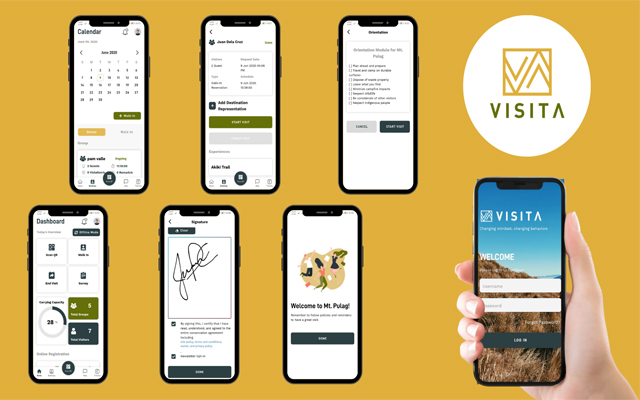
Visita, a non-profit sustainable visitor management platform which aims to help destinations adapt to health and safety protocols post-Covid, is looking for nature-based destinations to pilot test its website and app.
The collapse of the tourism industry has seen many destinations, communities and even conservation activities that rely on it suffer due to the lack of funding brought by tourism.
Visita helps destination managers to implement health and safety protocols
Visita aims to help destinations recover from Covid-19 by equipping managers with the technology to help them implement health and safety protocols. Visita’s technology will help destination managers implement environmentally sustainable practices, such as setting carrying capacities and educating guests on policies and biodiversity.
Furthermore, Visita can help destination managers implement social distancing in their destinations by allowing them to limit their daily carrying capacity and manage tourist traffic. Physical contact is also minimised since Visita allows for online visit requests and payment of conservation fees through online channels.
The platform also helps enforce destination policies through integrating conservation agreements, waivers, and visit terms and conditions into the system.
Additionally, destination managers will have access to relevant information about their guests should the need for contact tracing arise, while strictly following data privacy policies.
Project manager Pamela Valle said: “We travelled and immersed ourselves in at least three island and mountain destinations to ensure we come up with a product that solves current pain points. We observed existing processes, identified gaps, and asked for the destinations’ wish list in developing the design and features of the platform. We also consulted experts in technology, data privacy, and sustainable tourism research such as the Asian Institute of Management – Andrew Tan Center for Tourism in designing the prototype.”
Visita aims to solve current pain points of destination managers: Valle
Parameters of the pilot test for interested destinations can be designed depending on their needs and capacity. Visita can train managers and frontliners of chosen destinations on the principles of sustainable tourism, data privacy, and how to use the platform.
Interested destinations may contact Valle at contact@visita.org.ph to schedule an exploratory meeting. To learn more about the project, visit www.visita.org.ph.
Japan’s travel subsidy campaign is sparking innovation among local tourism players who are scurrying to adapt their strategies to tap the domestic market, even as the country battles a rise in Covid-19 cases.
Set to launch on July 22, the state-run 1.35 trillion yen (US$12.5 billion) Go To Travel campaign, will cover up to half of travellers’ domestic transport and accommodation costs if they book their overnight stays and day trips via travel agencies and affiliated booking sites.
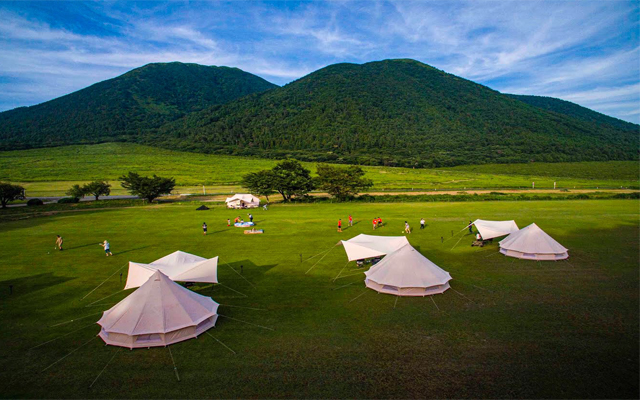
Camping with Soul Japan, which provides glamping equipment to campsites, has started leasing tents to campsites as glamping gains popularity amid Covid-19
Hopes are high that the campaign can help the battered tourism industry recover some losses, but fears remain that Covid-19 concerns may limit the uptake of the programme or result in people opting for travel in a nearby prefecture.
Still, with so many prefectures vying for visitors, accommodation, tour and F&B providers are working together to introduce new approaches.
“We are no longer competing (with each other); we are collaborating,” said Lothar Pehl, COO, Kiroro Resort Holdings. For instance, Kiroro has teamed up with a local vineyard to offer guests a vineyard tour and wine tasting experience, with socially distanced bus transport included.
The Hokkaido resort is also diversifying its marketing to attract more families, small groups, business travellers and FITs. With the launch of the Go To Travel campaign, its priority is the “drive-in market”.
“The local Hokkaido customer is our first target, and the Japan customer is our second target,” said Pehl, adding that the campaign has created the need “to focus not on a segment, but on a market – an entire population”.
Kiroro Resort turning to collaboration, not competition, to tide through travel slump: Pehl
Camping with Soul Japan, which provides glamping equipment to campsites, has adapted to supply tents to campsites in scenic spots and national parks, which are tipped be a popular choice for travellers.
“Campsites are getting more inquiries about glamping because people want luxury accommodation that is away from the crowds, but campsites can’t afford to invest in our tents at the moment,” said Taisuke Yokota, managing director. “That’s why we are now leasing them, to generate some income now and sales later.”
Graham Davis, owner of Cottage Davis Yakushima, an accommodation, café and restaurant, believes his self-catering accommodation is increasingly appealing as visitors can socially distance, but is taking a “go-slow approach” to opening up to more visitors. He is instead focusing on the F&B aspect of the business, developing take-out and delivery services.
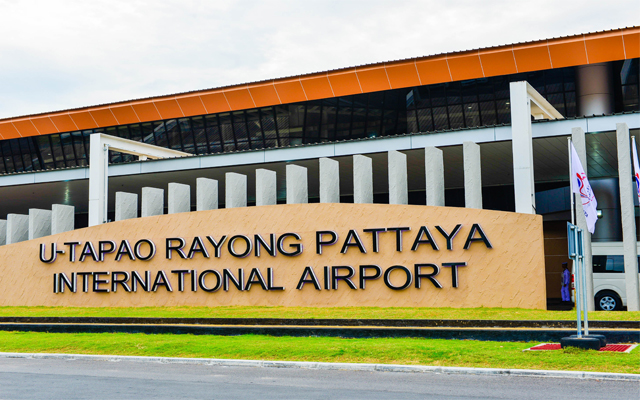
A new international airport for people business and travelers go to U Tapao Rayong and Pattaya.
The Thai government will make concerted efforts to divert more tourism to Rayong following a disastrous slip-up last week which saw one imported Covid case wiping out nearly all hotel bookings in the province.
The incident occurred during July 8-11 when one individual of a visiting Egyptian military delegation who stayed at the D’Varee Diva Central hotel in Rayong was found to have Covid-19. The delegates were exempted from undergoing the usual quarantines due to their diplomatic status.
The Egypt envoy had entered into Thailand via U-Tapao International Airport in Rayong province on July 8
The mishap impacted bookings in at least three major tourist destinations – accommodations in Rayong and Koh Samet saw a 80-100 per cent dive in bookings, while hotels in Pattaya reported bookings slipped 40-50 per cent.
Following the Covid-19 scare in Rayong, the government announced on Friday a five-part plan proposed by a Centre for Covid-19 Situation Administration (CCSA) subcommittee to boost tourism in the province.
The first two points focus on promoting meetings and seminars run by government agencies in the province, and sponsoring trips to Rayong for village health volunteers and other medical personnel.
The third and fourth measures involve using Rayong as a trial location to model the organisation of sports events, such as the football games of Thai League teams, and live concerts according to the new normal. Taweesilp Visanuyothin, spokesman for the CCSA, said officials would use these events to test disease control measures.
The final measure is to permit Thai and foreign film production crews into the province. Foreign film crews are one of five new categories of foreigners proposed to be allowed into the country during the sixth phase of Thailand’s reopening. Designated villas will act as quarantine facilities for the crews.
Although over 5,500 locals from Rayong and Bangkok have since tested negative for the virus, the Egyptian soldier case has raised public suspicion towards people with any contact to Rayong. The Bangkok Metropolitan Administration has also warned that anyone who has visited the same hotel and malls as the infected Egyptian soldier must inform city officials or face a 20,000 baht (US$629) fine.
In response to another Covid-19 case involving the nine-year-old daughter of a Sudanese attache, who had been residing in Sukhumvit with his family, hotels in Sukhumvit also lost bookings.
Both incidents have sparked fears of a second wave and eroded confidence of Thais about allowing foreigners into the country – close to 95 per cent of 1,459 Thai respondents in a recent poll said that foreigners should be barred from entering the country to prevent a fresh outbreak.
The recent upheaval of the hospitality industry due to Covid-19 is well-documented. At the time of writing, the global situation is easing and hotels are beginning to reopen again, but the travel landscape they now face is a very different one.
Pre-coronavirus, my key criteria for booking accommodation would be good service and sustainable practices. Now, I am more vigilant about their cleanliness standards and whether they have taken the appropriate hygiene measures. I am not alone in this sentiment either, which is why large hotel chains have come out to publish their new and improved cleaning playbooks to reassure their guests.
Opinions differ on what is the best way forward for the industry, but most agree that embracing technology should be a key part of a hotel’s re-entry plan. When properly implemented, technology can help hotels operate more efficiently, reduce costs and – most importantly – foster genuine trust among guests. For hotels, the challenge of the new normal will be conveying transparency and providing personalised service, while remaining efficient and productive – and technology will be the key to achieving the perfect balance.
Confidence through cleanliness
With hotels having to shift from ‘cleaning for appearances’ to ‘cleaning for health’, some of the extra weight of these heightened cleaning efforts can be shifted to technology. Maintaining good indoor air quality, for instance, can make a significant difference to health and safety – especially with the coronavirus currently being investigated for possible airborne spread.
The increased concern over air quality has led to a surge in popularity for bipolar ionisation technology, which releases charged atoms that surround and deactivate harmful substances. This technology can be integrated into existing heating, cooling and ventilation (HVAC) systems to provide active, continuous disinfection. It has already proved effective against other coronavirus outbreaks such as SARS and MERS, and emerging studies suggest that this may also prove true for Covid-19.
Using bipolar ionisation provides a number of benefits to hotels. It is a non-intrusive yet sophisticated hygiene technology that augments existing cleanliness procedures by cleaning at the molecular level. It also improves the capture efficiency of the existing HVAC’s air filtration system and reduces the quantity of outside air required to operate such HVAC systems, which in turn lowers energy costs. Hotels in the US have already begun implementing and promoting bipolar ionisation as a desirable amenity, and more are expected to follow suit.
Big data for better productivity
The continued fear of coronavirus transmission cements contactless engagement as a required amenity of hotels in the new normal post-Covid. To deliver and maintain the same seamless experience that guests have come to expect, hotels will have to rely more heavily on data and insights to understand their guests better and craft new, hyper-personalised experiences that minimise but do not devalue human interactions.
The crucial preliminary step is gathering data. Hotels can do this by utilising in-room, Internet of Things (IoT)-enabled wireless sensors to capture valuable information such as occupancy status, guests’ preferred temperature setpoints and room energy consumption, which can then be sent to a consolidated dashboard overseen by the hotel’s operations team that displays a full overview of room conditions in real-time.
With more information on the rooms’ live occupancy status, housekeeping teams can then plan their routes and sanitisation schedules better.
Meanwhile, maintenance teams can monitor HVAC systems for optimal efficiency and perform predictive maintenance before any malfunctions can escalate and jeopardise room comfort. These measures increase the teams’ productivity while reducing guest disruption as well as minimising unnecessary contact with guests.
Besides facilitating staff productivity, a consolidated dashboard of each room’s environmental data also presents a comprehensive picture of the hotel’s condition in real-time and allows management to make timely, informed decisions. Aside from addressing the longstanding issue of suboptimal connectivity between the hotel’s various data sources, quicker decision-making means the hotel can enhance its emergency response and problem resolution capabilities.
Enhancing services to improve the guest experience
The hospitality industry is called the service industry for a reason – the very nature of the hospitality sector is guest-centric. Therefore, to provide the best guest experience, hotels must understand their target market intimately. This can be achieved with artificial intelligence and analytics tools, which can transform the data gathered into more extensive insights about their guests over the long-term.
For instance, in-room sensors track room occupancy data, which can be analysed to provide insights on the most popular time in the morning for guests to leave their rooms, as well as when they are most likely to return at night. Beyond housekeeping schedules, this also allows hotels to plan events and promotions in their other facilities, such as the happy hour at the bar or dining discounts based on the time of day.
This data-driven approach increases the potential take-up rate of these promotions, which can directly increase revenue for the hotel and reduce downtime slumps. Conversely, real-time insights on the peak visiting and usage hours of the restaurants, as well as facilities such as the pool, gym and spa, can help management plan usage policies to prevent overcrowding and maintain a safe, comfortable environment.
Digitalise to survive
We are seeing South-east Asian countries easing their lockdowns and travel restrictions as they flatten their virus infection rate curves. Hotels and travel businesses in this region are slowly reopening and launching attractive promotions to get a head start on their recovery phase.
However, with lingering fears over the coronavirus and global travel still on the downturn, the reality is that guests will only return in force when they are confident of getting an accommodation experience that prioritises both enjoyment and safety.
It is evident that digitalisation – namely via IoT and remote working technologies – are going to be the primary enablers for hotels to implement the new normal of hospitality, like advanced sanitation measures, minimum-contact practices, efficient staff services and hyper-personalised experiences.
Thus, leveraging technology to enhance existing offerings and provide transparency on new safeguards is the natural next step for hotels. This is how they can ensure the wellbeing of guests and employees, maintain quality of service and, most importantly, rebuild confidence in the post-pandemic travel environment.
Grand Hyatt Bali has welcomed Marco Groten as general manager.
In addition to his responsibilities as general manager at Grand Hyatt Bali, he will also take on the role of area vice president of Hyatt Indonesia where he will oversee the following area hotels – Park Hyatt Jakarta, Andaz Bali, Alila SCBD, Alila Villas Uluwatu, Alila Seminyak, Studios at Alila Seminyak, Alila Ubud, Alila Manggis, Alila Purnama, Alila Solo, Grand Hyatt Jakarta, Grand Hyatt Bali, Hyatt Regency Bali and Hyatt Regency Yogyakarta.
Groten takes over the area vice president role from Peter Stettler who held this position for the past 25 years, and is now moving into his new role as senior advisor to Hyatt in Indonesia.
Groten has more than two decades of experience in the hospitality industry, having first started out as a front office manager in Bandung, Indonesia.
In 2018, Marco became head of operations for Alila, based in Hong Kong, working on the integration of Alila properties within Hyatt.
Three years after the joint venture between Kuoni Global Travel Services and Tumlare Destination Management, holding company JTB Corporation has finally integrated both into a single entity to establish a global DMC.
A press statement from JTB Corporation stated that Kuoni Tumlare will benefit from “Kuoni’s Swiss heritage, Tumlare’s Scandinavian roots and JTB’s deep history in Japan”.
Shinji Kamio, CEO, Kuoni Tumlare, added: “Kuoni Tumlare embodies the best of these companies: a stronger brand with richer expertise, the largest suppliers’ network in the group travel space, a broader destination portfolio and a more comprehensive offering.”
Adopting a destination-centric model, the new entity will serve retail and wholesale travel agents worldwide. It will leverage an existing network of local experts in European destination offices to handle all key operational tasks and deliver “higher quality, speed of response and operational excellence end-to-end”, noted the press statement.
“One brand and one global team mean a simpler way of working together, allowing us to focus even more on growth and customer satisfaction,” said Kamio.
Prior to this move, Kuoni Global Travel Services and Tumlare Destination Management had traded as separate brands in many global markets, although both operated as a single brand in Europe.
EAST Hotels properties address guests’ growing preference for multifunctional spaces through their Domain spaces
Good hotel design transcends ‘soft’ power and appeal; they can heavily impact a brand’s return on investment and guest loyalty. As economies around the world gradually reawaken and travel returns, the future of hotel design may be forever altered.
“Increasingly, the (hospitality) essentials will relate to hygiene, sanitation and operational reliability. In terms of Maslow’s hierarchy of needs, we’ve moved right back to the bottom of the pyramid – in the short term, at least – where safety and security are much more important than self-actualisation. Brands seen as able to guarantee standards of cleanliness will benefit,” opined Matt Turner, founder, AHEAD Awards.
EAST Hotels properties address guests’ growing preference for multifunctional spaces through their Domain spaces
AHEAD Asia recognises hotels and hotel facilities in the region that have effective design and features, and this year’s edition saw the judges convene via a virtual meeting.
While transparent and consistent hygiene standards are expected to become a mainstay in hospitality, customers are likely to continue to favour flexible, engaging spaces.
Turner added: “Effective design today must be from the point of view of delivering great guest experiences, rather than just design for design’s sake which (is to look) nice, eye-catching or unusual in some way.”
Meanwhile, Toby Smith, managing director of Swire Hotels and judge of AHEAD Asia 2020, remarked: “Appropriate design can have a huge influence on business performance, whether that be through maximising space, optimising efficiencies or (effecting) more aesthetic influences that shape a brand.”
Flexible and sustainable
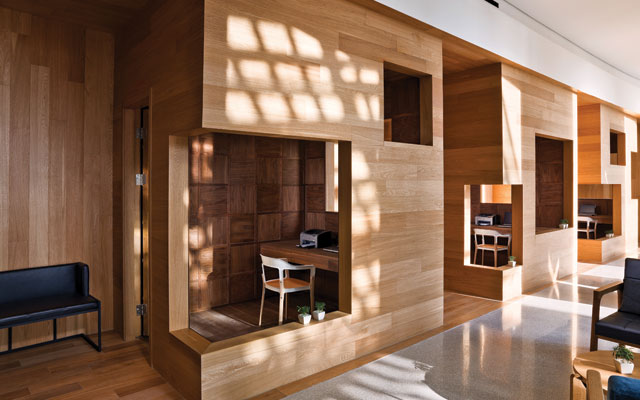
A key feature that many customers are drawn to now is the appeal of flexible common spaces for both leisure and corporate guests.
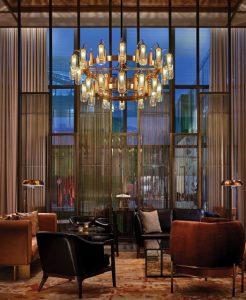
The lobby bar of The Opposite House, Beijing is a flexible space that allows a variety of seating options
Smith told TTG Asia: “Something that was repeatedly raised in our discussions was versatility in design or creating spaces that effectively accommodate guests at various points of their day or life.”
Notable examples of this include EAST Hotels’ Domain spaces, which function as cafés, meeting spaces, co-working zones and early evening bars, as well as UNION at The Opposite House in Beijing that provides an elegant environment with a variety of seating arrangements.
Consumers are also getting smarter when it comes to choosing sustainable stays. Providing environmentally-responsible amenities alone is no longer adequate; guests now pay attention to a hotel’s commitment to minimising waste and impact, even in its design.
“A sustainable approach is now table stakes. The degree to which sustainability is achieved is becoming more important and distinguishable, especially (among the) younger generations,” observed William Harris, founding partner, AvroKO and judge, AHEAD Asia 2020.
According to Harris, needing to be sustainable has driven hotels towards solutions that are more unconventional or register as more authentic. This has spurred hotels to redefine their offerings and do their part for the community, making the need for sustainability a “positive challenge”.
For instance, more properties are using natural and recycled materials, LED lighting, as well as renewable energy technology in their design. “Less talked-about features that are equally important include innovative water treatment and waste management systems,” said Nicholas Clayton, CEO, Capella Hotel Group, and judge, AHEAD 2020.
Visually, sustainability efforts can be communicated through “biophilic forms in hotels”, said Harris. These include outdoor experiences brought into the public spaces of hotels and resorts, such as indoor waterfalls, all-season terraces, rugged outdoor-style furnishing, oversized plants and panoramic views.
Such features also serve to help guests “feel soothed and balanced in a world where many people in urban settings can be spending up to 90 per cent of their days indoors”, explained Harris.
Personalised tech matters
No talk of the younger generation is complete without mentioning the need for technological integration.
As personalisation climbs in importance among well-heeled and discerning consumers, the use of technology has become ever more critical in creating the ultimate guest experience.
Casting his eyes into the future of hotel design, Clayton predicted: “Technology and personalisation will work in tandem. Going beyond pillow selection and customised toiletries, guests can expect to arrive in a room that’s set to their preference, from desired lighting to work and entertainment systems that mirror their standards back home.”
The main challenge, posited Smith, is being able to “successfully blend the digital with the human”, as people are ultimately social creatures who “thrive (on) face-to-face interaction”.
He added: “Creating vibrant, interesting spaces that ignite conversation is key, while at the same time harnessing the benefits of technology.”
The future has arrived, with the innovative use of artificial intelligence (AI) and technology in hotel spaces birthing automated experiences such as contactless check-in and check-out, facial recognition room entry, mobile controlled in-room services, as well as robots delivering housekeeping amenities and in-room dining.
What once was science fiction is now helping many hotels to improve the guest experience. Hilton’s Connected Room, being piloted in the US, for example, allows occupants to utilise a smartphone to control the room temperature and lighting, and even sync Netflix shows on the TV set.
Ben George, senior vice president and commercial director, Asia-Pacific, Hilton, said: “What I enjoyed most (about the Connected Room) was the fact that I was empowered and could control everything around the room swiftly and seamlessly without taking away the warm service and hospitality.”
That, he said, freed the concierge up to recommend and curate local activities, and for the hotel barista to better engage with guests about coffee preferences.
But even if travellers of the future have higher digital expectations, Ong Wee Min, vice president of conventions and exhibitions, Marina Bay Sands, believes technology will only remain an enabler to help companies improve operational efficiency and enhance guest experiences.
Ong stressed that it still boils down to the emotional bonds forged to retain guest loyalty.
For Pan Pacific Hotels Group (PPHG), its Guestroom Management System leverages smart devices and the Internet of Things (IoT) connectivity to provide an integrated and seamless automated solution to enhance operational efficiency and guest convenience.
Cinn Tan, the group’s chief sales and marketing officer, elaborated: “When rooms are vacant, the system sets the air-conditioning to an energy-efficient temperature.
“When a guest checks in and the room’s PMS (property management system) status changes to occupied, the system lowers the temperature so the room is comfortably cool when the guest enters. As the room’s motion sensor detects occupancy, lights come on automatically.
“When the guest leaves, the system switches off the lights and saves his/her preference, so the guest’s favourite ambience setting is launched the next time he/she returns.
“If there is a malfunction in the room, or when guests request for the make-up-room service, engineering and housekeeping staff receive real-time updates on their mobile, ensuring quick response time. The occupancy status on the system also allows them to service the room when it is vacant, minimising guest disturbance.”
Tan shared the system would be rolled out at the renovated Parkroyal Collection Marina Bay when it reopens in 3Q this year, adding that the system contributes to the hotel’s energy conservation efforts.
Looking ahead, Hilton’s George envisaged mobile-first experiences becoming the new normal. He noted digital services on the Hilton Honors app would continue to evolve and become more sophisticated for guests to personalise their experience.
He said: “By 2030, we will see these high-tech features being implemented widely around the world, potentially with added elements of VR (virtual reality) or AR being integrated into the rooms to provide personalised travel insights and recommendations.
“We are always excited to test-bed novel solutions that help to address guests’ needs and pain points. We launched our Innovation Gallery in 2017 to pilot new technologies, incubate, and prototype cutting-edge products – like noise cancellation and sleep improvement devices – to offer more options to enhance the travel experience.”
In the case of World Hotels, Melissa Gan, managing director, Asia-Pacific, said trial proof of concept for an AR experience was being carried out at member property, The Garden Hotel in Guangzhou.
Gan explained: “This hotel is extremely historical with many amazing stories and artifacts. AR (augmented reality) was used to enhance the guest experience to learn about the stories and artifacts (via) the guest’s personal smartphone and also to capture and record the experience.”
Gan predicts evolving technology will give rise to a-la-minute in-room cooking and housekeeping, health and wellness value adds.
“I envisage hotel rooms of the future in health and wellness resorts being able to use technology to plan individual experiences and goals on a great scale and with greater accuracy,” she said, adding that AR experiences and memories would be captured with AI.
In addition, PPHG’s Tan believes voice activation service would become more common.
“We already see the likes of Apple Homepod, Amazon Alexa and Google Home, where AI is leveraged to allow us to search and activate services through voice commands,” she remarked.
“In time to come, this will become more widely accepted with technology advances, lower costs and greater security, and we will assimilate this into our lifestyle.”
Short-term interest in travel to the US is down across most of the country’s key inbound markets, with the Chinese market posting the steepest fall, amid a continued rise in Covid-19 cases in the US.
Travel intent from China to the US in the year ahead tumbled by 18 per cent, shared Caroll Rheem, vice president of research and analytics for Brand USA, the DMO dedicated to marketing the US to international markets.
China travel sentiment dips most among US target markets; a tourist posing outside an old building on the campus of Yale University in the US pictured
She was citing a recent customised study by Engine/ORC International at Brand USA’s recent Covid-19 Research Update webinar. Specifically, the year ahead referred to the 12-month period from the date the survey was held (June 11, 2020).
The survey compared travel intent at time of study to the 2019 average, with average probability proportional to size (PPS) figures. The decline of travel sentiment in the Chinese market surpassed that of Asia-Pacific markets Australia, India and South Korea, where intent dropped by five, six and two per cent, respectively.
Though travel intent to the US in Japan grew by three per cent, Rheem cautioned that much of that sentiment is likely directed towards the Pacific Islands such as Hawaii, Guam and Saipan – destinations familiar with the Japanese.
Amid the volatile tourism landscape, travel sentiment among Chinese travellers towards most of the US’ competing destinations also declined, falling to between zero per cent to eight per cent. This is a markedly lower decline than the -18 per cent fall in Chinese travel intent to the US.
This means the US’ market share in China outbound travel is set to shrink, even as Chinese outbound travel sentiment begins to stabilise. Intent to travel internationally among Chinese respondents for the year ahead has remained at -37 per cent for studies done across April, May and June, relative to the 2019 average.
Beyond the significant number of Covid-19 cases in the US, which affected travel intent to the country across all markets, specific reasons were not given for the drop in Chinese travel sentiment.
Chinese respondents who expressed uncertainty in making decisions to travel internationally over the next 12 months cited concerns over Covid transmission (more than 50 per cent). A dip in availability of activities and experiences and travel restrictions were also significant reasons, each selected by more than 40 per cent of respondents.
Nearly 20 per cent of respondents cited doubt over financial stability as the reason, while a similar number shared that they were unable to afford international travel in 2020.
Among those keen to travel in the year ahead, 80 per cent of respondents said rest and relaxation was the most important consideration when deciding on a destination.
This was followed by learning about different cultures, visiting distinctive attractions, getting in touch with nature, and keeping within comfort zones, each chosen by more than 70 per cent of respondents.
According to Rheem, travellers in general are expected to oscillate between the experimentation and decision stages of the Kübler-Ross Emotional Response to Change – a model of emotions and states that arise when faced with change – where they have information to make plans and decisions, but the environment remains volatile, leaving many still experimenting with new ways of adapting.
Travellers will likely start by engaging in smaller “experiments”, such as going on domestic road trips, before moving on to larger “experiments”, such as international travel, she reckoned.
As global consumers adjust to new travel norms, Oxford Economics predicted that the US international tourism market could take five years to recover to 2019 levels.
International arrivals and tourism spending are expected to bottom out in 2020, after plunging by 50 million and 75 per cent, respectively this year, shared Rheem.
US hospitality industry demand is expected to recover to 88 per cent of 2019 levels by end-2021, with a full recovery expected only in end-2023.
Recovery is set to be gradual amid border controls, continued hesitancy about international trips, and lingering effects of the worldwide economic recession, said Rheem.
Rheem cautioned the figures from Oxford Economics is based on the likelihood that pandemic conditions will improve through 2020, and that a downgrade would be necessary if cases in the US continue to increase.
For consumers, being equipped with information on pandemic conditions and having the confidence that risks and costs are of an acceptable level are pertinent prerequisites before international travel can resume, reckoned Rheem.
Some travellers may even want to go through Covid-19 tests before entering the destination and be willing to be tracked in their time there.
Destinations and tourism suppliers also need to work on increasing flight availability and working out procedures to ensure primary attractions and experiences can reopen and maintain a certain level of capacity.
On a policy level, promoting the recovery of international travel would involve removing travel restrictions for most travellers – including the widespread two-week quarantine measures – as well as ensuring cases remain low at both the origin and destination.
Rheem shared that the US Travel Association is working to standardise health and safety expectations and processes across various states, to avoid traveller confusion.
– Translated by Angela Teo; this article was first published in TTG China
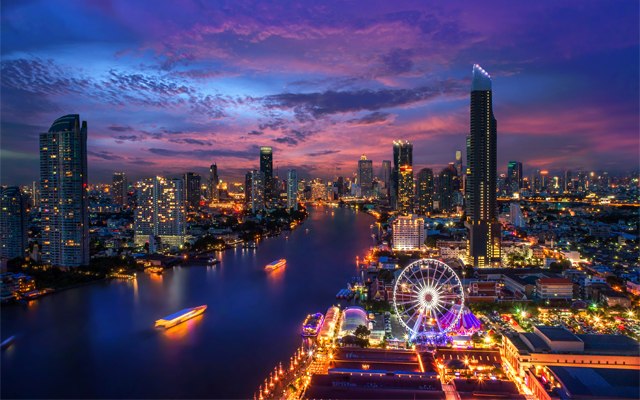
Bangkok cityscape. Bangkok night view in the business district. at twilight.
Bangkok-based real estate advisory firm Destination Capital will join forces with its capital partners to acquire, manage and rebrand hotel assets in Thailand and across Asia-Pacific in a bid to revitalise the hospitality sector.
Destination Capital (DC) was recently formed as an investment fund to partner with private equity and institutional funds to source hotel acquisition opportunities and asset manage in the Asia-Pacific region, with an emphasis on Thailand. The company is part of Asia’s leading hospitality operator, Destination Group, which has a 24-year track record in Thailand of buying, repositioning, asset managing and selling hotels.
Destination Capital formed to acquire hospitality assets in Thailand and Asia-Pacific that possess turnaround and value add potential; Bangkok cityscape pictured
Destination Capital CEO James Kaplan said in a statement that the company will source assets that will reap higher returns after renovation and repositioning, with a focus on prime-located freehold hotels and resorts of approximately 200 rooms located in key urban and resort locations.
The company plans to acquire a portfolio of 12-15 four-star hotels over the next 18 months, with capital values ranging up to 1.5 billion baht (US$47.1 million).
Full recovery of Thailand’s hospitality industry projected to take three to four years: Kaplan
Kaplan will leverage his global hospitality experience alongside the resources of Destination Group and its capital partners to attract domestic and international private equity, with a focus on acquiring, repositioning, and managing hotel assets in Thailand and elsewhere in Asia.
Thailand welcomed almost 40 million international tourists last year. However, recent estimates indicate 2020 international arrivals may plummet to as low as eight million, of which seven million have already arrived prior to the Covid-19 lockdown. The aviation and tourism industries have been disproportionately impacted, particularly in Thailand, where tourism accounts for almost 18 per cent of GDP.
Millions of people are unemployed, and thousands of hotel rooms are now shuttered, prompting the immediate need for fresh capital injections for hotels to re-employ and re-open as well as sustain operations during the projected prolonged recovery cycle.
Although the hospitality industry will be slow to recover as a result of the current situation, historically, Thailand has successfully rebounded from past crises, emerging more robust and more resilient.
“We believe a similar rebound story will be true with a full recovery in three to four years. We will deploy our resources to source and acquire hotels which present a turnaround story during this period of rebound,” said Kaplan who alongside his hospitality and real estate teams have a proven track record of asset acquisition and management of hotel turnarounds over the past several decades.
Kaplan added that the resilience of the Thai economy and tourism industry is a key factor to revive hotel and hospitality industry in the medium-term in line with company’s investment strategy.



















Three years after the joint venture between Kuoni Global Travel Services and Tumlare Destination Management, holding company JTB Corporation has finally integrated both into a single entity to establish a global DMC.
A press statement from JTB Corporation stated that Kuoni Tumlare will benefit from “Kuoni’s Swiss heritage, Tumlare’s Scandinavian roots and JTB’s deep history in Japan”.
Adopting a destination-centric model, the new entity will serve retail and wholesale travel agents worldwide. It will leverage an existing network of local experts in European destination offices to handle all key operational tasks and deliver “higher quality, speed of response and operational excellence end-to-end”, noted the press statement.
“One brand and one global team mean a simpler way of working together, allowing us to focus even more on growth and customer satisfaction,” said Kamio.
Prior to this move, Kuoni Global Travel Services and Tumlare Destination Management had traded as separate brands in many global markets, although both operated as a single brand in Europe.